
On November 9, 2026, Thomann had 95 microphones and pickups made for acoustic instruments: wind instruments, strings, acoustic guitar, piano, accordion and percussion. They come in three kinds.
| Mic on a stand | Clip-on gooseneck | Contact pickup | |
|---|---|---|---|
| Sound | most natural | close and present | dry, body only |
| Moving around | no | yes | yes |
| Feedback on loud stages | most likely | less likely | least likely |
| Bleed from other instruments | most | some | almost none |
| Needs phantom power | usually | usually | often, via an adapter |
On a stand: the natural sound
A small-diaphragm condenser a foot or so from the instrument hears it the way a listener does, with the body, the keys and a bit of room. It's the choice for recording and for quiet stages, but the player has to stay in front of it.
Lewitt LCT 140 AIR, $160

A small-diaphragm condenser with a cardioid capsule, a switchable Air EQ, a 12 dB pad and a low cut, with a clip and windscreen. It ranks first of 14 acoustic guitar microphones and works as well on strings and woodwinds. #1 of 16 acoustic guitar microphones.
Clip-on gooseneck: the mic that moves with you
A miniature condenser on a short gooseneck clips to the bell of a horn, the rim of a drum or the body of a guitar. It stays at the same distance however you move, so the level stays steady. It's what most sax and brass players use live.
Shure Beta 98 H/C, $329
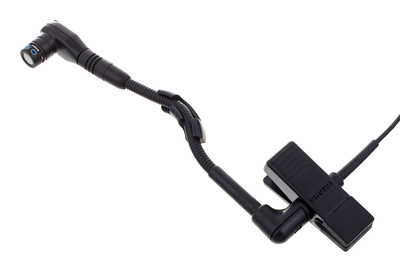
A cardioid condenser with an integrated clip and gooseneck, built for brass, saxophones and percussion. It handles 163 dB, louder than any trumpet bell. It ranks second of eight brass microphones. #2 of 9 microphones for trumpet, horn ETC.
Audio-Technica ATM350U, $375
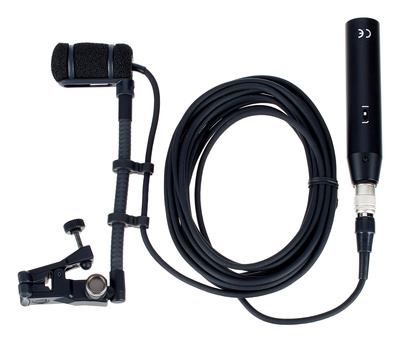
A cardioid condenser with a universal clip-on mount and interchangeable goosenecks and clamps, plus an 80 Hz low cut. It ranks first of 11 clarinet microphones and fits most other instruments. #1 of 12 microphones for clarinets.
At the top of the range, DPA's 4099 series costs $512 and up, sold in versions with mounts for different instruments.
Contact pickups: no feedback, no bleed
A contact pickup or piezo picks up vibration instead of air. Nothing else on stage gets in, and loud monitors can't make it squeal. The price is a drier, less natural sound, which an acoustic preamp or a little reverb helps.
Rumberger's K1X II for clarinet and sax mounts in a sleeve on the instrument and comes with a phantom power adapter and a jack adapter for wireless packs, at $423. For acoustic guitar, Thomann lists 41 soundhole magnetic pickups at a median of $132 and 32 complete pickup and preamp systems at $244, from Fishman, Shadow and LR Baggs.
Which one?
- Recording, or a quiet acoustic set: a mic on a stand.
- Sax, trumpet or trombone in a band: a clip-on gooseneck.
- Violin or clarinet on a loud stage: a contact pickup, or a clip-on with a tight polar pattern.
- Acoustic guitar: a pickup for loud stages, a mic for recording, both blended for the best of each.
Where the numbers come from. Every microphone Thomann lists for wind, string, piano, acoustic guitar and special instruments, plus acoustic guitar pickups, in stock on November 9, 2026, from its partner feed. Specs are from Thomann's descriptions. Places are from our instrument microphone rankings. Prices are Thomann's US prices.
Share this story

Denis Kataev runs AudioFu. Every night the site records the prices of more than 38,000 instruments and studio tools at Thomann, and he writes about what those numbers show: what got cheaper, what just arrived, and which discounts are real.
All stories by Denis Kataev →


