
Best Wireless Conference Systems Under $5,000 2026
So, you need a wireless conference system but your budget isn't exactly unlimited? Let's be real - that $10,000 Shure setup is dreamy, but it's not happening for everyone. We're focusing on systems under $5000 that actually deliver usable performance, avoiding the absolute bottom-tier stuff that sounds like you're talking through a tin can. We'll talk about what you can expect at this price point and where the compromises usually lie.
Last updated: September 28, 2026
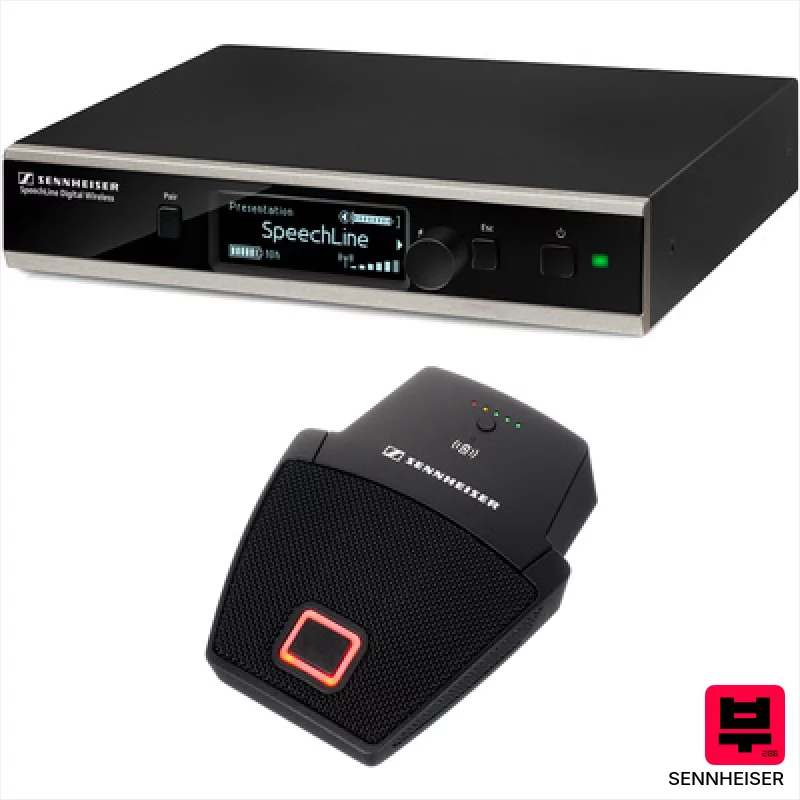
Sennheiser SL 114-S Wireless Bundle
- • Excellent boundary mic for clear table pickup, minimizing room noise.
- • Robust DW-3B construction feels very solid, professional grade.
- • Programmable micro switch adds significant flexibility in use cases.
- • Qi wireless charging is a convenient, modern touch.
- • 1.9 GHz band can be susceptible to interference in crowded RF environments.
- • Receiver size (9.5") might be restrictive for some mobile setups.
- • Boundary design limits placement options; not ideal for handheld use.
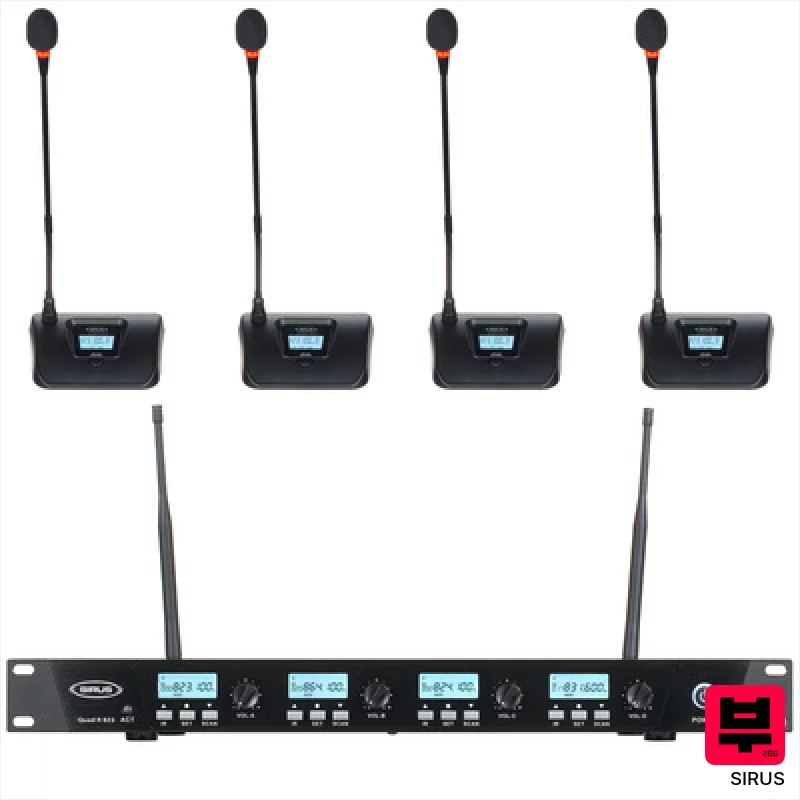
Sirus Quad R + 4C 823 Bundle
- • Rackmount design saves space, ideal for permanent conference room installations.
- • Infrared transmission simplifies channel syncing, reducing setup headaches.
- • Excellent signal-to-noise ratio ensures clear audio even in noisy environments.
- • UHF frequency range minimizes interference compared to FM systems.
- • Limited frequency range necessitates careful frequency coordination in dense RF areas.
- • External power supply adds another cable and potential point of failure.
- • Handheld and pocket transmitters sold separately, increasing overall investment.
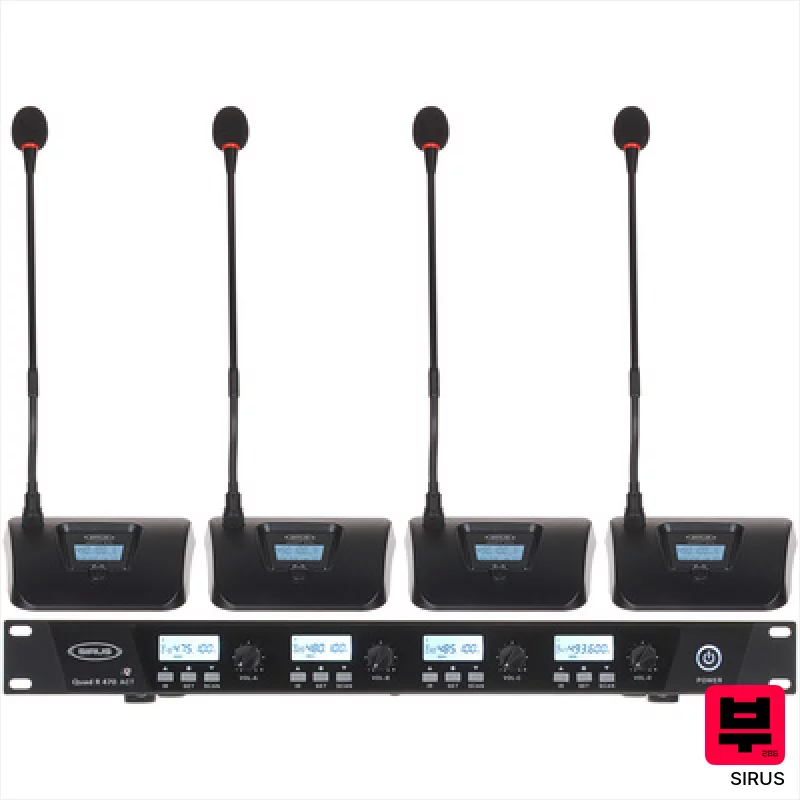
Sirus Quad R + 4C 470 Bundle
- • Excellent frequency scan simplifies setup for multi-mic environments.
- • IR transmission streamlines channel configuration across multiple transmitters.
- • Robust 1U rackmount design ensures stability in professional installations.
- • High signal-to-noise ratio minimizes background noise for clear audio.
- • 470-526 MHz band can be congested in some areas, limiting channel availability.
- • Power supply is external, adding to cable clutter and potential failure point.
- • Limited frequency range (40Hz-18kHz) may lack some high-end clarity for critical applications.
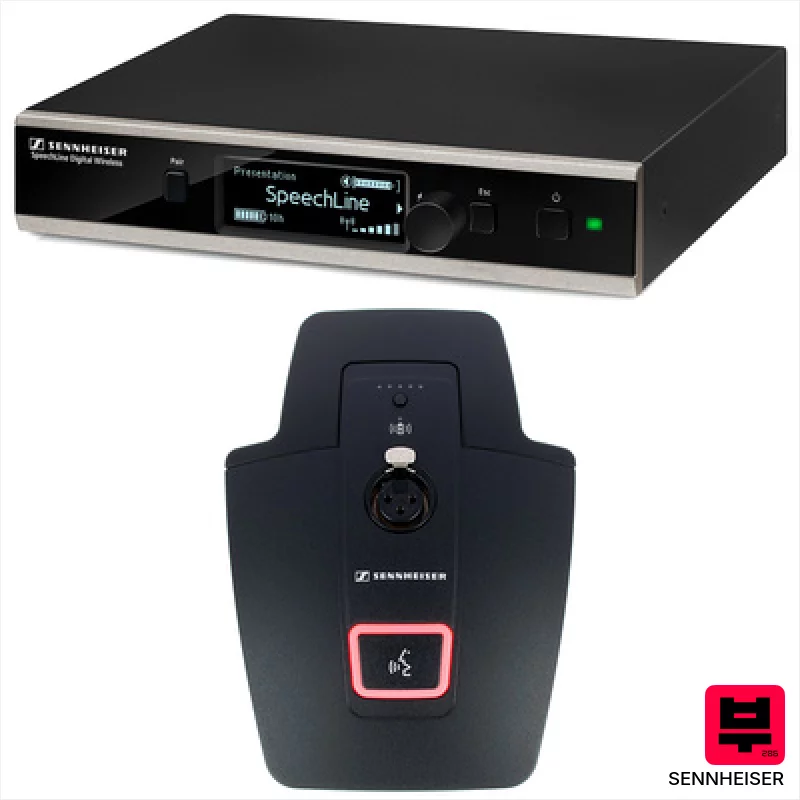
Sennheiser SL Tablestand & Receiver Set
- • Solid build quality; metal tripod feels substantial and stable.
- • 1.9 GHz digital transmission minimizes interference common in crowded RF spaces.
- • Sennheiser Cockpit Control offers granular remote monitoring and configuration.
- • Qi wireless charging adds convenience; battery life is genuinely impressive.
- • CHG2W charging base is a frustratingly separate purchase.
- • Limited frequency range restricts flexibility for complex multi-mic setups.
- • The 1.9 GHz band might have licensing/regulatory hurdles in some regions.
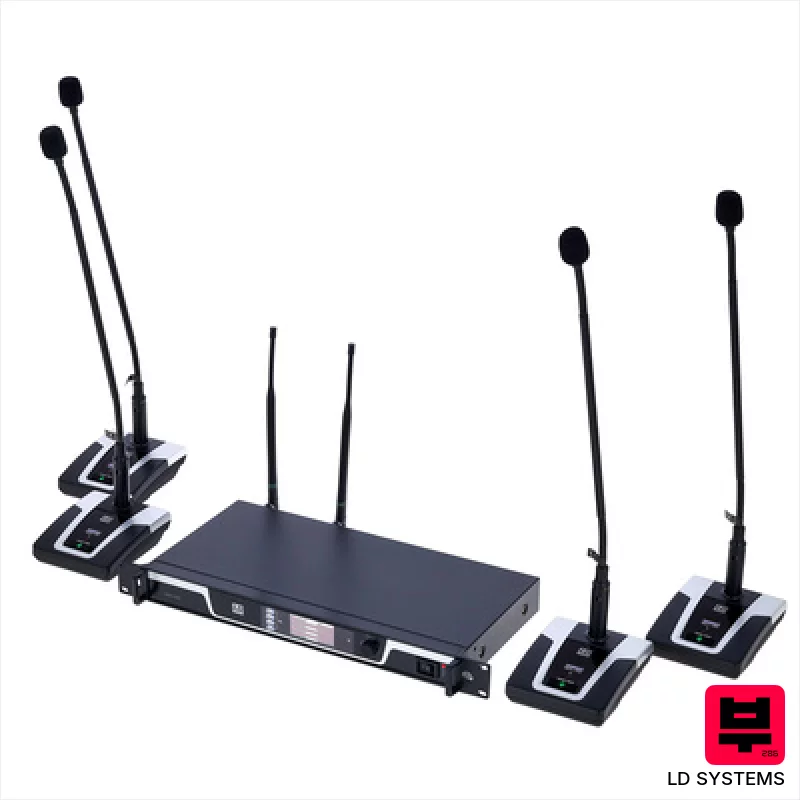
LD Systems U505 CS 4
- • Solid build quality with a professional, understated aesthetic
- • OLED display offers clear, at-a-glance system status
- • BNC antenna connectors allow for upgraded external antennas
- • 6 groups of 106 channels offer flexibility in congested RF environments
- • The system's weight (6kg) makes transport and setup cumbersome
- • 554-586 MHz band can be restrictive depending on location
- • Limited frequency range may require careful channel selection
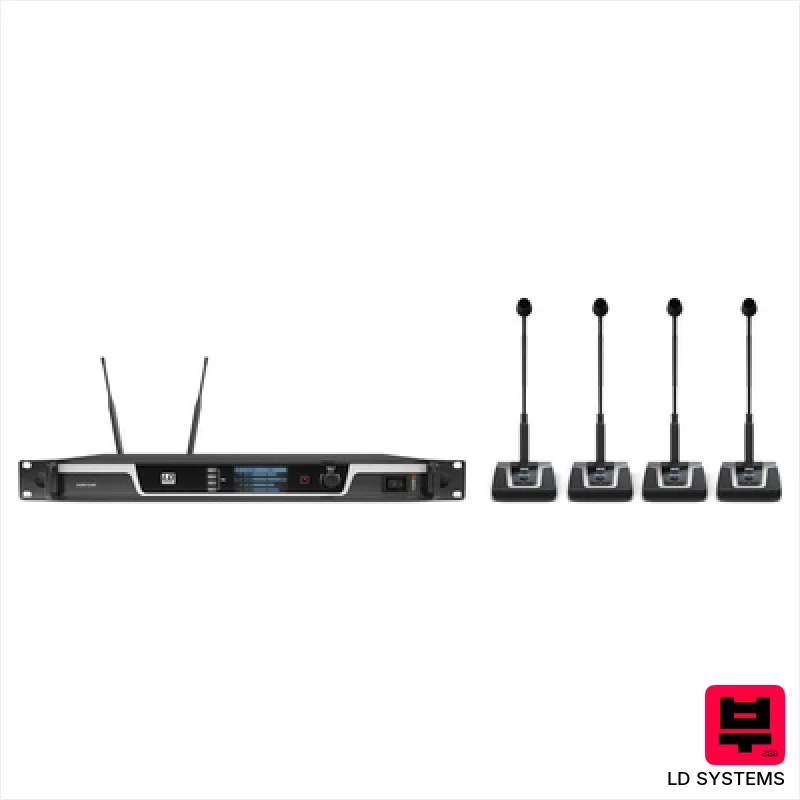
LD Systems U508 CS 4
- • Excellent true diversity UHF reception minimizes interference
- • Gooseneck mics offer stable positioning and reduced handling noise
- • Integrated inMix XLR output simplifies routing to mixers or recorders
- • OLED display provides clear, at-a-glance system status information
- • The base unit's weight makes it less portable for frequent relocation
- • Limited frequency range compared to some higher-end conference systems
- • AA batteries can become a recurring expense; consider rechargeable options
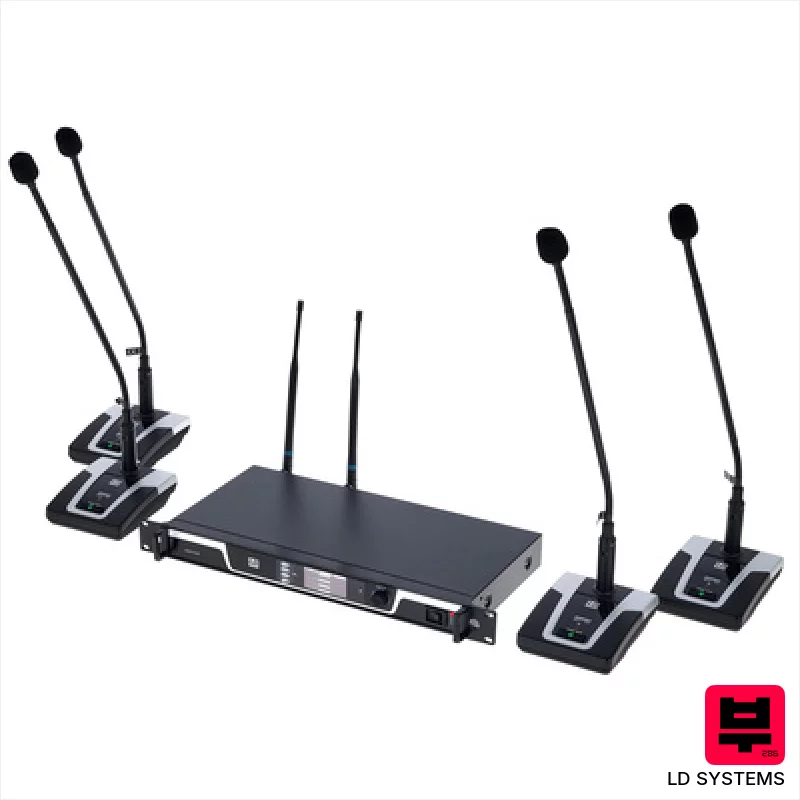
LD Systems U506 CS 4
- • Solid build quality with a robust metal chassis and stable table bases.
- • Infrared frequency synchronization is genuinely reliable and fast.
- • Gooseneck mics offer good positioning flexibility for presenters.
- • Balanced XLR outputs provide clean, professional audio signal.
- • The system's size and weight make it less portable for frequent moves.
- • Limited frequency band allocation may pose issues in densely populated RF areas.
- • Microphone unit battery life could be better, especially for extended meetings.
Wireless Conference Systems by the numbers
Measured across all 7 models in this category, so «wide», «short» or «expensive» mean something you can check.
How to Choose the Best Wireless Conference Systems
Frequency Bandwidth
More bandwidth means more channels, crucial for multiple speakers and avoiding interference. 2.4GHz is common but can be crowded, 5GHz is cleaner but range can suffer. Think about your environment.
Dynamic Range
A wider dynamic range means the system can handle quiet whispers and loud exclamations without clipping or sounding overly compressed. This is vital for natural-sounding vocals and avoiding a flat, lifeless tone.
Latency
Low latency is absolutely critical, especially for live speaking. Anything over 5ms is going to be noticeable and distracting. Higher-end systems get this close to wire-free performance.
Build Quality & Reliability
Let's be honest, cheaper gear often feels flimsy and prone to failure. Look for metal construction where possible and read reviews carefully - a system that cuts out mid-meeting is a nightmare.
Microphone Capsule Quality
This makes a HUGE difference in the overall tone. Cheaper mics can sound harsh and lack detail. A decent condenser capsule will offer better articulation and a more natural vocal presence. It's the difference between 'understandable' and 'engaging'.
Buying Guide
At this budget, you're making trade-offs. Don't expect broadcast-quality audio; expect a system that allows clear communication. Often, you'll be looking at systems that use digital transmission - which is great for clarity but can be susceptible to interference. Pay attention to the mic capsules - they're often the weakest link. Prioritize a system with good feedback rejection; it's better to have a slightly less detailed sound than a screeching mess.
How This List Is Built
We don't play these instruments — we're a catalog, not a review desk, and we'd rather say so than pretend otherwise. This page covers 7 wireless conference systems from the Thomann catalogue, which is the largest single source of specification data in this category: 7 in detail, the rest listed with their specifications.
Position is computed, not curated. We parse the manufacturer's own description into actual values — nut width, scale, fret count, fingerboard radius, size, alloy — and rank on them: how many specifications a model has published, how many of them are measurable numbers, and how precisely it meets this page's criterion. A product image adds a little. Price is not a ranking signal: it tells you nothing about whether a neck fits your hand. The same inputs always produce the same order, so nothing here is shuffled to look fresh.
What this list is good for: narrowing a category down to a shortlist by spec and budget. What it isn't: a substitute for hearing an instrument. Before you buy, read hands-on reviews and, where you can, play it. Full methodology.

