
Best Travel Guitars Under $5,000 2026
Alright, so you need a travel guitar, huh? Something that's gonna survive a gig bag beating, maybe a quick recording session on the road, and not completely suck when you plug it in. You're smart to set a budget - $5000 buys a lot of wood, but you can get seriously good, portable instruments for a lot less. Let's find you something that sounds good, feels good, and won't make you regret skipping that extra airline baggage fee.
Last updated: April 11, 2026
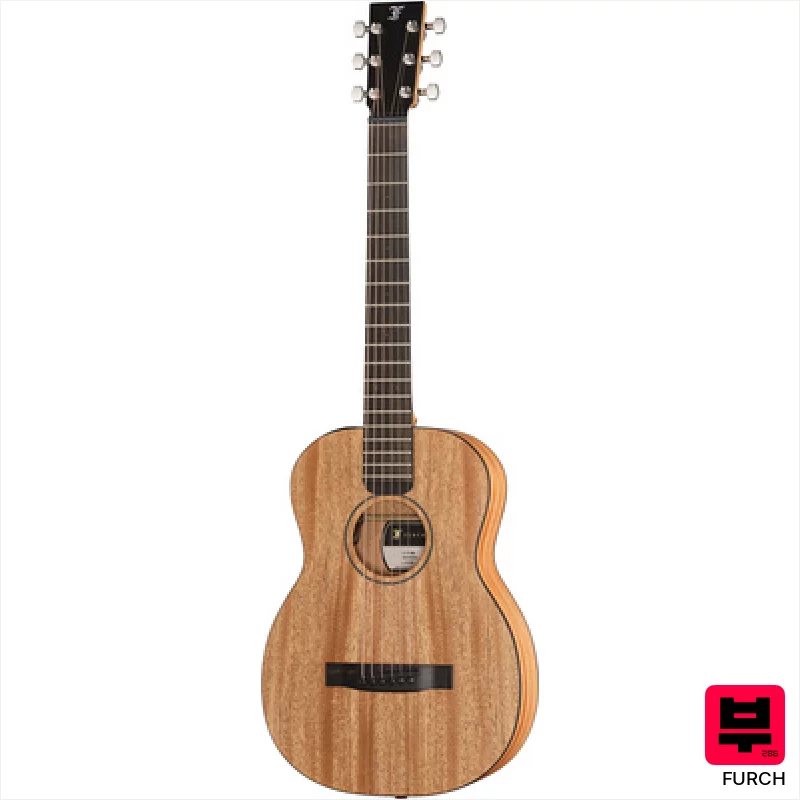
Furch LJ 10-MM EAS-VTC Little Jane
- • Solid mahogany construction delivers a warm, focused, and surprisingly resonant tone.
- • L.R. Baggs EAS-VTC system provides a natural amplified sound with excellent feedback rejection.
- • Ebony fingerboard and bridge offer exceptional clarity and sustain for precise playing.
- • Compact size and locking tuners make it exceptionally travel-friendly and reliably in tune.
- • Mahogany body limits tonal versatility; less bright than spruce-topped guitars.
- • Smaller body size sacrifices some projection and low-end response compared to full-size guitars.
- • Premium-priced for a travel guitar, requiring careful consideration of budget.
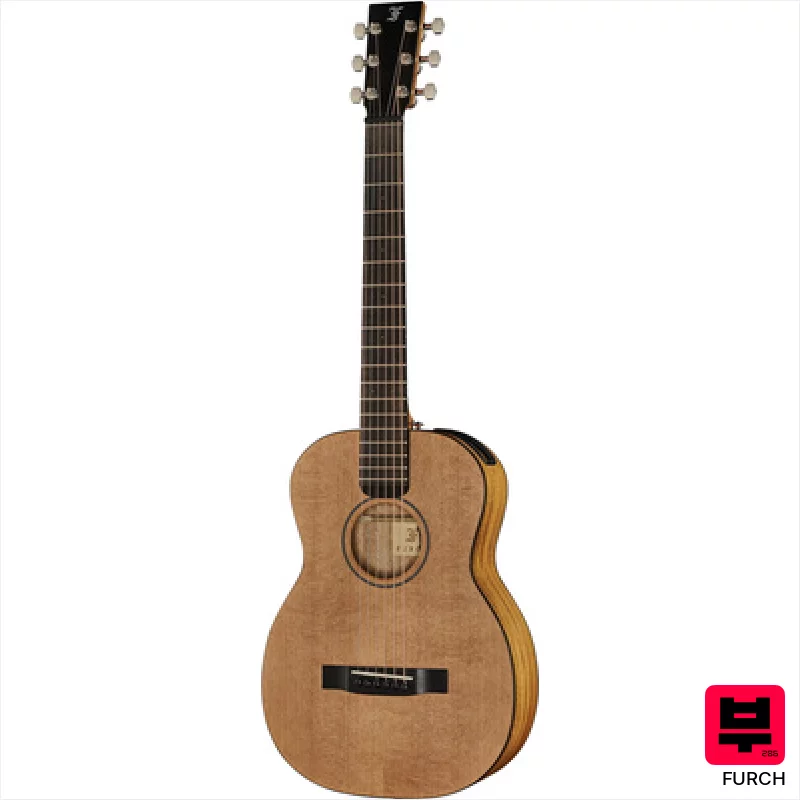
Furch LJ-10-CM LH w/EAS-VTC
- • Solid cedar top delivers a warm, responsive, and articulate voice.
- • Mahogany back and sides provide a focused, woody resonance.
- • LR Baggs EAS-VTC pickup system offers clear amplified tone with excellent feedback rejection.
- • Czech craftsmanship ensures exceptional build quality and attention to detail.
- • Foldable design, while convenient, slightly compromises overall resonance compared to full-size guitars.
- • Ebony fingerboard, while luxurious, may feel a bit harder than rosewood for some players.
- • Limited body size restricts low-end response for very bass-heavy playing styles.
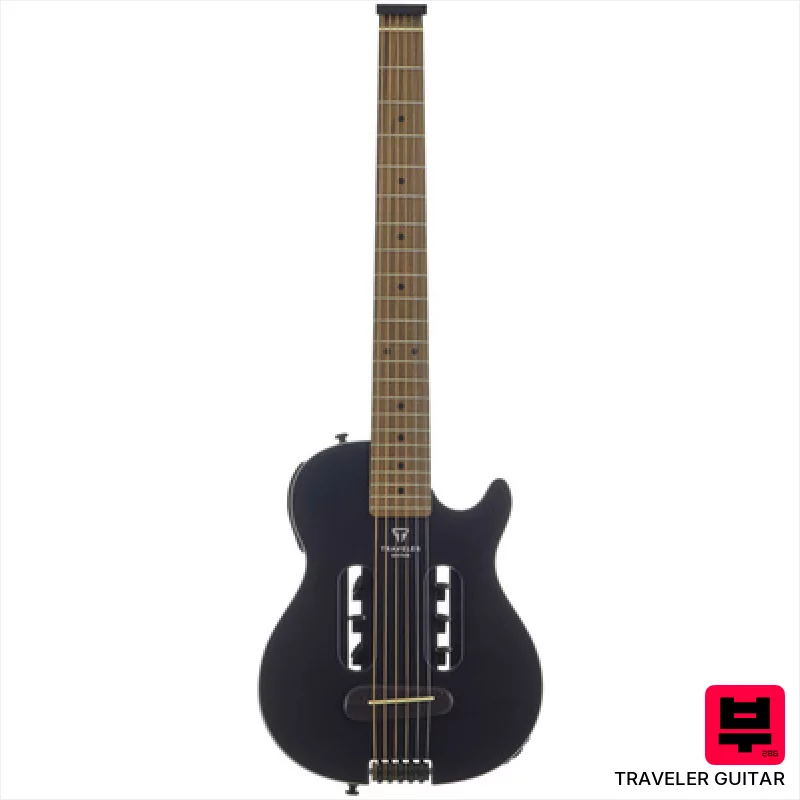
Traveler Guitar Escape Mark III Steel BK Satin
- • Mahogany body delivers a warm, focused acoustic tone with good sustain.
- • Shadow Nanoflex pickup system captures surprisingly natural amplified sound.
- • Built-in tuner and headphone amp offer silent practice convenience.
- • Compact size and lightweight design (1.9kg) make it truly travel-friendly.
- • The 9.5” fingerboard radius might feel a little flat for players accustomed to vintage necks.
- • While capable, the onboard EQ is basic and lacks nuanced tonal shaping.
- • The shorter 25.5” scale impacts string tension, affecting lower-register response.
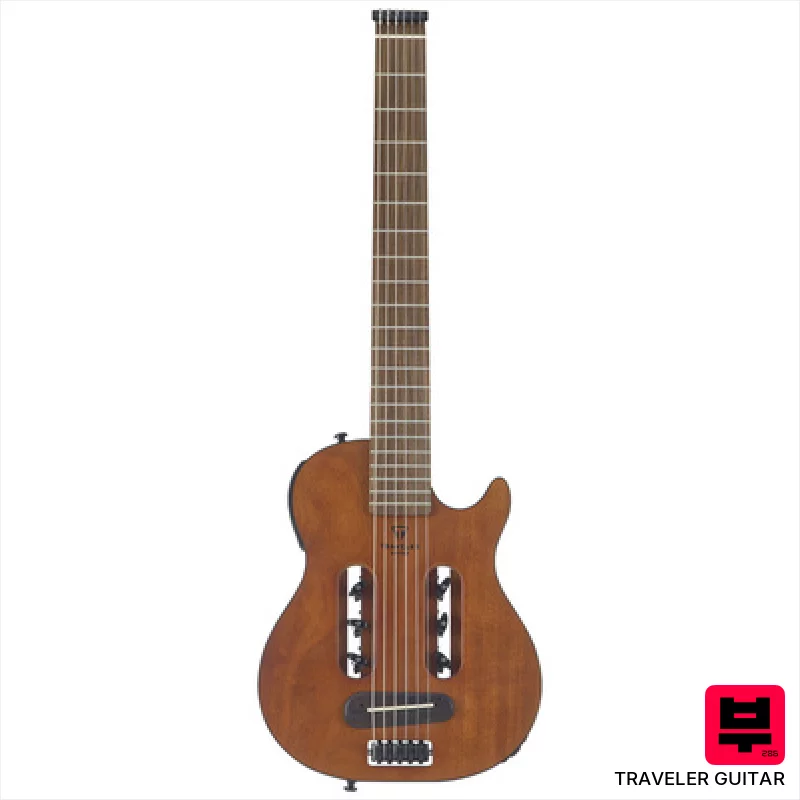
Traveler Guitar Escape Mark III Nylon Natural
- • Mahogany body delivers a warm, resonant acoustic tone.
- • Shadow Nanoflex pickup captures a surprisingly natural amplified sound.
- • Integrated tuner and preamp offer convenient practice and performance features.
- • Compact design and gig bag make it ideal for travel and limited spaces.
- • Open-gear tuners aren't as precise as sealed tuners, potentially impacting tuning stability.
- • Bolt-on neck, while practical, lacks the sustain of a set neck.
- • Flat fingerboard might not appeal to players accustomed to more rounded profiles.
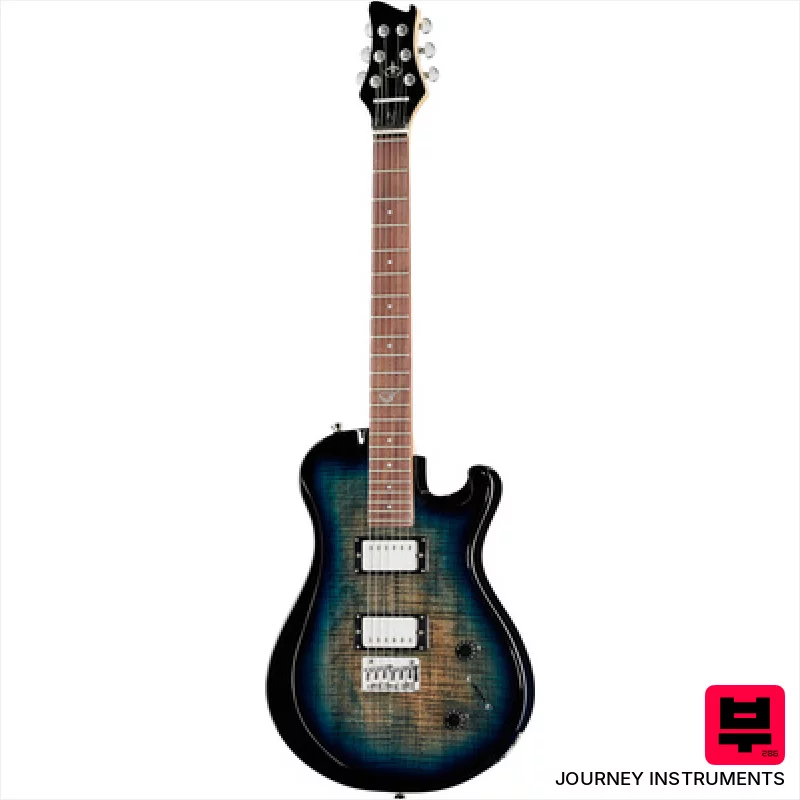
Journey Instruments OE990BL Travel El. Guitar FB
- • Flame maple top adds visual flair and a touch of brightness
- • Richlite fingerboard offers a consistently smooth playing experience
- • Humbucker/coil-split versatility covers blues, rock, and more
- • Compact design and backpack make travel incredibly convenient
- • Poplar body can lack the sustain of more premium tonewoods
- • Shorter scale length impacts low-end response compared to full-size guitars
- • Detachable neck, while innovative, may feel less stable to some players
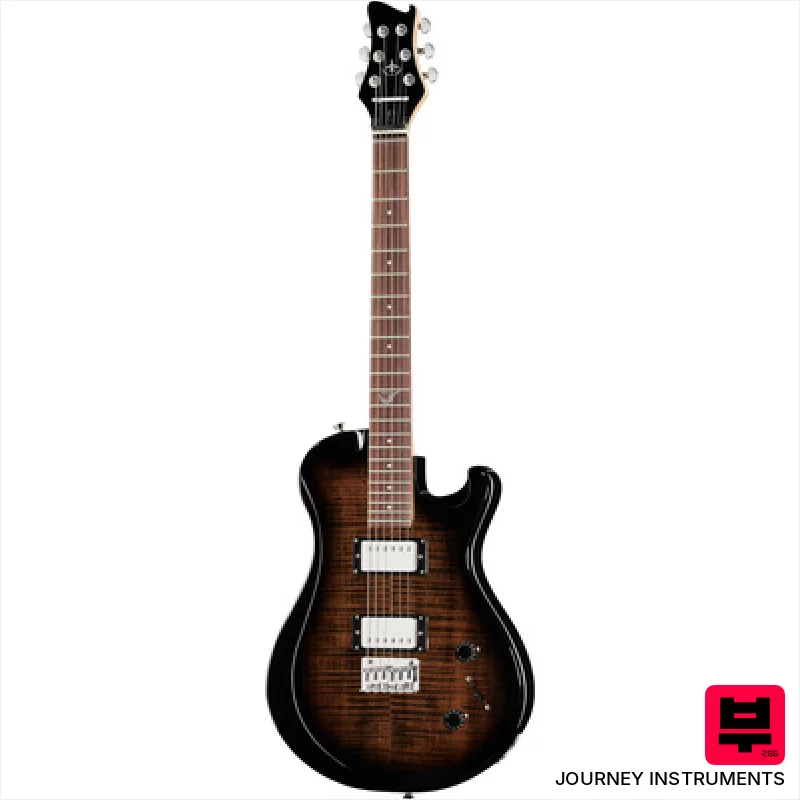
Journey Instruments OE990BK Travel El. Guitar BK
- • Flame maple top adds a touch of class and visual appeal
- • Richlite fingerboard offers a smooth, consistent playing surface
- • Humbucker/coil split versatility covers blues, rock, and jazz tones
- • Compact design and backpack make travel incredibly convenient
- • Poplar body lacks the resonance of mahogany or alder
- • Short scale length limits low-end extension and string tension
- • Detachable neck, while innovative, may require careful handling and maintenance
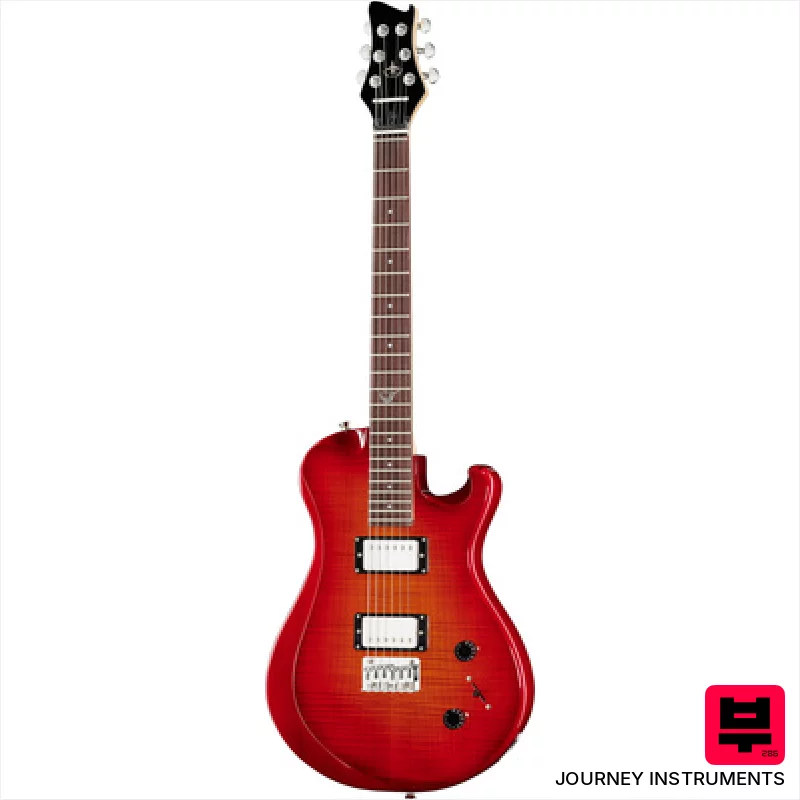
Journey Instruments OE990CB Travel El. Guitar CB
- • Flamed maple top adds visual appeal and subtle warmth
- • Richlite fretboard offers a stable, smooth playing surface
- • Humbucker/coil-split versatility covers blues, rock, and more
- • Journey locking tuners ensure accurate, reliable tuning stability
- • Poplar body can sound a bit 'plain' compared to mahogany or ash
- • Shorter 25in scale limits low-end extension and sustain
- • Collapsible design adds complexity, potentially impacting long-term durability

Journey Instruments OF882C Acacia Acoustic
- • Acacia top/back delivers a surprisingly warm, resonant tone for its size.
- • Detachable neck is genuinely clever and secure; travel is incredibly convenient.
- • Carbon-reinforced mahogany neck provides excellent stability and minimal flex.
- • EP001K pickup system offers a usable amplified tone without being overly bright.
- • Acacia, while pleasant, lacks the complexity of more premium tonewoods like mahogany or rosewood.
- • The shorter scale length might feel cramped for players with larger hands or longer fingers.
- • While compact, the overall weight is noticeable when carrying for extended periods.

Furch LJ 10-MM Mahogany Little Jane
- • Solid mahogany construction delivers a warm, focused, and woody tone.
- • Ebony fingerboard and bridge offer excellent clarity and sustain.
- • Folding design is remarkably stable and surprisingly playable for a travel guitar.
- • Czech Republic craftsmanship ensures high build quality and attention to detail.
- • Mahogany's tonal character might lack the brightness preferred by some players.
- • Folding mechanism, while clever, adds slight complexity and potential fragility.
- • Smaller body size limits projection and low-end response compared to full-size guitars.
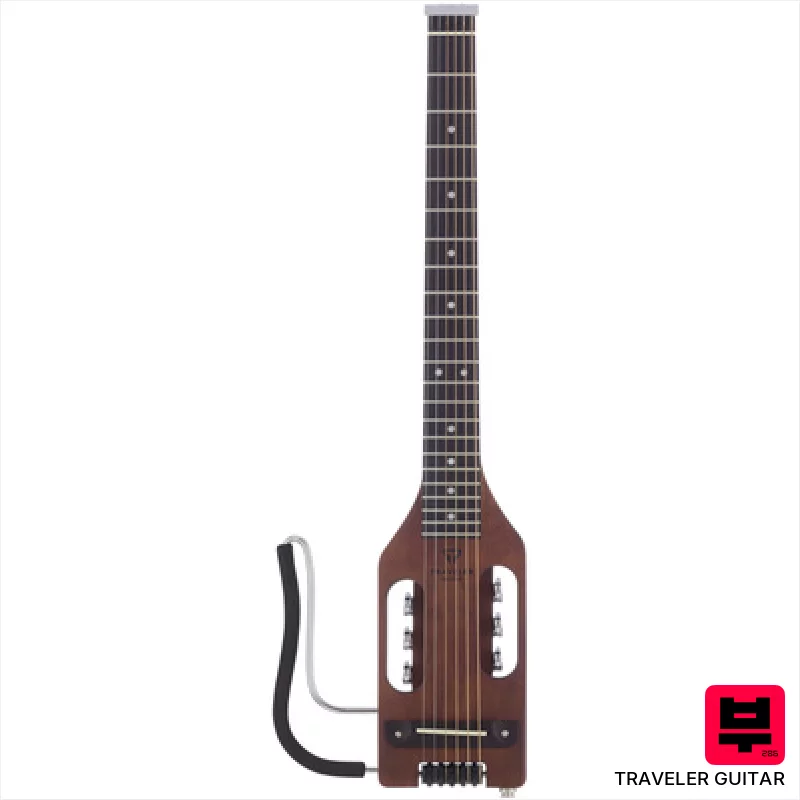
Traveler Guitar Ultra-Light Acoustic Lefty AB
- • Maple body offers bright, focused acoustic tone with good projection.
- • Neck-thru design enhances sustain and provides comfortable access across the fretboard.
- • Passive piezo pickup delivers surprisingly usable amplified sound for travel.
- • Compact size and light weight (1.3kg) make it incredibly portable and convenient.
- • Black walnut fingerboard can feel slightly harder than rosewood or ebony.
- • Passive piezo pickup lacks the warmth and nuance of more advanced systems.
- • Shorter 24.75” scale limits low-end response compared to full-size guitars.

Journey Instruments OEB990BK Travel Bass BK
- • Solid poplar body delivers a surprisingly warm, resonant low-end.
- • Maple neck with a comfortable medium-U profile plays very well.
- • Split coil neck pickup offers a usable, mellow tone for versatility.
- • Locking tuners and through-body string guide enhance tuning stability on the road.
- • Passive electronics limit tonal shaping options compared to active basses.
- • At 3.5kg, it's heavier than many other travel basses, especially when packed.
- • Solid poplar, while decent, isn’t a premium tonewood like mahogany or ash.
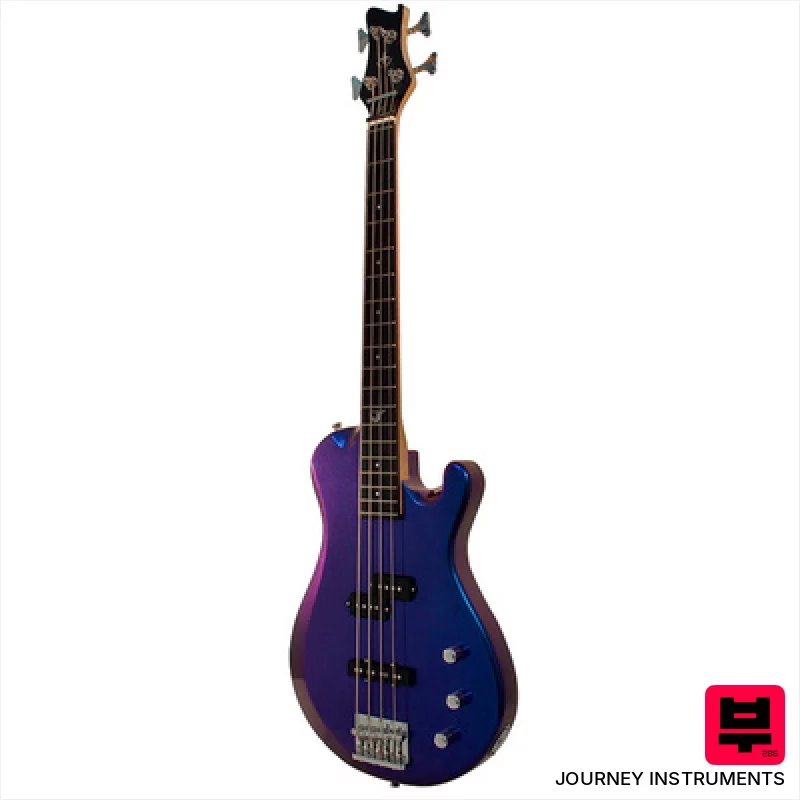
Journey Instruments OEB990B Travel Bass BP
- • Poplar body offers a surprisingly resonant and warm tonal foundation.
- • 16” radius fingerboard provides comfortable playability, especially for smaller hands.
- • Split coil neck pickup delivers a thick, usable low-end for varied tones.
- • Journey’s 18:1 locking tuners ensure stable tuning even with frequent travel.
- • 3.5kg weight, while reasonable, can be fatiguing during longer playing sessions.
- • Passive electronics limit tonal sculpting options compared to active basses.
- • 762mm scale length might feel slightly cramped for players accustomed to longer scales.
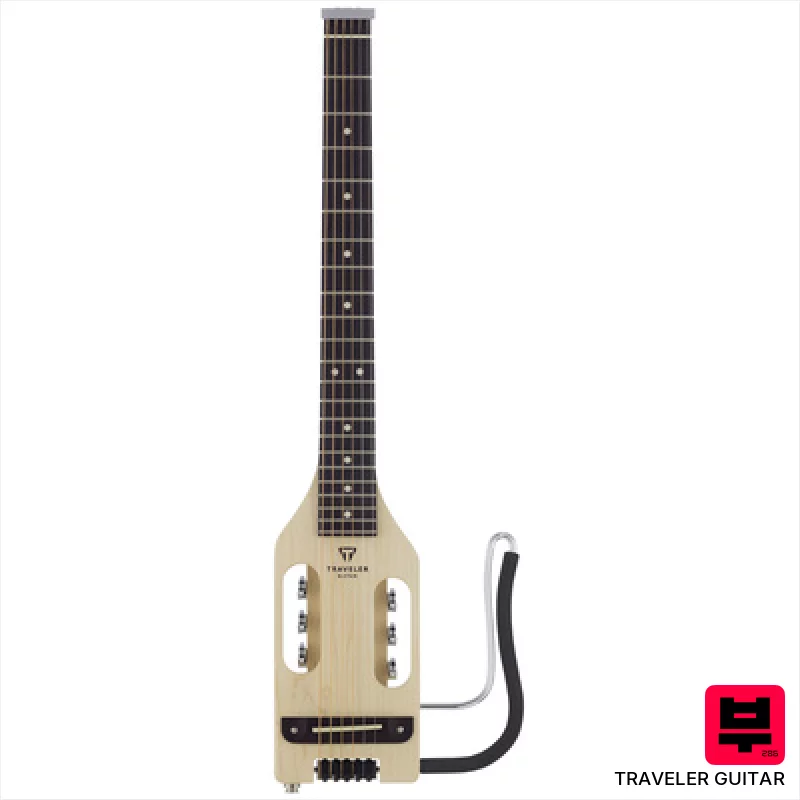
Traveler Guitar Ultra Light Acoustic Maple
- • Maple body delivers a bright, articulate tone with surprising sustain
- • Compact scale (24.75 in) simplifies chords and offers comfortable playability
- • Under-saddle piezo pickup provides usable amplified sound for basic performance
- • Sealed machine heads ensure stable tuning, a welcome touch for a travel guitar
- • Maple's brightness can sound thin without careful EQ or playing style adjustments
- • Under-saddle pickups often lack the nuance of more premium acoustic systems
- • Limited body size impacts projection and low-end response compared to full-size guitars
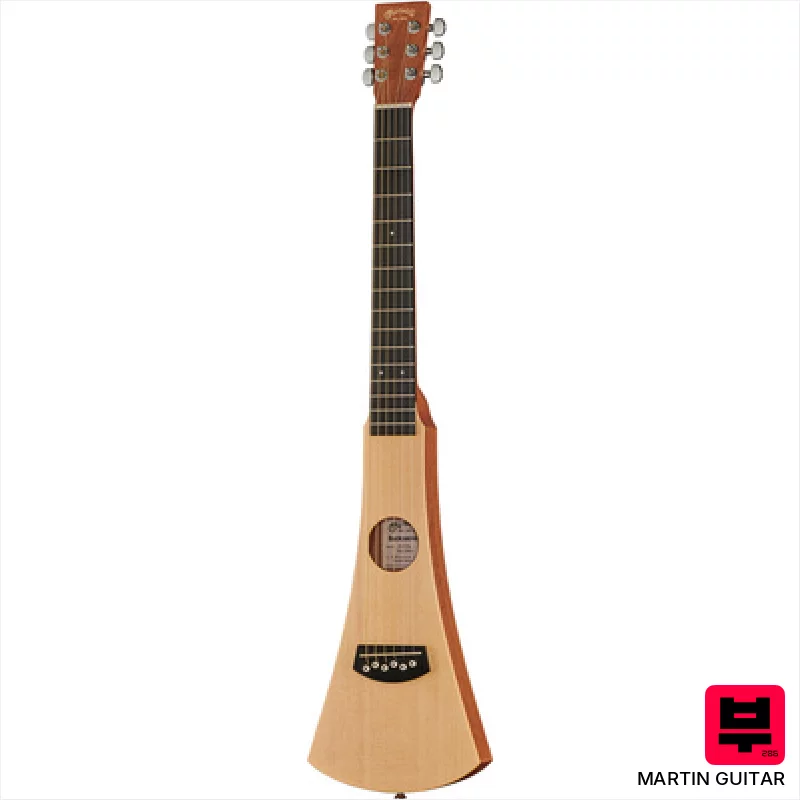
Martin Guitar Steel String Backpacker Guitar
- • Solid spruce top delivers a surprisingly rich, balanced tone.
- • Sapele back and sides offer warmth and projection for its size.
- • Richlite fingerboard provides a smooth, consistent playing surface.
- • Compact design and gig bag make it genuinely travel-friendly.
- • Shorter scale length limits low-end response and string tension.
- • 15 frets restrict upper register access for more advanced players.
- • Sapele’s appearance can be a bit plain compared to more figured woods.
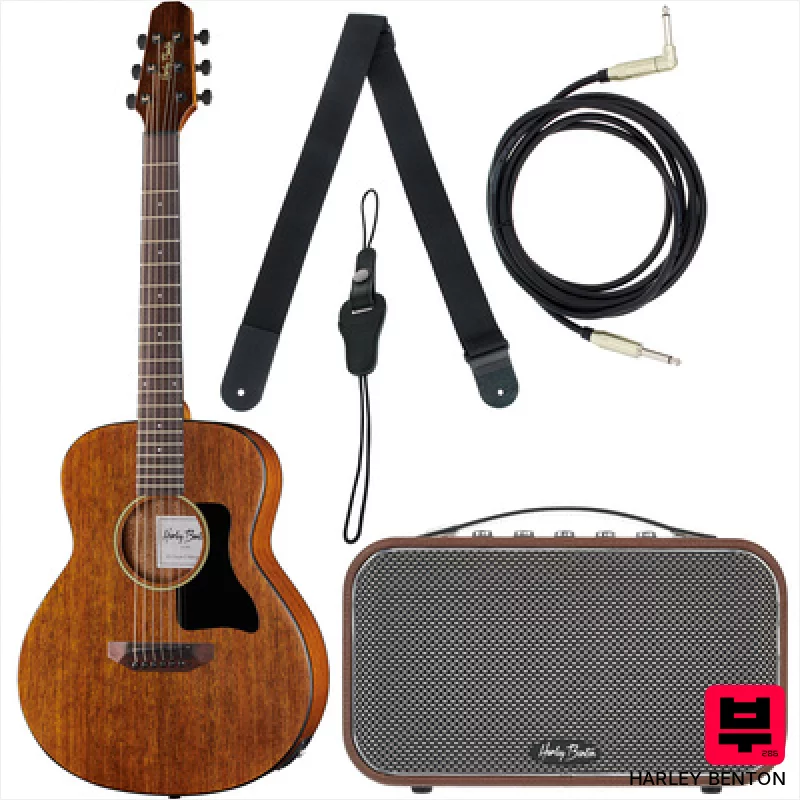
Harley Benton GS-Travel-E Mahogany Bundle
- • Mahogany body delivers a warm, focused tone with pleasant overtones.
- • HB-03 preamp and tuner offer convenient amplified performance and tuning.
- • Purple heart fingerboard provides a smooth, fast playing experience.
- • Compact size and gig bag make it genuinely travel-friendly and portable.
- • The shorter scale length limits low-end response and string tension.
- • Nato neck, while stable, lacks the premium feel of mahogany or maple.
- • Integrated electronics, while convenient, are basic and may limit advanced tonal shaping.
How to Choose the Best Travel Guitars
Size & Weight
Obviously, portability is key. Smaller bodies (parlor, 3/4 size) and lighter woods are crucial, but a tiny guitar can sacrifice sustain and low-end thump. We're looking for a balance.
Neck Profile & Playability
A comfortable neck is everything, especially when you're on the go and not wanting to fight your instrument. A thin, fast neck is great for shredding, but might feel flimsy; a chunkier neck offers stability but can be tiring. It's personal preference, but we'll call out what to expect.
Electronics & Pickup Voicing
Travel guitars often get cheap pickups. We're listening for something that at least offers usable clean tones and a decent breakup without sounding brittle or muddy. Headroom is important - you don't want it fizzing out the second you add a little gain.
Build Quality & Hardware
Cheaper guitars cut corners here - flimsy tuners, weak bridges, questionable bracing. We're checking for stability, tuning accuracy, and overall durability. A guitar that won't stay in tune or falls apart is useless, no matter how good it sounds initially.
Tone & Articulation
Even a travel guitar should have character. We're assessing the overall tonal balance - is there a fat midrange honk? Is the high end sparkly or ice-picky? Does it cut through the mix, or get lost in the mud? Good articulation means you can hear individual notes, even when playing chords.
Buying Guide
At this budget, you're getting a lot of guitar. Expect some compromises - you might not get all-solid woods (laminate tops are common to keep costs down), and hardware upgrades are always a possibility down the road. Don't get hung up on fancy finishes; focus on the neck feel and the overall tone. A well-built, comfortable guitar with decent electronics will always be better than a pretty one that fights you every step of the way.
How This List Is Built
We don't play these instruments — we're a catalog, not a review desk, and we'd rather say so than pretend otherwise. This page ranks 15 travel guitars from the Thomann catalogue, which is the largest single source of specification data in this category.
Position is computed, not curated. Four signals, in order of weight: how completely the manufacturer documents the instrument (number of published specifications), where it sits in the price range, how specific the model designation is — which filters out generic accessories — and whether a product image exists. The same inputs always produce the same order, so nothing here is shuffled to look fresh.
What this list is good for: narrowing a category down to a shortlist by spec and budget. What it isn't: a substitute for hearing an instrument. Before you buy, read hands-on reviews and, where you can, play it. Full methodology.

