AudioFu
AudioFu Chart · October 2026
Best Synthesizer Peripherals for Professional 2026
The top pick is Hammond XPK-250Wmk3 ($4,094). Elektron Analog Heat +FX gives you the most for the money at $1,171. Ranked by the AudioFu Index from 79 models across 29 brands, prices checked every night.
Last updated: October 14, 2026
Top 10
Full detail for the 10 highest AudioFu Index scores. Every other model is listed below.
-
- Weight25 kg
This pedal feels just like the old B-3 and C-3 models you love. It fits many different keyboards and has an expression pedal built right in. It is heavy to carry but works with both old and new gear.
Pros
- Three physical contacts mimic classic B-3 and C-3 pedals perfectly.
- Works with XK-7D, XK-7, XK-5, A-3, and expanded models.
- Integrated EXP-100f expression pedal saves space on the floor.
Cons
- Very heavy at 25 kg makes moving it difficult.
- No power adapter listed in the description.
48AudioFu
IndexStableno change since Aug 17Aug 17$4,094 now$4,094€3,659 at Thomann · in stockCheck price ↗ -
- Weight15.4 kg
The XPK-200GL is a serious upgrade for Hammond organ players wanting a more nuanced and controllable bass experience. Its wooden pedals and integrated sounds give it a unique character, making it ideal for players seeking that classic organ bass foundation without the complexity of a full modular setup. It’s a premium-priced piece of kit aimed at experienced players.
Pros
- Solid wood pedals offer excellent feel and responsiveness.
- Integrated tone generator expands sonic possibilities beyond simple bass.
- MIDI connectivity allows seamless integration with other gear and software.
Cons
- Size and weight make portability a significant challenge for gigging musicians.
- Limited tonal versatility compared to multi-effects or dedicated bass synths.
52AudioFu
IndexStableno change since Aug 14Aug 14$1,644 now$1,644€1,469 at Thomann · in stockCheck price ↗ -
- Weight13.5 kg
The Legend Pedalboard 25 is a beautifully built, dedicated pedalboard designed primarily for Viscount organists seeking authentic Hammond-style expression. It's a premium-priced solution for serious players wanting a robust and responsive pedal foundation, though its specific compatibility limits its broader appeal.
Pros
- Solid wood construction lends excellent stability and resonance
- 25 foot buttons offer a substantial expressive range for organ voicings
- Integrated volume pedal provides seamless dynamic control
Cons
- The large footprint demands significant stage space and transport logistics
- Limited MIDI programmability beyond basic Viscount organ functionality
47AudioFu
IndexStableno change since Aug 14Aug 14$1,677 now$1,677€1,499 at Thomann · in stockCheck price ↗ -
- Weight5.1 kg
The Sherman Filterbank 2 Dual Rack is a powerhouse for sound design and experimental music. It’s a serious piece of kit, offering a unique, warm, and characterful filtering experience that's a throwback to classic analog designs – perfect for electronic musicians, film composers, and anyone wanting to sculpt truly individual sounds.
Pros
- Dual-channel design doubles sonic possibilities and creative routing.
- Analog filters deliver a thick, resonant character; truly vintage warmth.
- Harmonics switch provides unique harmonic relationships for complex textures.
Cons
- The interface can feel overwhelming initially; steep learning curve for newcomers.
- Rack format limits portability; requires dedicated rack space and power.
48AudioFu
Index↓ 0.7%since Aug 14 · lowest so far$1,655 · Aug 14$1,644 now$1,644€1,469 at Thomann · in stockCheck price ↗ -
- Weight1.5 kg
The Analog Heat +FX is a powerhouse for anyone wanting to inject serious analog character into their sound. It's a fantastic tool for sound design, adding grit and movement, and generally making your tracks feel more alive – especially great for electronic music producers and those seeking unique textures.
Pros
- The 8-Fold distortion circuits deliver incredibly thick, saturated analog warmth.
- Assignable LFOs and envelope follower offer deep, dynamic modulation possibilities.
- Robust build quality with precise encoders inspires confident, tactile workflow.
Cons
- The complex routing can be overwhelming for users unfamiliar with Elektron's workflow.
- Limited input gain range might require pre-amplification for weaker signals.
65AudioFu
Index↓ 4.7%since Aug 14 · lowest so far$1,230 · Aug 14$1,171 now$1,171€1,047 at Thomann · in stockCheck price ↗ -
The Schrittmacher Black is a serious sequencing powerhouse for experimental electronic musicians and sound designers. It’s a complex machine, but if you’re looking for unparalleled control over your sequences – note, velocity, gate, and beyond – and aren't afraid to dive deep, this is an incredible tool. It’s best suited for studio environments where its size and depth can be fully exploited.
Pros
- 32 parameter lines offer incredible sequencing depth and complexity.
- Rotary encoders with print functionality drastically improve workflow and precision.
- Playback modes like PingPong and Random introduce dynamic, evolving sequences.
Cons
- The 240x128 display, while backlit, could benefit from higher resolution for intricate editing.
- The learning curve is steep; mastering the parameter linking takes dedicated time and practice.
30AudioFu
IndexStableno change since Aug 14Aug 14$1,508 now$1,508€1,348 at Thomann · in stockCheck price ↗ -
Oxi Instruments One MKII MIDI / CV Sequencer
One MKII Black Edition · OXI Instruments
16 for sale on Reverb1 finish at Thomann
The OXI Instruments One MKII Black Edition is a powerhouse for electronic musicians and experimental sound designers. Its eight independent sequencers, coupled with the granular control over each step, lets you create incredibly intricate and evolving patterns. If you crave a hands-on, deeply interactive sequencing experience beyond a standard DAW, this is a fantastic tool to explore.
Pros
- Black Edition finish elevates aesthetics and perceived value
- Eight sequencers offer immense creative routing possibilities
- Deep modulation options allow for complex, evolving soundscapes
Cons
- Steep learning curve for users unfamiliar with step sequencing concepts
- Limited polyphony in Poly mode might restrict some users
51AudioFu
IndexStableno change since Aug 14Aug 14$1,006 now$1,006€899 at Thomann · in stockCheck price ↗ -
- Weight7.7 kg
The XPK-130G is a clever little unit for organists and keyboard players wanting a dedicated, expressive bass pedal without hauling around a full bass rig. It’s a premium-priced solution, but the integrated sounds and MIDI capabilities make it a solid choice for live performance or studio work where space is at a premium.
Pros
- Solid build quality with robust metal pedal and casing.
- Integrated tone generator provides surprisingly usable bass sounds.
- Touch-sensitive pedal offers expressive playing capabilities.
Cons
- The 13-tone range is limited for extended basslines and experimentation.
- Relatively heavy for a pedal, portability is somewhat compromised.
48AudioFu
IndexStableno change since Aug 14Aug 14$995 now$995€889 at Thomann · in stockCheck price ↗ -
- Weight3.8 kg
The Sherman Filterbank 2 is a powerhouse for sound design and experimental music. Its dual filters and extensive modulation options let you craft truly unique and evolving sounds—perfect for electronic musicians, sound designers, and anyone wanting to add serious character to their synths. It's a complex tool, but the sonic rewards are massive.
Pros
- Dual filters deliver incredibly rich, complex harmonic textures.
- Harmonics switch allows for unique, musical filter interactions.
- Overdrive circuit adds grit and warmth for aggressive sounds.
Cons
- Steep learning curve due to extensive parameter options.
- The unit's size and weight make it less portable for gigging.
-
- Weight4.4 kg
The Sherman Filterbank 2 is a powerhouse for anyone wanting seriously sculpted, evolving sounds. It's not a simple effect – it's a sound design playground. Perfect for experimental electronic musicians, soundtrack composers, or anyone who wants to add a unique analog character to their synth patches.
Pros
- Dual analogue filters deliver incredibly rich, complex textures.
- Harmonics switch allows for uniquely musical filter interactions.
- Flexible modulation options – LFO, FM, AM – inspire creative sound design.
Cons
- Limited preset storage can be frustrating for live performance needs.
- Steep learning curve; mastering the modulation matrix takes time and effort.
All 79 synthesizer peripherals
Same index, same nightly prices — compact. Colour options of one model share a row. Tap a photo to zoom.
- 11
Sherman Filterbank 2 CompactSherman39↑ 9.2%$927€829$927€829Check ↗
- 12
OXI Instruments One MKII NostalgiaOXI Instruments31Stable$983€879$983€879Check ↗
- 13
Soma Laboratory Cosmos Drifting Memory StationCosmos Blue · SOMA · 2 finishes60↑ 19.3%$878€785$878€785Check ↗
- 14
Erica Synths Acidbox IIIErica Synths59Stable$514€459$514€459Check ↗
- 15
Erica Synths Zen DelayErica Synths58↓ 6.1%$625€559$625€559Check ↗
- 16
Dreadbox DarknessDreadbox73Stable$285€255$285€255Check ↗
- 17
Make Noise 0-Coast Patchable Synthesizer0-Ctrl · Make Noise56Stable$502€449$502€449Check ↗
- 18
Erica Synths Desktop Matrix MixerMatrix Mixer · Erica Synths53Stable$613€548$613€548Check ↗
- 19
Dtronics DT-1000Dtronics49Stable$558€499$558€499Check ↗
- 20
Erica Synths RazornatorErica Synths49Stable$614€549$614€549Check ↗
- 21
Erica Synths Resonant FilterbankErica Synths49Stable$842€753$842€753Check ↗
- 22
Jomox Moonwind MKIIJomox49↓ 5.9%$894€799$894€799Check ↗
- 23
Korg SQ-64 Polyphonic SequencerSQ-64 · Korg67↓ 3.1%$248€222$248€222Check ↗
- 24
Crumar Lower Manual Mojo 61 MK2Crumar47Stable$648€579$648€579Check ↗
- 25
Viscount Legend LM 61Viscount47Stable$771€689$771€689Check ↗
- 26
Viscount Legend LM 73Viscount47Stable$872€779$872€779Check ↗
- 27
Expressive E Touché SE USB Control SurfaceTouché · Expressive E · 2 finishes49Stable$435€389$435€389Check ↗
- 28
Tube Amp Manufactur Organ DriveTube Amp Manufactur45Stable$536€479$536€479Check ↗
- 29
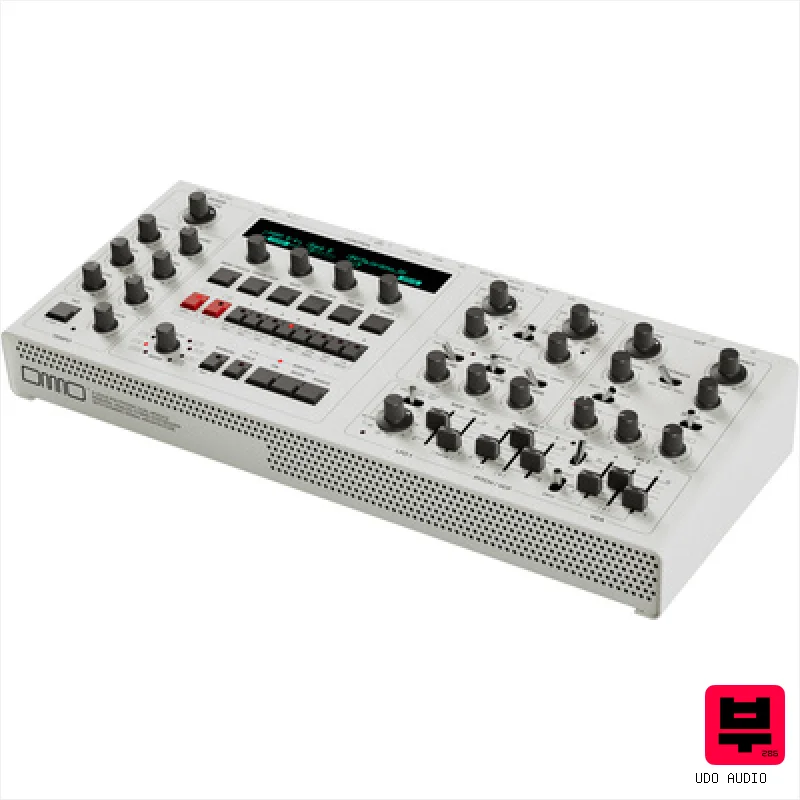
UDO Audio DMNO ONM-1UDO Audio45Stable$860€769$860€769Check ↗
- 30
Dtronics DT-800Dtronics49Stable$413€369$413€369Check ↗
- 31
Dreadbox KomorebiDreadbox64Stable$211€189$211€189Check ↗
- 32
Dtronics DT-RDX-V2Dtronics50↓ 1.7%$379€339$379€339Check ↗
- 33
SOMA Cosmos Rust EditionSOMA42↑ 16.0%$894€799$894€799Check ↗
- 34
Vermona Filter LancetVermona46Stable$424€379$424€379Check ↗
- 35
Vermona Action Filter 4Vermona46Stable$423€378$423€378Check ↗
- 36
Dtronics DT-81ZDtronics49Stable$379€339$379€339Check ↗
- 37
Dtronics DT-300 V2Dtronics49Stable$379€339$379€339Check ↗
- 38
Dtronics DT-200 V3Dtronics49Stable$335€299$335€299Check ↗
- 39
Endorphin.es Evil PetEndorphin.es36Stable$536€479$536€479Check ↗
- 40
Elektron Outbox 8Elektron46Stable$335€299$335€299Check ↗
- 41
Melbourne Instruments Roto-ControlMelbourne Instruments34↓ 6.4%$475€425$475€425Check ↗
- 42
Erica Synths XenodriveErica Synths34Stable$614€549$614€549Check ↗
- 43
Dtronics DT-303Dtronics49Stable$290€259$290€259Check ↗
- 44
Crumar Double BackCrumar47Stable$312€279$312€279Check ↗
- 45
Crumar BurnCrumar48↓ 1.9%$288€257$288€257Check ↗
- 46
Dreadbox KinematicDreadbox55Stable$199€178$199€178Check ↗
- 47
Melbourne Instruments Roto-Control Bitwig EditionMelbourne Instruments31Stable$558€499$558€499Check ↗
- 48
Bastl Instruments Thyme+Bastl Instruments31Stable$659€589$659€589Check ↗
- 49
SOMA Utilities (Screw)SOMA31↑ 8.4%$435€389$435€389Check ↗
- 50
SOMA Utilities (Pin)SOMA27↑ 16.6%$599€535$599€535Check ↗
- 51
SOMA Ornament-8SOMA27↑ 16.1%$894€799$894€799Check ↗
- 52
Rodec ONE + Ministyler BundleRodec26↑ 4.3%$816€729$816€729Check ↗
- 53
TEControl USB MIDI Breath & Bite ControlTEControl33Stable$357€319$357€319Check ↗
- 54
SOMA IlluminatorSOMA27↑ 21.9%$379€339$379€339Check ↗
- 55
Jomox T-Resonator MkIIJomox31Stable$312€279$312€279Check ↗
- 56
Leaf Audio Microphonic Soundbox MKIILeaf Audio33Stable$279€249$279€249Check ↗
- 57
Korg SQ-1 Step SequencerSQ-1 · Korg43↑ 4.6%$129€115$129€115Check ↗
- 58
SOMA Breakout BoxSOMA35Stable$223€199$223€199Check ↗
- 59
Lounsberry Pedals TFP-1 Tall & FatLounsberry Pedals31Stable$256€229$256€229Check ↗
- 60
Lounsberry Pedals OGO-1 Organ GrinderLounsberry Pedals31Stable$256€229$256€229Check ↗
- 61
ADDAC Mixology PedalADDAC30Stable$267€239$267€239Check ↗
- 62
Otamatone Techno WhiteOtamatone · 2 finishes42Stable$111€99$111€99Check ↗
- 63
Korg Nu:Tekt NTS-3Korg35↓ 6.6%$173€155$173€155Check ↗
- 64
TEControl USB MIDI Breath ControllerTEControl33Stable$196€175$196€175Check ↗
- 65
Bastl Instruments Kastle 2 FX WizardBastl Instruments31Stable$211€189$211€189Check ↗
- 66
TEControl Analog Breath ControllerTEControl33Stable$156€139$156€139Check ↗
- 67
Leaf Audio Microphonic PlaygroundLeaf Audio33Stable$111€99$111€99Check ↗
- 68
Roland WC-1 Wireless AdapterRoland30Stable$111€99$111€99Check ↗
- 69
Teenage Engineering EP-40 Riddim Supertone with EP-2350 Ting FX…EP-2350 Ting · Teenage Engineering · 2 finishes51Stable$62€55$62€55Check ↗
- 70
Otamatone Classic YellowOtamatone · 5 finishes49Stable$32€29$32€29Check ↗
- 71
Otamatone Melody BlueOtamatone · 4 finishes47Stable$21€19$21€19Check ↗
- 72
Otamatone Classic Crystal Clear BlueOtamatone · 2 finishes42Stable$39€35$39€35Check ↗
- 73
Otamatone Neo WhiteOtamatone · 2 finishes42Stable$50€45$50€45Check ↗
- 74
Otamatone Deluxe WhiteOtamatone · 2 finishes42Stable$88€79$88€79Check ↗
- 75
Otamatone Classic Hello KittyOtamatone37Stable$44€39$44€39Check ↗
- 76
Otamatone Classic Pac-ManOtamatone37Stable$50€45$50€45Check ↗
- 77
TEControl USB MIDI Pedal ControllerTEControl33Stable$92€82$92€82Check ↗
- 78
Leaf Audio Add-On Pack 2Leaf Audio20Stable$22€20$22€20Check ↗
- 79
Leaf Audio Add-On Pack 1Leaf Audio20Stable$28€25$28€25Check ↗
Synthesizer Peripherals by the numbers
Measured across all 94 models we track, not a sample.
Median $357 — half of all synthesizer peripherals here cost less.
median of 40 models · 0.13 kg–13.5 kg
How to choose the best synthesizer peripherals
Aftertouch Controllers
Essential for expressive, nuanced playing. Professional players need polyphonic aftertouch - think subtle vibrato on individual notes, evolving filter sweeps, or complex modulation sequences triggered by finger pressure. Cheap aftertouch feels like a gimmick; good aftertouch becomes an extension of your musicality.
Modular MIDI Interfaces
Forget basic MIDI-USB conversion. You need something that handles multiple MIDI channels, bi-directional communication, and ideally, DIN-to-USB conversion for older gear. A robust interface prevents MIDI dropouts and latency headaches, especially in complex setups with multiple synths and effects.
Expression Pedals
Beyond simple volume swells, expression pedals are your gateway to real-time manipulation of filter cutoff, LFO rate, or even complex patch changes. A pedal with a wide range and good responsiveness is crucial for dynamic performance - and a cheap pedal will feel unresponsive and fight you.
Ribbon Controllers
These offer a unique tactile experience, allowing for portamento, pitch bends, and expressive timbral changes that are impossible with a keyboard. While the learning curve can be steep, the sonic possibilities are vast, particularly for sound design and experimental textures. The feel is everything - a rubbery, lifeless ribbon is frustrating to use.
Custom MIDI Controllers
While dedicated MIDI keyboards are great, a custom controller - think knobs, sliders, buttons - tailored to your specific synth workflow can drastically improve efficiency and creativity. This isn't about flashy aesthetics; it's about ergonomic design and intuitive access to your most-used parameters.
Buying guide
Let's be honest, you're not chasing presets. You're sculpting sound, building patches from the ground up, and demanding real-time control over complex modulation. That means your synth peripherals need to keep pace. This isn't about a cheap USB MIDI cable; it's about expanding your creative toolkit and unlocking the full potential of your synths - and it's surprisingly easy to overlook these essential pieces.
Don't be swayed by flashy marketing. Professional peripherals are an investment, and you're paying for reliability, build quality, and nuanced control. Beware of cheap MIDI interfaces that introduce latency or drop MIDI signals - those problems are brutal on stage.
Spend the extra money on aftertouch that actually feels responsive, and prioritize build quality; a flimsy controller will fall apart under gigging conditions.
How the AudioFu Index works
Five measured signals and nothing else — no stars from strangers, no “tested by experts” we didn’t do. The weights are fixed and public. We don’t play these instruments; we measure the market around them.
This chart covers 94 synthesizer peripherals from the Thomann catalogue. Before you buy, read hands-on reviews and, where you can, play it. Full methodology.
AudioFu earns a commission when you buy through our Thomann links. It never changes the order — the index does.
- Demand40%
How many of this exact model are for sale on Reverb right now — what musicians actually buy and resell.
- Lineup20%
How many finishes Thomann stocks — makers expand the models that sell.
- Price15%
Where the price has moved since we started tracking in August.
- Specs15%
How completely the maker documents it.
- Maker10%
How deep the brand’s range is in this category.
Questions
What's the difference between a MIDI interface and a USB MIDI cable?
A simple USB MIDI cable just transmits MIDI data. A MIDI interface handles more complex tasks like converting DIN connectors, managing multiple channels, and often offers lower latency. Think of it as the difference between a garden hose and a sophisticated irrigation system.
Do I really need polyphonic aftertouch?
If you're just playing simple pads and basslines, maybe not. But for anything involving complex melodies, evolving textures, or expressive solos, polyphonic aftertouch is a game-changer. It's the difference between playing a keyboard and sculpting sound.
How important is latency?
Latency is everything. Even a few milliseconds of delay can ruin your timing and feel, especially when playing fast or using real-time modulation. Invest in a quality interface and keep your MIDI routing as direct as possible.
Can I use a standard guitar pedal as an expression pedal?
Technically, yes, but most guitar pedals aren't designed for the wide voltage range and smooth responsiveness required for synth control. Dedicated expression pedals offer better control and often include features like polarity inversion and range adjustment.
Are custom MIDI controllers worth the cost?
If you're spending hours tweaking parameters, absolutely. A well-designed custom controller can significantly streamline your workflow and unlock new creative avenues. But be honest about your needs - don't buy something just because it looks cool.