AudioFu
AudioFu Chart · October 2026
Best Synthesizer Peripherals for Intermediate 2026
The top pick is Dreadbox Darkness ($285). Dreadbox Komorebi gives you the most for the money at $212. Dtronics DT-RDX-V2 leads the high end. Ranked by the AudioFu Index from 79 models across 29 brands, prices checked every night.
Last updated: October 15, 2026
Top 10
Full detail for the 10 highest AudioFu Index scores. Every other model is listed below.
-
- Weight0.5 kg
The Dreadbox Darkness is a surprisingly capable reverb, especially if you're into experimental sound design. Its shimmer and gated effects add a ton of character, and the freeze function is a real game-changer for creating evolving soundscapes. It's perfect for synth players and electronic musicians wanting a unique and affordable reverb solution.
Pros
- Exceptional 32-bit conversion delivers pristine audio clarity
- Gated shimmer creates unique, ethereal textures easily
- Freeze function is genuinely useful for atmospheric pads
Cons
- Power supply not included feels like a cost-cutting measure
- Limited modulation options beyond spread parameter
73AudioFu
IndexStableno change since Aug 14Aug 14$285 now$285€255 at Thomann · in stockCheck price ↗ -
- Weight1 kg
The SQ-64 is a fantastic little sequencer for anyone wanting to add some rhythmic spice to their setup. It’s particularly well-suited for electronic musicians, experimental sound designers, or anyone looking to expand their melodic and rhythmic possibilities without a massive, complicated system. It's a creative powerhouse in a surprisingly compact package.
Pros
- Aluminum housing feels robust, hinting at Korg’s build quality.
- Polyphonic sequencing offers significantly more creative flexibility than basic sequencers.
- The OLED display is crisp and readable, even in dimly lit environments.
Cons
- Limited CV outputs might bottleneck complex modular setups.
- The 64-key matrix, while illuminated, can feel cramped for extended use.
67AudioFu
Index↓ 3.1%since Aug 14 · lowest so far$256 · Aug 14$249 now$249€222 at Thomann · in stockCheck price ↗ -
- Weight0.525 kg
The Komorebi is a really neat little analog chorus/flanger. Its BBD circuit gives it a lush, vintage vibe, and the LFOs and patch points let you go way beyond simple chorus. It's a sweet addition for anyone wanting to add some analog character and modulation to their sound, especially those already playing with modular synths.
Pros
- Analog chorus/flanger warmth, distinct from digital alternatives
- Versatile LFOs add movement and modulation possibilities
- Compact size ideal for pedalboards or small studios
Cons
- Power supply not included, adds to the overall cost
- Limited routing options compared to more complex effects units
64AudioFu
IndexStableno change since Aug 14Aug 14$212 now$212€189 at Thomann · in stockCheck price ↗ -
- Weight0.5 kg
The Kinematic is a seriously cool little box from Dreadbox, offering a surprising amount of sonic flexibility. It’s a fantastic way to add some grit and movement to your synth lines or drum tracks, especially if you're already dipping your toes into modular territory. This is a great tool for experimental electronic musicians and sound designers looking for a compact, character-rich processing option.
Pros
- Dreadbox’s signature analog warmth adds serious character.
- Versatile operation caters to compression, filtering, and envelope effects.
- Patch points unlock modular integration for complex sound design.
Cons
- Limited input gain range can be restrictive for weak signals.
- Power supply not included adds to the overall investment.
55AudioFu
IndexStableno change since Aug 14Aug 14$199 now$199€178 at Thomann · in stockCheck price ↗ -
Expressive E Touché SE USB Control Surface
Touché SE · Expressive E
8 for sale on Reverb2 finishes at Thomann
The Touché SE is a seriously cool little device if you're into experimental sound design or want a deeply expressive way to control your synths. It’s ideal for producers, sound designers, and electronic musicians who want nuanced, tactile control without a full-sized keyboard—just be prepared to invest some time learning its ins and outs.
Pros
- Highly expressive, nuanced control over VST parameters.
- The black plastic surface offers surprisingly good tactile feedback.
- Lié software provides immediate, usable sound design potential.
Cons
- Plastic construction feels less premium than metal alternatives.
- Limited key count restricts its use for full compositions.
55AudioFu
Index↓ 14.9%since Aug 14 · lowest so far$301 · Aug 14$256 now$256€229 at Thomann · in stockCheck price ↗ -
- Weight1.1 kg
The DT-RDX-V2 is a really clever piece of kit if you're deep into the Reface DX ecosystem. It unlocks the full potential of that synth, giving you hands-on control that’s otherwise buried in menus. Perfect for DX enthusiasts wanting a more tactile and expressive performance experience.
Pros
- Direct Reface DX control eliminates menu diving frustration.
- Metal holder provides surprising stability and a premium feel.
- MIDI merging expands connectivity for complex setups.
Cons
- Plastic housing feels somewhat cheap compared to higher-end controllers.
- Limited versatility; solely designed for the Reface DX.
50AudioFu
Index↓ 1.7%since Aug 14 · lowest so far$386 · Aug 14$380 now$380€339 at Thomann · in stockCheck price ↗ -
- Weight0.64 kg
This small pedal gives you four different ways to push your signal through distortion. The automatic pole detection makes it easy to switch modes without thinking too much. It's a solid, sturdy unit that won't fall apart during a gig, and it comes with its own power cord. Perfect for players who want quick, reliable distortion without buying a whole rack.
Pros
- Four distinct distortion types for varied sounds
- Automatic pole detection simplifies operation
- Robust housing built for stage durability
Cons
- No mention of input impedance specs
- Lacks modern MIDI or USB connectivity
49AudioFu
IndexStableno change since Aug 17Aug 17$290 now$290€259 at Thomann · in stockCheck price ↗ -
- Weight0.61 kg
The DT-200 V3 is a fantastic solution for Roland MKS-30, JX-3P, and GR-700 owners looking for deeper control beyond basic MIDI. It’s a well-built, reliable programmer that unlocks specific parameter adjustments these synths deserve, a real boon for serious Roland enthusiasts.
Pros
- Solid metal housing inspires confidence and longevity.
- Dedicated MIDI implementation unlocks nuanced Roland synth control.
- 6-Pin DIN cable included simplifies immediate setup and use.
Cons
- Limited to specific Roland models; lacks universal MIDI programming.
- Power draw solely from connected device may limit options.
49AudioFu
IndexStableno change since Aug 14Aug 14$335 now$335€299 at Thomann · in stockCheck price ↗ -
- Weight0.66 kg
This unit lets you tweak FM settings directly on compatible Yamaha gear. It feels solid with many trimmers for fine adjustments. Just note it only works with specific older models and has no power brick.
Pros
- Direct control of FM parameters
- Robust desktop format design
- 37 trimmer potentiometers included
Cons
- Only supports specific Yamaha models
- Limited to USB cable connection
49AudioFu
IndexStableno change since Aug 17Aug 17$380 now$380€339 at Thomann · in stockCheck price ↗ -
- Weight0.75 kg
The DT-300 V2 is a seriously useful tool for anyone deeply invested in the Roland MKS-50 or Alpha synths. It gives you full, hands-on control over those synths' parameters, which is a huge upgrade over menu diving. If you're serious about extracting every nuance from your vintage Roland gear, this is a worthwhile investment.
Pros
- High-quality LED faders offer precise, tactile parameter control
- Switchable MIDI-CC mode expands compatibility beyond Sysex
- Solid build quality; feels robust despite its compact size
Cons
- Limited to Roland MKS-50, Alpha 1 & 2, restricting broader utility
- Size, while compact, can still feel cramped on smaller desks
49AudioFu
IndexStableno change since Aug 14Aug 14$380 now$380€339 at Thomann · in stockCheck price ↗
All 79 synthesizer peripherals
Same index, same nightly prices — compact. Colour options of one model share a row. Tap a photo to zoom.
- 11
Dtronics DT-800Dtronics49Stable$413€369$413€369Check ↗
- 12
Crumar BurnCrumar48↓ 1.9%$288€257$288€257Check ↗
- 13
Crumar Double BackCrumar47Stable$312€279$312€279Check ↗
- 14
Elektron Outbox 8Elektron46Stable$335€299$335€299Check ↗
- 15
Vermona Action Filter 4Vermona46Stable$423€378$423€378Check ↗
- 16
Vermona Filter LancetVermona46Stable$424€379$424€379Check ↗
- 17
Korg SQ-1 Step SequencerSQ-1 · Korg43↑ 4.6%$129€115$129€115Check ↗
- 18
Otamatone Techno WhiteOtamatone · 2 finishes42Stable$111€99$111€99Check ↗
- 19
Korg Nu:Tekt NTS-3Korg35↓ 6.6%$174€155$174€155Check ↗
- 20
SOMA Breakout BoxSOMA35Stable$223€199$223€199Check ↗
- 21
Melbourne Instruments Roto-ControlMelbourne Instruments34↓ 6.4%$476€425$476€425Check ↗
- 22
Leaf Audio Microphonic PlaygroundLeaf Audio33Stable$111€99$111€99Check ↗
- 23
TEControl Analog Breath ControllerTEControl33Stable$156€139$156€139Check ↗
- 24
TEControl USB MIDI Breath ControllerTEControl33Stable$196€175$196€175Check ↗
- 25
Leaf Audio Microphonic Soundbox MKIILeaf Audio33Stable$279€249$279€249Check ↗
- 26
TEControl USB MIDI Breath & Bite ControlTEControl33Stable$357€319$357€319Check ↗
- 27
Bastl Instruments Kastle 2 FX WizardBastl Instruments31Stable$212€189$212€189Check ↗
- 28
Lounsberry Pedals TFP-1 Tall & FatLounsberry Pedals31Stable$256€229$256€229Check ↗
- 29
Lounsberry Pedals OGO-1 Organ GrinderLounsberry Pedals31Stable$256€229$256€229Check ↗
- 30
Jomox T-Resonator MkIIJomox31Stable$312€279$312€279Check ↗
- 31
SOMA Utilities (Screw)SOMA31↑ 8.4%$435€389$435€389Check ↗
- 32
Otamatone Deluxe WhiteOtamatone · 2 finishes42Stable$88€79$88€79Check ↗
- 33
Roland WC-1 Wireless AdapterRoland30Stable$111€99$111€99Check ↗
- 34
ADDAC Mixology PedalADDAC30Stable$268€239$268€239Check ↗
- 35
SOMA IlluminatorSOMA27↑ 21.9%$380€339$380€339Check ↗
- 36
TEControl USB MIDI Pedal ControllerTEControl33Stable$92€82$92€82Check ↗
- 37
Teenage Engineering EP-40 Riddim Supertone with EP-2350 Ting FX…EP-2350 FX MIC · Teenage Engineering45Stable$66€59$66€59Check ↗
- 38
Elektron Analog Heat +FXElektron65↓ 4.7%$1,172€1,047$1,172€1,047Check ↗
- 39
Soma Laboratory Cosmos Drifting Memory StationCosmos Blue · SOMA · 2 finishes60↑ 19.3%$879€785$879€785Check ↗
- 40
Erica Synths Acidbox IIIErica Synths59Stable$514€459$514€459Check ↗
- 41
Erica Synths Zen DelayErica Synths58↓ 6.1%$626€559$626€559Check ↗
- 42
Otamatone Neo WhiteOtamatone · 2 finishes42Stable$50€45$50€45Check ↗
- 43
Make Noise 0-Coast Patchable Synthesizer0-Ctrl · Make Noise56Stable$503€449$503€449Check ↗
- 44
Otamatone Classic YellowOtamatone · 5 finishes49Stable$32€29$32€29Check ↗
- 45
Erica Synths Desktop Matrix MixerMatrix Mixer · Erica Synths53Stable$613€548$613€548Check ↗
- 46
Hammond XPK-200GHammond · 2 finishes52Stable$1,398€1,249$1,398€1,249Check ↗
- 47
Otamatone Classic Pac-ManOtamatone37Stable$50€45$50€45Check ↗
- 48
Otamatone Classic Crystal Clear BlueOtamatone · 2 finishes42Stable$39€35$39€35Check ↗
- 49
Oxi Instruments One MKII MIDI / CV SequencerOne MKII Black Edition · OXI Instruments51Stable$1,006€899$1,006€899Check ↗
- 50
Dtronics DT-1000Dtronics49Stable$559€499$559€499Check ↗
- 51
Erica Synths RazornatorErica Synths49Stable$615€549$615€549Check ↗
- 52
Erica Synths Resonant FilterbankErica Synths49Stable$843€753$843€753Check ↗
- 53
Jomox Moonwind MKIIJomox49↓ 5.9%$894€799$894€799Check ↗
- 54
Otamatone Classic Hello KittyOtamatone37Stable$44€39$44€39Check ↗
- 55
Hammond XPK-130GHammond48Stable$995€889$995€889Check ↗
- 56
Sherman Filterbank 2 Dual RackSherman48↓ 0.7%$1,645€1,469$1,645€1,469Check ↗
- 57
Hammond XPK-250Wmk3Hammond48Stable$4,096€3,659$4,096€3,659Check ↗
- 58
Otamatone Melody BlueOtamatone · 4 finishes47Stable$21€19$21€19Check ↗
- 59
Crumar Lower Manual Mojo 61 MK2Crumar47Stable$648€579$648€579Check ↗
- 60
Viscount Legend LM 61Viscount47Stable$771€689$771€689Check ↗
- 61
Viscount Legend LM 73Viscount47Stable$872€779$872€779Check ↗
- 62
Sherman Filterbank 2Sherman47↑ 2.5%$973€869$973€869Check ↗
- 63
Viscount Legend Pedalboard 25Viscount47Stable$1,678€1,499$1,678€1,499Check ↗
- 64
Tube Amp Manufactur Organ DriveTube Amp Manufactur45Stable$536€479$536€479Check ↗
- 65
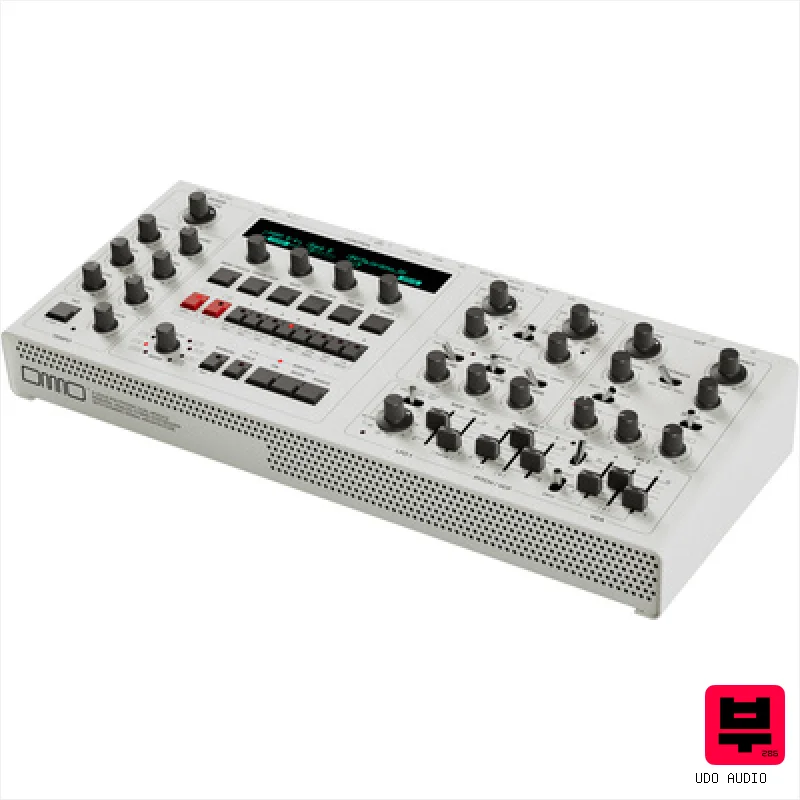
UDO Audio DMNO ONM-1UDO Audio45Stable$861€769$861€769Check ↗
- 66
Sherman Filterbank 2 RackSherman45↑ 6.7%$928€829$928€829Check ↗
- 67
SOMA Cosmos Rust EditionSOMA42↑ 16.0%$894€799$894€799Check ↗
- 68
Sherman Filterbank 2 CompactSherman39↑ 9.2%$928€829$928€829Check ↗
- 69
Endorphin.es Evil PetEndorphin.es36Stable$536€479$536€479Check ↗
- 70
Erica Synths XenodriveErica Synths34Stable$615€549$615€549Check ↗
- 71
Melbourne Instruments Roto-Control Bitwig EditionMelbourne Instruments31Stable$559€499$559€499Check ↗
- 72
Bastl Instruments Thyme+Bastl Instruments31Stable$659€589$659€589Check ↗
- 73
OXI Instruments One MKII NostalgiaOXI Instruments31Stable$984€879$984€879Check ↗
- 74
Manikin-Electronic Schrittmacher BlackManikin-Electronic30Stable$1,509€1,348$1,509€1,348Check ↗
- 75
SOMA Utilities (Pin)SOMA27↑ 16.6%$599€535$599€535Check ↗
- 76
SOMA Ornament-8SOMA27↑ 16.1%$894€799$894€799Check ↗
- 77
Rodec ONE + Ministyler BundleRodec26↑ 4.3%$816€729$816€729Check ↗
- 78
Leaf Audio Add-On Pack 1Leaf Audio20Stable$28€25$28€25Check ↗
- 79
Leaf Audio Add-On Pack 2Leaf Audio20Stable$22€20$22€20Check ↗
Synthesizer Peripherals by the numbers
Measured across all 93 models we track, not a sample.
Median $357 — half of all synthesizer peripherals here cost less.
median of 39 models · 0.35 kg–13.5 kg
How to choose the best synthesizer peripherals
Expression Pedals
These are non-negotiable for dynamic control. Beyond simple volume swells, you need reliable, assignable pedals for filter cutoff, modulation depth, anything that breathes life into your patches. Cheap plastic pedals feel mushy and inconsistent - you want something with a solid feel and accurate response.
Aftertouch Controllers
Aftertouch gives you tactile feedback and allows for nuanced expression-think subtle vibrato or filter sweeps with a gentle pressure. It's a significant step up from just keybed velocity. The learning curve can be a bit steep initially, but the payoff is huge.
MIDI Control Surfaces
A dedicated surface with knobs, sliders, and buttons frees you from constantly diving into menus on your synth's screen. It's about tactile workflow - quickly tweaking parameters on the fly, especially crucial when gigging.
Keyboard Action & Size
An intermediate player needs something beyond a basic synth action. Semi-weighted or weighted keys provide a more expressive playing experience. Consider the size; a smaller footprint is convenient for home use, but a larger, full-size keyboard offers more room for expression and control.
DAW Integration
Seamless integration with your DAW is vital. Look for peripherals that offer MIDI mapping, sysex support, and ideally, some level of DAW control - transport functions, mixer automation, that sort of thing.
Buying guide
Alright, so you're past the basic bread and butter synth sounds and starting to actually shape them, huh? You're not just happy with a preset anymore - you want to tweak the filter resonance until it screams, modulate the LFOs, and actually understand what's going on under the hood. That's awesome. But your stock keyboard isn't cutting it. Let's talk about peripherals that'll actually help you level up your synth game.
Don't chase the flashiest features. A lot of 'pro' gear is just expensive toys you won't use. Focus on build quality and functionality.
A solid expression pedal is more valuable than a surface with a hundred buttons you'll never touch. Watch out for controllers that feel cheap and plasticky; those encoders will get scratchy fast. Invest in something that will last, because you'll be relying on it to deliver consistent performance night after night.
How the AudioFu Index works
Five measured signals and nothing else — no stars from strangers, no “tested by experts” we didn’t do. The weights are fixed and public. We don’t play these instruments; we measure the market around them.
This chart covers 93 synthesizer peripherals from the Thomann catalogue. Before you buy, read hands-on reviews and, where you can, play it. Full methodology.
AudioFu earns a commission when you buy through our Thomann links. It never changes the order — the index does.
- Demand40%
How many of this exact model are for sale on Reverb right now — what musicians actually buy and resell.
- Lineup20%
How many finishes Thomann stocks — makers expand the models that sell.
- Price15%
Where the price has moved since we started tracking in August.
- Specs15%
How completely the maker documents it.
- Maker10%
How deep the brand’s range is in this category.
Questions
What's the difference between expression pedals and sustain pedals?
Sustain just holds a note. Expression pedals control a parameter over time - volume, filter, whatever you assign. They're totally different functions.
How important is aftertouch, really?
It's a game-changer for expressive playing, but it takes practice. If you're playing mostly pads and textures, it's invaluable. For harder, rhythmic stuff, it's less critical.
Can I use any MIDI controller with my synth?
Technically, yes. But compatibility and ease of use vary. Some controllers have proprietary software or limited sysex support. Research beforehand to avoid frustration.
What's the deal with sysex and why should I care?
Sysex (System Exclusive) is a way to send more complex MIDI data than standard MIDI can handle. It's essential for deep parameter control on some synths - think Korg Kronos or Roland Jupiter series.
I'm on a budget. Where should I spend my money?
Prioritize a good expression pedal first. Then a small, well-built MIDI control surface. Forget the fancy DAW integration stuff until later.