AudioFu
AudioFu Chart · October 2026
Best Synthesizer Peripherals for Beginner 2026
The top pick is Otamatone Melody Blue ($21). Otamatone Deluxe White leads the high end. Ranked by the AudioFu Index from 79 models across 29 brands, prices checked every night.
Last updated: October 15, 2026
Top 10
Full detail for the 10 highest AudioFu Index scores. Every other model is listed below.
-
This tiny blue toy lets kids and adults play 11 known songs just by opening their mouths. It comes with a battery and fits easily in a bag, but you can't change the pitch or plug it in. It's perfect for quick, silly fun without needing any extra equipment.
Pros
- Includes a CR2032 battery right out of the box
- Features 11 familiar pre-recorded songs for instant fun
- Operates simply by pressing the neck surface
Cons
- No specified connection options for external gear
- Lacks adjustable note pitch controls in this model
-
The Otamatone Classic Yellow is a quirky, instantly engaging instrument – think a cross between a squeezebox and a synthesizer. It's perfect for kids, casual music lovers, or anyone wanting a laugh and a unique musical experience. Don't expect professional-grade sounds, but it's undeniably fun and surprisingly expressive once you get the hang of it.
Pros
- Unique, expressive sound creation through neck pressure and mouth movement
- Bright yellow plastic body is visually appealing and durable for its price point
- Simple, battery-powered operation allows for immediate, portable fun
Cons
- Limited tonal palette; primarily novelty sounds, not serious music production
- Steep learning curve to achieve consistent and pleasing results
-
This Otamatone feels like a fun party trick turned into a real instrument. You press the clear blue surface on the neck and hum or talk to change the notes. It works with three small batteries and lets you adjust the pitch freely. Perfect for kids or anyone who wants to make sound without playing traditional keys.
Pros
- Transparent Blue color looks striking on stage
- Sound surface on neck allows easy pitch control
- Mouth operation creates unique expressive gestures
Cons
- Requires mouth movement which limits playing options
- No wired connection means no direct instrument input
-
The Otamatone Neo is a quirky, fun gadget more than a serious instrument. It’s perfect for kids, music enthusiasts looking for a laugh, or anyone wanting a unique and instantly playable sound toy. While the build isn't premium, the app integration and portability are definite pluses.
Pros
- The white finish looks surprisingly clean and modern.
- App integration allows for genuinely useful tonal adjustments.
- Compact size makes it incredibly portable and fun for kids.
Cons
- The plastic construction feels a bit flimsy, impacting long-term durability.
- Sound quality is novelty-driven; don't expect studio-grade tones.
-
This little Hello Kitty instrument makes noise when you press its neck or move its mouth. It runs on three AAAs and comes with batteries, so it works right away. It is great for kids or beginners who want to make music without cables. Just remember to keep those batteries fresh.
Pros
- Distinct sound created by pressing the neck surface
- Mouth opening and closing changes pitch instantly
- Different pitches available for various musical needs
Cons
- No cables or external connections mentioned
- Uses standard AAA batteries which drain quickly
-
Teenage Engineering EP-40 Riddim Supertone with EP-2350 Ting FX…
EP-2350 FX MIC · Teenage Engineering
2 for sale on Reverb1 finish at Thomann
- Weight0.13 kg
This tiny mic adds instant texture to any track with four built-in samples and live effect tweaks. It is perfect for quick jams or recording ideas on the go. While it needs batteries or a USB connection, its small size makes it a great portable tool.
Pros
- Four distinct effect voices for instant mood changes
- Live adjustment of every single effect parameter
- Built-in sample library with four unique sounds
Cons
- Requires AAA batteries unless USB-C is used
- No built-in storage for custom user presets
-
This toy lets you play by pressing the neck and moving the mouth. It comes with batteries so you can start right away. Great for kids or anyone wanting a silly, unique sound without a keyboard.
Pros
- Unique sound surface on the neck for playing
- Distinct Pac-Man mouth opening and closing action
- Adjustable note pitches for creative control
Cons
- Lacks traditional keys or a keyboard interface
- No cable output for connecting to amplifiers
-
This little pack is a brilliant extension for the Leaf Audio soundboxes. It's perfect for experimental musicians, sound designers, or anyone wanting to add organic, unpredictable textures to their sound. It really opens up creative possibilities beyond the stock sounds.
Pros
- Steel wire adds crisp snare articulation and resonance.
- Bamboo brush provides gentle, nuanced textural sounds.
- Metal balls introduce unique percussive and chaotic elements.
Cons
- Limited number of components restricts experimental possibilities.
- Component size may be restrictive for some soundbox configurations.
-
This little pack is a brilliant extension for Leaf Audio’s quirky sound design tools. It’s perfect for experimental musicians and sound designers who love adding organic textures and unexpected percussive elements to their creations—really opens up some creative avenues with minimal investment.
Pros
- Springs offer unique textural possibilities for Microphonic Soundbox and Playground.
- Kalimba reed adds unexpected percussive and melodic tones.
- Wooden sticks provide satisfying tactile interaction and percussive sounds.
Cons
- Limited number of springs restricts extensive sonic exploration.
- Rubber band's longevity is likely a concern given material.
-
The Otamatone Deluxe is a seriously fun, if unconventional, instrument. It’s perfect for anyone looking for a quirky, accessible way to make noise and entertain – great for kids, novelty acts, or anyone who wants a laugh. Don’t expect studio-quality sound, but it’s a blast to play and a guaranteed conversation starter.
Pros
- Larger size improves playability and note control compared to the classic.
- Stereo headphone jack allows for private practice and monitoring.
- Neck strap provides comfortable, hands-free operation during performances.
Cons
- The unique control method has a steep learning curve for traditional musicians.
- Sound quality, while charming, is inherently limited and quirky.
All 79 synthesizer peripherals
Same index, same nightly prices — compact. Colour options of one model share a row. Tap a photo to zoom.
- 11
TEControl USB MIDI Pedal ControllerTEControl33Stable$92€82$92€82Check ↗
- 12
Otamatone Techno WhiteOtamatone · 2 finishes42Stable$111€99$111€99Check ↗
- 13
Leaf Audio Microphonic PlaygroundLeaf Audio33Stable$111€99$111€99Check ↗
- 14
Roland WC-1 Wireless AdapterRoland30Stable$111€99$111€99Check ↗
- 15
Dreadbox DarknessDreadbox73Stable$285€255$285€255Check ↗
- 16
Korg SQ-64 Polyphonic SequencerSQ-64 · Korg67↓ 3.1%$249€222$249€222Check ↗
- 17
Elektron Analog Heat +FXElektron65↓ 4.7%$1,172€1,047$1,172€1,047Check ↗
- 18
Dreadbox KomorebiDreadbox64Stable$212€189$212€189Check ↗
- 19
Soma Laboratory Cosmos Drifting Memory StationCosmos Blue · SOMA · 2 finishes60↑ 19.3%$879€785$879€785Check ↗
- 20
Erica Synths Acidbox IIIErica Synths59Stable$514€459$514€459Check ↗
- 21
Erica Synths Zen DelayErica Synths58↓ 6.1%$626€559$626€559Check ↗
- 22
Make Noise 0-Coast Patchable Synthesizer0-Ctrl · Make Noise56Stable$503€449$503€449Check ↗
- 23
Dreadbox KinematicDreadbox55Stable$199€178$199€178Check ↗
- 24
Expressive E Touché SE USB Control SurfaceTouché SE · Expressive E · 2 finishes55↓ 14.9%$256€229$256€229Check ↗
- 25
Erica Synths Desktop Matrix MixerMatrix Mixer · Erica Synths53Stable$613€548$613€548Check ↗
- 26
Hammond XPK-200GHammond · 2 finishes52Stable$1,398€1,249$1,398€1,249Check ↗
- 27
Oxi Instruments One MKII MIDI / CV SequencerOne MKII Black Edition · OXI Instruments51Stable$1,006€899$1,006€899Check ↗
- 28
Dtronics DT-RDX-V2Dtronics50↓ 1.7%$380€339$380€339Check ↗
- 29
Dtronics DT-303Dtronics49Stable$290€259$290€259Check ↗
- 30
Dtronics DT-200 V3Dtronics49Stable$335€299$335€299Check ↗
- 31
Dtronics DT-81ZDtronics49Stable$380€339$380€339Check ↗
- 32
Dtronics DT-300 V2Dtronics49Stable$380€339$380€339Check ↗
- 33
Dtronics DT-800Dtronics49Stable$413€369$413€369Check ↗
- 34
Dtronics DT-1000Dtronics49Stable$559€499$559€499Check ↗
- 35
Erica Synths RazornatorErica Synths49Stable$615€549$615€549Check ↗
- 36
Erica Synths Resonant FilterbankErica Synths49Stable$843€753$843€753Check ↗
- 37
Jomox Moonwind MKIIJomox49↓ 5.9%$894€799$894€799Check ↗
- 38
Crumar BurnCrumar48↓ 1.9%$288€257$288€257Check ↗
- 39
Hammond XPK-130GHammond48Stable$995€889$995€889Check ↗
- 40
Sherman Filterbank 2 Dual RackSherman48↓ 0.7%$1,645€1,469$1,645€1,469Check ↗
- 41
Hammond XPK-250Wmk3Hammond48Stable$4,096€3,659$4,096€3,659Check ↗
- 42
Crumar Double BackCrumar47Stable$312€279$312€279Check ↗
- 43
Crumar Lower Manual Mojo 61 MK2Crumar47Stable$648€579$648€579Check ↗
- 44
Viscount Legend LM 61Viscount47Stable$771€689$771€689Check ↗
- 45
Viscount Legend LM 73Viscount47Stable$872€779$872€779Check ↗
- 46
Sherman Filterbank 2Sherman47↑ 2.5%$973€869$973€869Check ↗
- 47
Viscount Legend Pedalboard 25Viscount47Stable$1,678€1,499$1,678€1,499Check ↗
- 48
Elektron Outbox 8Elektron46Stable$335€299$335€299Check ↗
- 49
Vermona Action Filter 4Vermona46Stable$423€378$423€378Check ↗
- 50
Vermona Filter LancetVermona46Stable$424€379$424€379Check ↗
- 51
Tube Amp Manufactur Organ DriveTube Amp Manufactur45Stable$536€479$536€479Check ↗
- 52
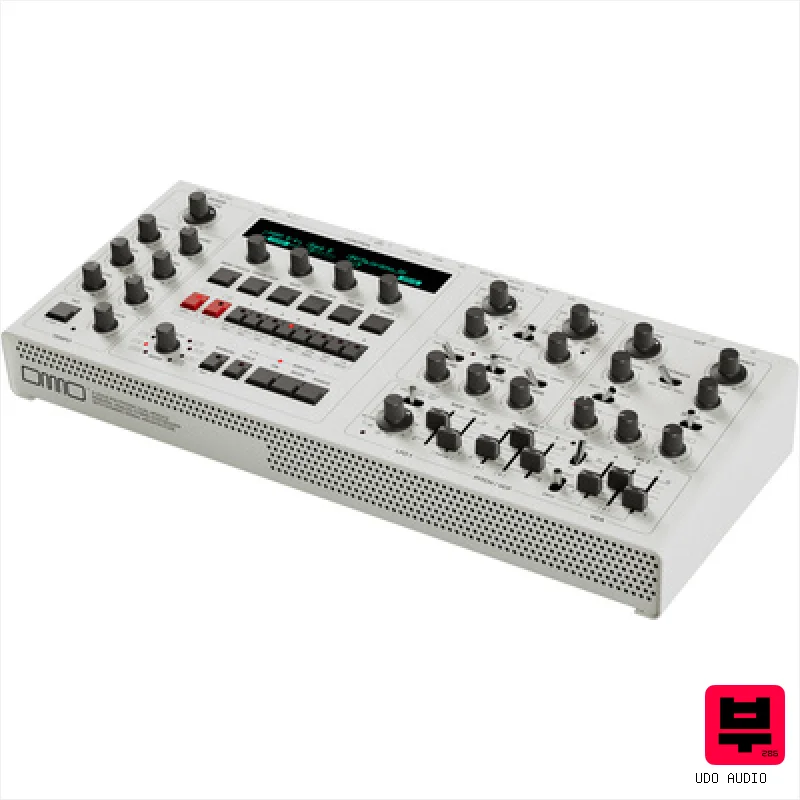
UDO Audio DMNO ONM-1UDO Audio45Stable$861€769$861€769Check ↗
- 53
Sherman Filterbank 2 RackSherman45↑ 6.7%$928€829$928€829Check ↗
- 54
Korg SQ-1 Step SequencerSQ-1 · Korg43↑ 4.6%$129€115$129€115Check ↗
- 55
SOMA Cosmos Rust EditionSOMA42↑ 16.0%$894€799$894€799Check ↗
- 56
Sherman Filterbank 2 CompactSherman39↑ 9.2%$928€829$928€829Check ↗
- 57
Endorphin.es Evil PetEndorphin.es36Stable$536€479$536€479Check ↗
- 58
Korg Nu:Tekt NTS-3Korg35↓ 6.6%$174€155$174€155Check ↗
- 59
SOMA Breakout BoxSOMA35Stable$223€199$223€199Check ↗
- 60
Melbourne Instruments Roto-ControlMelbourne Instruments34↓ 6.4%$476€425$476€425Check ↗
- 61
Erica Synths XenodriveErica Synths34Stable$615€549$615€549Check ↗
- 62
TEControl Analog Breath ControllerTEControl33Stable$156€139$156€139Check ↗
- 63
TEControl USB MIDI Breath ControllerTEControl33Stable$196€175$196€175Check ↗
- 64
Leaf Audio Microphonic Soundbox MKIILeaf Audio33Stable$279€249$279€249Check ↗
- 65
TEControl USB MIDI Breath & Bite ControlTEControl33Stable$357€319$357€319Check ↗
- 66
Bastl Instruments Kastle 2 FX WizardBastl Instruments31Stable$212€189$212€189Check ↗
- 67
Lounsberry Pedals TFP-1 Tall & FatLounsberry Pedals31Stable$256€229$256€229Check ↗
- 68
Lounsberry Pedals OGO-1 Organ GrinderLounsberry Pedals31Stable$256€229$256€229Check ↗
- 69
Jomox T-Resonator MkIIJomox31Stable$312€279$312€279Check ↗
- 70
SOMA Utilities (Screw)SOMA31↑ 8.4%$435€389$435€389Check ↗
- 71
Melbourne Instruments Roto-Control Bitwig EditionMelbourne Instruments31Stable$559€499$559€499Check ↗
- 72
Bastl Instruments Thyme+Bastl Instruments31Stable$659€589$659€589Check ↗
- 73
OXI Instruments One MKII NostalgiaOXI Instruments31Stable$984€879$984€879Check ↗
- 74
ADDAC Mixology PedalADDAC30Stable$268€239$268€239Check ↗
- 75
Manikin-Electronic Schrittmacher BlackManikin-Electronic30Stable$1,509€1,348$1,509€1,348Check ↗
- 76
SOMA IlluminatorSOMA27↑ 21.9%$380€339$380€339Check ↗
- 77
SOMA Utilities (Pin)SOMA27↑ 16.6%$599€535$599€535Check ↗
- 78
SOMA Ornament-8SOMA27↑ 16.1%$894€799$894€799Check ↗
- 79
Rodec ONE + Ministyler BundleRodec26↑ 4.3%$816€729$816€729Check ↗
Synthesizer Peripherals by the numbers
Measured across all 93 models we track, not a sample.
Median $357 — half of all synthesizer peripherals here cost less.
median of 39 models · 0.35 kg–13.5 kg
How to choose the best synthesizer peripherals
Keyboard Action
A weighted action mimics a piano, offering better dynamics and articulation. Semi-weighted is a good compromise for space and budget, but avoid membrane keyboards - they feel like pushing buttons, and that kills your touch sensitivity. It's the foundation of everything.
Connectivity
MIDI is king. A basic two-out MIDI interface lets you connect to your synth and a computer for recording. USB MIDI is convenient, but a dedicated interface often offers better latency and stability, especially important for tight performances.
Control Surface Layout
Look for a logical layout that doesn't feel overwhelming. Too many knobs and faders can be intimidating. Dedicated transport controls (play, stop, record) are a huge time-saver in the studio. Think about what you'll be controlling most often.
Build Quality & Reliability
Cheap plastic feels awful and breaks easily. Gigging means bumps and jostles; a robust build is essential. Even for bedroom practice, a solid feel inspires confidence and makes practicing more enjoyable - you'll actually want to play.
Software Integration
Many peripherals come bundled with software - DAWs, virtual instruments, or mapping tools. While not always essential, it's a bonus if it's intuitive and well-supported. Compatibility with your preferred DAW is key to avoiding headaches later.
Buying guide
So, you're diving into the synth world - awesome! But a synth by itself is just a box of knobs. You need peripherals to actually play it and get something usable out of it. Let's break down the essentials for beginners, because spending money on the wrong stuff is a fast way to get frustrated and give up before you even hear that fat midrange honk you're after.
Don't chase the 'latest and greatest' - those are often designed for experienced users. A solid, reliable MIDI keyboard with a decent action and basic connectivity is your starting point. Be wary of super-cheap options; they often cut corners on keybed quality and build, resulting in a frustrating playing experience.
Spending a bit more upfront will save you money (and frustration) down the line.
How the AudioFu Index works
Five measured signals and nothing else — no stars from strangers, no “tested by experts” we didn’t do. The weights are fixed and public. We don’t play these instruments; we measure the market around them.
This chart covers 93 synthesizer peripherals from the Thomann catalogue. Before you buy, read hands-on reviews and, where you can, play it. Full methodology.
AudioFu earns a commission when you buy through our Thomann links. It never changes the order — the index does.
- Demand40%
How many of this exact model are for sale on Reverb right now — what musicians actually buy and resell.
- Lineup20%
How many finishes Thomann stocks — makers expand the models that sell.
- Price15%
Where the price has moved since we started tracking in August.
- Specs15%
How completely the maker documents it.
- Maker10%
How deep the brand’s range is in this category.
Questions
What's the difference between MIDI and USB MIDI?
MIDI is the standard protocol; USB MIDI is just one way to implement it. USB MIDI is convenient for connecting to computers, but a dedicated MIDI interface can offer lower latency and better reliability, especially with older synths.
Do I need a sustain pedal?
Absolutely, if you're playing anything beyond simple melodies. Sustain adds depth and realism to your sounds, especially for pads and piano sounds. A basic Yamaha-style pedal is a good starting point.
How important is aftertouch?
Aftertouch (pressure on keys after they're pressed) is a cool feature, but not essential for beginners. It adds another layer of expression, but it's something you can learn later. Focus on getting a solid feel and action first.
What's a MIDI controller, and how does it differ from a synth?
A MIDI controller doesn't produce sound itself. It sends MIDI messages to a synthesizer (hardware or software) to tell it what to play. It's the 'brain' of your sound, but needs a sound source to actually make noise.
My DAW says 'MIDI Clock Sync' - what is that?
MIDI Clock Sync allows your DAW to control the tempo of your synth or other MIDI devices. It's essential for keeping everything in time when recording or performing live - no more rushing or dragging!