
Best Timberline Guitars Other Acoustic Guitars 2026
Alright, let's talk Timberline guitars. You've probably not heard much about them - they're not plastered all over YouTube. But if you're hunting for a solid, working acoustic that doesn't sound like a mass-produced clone, Timberline's worth a serious look, especially their "Other" models - the ones that aren't the standard dreadnoughts. They're a bit of a sleeper brand, and I've found some real gems over the years.
Last updated: April 11, 2026
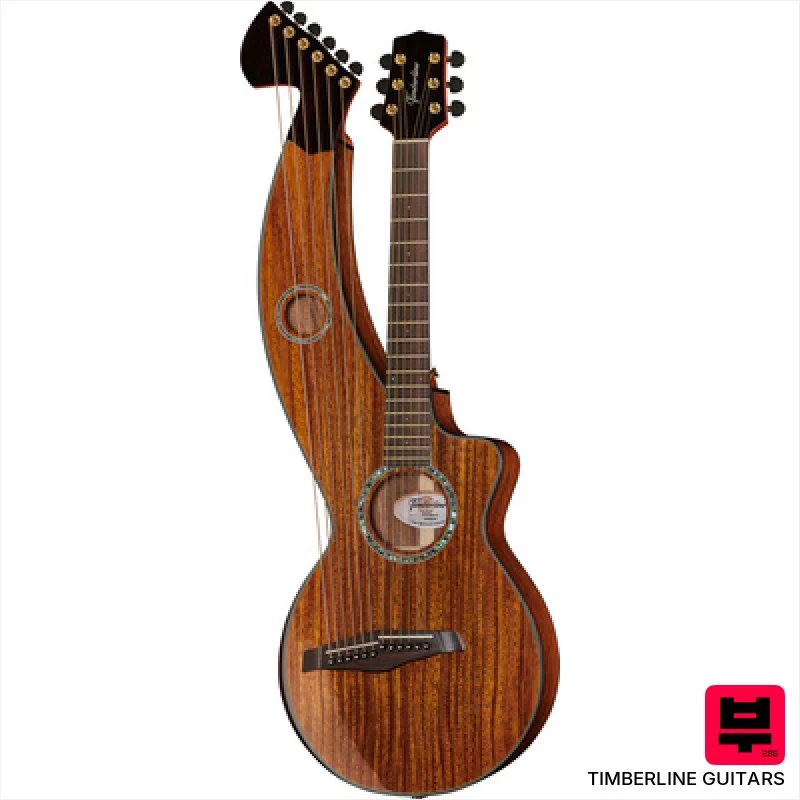
Timberline Guitars T70HGpc-e Harp Guitar
- • Silkwood construction delivers a warm, resonant tone with surprising projection.
- • K&K Pure Mini pickups offer a natural, amplified sound; exceptionally clean.
- • Ebony fretboard and Tusq nut/saddle provide smooth playability and sustain.
- • Grover Gold tuners ensure rock-solid tuning stability, a welcome premium touch.
- • Silkwood, while beautiful, can be more prone to temperature/humidity changes.
- • The parlor body size limits low-end response compared to larger harp guitars.
- • Premium-priced; represents a significant investment for most players.
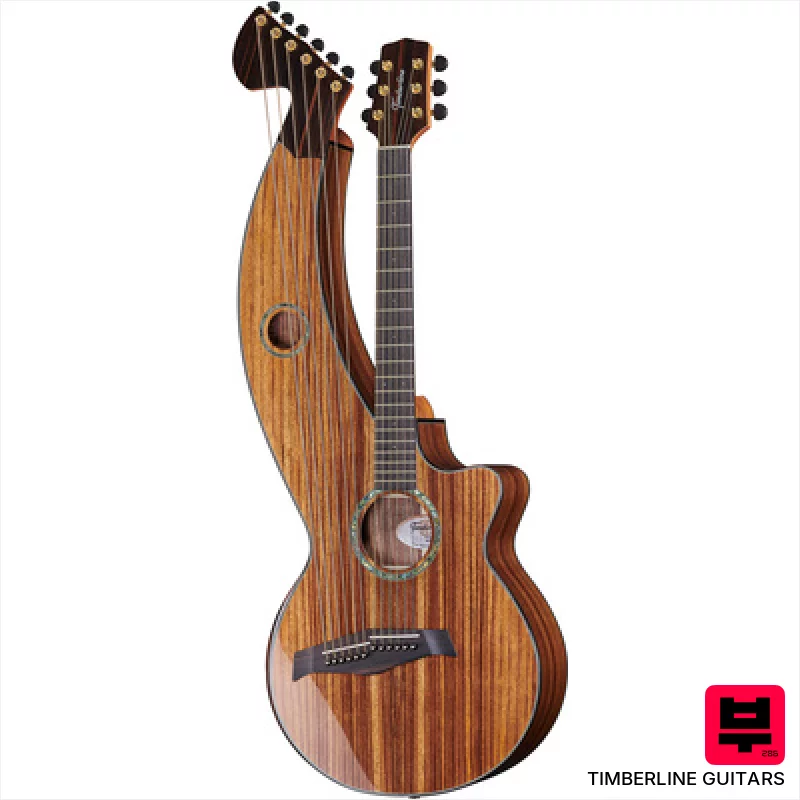
Timberline Guitars T70HGc-e Harp Guitar
- • Solid silkwood construction delivers a warm, resonant, and unique tone.
- • Ebony fretboard and TUSQ nut contribute to smooth playability and sustain.
- • K&K Pure Mini pickups offer a natural, amplified acoustic voice.
- • Grover gold machine heads ensure precise and stable tuning, a premium touch.
- • Silkwood is a less common tonewood, limiting familiarity and potential resale value.
- • The extended scale and bass strings require significant finger strength and adaptation.
- • Harp guitars inherently limit versatility compared to standard acoustic models.

Timberline Guitars T30HGpc-e Harp Guitar
- • Solid mahogany construction delivers a warm, resonant, and focused tone.
- • Ebony fretboard and nut offer exceptional clarity and precise intonation.
- • K&K Pure Mini pickups provide a natural amplified sound with minimal feedback.
- • Elegant abalone rosette and ebony binding elevate the instrument's aesthetic appeal.
- • The parlor body, while charming, limits the overall volume projection compared to larger sizes.
- • The shorter scale length might feel cramped for players accustomed to longer scales.
- • The premium-priced nature restricts accessibility for budget-conscious musicians.
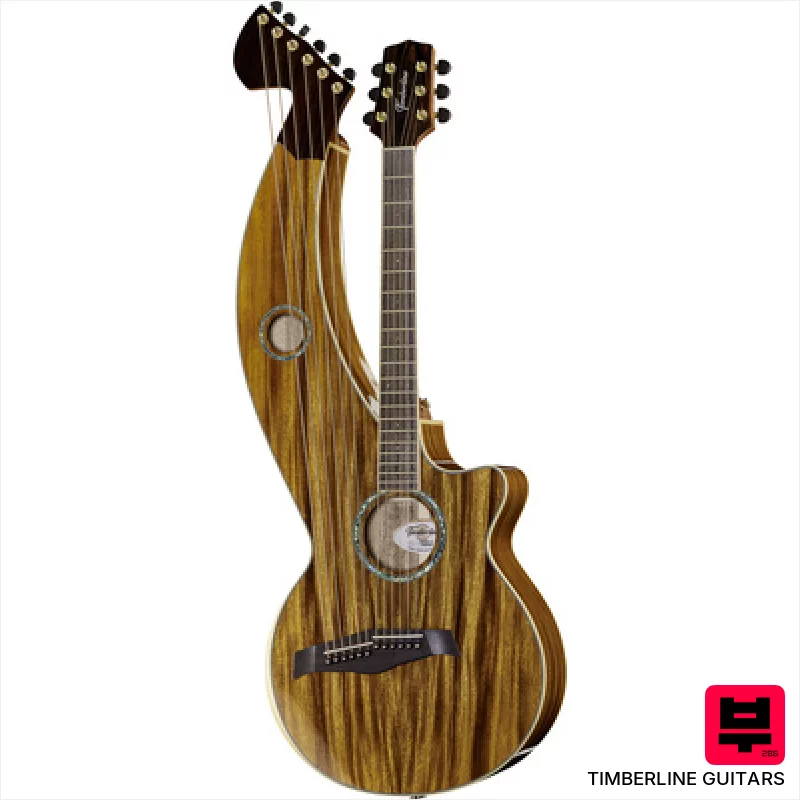
Timberline Guitars T60HGc-e Harp Guitar
- • Solid acacia construction delivers a warm, resonant, and complex tone.
- • Ebony fretboard and TUSQ nut offer smooth playability and excellent sustain.
- • K&K Pure Mini pickups provide a natural, amplified acoustic voice.
- • Grover gold machine heads ensure precise and reliable tuning stability.
- • The extended scale and added bass strings require significant finger strength and adaptation.
- • Acacia’s tonal character may lack the aggressive projection of some other tonewoods.
- • Harp guitars inherently limit versatility compared to standard acoustic instruments.
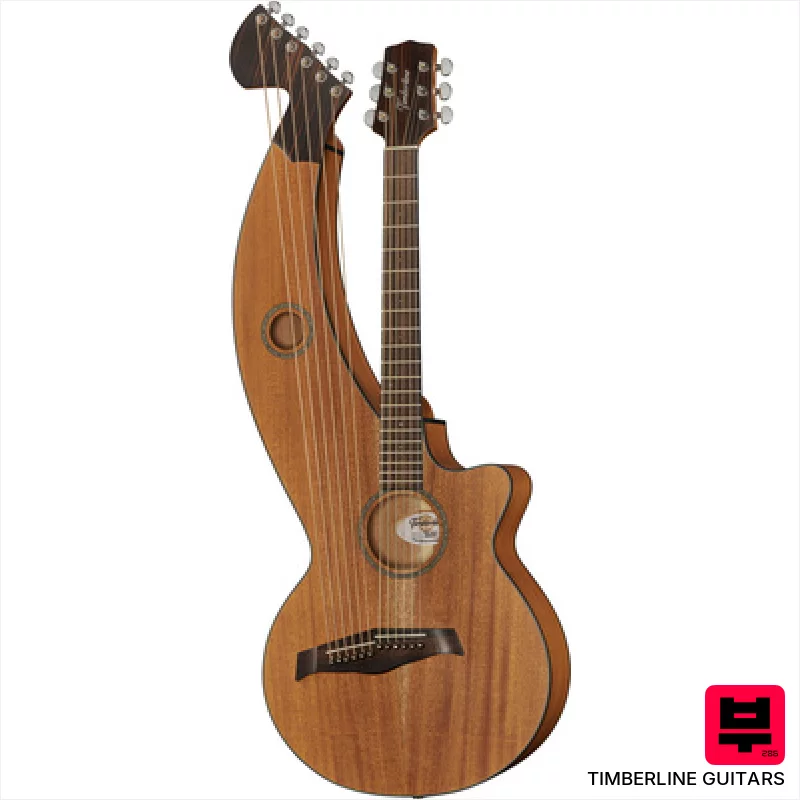
Timberline Guitars T20HGC-e Harp Guitar
- • Solid mahogany body delivers a warm, resonant, and focused acoustic tone.
- • Ebony fingerboard and headstock provide exceptional clarity and sustain.
- • Die-cast tuners ensure precise and stable tuning, crucial for harp strings.
- • Extended bass strings offer unique harmonic possibilities and a broader sonic palette.
- • Mahogany construction might lack the bright shimmer of spruce for some players.
- • Harp guitar design inherently limits portability and traditional playing styles.
- • The 16” fingerboard radius, while comfortable, may feel unusual to some.
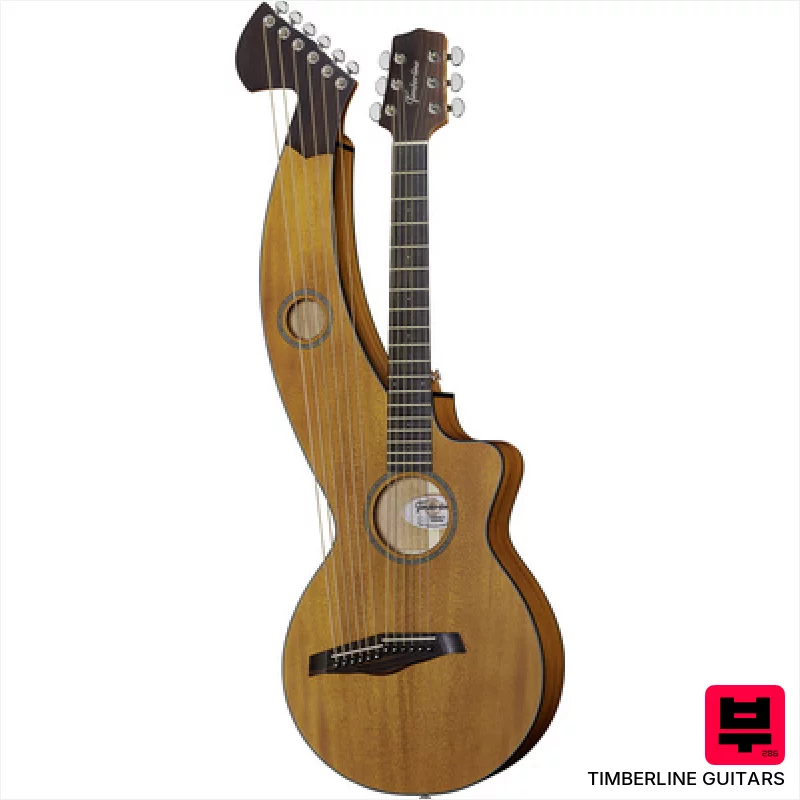
Timberline Guitars T20HGpc Harp Guitar
- • Solid mahogany construction delivers a warm, resonant, and focused tone.
- • Ebony fretboard and TUSQ nut offer smooth playability and enhanced sustain.
- • The unique sub-bass strings create a truly harp-like extended low-end response.
- • Well-executed rosette adds visual appeal without compromising structural integrity.
- • Mahogany can be a bit 'woody' – lacks the brightness of some tonewoods.
- • Parlor body size may be uncomfortable for larger players or those used to dreadnoughts.
- • Limited versatility; excels in folk/fingerstyle, less suited for aggressive genres.
How to Choose the Best Other Acoustic Guitars
Heritage & Design
Timberline's roots are in small-batch luthiery, initially building guitars for local musicians in the Pacific Northwest. That heritage translates to a slightly more individual feel and design philosophy than you'll find with larger manufacturers - they're not chasing trends, they're focused on usability.
Tone Characteristics
Timberline's tonewood pairings often lean toward warmer, more balanced sounds. You get a good low-end thump without getting muddy, and a pleasant, articulate high-end that avoids that brittle, ice-picky quality some modern guitars have. The midrange is present - it has that fat midrange honk that's great for vocal accompaniment or cutting through a band.
Build Quality & Materials
The construction is consistently solid - dovetail neck joints are the norm, and bracing patterns are well-executed. You're not getting exotic figured woods on the lower-end models, but the standard spruce tops and mahogany/sapele back and sides are well-seasoned and contribute to the overall resonance. The finish work isn't flawless on every guitar, but it's functional and doesn't detract from the tone.
Neck Profile & Playability
This is where Timberline really shines. The neck profiles are generally comfortable - leaning towards a medium-C shape that suits a wide range of players. The action is usually well-regulated from the factory, making them easy to play for both beginners and experienced players. It's a great platform for a setup to dial in your perfect feel.
Value Proposition
Timberline consistently offers a compelling value. You're getting a well-built, great-sounding acoustic at a price point that undercuts the big names. While they aren't the cheapest, you're avoiding the compromises often found in the ultra-budget category.
Buying Guide
Don't expect flashy aesthetics or complex electronics on the lower-end Timberlines - they're about function over form. The most common corner cut is the binding - it's often simpler and less ornate. If you're looking for a recording-ready instrument straight out of the box, a professional setup is still recommended, but the Timberlines generally play well to begin with. Spend a little extra for a solid spruce top - it'll make a noticeable difference in projection and responsiveness.
How This List Is Built
We don't play these instruments — we're a catalog, not a review desk, and we'd rather say so than pretend otherwise. This page ranks 6 other acoustic guitars from the Thomann catalogue, which is the largest single source of specification data in this category.
Position is computed, not curated. Four signals, in order of weight: how completely the manufacturer documents the instrument (number of published specifications), where it sits in the price range, how specific the model designation is — which filters out generic accessories — and whether a product image exists. The same inputs always produce the same order, so nothing here is shuffled to look fresh.
What this list is good for: narrowing a category down to a shortlist by spec and budget. What it isn't: a substitute for hearing an instrument. Before you buy, read hands-on reviews and, where you can, play it. Full methodology.

