
Best Baton Rouge Other Acoustic Guitars 2026
Look, you're after something a little different than the usual dreadnought or grand auditorium. Baton Rouge's 'Other' acoustic line - the Traveler, the BR-10, the Stage - they've carved out a niche for themselves offering unique shapes and surprisingly good value. They're not trying to be Martin or Gibson; they're offering something accessible, playable, and honestly, often a lot of fun to pick up and just mess around with. If you're tired of the same old acoustic tropes, let's dive in.
Last updated: April 11, 2026

Baton Rouge AR11C/ACE-W Grand Auditorium
- • Solid cedar top delivers warm, responsive, and articulate tones.
- • Wide neck caters to players accustomed to classical or wider acoustic feels.
- • Shadow BR2.1P pickup system provides a surprisingly natural amplified sound.
- • Ovangkol fingerboard and bridge offer a pleasing tonal balance and durability.
- • Matte open-pore finish can be prone to fingerprints and requires diligent care.
- • Mahogany back and sides may lack the projection of rosewood in certain playing styles.
- • 48mm nut width might feel cramped for players with smaller hands.
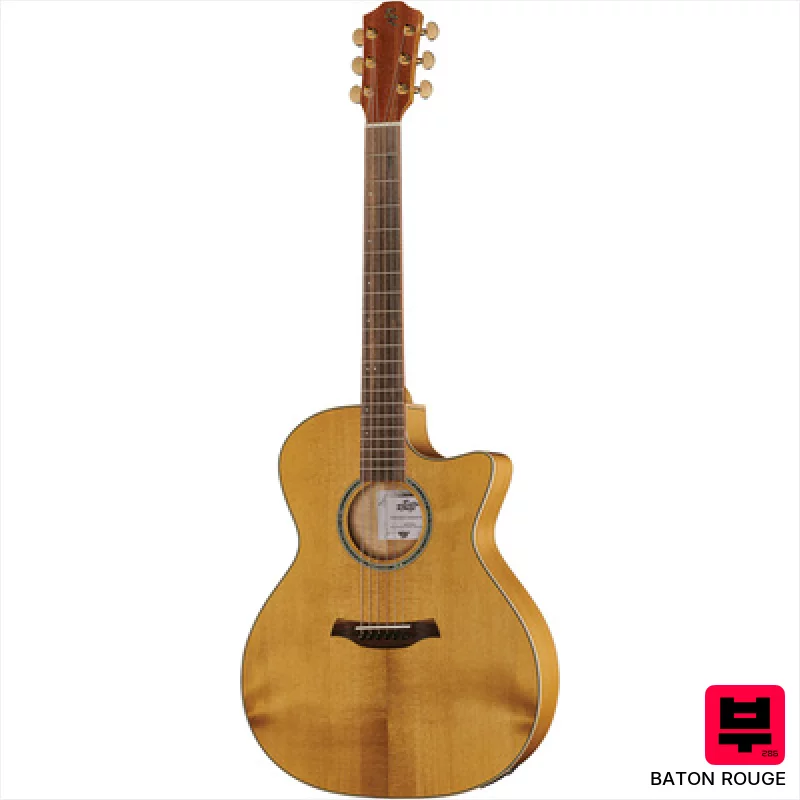
Baton Rouge TLM/ACEC Flamed Maple
- • Solid German spruce top delivers a bright, articulate tone with excellent projection
- • Flamed maple back and sides add warmth and complexity, avoiding typical spruce brightness
- • Cole Clark pickup system offers a natural amplified sound, great for stage or recording
- • Eucalyptus fingerboard and bridge provide a surprisingly responsive feel and good sustain
- • Eucalyptus fingerboard might require more frequent oiling compared to rosewood or ebony
- • Maple construction can be a bit dense, potentially feeling slightly heavier than other woods
- • Auditorium body shape isn’t ideal for aggressive percussive playing styles
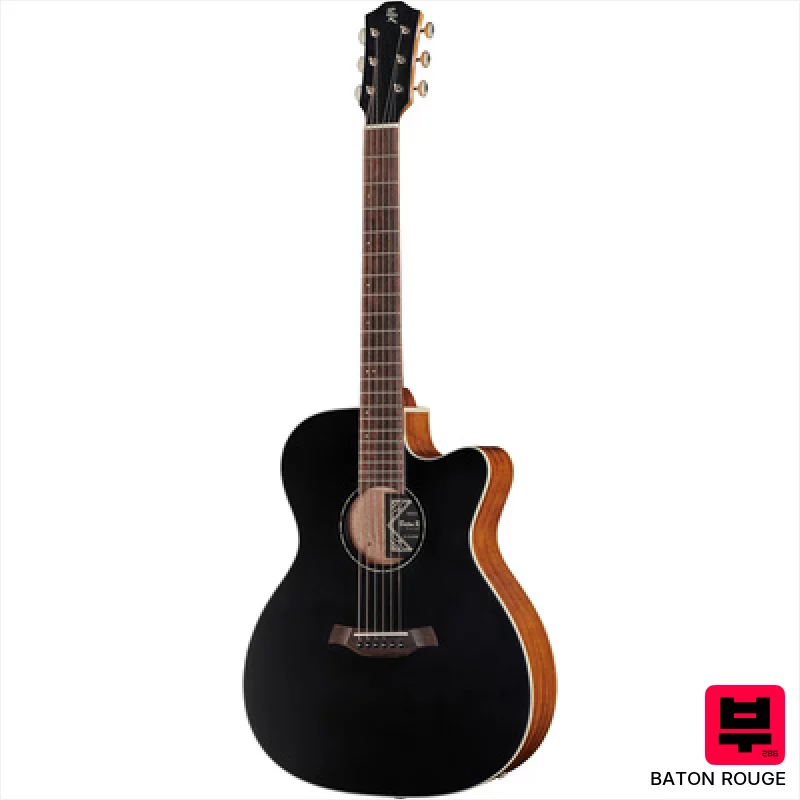
Baton Rouge X11S/OMCE-BT
- • Solid spruce top delivers a bright, responsive tone with good projection.
- • Mahogany back and sides add warmth and sustain, balancing the spruce.
- • BR-1 pickup system provides a usable amplified sound for stage or recording.
- • Indian Laurel fingerboard offers a smooth playing experience and pleasing aesthetics.
- • Okoume neck, while stable, lacks the premium feel of mahogany or maple.
- • ABS binding, while functional, isn't as visually appealing as wood binding.
- • Factory Elixir strings are decent but might be swapped for personal preference.

Baton Rouge AR21C/ACE
- • Canadian cedar top provides warm, responsive tone and excellent projection
- • Figured maple back/sides add clarity and sustain, enhancing the overall sound
- • Shadow BR-2.1P pickup system delivers a natural amplified tone with good feedback rejection
- • Nubone nut and saddle improve sustain and intonation, a nice touch at this price point
- • Ovangkol fretboard, while nice, can feel slightly less smooth than ebony
- • Matte finish, while aesthetically pleasing, can show fingerprints and grime more easily
- • Grand auditorium shape might be slightly large for smaller players or travel
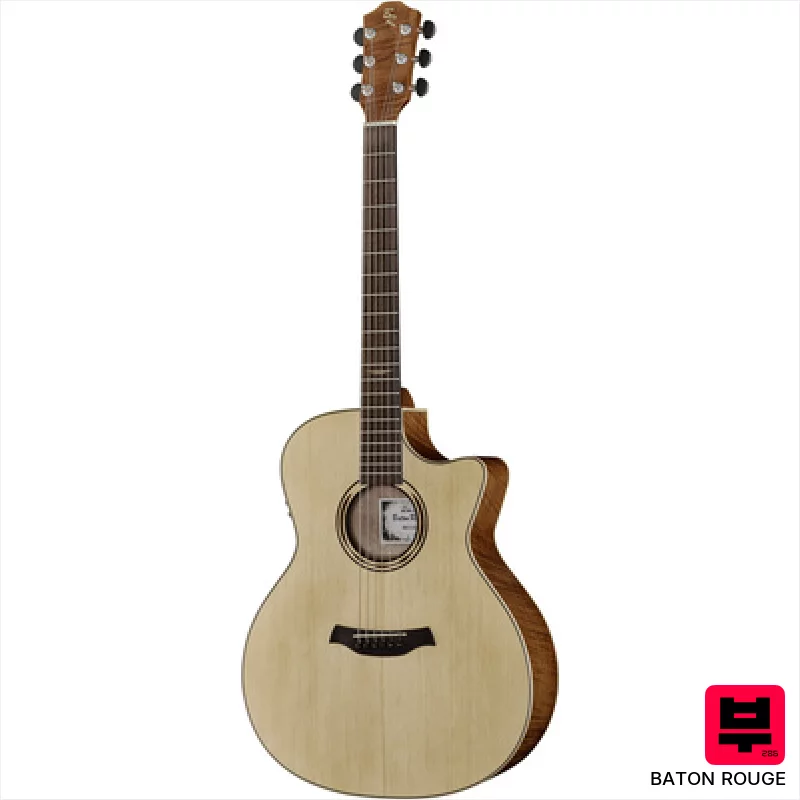
Baton Rouge AR61S/ACE
- • Solid German spruce top delivers a surprisingly resonant and articulate voice.
- • BR-2.1P pickup system provides clean, usable amplified tones with minimal feedback.
- • Ovangkol fingerboard and bridge offer a balanced warmth and sustain.
- • Diecast machine heads ensure stable tuning, a welcome touch at this price point.
- • Exotic mahogany back and sides, while beautiful, slightly dampen the top’s projection.
- • Ovangkol can feel a bit harder under the fingers compared to rosewood.
- • The open-pore finish, while aesthetically pleasing, requires more diligent care to prevent moisture damage.
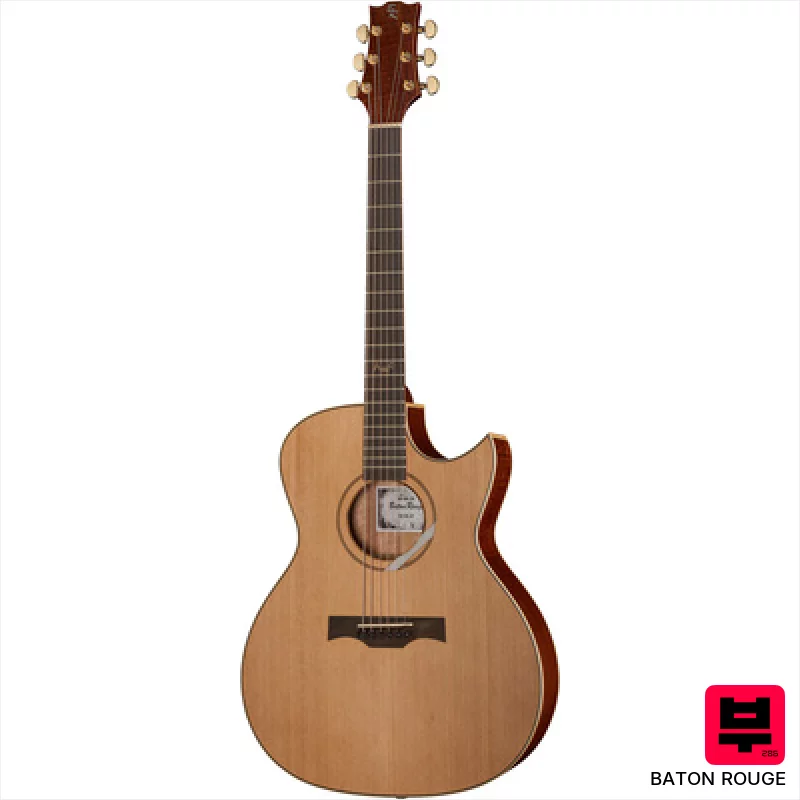
Baton Rouge X6C/AC-AF
- • Solid cedar top delivers warm, complex overtones and projection
- • Andrew Foy signature design offers enhanced playability and aesthetics
- • Exotic mahogany back/sides provide rich sustain and tonal depth
- • Nubone nut and saddle improve sustain and intonation stability
- • Ovangkol fingerboard might feel slightly harder than rosewood for some players
- • Stained mahogany back/sides can appear less visually striking than natural finishes
- • Auditorium shape may not be ideal for players needing a very deep bass response
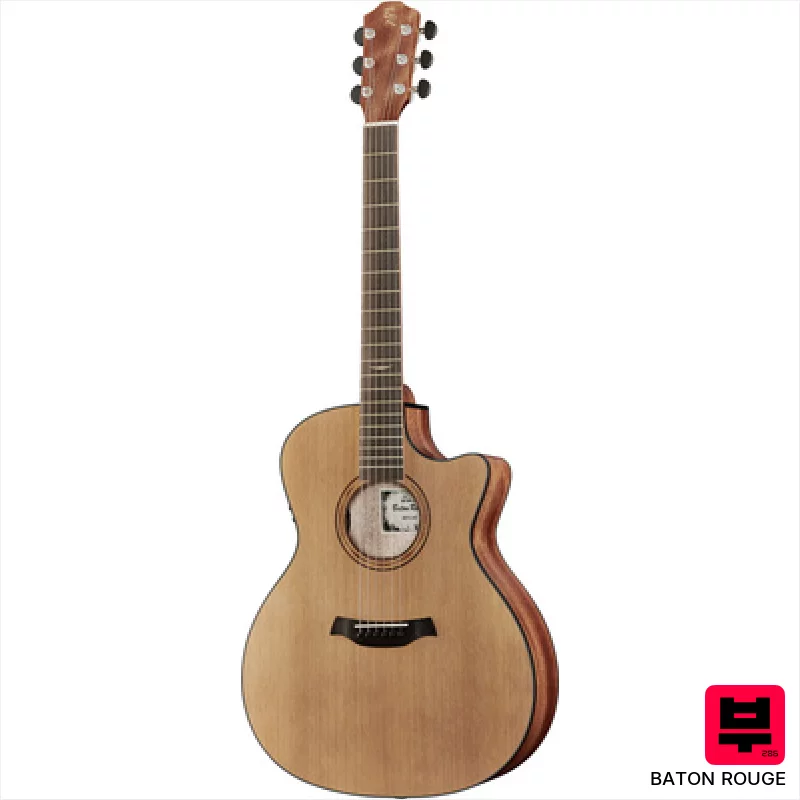
Baton Rouge AR31C/ACE
- • Solid cedar top delivers warm, responsive, and surprisingly articulate tone.
- • Flamed Okoume back and sides add complexity and a touch of visual flair.
- • BR-2.1P pickup system provides usable amplified tones for stage or recording.
- • Ovangkol fingerboard offers a smooth playing experience with good durability.
- • Okoume can sometimes exhibit a slight 'woody' resonance that might not suit all players.
- • The matte open-pore finish, while aesthetically pleasing, can be more susceptible to scratches.
- • 46mm nut width might feel a bit wide for players accustomed to slimmer necks.
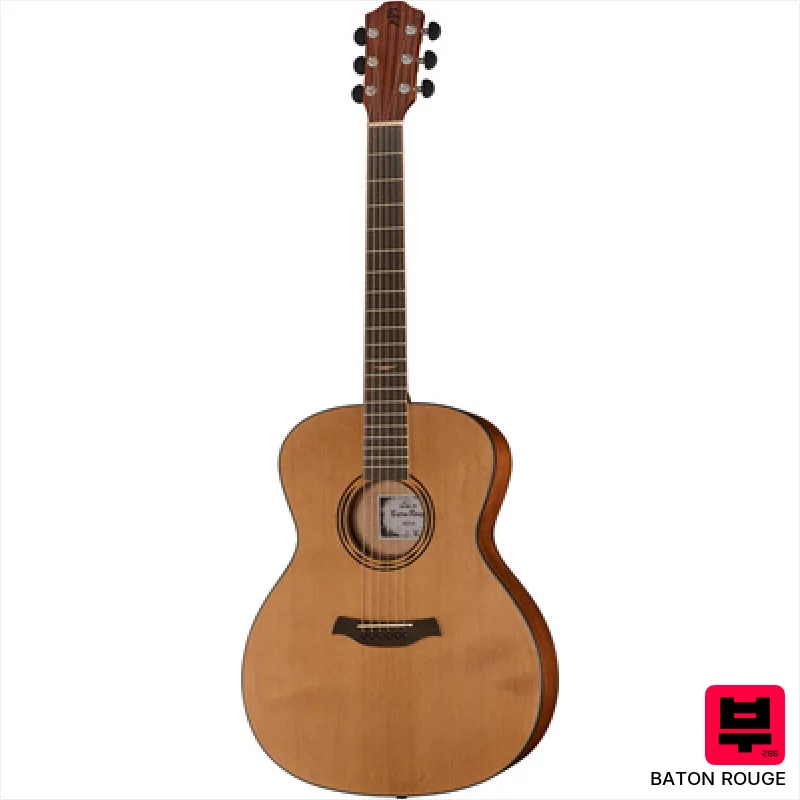
Baton Rouge AR21C/A
- • Solid cedar top delivers warm, responsive projection and overtones.
- • Ovangkol fingerboard provides a snappy, articulate feel.
- • Nubone nut and saddle improve sustain and tuning stability.
- • Matte open-pore finish allows the wood to breathe, enhancing resonance.
- • Figured maple back and sides can slightly dampen low-end warmth compared to all-cedar.
- • The 46mm nut width might feel a bit wide for players used to narrower necks.
- • ABS binding, while functional, lacks the premium feel of wood binding.
How to Choose the Best Other Acoustic Guitars
Heritage & Design Philosophy
Baton Rouge started as an importer, focusing on delivering playable instruments at aggressive price points. Their 'Other' series reflects this - designs often inspired by vintage or less-common shapes, prioritizing playability and affordability over high-end appointments.
Tone Characteristics
Expect a generally warmer, rounder tone than your typical bright, scooped acoustic. The smaller body sizes often emphasize the midrange, giving them a pleasing 'honk' that can be great for singer-songwriters or fingerstyle players. Don't expect massive low-end thump though - these aren't built to shake a stadium.
Build Quality & Materials
Solid tops are common (usually spruce or mahogany), but you'll often find laminate back and sides to keep costs down. The construction is generally solid; bracing is consistent, but the finish might not be flawless - it's a trade-off for the price. Fretwork can sometimes be a little rough, requiring a setup.
Playability & Neck Profile
This is where Baton Rouge really delivers. The neck profiles are typically comfortable - often a slim C shape - making them accessible for players of all hand sizes. Action is usually reasonable out of the box, though a professional setup can really unlock their potential.
Value Proposition
Let's be real, you're not paying flagship prices. You're getting a well-playing, decent-sounding acoustic at a fraction of the cost of established brands. This makes them fantastic for students, gigging musicians on a budget, or just someone who wants a reliable, fun instrument without breaking the bank.
Buying Guide
Don't expect the pristine finish or boutique feel of a high-end instrument. Look for a solid top - that's your biggest tonal upgrade. Factor in the cost of a setup; a little fretwork and action adjustment can make a huge difference. And honestly, try before you buy if you can - the smaller body sizes feel different, and what sounds 'warm' to one player might feel muddy to another.
How This List Is Built
We don't play these instruments — we're a catalog, not a review desk, and we'd rather say so than pretend otherwise. This page ranks 8 other acoustic guitars from the Thomann catalogue, which is the largest single source of specification data in this category.
Position is computed, not curated. Four signals, in order of weight: how completely the manufacturer documents the instrument (number of published specifications), where it sits in the price range, how specific the model designation is — which filters out generic accessories — and whether a product image exists. The same inputs always produce the same order, so nothing here is shuffled to look fresh.
What this list is good for: narrowing a category down to a shortlist by spec and budget. What it isn't: a substitute for hearing an instrument. Before you buy, read hands-on reviews and, where you can, play it. Full methodology.

