
Best Mixer, Attenuator Modules Under $1,000 2026
Okay, so you're diving into modular and realizing that a decent mixer is more than just a bunch of knobs. You need something that doesn't choke your signal, gives you some headroom, and lets you sculpt your sound - all without emptying your bank account. This list focuses on mixer and attenuator modules under $1000 that'll actually improve your patch game, whether you're gigging, tracking, or just noodling in your bedroom.
Last updated: April 11, 2026
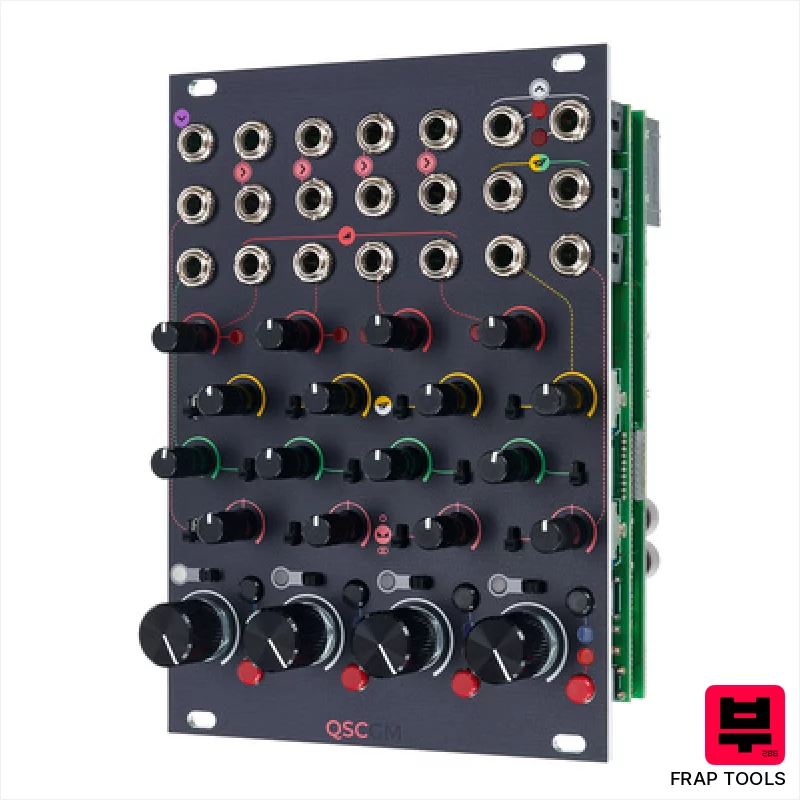
Frap Tools CGM Quad Stereo Channel
- • Exceptional build quality with robust metal chassis and tight tolerances
- • Flexible aux sends offer extensive routing possibilities for complex signal chains
- • CV control over multiple parameters unlocks expressive, dynamic mixing
- • Standalone operation expands modularity beyond the CGM system
- • 18HP footprint can be restrictive in smaller modular setups
- • Power draw is relatively high, demanding a powerful PSU
- • Limited EQ capabilities necessitate external processing for detailed shaping

NANO Modules Performance Mixer
- • Excellent CV looper offers real-time performance automation.
- • Faders feel solid and responsive; a noticeable quality upgrade.
- • Stereo effect returns provide flexible routing options.
- • Compact size maximizes rack space without sacrificing features.
- • Limited mono channel count might restrict complex stereo setups.
- • Build quality, while good, feels slightly plasticky for the price.
- • Cue output level control could benefit from finer resolution.

4ms Listen Four Quarters
- • Excellent balanced outputs minimize noise and crosstalk in complex setups.
- • The compact 12HP footprint is a huge boon for dense modular racks.
- • Intuitive controls offer precise gain staging for nuanced mixing.
- • Solid 4ms build quality ensures reliability and longevity in demanding environments.
- • Limited routing options compared to more feature-rich mixer modules.
- • Mono channels lack the flexibility of true stereo inputs.
- • The depth, while manageable, could be an issue in shallow Eurorack cases.

Shakmat Modular Griffin's Claws
- • Exceptional recording fidelity captures subtle CV nuances
- • Fader response offers precise, expressive modulation control
- • Sync modes unlock creative sequencing and rhythmic possibilities
- • Compact 12HP footprint maximizes valuable Eurorack space
- • Limited recording time per channel might restrict longer sequences
- • Logarithmic fader response can be less intuitive for some users
- • The +10V/-10V signal range might need level shifting in certain setups
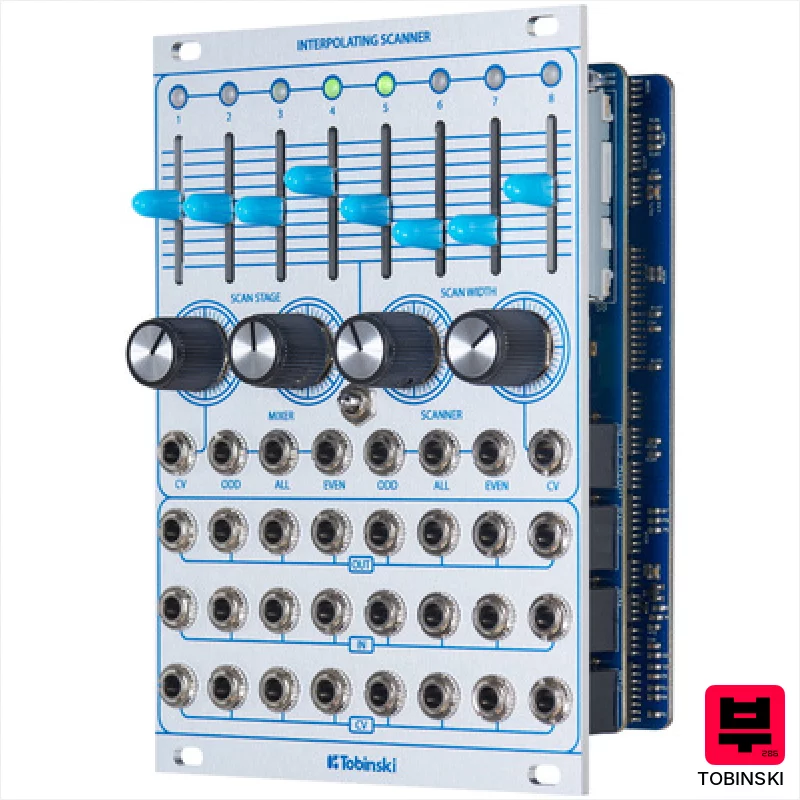
Tobinski Interpolating Scanner
- • Exceptional interpolation smoothness, avoids harsh stepping.
- • Robust build quality with sturdy faders and knobs.
- • Flexible routing options with multiple outputs.
- • Scanner's stage and width controls offer unique textures.
- • 18HP footprint can be restrictive in smaller racks.
- • Price point may be a barrier for budget-conscious users.
- • Limited input gain range on individual channels.
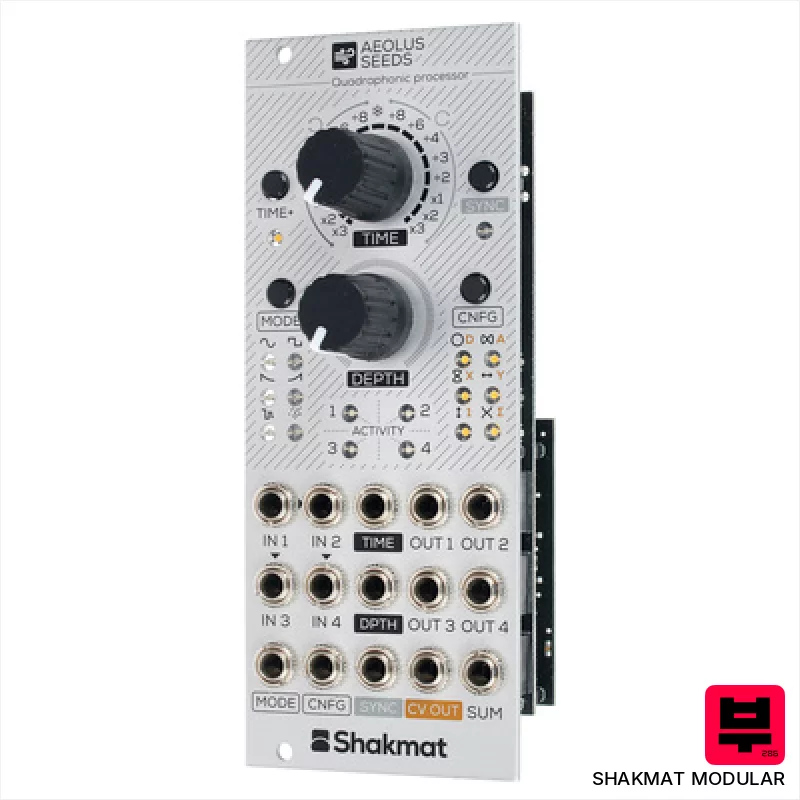
Shakmat Modular Aeolus Seeds
- • Excellent modulation possibilities with the six unique modes offer creative sound design.
- • Shakmat's robust build quality, using thick PCBs and sturdy jacks, inspires confidence.
- • The combined Time and Depth control simplifies complex modulation patterns.
- • Configurable CV output allows for flexible integration within a larger modular system.
- • Limited modulation destinations; primarily suited for controlling VCAs.
- • The granuliser mode, while interesting, can be noisy without careful parameter tweaking.
- • 10HP width might be restrictive for users with very tight Eurorack cases.
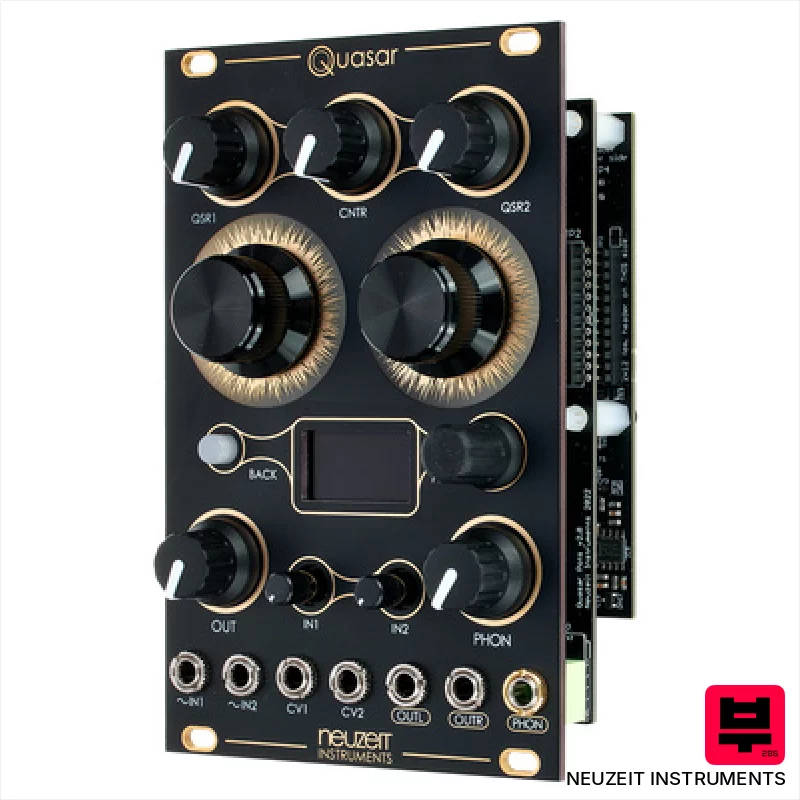
Neuzeit Instruments Quasar
- • Exceptional binaural processing creates genuinely immersive, spatial audio landscapes.
- • Flexible signal routing offers immense creative possibilities for sound design.
- • Intuitive OLED display and encoders streamline complex parameter adjustments.
- • Neuzeit's build quality is superb; feels robust and well-engineered.
- • 16 TE width can be restrictive in smaller Eurorack cases.
- • Steep learning curve; mastering the spatial parameters takes dedication.
- • Power consumption, while manageable, is higher than some simpler modules.
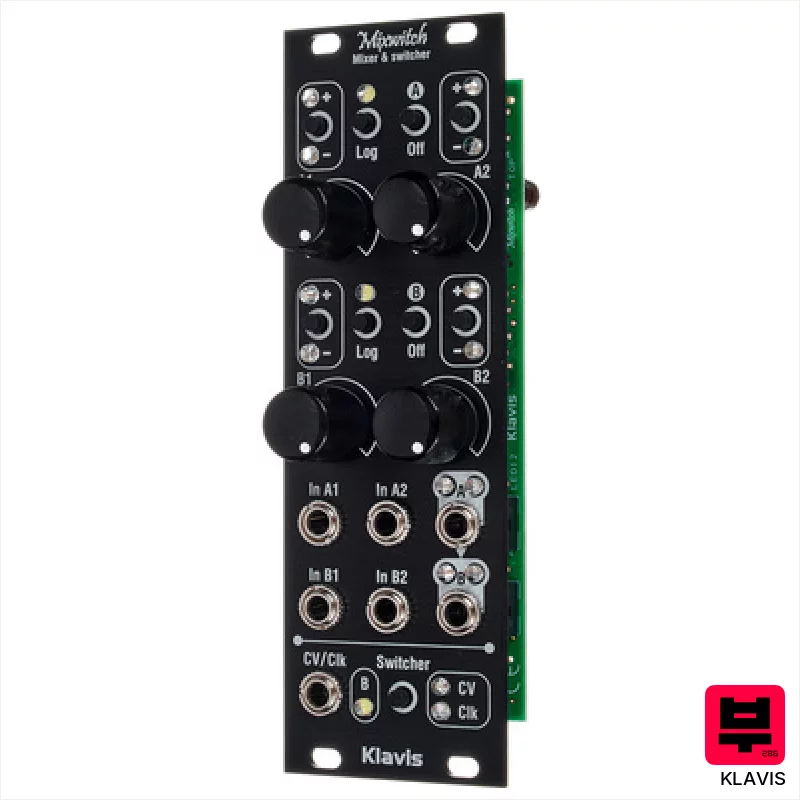
Klavis Mixwitch Black
- • Exceptional click-free muting truly elevates workflow and signal integrity.
- • Normalised 4:1 mixing offers flexible routing and signal shaping possibilities.
- • DC-coupled design allows for true signal path flexibility and CV manipulation.
- • LED polarity indication is a surprisingly useful and practical visual cue.
- • 8HP footprint can be restrictive in smaller Eurorack cases.
- • Limited channel count may not suit complex, large-scale mixing needs.
- • While versatile, the 2:1 mixer topology isn’t ideal for all routing scenarios.

Behringer 305 EQ/Mixer/Output
- • Four channels offer flexible signal routing and mixing possibilities
- • Built-in EQ provides tonal shaping without external modules
- • Tuning oscillator is a surprisingly useful utility for testing and calibration
- • Compact 24HP footprint maximizes space in Eurorack systems
- • Plastic construction feels less robust than higher-end Eurorack modules
- • Mono EQ is limited to input 1, restricting EQ versatility
- • Headphone output lacks a dedicated volume trim for precise monitoring
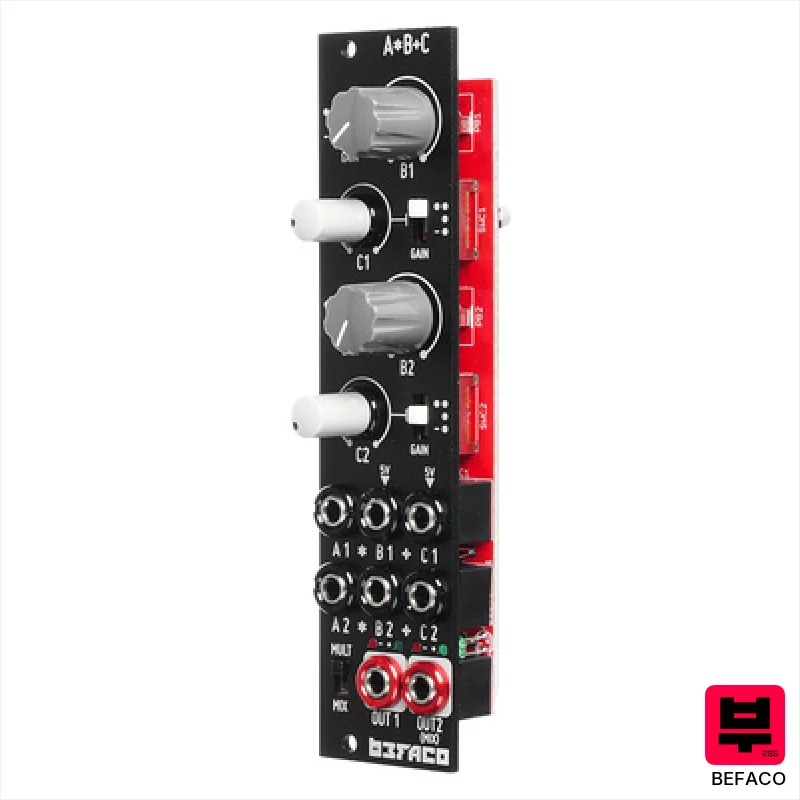
Befaco A*B+C V2
- • Versatile signal routing offers creative patching possibilities.
- • The dual voltage processing expands modulation options significantly.
- • Compact 6HP footprint maximizes space in tight Eurorack setups.
- • Solid build quality with robust pots and reliable connections.
- • Limited headroom can introduce clipping at higher gain settings.
- • Normalization, while clever, can be confusing for beginners.
- • The gain controls' range isn't as precise as dedicated VCAs.
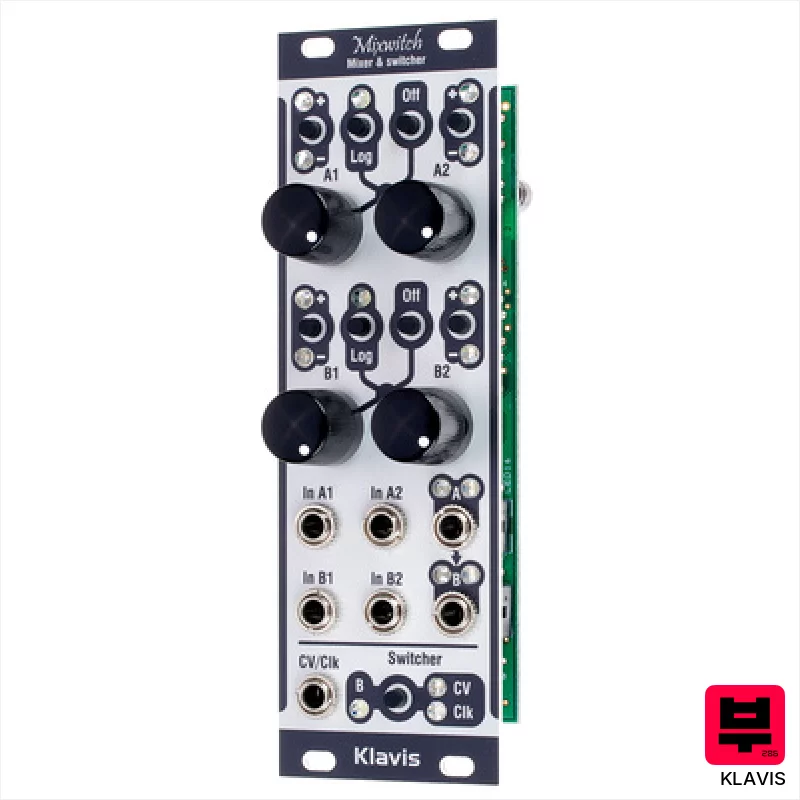
Klavis Mixwitch
- • DC-coupled signal path enables full voltage offset manipulation.
- • Click-free muting prevents unwanted pops and artifacts during transitions.
- • Flexible modulation routing offers creative signal shaping possibilities.
- • Compact 8TE footprint maximizes space in tight Eurorack setups.
- • The 4:1 mixer's normalized routing can be limiting for complex signal flows.
- • LED indicators, while helpful, are relatively small and can be hard to see in bright environments.
- • DC coupling might introduce unwanted noise with certain voltage-controlled oscillators.
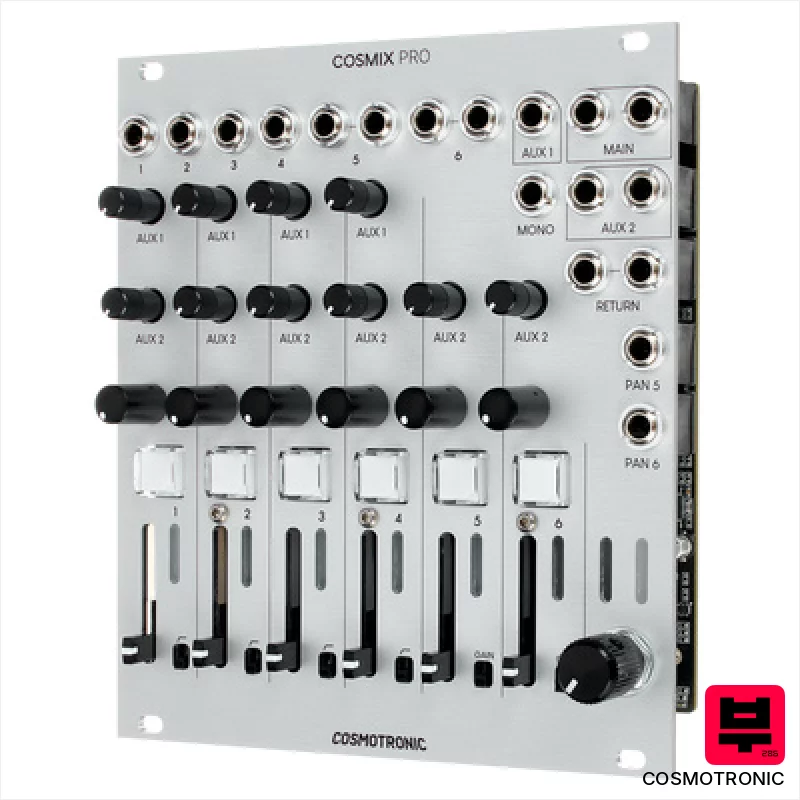
Cosmotronic Cosmix Pro Silver
- • Excellent channel density for a compact Eurorack module.
- • Faders offer tactile control absent in many digital mixers.
- • Aux sends provide flexible routing for effects and external processing.
- • Illuminated metering is a genuinely useful, high-end touch.
- • 170mA draw is relatively high, impacting power budget significantly.
- • Limited headroom; pushing channels can introduce noticeable noise floor.
- • Mono effect return lacks a dedicated level control.
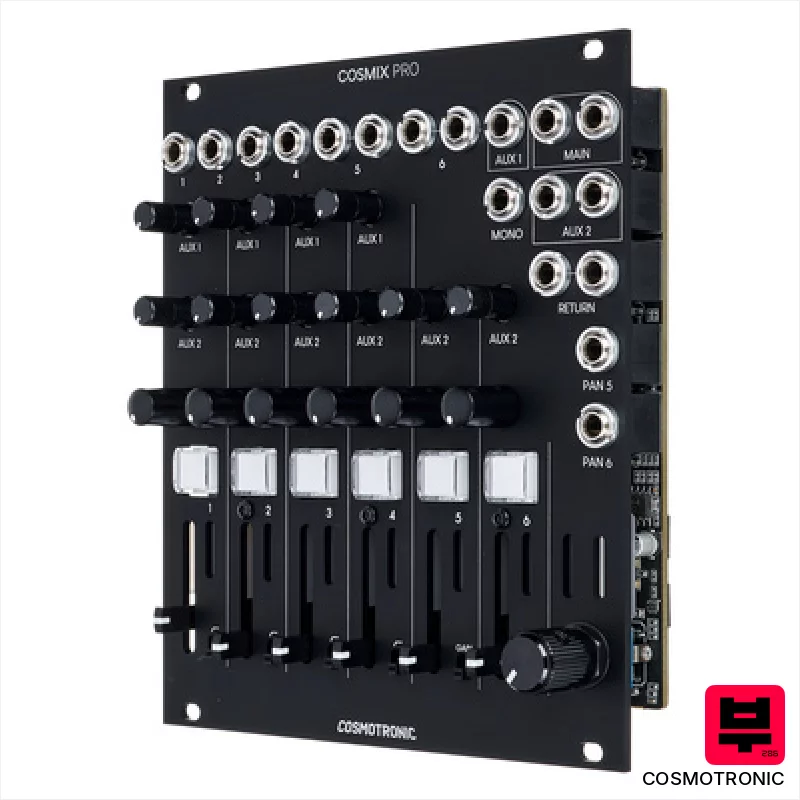
Cosmotronic Cosmix Pro Black
- • Solid build quality with robust faders; smooth, musical EQ shaping; versatile aux sends for external effects; compact depth saves valuable Eurorack space
- • Limited headroom at higher levels; panorama CV inputs lack fine-tuning control; mono effect return lacks dedicated level control
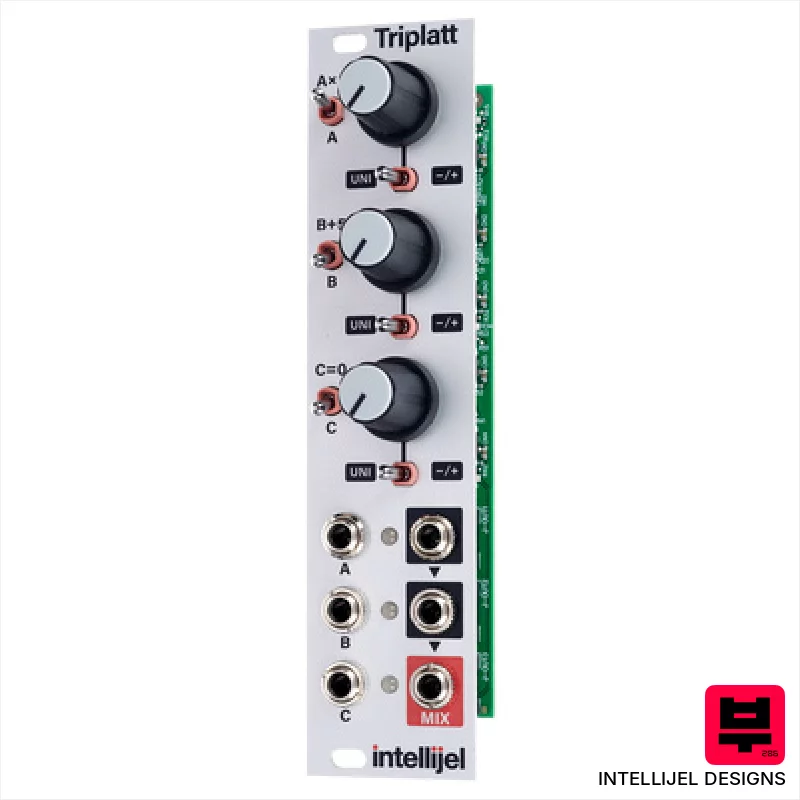
Intellijel Designs Triplatt
- • Extremely versatile signal routing and voltage manipulation capabilities.
- • Compact 6HP footprint maximizes space in tight Eurorack cases.
- • Intelligent voltage source functionality simplifies patching and experimentation.
- • Robust Intellijel build quality ensures long-term reliability and stability.
- • Limited channel count may restrict complex mixing scenarios.
- • The attenuvertor’s range can be restrictive for some voltage processing needs.
- • Power draw, while not excessive, can add up in larger systems.
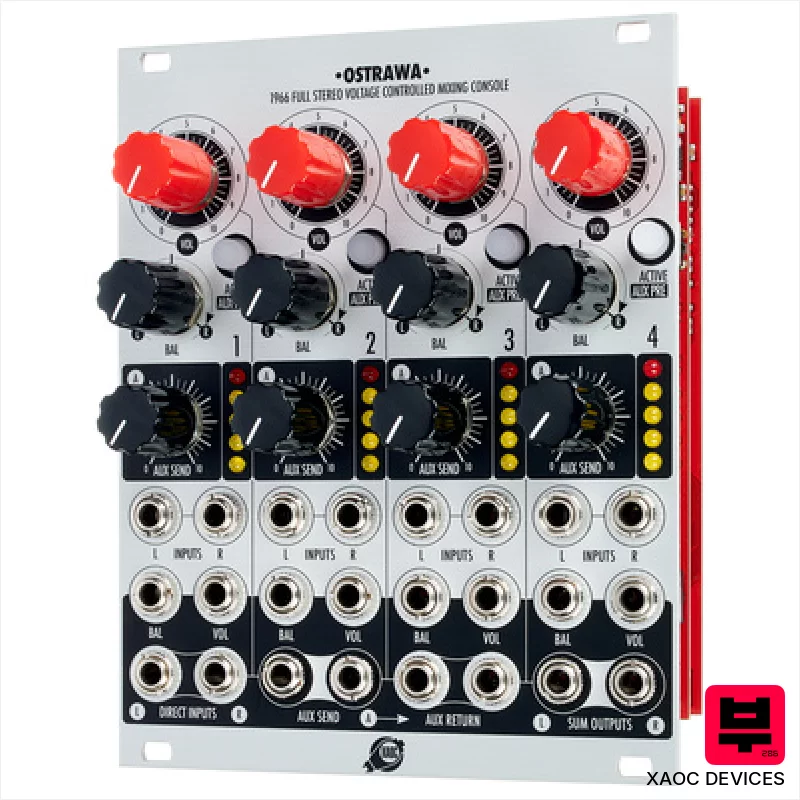
XAOC Devices Ostrawa
- • Exceptional stereo imaging due to careful circuit design.
- • Aux sends provide flexible routing for external effects.
- • CV control over level and balance enables dynamic mixing possibilities.
- • Build quality is superb; feels robust and well-engineered.
- • 20HP footprint can be limiting in smaller modular systems.
- • Lacks EQ or tone shaping capabilities, purely a mixer.
- • Price point positions it as a premium investment for serious modular users.
How to Choose the Best Mixer, Attenuator Modules
Noise Floor
Seriously, a noisy mixer will ruin a delicate patch faster than anything. We're looking for modules that stay quiet, even when pushed. That subtle FM drift you're chasing? It shouldn't be buried in hiss.
Headroom
Can it handle a hot oscillator signal without clipping and introducing harsh distortion? Headroom is crucial for preserving dynamics and getting a clean, punchy sound, especially when layering multiple signals.
Attenuation Range & Accuracy
A good attenuator lets you tame unruly signals and create subtle voltage interactions. We're judging modules on how accurately they control signal levels and whether the range is actually useful for your patching style.
Routing Flexibility
Can you send signals to multiple destinations? Do you need pre/post fader options? The more routing options, the more creative you can get without needing a ton of extra modules.
Build Quality & Ergonomics
Let's be real, flimsy pots and a cramped layout are a pain. We're looking for modules that feel solid and are easy to manipulate, even in a crowded modular case.
Buying Guide
At this price point, you're making trade-offs. Don't expect pristine, broadcast-quality audio - you're getting character and flexibility. Often, you'll see compromises in the build quality (plastic knobs instead of metal) or the number of features. Prioritize a low noise floor above all else, and be realistic about what you need. A couple of well-chosen mixers are better than a cheap, feature-bloated one that introduces noise.
How This List Is Built
We don't play these instruments — we're a catalog, not a review desk, and we'd rather say so than pretend otherwise. This page ranks 15 mixer, attenuator modules from the Thomann catalogue, which is the largest single source of specification data in this category.
Position is computed, not curated. Four signals, in order of weight: how completely the manufacturer documents the instrument (number of published specifications), where it sits in the price range, how specific the model designation is — which filters out generic accessories — and whether a product image exists. The same inputs always produce the same order, so nothing here is shuffled to look fresh.
What this list is good for: narrowing a category down to a shortlist by spec and budget. What it isn't: a substitute for hearing an instrument. Before you buy, read hands-on reviews and, where you can, play it. Full methodology.

