AudioFu
AudioFu Chart · October 2026
Best Mixer, Attenuator Modules for Professional 2026
The top pick is Frap Tools CGM Quad Stereo Channel ($592). Befaco Hexmix Eurorack Synthesizer Module gives you the most for the money at $458. Ranked by the AudioFu Index from 81 models across 29 brands, prices checked every night.
Last updated: October 15, 2026
Top 10
Full detail for the 10 highest AudioFu Index scores. Every other model is listed below.
-
The Frap Tools CGM Quad Stereo Channel is a seriously well-engineered mixer module. It’s perfect for those building larger, more complex modular systems who need precise control and flexible routing—especially if you're already invested in the CGM ecosystem. The CV control is a real highlight, allowing for incredibly dynamic and evolving mixes.
Pros
- Exceptional build quality with robust metal chassis and tight tolerances
- Flexible aux sends offer extensive routing possibilities for complex signal chains
- CV control over multiple parameters unlocks expressive, dynamic mixing
Cons
- 18HP footprint can be restrictive in smaller modular setups
- Power draw is relatively high, demanding a powerful PSU
36AudioFu
IndexStableno change since Aug 14Aug 14$592 now$592€529 at Thomann · in stockCheck price ↗ -
Xaoc Devices Praga Voltage Controlled Mixing Console
Praga · XAOC Devices
8 for sale on Reverb1 finish at Thomann
The Praga is a beautifully designed, sonically clean mixer that's perfect for Eurorack users serious about stereo imaging. It's a great central hub for complex modular patches, particularly those involving multiple sound sources needing precise volume and panning control. If you’re building a serious, stereo-focused modular system, this is a must-have component.
Pros
- Excellent headroom, handles hot signals with ease
- AUX sends offer flexible routing for effects chains
- Intuitive layout simplifies complex stereo mixing tasks
Cons
- Power consumption is relatively high for a mixer module
- Limited routing options compared to more expansive modular mixers
60AudioFu
IndexStableno change since Aug 14Aug 14$514 now$514€459 at Thomann · in stockCheck price ↗ -
The Ostrawa is a beautifully designed and sonically transparent stereo mixer. It's a fantastic centerpiece for complex modular setups, especially those emphasizing spatial audio and dynamic control—perfect for ambient soundscapes, experimental electronic music, or anyone needing pristine stereo summing. It's a high-end component that truly elevates a modular system’s sonic potential.
Pros
- Exceptional stereo imaging due to careful circuit design.
- Aux sends provide flexible routing for external effects.
- CV control over level and balance enables dynamic mixing possibilities.
Cons
- 20HP footprint can be limiting in smaller modular systems.
- Lacks EQ or tone shaping capabilities, purely a mixer.
36AudioFu
IndexStableno change since Aug 14Aug 14$536 now$536€479 at Thomann · in stockCheck price ↗ -
The Quasar is a seriously cool module for sound designers and experimental musicians who want to craft believable 3D audio. It’s a complex beast, but the ability to individually sculpt the spatial characteristics of each input is mind-blowing – perfect for creating evolving soundscapes and unique effects.
Pros
- Exceptional binaural processing creates genuinely immersive, spatial audio landscapes.
- Flexible signal routing offers immense creative possibilities for sound design.
- Intuitive OLED display and encoders streamline complex parameter adjustments.
Cons
- 16 TE width can be restrictive in smaller Eurorack cases.
- Steep learning curve; mastering the spatial parameters takes dedication.
32AudioFu
IndexStableno change since Aug 14Aug 14$536 now$536€479 at Thomann · in stockCheck price ↗ -
The Hexmix is a fantastic performance mixer for Eurorack, offering a surprising amount of EQ control per channel. It's ideal for sound designers, experimental musicians, or anyone wanting a really clean and flexible way to manage multiple synth voices – just be aware of its HP cost.
Pros
- Excellent EQ flexibility per channel provides tonal shaping
- Solid build quality with robust knobs and sturdy panel
- Master EQ adds further refinement and polish to the mix
Cons
- HP footprint is significant, impacting modular density
- Price point positions it as a premium investment
63AudioFu
IndexStableno change since Aug 14Aug 14$458 now$458€409 at Thomann · in stockCheck price ↗ -
This NANO Modules Performance Mixer is a seriously useful tool for Eurorack users wanting hands-on control and automation. It's ideal for live performers and studio engineers needing precise level adjustments and flexible routing – the CV looper alone makes it a standout. It’s a premium-priced mixer that brings a lot of performance-oriented features into a compact footprint.
Pros
- Excellent CV looper offers real-time performance automation.
- Faders feel solid and responsive; a noticeable quality upgrade.
- Stereo effect returns provide flexible routing options.
Cons
- Limited mono channel count might restrict complex stereo setups.
- Build quality, while good, feels slightly plasticky for the price.
35AudioFu
IndexStableno change since Aug 14Aug 14$509 now$509€455 at Thomann · in stockCheck price ↗ -
The Cosmix Pro Black is a seriously useful little mixer for Eurorack setups. It's a well-built, compact solution for managing multiple signals, and the aux sends are a great bonus for adding external effects. This is perfect for modular synth enthusiasts who need a clean, efficient way to route and process audio without breaking the bank.
Pros
- Solid build quality with robust faders; smooth, musical EQ shaping; versatile aux sends for external effects; compact depth saves valuable Eurorack space
Cons
- Limited headroom at higher levels; panorama CV inputs lack fine-tuning control; mono effect return lacks dedicated level control
37AudioFu
IndexStableno change since Aug 14Aug 14$469 now$469€419 at Thomann · in stockCheck price ↗ -
The ADDAC 814 is a serious routing powerhouse for modular enthusiasts. It’s not a simple mixer; it’s a matrix, offering incredible signal flow possibilities, but be prepared to invest time learning its intricacies. Perfect for experimental sound designers and those building complex, multi-signal chains.
Pros
- Excellent routing flexibility for complex modular setups.
- Robust construction; feels solid despite its size.
- Switchable Eurorack/line level offers great adaptability.
Cons
- The physical size (25+8 TE) demands considerable space.
- Learning curve is steep; matrix mixers aren't inherently intuitive.
-
This unit is great for stacking two distinct sound layers without fighting for control. You can choose between a smooth or discrete character for each layer, which helps shape how signals blend together. It fits easily into a rack at just 32 mm deep, but the wide 14 HP footprint takes up significant space. Best for builders who want flexible CV mixing without extra gear.
Pros
- Two independent scanning mixers for layered sound design
- Smooth or discrete character selectable for every layer
- Built-in attenuators handle the full CV voltage range
Cons
- 14 HP width is large for a single module
- No dedicated MIDI or USB control ports listed
34AudioFu
IndexStableno change since Aug 17Aug 17$435 now$435€389 at Thomann · in stockCheck price ↗ -
Tobinski's Interpolating Scanner is a seriously creative tool for sound design and sequencing. It's fantastic for experimental musicians and those wanting to add movement and evolving textures to their patches – the interpolation is silky smooth, a real step up from simpler scanners. The flexible routing is a huge plus, allowing for complex signal manipulation.
Pros
- Exceptional interpolation smoothness, avoids harsh stepping.
- Robust build quality with sturdy faders and knobs.
- Flexible routing options with multiple outputs.
Cons
- 18HP footprint can be restrictive in smaller racks.
- Price point may be a barrier for budget-conscious users.
33AudioFu
Index↓ 2.5%since Aug 14 · lowest so far$447 · Aug 14$435 now$435€389 at Thomann · in stockCheck price ↗
All 81 mixer, attenuator modules
Same index, same nightly prices — compact. Colour options of one model share a row. Tap a photo to zoom.
- 11
Hexinverter Électronique Mutant Hot GlueHexinverter Électronique34↓ 4.6%$373€333$373€333Check ↗
- 12
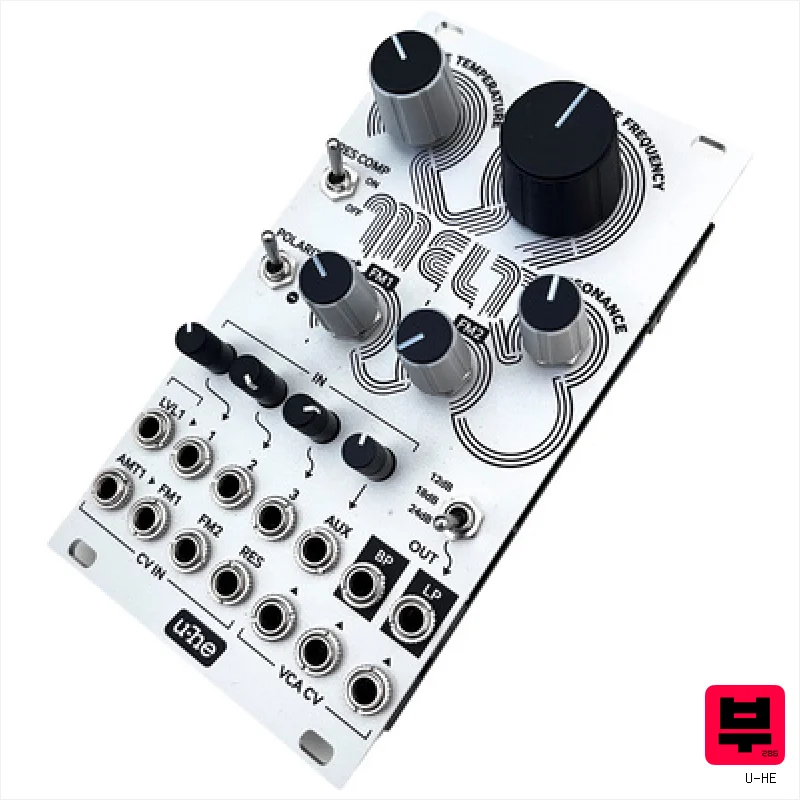
u-he CVilizationu-he34Stable$367€328$367€328Check ↗
- 13
AJH Synth Muting Mixer & VCA blackAJH Synth32Stable$335€299$335€299Check ↗
- 14
Doepfer A-138b "EXP" Mixer with Logarithmic PotsA-138M · Doepfer · 12 finishes87Stable$167€149$167€149Check ↗
- 15
Erica Synths Pico MixerDrum Mixer · Erica Synths70Stable$234€209$234€209Check ↗
- 16
Erica Synths Black Output V2Black Output Module V2 · Erica Synths70Stable$324€289$324€289Check ↗
- 17
Erica Synths Drum Mixer LiteErica Synths65↓ 8.3%$174€155$174€155Check ↗
- 18
Doepfer A-135-1 QVCA / VCMIX Quad Linear VCA and Voltage Controlled…A-135-1 · Doepfer63Stable$166€148$166€148Check ↗
- 19
Make Noise X-PAN ModuleX-Pan · Make Noise61Stable$324€289$324€289Check ↗
- 20
Modbap Modular TransitModbap Modular58↓ 23.2%$223€199$223€199Check ↗
- 21
Befaco STMix Eurorack Synthesizer ModuleSTMix · Befaco57Stable$165€147$165€147Check ↗
- 22
Dreadbox Psychosis ModulePsychosis · Dreadbox56Stable$185€165$185€165Check ↗
- 23
Frap Tools CGM Creative Mixer Series - QSC Stereo ChannelCGM Stereo Channel · Frap Tools56↑ 5.3%$223€199$223€199Check ↗
- 24
Joranalogue Audio Design Mix 3Joranalogue Audio Design54Stable$174€155$174€155Check ↗
- 25
Doepfer A-135-5Doepfer43↓ 3.1%$212€189$212€189Check ↗
- 26
Frap Tools CGM Creative Mixer Series - G GroupCGM Group · Frap Tools42Stable$230€205$230€205Check ↗
- 27
Tiptop Audio MIX7 2018MIX7 Black · Tiptop Audio · 2 finishes69↓ 3.3%$100€89$100€89Check ↗
- 28
Intellijel Designs Xfade 1UIntellijel Designs40↓ 2.9%$223€199$223€199Check ↗
- 29
Klavis Mixwitch BlackKlavis · 2 finishes40Stable$162€145$162€145Check ↗
- 30
Intellijel Designs Aux Mix 1UIntellijel Designs38Stable$230€205$230€205Check ↗
- 31
Befaco A*B+C V2Befaco37Stable$167€149$167€149Check ↗
- 32
ADDAC 815 MixologyADDAC36Stable$207€185$207€185Check ↗
- 33
Vostok Instruments AssetVostok Instruments36Stable$222€198$222€198Check ↗
- 34
Vostok Instruments HiveVostok Instruments36Stable$223€199$223€199Check ↗
- 35
ADDAC 713 Stereo Discrete MixerADDAC36Stable$268€239$268€239Check ↗
- 36
Tiptop Audio Buchla Model 207tTiptop Audio36Stable$279€249$279€249Check ↗
- 37
Doepfer A-135-3Doepfer41Stable$153€137$153€137Check ↗
- 38
4ms Listen Four4ms35↓ 2.0%$218€195$218€195Check ↗
- 39
Erica Synths Black Mixer / Splitter V2Black Mixer V2 · Erica Synths59Stable$106€95$106€95Check ↗
- 40
Shakmat Modular Griffin's ClawsShakmat Modular34Stable$324€289$324€289Check ↗
- 41
Shakmat Modular Aeolus MixerShakmat Modular34Stable$166€148$166€148Check ↗
- 42
Tiptop Audio Buchla Model 257tTiptop Audio33↑ 5.7%$188€168$188€168Check ↗
- 43
4ms Listen Four Quarters4ms33↑ 1.4%$252€225$252€225Check ↗
- 44
Bastl Instruments BuddyBastl Instruments32Stable$174€155$174€155Check ↗
- 45
Schlappi Engineering EddySchlappi Engineering32Stable$324€289$324€289Check ↗
- 46
Vostok Instruments TraceVostok Instruments36Stable$156€139$156€139Check ↗
- 47
Vostok Instruments PathVostok Instruments36Stable$156€139$156€139Check ↗
- 48
Frap Tools CGM Creative Mixer Series - I InsertCGM I (Insert) · Frap Tools34Stable$156€139$156€139Check ↗
- 49
NANO Modules ST-MARNANO Modules35Stable$151€135$151€135Check ↗
- 50
Befaco STMIX 1U Eurorack Synthesizer Module1U STMix · Befaco51Stable$111€99$111€99Check ↗
- 51
Frap Tools 333 - ProAudio Sum & Distribution333 · Frap Tools46Stable$119€106$119€106Check ↗
- 52
Acid Rain Technology JunctionAcid Rain Technology34Stable$144€129$144€129Check ↗
- 53
Intellijel Designs TriplattIntellijel Designs38Stable$129€115$129€115Check ↗
- 54
Xaoc Devices Bytom Impulse IntegratorBytom · XAOC Devices49↓ 4.5%$95€85$95€85Check ↗
- 55
Doepfer A-138-6 1UDoepfer41Stable$111€99$111€99Check ↗
- 56
Intellijel Designs MixupIntellijel Designs38Stable$110€98$110€98Check ↗
- 57
Weston Precision Audio M3S Stereo MixerWeston Precision Audio28↑ 7.2%$133€119$133€119Check ↗
- 58
Acid Rain Technology NavigatorAcid Rain Technology34Stable$118€105$118€105Check ↗
- 59
Befaco AtteBefaco37Stable$106€95$106€95Check ↗
- 60
Befaco Mixer V2Befaco37Stable$106€95$106€95Check ↗
- 61
Klavis Tweakers PlusKlavis38↓ 3.3%$100€89$100€89Check ↗
- 62
ADDAC 218 AttenuvertersADDAC30↑ 10.5%$118€105$118€105Check ↗
- 63
Intellijel Designs Unity MixerIntellijel Designs38Stable$96€86$96€86Check ↗
- 64
Intellijel Designs Quadratt 1UIntellijel Designs38Stable$95€85$95€85Check ↗
- 65
XAOC Devices KoninXAOC Devices36Stable$100€89$100€89Check ↗
- 66
XAOC Devices SopotXAOC Devices36Stable$100€89$100€89Check ↗
- 67
Intellijel Designs Duatt 1UIntellijel Designs38Stable$94€84$94€84Check ↗
- 68
NANO Modules MARNANO Modules35Stable$101€90$101€90Check ↗
- 69
Erica Synths Pico MixerErica Synths70Stable$66€59$66€59Check ↗
- 70
Doepfer A-183-3 AmplifierA-183-3 · Doepfer65Stable$65€58$65€58Check ↗
- 71
Erica Synths Black Mixer / Splitter V2Black Mixer/Splitter V2 · Erica Synths60↓ 2.7%$82€73$82€73Check ↗
- 72
Behringer 305 EQ/Mixer/Output Eurorack Synthesizer Module305 EQ/Mixer/Output · Behringer47↓ 16.4%$63€56$63€56Check ↗
- 73
Doepfer A-183-2 Offset GeneratorDoepfer41Stable$57€51$57€51Check ↗
- 74
Doepfer A-183-5Doepfer41Stable$77€69$77€69Check ↗
- 75
Klavis TweakersKlavis · 2 finishes41↓ 2.7%$82€73$82€73Check ↗
- 76
Intellijel Designs Att 1UIntellijel Designs38Stable$28€25$28€25Check ↗
- 77
Intellijel Designs Stereo Mixer 1UIntellijel Designs38Stable$83€74$83€74Check ↗
- 78
Rides In The Storm MULRides In The Storm35Stable$62€55$62€55Check ↗
- 79
Behringer CP3A-M MixerBehringer34Stable$32€29$32€29Check ↗
- 80
Rides In The Storm XXMRides In The Storm31↑ 6.7%$90€80$90€80Check ↗
- 81
Rides In The Storm NGMRides In The Storm30↑ 8.2%$59€53$59€53Check ↗
Mixer, Attenuator Modules by the numbers
Measured across all 96 models we track, not a sample.
Median $156 — half of all mixer, attenuator modules here cost less.
How to choose the best mixer, attenuator modules
Gain Staging & Headroom
Pro modules need serious headroom. Clipping during a live performance or while tracking is a non-starter. Look for modules that can handle hot signals without introducing unwanted distortion unless that's the effect you're going for - a subtle saturation can be nice, but unpredictable breakup isn't.
Attenuation Accuracy
A sloppy attenuator will ruin your mixer's stereo image and introduce phase issues. We're talking about precise, repeatable attenuation-especially crucial when using VCAs and complex modulation sources.
Routing Flexibility
Professional rigs often involve multiple signal paths. Modules with flexible routing options (pre/post attenuation switches, multiple inputs/outputs) are essential for complex patching and signal manipulation.
Noise Floor
A noisy mixer is a deal-breaker. Listen carefully for hiss or hum, especially when attenuating signals. A low noise floor is paramount when you're trying to capture subtle nuances in your sound.
Build Quality & Reliability
Let's be honest, modular synths are an investment. Cheap plastic pots and flimsy wiring are a recipe for disaster on stage. Look for robust construction and high-quality components that can withstand the rigors of gigging.
Buying guide
Alright, so you're wrestling with a modular rig that's spitting out more signals than you can handle. Mixer and attenuator modules aren't just 'nice to haves' anymore; they're essential for taming that beast and actually getting a usable, gig-ready sound. Forget the flimsy, one-knob affairs-we're talking about modules that offer real control and headroom when you're building soundscapes for a live set or tracking a complex patch. Let's dive into what separates the wheat from the chaff.
Don't be fooled by flashy features. A simple, well-built attenuator will always outperform a feature-laden mess. Pay close attention to the taper of the attenuators - a logarithmic taper feels more natural for volume adjustments.
Be prepared to spend a bit more for modules with truly accurate attenuation and a low noise floor; those corners often get cut on budget modules and it shows in the final sound. Ultimately, choose modules that complement your workflow and sonic goals.
How the AudioFu Index works
Five measured signals and nothing else — no stars from strangers, no “tested by experts” we didn’t do. The weights are fixed and public. We don’t play these instruments; we measure the market around them.
This chart covers 96 mixer, attenuator modules from the Thomann catalogue. Before you buy, read hands-on reviews and, where you can, play it. Full methodology.
AudioFu earns a commission when you buy through our Thomann links. It never changes the order — the index does.
- Demand40%
How many of this exact model are for sale on Reverb right now — what musicians actually buy and resell.
- Lineup20%
How many finishes Thomann stocks — makers expand the models that sell.
- Price15%
Where the price has moved since we started tracking in August.
- Specs15%
How completely the maker documents it.
- Maker10%
How deep the brand’s range is in this category.
Questions
What's the difference between an attenuator and a mixer?
An attenuator primarily reduces signal level-it's a voltage-controlled resistor. A mixer combines multiple signals, often with adjustable levels for each. You'll often want both in your modular setup.
Can I use a regular audio mixer with my modular?
Technically, yes, but you'll likely lose a lot of headroom and introduce unwanted noise. Modular signals often have unique voltage ranges and impedance characteristics that external mixers aren't designed to handle.
What's a 'unity gain' attenuator?
It's an attenuator that can pass a signal without reducing its level. This is useful for impedance matching or when you need to preserve the original signal strength.
How important is the attenuator taper?
It's surprisingly important. A logarithmic taper (like a potentiometer) feels more natural for volume adjustments - it's more proportional to the rotation of the knob. Linear tapers can feel abrupt and unnatural.
My modular mixer is introducing distortion. What's happening?
You're likely overloading the mixer's internal circuitry. Check your signal levels, reduce the attenuation, or consider a mixer with more headroom.