
Best Tiptop Audio Mixer, Attenuator Modules 2026
Okay, so you're diving into the modular world and need a solid mixer and attenuation setup? Tiptop Audio has quietly become a go-to for a lot of serious modular users - and for good reason. Their modules aren't flashy, but they're built to handle the heat of a live performance or a complex studio patch, offering a unique sonic character that's both clean and surprisingly musical. Let's break down why Tiptop's gear deserves a serious look.
Last updated: April 11, 2026
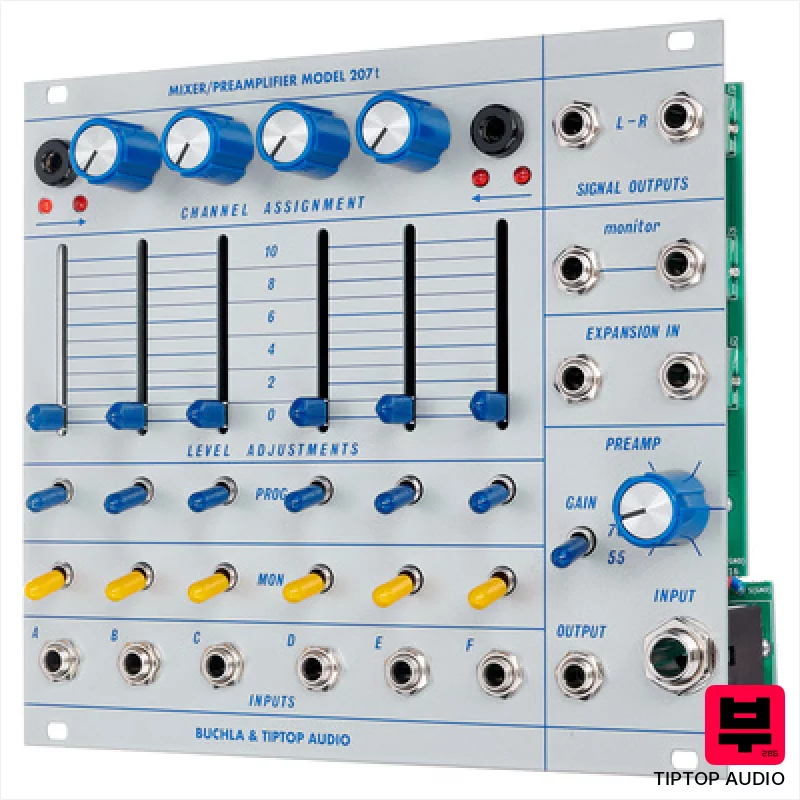
Tiptop Audio Model 207t
- • Solid, metal build feels robust and ready for gigging.
- • Panorama CV control offers creative, dynamic mixing possibilities.
- • Gain switch (55/70dB) provides excellent flexibility for signal levels.
- • Monitor outputs are invaluable for headphone tracking and critical listening.
- • Depth (28mm) can be restrictive in shallow Eurorack cases.
- • Gain range might be overwhelming for absolute beginners to modular synthesis.
- • The faders feel a bit plasticky compared to higher-end mixer modules.
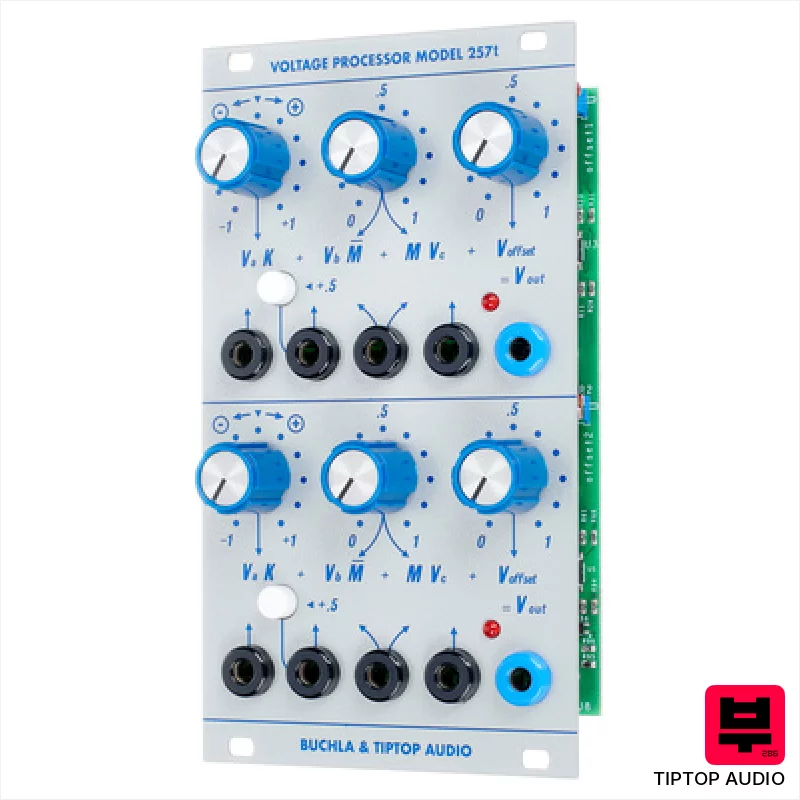
Tiptop Audio Model 257t
- • Dual voltage processing offers exceptional flexibility for complex modulation.
- • Voltage-controlled crossfader adds dynamic, expressive control over signals.
- • Compact 14HP footprint maximizes space in tight Eurorack setups.
- • Solid aluminum faceplate provides a premium feel and durable build.
- • Limited number of inputs per channel may restrict complex signal routing.
- • Offset adjustments can be a little fiddly without precise calibration.
- • Power draw, while not excessive, is noticeable in power-constrained systems.
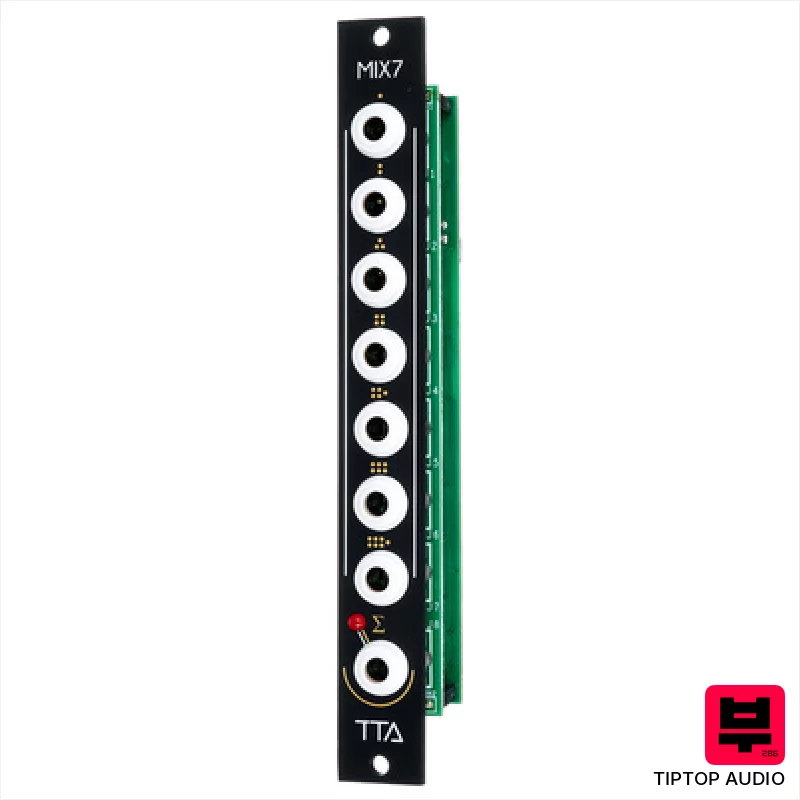
Tiptop Audio MIX7 Black
- • Extremely compact 3HP footprint maximizes valuable rack space.
- • Solid build quality with Tiptop's signature robust metal chassis.
- • Low-noise circuit ensures clean signal paths even with hot signals.
- • Versatile for audio, CV, and trigger mixing, expands modular possibilities.
- • Limited to 7 inputs; might be restrictive for larger setups.
- • 3HP size can make knob adjustments a bit fiddly.
- • Analog design means no digital recall or advanced routing options.

Tiptop Audio MIXZ
- • Excellent noise floor for a Eurorack mixer at this price.
- • Flexible three-section design allows for complex routing.
- • Gain controls on each channel provide precise level shaping.
- • Compact 10HP footprint maximizes space in tight racks.
- • The master gain on Mixer B can be a little too sensitive.
- • MixBus routing can feel slightly unintuitive initially.
- • Plastic knobs feel a little less robust than metal alternatives.
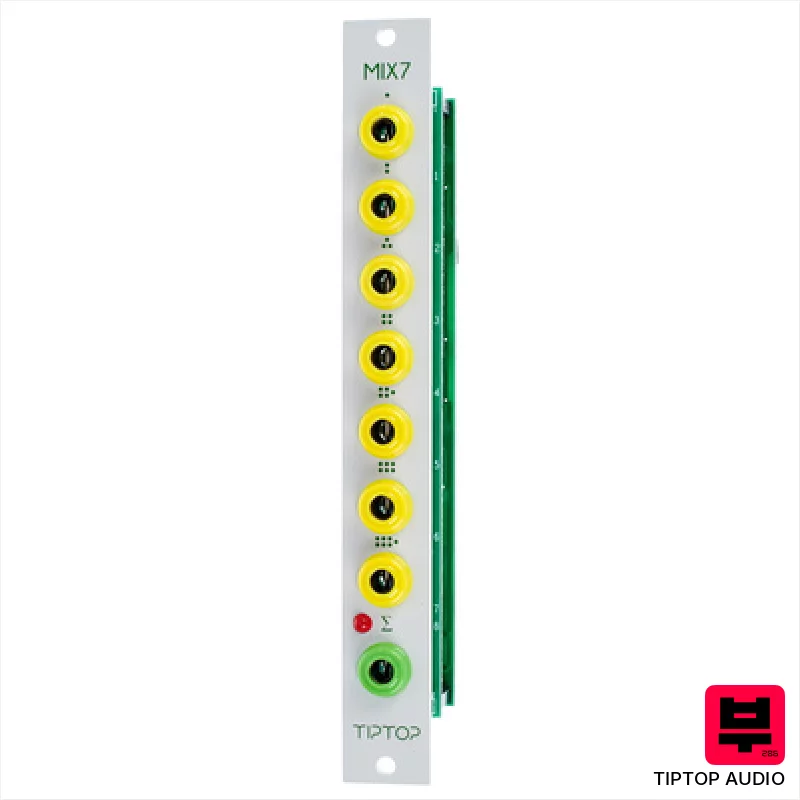
Tiptop Audio MIX7
- • Extremely compact 3HP design maximizes valuable rack space.
- • Solid Tiptop build quality; feels robust and reliable.
- • Clean, low-noise circuit preserves signal integrity.
- • Versatile for audio, CV, and trigger mixing applications.
- • Limited to 7 inputs; may not suit complex routing needs.
- • Analog design introduces some inherent noise floor at higher levels.
- • 3HP size restricts internal component selection, impacting ultimate performance.
How to Choose the Best Mixer, Attenuator Modules
Build Quality
Tiptop's panels are thick, the knobs feel rock-solid, and the internal components are clearly high-grade. They've definitely prioritized durability - these modules are gig-ready and can take a beating, unlike some of the thinner-panelled options out there.
Sonic Character
While they aim for transparency, Tiptop's mixers don't completely disappear. They impart a subtle warmth and a slightly rounded low-end that prevents harshness, especially when dealing with aggressive oscillators or noisy effects. It's a subtle thing, but it's there and it's welcome.
Attenuation Capabilities
The attenuation on Tiptop modules is clean and precise. You're getting a full range of control without introducing unwanted noise or distortion, which is crucial for shaping complex signals and taming unruly voltage sources. It's not just about lowering levels; it's about sculpting dynamics.
Modular Integration
Tiptop designs with the modular workflow in mind. The module spacing is standard, the power requirements are reasonable, and the signal flow is intuitive. They just fit into a modular system seamlessly, unlike some modules that feel like an afterthought.
Routing Flexibility
Tiptop's mixers offer a surprising amount of routing options for their size. You'll find aux sends, pre/post fader switching, and sometimes even panning capabilities, allowing for creative signal manipulation and a more dynamic mix, especially valuable for live performance.
Buying Guide
If you're on a tight budget, you can find cheaper mixers, but you'll likely compromise on build quality or sonic character. Tiptop sits in a sweet spot - they're not the absolute cheapest, but the extra investment is justified by the robustness and the subtly pleasing sound. Look for used modules to save a bit, but be prepared to pay a premium for the reliability - you don't want your mixer failing mid-gig.
How This List Is Built
We don't play these instruments — we're a catalog, not a review desk, and we'd rather say so than pretend otherwise. This page ranks 5 mixer, attenuator modules from the Thomann catalogue, which is the largest single source of specification data in this category.
Position is computed, not curated. Four signals, in order of weight: how completely the manufacturer documents the instrument (number of published specifications), where it sits in the price range, how specific the model designation is — which filters out generic accessories — and whether a product image exists. The same inputs always produce the same order, so nothing here is shuffled to look fresh.
What this list is good for: narrowing a category down to a shortlist by spec and budget. What it isn't: a substitute for hearing an instrument. Before you buy, read hands-on reviews and, where you can, play it. Full methodology.

