AudioFu
AudioFu Chart · October 2026
Best Mixer, Attenuator Modules Under $300 2026
The top pick is Doepfer A-138b "EXP" Mixer with Logarithmic Pots ($66). Erica Synths Pico Mixer leads the high end. Ranked by the AudioFu Index from 64 models across 21 brands, prices checked every night.
Last updated: October 15, 2026
Top 10
Full detail for the 10 highest AudioFu Index scores. Every other model is listed below.
-
Doepfer A-138b "EXP" Mixer with Logarithmic Pots
A-138b · Doepfer
11 for sale on Reverb12 finishes at Thomann
The A-138b is a straightforward, no-frills mixer that's perfect for anyone just starting out with modular synthesis or needing a simple audio summing solution. Its logarithmic potentiometers make it a breeze to manage levels, and the small size is a huge bonus in cramped racks. It's a workhorse module for basic signal blending.
Pros
- Log pots offer smooth, predictable gain staging.
- Compact 8HP footprint maximizes modular space.
- Robust Doepfer build quality ensures long-term reliability.
Cons
- Limited to two input channels; lacks more advanced routing.
- Logarithmic pots can be less flexible for certain modulation tasks.
-
The Pico Mixer is a brilliant little utility module if you're tight on space and just need a clean, basic way to combine a few signals. It’s ideal for beginners getting into modular or anyone who needs a super-compact submixer for CV or audio. Don't expect a lot of fancy features, but it does exactly what it's supposed to, reliably.
Pros
- Extremely compact 3HP footprint saves precious rack space.
- Simple, clean signal path avoids unwanted coloration.
- Solid Erica Synths build quality feels robust for its size.
Cons
- Limited to three channels; not suitable for complex mixes.
- Lacks panning capabilities, restricting stereo image manipulation.
-
This Drum Mixer is a sweet addition to any Eurorack setup, especially for those crafting electronic percussion or drum machines. The integrated Vactrol compressor gives your drums a really nice, gluey feel – not sterile at all. It's perfect for sound designers and modular enthusiasts looking for a compact, feature-rich drum processing hub.
Pros
- Vactrol compression adds warmth and dynamic shaping beautifully
- Compact 14HP footprint maximizes modular space efficiency
- Assignable aux sends offer flexible routing and effects processing
Cons
- 3.5mm mini jacks can be fiddly with larger patch cables
- Limited channel EQ or filtering capabilities for detailed sculpting
70AudioFu
IndexStableno change since Aug 14Aug 14$234 now$234€209 at Thomann · in stockCheck price ↗ -
The MIX7 Black is a fantastic, no-frills solution for anyone needing a compact mixer in their Eurorack. It's perfect for smaller racks or adding a little extra flexibility to a larger system – especially for those prioritizing a clean, analog signal path and maximizing space. Don't expect fancy features, but it does exactly what it's supposed to, and it does it well.
Pros
- Extremely compact 3HP footprint maximizes valuable rack space.
- Solid build quality with Tiptop's signature robust metal chassis.
- Low-noise circuit ensures clean signal paths even with hot signals.
Cons
- Limited to 7 inputs; might be restrictive for larger setups.
- 3HP size can make knob adjustments a bit fiddly.
69AudioFu
Index↓ 3.3%since Aug 14 · lowest so far$103 · Aug 14$100 now$100€89 at Thomann · in stockCheck price ↗ -
The A-183-3 is a no-frills, reliable DC amplifier perfect for basic signal boosting and attenuation in modular setups. It's a workhorse for beginners getting their feet wet with modular synthesis or anyone needing a simple, clean gain stage – just be mindful of the DC coupling’s potential quirks.
Pros
- Robust Doepfer build quality ensures long-term reliability.
- Simple, clean amplification avoids unwanted coloration of signals.
- Switchable gain provides flexibility for various signal levels.
Cons
- Limited functionality compared to more complex mixer modules.
- DC coupling can introduce unwanted hum or offset with certain signals.
-
The Drum Mixer Lite is a seriously useful little module for any Eurorack drummer or percussion enthusiast. Erica Synths nailed the Vactrol compression – it's not just a gimmick, it genuinely adds character and glue to your drum sounds. Perfect for smaller systems or anyone wanting a dedicated drum mixing solution without taking up too much space.
Pros
- Excellent Vactrol compression adds warmth and dynamic shaping.
- Compact 10HP footprint maximizes modular space efficiency.
- Well-implemented gain staging preserves signal integrity.
Cons
- 3.5mm mini-jacks can feel flimsy with frequent patching.
- Limited channel count might restrict larger drum setups.
65AudioFu
Index↓ 8.3%since Aug 14 · lowest so far$189 · Aug 14$174 now$174€155 at Thomann · in stockCheck price ↗ -
Doepfer A-135-1 QVCA / VCMIX Quad Linear VCA and Voltage Controlled…
A-135-1 · Doepfer
7 for sale on Reverb1 finish at Thomann
The A-135-1 is a workhorse mixer for any Eurorack setup. It’s a straightforward, reliable way to manage multiple signals and automate levels with CV, perfect for those who prioritize clean mixing and predictable behavior over fancy features. A solid choice for beginners and experienced modular users alike.
Pros
- Excellent signal integrity, minimal noise floor for clean mixing.
- Robust, classic Doepfer build quality; feels very solid.
- Flexible routing options with individual channel outputs.
Cons
- Limited headroom; can clip easily with strong signals.
- 18HP can be restrictive in smaller modular systems.
63AudioFu
IndexStableno change since Aug 14Aug 14$166 now$166€148 at Thomann · in stockCheck price ↗ -
Erica Synths Black Mixer / Splitter V2
Black Mixer/Splitter V2 · Erica Synths
7 for sale on Reverb1 finish at Thomann
The Black Mixer/Splitter V2 is a no-frills, incredibly compact utility module. It’s perfect for Eurorack users needing basic signal routing in a tight space, or for splitting a single signal to multiple destinations. Its simplicity and small size make it a great addition to any modular system.
Pros
- Extremely compact 4HP footprint maximizes modular space.
- Simple, clean signal path avoids unwanted coloration.
- Versatile input/output routing expands patching possibilities.
Cons
- Limited to 4 inputs, restricting larger mixer needs.
- No attenuators or other signal shaping features.
60AudioFu
Index↓ 2.7%since Aug 14 · lowest so far$84 · Aug 14$82 now$82€73 at Thomann · in stockCheck price ↗ -
Erica Synths Black Mixer / Splitter V2
Black Mixer V2 · Erica Synths
7 for sale on Reverb1 finish at Thomann
The Black Mixer V2 is a seriously useful little module for Eurorack users needing a clean, compact summing solution. It's perfect for attenuating signals, creating unique effects chains with AC coupling, or just consolidating multiple oscillators. This is a workhorse for anyone building a smaller or mid-sized modular synth.
Pros
- Solid build quality with robust Eurorack panel construction
- AC coupling provides unique signal shaping possibilities
- Buffered outputs maintain signal integrity across your modular system
Cons
- Limited to three inputs – not ideal for large modular setups
- AC coupling can introduce unwanted low-frequency buildup
-
The Modbap Transit is a seriously useful little mixer for any Eurorack patch. It's great for bringing in external audio sources or adding some dynamic control with the ducking CV. Perfect for those building smaller, focused systems where space and clean signal paths are a priority.
Pros
- Solid build quality for the price point; feels surprisingly robust.
- Ducking CV input offers creative dynamic mixing possibilities.
- Compact 6U width saves valuable space in tight Eurorack setups.
Cons
- 50mA draw is relatively high for a simple mixer; consider power budget.
- 3.5mm mini-jack headphone output isn't ideal for professional monitoring.
58AudioFu
Index↓ 23.2%since Aug 14 · lowest so far$290 · Aug 14$223 now$223€199 at Thomann · in stockCheck price ↗
All 64 mixer, attenuator modules
Same index, same nightly prices — compact. Colour options of one model share a row. Tap a photo to zoom.
- 11
Befaco STMix Eurorack Synthesizer ModuleSTMix · Befaco57Stable$165€147$165€147Check ↗
- 12
Dreadbox Psychosis ModulePsychosis · Dreadbox56Stable$185€165$185€165Check ↗
- 13
Frap Tools CGM Creative Mixer Series - QSC Stereo ChannelCGM Stereo Channel · Frap Tools56↑ 5.3%$223€199$223€199Check ↗
- 14
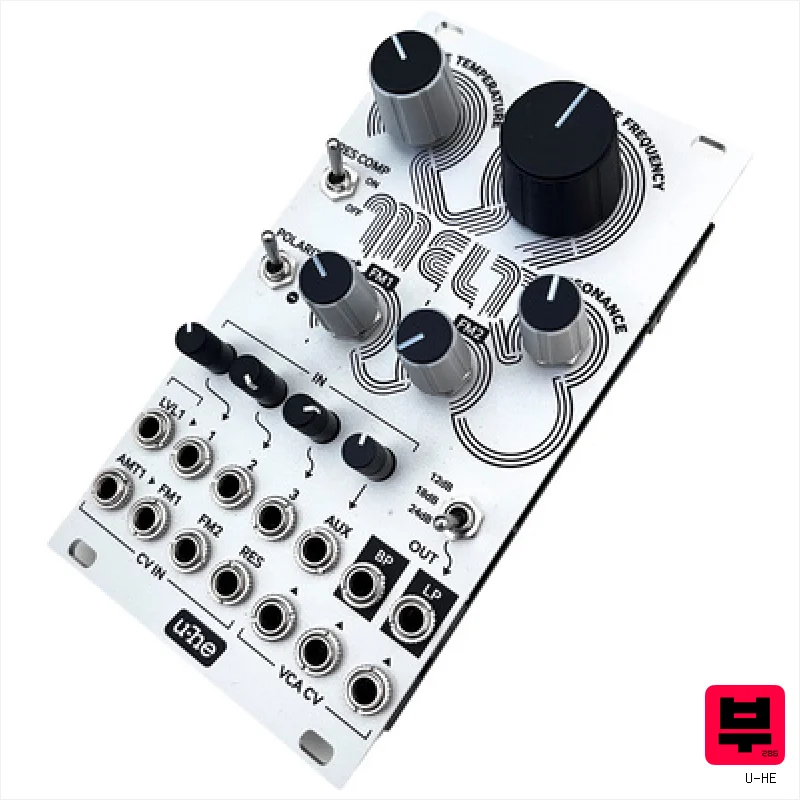
Joranalogue Audio Design Mix 3Joranalogue Audio Design54Stable$174€155$174€155Check ↗
- 15
Befaco STMIX 1U Eurorack Synthesizer Module1U STMix · Befaco51Stable$111€99$111€99Check ↗
- 16
Xaoc Devices Bytom Impulse IntegratorBytom · XAOC Devices49↓ 4.5%$95€85$95€85Check ↗
- 17
Behringer 305 EQ/Mixer/Output Eurorack Synthesizer Module305 EQ/Mixer/Output · Behringer47↓ 16.4%$63€56$63€56Check ↗
- 18
Frap Tools 333 - ProAudio Sum & Distribution333 · Frap Tools46Stable$119€106$119€106Check ↗
- 19
Doepfer A-135-5Doepfer43↓ 3.1%$212€189$212€189Check ↗
- 20
Frap Tools CGM Creative Mixer Series - G GroupCGM Group · Frap Tools42Stable$230€205$230€205Check ↗
- 21
Doepfer A-183-2 Offset GeneratorDoepfer41Stable$57€51$57€51Check ↗
- 22
Doepfer A-183-5Doepfer41Stable$77€69$77€69Check ↗
- 23
Klavis TweakersKlavis · 2 finishes41↓ 2.7%$82€73$82€73Check ↗
- 24
Doepfer A-138-6 1UDoepfer41Stable$111€99$111€99Check ↗
- 25
Doepfer A-135-3Doepfer41Stable$153€137$153€137Check ↗
- 26
Klavis MixwitchKlavis · 2 finishes40Stable$156€139$156€139Check ↗
- 27
Intellijel Designs Xfade 1UIntellijel Designs40↓ 2.9%$223€199$223€199Check ↗
- 28
Intellijel Designs Att 1UIntellijel Designs38Stable$28€25$28€25Check ↗
- 29
Intellijel Designs Stereo Mixer 1UIntellijel Designs38Stable$83€74$83€74Check ↗
- 30
Intellijel Designs Duatt 1UIntellijel Designs38Stable$94€84$94€84Check ↗
- 31
Intellijel Designs Quadratt 1UIntellijel Designs38Stable$95€85$95€85Check ↗
- 32
Intellijel Designs Unity MixerIntellijel Designs38Stable$96€86$96€86Check ↗
- 33
Klavis Tweakers PlusKlavis38↓ 3.3%$100€89$100€89Check ↗
- 34
Intellijel Designs MixupIntellijel Designs38Stable$110€98$110€98Check ↗
- 35
Intellijel Designs TriplattIntellijel Designs38Stable$129€115$129€115Check ↗
- 36
Intellijel Designs Aux Mix 1UIntellijel Designs38Stable$230€205$230€205Check ↗
- 37
Befaco Mixer V2Befaco37Stable$106€95$106€95Check ↗
- 38
Befaco AtteBefaco37Stable$106€95$106€95Check ↗
- 39
Befaco A*B+C V2Befaco37Stable$167€149$167€149Check ↗
- 40
XAOC Devices SopotXAOC Devices36Stable$100€89$100€89Check ↗
- 41
XAOC Devices KoninXAOC Devices36Stable$100€89$100€89Check ↗
- 42
Vostok Instruments PathVostok Instruments36Stable$156€139$156€139Check ↗
- 43
Vostok Instruments TraceVostok Instruments36Stable$156€139$156€139Check ↗
- 44
ADDAC 815 MixologyADDAC36Stable$207€185$207€185Check ↗
- 45
Vostok Instruments AssetVostok Instruments36Stable$222€198$222€198Check ↗
- 46
Vostok Instruments HiveVostok Instruments36Stable$223€199$223€199Check ↗
- 47
ADDAC 713 Stereo Discrete MixerADDAC36Stable$268€239$268€239Check ↗
- 48
Tiptop Audio Buchla Model 207tTiptop Audio36Stable$279€249$279€249Check ↗
- 49
Rides In The Storm MULRides In The Storm35Stable$62€55$62€55Check ↗
- 50
NANO Modules MARNANO Modules35Stable$101€90$101€90Check ↗
- 51
NANO Modules ST-MARNANO Modules35Stable$151€135$151€135Check ↗
- 52
4ms Listen Four4ms35↓ 2.0%$218€195$218€195Check ↗
- 53
Behringer CP3A-M MixerBehringer34Stable$32€29$32€29Check ↗
- 54
Acid Rain Technology NavigatorAcid Rain Technology34Stable$118€105$118€105Check ↗
- 55
Acid Rain Technology JunctionAcid Rain Technology34Stable$144€129$144€129Check ↗
- 56
Frap Tools CGM Creative Mixer Series - I InsertCGM I (Insert) · Frap Tools34Stable$156€139$156€139Check ↗
- 57
Shakmat Modular Aeolus MixerShakmat Modular34Stable$166€148$166€148Check ↗
- 58
Tiptop Audio Buchla Model 257tTiptop Audio33↑ 5.7%$188€168$188€168Check ↗
- 59
4ms Listen Four Quarters4ms33↑ 1.4%$252€225$252€225Check ↗
- 60
Bastl Instruments BuddyBastl Instruments32Stable$174€155$174€155Check ↗
- 61
Rides In The Storm XXMRides In The Storm31↑ 6.7%$90€80$90€80Check ↗
- 62
Rides In The Storm NGMRides In The Storm30↑ 8.2%$59€53$59€53Check ↗
- 63
ADDAC 218 AttenuvertersADDAC30↑ 10.5%$118€105$118€105Check ↗
- 64
Weston Precision Audio M3S Stereo MixerWeston Precision Audio28↑ 7.2%$133€119$133€119Check ↗
Mixer, Attenuator Modules by the numbers
Measured across all 78 models we track, not a sample.
Median $116 — half of all mixer, attenuator modules here cost less.
How to choose the best mixer, attenuator modules
Noise Floor
Seriously, a noisy mixer will ruin your signal. We're looking for modules that stay quiet, even when pushing levels. A low noise floor is non-negotiable for clean recording or subtle sound design.
Attenuation Range & Accuracy
How precisely can you control the signal level coming into the mixer? Cheap attenuators often have uneven response or unpredictable behavior. We're checking for smooth, predictable tapering.
EQ Capabilities
A little EQ goes a long way. Does it offer a basic high/low cut, or something more flexible? Even a simple shelf EQ can rescue a dull patch.
Routing Flexibility
Can you send signals to external effects, create subgroups, or use the mixer for parallel processing? More routing options mean more creative possibilities.
Build Quality & Reliability
Let's be real, modules in this price range will have compromises. We're assessing the robustness of the pots, the quality of the PCB, and overall construction to ensure it'll survive a gigging lifestyle (or at least a few years of heavy use).
Buying guide
Alright, so you're diving into modular and realizing how quickly things add up. A Eurorack case isn't cheap, modules aren't free, and suddenly you need a mixer just to hear your sounds without everything collapsing into a muddy mess. Thankfully, you don't need to drop a grand on a fancy mixer module; there's solid bang-for-your-buck to be found under $300. Let's look at what's actually worth your money.
At this budget, expect some compromises. The pots might not be buttery smooth like those on a $500 mixer, and the EQ might be a bit basic. Don't expect pristine audio; there's almost always a subtle 'character' that some might consider noise.
Prioritize a low noise floor above all else - a clean signal is the foundation for everything else. Look for modules with decent attenuation range, even if the EQ is just a basic high-pass filter.
How the AudioFu Index works
Five measured signals and nothing else — no stars from strangers, no “tested by experts” we didn’t do. The weights are fixed and public. We don’t play these instruments; we measure the market around them.
This chart covers 78 mixer, attenuator modules from the Thomann catalogue. Before you buy, read hands-on reviews and, where you can, play it. Full methodology.
AudioFu earns a commission when you buy through our Thomann links. It never changes the order — the index does.
- Demand40%
How many of this exact model are for sale on Reverb right now — what musicians actually buy and resell.
- Lineup20%
How many finishes Thomann stocks — makers expand the models that sell.
- Price15%
Where the price has moved since we started tracking in August.
- Specs15%
How completely the maker documents it.
- Maker10%
How deep the brand’s range is in this category.
Questions
Can I really get a 8-channel mixer for under $300?
You can, but expect limitations. Most will be simpler in features and have a higher noise floor than pricier options. 4-channel modules are generally a safer bet for better performance at that price point.
What's the difference between an attenuator and a mixer?
An attenuator simply reduces signal level. A mixer combines multiple signals and often includes EQ. Many modules blur the line, offering both functions.
Are these mixers suitable for recording?
Absolutely, but be mindful of the noise floor. A quiet preamp and a clean mixer are essential for decent recordings. Don't expect pristine, studio-grade results, but it's a solid starting point.
What should I look for in terms of headroom?
Headroom is crucial to avoid clipping. Look for modules that can handle hotter signals without distortion. A little headroom buys you flexibility when processing.
Are there any 'hidden' features I should be aware of?
Some cheaper modules might have slightly offset voltage rails, which can subtly alter the timbre of your signals. It's usually not a huge deal, but something to be aware of if you're chasing absolute accuracy.