
Best MIDI Tools Under $2,000 2026
Okay, so you need to level up your MIDI game but your bank account isn't screaming 'platinum.' We've all been there. Forget the boutique, thousand-dollar controllers - there's a surprising amount of serious MIDI gear you can snag for under $2000 that'll actually improve your workflow and sounds. Let's break down what's worth your money and what's just hype.
Last updated: April 11, 2026

Crumar Mojo Pedals Model 2018
- • Robust, steel construction ensures lasting durability and stability.
- • Velocity-sensitive keys offer expressive, nuanced MIDI control.
- • Compact 13-key design maximizes space while retaining functionality.
- • Seamless integration with Crumar Mojo and GSi Gemini platforms.
- • The 13-key layout might feel restrictive for complex performances.
- • Limited to Crumar/GSi ecosystem; broader MIDI compatibility is lacking.
- • Weight makes it less portable; requires dedicated space for use.

Old Blood Noise Endeavors MTET MIDI To Expression Trans.
- • Four isolated expression outputs unlock nuanced, complex modulation.
- • Solid, compact enclosure feels robust and well-built, typical OBNX quality.
- • Tip-connected slider intelligently adapts to various expression pedal standards.
- • MIDI Thru port allows for signal chaining and expanded MIDI control.
- • Limited to expression control; lacks other MIDI conversion capabilities.
- • Requires a separate, standard 9V DC power supply, adding to the cost and clutter.
- • Four expression outputs might be overkill for simpler setups.
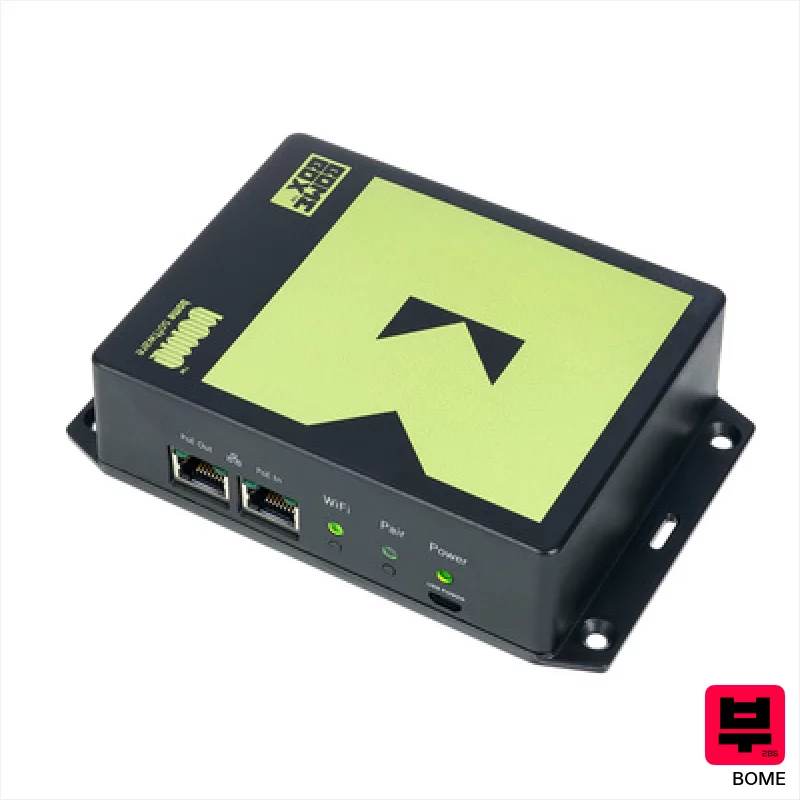
Bome BomeBox with Flange
- • Robust ABS housing offers excellent protection during gigging and studio use
- • Low-latency MIDI routing crucial for tight synchronization with digital audio workstations
- • Integrated MIDI Translator Pro engine unlocks complex MIDI processing capabilities
- • Ethernet switch simplifies network setup for Allen & Heath console users
- • Power supply not included; requires a separate 5V micro-USB power adapter
- • 100 Mbit/s Ethernet speed may be a bottleneck for very large MIDI data streams
- • Configuration, while web-based, can have a steep learning curve for MIDI novices

CME WIDI Jack DIN-5 MIDI Bundle
- • Bluetooth 5 offers genuinely low-latency MIDI transmission for responsive playing.
- • DIN-5 connector expands MIDI connectivity beyond standard 3.5mm jacks.
- • Compact size and magnetic base offer convenient placement and portability.
- • WIDI ecosystem compatibility provides flexibility for expanding MIDI setups.
- • Reliance on Bluetooth introduces potential for interference and connection drops.
- • Powering via MIDI Out can limit options for certain MIDI devices.
- • Limited range compared to traditional wired MIDI solutions.

Lab4Music SiparioX
- • Intuitive color touchscreen simplifies complex MIDI routing tasks.
- • Scenes with instrument icons drastically improve workflow organization.
- • Flexible performance creation allows for intricate layered sounds.
- • Robust build quality suggests durability for studio and stage use.
- • Lack of a dedicated power supply adds to initial investment.
- • Limited USB host functionality restricts compatible controller types.
- • 3.5mm MIDI jacks feel somewhat less robust than standard DIN connectors.
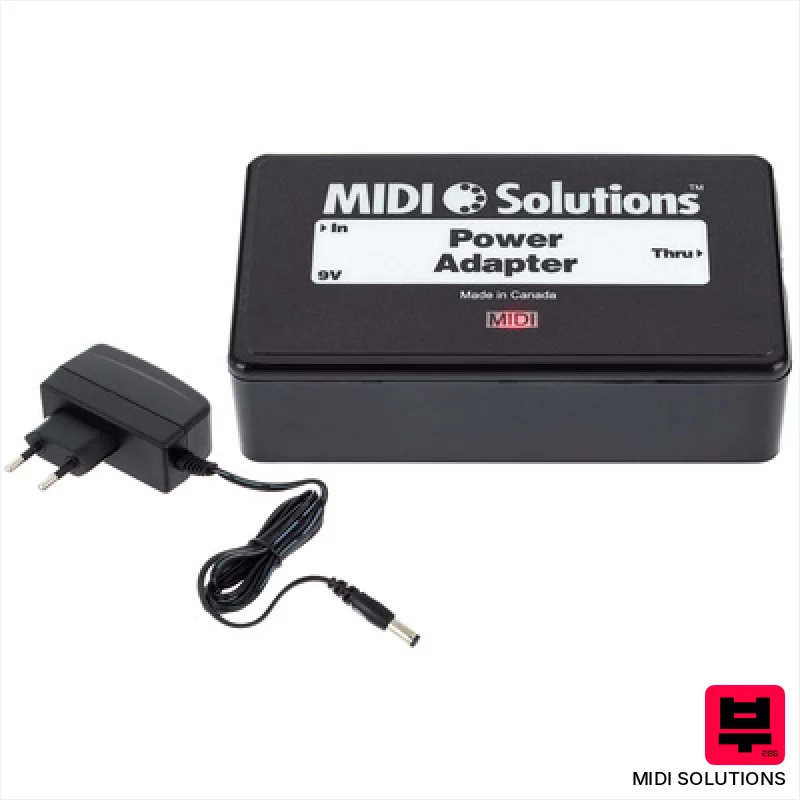
MIDI Solutions Power Adapter PSA Bundle
- • Amplifies MIDI signals reliably over longer cable runs
- • Provides essential power boost for MIDI devices struggling for voltage
- • Thomann power supply ensures consistent, regulated power delivery
- • Compact design minimizes clutter in a crowded studio setup
- • Requires a separate power supply, adding to the overall cost
- • Limited to 9V DC operation, unsuitable for other voltage devices
- • MIDI Thru port offers basic functionality, lacks advanced features
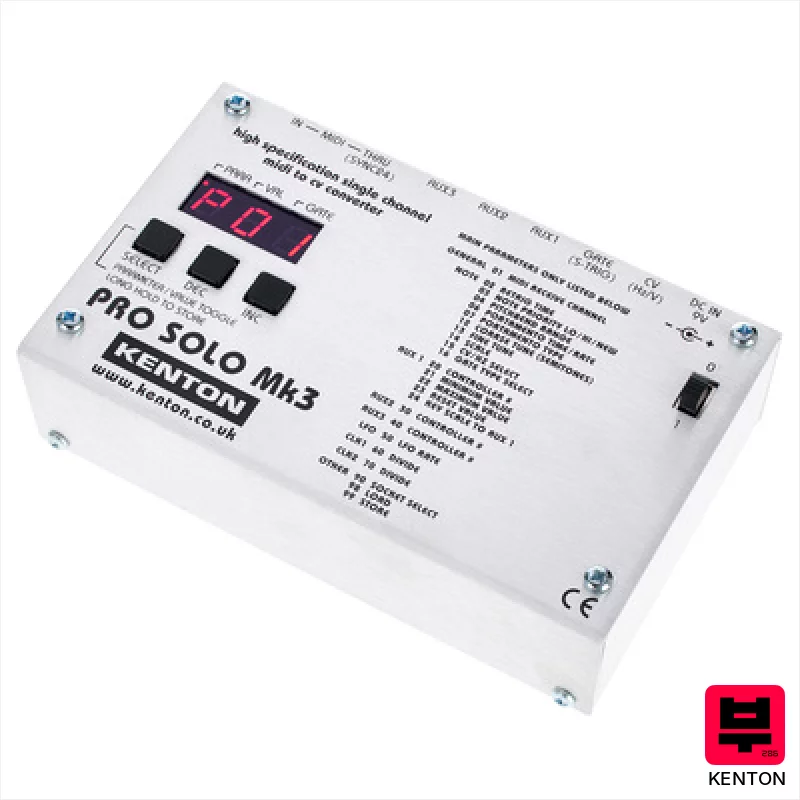
Kenton Pro Solo MkIII
- • Flexible Aux outputs offer unique modulation possibilities.
- • Robust build quality feels immediately durable and reliable.
- • Independent clocking for each Aux channel is a huge workflow boost.
- • Compact size makes it easy to integrate into tight studio spaces.
- • Mini-jack connections feel a little fragile for frequent patching.
- • Single channel limits its use in complex modular setups.
- • Price point might be steep for hobbyists on a tight budget.

Kenton Pro CV to MIDI
- • Excellent tracking accuracy, crucial for complex polyphonic sequences and nuanced expression.
- • The 16-bit AD conversion provides clean, noise-free MIDI data, even from dirty CV signals.
- • Aux CV inputs offer flexible modulation routing for MIDI CC control, expanding creative possibilities.
- • Compact size and robust build quality make it ideal for studio or live performance environments.
- • Limited input jack size (3.5mm) may require adapters for some vintage gear.
- • While versatile, the scale options are geared towards subtractive synthesis workflows.
- • The price point, while reasonable, might be a barrier for absolute beginners.

XVive MD1 Wireless MIDI System
- • Compact design eliminates cable clutter, simplifying studio setups
- • Bluetooth 5's 3ms latency is genuinely usable for live performance
- • Automatic pairing drastically reduces setup time and frustration
- • Modular adapters offer flexibility for different MIDI device configurations
- • Range is limited; walls significantly reduce the 20m advertised distance
- • Powering solely through MIDI-Out might be problematic with some older gear
- • Plastic construction feels a little less premium than competing wireless systems

Conductive Labs MRCC
- • Comprehensive routing capabilities exceed most dedicated MIDI routers.
- • Intuitive OLED display and encoder simplify complex programming on the fly.
- • Six independent arpeggiators offer incredible creative possibilities for sequencing.
- • Class-compliant USB interface provides seamless integration with DAWs and devices.
- • The physical footprint is substantial, requiring significant desk space.
- • The learning curve for advanced routing features can be steep for beginners.
- • While versatile, the build quality feels somewhat plasticky for the price.

Lab4Music enJOY
- • Versatile CV/MIDI conversion simplifies modular synth integration.
- • Joystick offers expressive, real-time modulation possibilities.
- • Compact size makes it ideal for smaller studios or mobile setups.
- • Multiple CV outputs allow complex signal routing and modulation.
- • Limited preset memory restricts complex patch recall.
- • Plastic enclosure feels less robust than metal alternatives.
- • Learning curve for CV modulation can be steep for beginners.
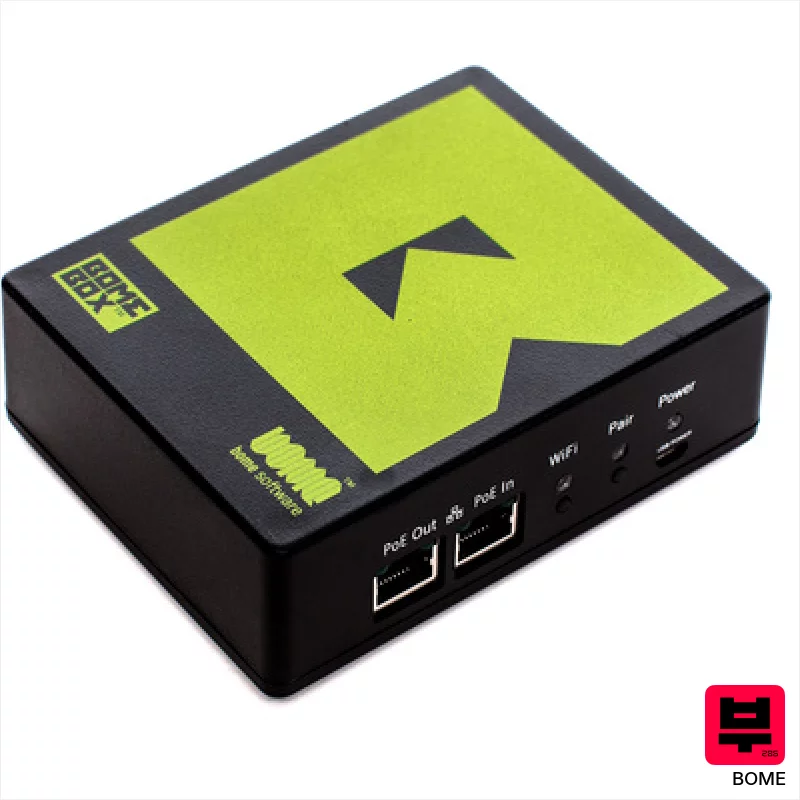
Bome BomeBox
- • Robust ABS housing provides excellent protection for transport and stage use
- • Low-latency MIDI routing is genuinely impressive, crucial for live performance
- • Integrated MIDI Translator Pro unlocks complex MIDI processing capabilities
- • Dual Ethernet ports simplify network integration for larger setups
- • Requires a separate power supply, adding to initial investment and complexity
- • 802.11 b/g/n Wi-Fi is a bit dated, limiting maximum bandwidth
- • Web interface, while functional, could benefit from a more modern design
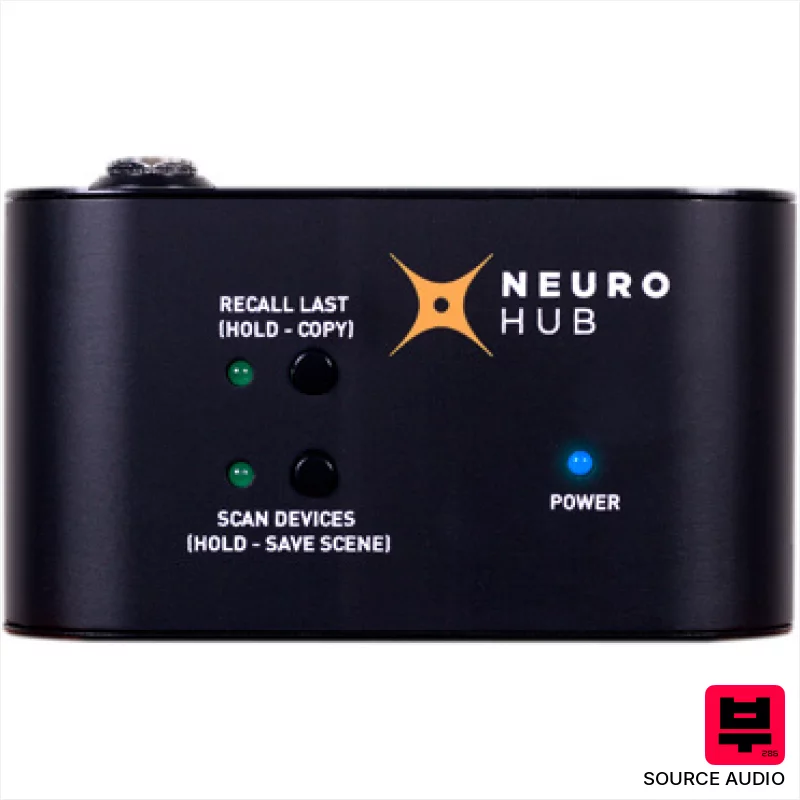
Source Audio Neuro Hub v1
- • Centralizes Source Audio pedal control, simplifying complex setups.
- • Seamless Scene recall streamlines live performance transitions.
- • Passive expression input expands dynamic control options.
- • Compact size minimizes pedalboard footprint without compromise.
- • Limited compatibility beyond Source Audio pedals restricts broader MIDI use.
- • Mini-USB port feels dated and somewhat fragile.
- • Lack of individual pedal parameter editing within Scenes is a drawback.

CME WIDI Thru6 BT
- • Compact design maximizes desk space, ideal for crowded studios.
- • Bluetooth MIDI offers flexible, wireless connectivity options.
- • Six outputs allow complex routing to multiple devices.
- • Robust USB-C power ensures stable operation without external power.
- • Limited to MIDI data; no audio signal processing capabilities.
- • Small size might make it feel less substantial in hand.
- • Bluetooth range, while decent, isn't suitable for large venues.
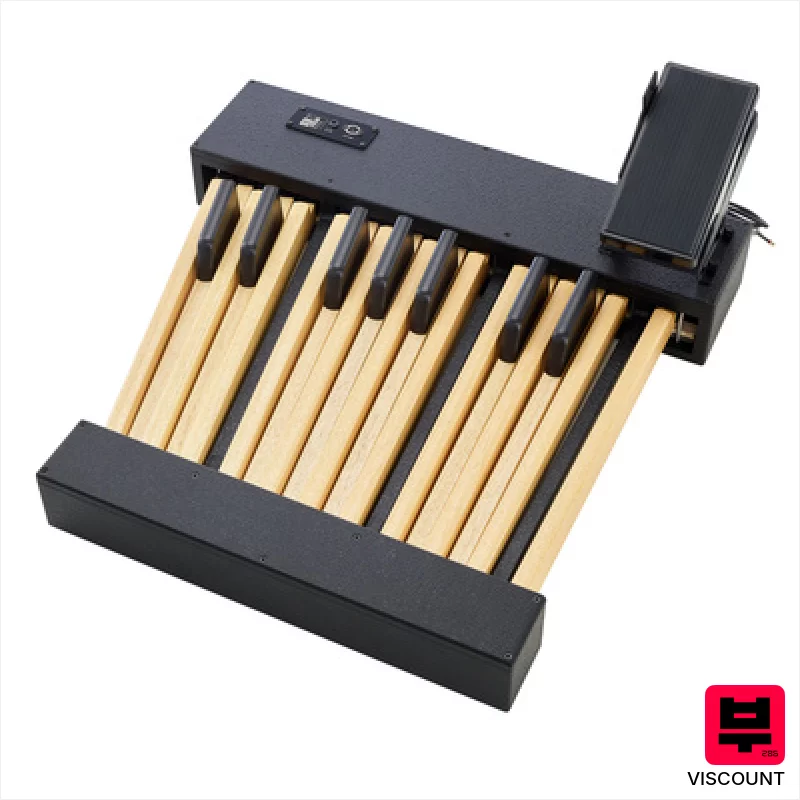
Viscount Legend Pedalboard 18
- • Robust steel construction provides excellent stability underfoot.
- • Dedicated volume pedal offers precise dynamic control.
- • 18 footswitches allow for complex program changes and effects routing.
- • Seamless integration with Viscount Legend/Live organs enhances workflow.
- • Limited versatility with non-Viscount instruments, requiring MIDI reconfiguration.
- • Significant weight makes transportation and setup challenging for solo users.
- • Premium-priced, representing a substantial investment for many.
How to Choose the Best MIDI Tools
Keybed Quality
A mushy, unresponsive keybed kills inspiration faster than a blown amp. We're looking for decent action - something with a bit of travel and tactile feedback that doesn't feel like playing on a rubber sheet. Velocity sensitivity is crucial too - you need dynamic control.
Aftertouch & Modulation
Aftertouch can add serious expressiveness to pads and leads, and dedicated mod wheels/strips let you sculpt sounds in real-time. While full-blown aftertouch is rare at this price, good mod controls are a must.
Connectivity
MIDI I/O is the baseline, obviously. USB MIDI is essential for modern DAWs. Look for bi-directional MIDI - the ability to send and receive MIDI data - for controlling external gear. Some units offer CV/Gate for analog synth integration, which is a huge bonus.
DAW Integration
Seamless integration with your DAW is a huge time saver. Some controllers have dedicated buttons or modes for specific DAWs, automating common tasks like transport control and plugin selection. Check compatibility before you buy.
Build Quality & Portability
Let's be real, cheaper gear often cuts corners. We're looking for something that feels reasonably solid, won't fall apart after a few gigs, and is portable enough to haul to band rehearsals or recording sessions. Plastic construction is common, but it shouldn't feel flimsy.
Buying Guide
At this price point, you're going to make some trade-offs. Don't expect full-travel aftertouch or a premium build like you'd find on a $3000 controller. Focus on the keybed feel and mod controls - those are the things that directly impact your playing. Prioritize DAW integration if you spend most of your time in a digital environment, and consider portability if you gig regularly. A solid MIDI keyboard is an investment in your creativity, not just a piece of gear.
How This List Is Built
We don't play these instruments — we're a catalog, not a review desk, and we'd rather say so than pretend otherwise. This page ranks 15 midi tools from the Thomann catalogue, which is the largest single source of specification data in this category.
Position is computed, not curated. Four signals, in order of weight: how completely the manufacturer documents the instrument (number of published specifications), where it sits in the price range, how specific the model designation is — which filters out generic accessories — and whether a product image exists. The same inputs always produce the same order, so nothing here is shuffled to look fresh.
What this list is good for: narrowing a category down to a shortlist by spec and budget. What it isn't: a substitute for hearing an instrument. Before you buy, read hands-on reviews and, where you can, play it. Full methodology.

