
Best Master Keyboards (up to 88 Keys) Under $300 2026
Alright, so you need a decent MIDI controller but your wallet's looking a little thin? Finding an 88-key master keyboard under $300 used to be a pipe dream, but the market's shifted a bit. We're not talking about boutique, studio-grade instruments here, but there are some surprisingly capable options that won't leave you eating ramen for a month. Let's break down the best bang-for-your-buck options.
Last updated: April 11, 2026

M-Audio Keystation 88 MK3
- • 88-key layout offers full piano range for serious playing
- • Semi-weighted keys provide a more realistic feel than synth actions
- • USB and 5-pin MIDI connectivity expands compatibility options
- • Included software bundle is a solid starting point for beginners
- • The semi-weighted action lacks the nuance of fully weighted keys
- • Plastic construction feels budget-oriented, impacting long-term durability
- • Requires a separate adapter for iOS connectivity, adding to the cost

Nektar Impact GXP88
- • Velocity-sensitive aftertouch adds expressive performance capabilities
- • Solid build quality for a keyboard in this price bracket
- • Comprehensive transport controls streamline DAW workflow
- • Class-compliant USB simplifies connectivity across multiple platforms
- • Half-weighted keys lack the feel of true weighted action
- • Limited knob versatility restricts advanced parameter control
- • The included software integration could be more intuitive
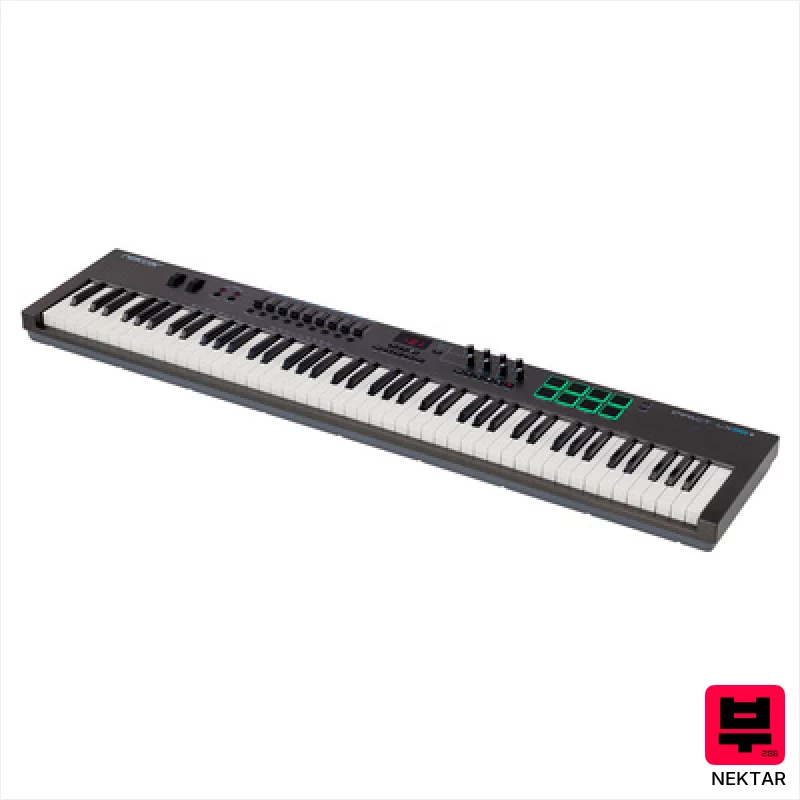
Nektar Impact LX88+
- • 88-key velocity sensitivity provides a realistic piano playing experience
- • Solid build quality with a surprisingly robust plastic chassis for the price
- • Comprehensive DAW integration streamlines workflow and reduces mouse reliance
- • Assignable buttons and faders offer deep customization for various software
- • Plastic key action lacks the nuance of a fully weighted keyboard
- • Limited pad sensitivity compared to higher-end MIDI controllers
- • The overall aesthetic feels somewhat utilitarian and lacks premium flair

Icon iKeyboard 8X
- • Solid metal case offers unexpected durability for the price.
- • Mackie Control/HUI protocol support expands DAW integration options.
- • Assignable buttons and LED feedback provide customizable workflow.
- • iMap software simplifies MIDI mapping, easing initial setup.
- • Keys lack aftertouch, limiting expressive playing possibilities.
- • Lightweight plastic key action feels budget-oriented, not weighted.
- • Limited pad functionality restricts drum programming potential.
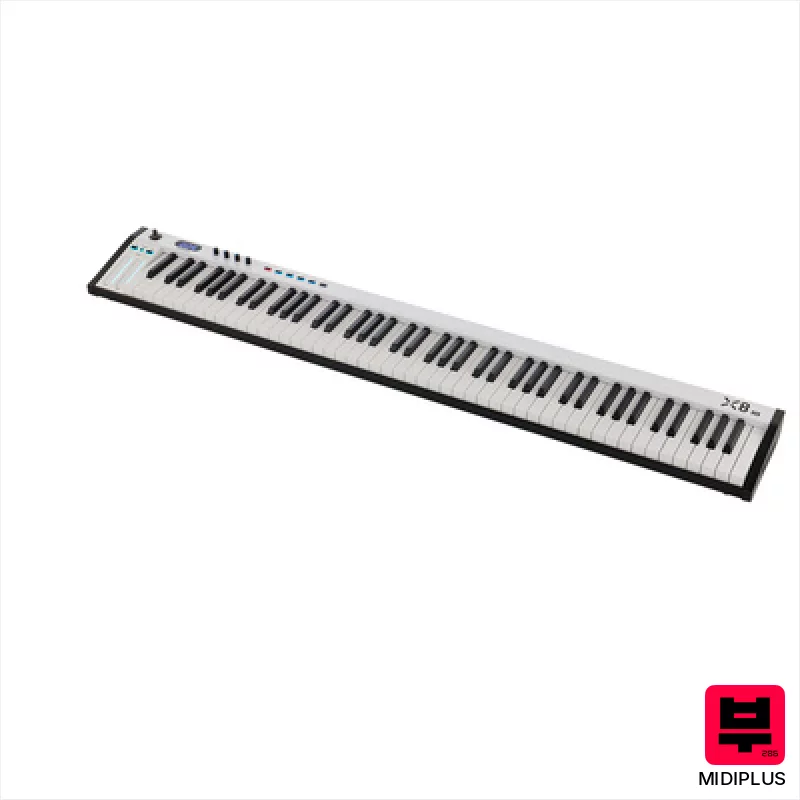
Midiplus X-8 III
- • Robust metal housing provides surprising stability for the price.
- • Assignable knobs and buttons offer considerable customization potential.
- • Smart Scale mode is genuinely useful for learning and composition.
- • Class-compliant USB makes it incredibly easy to connect and use.
- • Semi-weighted action lacks the nuance of fully weighted keys.
- • Plastic key caps feel noticeably cheaper than higher-end alternatives.
- • Limited MIDI connectivity beyond basic USB and DIN.
How to Choose the Best Master Keyboards (up to 88 Keys)
Key Action
This is the big one. Forget graded hammer action; at this price point, you're mostly looking at synth-action or semi-weighted. Synth-action is light and fast, good for leads and pads, but lacks the feel of a piano. Semi-weighted is a step up, offering a bit more resistance, but still not a true piano feel. Pay attention to the travel and responsiveness.
Build Quality
Let's be honest, plastic is the name of the game. We're looking for decent plastic - not brittle, easily scratched stuff. Check the key stability; do they wobble? Loose keys are a dealbreaker, especially for gigging.
Connectivity
MIDI, obviously. USB MIDI is essential for modern DAWs. Some might offer sustain pedal input, which is a huge plus for piano sounds. Audio outputs are rare at this price, but a welcome surprise if you find them.
Controller Assignment
How many knobs, sliders, and pads do you get? Can you easily map them to your DAW or virtual instruments? The more flexibility, the more useful the controller will be for sound design and mixing.
Aftertouch & Modulation
Don't expect a ton here. Aftertouch (pressure sensitivity after you press a key) is almost nonexistent in this price range. Modulation wheel response is important - does it feel smooth and controlled, or jerky and unpredictable?
Buying Guide
At this price, you're making compromises. The action won't feel like a Steinway, and the plastic will feel... plasticky. Prioritize key feel and build quality - a stable, responsive action is more valuable than extra knobs you won't use. Don't chase the '88-key' dream if a 61-key controller with a better action and build feels better in your hands. And read reviews - other players will tell you what the real-world issues are.
How This List Is Built
We don't play these instruments — we're a catalog, not a review desk, and we'd rather say so than pretend otherwise. This page ranks 5 master keyboards (up to 88 keys) from the Thomann catalogue, which is the largest single source of specification data in this category.
Position is computed, not curated. Four signals, in order of weight: how completely the manufacturer documents the instrument (number of published specifications), where it sits in the price range, how specific the model designation is — which filters out generic accessories — and whether a product image exists. The same inputs always produce the same order, so nothing here is shuffled to look fresh.
What this list is good for: narrowing a category down to a shortlist by spec and budget. What it isn't: a substitute for hearing an instrument. Before you buy, read hands-on reviews and, where you can, play it. Full methodology.

