AudioFu Chart · October 2026
Best Doepfer Master Keyboards (up to 88 Keys) 2026
The top pick is Doepfer LMK4+ 88 GH grey ($1,901). Doepfer PK88 GH gives you the most for the money at $1,288. Ranked by the AudioFu Index from 3 models, prices checked every night.
Last updated: October 19, 2026
Top 3
Full detail for the 3 highest AudioFu Index scores. Every other model is listed below.
-
- Weight24 kg
- Keys88 keys
- Key actionWeighted keys
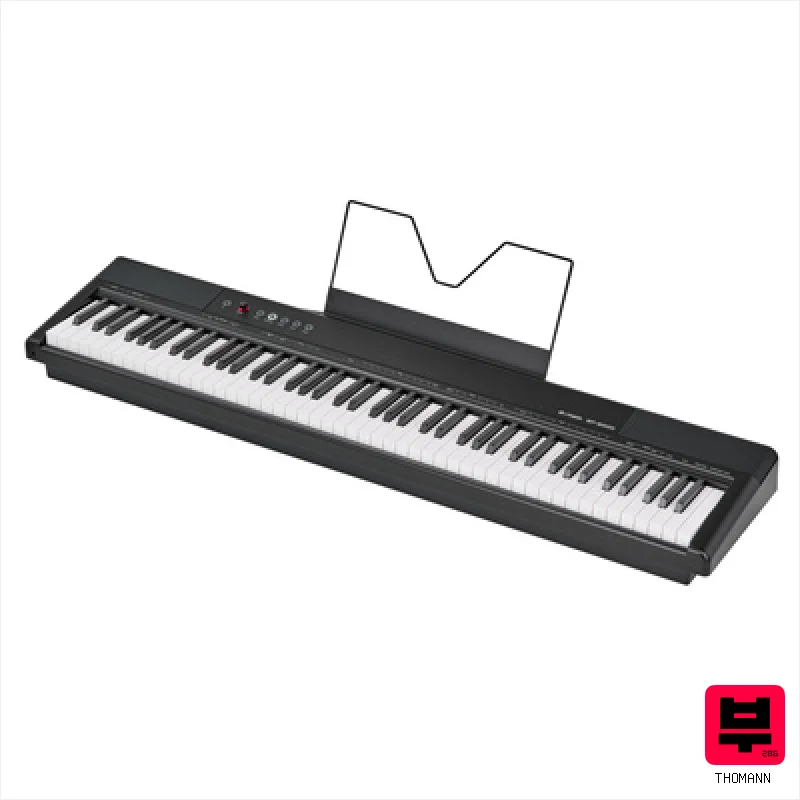
The Doepfer LMK4+ 88 GH grey is a serious master keyboard for synth enthusiasts and studio musicians. It's a workhorse with a solid build and a surprisingly expressive keybed, making it ideal for those who need extensive MIDI control and split zone capabilities. Just be prepared for its heft – this isn't a keyboard you’re easily taking on the road.
Pros
- Solid build quality with silver-grey aluminum front and back covers
- TP/40GH action provides realistic hammer feel and aftertouch
- Comprehensive MIDI connectivity for deep integration with synths
Cons
- The TP/40GH action, while good, isn't the absolute highest-end available
- The grey color scheme might not appeal to everyone's aesthetic
64AudioFu
Index↓ 5.6%since Aug 17 · lowest so far$2,013 · Aug 17$1,901 now$1,901€1,689 at Thomann · in stockCheck price ↗ -
- Weight20 kg
- Keys88 keys
- Key actionWeighted keys
The Doepfer PK88 GH is a solid choice for the serious inmobile pianist who needs a reliable, compact master keyboard. The TP/40GH action is a noticeable step up from budget options, offering a good balance of feel and responsiveness. It’s a no-frills controller, so if you need extensive hands-on control, look elsewhere, but for pure MIDI transmission and a decent action, it’s hard to beat.
Pros
- Solid TP/40GH action provides realistic graded hammer feel
- Compact design minimizes footprint for studio or mobile setups
- Reliable MIDI output ensures compatibility with various synths
Cons
- Limited control surface; lacks dedicated knobs or faders
- Price point positions it as a premium-priced option
53AudioFu
IndexStableno change since Aug 17Aug 17$1,288 now$1,288€1,145 at Thomann · in stockCheck price ↗ -
- Keys88 keys
The Doepfer LMK2+ 88 GH is a serious master keyboard for modular enthusiasts and those needing extensive MIDI control. Its keybed feels fantastic, and the split zone capabilities are killer for layering sounds, but be prepared to supply your own housing. This is a workhorse, not a pretty face.
Pros
- Excellent keybed with responsive, graded hammer action.
- Flexible split zone functionality for complex setups.
- Comprehensive MIDI implementation with USB and foot controller support.
Cons
- Lacks a case, requiring separate purchase for protection and transport.
- The 'barebones' design isn't aesthetically pleasing for all users.
43AudioFu
IndexStableno change since Aug 17Aug 17$1,406 now$1,406€1,249 at Thomann · in stockCheck price ↗
Master Keyboards (up to 88 Keys) by the numbers
Measured across all 26 models we track, not a sample.
median of 24 models · 6.24 kg–24 kg
median of 8 models · 88–88
most common · 17 models
How to choose the best master keyboards (up to 88 keys)
Key Action
Doepfer's signature is their custom-designed keybeds. They aren't Fatar - which is what most other 'weighted' controllers use - and that's a big deal. The action leans towards a lighter, more piano-like feel, prioritizing speed and responsiveness over a super-heavy, 'piano bench' vibe. This makes them fantastic for fast runs and nuanced expression, but if you're used to a truly heavy piano action, it'll take some getting used to.
MIDI Implementation
Forget generic MIDI messages. Doepfer's keyboards offer deep MIDI control, often including aftertouch and velocity curve customization that goes beyond what you find on typical controllers. This is huge for programming complex sounds and injecting subtle human feel into synthesized textures.
Build Quality
The build is solid, no doubt. The chassis is robust, and the keybed itself feels incredibly well-engineered. It's not flashy - we're talking about German engineering, not boutique aesthetics - but it's built to withstand the rigors of gigging and studio use. The finish is utilitarian, but the quality is undeniable.
Tone Characteristics (Pickup Voicing)
This might seem odd for a MIDI controller, but the Doepfer's internal MIDI implementation subtly affects the perceived "tone" of the sounds you're playing. The velocity response and aftertouch sensitivity are so finely tuned that they can genuinely shape the character of a virtual instrument, adding a richness that's often missing from cheaper controllers. It's a subtle thing, but it adds up.
Eurorack Integration
If you're already in the Doepfer/Eurorack world, the integration is seamless. MIDI connectivity is often designed with modular systems in mind, and the keyboards can be easily controlled and configured within a modular environment. This is a huge advantage for those building custom synth setups.
Buying guide
Alright, so you're looking at Doepfer Master Keyboards. These aren't your typical MIDI controllers - they're built by a company steeped in the modular synth world, and that shows. If you're serious about expressive playing, nuanced dynamics, and a keyboard that feels like an extension of your musicality, you owe it to yourself to check these out, especially if you're already invested in the Eurorack ecosystem. Let's break down what makes them tick, from the A-series to the behemoth 88-key models.
Look, these aren't cheap. You're paying for that custom keybed and the meticulous engineering. The 88-key models are a serious investment, but if you need that extended range and that Doepfer feel, it's hard to argue.
Be prepared for a learning curve with the action; it's different. Don't expect a super-heavy piano feel - embrace the responsiveness.
How the AudioFu Index works
Five measured signals and nothing else — no stars from strangers, no “tested by experts” we didn’t do. The weights are fixed and public. We don’t play these instruments; we measure the market around them.
This chart covers 5 master keyboards (up to 88 keys) from the Thomann catalogue (of 26 in the category). Before you buy, read hands-on reviews and, where you can, play it. Full methodology.
AudioFu earns a commission when you buy through our Thomann links. It never changes the order — the index does.
- Demand40%
How many of this exact model are for sale on Reverb right now — what musicians actually buy and resell.
- Lineup20%
How many finishes Thomann stocks — makers expand the models that sell.
- Price15%
Where the price has moved since we started tracking in August.
- Specs15%
How completely the maker documents it.
- Maker10%
How deep the brand’s range is in this category.
Questions
Are Doepfer keybeds better than Fatar?
'Better' is subjective. Fatar is the industry standard for a reason - they're reliable and offer a range of actions. Doepfer's action is distinct, prioritizing speed and nuance. It's a different feel, not necessarily 'better' for everyone, but it's a defining characteristic.
Can I use a Doepfer keyboard with non-Eurorack gear?
Absolutely. They're standard MIDI controllers - they'll work with any synth, DAW, or sampler that accepts MIDI input. You just might not fully utilize all of their advanced MIDI features.
What's the difference between the A-series and the larger models?
The A-series are generally more compact and often have fewer MIDI control options. The larger models (64 and 88 keys) offer more extensive MIDI features, a wider range, and a slightly more robust build, but come at a higher price point.
Do I need to worry about MIDI latency?
Like any MIDI controller, latency can be a factor depending on your setup. Ensure your audio interface and DAW are configured correctly to minimize latency. The Doepfer's responsive action helps mask some latency issues, but it's still something to be aware of.
Is the 88-key model too big for my studio?
It's a substantial piece of gear. Measure your space carefully! While the build quality is excellent, the size and weight are significant considerations if you're limited on room or need to transport the keyboard regularly.