
Best Master Keyboards (up to 88 Keys) for Intermediate 2026
Alright, so you're past the beginner stage and starting to really explore the possibilities of virtual instruments and sequencing. A master keyboard isn't just a controller; it's your interface to a whole universe of sounds. But stepping up from a basic MIDI keyboard can be overwhelming - it's about finding something that inspires you, feels good under your fingers, and doesn't break the bank. Let's break down some solid options for the intermediate player.
Last updated: September 30, 2026
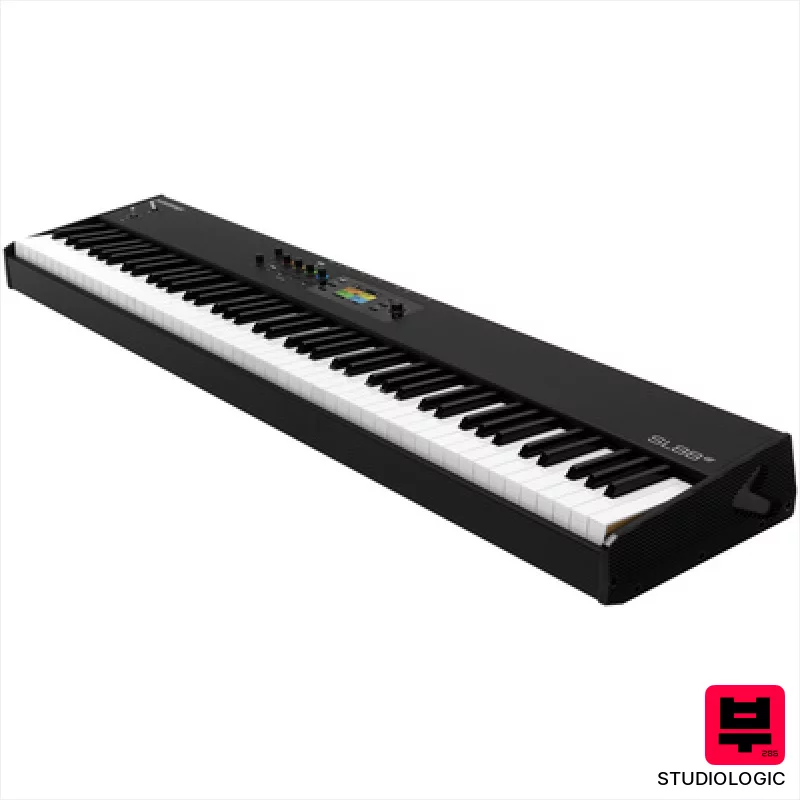
Studiologic SL88 GT mk2
- • TP/400 action provides realistic hammer feel and dynamic response.
- • Numa Player integration streamlines sample library workflow considerably.
- • Comprehensive MIDI 2.0 support future-proofs the controller's connectivity.
- • Solid build quality; the wood frame adds noticeable stability and heft.
- • The integrated audio interface, while convenient, is basic for serious recording.
- • Limited pad functionality – primarily for Numa Player navigation.
- • Size and weight make it less than ideal for smaller studios or frequent transport.

Studiologic SL88 mk2
- • Excellent TP/110 key action convincingly mimics acoustic piano feel.
- • Numa Player integration simplifies sound engine management significantly.
- • Solid build quality with a substantial, roadworthy feel for its class.
- • Comprehensive MIDI 2.0 support future-proofs the controller's connectivity.
- • The LCD screen is relatively small and can be hard to read in low light.
- • Limited onboard controls necessitate heavy DAW reliance for complex setups.
- • Magnetic rail system requires separate purchase of sheet music/laptop holders.

M-Audio Hammer 88
- • Solid 88-key weighted hammer action provides realistic piano feel
- • Included Skoove license offers a great value for beginners
- • Compact size and relatively lightweight for a full-size keyboard
- • Zone assignment features allow for creative layering and chord voicings
- • Plastic construction feels budget-oriented, lacks premium feel
- • Limited knob/fader control compared to higher-end master keyboards
- • USB power only option can be inconvenient for some setups

Arturia KeyLab 88 mk3 Black
- • Robust aluminum chassis with wood panels feels exceptionally solid and premium.
- • Fatar TP/110 keybed delivers a surprisingly realistic, nuanced hammer action.
- • Comprehensive DAW control and NKS support streamlines workflow significantly.
- • Bright, clear 3.5” screen offers excellent visual feedback for parameter adjustments.
- • Aftertouch, while present, is a bit subtle and may not satisfy all players.
- • The included Komplete Select bundle, while valuable, is a one-time offering.
- • Size and weight make it less ideal for smaller spaces or mobile setups.

Arturia KeyLab 88 mk3 White
- • Robust aluminum chassis paired with warm wood accents feels exceptionally premium.
- • Fatar TP/110 action delivers a surprisingly realistic, nuanced piano feel.
- • Comprehensive DAW control and NKS support streamline workflow significantly.
- • The full-color screen provides clear visual feedback and customizable functionality.
- • The sheer size and weight make portability a genuine consideration for many users.
- • Limited modulation options beyond the standard wheels and faders can feel restrictive.
- • The included Komplete Select bundle, while valuable, isn't a full Komplete license.

M-Audio Hammer 88 Pro
- • Graded hammer action provides surprisingly realistic piano feel.
- • Assignable zones offer excellent flexibility for sound design.
- • Extensive DAW control features streamline workflow significantly.
- • RGB pads are responsive and well-suited for beat production.
- • Plastic construction feels somewhat budget-oriented, lacks premium heft.
- • Aftertouch implementation is basic; lacks nuanced expression.
- • OLED display is small, can be difficult to read in low light.
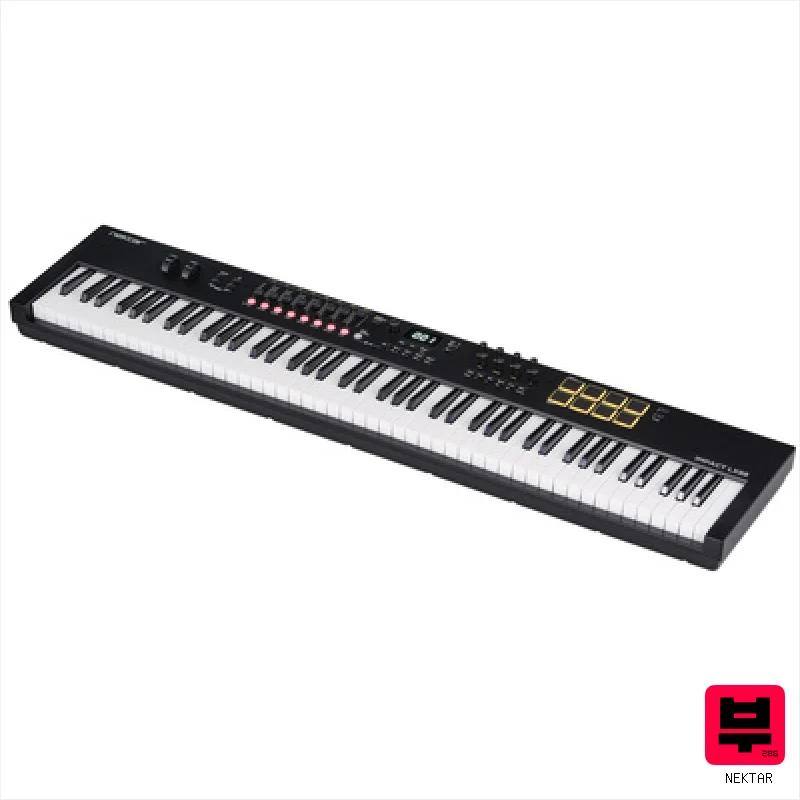
Nektar Impact LX88 mk3
- • 88 full-size keys with clean action feel
- • Integrated transport and scale controls
- • Direct NKS control for 2000+ instruments
- • USB power with optional fine resolution
- • No built-in audio interface or sound engine
- • Weight is not listed in the description
- • Lacks built-in speakers or headphone jack
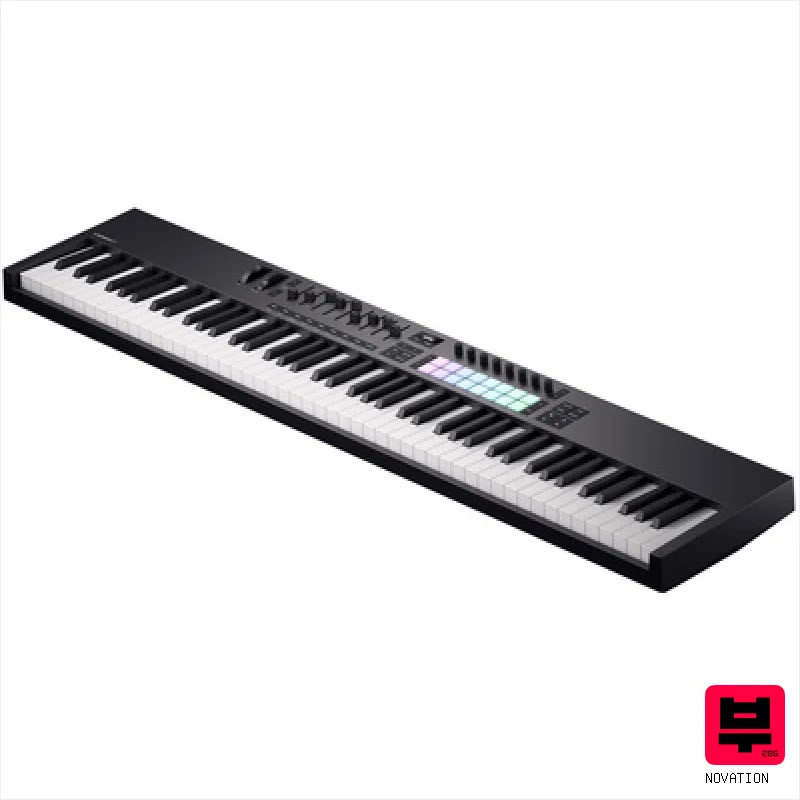
Novation Launchkey 88 MK4
- • Half-weighted 88 full-size keys feel natural for playing
- • 16 RGB pads with polyphonic aftertouch add deep control
- • 9 faders and 8 knobs offer powerful mixing options
- • Built-in arpeggiator helps create instant grooves quickly
- • No built-in audio interface for direct sound recording
- • Power comes only from USB, no external adapter option
- • Heavy at 8 kg makes transport slightly difficult
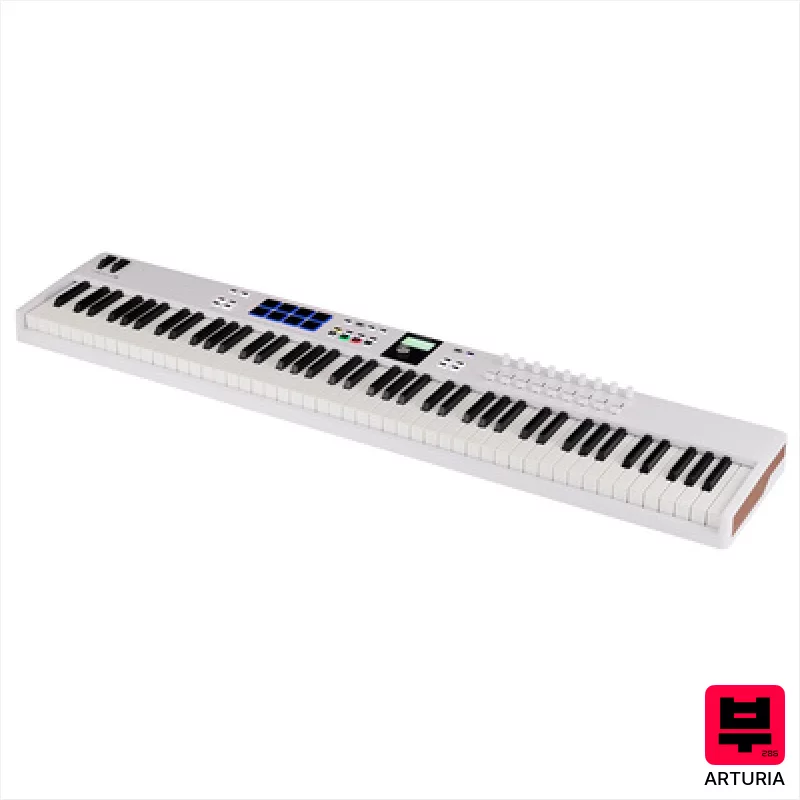
Arturia KeyLab Essential 88 mk3 White
- • Excellent 88-key action provides a surprisingly responsive and expressive playing experience.
- • Solid build quality with a matte white finish feels premium and durable.
- • Comprehensive DAW control with Mackie/HUI compatibility streamlines workflow.
- • Analog Lab integration offers a vast library of instantly usable sounds and presets.
- • The weight makes it less portable; definitely a studio-bound instrument.
- • Key action, while good, isn't a fully weighted, graded hammer action.
- • Limited customization options for the LCD display's information.
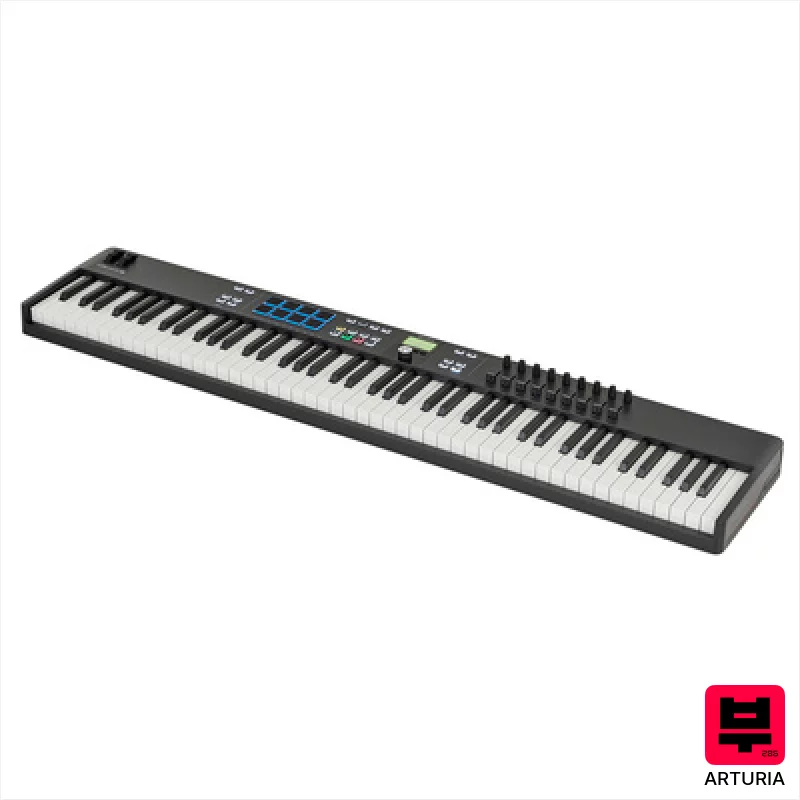
Arturia KeyLab Essential 88 mk3 Black
- • Solid 88-key action provides a surprisingly expressive playing experience.
- • Analog Lab integration streamlines workflow and offers immediate sonic inspiration.
- • Comprehensive transport controls offer DAW integration beyond simple note input.
- • The included Komplete Select bundle expands sound palette significantly.
- • The plastic chassis feels a little less premium than higher-end competitors.
- • 88-key size makes it less ideal for smaller studio spaces or travel.
- • Key action, while decent, lacks the nuanced feel of fully-weighted piano keys.

Midiplus Stage 88
- • Aluminium housing provides solid build quality for the price.
- • 88 velocity-sensitive keys offer responsive touch control.
- • 64 EMU sounds plus 128 GM sounds give a wide selection.
- • 8 rotary knobs and 8 faders let you customize your setup.
- • Half-weighted action lacks the resistance of full-weighted pianos.
- • No dedicated piano or acoustic guitar sound patches listed.
- • Power requires external USB DC supply, no built-in battery.
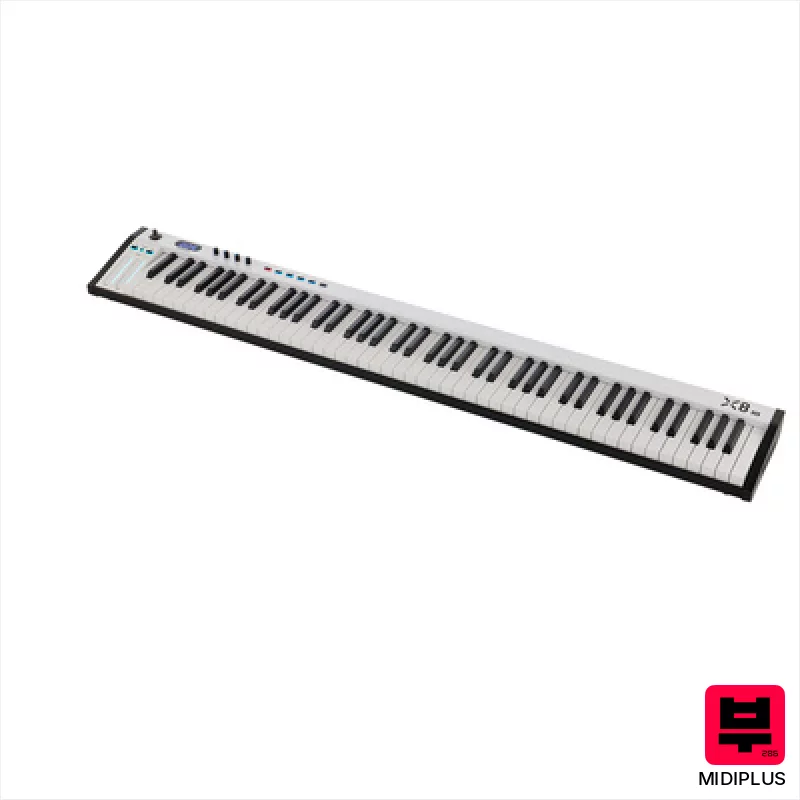
Midiplus X-8 III
- • Robust metal housing provides surprising stability for the price.
- • Assignable knobs and buttons offer considerable customization potential.
- • Smart Scale mode is genuinely useful for learning and composition.
- • Class-compliant USB makes it incredibly easy to connect and use.
- • Semi-weighted action lacks the nuance of fully weighted keys.
- • Plastic key caps feel noticeably cheaper than higher-end alternatives.
- • Limited MIDI connectivity beyond basic USB and DIN.

Nektar Impact GXP88
- • Velocity-sensitive aftertouch adds expressive performance capabilities
- • Solid build quality for a keyboard in this price bracket
- • Comprehensive transport controls streamline DAW workflow
- • Class-compliant USB simplifies connectivity across multiple platforms
- • Half-weighted keys lack the feel of true weighted action
- • Limited knob versatility restricts advanced parameter control
- • The included software integration could be more intuitive

Doepfer LMK4+ 88 GH black
- • Solid, weighty build with robust black front and back panels
- • TP/40GH action provides a surprisingly realistic, graded hammer feel
- • Comprehensive MIDI connectivity for deep integration with modular setups
- • Clear, bright LCD displays offer excellent visibility in various lighting conditions
- • The TP/40GH action, while good, isn't quite on par with high-end acoustic piano actions
- • Limited onboard sounds – purely a MIDI controller, requires external sound sources
- • The extensive menu system can take time to fully master and customize

Doepfer LMK4+ 88 GH grey
- • Solid build quality with silver-grey aluminum front and back covers
- • TP/40GH action provides realistic hammer feel and aftertouch
- • Comprehensive MIDI connectivity for deep integration with synths
- • 8 Split Zones offer incredible flexibility for complex setups
- • The TP/40GH action, while good, isn't the absolute highest-end available
- • The grey color scheme might not appeal to everyone's aesthetic
- • Significant weight makes portability a real challenge for solo musicians
Every master keyboards (up to 88 keys) that matches
26 models match this page. The 15 above are covered in detail; the rest are listed here with their published specifications.
| # | Model | Specifications | Price |
|---|---|---|---|
| 16 | Doepfer PK88 GH | Weight 20 kg · Keys 88 keys · Key action Weighted keys | $1,300 |
| 17 | M-Audio Keystation 88 MK3 | Weight 6.24 kg · Key action Semi-weighted keys | $244 |
| 18 | Native Instruments Kontrol S88 MK3 Kompl. 15 Ult. | Weight 13.5 kg · Key action Weighted keys | $1,736 |
| 19 | Kawai VPC1 Stage Bundle | Weight 29.5 kg · Key action Weighted keys | $1,550 |
| 20 | Kawai VPC1 | Weight 29.5 kg · Key action Weighted keys | $1,474 |
| 21 | Native Instruments Kontrol S88 MK3 Case Bundle | Weight 13.5 kg · Key action Weighted keys | $1,464 |
| 22 | Native Instruments Kontrol S88 MK3 Komplete 15 | Weight 13.5 kg · Key action Weighted keys | $1,350 |
| 23 | Native Instruments Kontrol S88 MK3 | Weight 13.5 kg · Key action Weighted keys | $1,134 |
| 24 | Doepfer LMK2+ 88 GH without Case | Keys 88 keys | $1,418 |
| 25 | Roland A-88 MKII | Weight 16.3 kg | $1,248 |
| 26 | Doepfer LMK4+ 88 GH BL without Case | not published | $1,759 |
Master Keyboards (up to 88 Keys) by the numbers
Measured across all 26 models in this category, so «wide», «short» or «expensive» mean something you can check.
How to Choose the Best Master Keyboards (up to 88 Keys)
Action & Key Feel
This is paramount. Weighted keys are almost a must for serious playing - you want that piano-like resistance and rebound. Semi-weighted keys can work, but often feel a little mushy and lack dynamics. Hammer action is the gold standard, but comes with a price. A cheap weighted action can feel clunky, so try before you buy if possible.
Aftertouch & Modulation
Subtle aftertouch (channel or polyphonic) adds a huge layer of expressiveness to pads, strings, and other sustained sounds. Assignable modulation wheels and strips are also essential for tweaking filters, effects, and other parameters in real-time - it's how you go beyond just playing notes.
Build Quality & DAW Integration
A flimsy plastic chassis will rattle on stage. Solid construction, decent knobs and faders, and reliable USB MIDI connectivity are non-negotiable. Seamless DAW integration-easy mapping, good driver support-will save you a ton of frustration.
Keybed Length (88 vs. 76/61)
88 keys are the standard for piano, offering the full range. However, a 76-key or even 61-key controller can be more portable and comfortable for some. Consider the types of instruments you primarily use; if you're a piano purist, 88 is the way to go.
Knobs, Faders, & Transport Controls
Having dedicated physical controls for volume, pan, filters, and basic DAW transport functions (play, stop, record) is a massive time-saver and adds a tactile dimension to your workflow. It's a huge step up from clicking around with a mouse.
Buying Guide
Don't chase the feature list; chase the feel. A keyboard with a fantastic keybed but flimsy controls is still a compromise. Watch out for cheap weighted actions - they can be frustrating to play. Spending a bit more on a reputable brand with a solid keybed is almost always worth it; you'll be happier in the long run, and it'll hold up to gigging.
How This List Is Built
We don't play these instruments — we're a catalog, not a review desk, and we'd rather say so than pretend otherwise. This page covers 26 master keyboards (up to 88 keys) from the Thomann catalogue, which is the largest single source of specification data in this category: 15 in detail, the rest listed with their specifications.
Position is computed, not curated. We parse the manufacturer's own description into actual values — nut width, scale, fret count, fingerboard radius, size, alloy — and rank on them: how many specifications a model has published, how many of them are measurable numbers, and how precisely it meets this page's criterion. A product image adds a little. Price is not a ranking signal: it tells you nothing about whether a neck fits your hand. The same inputs always produce the same order, so nothing here is shuffled to look fresh.
What this list is good for: narrowing a category down to a shortlist by spec and budget. What it isn't: a substitute for hearing an instrument. Before you buy, read hands-on reviews and, where you can, play it. Full methodology.

