
Best Expander Modules for System Expansion 2026
So, you've got a Eurorack core going, but that sweet, evolving drone patch needs more voices, or your bassline's just not got the low-end thump you need for the gig. Expanders are the answer, but not all expanders are created equal. We're not just looking at I/O counts here; we're talking about how these modules integrate tonally and functionally into your existing system-that's what truly matters for expansion.
Last updated: July 22, 2026 • Next update: July 29, 2026
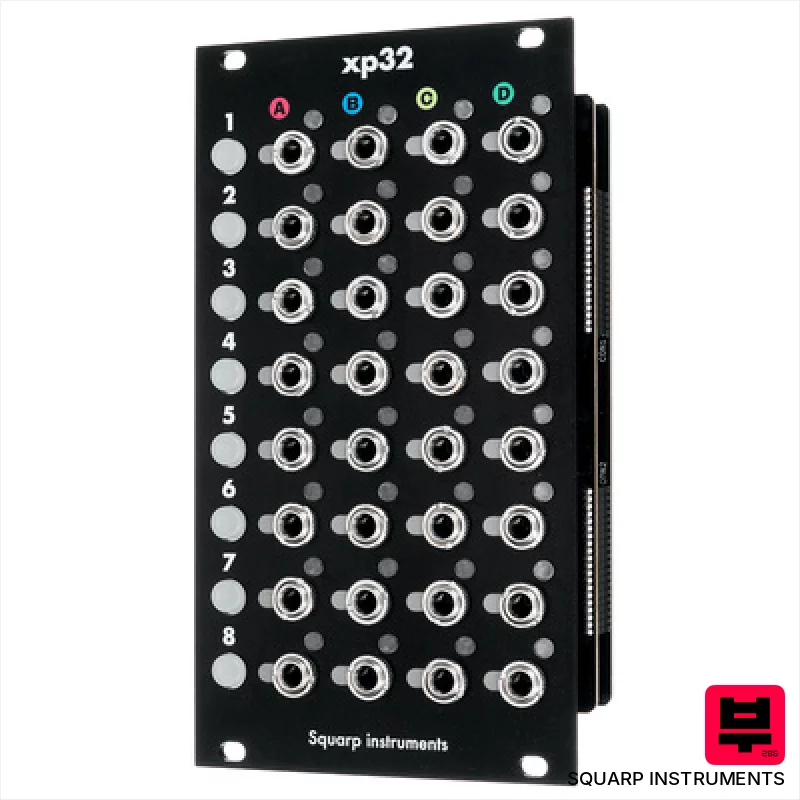
Squarp Instruments xp32
- • Exceptional 16-bit AD conversion delivers clean, precise signal routing.
- • 32 outputs significantly expand Hermod+ sequencing possibilities.
- • Compact 14HP footprint maximizes Eurorack space efficiency.
- • Dedicated modulation sources unlock creative, complex rhythmic patterns.
- • Requires Hermod+; not a standalone module, limiting its appeal.
- • Power draw, while manageable, can be a consideration in dense racks.
- • Learning curve exists to fully utilize all 32 outputs and modulation.

Vermona Modular MEX3
- • Expands meloDICER functionality significantly, unlocking its full potential.
- • Three-part chord generation provides complex harmonic textures.
- • Comprehensive MIDI control via CC commands allows for deep sequencing.
- • Compact 4U width makes it suitable for dense Eurorack setups.
- • Requires a Vermona meloDICER to function; it's not standalone.
- • Limited MIDI connectivity with only 3.5mm TRS jacks.
- • Power draw, while modest, can still impact smaller power supplies.

Der Mann mit der Maschine S10 Controller
- • Excellent expansion for Droid Master, adds tangible control options.
- • Well-machined rotary switches offer precise, tactile feedback.
- • Compact 5HP footprint minimizes modular system space usage.
- • Toggle switches provide reliable, distinct on/off functionality.
- • Requires Droid Master – a significant upfront investment.
- • Limited functionality standalone; entirely dependent on Droid Master.
- • Plastic housing feels slightly less premium than some high-end modules.
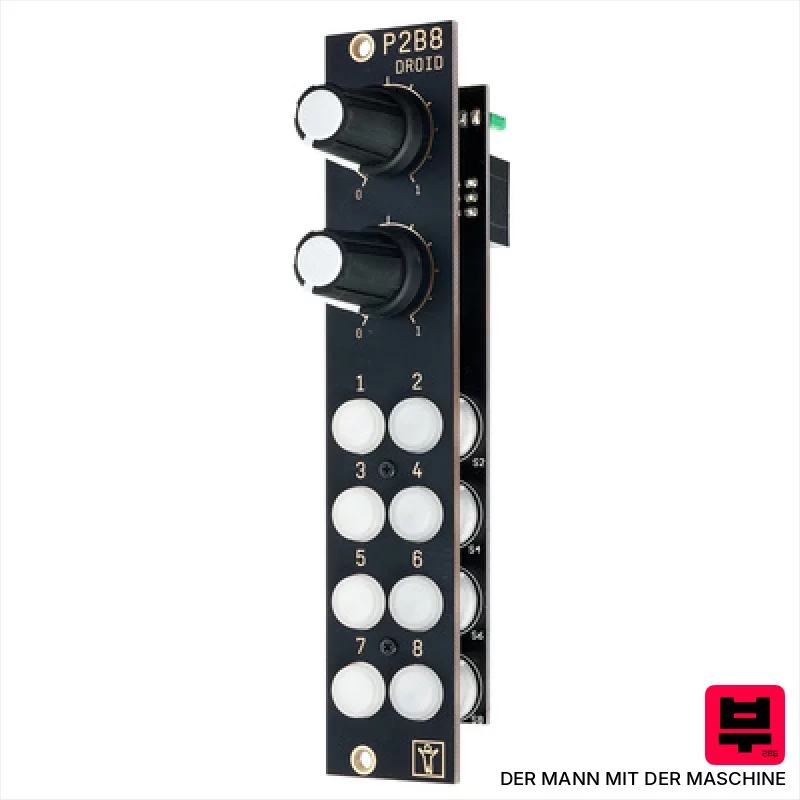
Der Mann mit der Maschine P2B8 Controller Yellow
- • Excellent tactile knobs offer precise parameter adjustments.
- • Bright yellow buttons provide clear visual feedback in low-light conditions.
- • Compact 5U width maximizes space in dense Eurorack setups.
- • Ribbon cable simplifies connection to the Droid Master module.
- • Requires the Droid Master; standalone functionality is nonexistent.
- • Limited to two knobs; expands control but isn’t comprehensive.
- • Yellow aesthetic might clash with some rack aesthetics.

XAOC Devices Bohumin
- • Expands Ostrawa’s routing significantly, unlocking complex stereo effects.
- • Provides precise level control over aux returns, crucial for mix shaping.
- • CV and gate inputs offer dynamic, performance-driven aux sends and mutes.
- • Compact 10HP footprint maximizes space in dense modular systems.
- • Requires Ostrawa, limiting its standalone utility and increasing overall cost.
- • Aux send B CV input lacks attenuation, potentially overwhelming the return.
- • Limited to two aux returns; more complex routing demands further expansion.
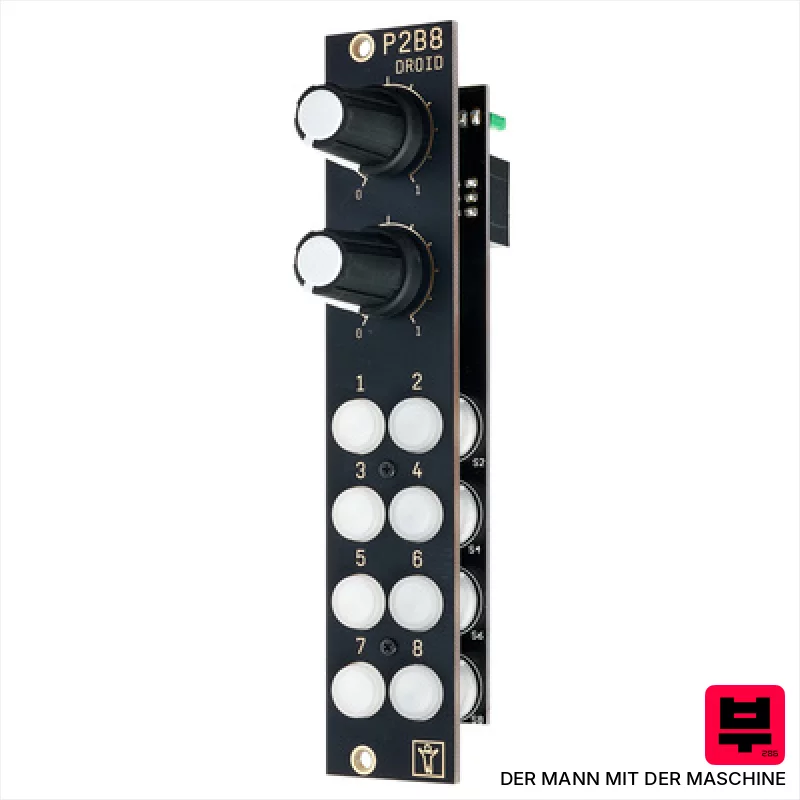
Der Mann mit der Maschine P2B8 Controller Blue
- • Excellent tactile feel from the robust, plastic knobs.
- • Bright blue LEDs provide clear visual feedback in low-light conditions.
- • Compact 5U width maximizes Eurorack panel real estate.
- • Simple ribbon cable connection simplifies integration with Droid Master.
- • Limited to Droid Master functionality; lacks standalone operation.
- • Plastic construction feels less premium than metal-encased modules.
- • Button travel is a bit short; could feel more substantial.
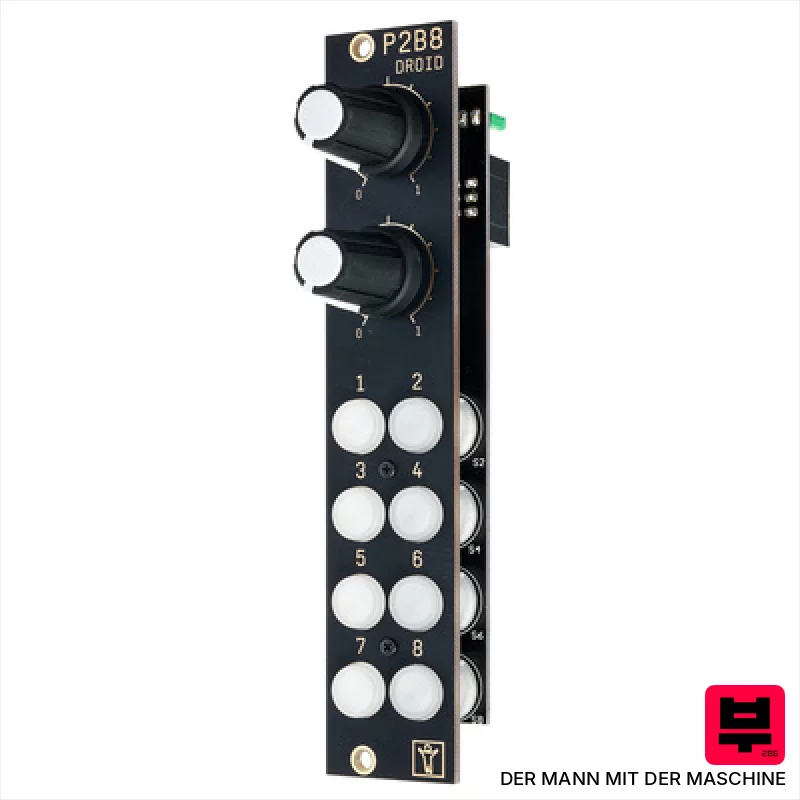
Der Mann mit der Maschine P2B8 Controller Green
- • Excellent build quality; feels robust with a solid, metal enclosure.
- • Green illumination is visually appealing and offers good visibility in darker environments.
- • The 6-pin ribbon cable connection is secure and simplifies integration with Droid Master.
- • Provides a tangible, hands-on control layer for Droid Master’s complex parameters.
- • Requires the Droid Master module, significantly increasing overall system cost.
- • Limited to Droid Master functionality; lacks standalone operation capabilities.
- • 5HP footprint can be restrictive in densely populated Eurorack cases.
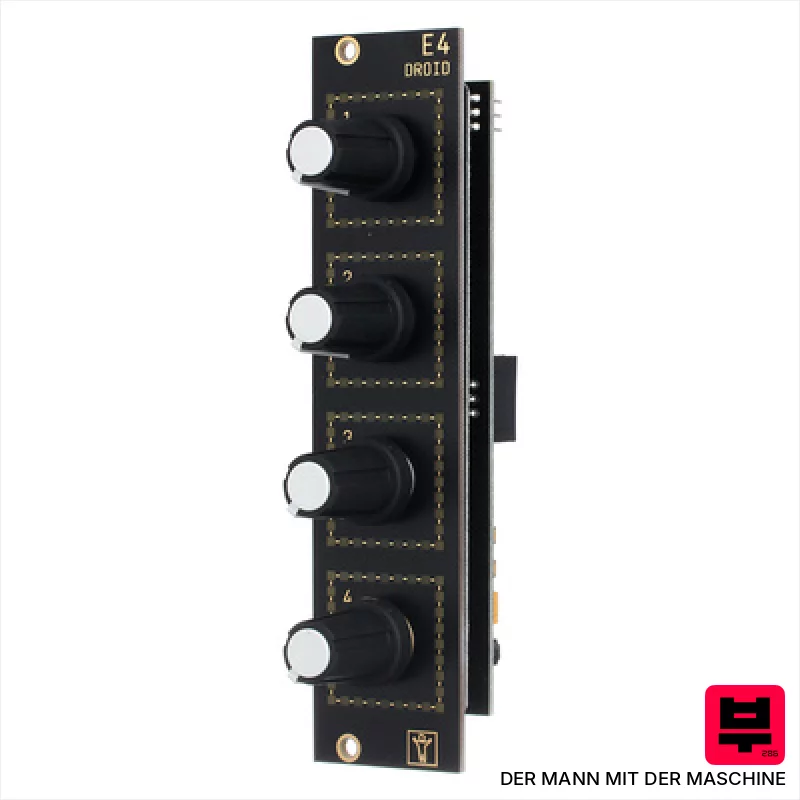
Der Mann mit der Maschine E4 Controller
- • Excellent build quality with robust, smooth multiturn encoders.
- • LEDs offer clear, customizable visual feedback for parameter tracking.
- • 6U width maximizes space efficiency within a Eurorack system.
- • Seamless integration with Droid Master expands its control capabilities.
- • Requires Droid Master – not a standalone controller.
- • 6U width might be restrictive for smaller Eurorack cases.
- • Limited to 4 encoders; more complex control schemes may feel constrained.

XAOC Devices Arad
- • Crack-free muting eliminates clicks, crucial for clean sequencing.
- • Direct audio input adds a unique texture layer to Oradea voices.
- • Compact 6HP footprint maximizes valuable modular space.
- • Dedicated 'Excite' button delivers instant, expressive percussive bursts.
- • Requires the XAOC Oradea – a significant initial investment.
- • Limited to Oradea functionality; not a standalone module.
- • The single 'Excite' button might feel restrictive for complex rhythms.
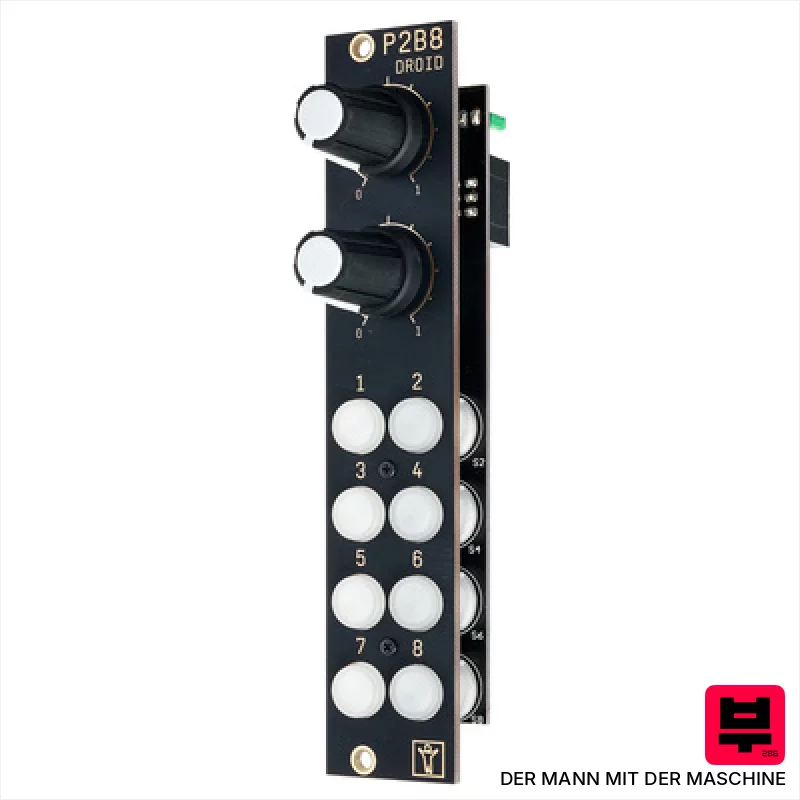
Der Mann mit der Maschine P2B8 Controller Red
- • Excellent tactile knobs offer precise, immediate parameter adjustments.
- • Bright red LEDs provide clear visual feedback in dimly lit environments.
- • Compact 5U width maximizes space efficiency within a Eurorack case.
- • Ribbon cable included simplifies initial setup and connection.
- • Requires the Droid Master module; standalone functionality is nonexistent.
- • Limited to only two knobs; more extensive control needs additional modules.
- • Plastic construction feels slightly less robust than higher-end Eurorack modules.
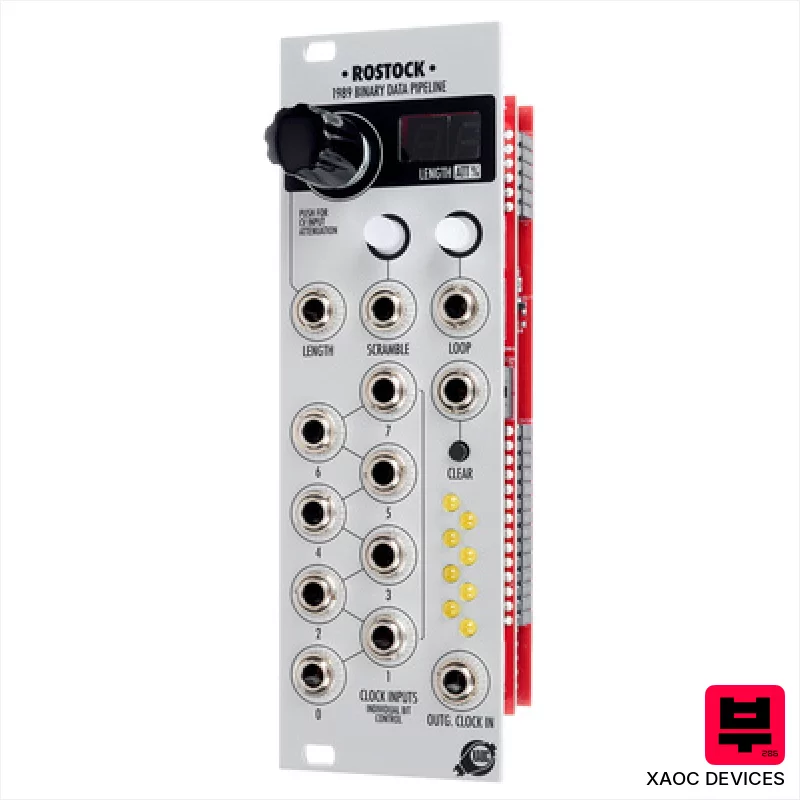
XAOC Devices Rostock
- • Exceptional bit-level manipulation for complex rhythmic textures.
- • Leibniz system integration unlocks truly unique sequencing possibilities.
- • Scramble function creates unpredictable, chaotic melodic variations.
- • Compact 8HP footprint maximizes valuable rack space.
- • Relatively high power draw compared to simpler utility modules.
- • Steep learning curve; requires understanding of binary data concepts.
- • Limited standalone utility; designed as part of a larger system.
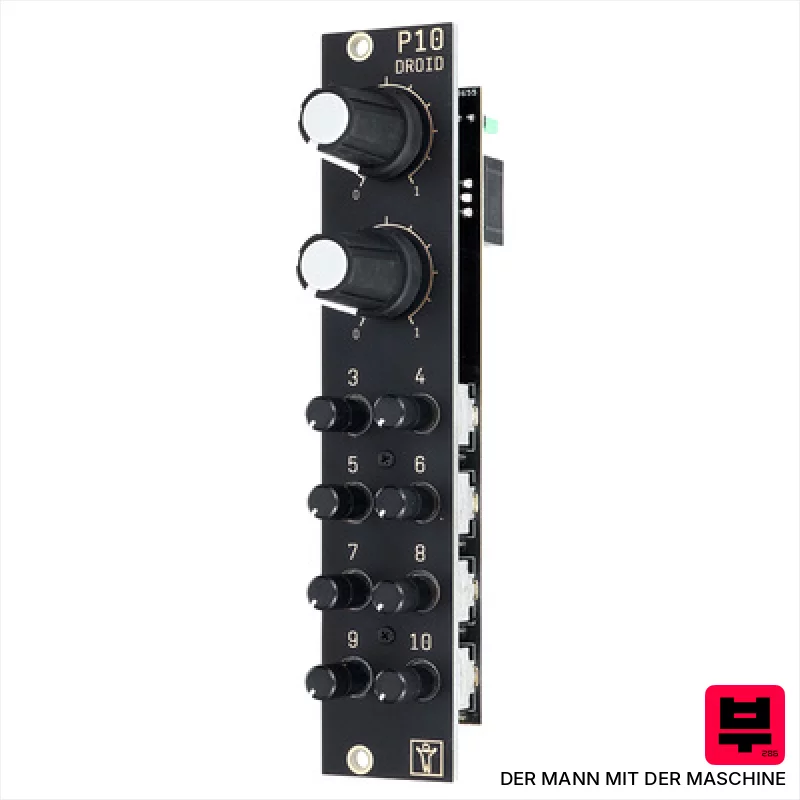
Der Mann mit der Maschine P10 Controller
- • Excellent knob density for fine-grained Droid Master control.
- • Robust build quality; feels solid within a Eurorack system.
- • 6-pin ribbon cable included simplifies immediate integration.
- • Compact 5TE width maximizes valuable panel space.
- • Requires Droid Master; standalone functionality is nonexistent.
- • Limited to Droid Master's parameter ranges; lacks universal CV control.
- • Knob resolution may feel slightly coarse for ultra-precise modulation.
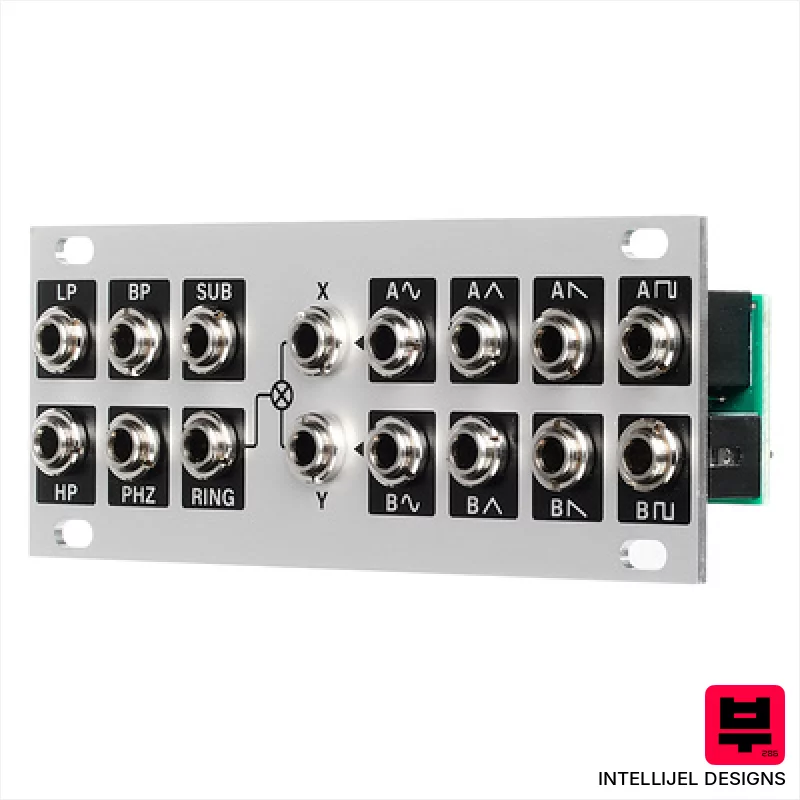
Intellijel Designs Atlx 1U
- • Expands Atlantix functionality significantly, adding ring modulation.
- • Provides multiple outputs for complex oscillator routing.
- • Robust Intellijel build quality; feels very solid.
- • Compact 20HP footprint maximizes space in a modular system.
- • Requires an Atlantix system; not standalone functionality.
- • Ring modulation can be harsh; requires careful parameter adjustment.
- • Limited utility outside of Atlantix system integration.
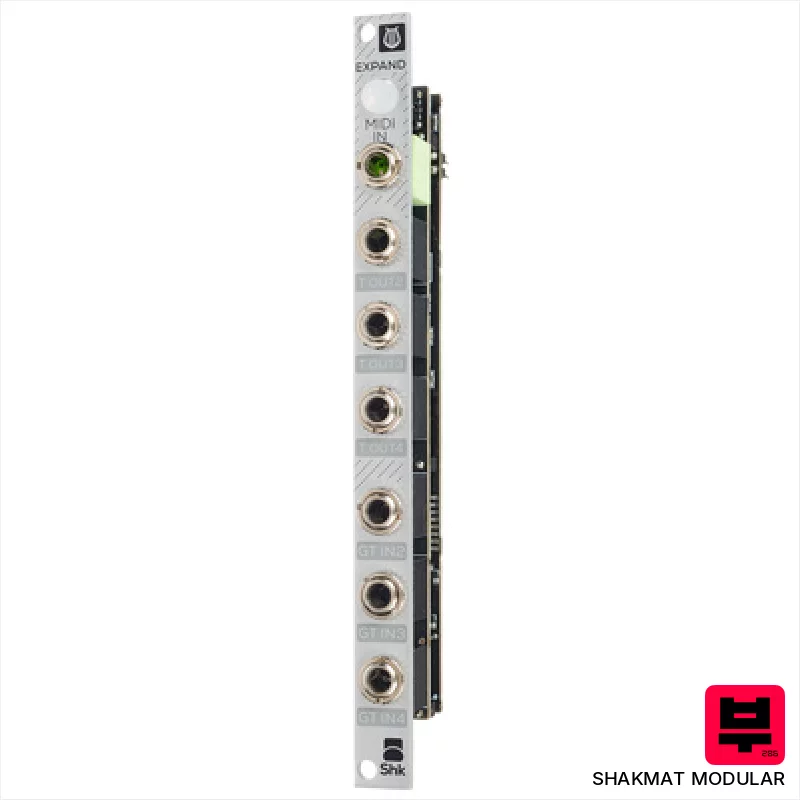
Shakmat Modular Bard Quartet Expand
- • MIDI control expands Bard Quartet’s functionality significantly.
- • Compact 2U form factor maximizes Eurorack space efficiency.
- • Dedicated MIDI button offers tactile control and workflow boost.
- • Firmware update compatibility ensures future-proofing and upgrades.
- • Requires Serial Programmer for older Bard Quartet modules, adding cost/complexity.
- • Limited power draw necessitates careful Eurorack power planning.
- • 3.5mm MIDI input is less robust than standard 5-pin DIN.
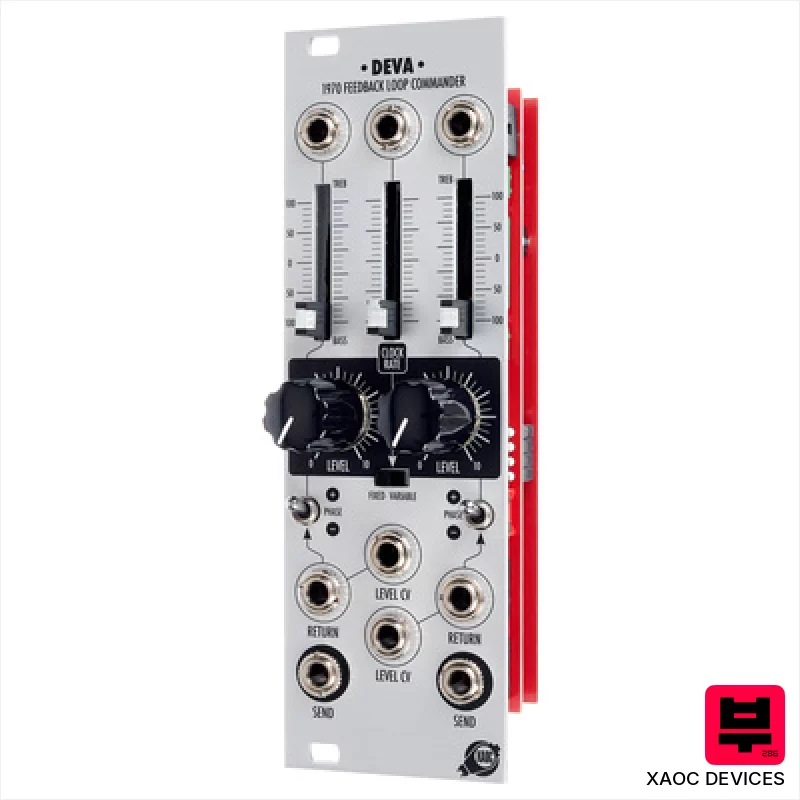
XAOC Devices Deva
- • Excellent feedback loop character, adding grit and movement.
- • Full CV control allows for deep modulation possibilities.
- • Compact 8HP footprint maximizes valuable rack space.
- • XAOC's signature build quality feels robust and reliable.
- • Requires a Timiszoara to function, limiting standalone use.
- • Analog feedback can be unpredictable; requires careful gain staging.
- • Limited input/output options for complex signal chains.
How to Choose the Best Expander Modules
Voice Density
This is the obvious one - how many voices/oscillators/filters can it handle? But more importantly, how does the sound degrade as you push it? A cheap expander might sound fine with two oscillators, but fall apart with eight, introducing noise or compression.
Tonal Integration
Does the expander's timbre and character mesh with your core modules? A bright, glassy expander won't play well with a dark, vintage-voiced system, and vice versa. Look for modules with a flexible tonal palette or a neutral character.
Modulation Capabilities
Expanders aren't just for adding raw voices; they need to be modulated. Look for built-in LFOs, envelope followers, or modulation inputs to integrate seamlessly into your patching flow. A static, unmodulated expander is just a fancy oscillator.
Routing Flexibility
Beyond basic input/output, consider how the expander allows signal flow. Can you route signals internally? Can you use it as a mixer or effects processor? The more routing options, the more creative possibilities.
Latency and Headroom
This is critical for live performance. Low latency is essential for responsive playing, and sufficient headroom prevents clipping and distortion when layering multiple voices. Cheap expanders often cut corners here, leading to a muddy or unstable sound.
Buying Guide
Don't chase the biggest voice count; prioritize tonal compatibility and routing options. Seriously, a smaller expander that sounds fantastic and integrates well is better than a huge brick that just adds noise. Be wary of expanders that promise too much for too little - those corners will be cut, usually in the audio quality or build. Invest in something that'll actually enhance your system, not become a bottleneck.
Our Methodology
We don't rely on spec sheets here at Audiofu. We've spent countless hours patching these expanders into different systems, A/B'ing them against each other, and putting them through the wringer - live rehearsals, late-night recording sessions, the whole shebang. It's about how they feel and sound in a real-world context, not just the number of jacks they offer.

