AudioFu
AudioFu Chart · October 2026
Best Expander Modules for Advanced 2026
The top pick is Doepfer A-154 Sequencer Controller ($223). Der Mann mit der Maschine M4 Motor Fader Unit leads the high end. Ranked by the AudioFu Index from 68 models across 22 brands, prices checked every night.
Last updated: October 15, 2026
Top 10
Full detail for the 10 highest AudioFu Index scores. Every other model is listed below.
-
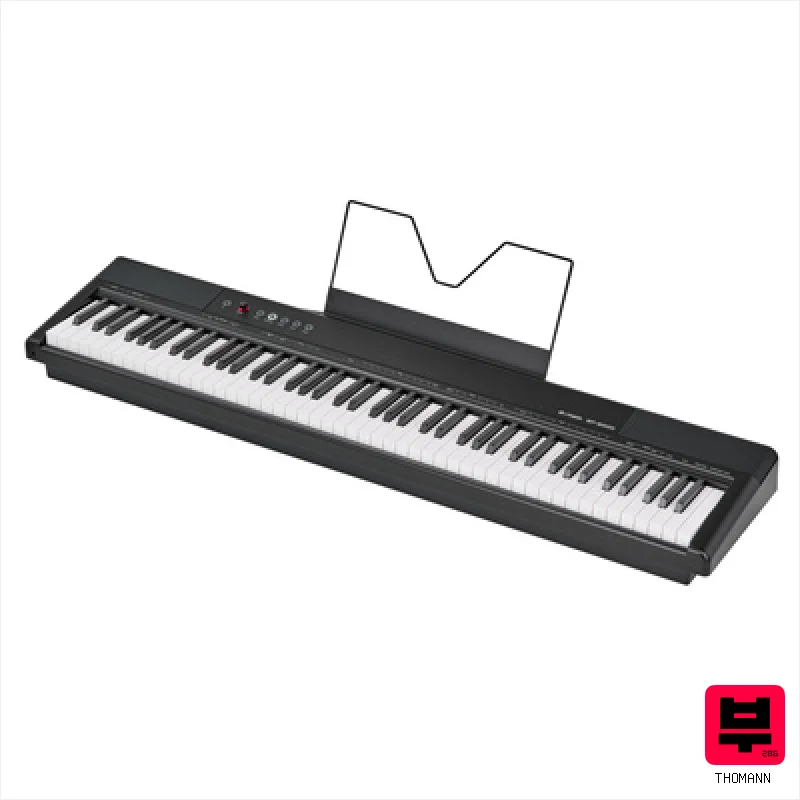
Doepfer A-154 Sequencer Controller
A-154 Vintage Edition · Doepfer
4 for sale on Reverb2 finishes at Thomann
The A-154 Vintage Edition is a fantastic, budget-friendly sequencer expander for Doepfer systems. It’s perfect for anyone wanting that classic, analog sequencing vibe, especially if you're already invested in the A-155 ecosystem. The black faceplate really nails the vintage look and feel.
Pros
- Vintage black faceplate adds a classy, retro aesthetic appeal
- Solid Doepfer build quality; feels robust and dependable
- Offers versatile sequencing modes for varied rhythmic patterns
Cons
- Requires two A-155 modules for full 16-step functionality
- LED display can be a bit dim in brightly lit environments
73AudioFu
Index↓ 4.8%since Aug 14 · lowest so far$234 · Aug 14$223 now$223€199 at Thomann · in stockCheck price ↗ -
Expert Sleepers ESX-8CV MK2 CV Expander Eurorack Synth Module
ESX-8CV mk2 · Expert Sleepers
9 for sale on Reverb1 finish at Thomann
This little module is a workhorse for expanding your Expert Sleepers ecosystem. It’s a super clean way to get eight additional CV outputs from your ES-4 or ES-40, and the build quality is impeccable. Perfect for those who’ve already invested in Expert Sleepers and need more CV routing options.
Pros
- Rock-solid Expert Sleepers build quality and reliability
- Precise 12-bit D/A conversion for clean CV signals
- Flexible voltage range for diverse modular patching
Cons
- Requires an ES-4, ES-40, or ES-5 to function – not standalone
- DC-coupled outputs can introduce drift with some voltage sources
76AudioFu
IndexStableno change since Aug 14Aug 14$212 now$212€189 at Thomann · in stockCheck price ↗ -
Befaco Hexpander Eurorack Synthesizer Module
Hexpander · Befaco
8 for sale on Reverb1 finish at Thomann
The Hexpander is a really smart addition if you already own a Hexmix. It unlocks a whole new level of routing and monitoring control, making it ideal for live performers or anyone needing more complex effects management within their modular setup. It’s a focused expander, not a replacement for a full mixer.
Pros
- Expands Hexmix’s routing significantly, adding crucial flexibility.
- Aux sends offer pre/post fader control for nuanced effects.
- Dedicated headphone output simplifies monitoring during performance.
Cons
- Adds considerable HP cost for relatively limited functionality on its own.
- Reliance on the Hexmix means it’s not a standalone solution.
71AudioFu
Index↓ 1.2%since Aug 14 · lowest so far$373 · Aug 14$368 now$368€329 at Thomann · in stockCheck price ↗ -
Xaoc Devices Hrad Mixing Console Expansion
Hrad · XAOC Devices
4 for sale on Reverb1 finish at Thomann
The Hrad is a focused, essential expander for anyone already invested in the XAOC Praga ecosystem. It streamlines your aux routing and cueing, making complex patching more manageable and performance-ready. If you're building a Praga-centric modular system, this is a smart, efficient addition.
Pros
- Solid build quality; feels robust and well-engineered
- Provides crucial expandability for Praga mixer workflow
- Cue output is thoughtfully implemented for performance use
Cons
- Requires Praga module, adding to overall system cost
- Limited routing flexibility compared to more complex expanders
68AudioFu
Index↓ 3.9%since Aug 14 · lowest so far$290 · Aug 14$279 now$279€249 at Thomann · in stockCheck price ↗ -
Der Mann mit der Maschine M4 Motor Fader Unit
Not on Reverb yet1 finish at Thomann
The M4 is a seriously cool addition if you're already in the Droid Master ecosystem. It lets you build some genuinely unique performance workflows with those motorized faders and programmable haptic feedback—perfect for experimental musicians and those who want to get really granular with their sequencing and modulation.
Pros
- Motorized faders offer precise, repeatable control for complex sequences
- Programmable haptic feedback adds unique expressive possibilities for performance
- 60mm faders provide good visual feedback and a substantial feel
Cons
- Requires the Droid Master module, increasing the overall investment
- 350mA current draw can be significant, demanding a robust power supply
57AudioFu
Index↓ 19.0%since Aug 14 · lowest so far$536 · Aug 14$434 now$434€388 at Thomann · in stockCheck price ↗ -
The Bohumin is a really clever little module if you're already invested in the Ostrawa ecosystem. It's like giving your Ostrawa a serious upgrade, adding a second stereo aux send and a ton of modulation possibilities for creating evolving soundscapes and dynamic textures—perfect for experimental electronic musicians and sound designers who crave nuanced control.
Pros
- Expands Ostrawa’s routing significantly, unlocking complex stereo effects.
- Provides precise level control over aux returns, crucial for mix shaping.
- CV and gate inputs offer dynamic, performance-driven aux sends and mutes.
Cons
- Requires Ostrawa, limiting its standalone utility and increasing overall cost.
- Aux send B CV input lacks attenuation, potentially overwhelming the return.
52AudioFu
Index↓ 3.9%since Aug 14 · lowest so far$290 · Aug 14$279 now$279€249 at Thomann · in stockCheck price ↗ -
The Rostock is a seriously cool module if you're diving into intricate sequencing and sound design. It's a core piece of XAOC's Leibniz system, offering unique bit-level manipulation. Perfect for experimental musicians and sound designers looking to generate complex, evolving patterns and textures.
Pros
- Exceptional bit-level manipulation for complex rhythmic textures.
- Leibniz system integration unlocks truly unique sequencing possibilities.
- Scramble function creates unpredictable, chaotic melodic variations.
Cons
- Relatively high power draw compared to simpler utility modules.
- Steep learning curve; requires understanding of binary data concepts.
51AudioFu
Index↓ 3.5%since Aug 14 · lowest so far$289 · Aug 14$279 now$279€249 at Thomann · in stockCheck price ↗ -
The Jena is a seriously powerful little module. It's like having a mini-wavetable workstation in your rack, perfect for sound designers and experimental musicians who want to create evolving textures and complex rhythms. Just be prepared to dive deep – it's not the easiest module to pick up, but the payoff is huge.
Pros
- Exceptional wavetable sculpting capabilities for unique textures
- Seamless integration with XAOC’s Leibniz ecosystem unlocks complex modulation
- Compact 8HP footprint maximizes patch flexibility in tight racks
Cons
- Steep learning curve for those unfamiliar with wavetable synthesis
- Power draw requires careful consideration in power-constrained systems
50AudioFu
IndexStableno change since Aug 14Aug 14$279 now$279€249 at Thomann · in stockCheck price ↗ -
The Tete is a brilliant extension of the Tetrapad, instantly transforming it into a powerful performance hub. It’s perfect for experimental musicians and live performers who want a unique blend of sequencing, looping, and real-time control within a modular environment—a real game-changer for expanding your live setup.
Pros
- Remarkable Tetrapad expander, unlocks creative performance possibilities
- Flexible combo mode handles faders, LFOs, and drum triggering
- Step sequencing offers precise control and recall of sequences
Cons
- Requires the Tetrapad, increasing overall system investment
- Limited physical controls beyond the Tetrapad pads themselves
50AudioFu
Index↓ 2.8%since Aug 14 · lowest so far$356 · Aug 14$346 now$346€309 at Thomann · in stockCheck price ↗ -
This X7 expander is a clever little addition for Droid Master users. It's a straightforward solution for bringing in external MIDI devices and triggering gates, and the USB-C is a nice touch for modern workflows. Ideal for those wanting to integrate their Droid Master into a larger, MIDI-driven modular setup without complex routing.
Pros
- Excellent MIDI integration expands Droid Master's capabilities significantly.
- Compact 4U width optimizes precious Eurorack space.
- Reliable 3.5mm TRS MIDI ports offer robust connections.
Cons
- Solely dependent on the Droid Master – limited standalone use.
- Power draw, while manageable, could impact larger systems.
All 68 expander modules
Same index, same nightly prices — compact. Colour options of one model share a row. Tap a photo to zoom.
- 11
Expert Sleepers FHX-8CV CV Expander Eurorack Synth ModuleFHX-8CV · Expert Sleepers · 2 finishes72Stable$162€145$162€145Check ↗
- 12
Der Mann mit der Maschine B32 ControllerDer Mann mit der Maschine48Stable$300€268$300€268Check ↗
- 13
Squarp Instruments xp32Squarp Instruments41Stable$648€579$648€579Check ↗
- 14
XAOC Devices DevaXAOC Devices51↓ 2.2%$196€175$196€175Check ↗
- 15
Intellijel Designs CVx 1UIntellijel Designs51↓ 5.4%$196€175$196€175Check ↗
- 16
4ms MetaAIO4ms39↑ 11.2%$223€199$223€199Check ↗
- 17
Der Mann mit der Maschine DB8E Display/ControllerDer Mann mit der Maschine48Stable$199€178$199€178Check ↗
- 18
XAOC Devices Ostankino IIXAOC Devices50Stable$188€168$188€168Check ↗
- 19
Der Mann mit der Maschine E4 ControllerDer Mann mit der Maschine48Stable$188€168$188€168Check ↗
- 20
Vermona Modular MEX3Vermona Modular41Stable$200€179$200€179Check ↗
- 21
XAOC Devices Lipsk IIXAOC Devices51↓ 1.9%$174€155$174€155Check ↗
- 22
XAOC Devices GeraXAOC Devices50Stable$174€155$174€155Check ↗
- 23
Vermona Mono Lancet Modular DockVermona43↓ 3.4%$189€169$189€169Check ↗
- 24
Der Mann mit der Maschine G8 ExpanderDer Mann mit der Maschine48Stable$166€148$166€148Check ↗
- 25
Der Mann mit der Maschine S10 ControllerDer Mann mit der Maschine49↓ 0.7%$154€138$154€138Check ↗
- 26
Expert Sleepers ES-5 mk4Expert Sleepers46Stable$156€139$156€139Check ↗
- 27
Ohmforce Bohm GrooveOhmforce43Stable$156€139$156€139Check ↗
- 28
ADDAC 501B Complex Random ExpansionADDAC37↑ 10.4%$167€149$167€149Check ↗
- 29
4MS QCD ExpanderModule Wi-Fi Expander · 4ms78Stable$111€99$111€99Check ↗
- 30
Xaoc Devices Nin Zadar ExpanderNIN · XAOC Devices72Stable$73€65$73€65Check ↗
- 31
Doepfer A-161 Clock SequencerA-161 · Doepfer71Stable$71€63$71€63Check ↗
- 32
Expert Sleepers TMB Tiny MIDI Breakout Eurorack Synth ModuleTiny MIDI Breakout · Expert Sleepers66Stable$55€49$55€49Check ↗
- 33
Expert Sleepers TMB Tiny MIDI Breakout Eurorack Synth ModuleMIDI breakout · Expert Sleepers66Stable$60€54$60€54Check ↗
- 34
Intellijel Designs Atlx 1UIntellijel Designs · 2 finishes57Stable$73€65$73€65Check ↗
- 35
Schlappi Engineering Cascade BlackSchlappi Engineering · 2 finishes51Stable$73€65$73€65Check ↗
- 36
Der Mann mit der Maschine P10 ControllerDer Mann mit der Maschine51↓ 3.9%$111€99$111€99Check ↗
- 37
Malekko DIN SYNCMalekko50↓ 40.8%$32€29$32€29Check ↗
- 38
XAOC Devices UstkaXAOC Devices50Stable$73€65$73€65Check ↗
- 39
XAOC Devices HelXAOC Devices50Stable$95€85$95€85Check ↗
- 40
XAOC Devices Poti IIXAOC Devices50Stable$100€89$100€89Check ↗
- 41
XAOC Devices AradXAOC Devices50Stable$133€119$133€119Check ↗
- 42
Befaco MEX Eurorack Synthesizer ModuleMEX · Befaco49Stable$95€85$95€85Check ↗
- 43
Der Mann mit der Maschine P4B2 ControllerDer Mann mit der Maschine49↓ 0.8%$140€125$140€125Check ↗
- 44
Intellijel Designs XY IO 1UIntellijel Designs48Stable$24€21$24€21Check ↗
- 45
Intellijel Designs Stereo Line In Jacks 1UIntellijel Designs48Stable$24€21$24€21Check ↗
- 46
Intellijel Designs Stereo Out Jacks 1UIntellijel Designs48Stable$27€24$27€24Check ↗
- 47
Intellijel Designs USB Extender 1U/3UIntellijel Designs48Stable$49€44$49€44Check ↗
- 48
Intellijel Designs QxIntellijel Designs48Stable$87€78$87€78Check ↗
- 49
Intellijel Designs GxIntellijel Designs48Stable$87€78$87€78Check ↗
- 50
Der Mann mit der Maschine P2B8 ControllerDer Mann mit der Maschine48Stable$121€108$121€108Check ↗
- 51
Doepfer A-126-2 ExpanderDoepfer46Stable$54€48$54€48Check ↗
- 52
Doepfer A-149-2Doepfer46Stable$66€59$66€59Check ↗
- 53
4ms Listen Up4ms46↓ 1.5%$73€65$73€65Check ↗
- 54
Erica Synths Black Filter CouplerBlack VCF Coupler · Erica Synths46↑ 32.0%$111€99$111€99Check ↗
- 55
vpme.de SixSwitchesvpme.de43Stable$50€45$50€45Check ↗
- 56
OXI Instruments Split 2HPOXI Instruments43Stable$76€68$76€68Check ↗
- 57
NANO Modules EXP4NANO Modules43↓ 3.5%$92€82$92€82Check ↗
- 58
Ohmforce Bohm PerformerOhmforce43Stable$111€99$111€99Check ↗
- 59
Shakmat Modular Bard Quartet ExpandShakmat Modular43Stable$111€99$111€99Check ↗
- 60
OXI Instruments Pipe MKIIOXI Instruments43Stable$123€110$123€110Check ↗
- 61
Erica Synths Graphic Resonant FB ExpanderErica Synths43Stable$129€115$129€115Check ↗
- 62
Shakmat Modular Ballista Blast ExpanderShakmat Modular43Stable$144€129$144€129Check ↗
- 63
vpme.de QEXvpme.de43Stable$146€130$146€130Check ↗
- 64
Robaux MIDI Expander 2HPRobaux41Stable$17€15$17€15Check ↗
- 65
AtoV PunkBusAtoV41Stable$123€110$123€110Check ↗
- 66
Neuzeit Instruments WarpEXNeuzeit Instruments41Stable$133€119$133€119Check ↗
- 67
4ms MetaButtons4ms41↑ 8.4%$144€129$144€129Check ↗
- 68
ADDAC 506B Stochastic Function Exp.ADDAC38↑ 9.5%$129€115$129€115Check ↗
Expander Modules by the numbers
Measured across all 72 models we track, not a sample.
Median $129 — half of all expander modules here cost less.
How to choose the best expander modules
Modulation Depth & Range
It's not just about how much a parameter can move, but the quality of that movement. Can it go subtly expressive, or just slam into clipping? We're looking for expanders that offer nuanced control, especially when dealing with complex FM or waveshaping.
Voice Architecture Flexibility
Simple expanders just add more oscillators. Advanced ones let you route signals internally, cross-modulate complex waveforms, and create entirely new sonic pathways. The more routing options, the more creative potential.
Envelope/LFO Response
A sluggish or quantized envelope can kill a patch's vibe. We're after expanders with fast, precise envelopes and LFOs that can handle both subtle tremolo and aggressive, rhythmic pulses.
Noise & Artifacts
Cheap expanders often have audible hiss or aliasing artifacts, especially at higher frequencies. These can ruin a pristine patch. We're listening for clean, quiet operation, even under heavy modulation.
Hands-On Playability
A complex expander shouldn't feel like a computer interface. We want knobs and switches that provide immediate, tactile control - something you can tweak on the fly during a gig or while layering sounds in a recording session.
Buying guide
Alright, so you're past the basic VCO-filter-envelope loop and want to really sculpt your sound? Expander modules are where it's at - they're not just extra voices, they're about creating complex, evolving textures that go beyond basic patchable sounds. But slapping any expander into your rack isn't gonna cut it; we're talking serious sonic manipulation here. This is for players who want to really wring something unique out of their modular.
Don't be fooled by sheer feature counts. A module crammed with options isn't automatically better. Often, it's just more things to get in the way.
Look for expanders that prioritize intuitive workflow and a clear signal path - something you can understand and manipulate quickly. Paying extra for a module with excellent build quality and low noise floor is almost always worth it; those little imperfections really creep into a mix.
How the AudioFu Index works
Five measured signals and nothing else — no stars from strangers, no “tested by experts” we didn’t do. The weights are fixed and public. We don’t play these instruments; we measure the market around them.
This chart covers 72 expander modules from the Thomann catalogue. Before you buy, read hands-on reviews and, where you can, play it. Full methodology.
AudioFu earns a commission when you buy through our Thomann links. It never changes the order — the index does.
- Demand40%
How many of this exact model are for sale on Reverb right now — what musicians actually buy and resell.
- Lineup20%
How many finishes Thomann stocks — makers expand the models that sell.
- Price15%
Where the price has moved since we started tracking in August.
- Specs15%
How completely the maker documents it.
- Maker10%
How deep the brand’s range is in this category.
Questions
What's the difference between an expander and a multi?
A multi is usually just a bunch of identical voices. Expanders, ideally, offer more unique sonic characteristics and modulation options within each voice, or between them. Think of a multi as a chorus, an expander as a complex, evolving soundscape generator.
I'm new to modular, should I start with an expander?
Not really. Get your core modules (VCO, filter, envelope) solid first. Expanders are best used after you understand the basics - otherwise, you'll just be lost in a sea of knobs.
How important is headroom?
Crucial. Especially if you're layering sounds or using heavy FM. Insufficient headroom leads to clipping and a muddy, lifeless sound. Listen for that 'breathing room' in the signal path.
Can I use an expander for bass?
Absolutely, but be mindful of aliasing. Aggressive waveshaping or FM can generate high-frequency artifacts that muddy the low-end. Careful filtering and modulation are key to getting a clean, powerful bass sound.
My expander is making weird noises - what's going on?
First, check your power. Dirty power can introduce all sorts of gremlins. Then, examine your patching - a rogue cable or a poorly chosen modulation source can cause unexpected artifacts. Finally, consider the module's design - some designs are inherently noisier than others.