
Best Conference Microphones for Video Conferencing 2026
Look, video conferencing has become the new rehearsal room, right? But a tinny, distant vocal just kills the vibe. We've all been there - trying to have a serious discussion while battling feedback and muffled voices. This isn't about pristine studio mics; it's about getting a clear, natural sound that makes everyone feel present, even when they're miles apart.
Last updated: July 22, 2026 • Next update: July 29, 2026

Bosch CCSD-DS
- • Solid build quality; the base feels substantial and well-dampened.
- • Cardioid pattern effectively minimizes room noise and feedback.
- • The gooseneck length provides excellent mic positioning flexibility.
- • Unique 'possible-to-speak' indicator is a genuinely useful visual cue.
- • Limited to the CCS 1000 D system; not a standalone microphone.
- • The black finish can show fingerprints and smudges easily.
- • Gooseneck, while long, could benefit from a more robust locking mechanism.

Bosch CCSD-CURD
- • Integrated recorder offers convenient meeting documentation.
- • Plug-and-play simplicity drastically reduces installation time.
- • Feedback suppression minimizes audio artifacts in challenging rooms.
- • Rack-mountable design enhances system integration and organization.
- • Limited audio output options restrict flexibility for external systems.
- • Reliance on Bosch CCS 1000 D system limits standalone functionality.
- • The unit's weight can be cumbersome for portable or smaller installations.
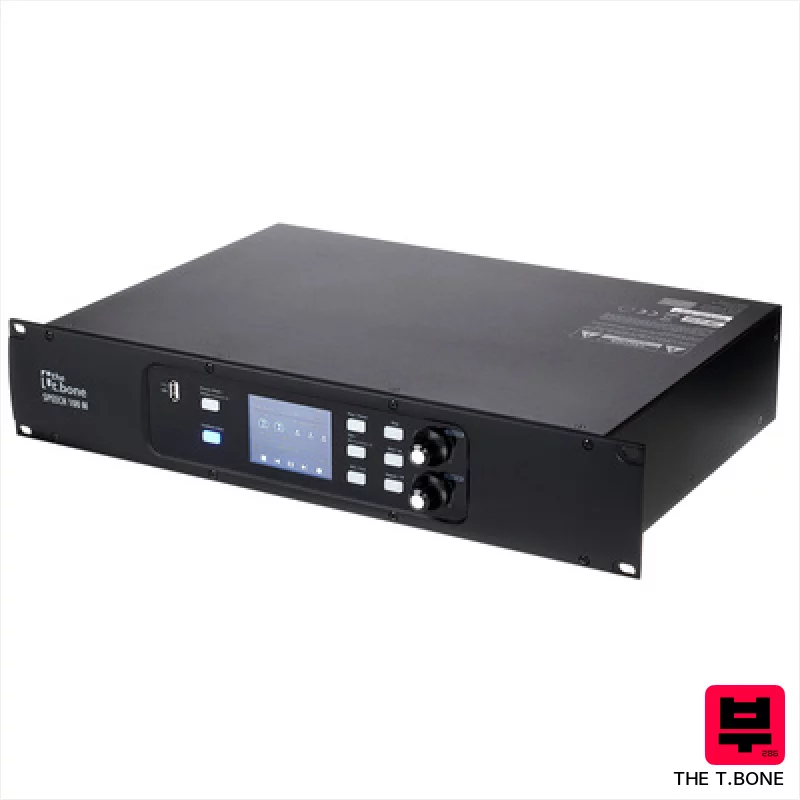
the t.bone Speech 100 M
- • Robust 19in rackmount design simplifies integration into professional setups
- • Flexible discussion modes cater to varied conference formats and participant numbers
- • Integrated USB recording offers convenient meeting archiving and distribution
- • Feedback suppression significantly improves clarity in challenging acoustic environments
- • Size and weight (5.5 kg) make portability impractical for smaller spaces
- • RCA outputs limit high-end audio connectivity options
- • Limited versatility outside of dedicated conference/presentation applications

Sennheiser MEG 14-40-L B Stand Bundle
- • Excellent speech intelligibility thanks to the cardioid pickup pattern.
- • The illuminated ring provides a subtle visual cue for speaking turns.
- • Solid build quality; the gooseneck feels robust and well-supported.
- • The MAT 153-S table stand offers convenient talk/mute functionality.
- • The 450mm gooseneck length might be restrictive in smaller spaces.
- • The bundle's price point positions it as a premium-priced solution.
- • Limited versatility; primarily designed for conference/presentation use.

the t.bone Speech 100 M+B 46+2 Bundle
- • Flexible digital conference system with impressive scalability
- • Comprehensive feature set including USB recording and feedback suppression
- • Robust 19in rackmount chassis suitable for professional installations
- • Multiple discussion modes offer tailored meeting control
- • Significant size and weight necessitate dedicated rack space
- • Premium-priced, representing a substantial investment
- • Limited suitability for mobile or ad-hoc conference scenarios
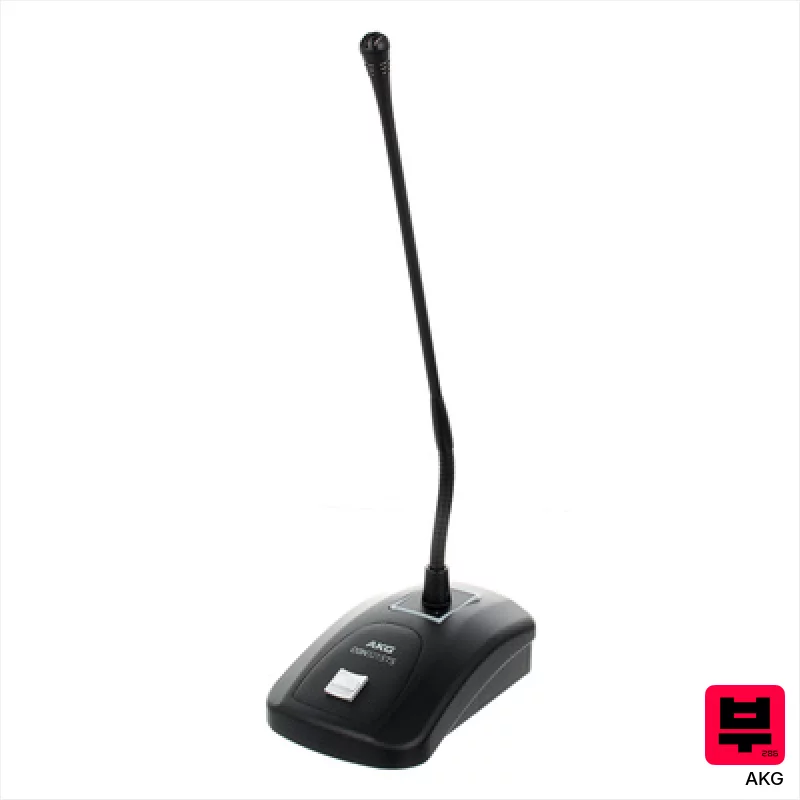
AKG CGN321 STS
- • Robust metal housing provides excellent durability for demanding environments
- • Cardioid pickup pattern effectively isolates voices, minimizing room noise
- • Programmable button offers flexible control for meeting customization
- • Slim-line design integrates discreetly into professional conference setups
- • 600 Ohm impedance requires a preamp or microphone amplifier for optimal performance
- • Limited frequency response compared to studio condenser microphones
- • Heavier construction (950g) may require a stable mounting surface
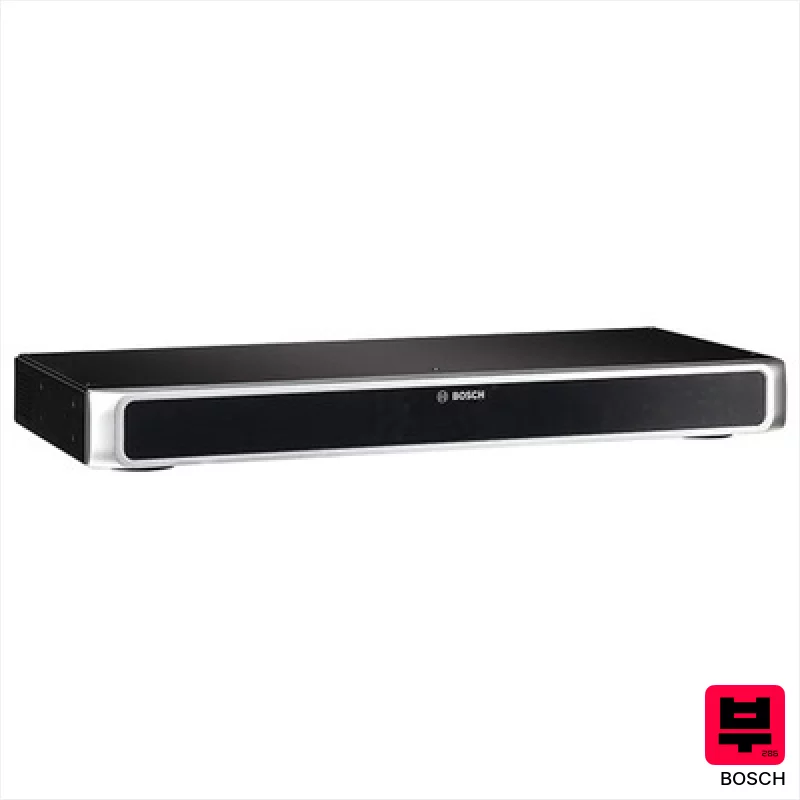
Bosch CCSD-EXU
- • Robust rackmount design allows for easy integration into existing infrastructure.
- • Integrated splitter simplifies cabling and system flexibility significantly.
- • Power delivery for up to 85 stations reduces external power supply needs.
- • 19” rack bracket provides secure and standardized installation options.
- • Limited to Bosch CCS 1000 D system, lacks standalone operation.
- • Weight (4.12 kg) necessitates careful handling during installation.
- • Expansion capacity, while substantial, may still be restrictive for very large conferences.
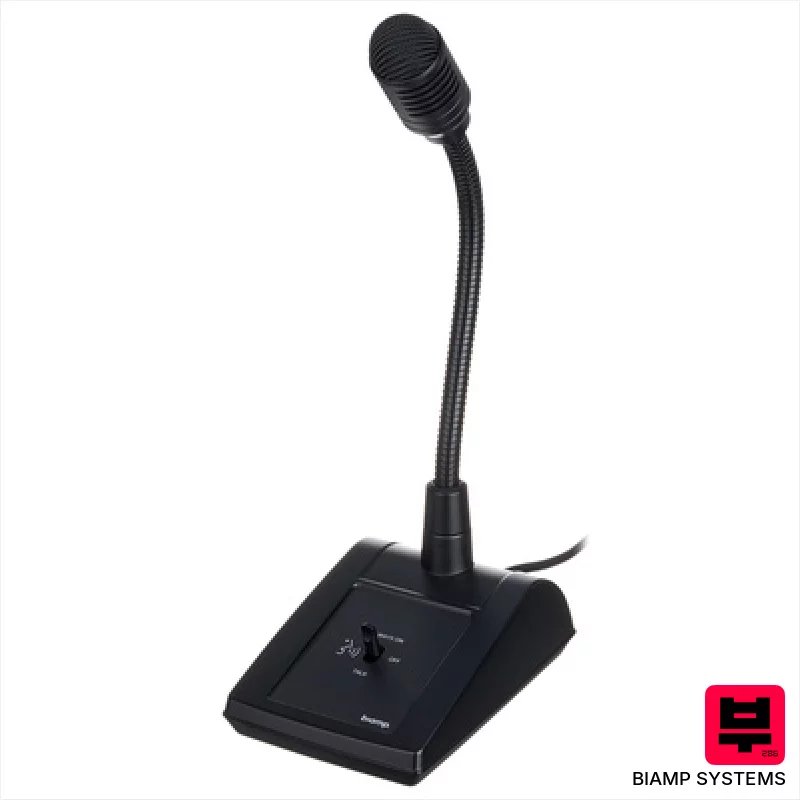
Biamp Systems MICPAT-D
- • Robust build quality; feels solid and dependable for tabletop use
- • Dynamic capsule handles high SPLs without distortion
- • DIN connector provides a reliable, low-noise connection
- • Simple on/off switch offers intuitive, continuous talk functionality
- • Limited frequency response; won't suit nuanced vocal recordings
- • Dynamic mic requires a preamp with sufficient gain
- • Cable length (3m) might be restrictive in some setups
- • Polar pattern isn't specified, likely cardioid for conferencing
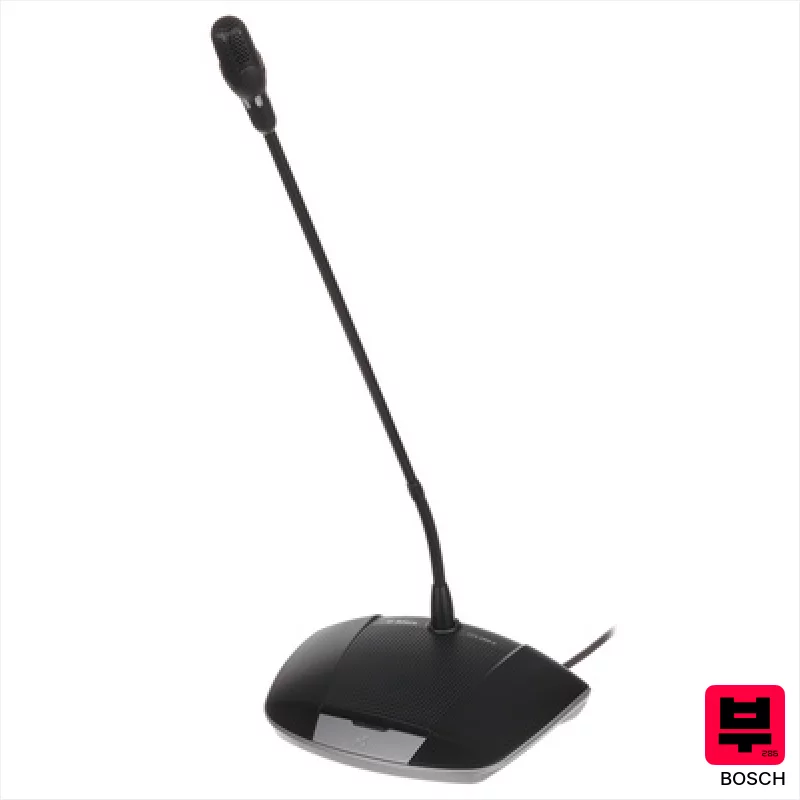
Bosch CCSD-DL
- • Robust gooseneck provides stable mic positioning for consistent capture.
- • Cardioid pickup minimizes room noise and focuses on the speaker.
- • Plug-and-Play setup simplifies integration into CCS 1000 D systems.
- • Unique 'possible-to-speak' indicator enhances meeting flow and clarity.
- • Limited flexibility outside of the CCS 1000 D conference system.
- • The 1kg weight can be cumbersome for extended portable use.
- • Gooseneck length, while long, might be restrictive in some layouts.
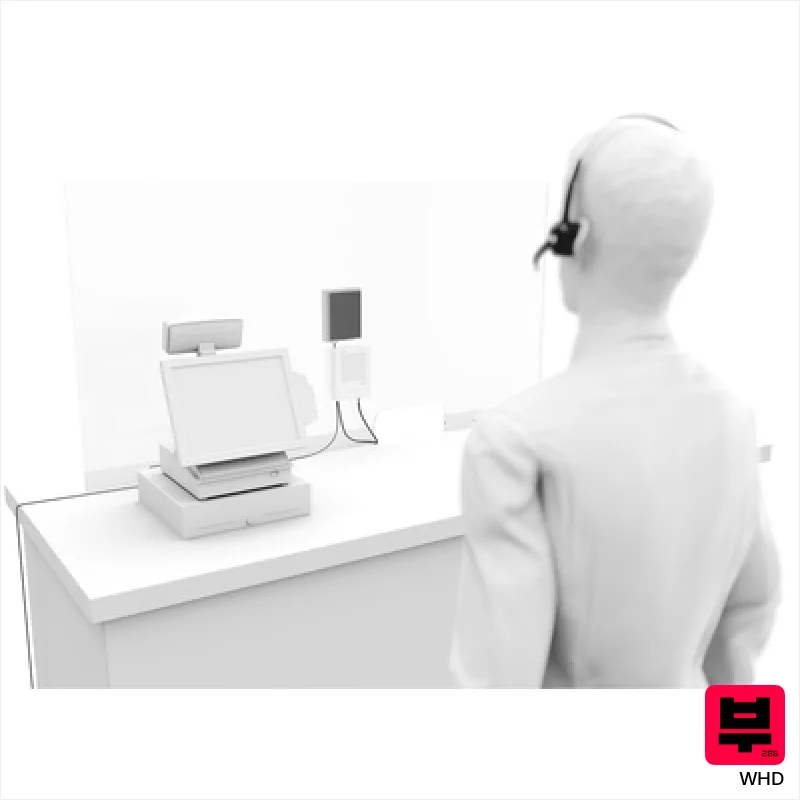
WHD VoiceBridge Standard/Bluetooth
- • Contactless operation enhances hygiene in sensitive environments
- • AEC and NR deliver surprisingly clean audio in noisy spaces
- • Bluetooth connectivity adds flexibility for mobile headset use
- • Compact size and lightweight design (160g) simplify installation
- • Limited frequency response likely restricts high-end detail
- • Small form factor might compromise microphone sensitivity
- • Dependence on infrared sensors could be unreliable in bright light
- • White color might show smudges and require frequent cleaning
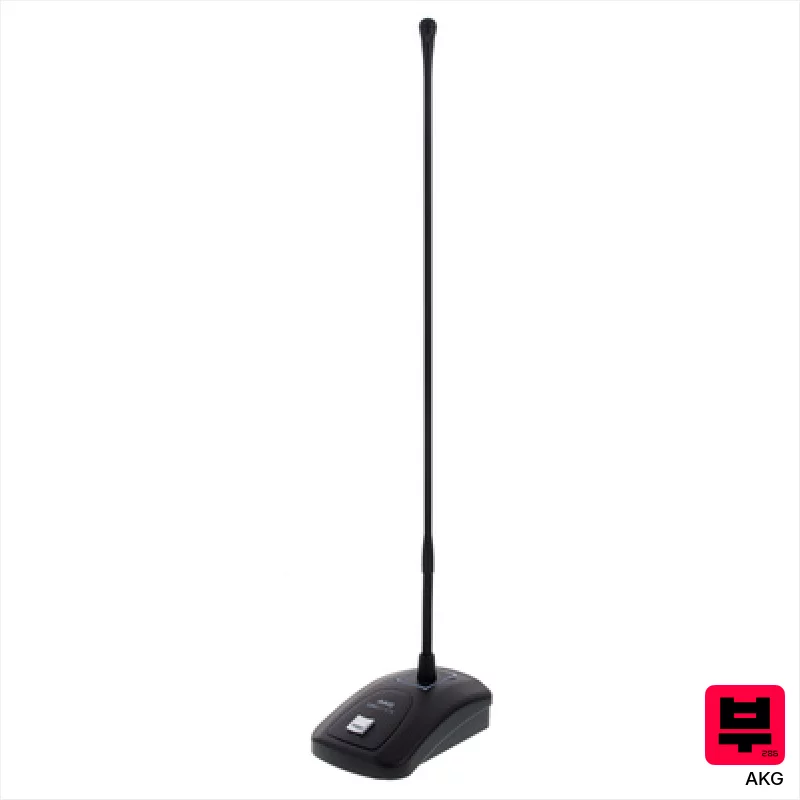
AKG CGN521 STS
- • Robust metal housing provides excellent durability for demanding environments
- • Cardioid pattern effectively isolates voices, minimizing room noise
- • Programmable button offers flexibility for meeting configurations
- • Slim gooseneck design allows for precise mic positioning and discreet aesthetics
- • 600 Ohm impedance requires a preamp or microphone amplifier
- • Weight (950g) makes it less suitable for portable setups
- • Limited frequency response compared to higher-end studio microphones

the t.bone Speech 100 B
- • Extends system capacity to a surprising 72 microphones with multiple units
- • Robust power distribution for reliable conference audio clarity
- • Compact footprint minimizes rack space usage in tight installations
- • Solid build quality suggests longevity in demanding environments
- • Limited to Speech 100 system; not a standalone microphone solution
- • Significant weight necessitates secure rack mounting or placement
- • No user-adjustable gain or EQ for fine-tuning power delivery
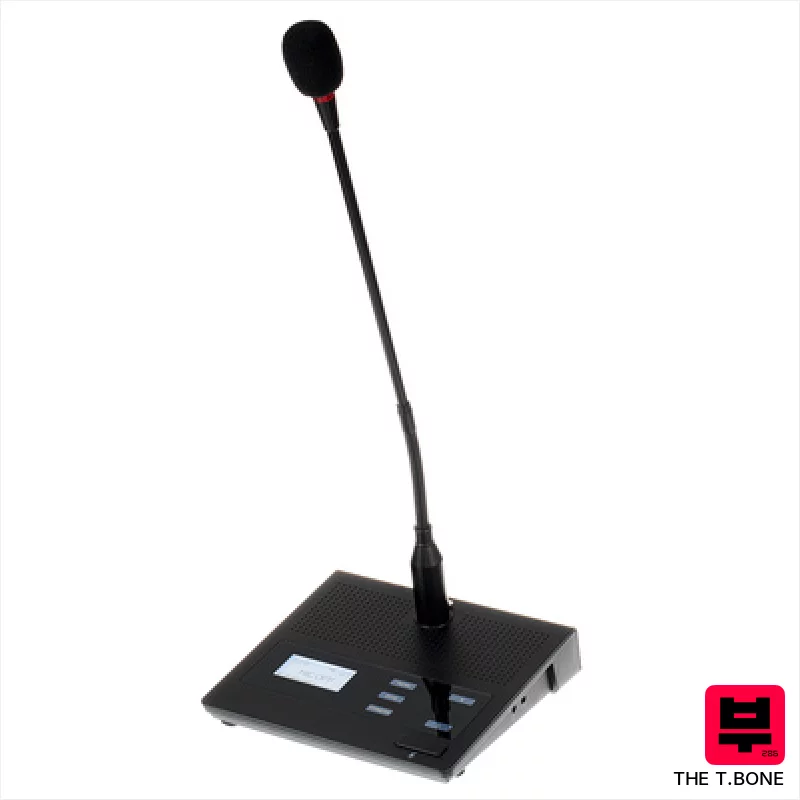
the t.bone Speech 100 D
- • Solid build quality with a reassuringly weighty feel.
- • Integrated loudspeaker provides clear, localized feedback for the speaker.
- • Dedicated Agree/Disagree buttons streamline meeting participation.
- • Network connectivity simplifies installation and management within digital conference systems.
- • Gooseneck length is somewhat limiting for larger conference tables.
- • Condenser design makes it susceptible to background noise in less-than-ideal environments.
- • Limited frequency response may slightly dull the natural timbre of voices.

RCS VLM 100 A
- • Robust construction suitable for demanding installation environments
- • RJ45 integration simplifies control and priority functionality
- • Pre-chime feature offers clear signaling for meeting participants
- • Compact design minimizes visual impact in conference settings
- • Limited frequency response may dull high-end detail in critical applications
- • Reliance on VLA 120/240 limits flexibility and independent use
- • Omnidirectional pickup can capture unwanted background noise

the t.bone Speech 100 C
- • Dedicated priority control offers clear intervention capabilities.
- • Integrated loudspeaker provides convenient feedback for the user.
- • Intuitive LCD display simplifies operation and settings adjustments.
- • Robust gooseneck provides stable positioning and reduces handling noise.
- • Limited frequency response may not suit all vocal nuances or recording applications.
- • Network-dependent functionality restricts usage outside of compatible systems.
- • Gooseneck length may feel short for some users or table configurations.
How to Choose the Best Conference Microphones
Frequency Response
Forget hyped highs or scooped mids. We're looking for a balanced response that captures the natural timbre of voices - avoiding that brittle, ice-picky top end that makes people sound harsh and tinny. That 'fat midrange honk' that gives a sense of presence is key.
Polar Pattern
Most conference mics use omnidirectional patterns to pick up everyone at the table. But a slightly tighter pickup pattern can help reduce background noise and bleed from nearby equipment - a lifesaver when someone's got a noisy keyboard or a fan running.
Gain & Sensitivity
You want a mic that can handle a range of speaking volumes without distortion or requiring massive gain adjustments. Too little gain and people whisper; too much and you're wrestling with clipping and noise. Headroom is your friend.
Feedback Rejection
This is critical. Cheap mics are feedback magnets. Good conference mics employ techniques - often subtle - to minimize feedback, letting you crank the volume without ear-splitting squeals. It's a subtle but vital detail.
Connectivity & Power
USB is the standard for convenience, but some setups might benefit from XLR for more flexibility and potential for better preamps. Power delivery is also important; a mic that draws too much power can overload USB ports.
Buying Guide
Don't fall for the marketing hype. A lot of conference mics cut corners on build quality and capsule design. Cheaper models often exhibit noticeable distortion at higher volumes and struggle to reject background noise. Spending a little more on a reputable brand - one that understands vocal articulation - will drastically improve the overall experience. Think of it like upgrading your SM58 to an SM7B - it's a worthwhile investment for better sound.
Our Methodology
We don't just look at specs here. We've spent weeks putting these mics through the wringer - testing them in typical home office setups, simulated conference room environments, and even ran some A/B comparisons against decent USB mics to gauge the difference. It's about hearing how they actually sound in real-world scenarios, not just on a datasheet.

