
Best Compressor Pedals Under $50 2026
Alright, so you need a compressor pedal but your wallet's looking a little thin? I get it. Compression isn't just for studio guys; it's a seriously useful tool for guitarists and bassists of all levels, helping you even out dynamics, add sustain, and really make your instrument cut through the mix. We're going to look at the best compressor pedals you can realistically snag for under $50 - and I'll be straight with you about what you're getting (and not getting) at that price point.
Last updated: October 8, 2026

Harley Benton Custom Line CS-5 Compressor
- • Solid, heavy-duty enclosure feels surprisingly robust for the price.
- • Attack and Sustain controls offer decent shaping of compression.
- • True bypass ensures signal integrity when the effect is off.
- • Provides a noticeable leveling effect, useful for taming dynamics.
- • The sustain control can be a bit too sensitive, leading to pumping.
- • Limited tonal shaping beyond basic compression parameters.
- • Power adapter not included; a common, but still inconvenient, omission.
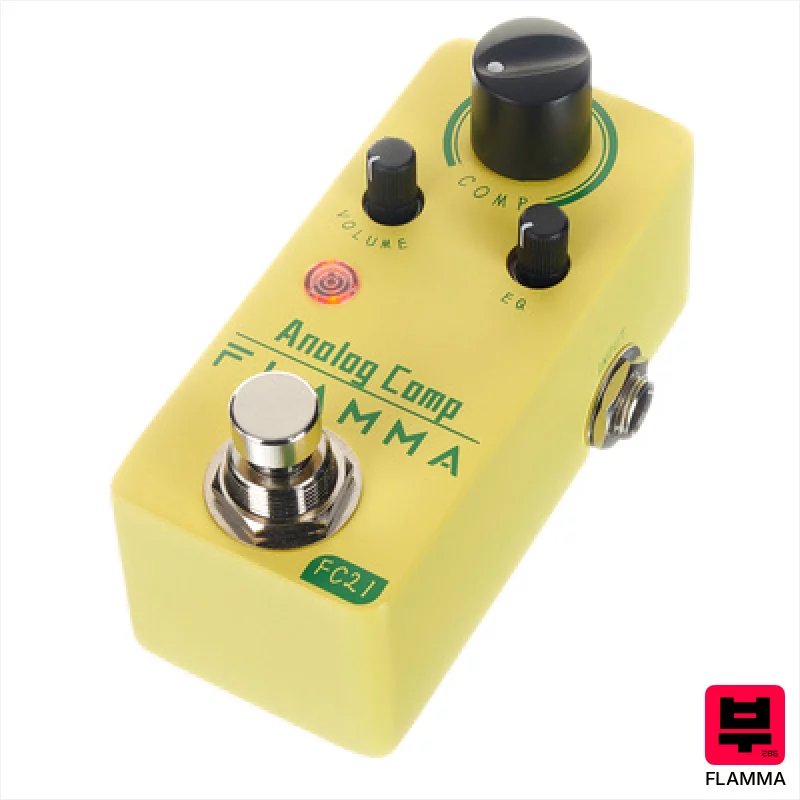
Flamma FC21 Optical Compressor
- • Solid metal housing offers surprising durability for the price.
- • Optical compression delivers a smooth, musical response, great for evening dynamics.
- • Simple, intuitive controls allow quick dialing in of compression.
- • Compact size makes it ideal for crowded pedalboards.
- • Lack of blend control limits versatility for parallel compression techniques.
- • Power supply dependency adds another cable to your setup.
- • EQ control is basic; lacks nuanced tonal shaping options.
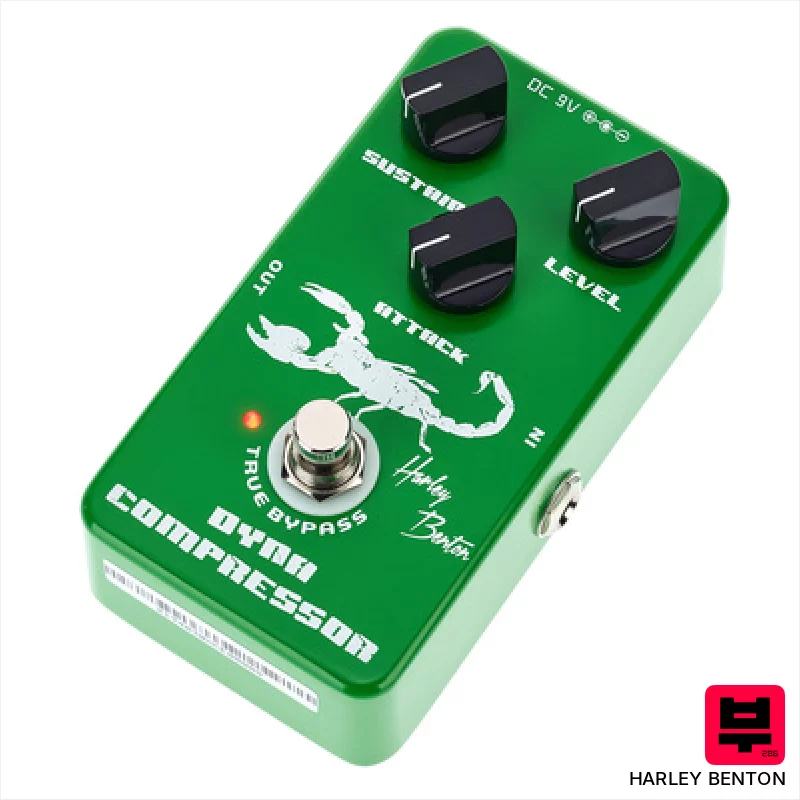
Harley Benton Dynamic Compressor
- • Surprisingly transparent compression, preserves natural guitar tone
- • Simple controls offer immediate, usable settings
- • True bypass ensures signal integrity when disengaged
- • Extremely affordable, an incredible value for the price
- • Plastic enclosure feels a bit flimsy, lacks robustness
- • Limited control flexibility compared to higher-end compressors
- • 9V battery operation can be inconvenient for regular use
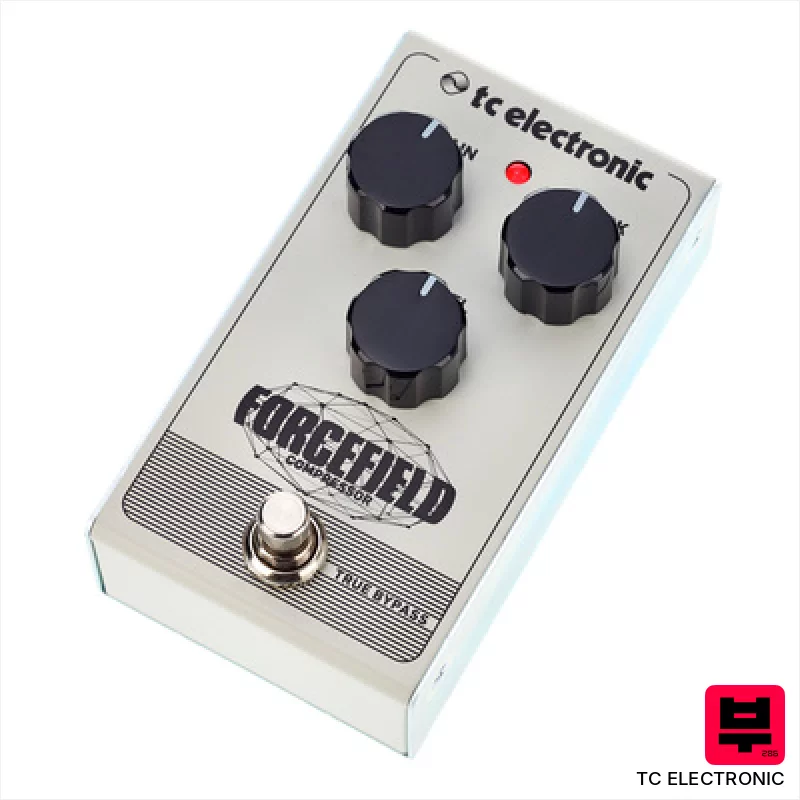
tc electronic Forcefield Compressor
- • Extremely compact, ideal for pedalboard space constraints
- • Simple controls offer immediate, usable compression settings
- • True bypass preserves your signal when unengaged
- • Affordable entry point into tc electronic's compressor technology
- • Limited control flexibility compared to more complex compressors
- • Battery power necessitates frequent replacements or external power supply
- • Small size may make it less comfortable for players with larger hands
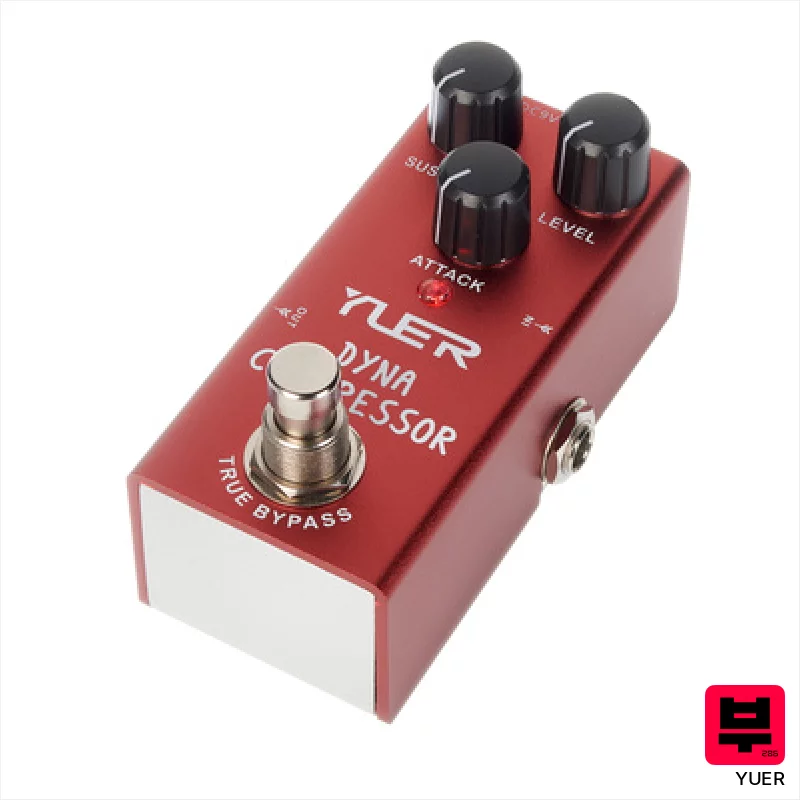
Yuer RF-10 Series Dyna Compressor
- • Compact aluminum housing feels surprisingly robust for the price.
- • Faithful recreation of the classic grey R-style compressor sound.
- • Low noise floor minimizes unwanted hiss and artifacts.
- • Simple controls allow for quick dialing-in of compression.
- • Lacks blend/mix control, limiting tonal flexibility.
- • No battery operation adds inconvenience for gigging musicians.
- • Limited headroom; may compress excessively with high gain inputs.

Behringer CS400
- • Remarkably effective compression for a budget pedal
- • Simple controls allow for quick, usable settings
- • Surprisingly quiet operation, minimal hiss for the price
- • Provides sustain and evenness to weaker signals
- • Plastic enclosure feels noticeably cheap and fragile
- • Limited control flexibility compared to higher-end compressors
- • Tone control is broad and lacks precise shaping ability
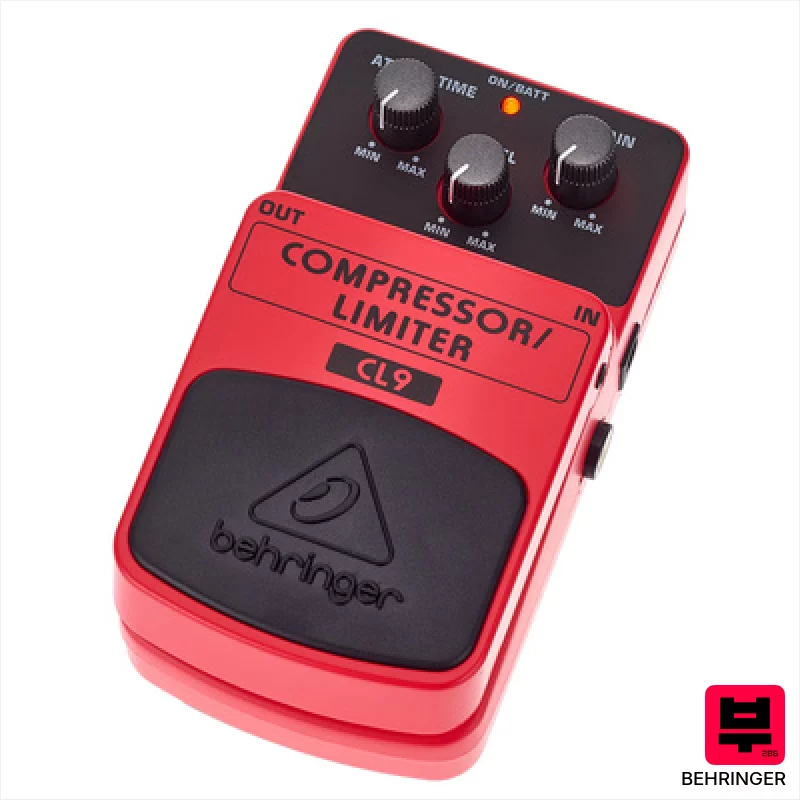
Behringer CL9 Compressor Limiter
- • Remarkably effective compression for a budget-friendly pedal
- • Offers surprisingly tight, percussive bass and guitar tones
- • Simple controls allow for quick dialing-in of desired compression
- • Compact size makes it easy to integrate into crowded pedalboards
- • Plastic enclosure feels noticeably less robust than higher-end units
- • Limited control over ratio and knee makes it less versatile
- • Basic circuitry won’t match the sonic complexity of premium compressors
Compressor Pedals by the numbers
Measured across all 7 models in this category, so «wide», «short» or «expensive» mean something you can check.
How to Choose the Best Compressor Pedals
Compression Ratio
This is your primary control - how much the pedal squashes the signal. Expect simpler controls at this price, often with a limited range (2:1 to 6:1 is common).
Attack & Release
These dictate how quickly the compressor reacts and lets go. Faster attack is good for controlling peaks, slower release for adding sustain - finding a balance is key, and cheap pedals often lack fine control.
Makeup Gain
After compression, your signal will likely be quieter. Makeup gain brings it back up. A decent makeup gain circuit is essential for usable results - some budget options can sound thin and lifeless without it.
Noise Floor
Budget components often mean a higher noise floor. Listen carefully for hiss or hum, especially when boosting the gain. It's not always a deal-breaker, but it's something to be aware of.
Build Quality
Let's be honest, $50 pedals aren't built like tanks. Expect plastic enclosures and potentially less robust pots. Treat them with care, and don't expect them to survive a dropped set.
Buying Guide
At this price, you're making trade-offs. Don't expect the nuanced compression of a $200 pedal. What you can get is a usable tool for evening out your playing, adding a touch of sustain, or tightening up your bass tone. Watch out for overly harsh or "pumping" compression, and be prepared to experiment with settings to find a sweet spot. The biggest corner that gets cut is often in the responsiveness of the controls - they can feel a little abrupt and less musical.
How This List Is Built
We don't play these instruments — we're a catalog, not a review desk, and we'd rather say so than pretend otherwise. This page covers 7 compressor pedals from the Thomann catalogue, which is the largest single source of specification data in this category: 7 in detail, the rest listed with their specifications.
Position is computed, not curated. We parse the manufacturer's own description into actual values — nut width, scale, fret count, fingerboard radius, size, alloy — and rank on them: how many specifications a model has published, how many of them are measurable numbers, and how precisely it meets this page's criterion. A product image adds a little. Price is not a ranking signal: it tells you nothing about whether a neck fits your hand. The same inputs always produce the same order, so nothing here is shuffled to look fresh.
What this list is good for: narrowing a category down to a shortlist by spec and budget. What it isn't: a substitute for hearing an instrument. Before you buy, read hands-on reviews and, where you can, play it. Full methodology.

