
Best Compressor Pedals Under $300 2026
Alright, so you want compressor pedal magic without draining your gigging budget? It's totally doable. A good compressor isn't just for fancy studio trickery; it's a vital tool for evening out your dynamics, adding sustain, and making your guitar or bass cut through the mix - whether you're playing a smoky blues bar or tracking a tight bassline. Let's break down the best compressor pedals you can snag for under $300.
Last updated: October 8, 2026
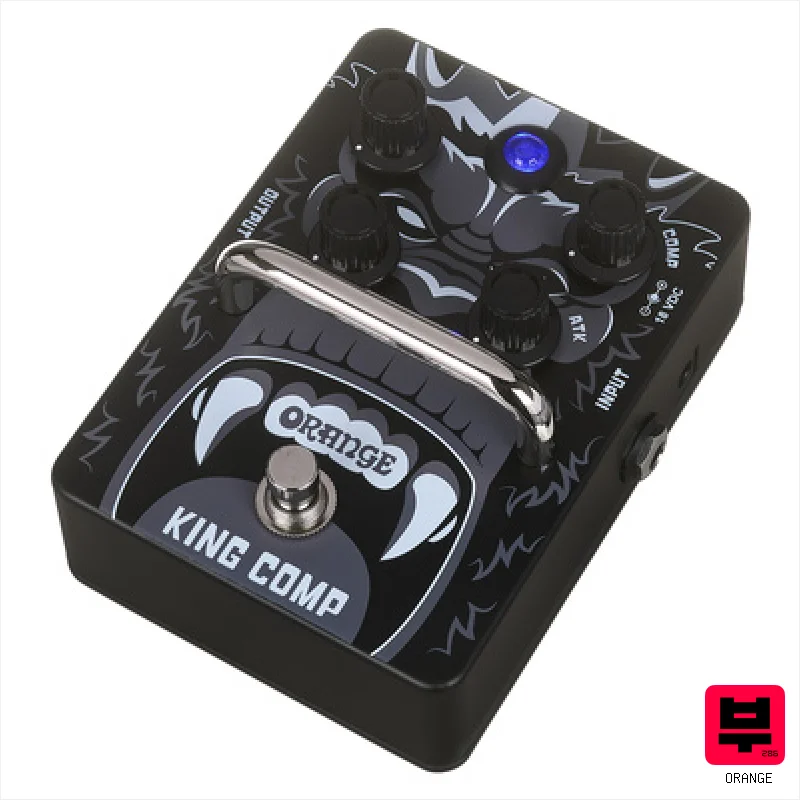
Orange King Comp
- • Adds warmth and brilliance to the guitar tone
- • Provides powerful sustain for long solos
- • Uses a Class-A VCA compression circuit
- • Includes a dedicated power supply in the box
- • No blend control to mix dry and wet signal
- • Missing a standard pedal bypass feature
- • Fixed power supply limits voltage options
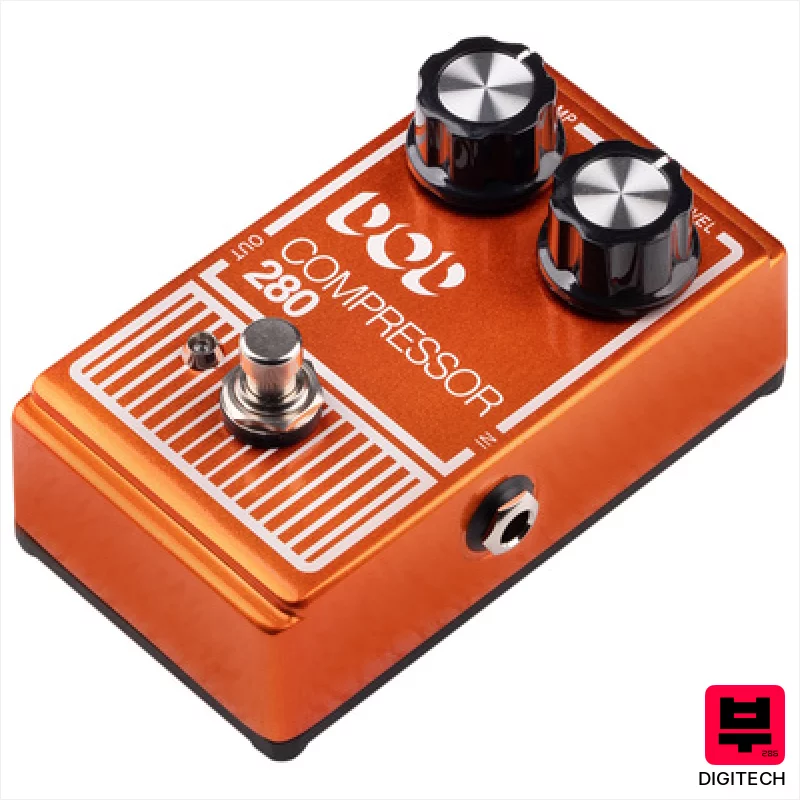
Digitech DOD Compressor 280
- • Robust aluminum enclosure feels solid and durable for gigging.
- • Classic DOD compression character – smooth sustain and punch.
- • True bypass preserves your signal when the pedal's off.
- • Improved components offer a cleaner, more reliable compression.
- • Limited control range; dialing in subtle compression is tricky.
- • Lack of a blend knob restricts tonal flexibility significantly.
- • 9V DC power supply not included; adds to the overall cost.

Harley Benton Custom Line CS-5 Compressor
- • Solid, heavy-duty enclosure feels surprisingly robust for the price.
- • Attack and Sustain controls offer decent shaping of compression.
- • True bypass ensures signal integrity when the effect is off.
- • Provides a noticeable leveling effect, useful for taming dynamics.
- • The sustain control can be a bit too sensitive, leading to pumping.
- • Limited tonal shaping beyond basic compression parameters.
- • Power adapter not included; a common, but still inconvenient, omission.

DSM & Humboldt ClearComp 1078 Compressor
- • Exceptional transparency; preserves natural instrument tone and dynamics remarkably well.
- • Highly versatile compression range, suitable for subtle leveling to aggressive squashing.
- • Blend control allows seamless integration with dry signal, avoiding unnatural artifacts.
- • Robust, all-metal enclosure provides excellent durability for stage and studio use.
- • Lacks battery operation, necessitating a dedicated power supply.
- • Attack and release controls can be a bit sensitive, requiring careful tweaking.
- • Relatively compact size might be a challenge for pedalboard space constraints.

J. Rockett Audio Designs Airchild Six Sixty Compressor
- • Active tilt EQ 'Tone' knob provides unique tonal shaping flexibility.
- • Blend control allows for seamless integration with dry signal, avoids squashing.
- • Robust enclosure and quality components inspire confidence in long-term durability.
- • Transparent compression preserves natural instrument character and nuances well.
- • Tone knob's EQ range might be too narrow for some users' taste.
- • Limited control depth compared to more complex, studio-grade compressors.
- • The 'Heavy' footswitch mode can be a bit aggressive for subtle compression.
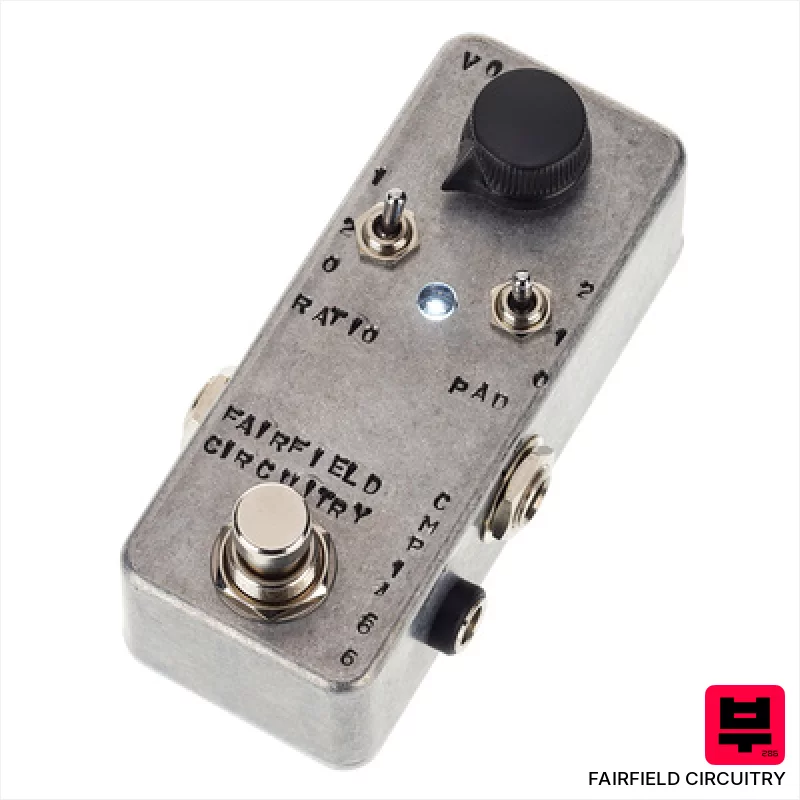
Fairfield Circuitry The Accountant
- • JFET gain reduction provides a uniquely musical, warm compression.
- • Ratio and Pad switches offer surprising versatility in compression character.
- • True bypass ensures signal integrity when the effect is disengaged.
- • Robust, compact enclosure built to withstand gigging demands.
- • No blend control limits its use for subtle, transparent compression.
- • Lacks a power switch, requiring pedalboard management.
- • Relatively premium-priced compared to some other compressor options.

Suhr Woodshed Comp
- • Exemplary transparency, preserves original tone with subtle gain enhancement
- • Andy Wood’s influence yields a uniquely musical and responsive compression
- • Robust enclosure and high-quality components ensure long-term reliability
- • Versatile enough for clean compression to subtle drive boost applications
- • Limited control set might feel restrictive for experienced compressor users
- • Premium-priced, a significant investment for a single effect pedal
- • True bypass can introduce a slight volume drop requiring adjustment
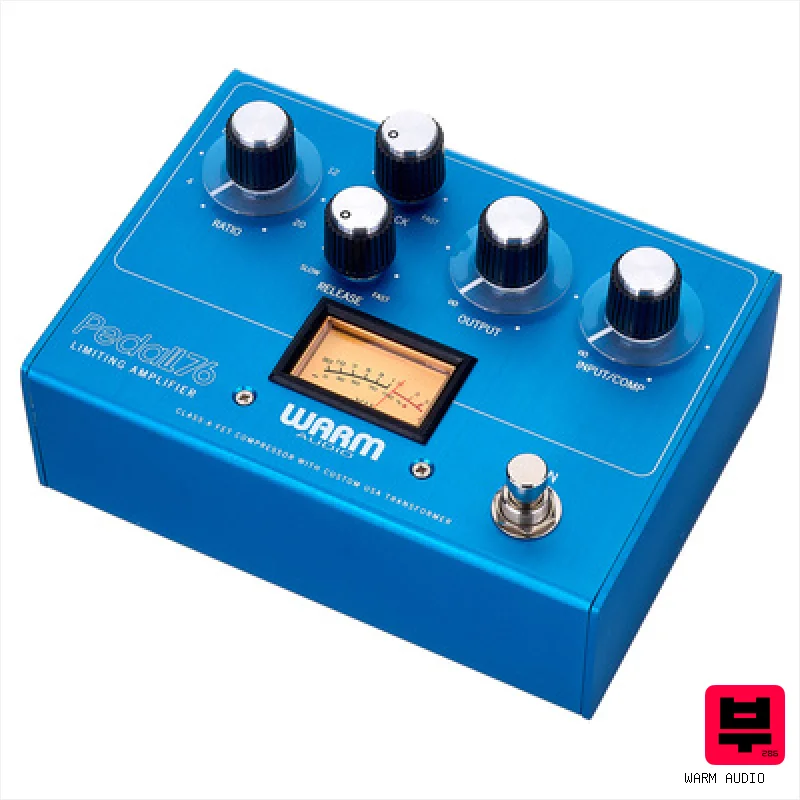
Warm Audio Pedal76 FET LTD Compressor
- • Five dedicated knobs for precise control over compression settings
- • True bypass keeps your original tone clean when effect is off
- • Built-in VU meter lets you see your signal levels clearly
- • Limited blue case offers a unique look for your pedalboard
- • Heavy at 862 grams for a small pedal unit
- • No push buttons means fewer ways to tweak settings on the fly
- • Requires a separate power adapter since no battery support exists

JHS Pedals Pulp'n Peel V4
- • Excellent natural compression, avoids squashing the signal.
- • EQ control provides tonal shaping beyond basic compression.
- • Blend knob allows seamless integration with dry signal.
- • Robust enclosure and quality components suggest long-term reliability.
- • Price point places it in a premium-priced category for a compressor.
- • Limited control depth compared to more complex, multi-band compressors.
- • Smaller footprint might be challenging for pedalboard space constraints.
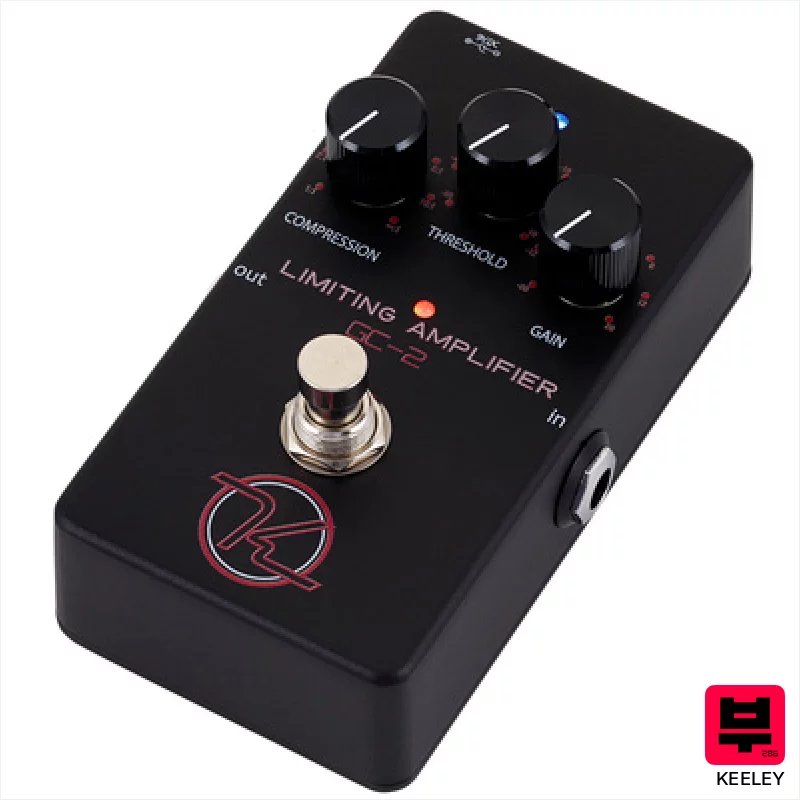
Keeley Compressor GC-2
- • Excellent transparency, preserves natural dynamics remarkably well
- • Gain control adds subtle drive and warmth when needed
- • Keeley’s signature smooth compression avoids a squashed feel
- • Robust enclosure and high-quality components promise lasting reliability
- • Limited control set compared to more complex compressors
- • May require tweaking to avoid over-compression with high-gain amps
- • Relatively premium-priced compared to basic compressor options
- • Power consumption slightly higher than some competitors

Keeley Aria
- • Robust metal enclosure feels incredibly solid and roadworthy.
- • Compressor offers transparent leveling, preserving original tone.
- • Overdrive channel delivers a warm, responsive, and musical grit.
- • Flexible FX order switch caters to diverse tonal preferences.
- • The overdrive, while excellent, lacks the extreme gain for heavier genres.
- • Power supply not included; a common but still frustrating omission.
- • The switching system DIP switches can be a bit confusing initially.
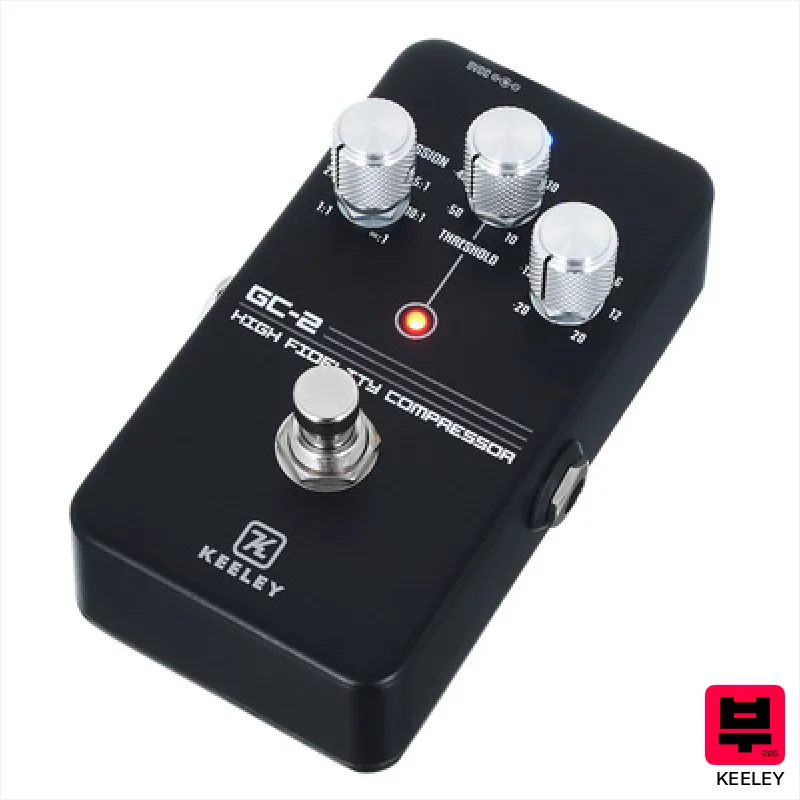
Keeley Compressor GC-2 2K24 Custom
- • Chromalux finish is stunning; adds a premium, boutique aesthetic.
- • Keeley's signature smooth compression avoids that squashed, lifeless feel.
- • Threshold control offers incredible flexibility, from subtle to aggressive.
- • Robust metal enclosure feels exceptionally solid and well-built.
- • Higher current draw means frequent battery changes or a reliable power supply.
- • Limited control set; lacks a blend knob for parallel compression options.
- • The 2K24 Custom is premium-priced, potentially outside some players' budgets.

Source Audio SA 252 Atlas Compressor
- • Versatile compression styles cover a wide range of tonal needs
- • Bass mode genuinely adapts settings for low-end clarity
- • Neuro Editor unlocks a huge depth of customization possibilities
- • Direct parameter access simplifies dialing in precise compression
- • Complex interface can be overwhelming for beginners; steep learning curve
- • Source Audio's menu diving can be frustrating for quick adjustments
- • Size is relatively large, taking up significant pedalboard space
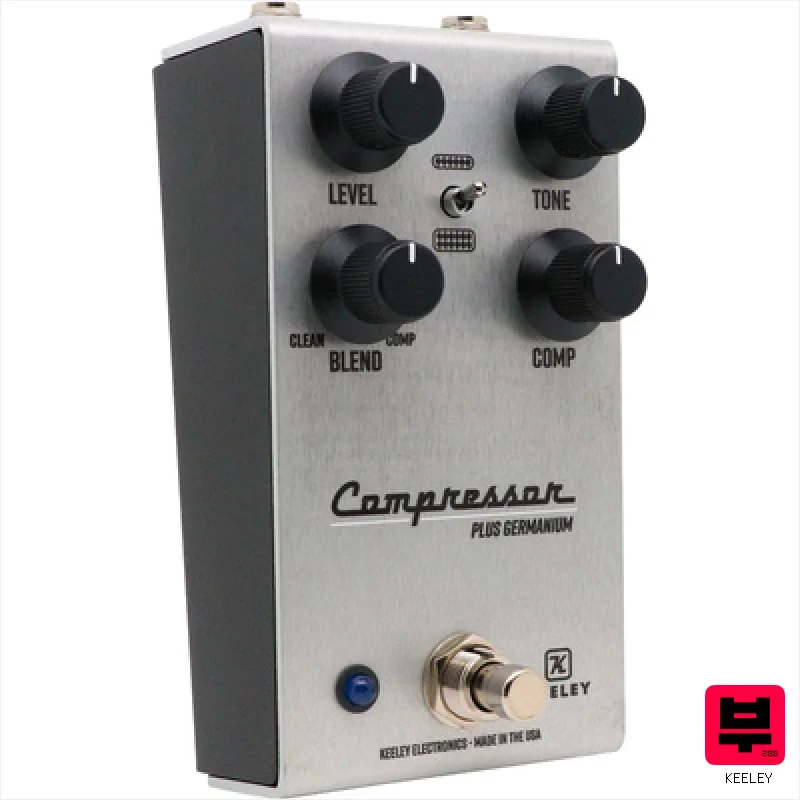
Keeley Compressor Plus Germanium
- • True bypass or buffered bypass option available
- • Germanium diode used for warm tone
- • Dedicated tone control for sound shaping
- • Recovery speed switch for pickup voicing
- • No battery operation support
- • Requires external power adapter
- • Heavy 290 gram unit size
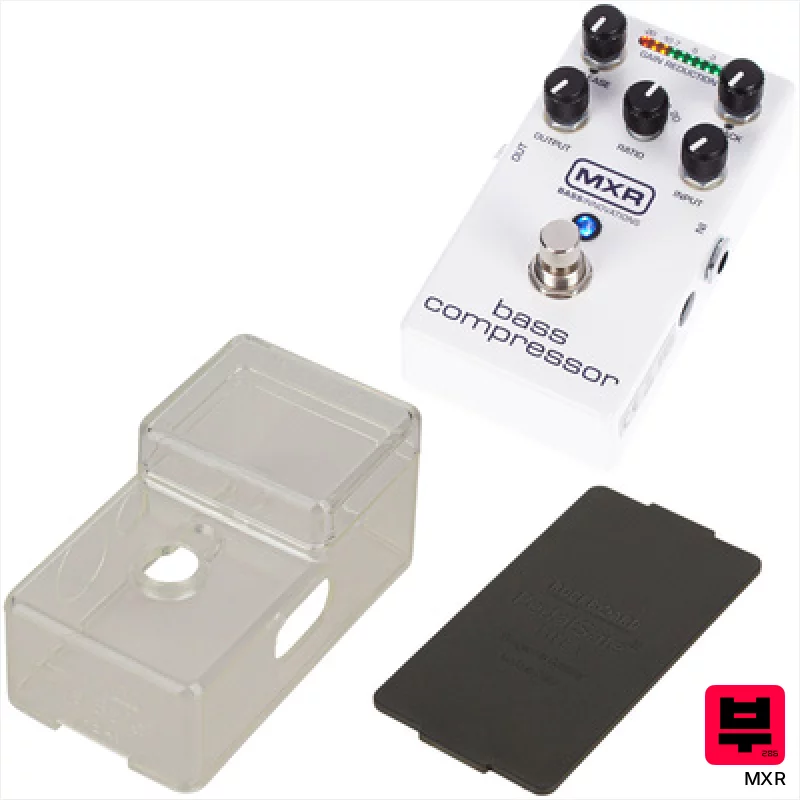
MXR Bass Comp Bundle PS A1
- • Rockboard cover offers excellent protection from road wear and dust
- • MXR’s CHT ensures transparent compression without harsh artifacts
- • M87’s attack/release controls offer precise dynamic shaping
- • Robust metal housing and true bypass ensure reliability and tonal integrity
- • The power supply isn't included, adding to the overall expense
- • Limited blend control can restrict natural bass tone integration
- • The footprint, while manageable, may be tight on smaller pedalboards
Every compressor pedals that matches
55 models match this page. The 15 above are covered in detail; the rest are listed here with their published specifications.
Compressor Pedals by the numbers
Measured across all 55 models in this category, so «wide», «short» or «expensive» mean something you can check.
How to Choose the Best Compressor Pedals
Compression Ratio
This dictates how much your signal is squeezed. Lower ratios (2:1 to 4:1) are subtle, great for evening out dynamics and adding a touch of sustain. Higher ratios (6:1 and up) are more aggressive, good for that squashed, modern tone, but can easily sound lifeless if you're not careful.
Attack & Release
Attack controls how quickly the compressor starts working when the signal exceeds the threshold. Release dictates how long it takes for the compressor to stop working. Fast attack is good for percussive playing, while slower attack lets transients through. Release time is key for avoiding that pumping effect - too slow and things get muddy; too fast and you lose sustain.
Gain/Makeup Gain
Compression reduces your signal level, so makeup gain brings it back up. A good compressor will have enough headroom to avoid adding unwanted noise or distortion when you crank the gain. Watch out for compressors that introduce hiss or fizz when boosting the signal.
True Bypass vs. Buffered Bypass
True bypass completely removes the pedal from the signal chain when disengaged. Buffered bypass includes a buffer circuit that helps preserve your signal's strength, especially important with long cable runs or darker-sounding amps. Buffered bypass can sometimes slightly color the tone, though - it's a trade-off.
Control Layout & Usability
A compressor can get complex quickly. Look for pedals with clear labeling and a logical layout. Knobs that are easy to adjust on the fly are a huge plus when you're in the heat of a gig.
Buying Guide
At this price point, expect some compromises. You're not getting the absolute smoothest, most transparent compression. Corners are often cut in the quality of the components, which can manifest as a bit more noise or a slightly less refined feel. Focus on finding a pedal with a usable compression range and a decent amount of headroom - you can always dial back the aggression. Don't chase the 'perfect' vintage vibe; look for a compressor that serves your specific musical needs.
How This List Is Built
We don't play these instruments — we're a catalog, not a review desk, and we'd rather say so than pretend otherwise. This page covers 55 compressor pedals from the Thomann catalogue, which is the largest single source of specification data in this category: 15 in detail, the rest listed with their specifications.
Position is computed, not curated. We parse the manufacturer's own description into actual values — nut width, scale, fret count, fingerboard radius, size, alloy — and rank on them: how many specifications a model has published, how many of them are measurable numbers, and how precisely it meets this page's criterion. A product image adds a little. Price is not a ranking signal: it tells you nothing about whether a neck fits your hand. The same inputs always produce the same order, so nothing here is shuffled to look fresh.
What this list is good for: narrowing a category down to a shortlist by spec and budget. What it isn't: a substitute for hearing an instrument. Before you buy, read hands-on reviews and, where you can, play it. Full methodology.

