AudioFu
AudioFu Chart · October 2026
Best Bass Traps for Professional 2026
The top pick is PSI Audio AVAA C214 Feet Set White ($3,870). t.akustik Tube Trap BD gives you the most for the money at $223. Ranked by the AudioFu Index from 40 models across 8 brands, prices checked every night.
Last updated: October 14, 2026
Top 10
Full detail for the 10 highest AudioFu Index scores. Every other model is listed below.
-
- Weight11 kg
The PSI Audio AVAA C214 is a seriously clever piece of kit. It's a digitally controlled active bass trap that delivers surprisingly powerful low-frequency absorption in a compact package. This is a game-changer for smaller studios or mixing rooms battling muddy bass buildup – if you're a serious engineer or producer needing precise room correction, it's worth considering.
Pros
- Robust aluminum housing provides excellent vibration damping.
- Digitally controlled operation allows for precise, app-based adjustments.
- Effective low-frequency absorption rivals much larger passive traps.
Cons
- The substantial weight (11kg + 2.1kg) makes installation potentially challenging.
- Premium-priced, representing a significant investment for most home studios.
32AudioFu
IndexStableno change since Aug 14Aug 14$3,870 now$3,870€3,459 at Thomann · in stockCheck price ↗ -
- Weight13 kg
The AVAA C20 is a game-changer for anyone serious about bass response in their studio. It’s an active bass trap that genuinely delivers on its promise, simplifying room correction and providing a noticeable improvement in clarity and punch. This is perfect for mixing engineers and producers battling muddy low-end in smaller, less-than-ideal spaces.
Pros
- Exceptional low-frequency absorption, minimizing room modes effectively.
- Polar White finish blends seamlessly with modern studio aesthetics.
- Mobile design allows for flexible placement and experimentation.
Cons
- Premium-priced, representing a significant investment for smaller studios.
- Relatively heavy, requiring careful handling and potentially two people to move.
46AudioFu
Index↑ 6.9%since Aug 14$2,774 · Aug 14$2,964 now$2,964€2,649 at Thomann · in stockCheck price ↗ -
- Weight21 kg
The Woody Wavy Absorber Bordeaux is a serious bass trap, plain and simple. The diaphragm tech really tackles those low-end rumble issues, and the recycled textile adds a good layer of broadband absorption. This is a great choice for home studios or smaller commercial spaces needing targeted low-frequency control.
Pros
- Heavy PVC membrane provides exceptional low-frequency absorption.
- Envizol textile offers broad absorption across mid and high frequencies.
- Unique burnt wood frame adds visual character and acoustic diffusion.
Cons
- The substantial weight (21kg) makes handling and placement challenging.
- Bordeaux color might clash with some studio aesthetics; limited color options.
44AudioFu
IndexStableno change since Aug 14Aug 14$838 now$838€749 at Thomann · in stockCheck price ↗ -
- Weight21 kg
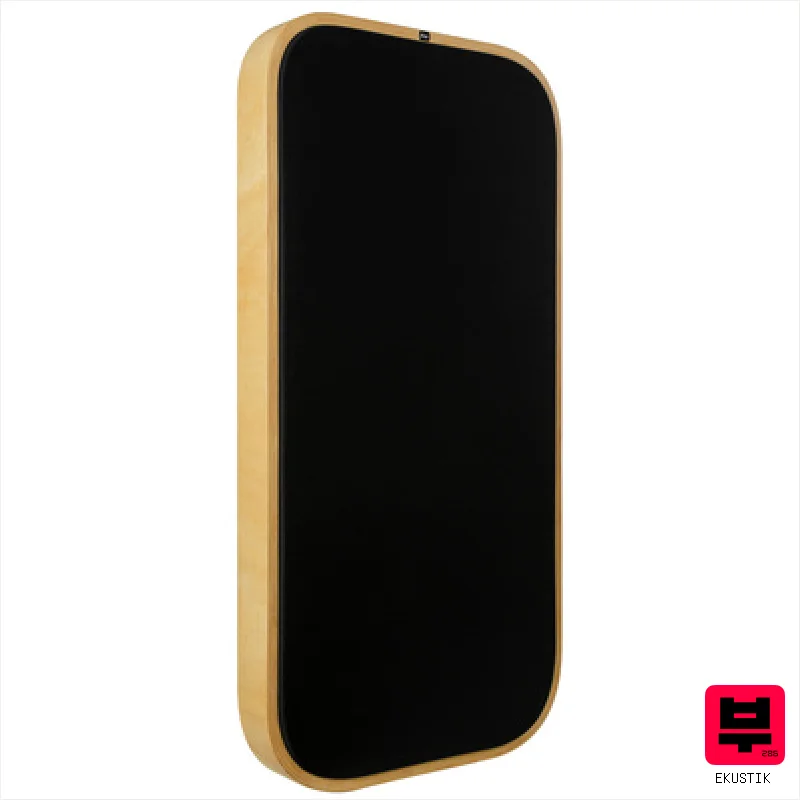
This Ekustik Woody Wavy Absorber is a serious bass trap for rooms needing targeted low-frequency control. The build quality is excellent, and the aesthetic is undeniably unique. It's a great choice for home studios, recording booths, or commercial spaces where both performance and a touch of character are valued.
Pros
- Unique burnt wood frame adds visual character and subtle diffusion.
- Heavy PVC membrane delivers genuinely effective 60Hz absorption.
- Envizol TB OH50 textile provides a pleasant, non-reflective surface.
Cons
- Significant weight (21kg) makes handling and repositioning challenging.
- Premium-priced, limiting accessibility for budget-conscious studios.
-
- Weight21 kg
This Ekustik Woody Wavy is a seriously well-built bass trap. The combination of membrane and textile absorption gives you a noticeable improvement in low-end clarity, and the unique wooden frame actually looks good in a studio. It’s a premium-priced solution best suited for home studios or project rooms where targeted low-frequency control is a priority.
Pros
- Envizol TB OH50 textile offers excellent aesthetics and sustainable acoustic performance.
- The heavy PVC membrane demonstrably targets and absorbs low frequencies effectively.
- Unique burnt wood frame adds a distinct visual element and robust construction.
Cons
- The substantial weight (21kg) makes handling and repositioning somewhat challenging.
- Cream White finish might not suit all room aesthetics or studio design preferences.
-
This pair of traps handles the lowest rumble in your room by tuning between 50 and 100 Hz. The solid MDF box with melamine foam feels like a real tool, not just a plastic cover. It comes with a scale so you can match the trap to your specific room needs. Best for engineers who need to tame those deep frequencies without spending a fortune.
Pros
- Adjusts absorption for deep bass frequencies between 50 and 100 Hz
- Built from sturdy high-quality MDF and melamine foam
- Includes a built-in scale for quick and easy frequency tuning
Cons
- No NRC rating is provided in the official product description
- Specific mounting methods or bracket details are not listed
31AudioFu
IndexStableno change since Aug 17Aug 17$726 now$726€649 at Thomann · in stockCheck price ↗ -
The Vari Bass Ultra is a serious upgrade for any studio struggling with muddy low-end. The tunable nature lets you really dial in the bass response, and the Brown Oak finish looks way better than typical black foam. It’s a great solution for smaller to medium-sized control rooms or home studios where aesthetics matter.
Pros
- Excellent low-frequency absorption, noticeably tames room modes.
- Attractive Brown Oak finish integrates seamlessly into studio aesthetics.
- Tunable design allows for precise frequency targeting, adaptable to various rooms.
Cons
- Relatively large footprint requires significant studio space.
- Premium-priced compared to basic foam bass traps.
31AudioFu
IndexStableno change since Aug 14Aug 14$726 now$726€649 at Thomann · in stockCheck price ↗ -
- Weight10.7 kg
The HOFA Basstrap 104 Orange is a solid, well-built bass trap – the orange color is a nice touch. It’s a great solution for smaller recording studios, home offices, or listening rooms struggling with low-frequency build-up. If you're serious about taming bass resonances without breaking the bank, this is a worthwhile investment.
Pros
- Natural fibre fill provides surprisingly effective broadband absorption.
- Multiplex wood panels ensure robust construction and stability.
- Stackable design offers flexible placement and room configuration options.
Cons
- 10.7 kg weight makes repositioning a two-person job, especially stacked.
- Orange color might clash with some studio aesthetics or client preferences.
-
- Weight7 kg
These t.akustik panels are a solid, budget-friendly option for home studios or rehearsal spaces needing some basic acoustic improvement. The adjustable angles are a nice touch for fine-tuning reflections, but don't expect miracles – they're best used in conjunction with other acoustic treatments for a truly balanced sound. Great for podcasters, streamers, and musicians wanting a quick and easy room upgrade.
Pros
- High-density foam offers respectable broadband absorption.
- Adjustable angles provide flexibility in room shaping.
- Flame retardant construction adds a layer of safety.
Cons
- Bass trapping effectiveness limited by relatively thin profile.
- Modular design necessitates careful assembly and planning.
50AudioFu
IndexStableno change since Aug 14Aug 14$379 now$379€339 at Thomann · in stockCheck price ↗ -
- Weight13.6 kg
The t.akustik Tube Trap BD is a solid, visually appealing bass trap. It's a great starting point for improving low-end clarity in smaller project studios, home theaters, or rehearsal spaces. The build quality is noticeable, and the natural finish helps it blend into the room without looking sterile.
Pros
- Dense 40kg/m³ foam provides effective, broadband low-frequency absorption.
- Natural lacquer finish elevates aesthetics, suitable for visible room treatment.
- Flame retardant construction (FMVSS 302) ensures safety in recording environments.
Cons
- Bordeaux color may not suit all studio aesthetics; limited color options.
- Significant weight makes installation potentially challenging for a single person.
58AudioFu
IndexStableno change since Aug 14Aug 14$223 now$223€199 at Thomann · in stockCheck price ↗
All 40 bass traps
Same index, same nightly prices — compact. Colour options of one model share a row. Tap a photo to zoom.
- 11
HOFA Basstrap 104 RoyalHOFA46↑ 5.1%$252€225$252€225Check ↗
- 12
HOFA Basstrap 104 GreyHOFA45↑ 7.0%$256€229$256€229Check ↗
- 13
HOFA Basstrap 104 BordeauxHOFA45↑ 7.0%$256€229$256€229Check ↗
- 14
HOFA Basstrap 104 AnthrazitHOFA45↑ 7.0%$256€229$256€229Check ↗
- 15
EQ Acoustics S15 BlackEQ Acoustics · 4 finishes42Stable$279€249$279€249Check ↗
- 16
Sessiondesk SBX subSessiondesk42Stable$446€399$446€399Check ↗
- 17
Vicoustic Super Bass Extreme Ult BlackVicoustic · 3 finishes41↓ 9.1%$446€399$446€399Check ↗
- 18
Vicoustic Super Bass Extreme Ult Nat OakVicoustic31Stable$446€399$446€399Check ↗
- 19
t.akustik Kids Line Cube BL 480t.akustik50Stable$200€179$200€179Check ↗
- 20
t.akustik Kids Line Cube RD 480t.akustik50Stable$200€179$200€179Check ↗
- 21
Auralex Acoustics Lenrd Bass Traps PurpleAuralex Acoustics29Stable$267€239$267€239Check ↗
- 22
Auralex Acoustics Lenrd Bass Traps Charcoal 4Auralex Acoustics29Stable$267€239$267€239Check ↗
- 23
Vicoustic Super Bass Extreme Ult OakVicoustic28↑ 8.1%$446€399$446€399Check ↗
- 24
t.akustik Melamine Cornertube 480 GRt.akustik35Stable$218€195$218€195Check ↗
- 25
EQ Acoustics Spectrum 2 L10C BassTrap WhiteEQ Acoustics · 12 finishes46↑ 6.3%$189€169$189€169Check ↗
- 26
HOFA Basstrap 52 GreyHOFA45↑ 6.3%$189€169$189€169Check ↗
- 27
t.akustik LF-D 60 Bass Trap Halifax oakt.akustik34↑ 2.2%$211€189$211€189Check ↗
- 28
EQ Acoustics S10C Bass Trap BlackEQ Acoustics · 2 finishes38Stable$189€169$189€169Check ↗
- 29
HOFA Basstrap 52 OrangeHOFA · 3 finishes36↑ 6.3%$189€169$189€169Check ↗
- 30
HOFA Basstrap 52 AnthrazitHOFA30↑ 6.3%$189€169$189€169Check ↗
- 31
HOFA Basstrap 52 BordeauxHOFA31↑ 3.8%$185€165$185€165Check ↗
- 32
t.akustik CBT-37 Melamine WHt.akustik · 3 finishes48↓ 20.2%$88€79$88€79Check ↗
- 33
t.akustik Highline CBT2 Gloss Whitet.akustik · 4 finishes43↓ 2.7%$162€145$162€145Check ↗
- 34
t.akustik Highline CBT1 White Woodt.akustik · 4 finishes42Stable$88€79$88€79Check ↗
- 35
t.akustik AC-37t.akustik35Stable$73€65$73€65Check ↗
- 36
t.akustik Kids Line Cube RD 300t.akustik35Stable$111€99$111€99Check ↗
- 37
t.akustik Kids Line Cube BL 300t.akustik35Stable$111€99$111€99Check ↗
- 38
EQ Acoustics Project Corner Cubes greyEQ Acoustics34Stable$77€69$77€69Check ↗
- 39
EQ Acoustics Project Corner Traps greyEQ Acoustics29↑ 12.7%$100€89$100€89Check ↗
- 40
Auralex Acoustics 4" CornerFill Set CharcoalAuralex Acoustics20↓ 9.2%$111€99$111€99Check ↗
Bass Traps by the numbers
Measured across all 77 models we track, not a sample.
Median $200 — half of all bass traps here cost less.
median of 26 models · 1.18 kg–21 kg
How to choose the best bass traps
Low-Frequency Absorption
It's not just about absorbing some bass; it's about absorbing the problematic frequencies - typically between 30Hz and 250Hz. A trap that only dips down to 100Hz isn't going to solve your muddy low-end issues. Look for traps with a broadband response, or multiple traps tuned to different frequencies.
Placement & Corner Traps
Bass accumulates in corners. The most effective bass trapping is almost always in the corners - floor-to-ceiling designs are ideal. Ignoring corner placement is a massive mistake; it's where the pressure builds.
Construction & Density
The denser the material, the better the low-frequency absorption. Fiberglass is king, but mineral wool is a decent alternative. Avoid thin foam panels if you're serious about taming those sub-200Hz frequencies - they're glorified mid-range absorbers.
Air Gap & Helmholtz Resonators
An air gap behind a panel can significantly extend a trap's low-frequency absorption range. Helmholtz resonators, tuned to specific frequencies, can be incredibly effective for targeting problem areas, but they require careful calculation and placement. Misplaced resonators can create problems.
Room Modes & SBIR
Understanding your room's modal frequencies (the resonant frequencies that create peaks and nulls) and how Sound Boarding Interference Response (SBIR) affects them is critical. Bass traps are a tool to address these issues - you need to know what you're fighting.
Buying guide
Let's be honest, you're not chasing 'good enough' tone anymore. You're chasing that elusive low-end clarity, that tight, controlled thump that cuts through a live mix or translates perfectly in a studio recording. Bass traps are the unsung heroes of that quest, and choosing the right ones isn't about aesthetics; it's about fundamentally shaping your room's response. We're not talking about slapping some foam on the walls and calling it a day - this is about surgical acoustic correction.
Don't fall for the hype. A lot of 'bass traps' are glorified acoustic foam - they'll do little for your low end. Invest in properly sized, dense fiberglass or mineral wool traps, prioritize corner placement, and be prepared to experiment.
Corner traps are almost always worth the extra cost, and don't be afraid to DIY - building your own can save money and allow for custom tuning. Remember, acoustic treatment is an iterative process - you'll likely need to adjust placement and add more traps as you refine your room's sound.
How the AudioFu Index works
Five measured signals and nothing else — no stars from strangers, no “tested by experts” we didn’t do. The weights are fixed and public. We don’t play these instruments; we measure the market around them.
This chart covers 77 bass traps from the Thomann catalogue. Before you buy, read hands-on reviews and, where you can, play it. Full methodology.
AudioFu earns a commission when you buy through our Thomann links. It never changes the order — the index does.
- Demand40%
How many of this exact model are for sale on Reverb right now — what musicians actually buy and resell.
- Lineup20%
How many finishes Thomann stocks — makers expand the models that sell.
- Price15%
Where the price has moved since we started tracking in August.
- Specs15%
How completely the maker documents it.
- Maker10%
How deep the brand’s range is in this category.
Questions
How many bass traps do I need?
It depends entirely on your room size and construction. A small bedroom studio might need 4-6, while a larger rehearsal space could require 12 or more. Start with the corners and work your way out.
Are DIY bass traps really worth it?
Absolutely, if you're comfortable with basic construction. Materials are relatively cheap, and you can customize the size and tuning to your specific room needs. Just be sure to use proper safety gear when working with fiberglass.
What's the difference between a bass trap and acoustic foam?
Acoustic foam is primarily effective at absorbing mid and high frequencies. Bass traps are designed to absorb low frequencies, typically using denser materials and often incorporating air gaps or resonators.
Can I use bass traps to fix a bad-sounding room completely?
No. Bass traps are a crucial part of the solution, but they won't magically transform a poorly designed room. Room shape, speaker placement, and overall construction all play a role.
What's the deal with 'tuned' bass traps?
Tuned traps are designed to absorb energy at specific frequencies. They're great for addressing problem nodes, but require careful measurement and placement - if done incorrectly, they can worsen the sound.