AudioFu
AudioFu Chart · October 2026
Best Bass Traps for Advanced 2026
The top pick is PSI Audio AVAA C214 ($3,680). t.akustik Absorber Wall Modular 192-L gives you the most for the money at $379. Ranked by the AudioFu Index from 40 models across 8 brands, prices checked every night.
Last updated: October 14, 2026
Top 10
Full detail for the 10 highest AudioFu Index scores. Every other model is listed below.
-
- Weight11 kg
The AVAA C214 is a seriously clever bit of kit. It’s a game-changer for anyone battling muddy low-end in a smaller mixing or mastering room – the size is remarkable for the impact it delivers. If you're a serious engineer or producer struggling with bass buildup, this is a worthwhile investment.
Pros
- Robust aluminum housing provides excellent acoustic damping and durability.
- Digitally controlled operation allows for precise, app-based adjustments and recall.
- Extremely compact design delivers bass absorption equivalent to a massive panel.
Cons
- Premium-priced, representing a significant investment for most home studios.
- Weight (11kg) necessitates careful handling and secure mounting.
53AudioFu
IndexStablesince Aug 14$3,681 · Aug 14$3,680 now$3,680€3,289 at Thomann · in stockCheck price ↗ -
- Weight13 kg
The AVAA C20 Black is a game-changer for serious recording and mixing engineers struggling with bass buildup. It's like having a massive bass trap in a surprisingly compact package, and the fact that it doesn't require tuning makes it incredibly user-friendly. Perfect for those who need targeted low-frequency control without a complicated setup.
Pros
- Exceptional low-frequency absorption, effectively tames room modes.
- Unique active design eliminates complex room calibration procedures.
- Compact footprint offers surprising performance for its size.
Cons
- Premium-priced, a significant investment for most home studios.
- Limited frequency range; won't address higher-midrange reflections.
49AudioFu
IndexStablesince Aug 14$2,774 · Aug 14$2,787 now$2,787€2,491 at Thomann · in stockCheck price ↗ -
- Weight21 kg
The Woody Wavy Absorber Bordeaux is a serious bass trap, plain and simple. The diaphragm tech really tackles those low-end rumble issues, and the recycled textile adds a good layer of broadband absorption. This is a great choice for home studios or smaller commercial spaces needing targeted low-frequency control.
Pros
- Heavy PVC membrane provides exceptional low-frequency absorption.
- Envizol textile offers broad absorption across mid and high frequencies.
- Unique burnt wood frame adds visual character and acoustic diffusion.
Cons
- The substantial weight (21kg) makes handling and placement challenging.
- Bordeaux color might clash with some studio aesthetics; limited color options.
44AudioFu
IndexStableno change since Aug 14Aug 14$838 now$838€749 at Thomann · in stockCheck price ↗ -
- Weight21 kg
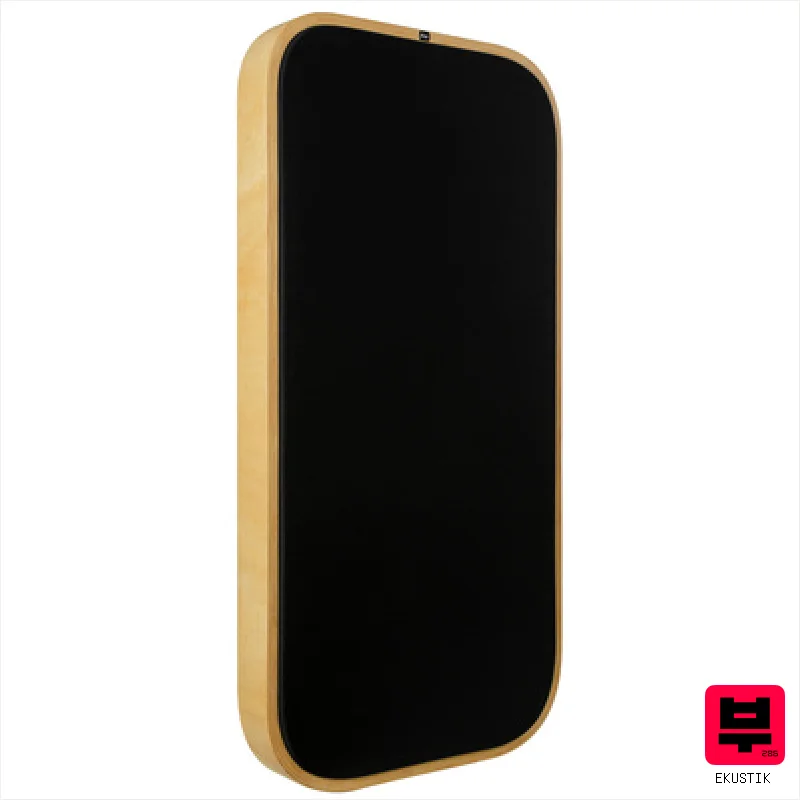
This Ekustik Woody Wavy Absorber is a serious bass trap for rooms needing targeted low-frequency control. The build quality is excellent, and the aesthetic is undeniably unique. It's a great choice for home studios, recording booths, or commercial spaces where both performance and a touch of character are valued.
Pros
- Unique burnt wood frame adds visual character and subtle diffusion.
- Heavy PVC membrane delivers genuinely effective 60Hz absorption.
- Envizol TB OH50 textile provides a pleasant, non-reflective surface.
Cons
- Significant weight (21kg) makes handling and repositioning challenging.
- Premium-priced, limiting accessibility for budget-conscious studios.
-
- Weight11.9 kg
This trap uses recycled plastic and natural wood fibre to soak up low-end frequencies. You can tune it deeper by leaving a bigger space between the wall and the unit. It stands alone or hooks into other traps easily. Great for vocal booths or small studios on a budget.
Pros
- Recycled plastic bottles make the outer surface
- Sustainable Black Forest wood fibre inside
- Tool-free connectors for quick setup changes
Cons
- No NRC rating listed in the specs
- Exact dimensions are not provided
42AudioFu
IndexStableno change since Aug 17Aug 17$446 now$446€399 at Thomann · in stockCheck price ↗ -
These Super Bass Extreme panels are a solid choice for tackling those troublesome low-end frequencies in smaller to mid-sized studios. The membrane design is clever and noticeably improves clarity, especially if you're tracking bass-heavy instruments or vocals. They’re a worthwhile investment for serious home recordists and project studios.
Pros
- Membrane design effectively tames low-frequency peaks and resonances.
- High-density foam provides substantial mid-bass absorption.
- Euroclass E fire rating offers peace of mind and safety.
Cons
- Relatively large size demands significant corner space.
- Performance is most noticeable in lower frequency ranges.
41AudioFu
Index↓ 9.1%since Aug 14 · lowest so far$491 · Aug 14$446 now$446€399 at Thomann · in stockCheck price ↗ -
- Weight7 kg
These t.akustik panels are a solid, budget-friendly option for home studios or rehearsal spaces needing some basic acoustic improvement. The adjustable angles are a nice touch for fine-tuning reflections, but don't expect miracles – they're best used in conjunction with other acoustic treatments for a truly balanced sound. Great for podcasters, streamers, and musicians wanting a quick and easy room upgrade.
Pros
- High-density foam offers respectable broadband absorption.
- Adjustable angles provide flexibility in room shaping.
- Flame retardant construction adds a layer of safety.
Cons
- Bass trapping effectiveness limited by relatively thin profile.
- Modular design necessitates careful assembly and planning.
50AudioFu
IndexStableno change since Aug 14Aug 14$379 now$379€339 at Thomann · in stockCheck price ↗ -
- Weight21 kg
This Ekustik Woody Wavy is a seriously well-built bass trap. The combination of membrane and textile absorption gives you a noticeable improvement in low-end clarity, and the unique wooden frame actually looks good in a studio. It’s a premium-priced solution best suited for home studios or project rooms where targeted low-frequency control is a priority.
Pros
- Envizol TB OH50 textile offers excellent aesthetics and sustainable acoustic performance.
- The heavy PVC membrane demonstrably targets and absorbs low frequencies effectively.
- Unique burnt wood frame adds a distinct visual element and robust construction.
Cons
- The substantial weight (21kg) makes handling and repositioning somewhat challenging.
- Cream White finish might not suit all room aesthetics or studio design preferences.
-
These Super Bass Extreme panels are a smart choice for serious home studios or smaller commercial spaces struggling with muddy low-end. The oak finish is a big plus for looks, and the hybrid design offers surprisingly effective bass absorption without the typical foam look. Perfect for mixing engineers or producers needing to clean up their low-frequency response.
Pros
- Natural Oak finish elevates studio aesthetics; looks far better than standard foam.
- The membrane/foam/perforation combo genuinely tackles low-frequency issues.
- VicFix mounting system is robust and provides secure, reliable corner placement.
Cons
- Relatively bulky; corner placement is essentially mandatory, limiting flexibility.
- Price point positions it as a premium acoustic treatment, a significant investment.
31AudioFu
IndexStableno change since Aug 14Aug 14$446 now$446€399 at Thomann · in stockCheck price ↗ -
This pair of traps handles the lowest rumble in your room by tuning between 50 and 100 Hz. The solid MDF box with melamine foam feels like a real tool, not just a plastic cover. It comes with a scale so you can match the trap to your specific room needs. Best for engineers who need to tame those deep frequencies without spending a fortune.
Pros
- Adjusts absorption for deep bass frequencies between 50 and 100 Hz
- Built from sturdy high-quality MDF and melamine foam
- Includes a built-in scale for quick and easy frequency tuning
Cons
- No NRC rating is provided in the official product description
- Specific mounting methods or bracket details are not listed
31AudioFu
IndexStableno change since Aug 17Aug 17$726 now$726€649 at Thomann · in stockCheck price ↗
All 40 bass traps
Same index, same nightly prices — compact. Colour options of one model share a row. Tap a photo to zoom.
- 11
Vicoustic Vari Bass Ultra Brown OakVicoustic31Stable$726€649$726€649Check ↗
- 12
Vicoustic Super Bass Extreme Ult OakVicoustic28↑ 8.1%$446€399$446€399Check ↗
- 13
HOFA Basstrap 104 OrangeHOFA · 3 finishes50↑ 7.0%$256€229$256€229Check ↗
- 14
EQ Acoustics S15 BlackEQ Acoustics · 4 finishes42Stable$279€249$279€249Check ↗
- 15
HOFA Basstrap 104 RoyalHOFA46↑ 5.1%$252€225$252€225Check ↗
- 16
HOFA Basstrap 104 GreyHOFA45↑ 7.0%$256€229$256€229Check ↗
- 17
HOFA Basstrap 104 BordeauxHOFA45↑ 7.0%$256€229$256€229Check ↗
- 18
HOFA Basstrap 104 AnthrazitHOFA45↑ 7.0%$256€229$256€229Check ↗
- 19
Auralex Acoustics Lenrd Bass Traps PurpleAuralex Acoustics29Stable$267€239$267€239Check ↗
- 20
Auralex Acoustics Lenrd Bass Traps Charcoal 4Auralex Acoustics29Stable$267€239$267€239Check ↗
- 21
t.akustik Tube Trap BDt.akustik · 5 finishes58Stable$223€199$223€199Check ↗
- 22
EQ Acoustics Spectrum 2 L10C Bass Trap BlueEQ Acoustics · 12 finishes56↓ 21.4%$140€125$140€125Check ↗
- 23
t.akustik Kids Line Cube BL 480t.akustik50Stable$200€179$200€179Check ↗
- 24
t.akustik Kids Line Cube RD 480t.akustik50Stable$200€179$200€179Check ↗
- 25
t.akustik CBT-37 Melamine WHt.akustik · 3 finishes48↓ 20.2%$88€79$88€79Check ↗
- 26
HOFA Basstrap 52 GreyHOFA45↑ 6.3%$189€169$189€169Check ↗
- 27
t.akustik Highline CBT2 Gloss Whitet.akustik · 4 finishes43↓ 2.7%$162€145$162€145Check ↗
- 28
t.akustik Highline CBT1 White Woodt.akustik · 4 finishes42Stable$88€79$88€79Check ↗
- 29
EQ Acoustics S10C Bass Trap BlackEQ Acoustics · 2 finishes38Stable$189€169$189€169Check ↗
- 30
HOFA Basstrap 52 OrangeHOFA · 3 finishes36↑ 6.3%$189€169$189€169Check ↗
- 31
t.akustik AC-37t.akustik35Stable$73€65$73€65Check ↗
- 32
t.akustik Kids Line Cube RD 300t.akustik35Stable$111€99$111€99Check ↗
- 33
t.akustik Kids Line Cube BL 300t.akustik35Stable$111€99$111€99Check ↗
- 34
t.akustik Melamine Cornertube 480 GRt.akustik35Stable$218€195$218€195Check ↗
- 35
EQ Acoustics Project Corner Cubes greyEQ Acoustics34Stable$77€69$77€69Check ↗
- 36
t.akustik LF-D 60 Bass Trap Halifax oakt.akustik34↑ 2.2%$211€189$211€189Check ↗
- 37
HOFA Basstrap 52 BordeauxHOFA31↑ 3.8%$185€165$185€165Check ↗
- 38
HOFA Basstrap 52 AnthrazitHOFA30↑ 6.3%$189€169$189€169Check ↗
- 39
EQ Acoustics Project Corner Traps greyEQ Acoustics29↑ 12.7%$100€89$100€89Check ↗
- 40
Auralex Acoustics 4" CornerFill Set CharcoalAuralex Acoustics20↓ 9.2%$111€99$111€99Check ↗
Bass Traps by the numbers
Measured across all 77 models we track, not a sample.
Median $200 — half of all bass traps here cost less.
median of 26 models · 1.18 kg–21 kg
How to choose the best bass traps
Low-Frequency Absorption
This isn't just about dropping the 125Hz node; it's about how consistently it absorbs across the sub-bass spectrum (30-60Hz) without creating weird dead spots or introducing unwanted coloration. A trap that only handles 80Hz is useless for serious bass work.
Panel Depth & Construction
Thicker panels generally perform better at lower frequencies, but thickness alone isn't enough. We're looking at the density of the materials, the internal baffling, and how well it's all put together - cheap materials will rattle and vibrate, defeating the purpose.
Phase Response & Sound Coloration
Some traps can introduce a subtle phase shift or alter the tonal balance of the room. We're listening for artifacts like a loss of transient detail or a 'scooped' midrange - subtle changes that can impact the perceived clarity and punch of your instruments.
Placement Flexibility & Mounting Options
A trap that's difficult to position or mount is a trap that won't get used. We're prioritizing models that offer multiple mounting options and are designed to be easily moved and adjusted as your room evolves.
Room Mode Interaction & Boundary Effects
Advanced players understand that bass traps don't exist in a vacuum. We're evaluating how each trap interacts with room modes and boundary effects, and how it affects the overall perceived spaciousness and clarity of the room - you don't want a trap that creates new problems.
Buying guide
Alright, so you've got a decent mic, a respectable interface, and you're finally starting to hear that muddy low-end rumble in your recordings - the kind that sucks the life out of your basslines and makes your kick drum sound like it's swimming in molasses. It's time to move beyond those flimsy foam squares and invest in some serious bass traps. We're not talking about beginner stuff here; this is for players who actually care about nuanced dynamics and articulate low-end response.
Don't fall for the marketing hype; a thick panel doesn't automatically equal better performance. Pay attention to the construction quality - flimsy plywood and cheap fabric are a recipe for disappointment. Realistically, you're going to spend at least $300-$500 for a set of traps that will actually make a difference, and that's an investment in your sound.
Look for traps that offer a good balance of absorption and diffusion, as complete absorption can make a room feel sterile and lifeless.
How the AudioFu Index works
Five measured signals and nothing else — no stars from strangers, no “tested by experts” we didn’t do. The weights are fixed and public. We don’t play these instruments; we measure the market around them.
This chart covers 77 bass traps from the Thomann catalogue. Before you buy, read hands-on reviews and, where you can, play it. Full methodology.
AudioFu earns a commission when you buy through our Thomann links. It never changes the order — the index does.
- Demand40%
How many of this exact model are for sale on Reverb right now — what musicians actually buy and resell.
- Lineup20%
How many finishes Thomann stocks — makers expand the models that sell.
- Price15%
Where the price has moved since we started tracking in August.
- Specs15%
How completely the maker documents it.
- Maker10%
How deep the brand’s range is in this category.
Questions
Are thicker bass traps always better?
Not necessarily. Thickness helps with low frequencies, but construction quality and internal design matter just as much. A well-designed thinner trap can outperform a poorly-built thick one.
How many bass traps do I actually need?
It depends on your room size and shape, but start with corner traps - those are the biggest offenders. You'll likely need at least four for a small studio, and more for larger spaces. A room analysis tool can help guide placement.
What's the difference between absorption and diffusion?
Absorption converts sound energy into heat, reducing reflections. Diffusion scatters sound waves, creating a more spacious and natural sound. You need a balance of both for a good-sounding room.
Can I DIY bass traps?
Absolutely, but it's more involved than just gluing foam to a board. You need to understand acoustic principles and be comfortable working with rigid fiberglass or mineral wool - improper construction can actually worsen your room's acoustics.
My room sounds 'dead' after installing bass traps. What's wrong?
You've probably over-treated it. Remove a few traps and experiment with placement to find the right balance between absorption and liveliness. Diffusion can also help combat a 'dead' sound.