
Best Behringer Active Nearfield Monitors 2026
Look, we all start somewhere, and sometimes that somewhere is with a budget that's tighter than a Les Paul's neck joint. Behringer's active nearfield monitors have become a surprising staple for a reason - they offer a serious bang for your buck, especially if you're just getting into home recording or need a reliable practice rig. They're not going to replace your NS10s, but for the price, they can actually get you a usable and even enjoyable monitoring experience.
Last updated: April 11, 2026
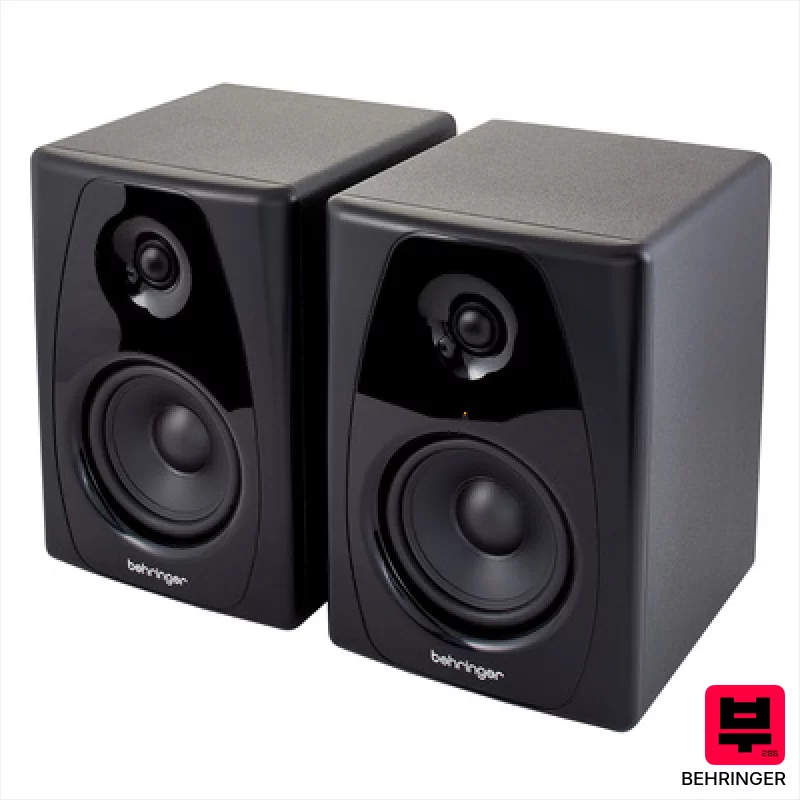
Behringer Studio 50USB
- • Bi-amping provides surprising clarity and headroom for the price.
- • Silk dome tweeter offers a smooth, extended high-end response.
- • USB connectivity simplifies setup for computer-based recording.
- • Waveguide design widens the sweet spot, aiding collaboration.
- • Plastic housing feels noticeably less robust than metal alternatives.
- • Limited EQ adjustments restrict fine-tuning for problematic rooms.
- • Bass response lacks deep extension; better suited for mids/highs.
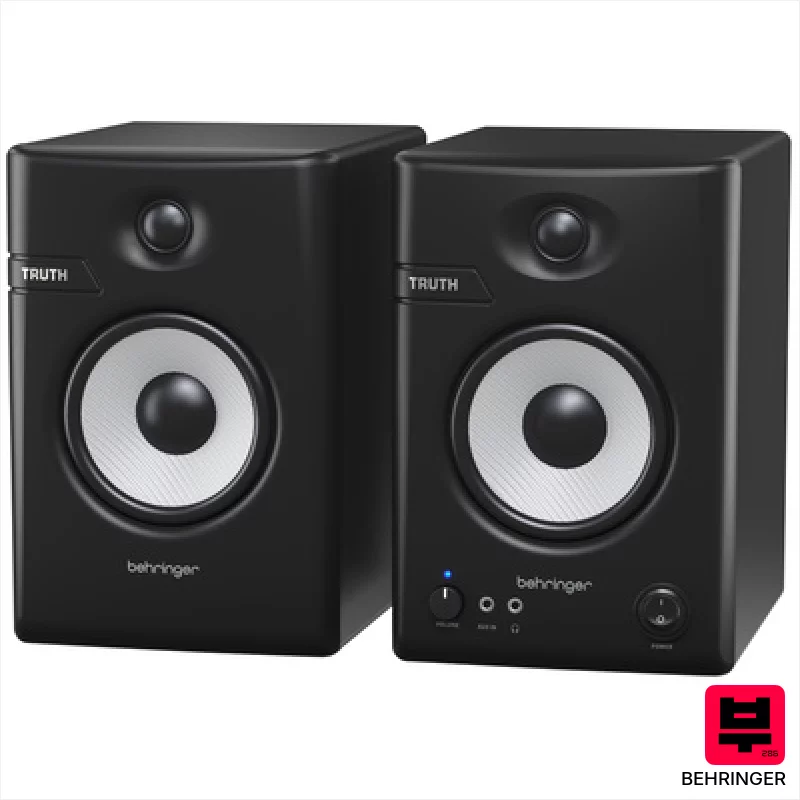
Behringer Truth 4.5 BT
- • Surprisingly balanced frequency response for the price point; avoids harshness.
- • Bluetooth 5.3 offers reliable, low-latency wireless audio streaming.
- • Front-panel controls offer quick adjustments for volume and basic correction.
- • Compact size makes them ideal for smaller home studios or desks.
- • Build quality feels plasticky; lacks the robustness of more expensive monitors.
- • Limited power output; struggles at higher volumes in larger rooms.
- • Tweeter lacks refinement; high frequencies can sound slightly brittle at times.

Behringer Truth 3.5 BT
- • Surprisingly clean and balanced sound for the price point; decent imaging.
- • Bluetooth 5.3 offers reliable, low-latency wireless audio streaming.
- • Compact size makes them ideal for smaller home studios or bedrooms.
- • Front-panel controls provide quick and easy level adjustments and power.
- • Bass response lacks depth and extension; noticeable roll-off below 150Hz.
- • Plastic enclosure resonates slightly, impacting clarity at higher volumes.
- • Limited connectivity; lacks balanced inputs for professional setups.

Behringer NEKKST K5
- • Surprisingly balanced frequency response for the price point.
- • Room compensation adjustments offer surprisingly effective tailoring.
- • Solid MDF cabinet construction reduces unwanted cabinet resonances.
- • XLR input provides clean signal path for professional interfaces.
- • Bass response lacks deep extension; feels a bit rolled off.
- • Tweeter can exhibit a slightly harsh edge at higher volumes.
- • Plastic waveguide feels flimsy compared to more premium monitors.
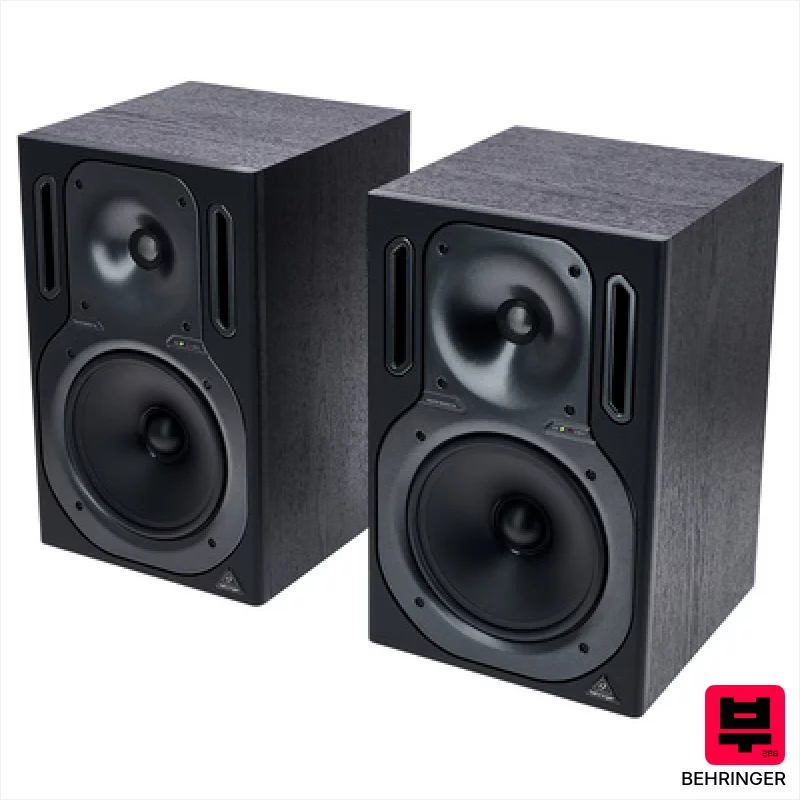
Behringer B2031A Truth
- • Surprisingly deep and controlled bass response for the price.
- • The built-in limiters genuinely protect drivers from overload.
- • Magnetically shielded design minimizes interference with other equipment.
- • Robust MDF construction feels solid and well-damped for minimal resonance.
- • High-frequency response can be slightly harsh and fatiguing over extended listening sessions.
- • The plastic enclosure, while sturdy, doesn't feel as premium as more expensive monitors.
- • Limited EQ options; room correction is basic and may not suit all spaces.
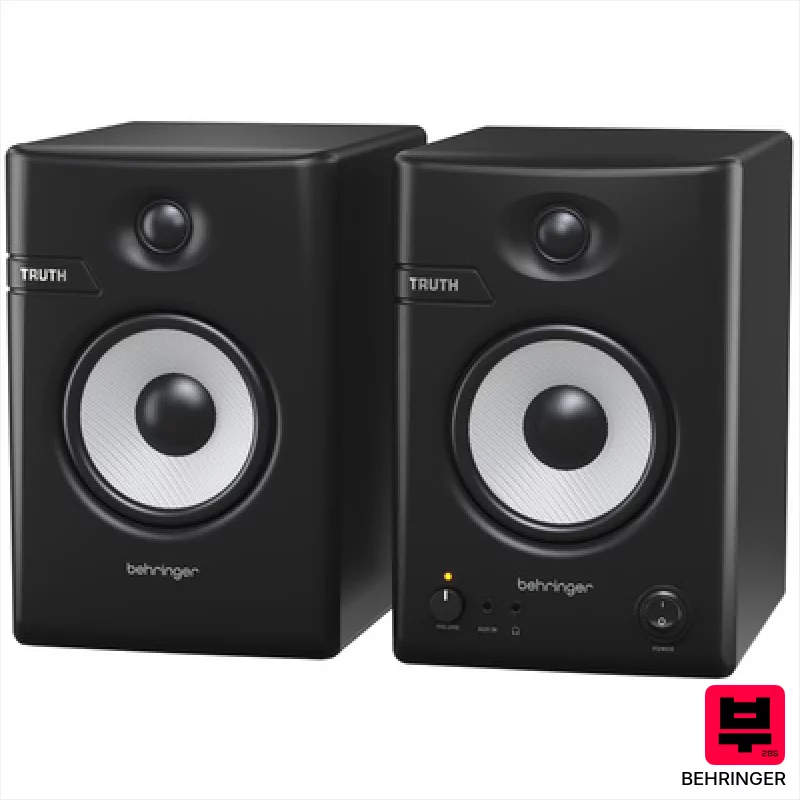
Behringer Truth 4.5
- • Surprisingly flat frequency response for the price point; revealing of mix flaws.
- • Class-D amplification delivers decent headroom without excessive distortion at moderate levels.
- • Compact size makes them ideal for smaller home studios or mobile setups.
- • The front-panel controls are convenient for quick volume adjustments and headphone use.
- • Bass response lacks deep extension and can sound a bit boxy in smaller rooms.
- • Build quality feels plasticky; not as robust as more expensive studio monitors.
- • Tweeter can exhibit some harshness on brighter mixes or with poorly mastered tracks.
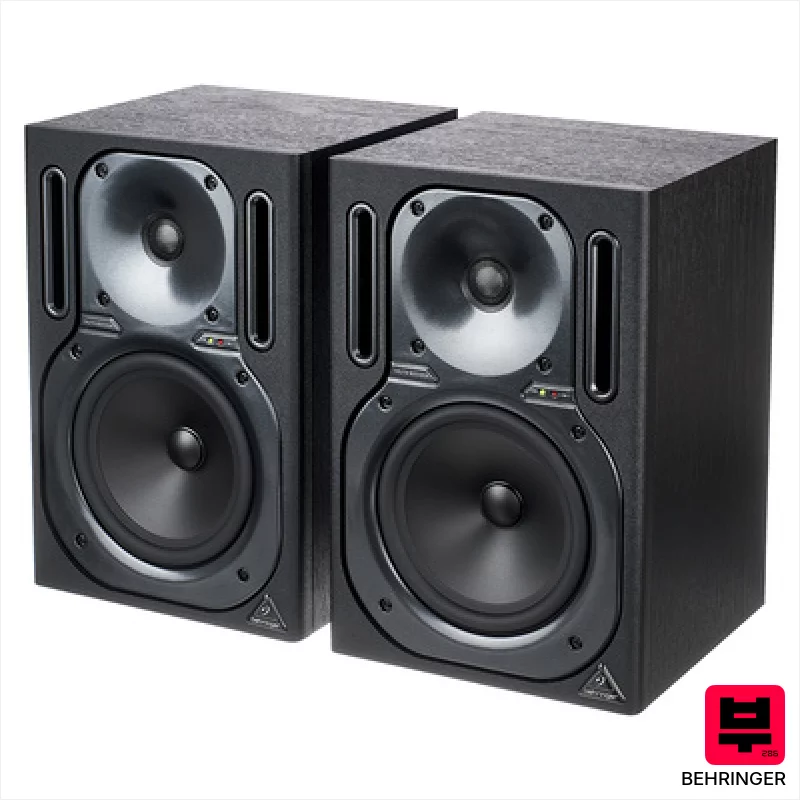
Behringer B2030A Truth
- • Surprisingly balanced frequency response for the price point
- • Solid bass response thanks to the 6 3/4’ woofer
- • Magnetically shielded, ideal for near-field placement near electronics
- • XLR inputs allow for professional, noise-free connections
- • Plastic enclosure can feel a little cheap compared to higher-end monitors
- • High-frequency response can be a touch harsh without EQ adjustments
- • Limited connectivity beyond XLR and 1/4’ jack
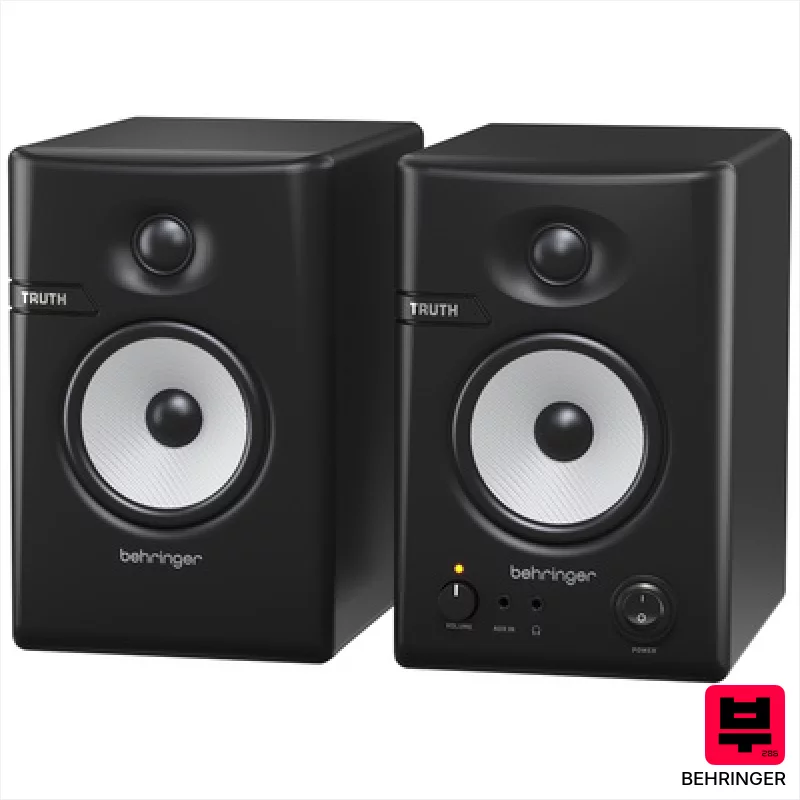
Behringer Truth 3.5
- • Surprisingly balanced frequency response for the price point.
- • Class-D amp delivers clean power without excessive heat.
- • Compact size makes them ideal for smaller home studios or desks.
- • Headphone output offers convenient private listening options.
- • The plastic enclosure resonates slightly at higher volumes.
- • Tweeter lacks refinement; high frequencies can be a bit harsh.
- • Limited connectivity – lacks XLR inputs common in professional setups.
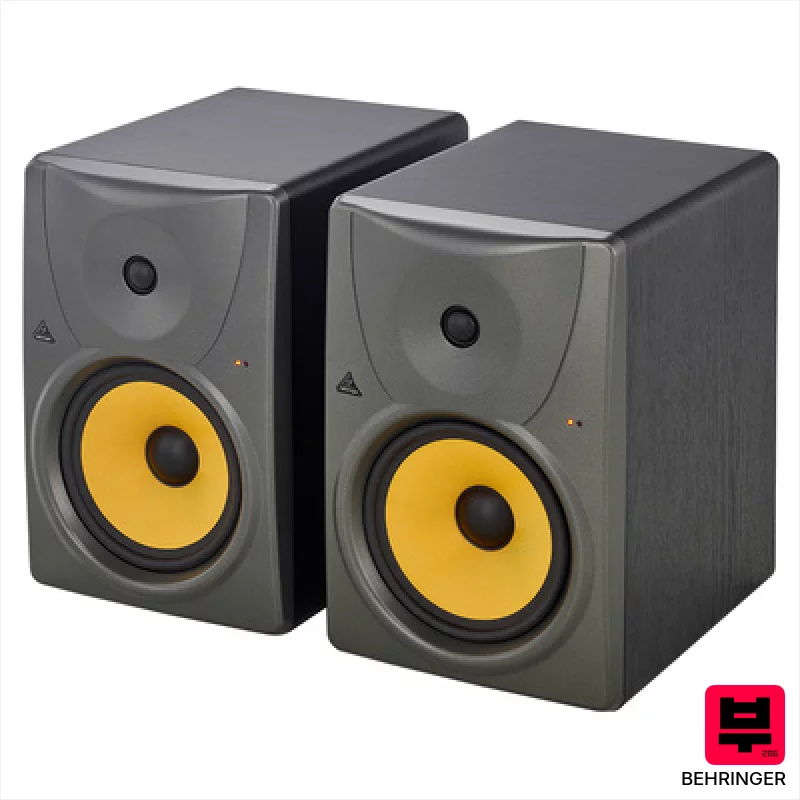
Behringer B1031A
- • Kevlar woofer delivers surprisingly tight, controlled low-end response.
- • Balanced XLR inputs offer clean signal path for critical monitoring.
- • Magnetically shielded design minimizes interference near other electronics.
- • Ample power ensures headroom even at higher listening levels.
- • Plastic enclosure feels a bit cheap, lacks the rigidity of metal alternatives.
- • Room correction is basic; serious acoustic treatment still recommended.
- • Tweeter can be slightly harsh at high volumes; EQ adjustments helpful.

Behringer MS16
- • Surprisingly decent bass response for their size, thanks to the 4in woofer.
- • The built-in mic/instrument input is a genuinely useful feature for practice.
- • Magnetically shielded, minimizing interference in recording environments.
- • Compact size makes them ideal for small home studios or mobile setups.
- • The 8-watt amplifier power is quite limited; won't fill a large room.
- • The plastic enclosure feels noticeably cheap and lacks acoustic damping.
- • Treble can be a bit harsh and fatiguing at higher volumes.
How to Choose the Best Active Nearfield Monitors
Price-to-Performance
Let's be honest, this is the big one. Behringer's aggressive pricing makes them accessible to a huge range of musicians. The sheer value proposition is undeniable - you're getting a powered monitor with decent features for a fraction of the cost of competitors.
Frequency Response & Tone
They lean towards a slightly warmer, more forgiving sound. Don't expect a surgically precise, perfectly flat response. They have a noticeable low-midrange presence - a kind of fatness that can be great for rock and pop, but might need taming with EQ if you're working on something super clean like acoustic music or classical.
Build Quality & Durability
This is where the budget shows. The cabinets are MDF, but a bit thin. They'll survive a gigging environment, but don't expect them to take a serious beating. The drivers themselves seem reasonably robust, but the plastic components feel a little flimsy.
Headroom & Power
The power handling isn't going to blow you away, especially in larger rooms. You'll start to hear compression and distortion at higher volumes - a common trade-off with budget powered monitors. For serious mixing at loud levels, consider a sub.
Feature Set
You get the basics: balanced inputs (XLR and TRS), high/low power switches, and a basic EQ section. Don't expect fancy DSP or room correction-this is about getting the fundamentals right at an affordable price.
Buying Guide
If you're on a tight budget and need a decent monitoring solution for bedroom recording, practice, or rehearsals, Behringer active monitors are worth a serious look. Be aware of the build quality limitations - these aren't studio mainstays. If you're mixing critical audio professionally, you'll probably want to invest in something more transparent, but for the price, you're getting a ton of usable sound. The high/low power switch is a lifesaver in smaller spaces.
How This List Is Built
We don't play these instruments — we're a catalog, not a review desk, and we'd rather say so than pretend otherwise. This page ranks 10 active nearfield monitors from the Thomann catalogue, which is the largest single source of specification data in this category.
Position is computed, not curated. Four signals, in order of weight: how completely the manufacturer documents the instrument (number of published specifications), where it sits in the price range, how specific the model designation is — which filters out generic accessories — and whether a product image exists. The same inputs always produce the same order, so nothing here is shuffled to look fresh.
What this list is good for: narrowing a category down to a shortlist by spec and budget. What it isn't: a substitute for hearing an instrument. Before you buy, read hands-on reviews and, where you can, play it. Full methodology.

