AudioFu Chart · October 2026
Best 4-String Acoustic Basses Under $2,000 2026
The top pick is Ibanez AEGB24E Standard ($447). Harley Benton B-30NT Acoustic Bass Series gives you the most for the money at $167. Taylor GS Mini-e Koa Plus leads the high end. Ranked by the AudioFu Index from 38 models across 13 brands, prices checked every night.
Last updated: October 22, 2026
Top 10
Full detail for the 10 highest AudioFu Index scores. Every other model is listed below.
-
- Nut width43 mm (1.69")
- Scale815 mm (32.09")
- Frets21 frets
- FingerboardWalnut fingerboard
The AEGB24E-MHS is a surprisingly capable acoustic bass, especially for the money. Its sapele construction delivers a pleasing warmth, and the built-in preamp makes it stage-ready. It's an excellent choice for gigging musicians or beginners who want a full-bodied acoustic bass tone without a premium-priced investment.
Pros
- Sapele top offers a warm, resonant acoustic tone.
- Nyatoh/Maple neck provides a stable, comfortable playing feel.
- AEQ-2T preamp offers convenient tuning and basic EQ control.
Cons
- Saddle material limits high-end clarity and sustain.
- Sapele back/sides can sound a bit boxy compared to mahogany.
74AudioFu
IndexStableno change since Aug 17Aug 17$447 now$447€398 at Thomann · in stockCheck price ↗ -
- Nut width42.9 mm (1.69")
- Scale597 mm (23.5")
- FingerboardEbony fingerboard
The GS Mini-e Bass is a surprisingly capable little instrument. Its torrefied spruce top gives it a warmer, more mature acoustic voice than you’d expect from a smaller bass. This is perfect for gigging musicians needing portability, or students wanting a manageable, well-built acoustic bass with amplified options.
Pros
- Solid torrefied spruce top delivers warm, mature acoustic tone.
- Sapele back & sides provide excellent projection and sustain.
- Mahogany neck offers comfortable playability and stability.
Cons
- Scale length limits low-end extension compared to full-size basses.
- Sapele back/sides can feel slightly less resonant than rosewood.
66AudioFu
IndexStableno change since Aug 17Aug 17$1,066 now$1,066€949 at Thomann · in stockCheck price ↗ -
- Nut width42.9 mm (1.69")
- Scale597 mm (23.5")
- Frets20 frets
This GS Mini-e Koa Bass is a seriously cool little instrument. It's perfect for gigging musicians who need something portable or for beginners wanting a premium acoustic bass feel. The Koa's sweet tone combined with the ES-B pickup makes it surprisingly versatile for a bass of this size.
Pros
- Solid koa top delivers a warm, articulate, and focused acoustic tone.
- Maple neck provides excellent stability and a comfortable playing feel.
- ES-B pickup system offers a surprisingly clean and usable amplified sound.
Cons
- Koa's inherent brightness may require EQ for certain playing styles.
- Shorter scale length limits low-end extension compared to full-size basses.
65AudioFu
IndexStableno change since Aug 17Aug 17$1,121 now$1,121€998 at Thomann · in stockCheck price ↗ -
- Nut width46 mm (1.81")
- Scale815 mm (32.09")
- Frets22 frets
- BodyMahogany body
- FingerboardJatoba fingerboard
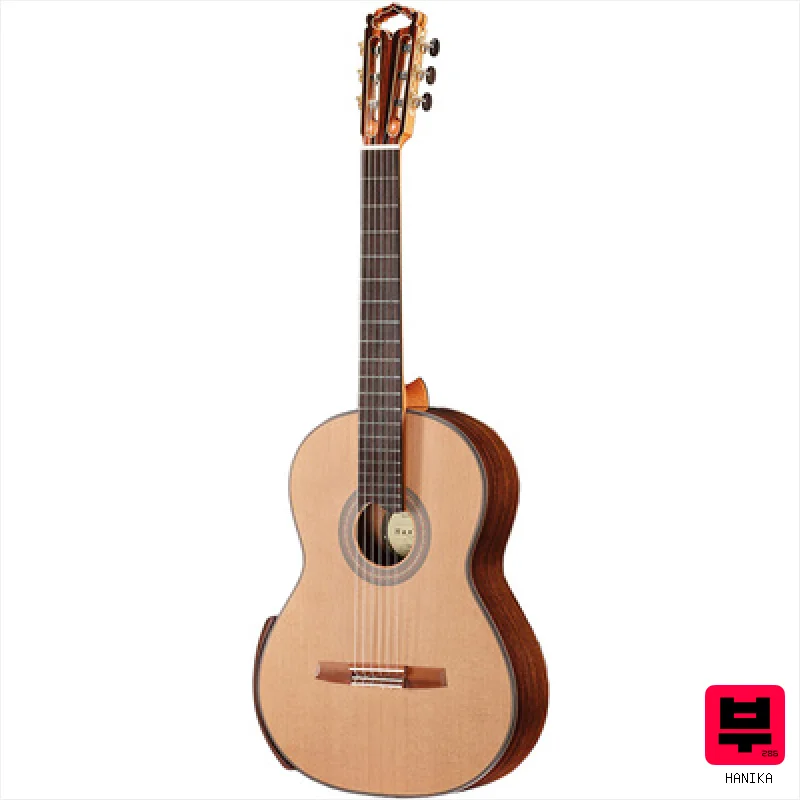
This Harley Benton B-30NT is a genuinely impressive offering for the price. It's a big, resonant acoustic bass that's surprisingly versatile thanks to the onboard pickup system. Ideal for singer-songwriters, campfire jams, or anyone wanting an affordable acoustic bass with amplified options.
Pros
- Spruce top delivers a surprisingly bright and articulate acoustic tone.
- Mahogany back and sides contribute to a warm, resonant low-end presence.
- Built-in pickup system offers amplified versatility for gigs and recording.
Cons
- Factory strings are basic and will likely need upgrading for optimal tone.
- Super jumbo body can be unwieldy for smaller players or travel.
62AudioFu
IndexStableno change since Aug 17Aug 17$167 now$167€149 at Thomann · in stockCheck price ↗ -
- Nut width43 mm (1.69")
- Scale812 mm (31.97")
- Frets21 frets
- BodySapele body
- FingerboardWalnut fingerboard
The AEGB25E-TKH is a solid, affordable acoustic bass perfect for gigging musicians or studio players needing a versatile, stage-ready instrument. Its comfortable neck and built-in preamp make it easy to dial in a good sound, and the Sapele/Spruce construction provides a pleasing, full tone. This is a great option for folk, country, or Americana players who want a bass with acoustic character.
Pros
- Sapele/Spruce combo delivers warm, resonant acoustic tones.
- Ibanez AEQ-2T preamp provides convenient onboard tuning and EQ.
- Bolt-on Nyatoh neck offers comfortable playability and stability.
Cons
- Sapele body can be a bit dense, resulting in a heavier instrument.
- Undersaddle pickup system can sound somewhat 'quacky' at higher volumes.
60AudioFu
IndexStableno change since Aug 17Aug 17$537 now$537€478 at Thomann · in stockCheck price ↗ -
- Nut width43 mm (1.69")
- Scale815 mm (32.09")
- Frets21 frets
- FingerboardWalnut fingerboard
This acoustic bass uses spruce and sapele for a warm, punchy sound that stands up in a band. The cutaway shape makes reaching high frets easy, while the built-in tuner keeps you in tune. It suits players who want a solid, natural tone without extra gear or complex settings.
Pros
- Solid spruce top provides a bright, responsive attack for fingerstyle playing.
- Sapele back and sides offer rich, warm resonance without heavy bulk.
- Ibanez undersaddle pickup delivers clear, balanced output with minimal feedback.
Cons
- Plastic nut and saddle limit sustain compared to metal alternatives.
- Single preamp channel lacks EQ controls for custom tone shaping.
58AudioFu
IndexStableno change since Oct 21Oct 21$415 now$415€369 at Thomann · in stockCheck price ↗ -
- Nut width43 mm (1.69")
- Scale810 mm (31.89")
- Frets20 frets
The PCBE14MH-WK is a surprisingly capable acoustic-electric bass that hits a sweet spot for gigging musicians needing a versatile, affordable stage-ready instrument. The build quality is solid for the price, and that weathered black finish looks great. It’s perfect for singer-songwriters, folk artists, or anyone wanting a warm, full acoustic bass tone without the bulk of a traditional upright.
Pros
- Okoume top and back deliver a warm, resonant acoustic tone.
- Ibanez AEQ-2t preamp offers convenient tuning and stage-ready amplification.
- Maple neck provides stability and a comfortable, familiar playing feel.
Cons
- Okoume, while pleasant, lacks the premium tonal complexity of mahogany or rosewood.
- Undersaddle pickups can sound slightly 'quacky' – EQ adjustments are key.
57AudioFu
Index↓ 1.0%since Aug 17 · lowest so far$325 · Aug 17$321 now$321€286 at Thomann · in stockCheck price ↗ -
- Nut width43 mm (1.69")
- Scale597 mm (23.5")
- Frets20 frets
- Fingerboard radius350 mm (13.78")
- Neck profileC-shape neck
This GS-Travel-E is a neat little package, perfect for students, gigging musicians needing a backup, or anyone wanting a portable acoustic bass with amplified options. The mahogany gives it a pleasing warmth, and the built-in tuner is a real bonus. It's not a flagship instrument, but for the price, it's seriously impressive.
Pros
- Mahogany body delivers a warm, woody tone with surprising resonance.
- Bone nut and saddle contribute to improved sustain and clarity.
- HB-03 preamp and tuner are surprisingly functional and convenient.
Cons
- Okoume neck, while stable, might feel less premium than maple.
- Purple heart fingerboard can be a bit brittle and prone to minor chipping.
55AudioFu
IndexStableno change since Aug 17Aug 17$190 now$190€169 at Thomann · in stockCheck price ↗ -
- Nut width43 mm (1.69")
- Scale815 mm (32.09")
- Frets21 frets
- FingerboardRosewood fingerboard
This bass feels solid with a spruce top that cuts through any mix. The Sapele wood adds warmth while the built-in tuner makes tuning quick and easy. It suits players who want a warm tone without needing external electronics.
Pros
- Solid spruce top for bright, punchy low-end response
- Sapele back and sides offer rich, warm harmonic depth
- Ibanez undersaddle pickup ensures consistent output volume
Cons
- Plastic nut and saddle may lack sustain compared to metal
- 32.1 inch scale length is longer than standard 32 inch
53AudioFu
Index↓ 18.8%since Aug 17 · lowest so far$538 · Aug 17$437 now$437€389 at Thomann · in stockCheck price ↗ -
- Nut width38.1 mm (1.5")
- Scale762 mm (30")
- Frets20 frets
- Fingerboard radius241 mm (9.49")
- FingerboardWalnut fingerboard
This bass sounds like a real instrument because of its solid spruce top and mahogany body. The Fishman preamp makes it easy to plug in without losing that acoustic feel. It works well for players who want a blend of natural tone and reliable pickup output.
Pros
- Solid spruce top delivers strong, responsive acoustic projection
- Mahogany back and sides add warmth to the low end
- Fishman CD-1 preamp offers clear, balanced electric tone
Cons
- No specific weight rating listed for player comfort
- Single-ply strings may feel thin for some players
53AudioFu
IndexStableno change since Aug 17Aug 17$504 now$504€449 at Thomann · in stockCheck price ↗
All 38 4-String acoustic basses
Same index, same nightly prices — compact. Colour options of one model share a row. Tap a photo to zoom.
- 11
Gold Tone M-Bass25 Micro 25" Scale Acoustic/Electric Bass NaturalMicro Bass 25 w/Bag · Gold Tone53Stable$538€479$538€479Check ↗
- 12
Fender CB-60SCE A-Bass Black 2018Fender · 3 finishes51↓ 6.7%$282€251$282€251Check ↗
- 13
Warwick Rockbass Alien Deluxe Hybrid Thinline 4Alien Deluxe Hybrid 4 NTS · Warwick49↓ 1.1%$999€889$999€889Check ↗
- 14
Harley Benton CLB-70SRE Mini SBKHarley Benton · 2 finishes48Stable$257€229$257€229Check ↗
- 15
Guild Westerly Collection B-240E NaturalB-240E Acoustic Bass · Guild47Stable$617€549$617€549Check ↗
- 16
Guild Westerly Collection Jumbo Junior MahoganyJumbo Junior Bass Westerly · Guild47Stable$628€559$628€559Check ↗
- 17
Cordoba Mini II MH ClassicalMini II Bass MH-E · Cordoba45Stable$288€256$288€256Check ↗
- 18
Fender Kingman Bass SEB WNFender44Stable$656€584$656€584Check ↗
- 19
Ortega D7CE-4Ortega42Stable$336€299$336€299Check ↗
- 20
Ortega D7E-SBK-4Ortega42Stable$336€299$336€299Check ↗
- 21
Warwick Alien 4-string Natural SatinWarwick42Stable$1,684€1,499$1,684€1,499Check ↗
- 22
Ibanez PNB14E-OPN Acoustic BassIbanez41↓ 2.0%$277€247$277€247Check ↗
- 23
Ibanez PCBE12MH-OPNIbanez41↓ 1.4%$313€279$313€279Check ↗
- 24
Ibanez AEB8E StandardAEB8E-BK · Ibanez41Stable$352€313$352€313Check ↗
- 25
Ortega STRIPEDSU.ACBOrtega40Stable$759€676$759€676Check ↗
- 26
Warwick RB Alien 4 Dlx TL Hybrid SBBWarwick40Stable$1,010€899$1,010€899Check ↗
- 27
Martin Guitar 000C Jr E Bass Burst NewMartin Guitar40Stable$1,178€1,049$1,178€1,049Check ↗
- 28
Martin Guitar 000C Jr E Bass NewMartin Guitar40Stable$1,235€1,099$1,235€1,099Check ↗
- 29
Warwick Rockbass Alien Standard Fretless 4Alien Fretless 4 Natural Satin · Warwick40Stable$1,684€1,499$1,684€1,499Check ↗
- 30
Ovation Elite B778TX-5-GOvation39↓ 3.2%$1,032€919$1,032€919Check ↗
- 31
Gold Tone Micro Bass 23 w/BagGold Tone38Stable$499€444$499€444Check ↗
- 32
Ortega KTSM2-4 Ken Taylor SignatureOrtega37Stable$763€679$763€679Check ↗
- 33
Applause Elite AEB4-7SApplause36Stable$344€306$344€306Check ↗
- 34
Takamine GB30CE-N2 NaturalTakamine36Stable$606€539$606€539Check ↗
- 35
Ovation Celebrity Elite CEB44X-7C-GOvation35Stable$538€479$538€479Check ↗
- 36
Guild Westerly Collection B-140E NaturalB-140E Nat Westerly · Guild33Stable$999€889$999€889Check ↗
- 37
Harley Benton GS-Travel-E Bass Spruce SetHarley Benton31Stable$224€199$224€199Check ↗
- 38
Harley Benton GS-Travel-E Bass Mahoga SetHarley Benton31Stable$235€209$235€209Check ↗
4-String Acoustic Basses by the numbers
Measured across all 52 models we track, not a sample.
Median $447 — half of all 4-String acoustic basses here cost less.
median of 50 models · 38.1 mm (1.5")–46 mm (1.81")
median of 46 models · 597 mm (23.5")–864 mm (34.02")
median of 36 models · 19–22
most common · 8 models
How to choose the best 4-String acoustic basses
Tonewood
Spruce tops are common and offer a good balance of clarity and warmth. Mahogany back and sides tend to add a bit of that 'fat midrange honk' that's nice for cutting through a mix, but can sometimes get muddy - it's a trade-off. Look for solid wood where possible, but laminate is acceptable at this price point.
Bracing Pattern
This massively affects sustain and responsiveness. Forward-shifted bracing is generally considered more modern and allows for more vibration, resulting in more volume and a more lively feel. Older, more conservative bracing patterns will often feel a bit stiff.
Pickup Voicing (if applicable)
Many of these basses have onboard pickups, and the quality varies wildly. Cheap pickups can sound brittle and harsh, lacking that natural acoustic warmth. Listen for a pickup that complements the natural tone of the wood, not fights it.
Neck Profile & Action
Comfort is king. A neck that's too thick or too thin will kill your playing. Action (string height) is crucial too; too high and it's a fight, too low and you'll get fret buzz. Ideally, you want a comfortable C-shape profile and action you can adjust.
Hardware Quality
Cheap tuners and a poorly fitted bridge can make even a great-sounding bass a pain to play and keep in tune. Pay attention to how smoothly the tuning pegs turn and how solid the bridge feels - these are details that matter for gigging.
Buying guide
So, you want an acoustic bass, huh? Smart move - they're surprisingly versatile, great for folk, blues, even some jazz. Finding a good one under $2000 that doesn't sound like a cardboard box takes some digging, but it's totally doable. Let's break down some solid options that won't leave you wishing you'd just bought a better amp.
At this price, you're making compromises. Don't expect the same level of craftsmanship as a $3000 instrument. Solid wood construction is a big plus, but laminate is often unavoidable.
Focus on playability and overall tone - a bass that feels good and sounds decent plugged in is more valuable than a bass that looks pretty but is a pain to play. A decent setup from a local tech can often make a huge difference, too.
How the AudioFu Index works
Five measured signals and nothing else — no stars from strangers, no “tested by experts” we didn’t do. The weights are fixed and public. We don’t play these instruments; we measure the market around them.
This chart covers 52 4-String acoustic basses from the Thomann catalogue. Before you buy, read hands-on reviews and, where you can, play it. Full methodology.
AudioFu earns a commission when you buy through our Thomann links. It never changes the order — the index does.
- Demand40%
How many of this exact model are for sale on Reverb right now — what musicians actually buy and resell.
- Lineup20%
How many finishes Thomann stocks — makers expand the models that sell.
- Price15%
Where the price has moved since we started tracking in August.
- Specs15%
How completely the maker documents it.
- Maker10%
How deep the brand’s range is in this category.
Questions
Are acoustic basses loud enough for live gigs?
They're not as loud as an electric bass, obviously. You'll almost certainly want to plug in, but a well-built acoustic can still project surprisingly well, especially in smaller venues or acoustic-focused sets.
What's the difference between a solid top and a laminate top?
A solid top vibrates more freely, generally offering better tone and sustain. Laminate tops are layered, making them more stable and cheaper to produce, but they often lack the same resonance.
Can I use an acoustic bass for recording?
Absolutely! A good acoustic bass can add a unique warmth and organic feel to your recordings. Just be mindful of room acoustics and microphone placement.
What should I look for in a pickup system?
Look for a system with a preamp and EQ controls. This allows you to shape the tone and cut through the mix better. Piezo pickups are common, but some models use magnetic soundholes for a more natural acoustic sound.
Is it worth getting a setup after buying a new bass?
100%. Even a new bass often needs a setup - adjusting the action, intonation, and neck relief - to play its best. It's a relatively inexpensive investment that can significantly improve your playing experience.