
Best Martin Guitar 4-String Acoustic Basses 2026
Alright, let's talk Martin acoustic basses. They're not the most common sight on stage, but when they do show up, they often command respect. Martin's heritage in acoustic instruments gives them a serious leg up - that's not just marketing, it's about decades of refinement in wood selection and bracing. If you're looking for a 4-string acoustic bass with a woody, resonant voice and serious projection, you're in the right place.
Last updated: April 11, 2026
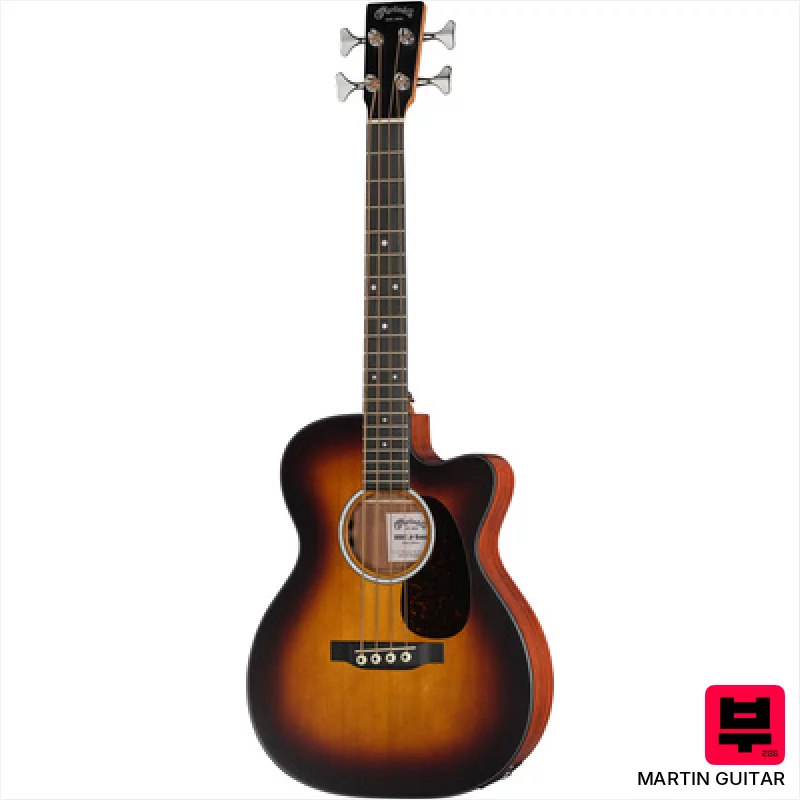
Martin Guitar 000CJR-10E BASS Burst
- • Solid Sapele back/sides deliver warm, resonant low-end tones.
- • Spruce top offers balanced projection and articulation.
- • Fishman Sonitone provides clean, amplified sound with good feedback rejection.
- • Richlite fingerboard and bridge offer excellent stability and tonal response.
- • Sapele can be a bit visually plain compared to Rosewood alternatives.
- • The 24” scale might feel slightly cramped for players with larger hands.
- • The included gig bag is functional but not a premium, padded case.

Martin Guitar DJR-10E BASS Burst
- • Solid Sapele back/sides deliver rich, resonant low-end tones.
- • Spruce top provides excellent projection and responsiveness across the range.
- • Fishman Sonitone pickup system offers natural acoustic amplification.
- • Richlite fingerboard is durable and provides a smooth playing experience.
- • Dreadnought body size can be bulky and less comfortable for smaller players.
- • Sapele's tonal character might lack the brightness some prefer in an acoustic bass.
- • Richlite, while durable, lacks the traditional feel of wood fingerboards.
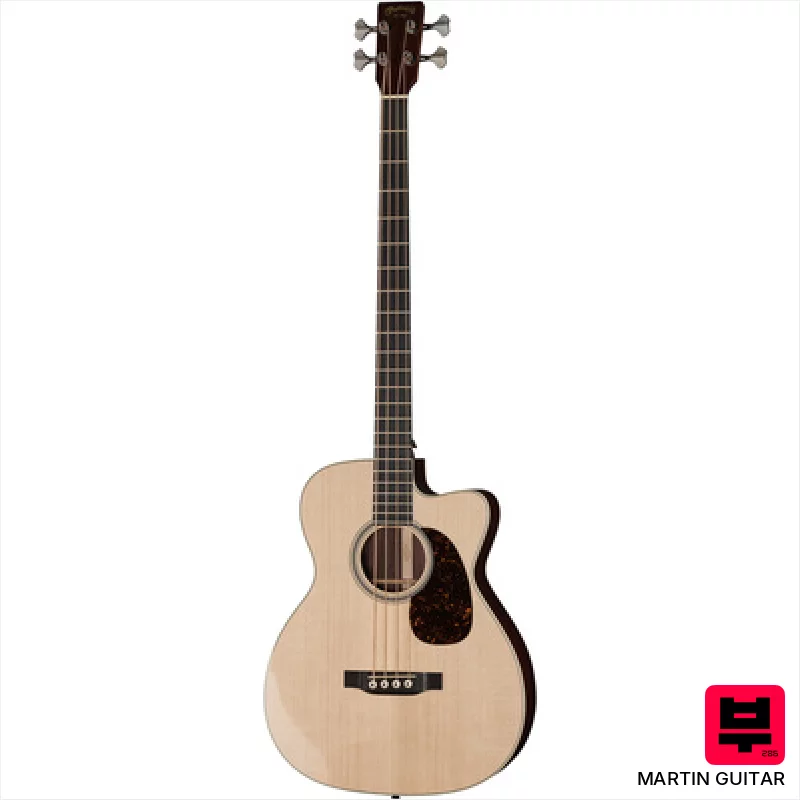
Martin Guitar BC-16E
- • Solid rosewood back/sides deliver rich, complex overtones.
- • Spruce top offers excellent projection and clarity.
- • Fishman Aura VT pickup system captures Martin's acoustic voice faithfully.
- • Ebony fingerboard provides a smooth, responsive playing experience.
- • The 34-inch scale can feel long for smaller players.
- • Solid rosewood construction results in a relatively heavy instrument.
- • The satin finish, while attractive, can feel less refined than gloss finishes.

Martin Guitar 000CJR-10E BASS
- • Solid sapele back & sides deliver rich, resonant, and warm low-end tones.
- • Spruce top provides excellent projection and a responsive, articulate attack.
- • Fishman Sonitone BT-1 pickup system offers clean, amplified sound with good feedback rejection.
- • Gotoh tuners ensure accurate and reliable tuning stability, a hallmark of Martin quality.
- • Sapele can be a bit dense, contributing to a slightly heavier instrument overall.
- • Richlite fingerboard, while durable, lacks the traditional feel of ebony for some players.
- • The 24” scale length might feel a bit long for players accustomed to shorter bass scales.
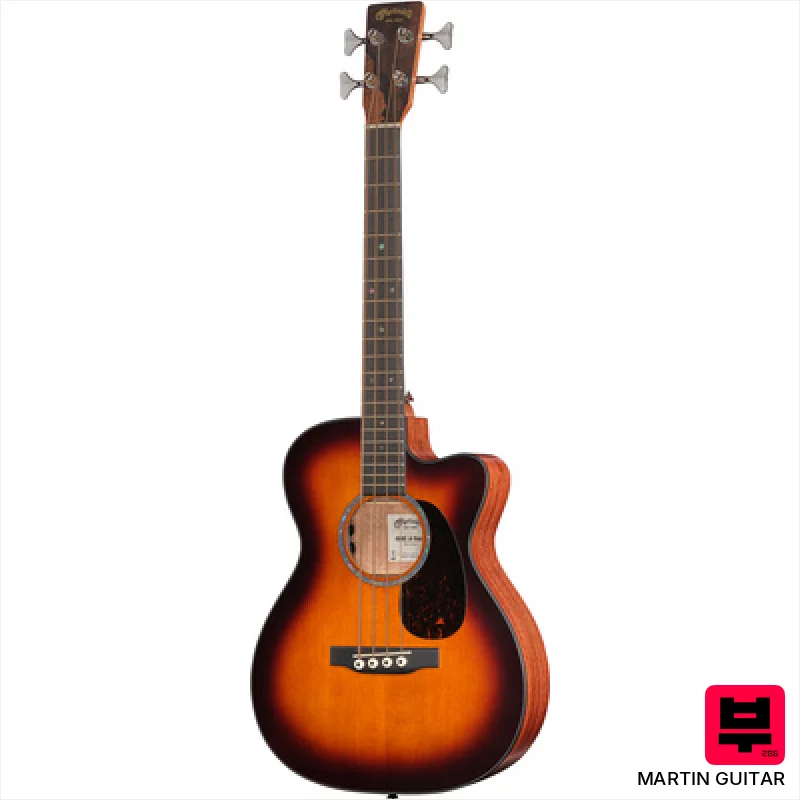
Martin Guitar 000C Jr E Bass Burst
- • Sapele back/sides offer a warm, focused low-end response.
- • Spruce top provides clarity and projection for articulate playing.
- • Ebony fingerboard delivers smooth, fast action and note definition.
- • Martin E-1 pickup system captures natural acoustic tone with useful amplification.
- • Shorter scale length limits low-end extension compared to full-size basses.
- • Burst finish can be a matter of personal aesthetic preference.
- • Sapele's tonal characteristics may not suit all genres perfectly.
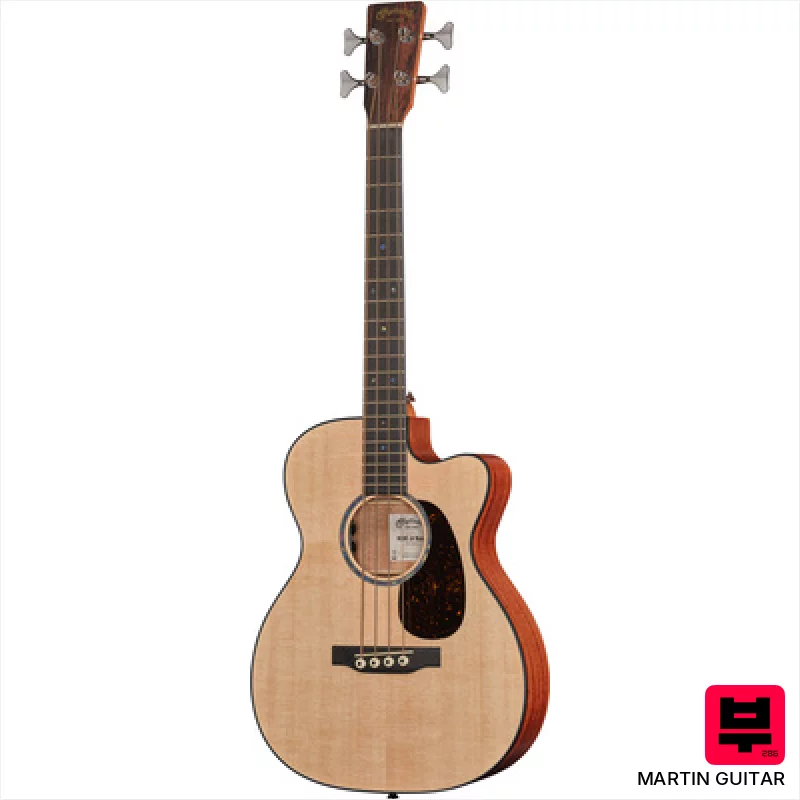
Martin Guitar 000C Jr E Bass
- • Sapele back & sides deliver a warm, resonant low-end foundation.
- • Spruce top provides excellent projection and a bright, responsive character.
- • Martin E-1 pickup system offers a surprisingly natural amplified tone.
- • Ebony fingerboard contributes to smooth playability and note clarity.
- • Shorter scale length limits low-end extension compared to standard basses.
- • Sapele can be a bit 'woody' sounding initially; requires some break-in.
- • Cutaway access isn’t as comfortable as a full-size dreadnought’s.
How to Choose the Best 4-String Acoustic Basses
Heritage & Construction
Martin's X-bracing patterns, honed over years, are key to the bass's response and sustain. You're getting more than just a bass; you're getting a piece of acoustic history. This translates to a fuller, more complex tone than you'd get from a builder less steeped in tradition.
Wood Selection
Martin typically uses Sitka Spruce tops for their acoustic basses, offering a bright, articulate voice that can cut through a band. Back and sides often feature Mahogany or Rosewood, each contributing a different flavor - Mahogany for a warmer, more focused tone, Rosewood for a richer, more complex low-end.
Tone Characteristics
Don't expect a super-scooped, modern bass tone. Martin acoustic basses deliver a pronounced midrange - that fat midrange honk - alongside a respectable low-end thump. It's a sound that sits well in roots, Americana, or even a folk-rock context. The articulation is generally excellent, allowing individual notes to shine.
Playability & Neck Profile
Martin's neck profiles are generally comfortable, but they can vary. The 'Modified Low Oval' is a common choice, offering a good balance of speed and comfort. Action is usually manageable right out of the box, but a professional setup is always a worthwhile investment to optimize playability.
Pickup Voicing (if applicable)
Many Martin acoustic basses come equipped with pickups. The voicing on these pickups often aims to retain the natural acoustic tone, rather than drastically alter it. Expect a relatively balanced response, although some models might lean towards a brighter or warmer character. Headroom can be a limiting factor when amplifying, so consider a quality preamp if you plan on gigging loud.
Buying Guide
Martin acoustic basses aren't cheap. You're paying for the name, the wood, and the craftsmanship. Watch out for older models with potential neck warps or finish issues - a good luthier inspection is smart. The pickup systems, while generally decent, are often an area where you might consider an upgrade down the line if you're serious about amplified performance. Don't expect earth-shattering low-end; this is an acoustic bass, after all, and its strength lies in its articulate midrange and woody character.
How This List Is Built
We don't play these instruments — we're a catalog, not a review desk, and we'd rather say so than pretend otherwise. This page ranks 6 4-string acoustic basses from the Thomann catalogue, which is the largest single source of specification data in this category.
Position is computed, not curated. Four signals, in order of weight: how completely the manufacturer documents the instrument (number of published specifications), where it sits in the price range, how specific the model designation is — which filters out generic accessories — and whether a product image exists. The same inputs always produce the same order, so nothing here is shuffled to look fresh.
What this list is good for: narrowing a category down to a shortlist by spec and budget. What it isn't: a substitute for hearing an instrument. Before you buy, read hands-on reviews and, where you can, play it. Full methodology.

