
Best Ortega 4-String Acoustic Basses 2026
Alright, so you're looking at an acoustic bass? Smart move. Ortega's been quietly building some seriously interesting instruments for decades, and their 4-string acoustics deserve a closer look - especially if you're after something with a bit of European flair and a vibe that's just a little different than your standard Fender or Yamaha. They're not for everyone, but when they click, they really click, offering a unique blend of warmth and projection. Let's dive in.
Last updated: April 11, 2026
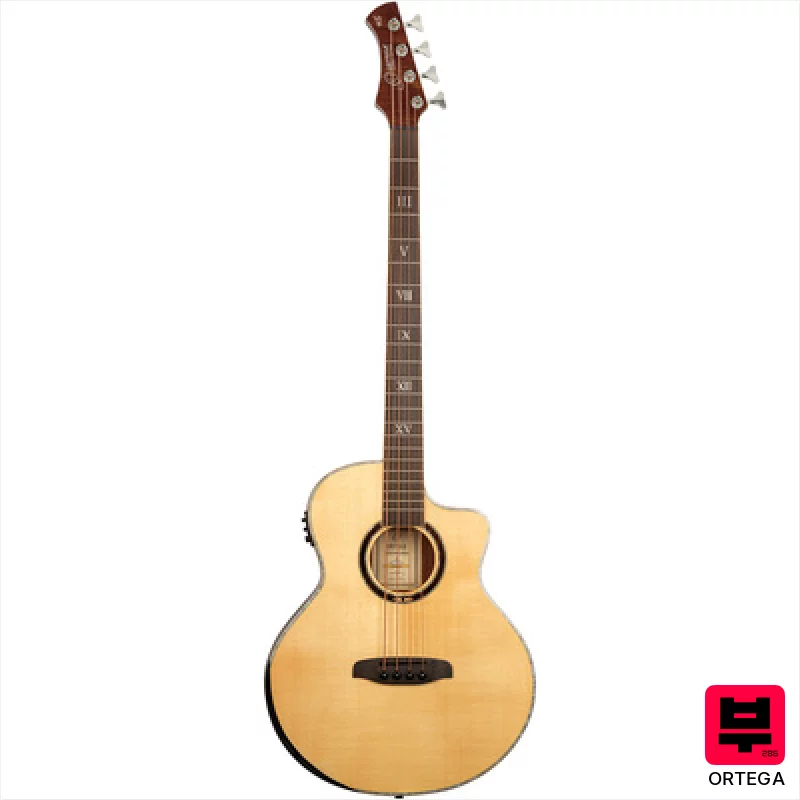
Ortega KTSM2-4 Ken Taylor Signature
- • Solid spruce top delivers a surprisingly articulate and resonant acoustic tone.
- • Ken Taylor's reversed headstock design improves string balance and aesthetics.
- • MagusX/B pickup system provides a clean, usable amplified signal with onboard controls.
- • Flamed maple back and sides add warmth and complexity to the overall sonic character.
- • The thinner body, while comfortable, sacrifices some low-end projection acoustically.
- • Nato neck, while stable, lacks the premium feel of mahogany or maple.
- • Medium scale length might feel slightly cramped for bassists used to longer scales.
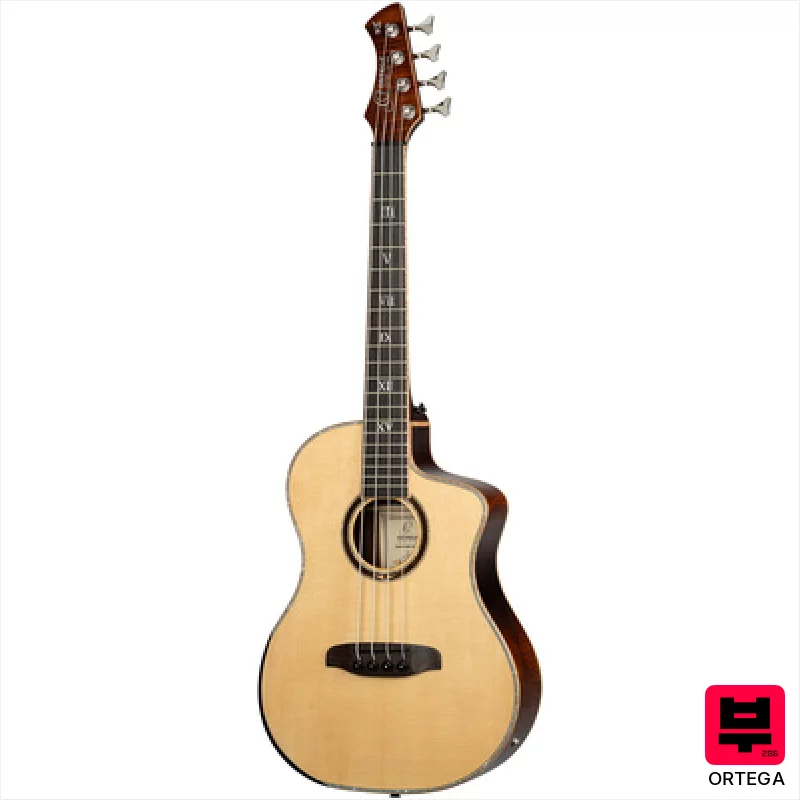
Ortega KT-WALKER-V3 Ken Taylor Sign.
- • Solid spruce top delivers clear, articulate projection and warmth.
- • Flamed maple back/sides add complexity and sustain to the tone.
- • Ortega MagusX pickup system provides a usable, rechargeable amplified signal.
- • Short scale (620mm) offers comfortable playability, especially for smaller hands.
- • Flamed maple back can make the bass somewhat visually busy for some tastes.
- • Nato neck, while stable, lacks the premium feel of mahogany or maple.
- • Short scale limits low-end extension compared to a standard 34” bass.
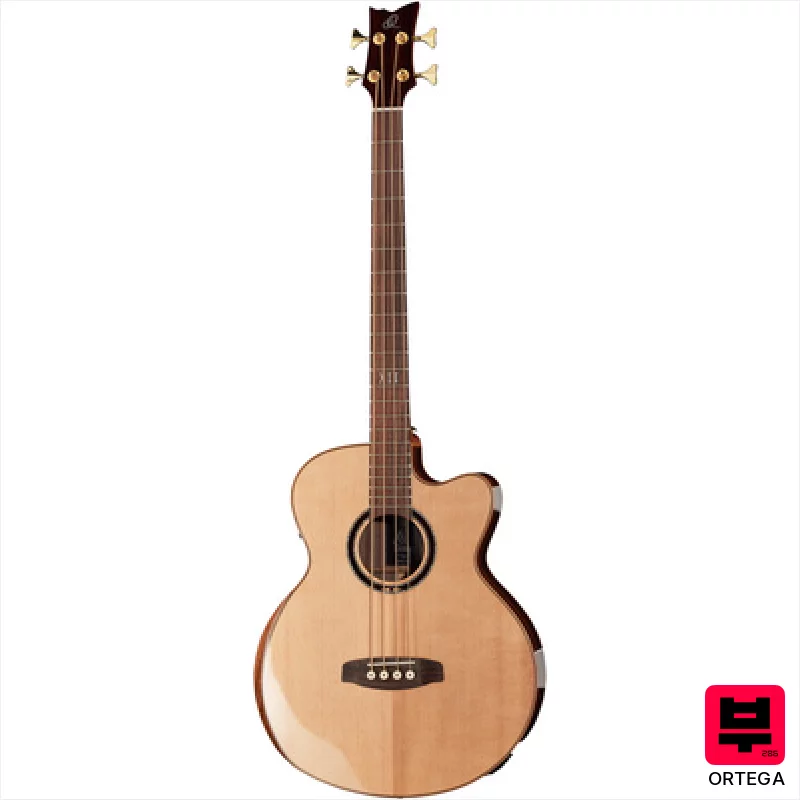
Ortega STRIPEDSU.ACB
- • Solid Alaska spruce top delivers a surprisingly resonant and articulate acoustic tone.
- • AAA ebony back and sides offer exceptional sustain and a refined aesthetic.
- • Ortega MagusPro preamp provides clean amplification with useful EQ shaping.
- • Pau Ferro fingerboard offers a smooth playing experience and good durability.
- • Ebony construction makes it notably heavier than basses with lighter woods.
- • 812mm scale can feel long for players accustomed to shorter scale basses.
- • Limited tonal versatility compared to electric basses with broader pickup options.
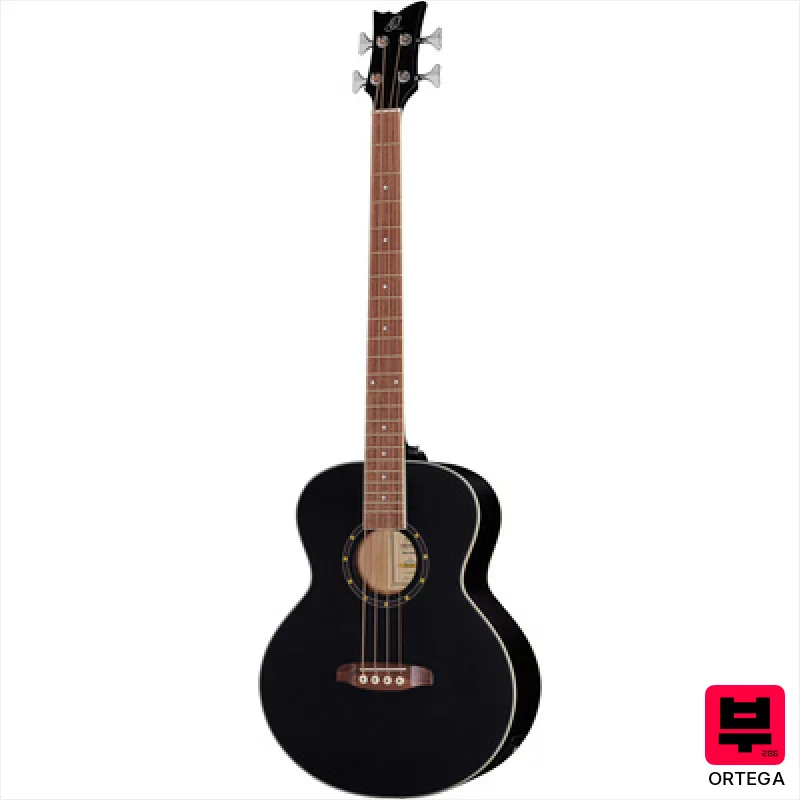
Ortega D7E-SBK-4
- • Spruce top delivers surprising clarity and projection for an acoustic bass.
- • Mahogany back and sides provide a warm, woody tone with excellent sustain.
- • Ortega MagusPro/B pickup system offers a usable, amplified sound without excessive feedback.
- • Walnut fingerboard feels smooth and comfortable, aiding playability across the longer scale.
- • The satin black finish can show fingerprints and smudges easily.
- • 812mm scale length requires a bit of an adjustment for players used to shorter basses.
- • While usable, the pickup isn't high-end and may need external preamp for stage use.
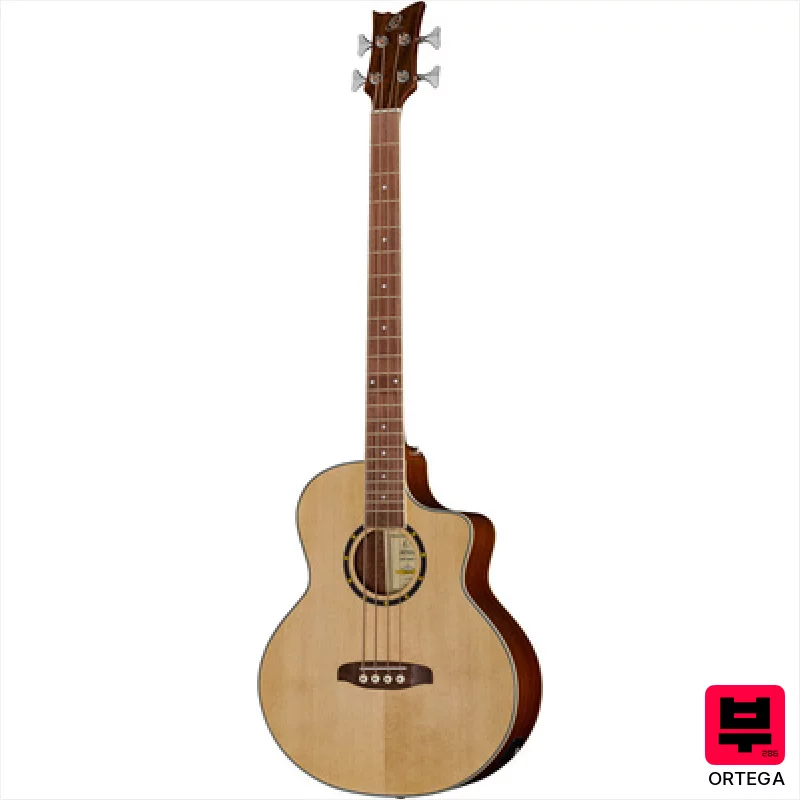
Ortega D7CE-4
- • Spruce top delivers a bright, responsive tone with good projection.
- • Mahogany back and sides add warmth and a pleasant mid-range focus.
- • Ortega MagusPro/B pickup provides a usable amplified sound for stage or recording.
- • The 45mm nut width suits players familiar with wider bass necks, enhancing comfort.
- • Mahogany construction can lack the sustain of more premium tonewoods.
- • The satin finish, while aesthetically pleasing, can feel a bit plasticky to some.
- • The included pickguard is an afterthought and feels cheap compared to the instrument.
How to Choose the Best 4-String Acoustic Basses
Heritage & Design
Ortega's roots are in traditional Spanish guitar making, and that influence shines through in the body shapes (often inspired by classical guitars) and the overall aesthetic. It's not a modern, sleek design - it's got character, and that impacts the tone - a little darker and more woody than some brighter acoustics.
Tonewood Selection
You'll typically find Ortega basses using sapele, mahogany, or occasionally rosewood for the back and sides. Sapele gives a brighter, more articulate tone, while mahogany offers a warmer, rounder voice. These choices significantly affect the instrument's low-end thump and overall responsiveness.
Scale Length & Neck Profile
Most Ortega 4-strings stick with the standard 34" scale, which is comfortable for most bass players. However, the neck profiles can vary, some leaning towards a more traditional classical guitar feel which might take some getting used to if you're used to a slimmer, modern bass neck. The action tends to be a little higher than you might be accustomed to on an electric bass, which is standard for acoustic instruments.
Pickup Voicing (on Electro-Acoustic Models)
Ortega's onboard pickups are generally decent, but they're not going to rival a high-end Fishman or LR Baggs. They tend to be voiced to preserve the natural acoustic tone - a good thing if you want a faithful reproduction, but it means you won't get a ton of aggressive overdrive or scooped mids. Plugged in, they're great for folk, blues, or lighter genres.
Build Quality & Hardware
Ortega's build quality is generally solid for the price point. The hardware (tuners, bridge) is usually functional, though not spectacular - a potential upgrade point down the line. The bracing patterns are key - they impact sustain and projection, and Ortega's designs are well-considered for acoustic bass performance.
Buying Guide
Look, you're not buying a bass to shred metal with. Ortega acoustic basses are best suited for fingerstyle playing, folk, blues, or situations where you need a natural, organic low end. The higher-end models (those with solid tops like cedar or spruce) will offer noticeably improved projection and sustain, but they come at a price. Don't expect ice-picky high notes - these basses are about warmth and a woody resonance, so if you're chasing bright, cutting tones, look elsewhere.
How This List Is Built
We don't play these instruments — we're a catalog, not a review desk, and we'd rather say so than pretend otherwise. This page ranks 5 4-string acoustic basses from the Thomann catalogue, which is the largest single source of specification data in this category.
Position is computed, not curated. Four signals, in order of weight: how completely the manufacturer documents the instrument (number of published specifications), where it sits in the price range, how specific the model designation is — which filters out generic accessories — and whether a product image exists. The same inputs always produce the same order, so nothing here is shuffled to look fresh.
What this list is good for: narrowing a category down to a shortlist by spec and budget. What it isn't: a substitute for hearing an instrument. Before you buy, read hands-on reviews and, where you can, play it. Full methodology.

