
An active speaker has its amplifier built in: you plug in a signal and a power cable and it plays. A passive speaker has no amplifier inside, so it needs a separate power amp to drive it through a speaker cable. That's the whole difference, and it decides where each makes sense.
Active is simpler, better matched (the maker tunes the amp to the speaker) and the standard for studios, small bands and DJs. Passive keeps the heavy electronics out of the box, which suits fixed installations and big systems where amps live in one rack.
Active vs passive at a glance
| Active | Passive | |
|---|---|---|
| Amplifier | Built in | Separate, needed |
| Setup | Power + signal cable | Amp, speaker cables, matching |
| Weight per speaker | Heavier | Lighter |
| Matching amp to speaker | Done by the maker | Your job |
| Typical use | Studios, small PA, DJs | Installations, large PA |
| Median full-range PA speaker at Thomann | $663 | $505 |
The passive median looks cheaper, but it doesn't include the amplifier.
The real price: a pair of each
Here's the comparison with two of the highest-ranked 12-inch speakers we track. On October 18, an active pair of JBL EON712 cost about $1,160. A passive pair of JBL JRX 212 cost about $580, but with a Crown XLS 1502 amplifier to drive them the total was about $1,140, before speaker cables. At this size, the costs are close, and the active pair is simpler.
JBL EON712, $578
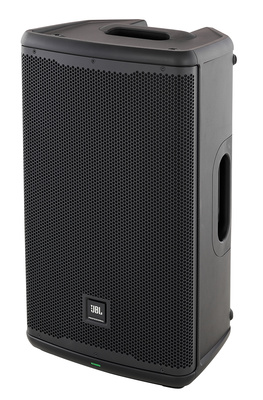
An active 12-inch speaker with 650 watts RMS, a built-in DSP and a three-channel mixer. #2 of 252 active full-range PA speakers.
Yamaha DBR12, $514
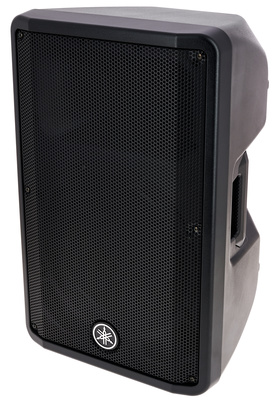
An active 12-inch speaker with a two-channel mixer, a common choice for bands and events. #3 of 252 active full-range PA speakers.
JBL JRX 212, $290
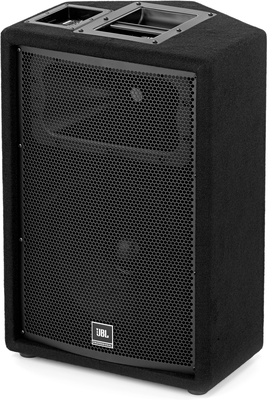
A passive 12-inch speaker rated at 250 watts continuous, light and simple. #1 of 138 passive full-range PA speakers.
Crown XLS 1502, $559
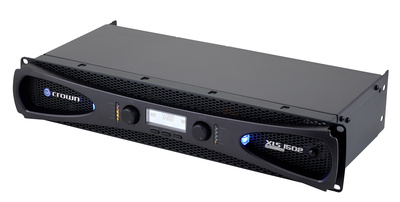
A two-channel Class D power amp delivering 525 watts per channel at 4 ohms or 300 watts at 8 ohms, enough for a pair of passive speakers. #1 of 83 general power amps.
What about studio monitors?
Almost all of them are active: of the studio nearfield monitors in stock at Thomann, 366 were active and only 7 passive. Matching the amplifier to the speaker is what makes a monitor accurate, so makers build it in.
Questions
Are active speakers better than passive?
For most musicians, yes: simpler setup and a well-matched amp. Passive is better for large or permanent systems.
Do passive speakers need an amplifier?
Yes, always. Match the amp's power and impedance to the speakers.
Can I connect active speakers to an amplifier?
No. Active speakers take a line-level signal from a mixer or interface, never the output of a power amp.
How we measured. Medians: every active (364) and passive (189) full-range PA speaker Thomann listed as in stock on October 18, 2026. Pair totals use the October 18 prices of the products shown, converted from euros at the European Central Bank rate. Products show today's price and rank, updated every night.
Share this story

Denis Kataev runs AudioFu. Every night the site records the prices of more than 38,000 instruments and studio tools at Thomann, and he writes about what those numbers show: what got cheaper, what just arrived, and which discounts are real.
All stories by Denis Kataev →


