
On November 9, 2026, Thomann had 356 active nearfield studio monitors in stock, with a median price of $627. 137 of them list RCA inputs, the kind on a turntable preamp or a TV, and 29 have Bluetooth, at a median of $221. Here is what still separates them from hi-fi speakers.
What's different
The sound. Hi-fi speakers are tuned to sound pleasant: a little extra bass, softened highs, a wide sweet spot. Monitors aim for a flat response, so you hear the recording as it is, problems included. That is the point: a mix that sounds right on them translates to earbuds, cars and clubs.
The distance. Nearfield monitors are designed for about three to six feet, the distance from a desk to your ears. Many hi-fi speakers are made to fill a living room.
The amp. Studio monitors are almost all active: the amplifiers are inside, matched to each driver. Most hi-fi speakers are passive and need an amplifier or receiver.
The inputs. Monitors take balanced XLR or jack cables from an audio interface. Hi-fi speakers take RCA or speaker wire from an amp. The 137 monitors with RCA inputs bridge the two.
Monitors that also do Bluetooth
IK Multimedia iLoud Micro Monitor, $219
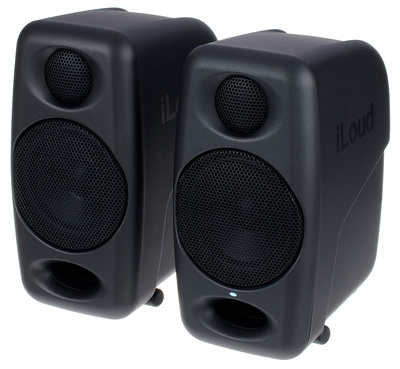
A pair of tiny two-way monitors with 3-inch woofers, four amplifiers, EQ settings for desk or stand placement, and Bluetooth. They rank 9th of 222 monitors, the highest of any Bluetooth model. #9 of 221 active nearfield monitors.
M-Audio BX5BT, $176
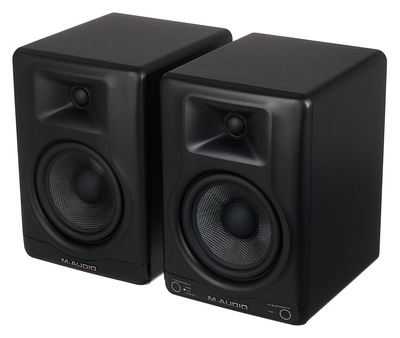
Five-inch Kevlar woofers, 120 watts per pair, a DSP crossover and Bluetooth with app control. They rank 17th of 222, second among Bluetooth monitors. #16 of 221 active nearfield monitors.
Kali Audio LP-UNF, $326
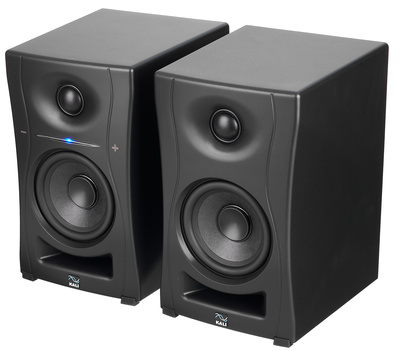
Desktop monitors with a 4.5-inch woofer, a compression driver, 80 watts per side, USB audio, Bluetooth, touch volume and a boundary EQ for wall or desk placement. #50 of 221 active nearfield monitors.
M-Audio's BX3BT is the cheapest Bluetooth pair at $99. AIAIAI's UNIT-4 goes fully wireless, sending uncompressed audio over its own link, for $669 a pair.
Can you use monitors for hi-fi?
Yes, and many people do. Things to know:
- Small monitors have little deep bass. Under 5 inches, plan on a subwoofer if you want it.
- They are honest: a bad recording sounds bad. Some find that tiring for casual listening, others never go back.
- Set them up like a studio: tweeters at ear height, an equilateral triangle with your head, a little away from the wall.
Can you mix on hi-fi speakers?
You can, but you'll be correcting for their colour. If they add bass, your mixes will come out thin elsewhere. If you already own good hi-fi speakers, check your mixes on headphones and in the car, or add a pair of small monitors.
Where the numbers come from. Every active nearfield studio monitor Thomann had in stock on November 9, 2026, from its partner feed. Bluetooth and RCA inputs are read from Thomann's descriptions. Places are from our studio monitor ranking. Prices are Thomann's US prices; most monitors are priced per speaker, pairs and sets as stated in the name.
Share this story

Denis Kataev runs AudioFu. Every night the site records the prices of more than 38,000 instruments and studio tools at Thomann, and he writes about what those numbers show: what got cheaper, what just arrived, and which discounts are real.
All stories by Denis Kataev →


