
Best Wireless Devices for Cameras Under $500 2026
So, you need wireless for your camera rig, huh? Maybe you're filming a wedding, doing some location shoots, or just want to ditch the cable clutter. Finding a decent wireless system under $500 that doesn't sound like you're recording through a tin can is tough, but it's doable. Let's break down what you can realistically expect and find some options that won't leave you regretting your decision.
Last updated: April 11, 2026
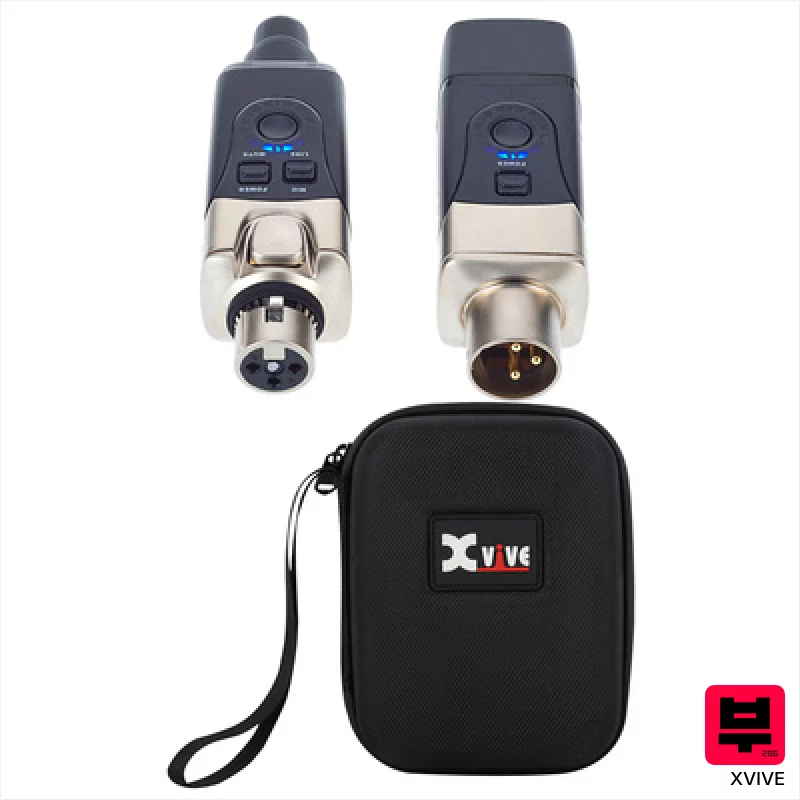
XVive U3 Microphone Wireless Bundle
- • Robust ABS housing offers surprisingly good impact resistance.
- • 2.4GHz band ensures reliable operation globally, avoiding common interference.
- • Mic/Line switch provides versatility for vocalists and DJs alike.
- • Impressive 110dB dynamic bandwidth delivers a clean, clear signal.
- • ABS housing, while robust, lacks the premium feel of metal construction.
- • Micro USB charging feels dated compared to USB-C alternatives.
- • Limited channel selection (6) might be restrictive for crowded RF environments.

Rode Wireless GO II Single Bundle
- • Compact form factor simplifies mounting on camera or talent.
- • Integrated microphone delivers surprisingly clear, natural vocal capture.
- • On-board memory provides a safety net for critical recordings.
- • Intuitive level adjustments quickly optimize gain without distortion.
- • 2.4 GHz band susceptible to interference in crowded RF environments.
- • Single bundle limits flexibility for multi-mic setups or talent interviews.
- • Limited codec options restrict advanced audio processing capabilities.
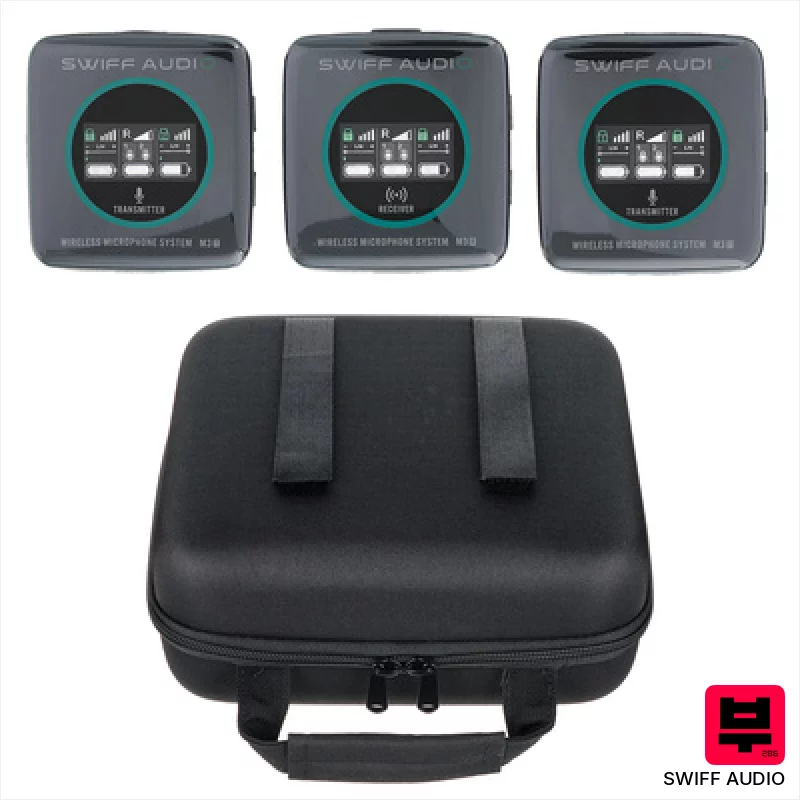
Swiff Audio M3 PRO Case Bundle
- • Compact size makes it ideal for run-and-gun video work.
- • 2.4GHz digital transmission provides a cleaner signal than older FM systems.
- • The included case offers excellent portability and protection.
- • Dual transmitters offer flexibility for interviews or two-person setups.
- • Plastic construction feels a little flimsy compared to higher-end metal options.
- • 50m range is respectable, but susceptible to interference in crowded areas.
- • Limited channel options may necessitate frequency scanning in challenging environments.
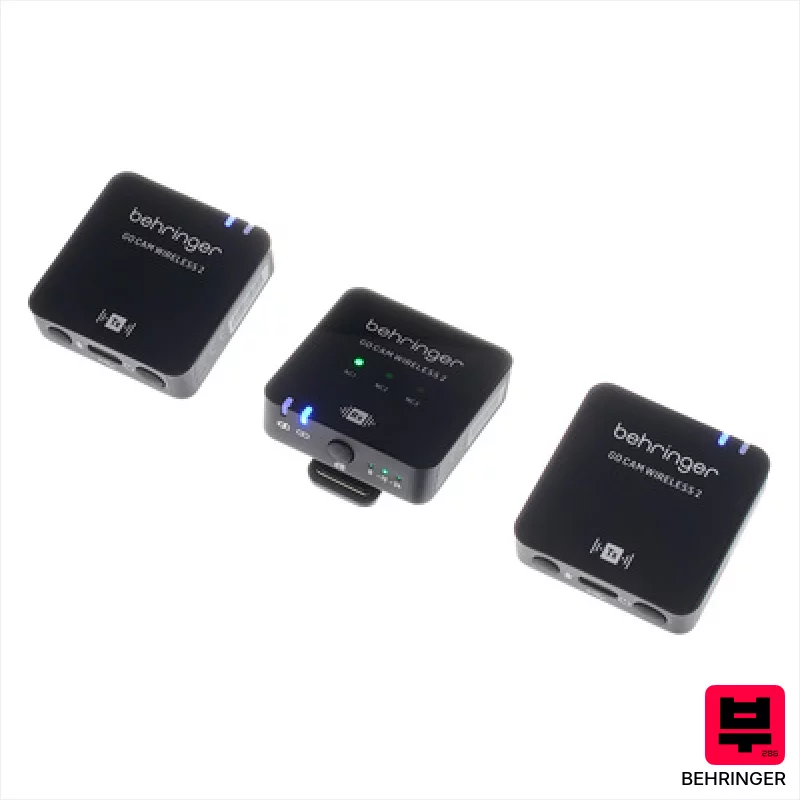
Behringer Go Cam Wireless 2
- • Extremely compact and lightweight transmitters for discreet camera use
- • Built-in omnidirectional mics offer surprisingly decent, usable audio
- • Real-time monitoring is a genuinely useful feature for on-location recording
- • Comprehensive accessory kit provides immediate usability out of the box
- • Plastic construction feels noticeably less robust than higher-end wireless systems
- • Limited frequency band means potential interference in crowded RF environments
- • Omnidirectional mics pick up significant background noise, even with noise reduction
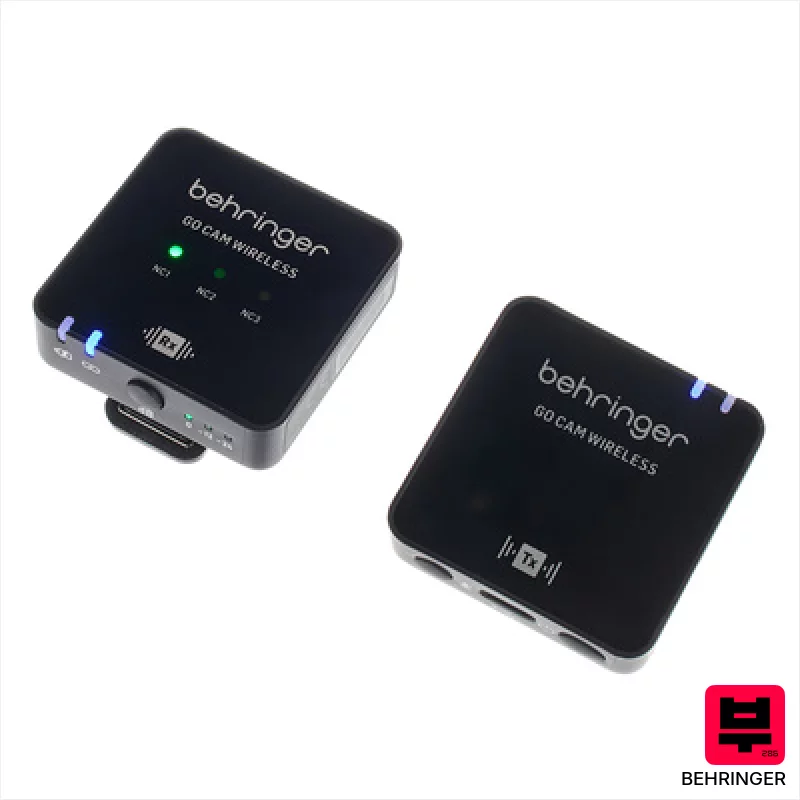
Behringer Go Cam Wireless
- • Compact and lightweight design allows for discreet camera mounting.
- • Built-in omnidirectional mic provides surprisingly decent vocal capture.
- • USB-C charging and monitoring headphones offer modern convenience.
- • Includes multiple cables for versatile connectivity to various devices.
- • Limited frequency band and channel count restricts use in crowded RF environments.
- • Plastic construction feels budget-oriented; durability may be a concern.
- • Omnidirectional mic picks up significant background noise without careful placement.

Swiff Audio M3 PRO
- • Compact design and lightweight construction make it truly mobile-friendly.
- • 2.4GHz digital transmission offers a relatively clean signal for the price point.
- • The included monitoring headphone output is a genuinely useful feature for on-location work.
- • 24-bit/48kHz sampling provides decent audio resolution for vlogging and interviews.
- • Plastic construction feels somewhat flimsy; not ideal for heavy daily use.
- • 50m range is optimistic; expect reduced performance with obstacles.
- • Integrated microphone quality is acceptable, but external mics are strongly recommended.

Sennheiser XSW-D XLR Base Set
- • Rock-solid Sennheiser build quality, feels premium in hand
- • Digital transmission provides clean, interference-free audio
- • XLR connectivity expands compatibility with professional gear
- • Compact transmitter design minimizes on-camera obstruction
- • Limited frequency options compared to higher-end wireless systems
- • Base set lacks accessories like a case or additional batteries
- • Transmitter’s XLR input limits it to dynamic mics only
How to Choose the Best Wireless Devices for Cameras
Frequency Range & Bandwidth
Wider bandwidth means more headroom and less chance of interference. Expect 20MHz or more for decent results; anything less and you'll likely hear some digital artifacts. The lower the frequency, the better it cuts through a noisy environment, but higher frequencies can offer a more natural, detailed sound.
Dynamic Range & Signal-to-Noise Ratio (SNR)
This is crucial. A good SNR means less hiss and noise floor, allowing you to capture quieter sounds. Dynamic range dictates how well it handles loud peaks without clipping or distortion. Expect at least 70dB SNR for usable results.
Operating Range & Reliability
Don't believe the advertised range! Walls, interference, and body blocking will drastically reduce it. Realistically, 50-75 feet is more likely in most environments. Consistent signal stability is more important than raw distance.
Audio Quality & Latency
Lower latency is essential for monitoring and real-time applications. A latency of 5ms or less is ideal. Audio quality will likely be compressed in this price range - don't expect pristine studio-grade sound, but listen for clarity and a natural tonality without harshness.
Build Quality & Durability
Gigs can be rough. Look for metal housings and robust connectors. You're not buying disposable gear; you're investing in something that will survive the occasional drop and the constant wear and tear of regular use.
Buying Guide
At this price point, compromises are inevitable. You're likely looking at digital wireless systems, which inherently compress the audio to save bandwidth. Don't expect the same warmth or dynamic range as a high-end analog system. Prioritize a system with good frequency response and a decent SNR over maximum range - you can always get closer. Read reviews carefully, and be aware that advertised range is almost always optimistic.
How This List Is Built
We don't play these instruments — we're a catalog, not a review desk, and we'd rather say so than pretend otherwise. This page ranks 7 wireless devices for cameras from the Thomann catalogue, which is the largest single source of specification data in this category.
Position is computed, not curated. Four signals, in order of weight: how completely the manufacturer documents the instrument (number of published specifications), where it sits in the price range, how specific the model designation is — which filters out generic accessories — and whether a product image exists. The same inputs always produce the same order, so nothing here is shuffled to look fresh.
What this list is good for: narrowing a category down to a shortlist by spec and budget. What it isn't: a substitute for hearing an instrument. Before you buy, read hands-on reviews and, where you can, play it. Full methodology.

