
Best Wireless Devices for Cameras Under $2,000 2026
Alright, so you need wireless for your camera rig but you're not looking to remortgage the house? I get it. Wireless systems can get seriously pricey, but there's a sweet spot under $2000 where you can get genuinely usable gear that won't leave you cursing its dropouts on a live shoot. We're talking about getting reliable audio without sacrificing your rent money - let's find something that'll actually work for your needs.
Last updated: April 11, 2026

Sennheiser AVX-ME2 MKE2 Bundle
- • Robust, all-digital wireless system minimizes interference issues.
- • ME2 lav mic delivers clear, natural vocal reproduction with good detail.
- • PlugON receiver's swivel XLR provides versatile mounting options.
- • AES 256 encryption ensures secure, private audio transmissions.
- • The system's frequency range is relatively narrow, limiting channel availability in crowded RF environments.
- • Battery life, while decent, demands regular charging for extended shoots.
- • The bodypack transmitter can feel a bit bulky for some users.
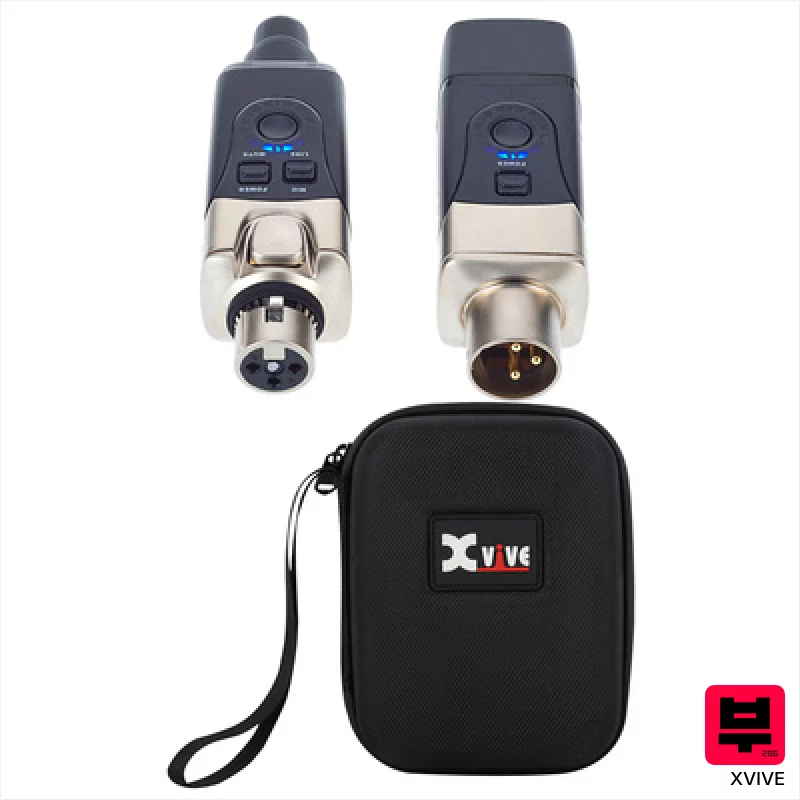
XVive U3 Microphone Wireless Bundle
- • Robust ABS housing offers surprisingly good impact resistance.
- • 2.4GHz band ensures reliable operation globally, avoiding common interference.
- • Mic/Line switch provides versatility for vocalists and DJs alike.
- • Impressive 110dB dynamic bandwidth delivers a clean, clear signal.
- • ABS housing, while robust, lacks the premium feel of metal construction.
- • Micro USB charging feels dated compared to USB-C alternatives.
- • Limited channel selection (6) might be restrictive for crowded RF environments.

Rode Wireless GO II Single Bundle
- • Compact form factor simplifies mounting on camera or talent.
- • Integrated microphone delivers surprisingly clear, natural vocal capture.
- • On-board memory provides a safety net for critical recordings.
- • Intuitive level adjustments quickly optimize gain without distortion.
- • 2.4 GHz band susceptible to interference in crowded RF environments.
- • Single bundle limits flexibility for multi-mic setups or talent interviews.
- • Limited codec options restrict advanced audio processing capabilities.

Sennheiser AVX-MKE2 Set
- • Excellent audio clarity with the MKE2 lavalier mic's natural sound
- • Robust digital transmission avoids RF interference common in crowded areas
- • PlugON receiver's swivel XLR provides flexible camera mounting options
- • Automatic frequency management simplifies operation for less experienced users
- • Limited frequency band restricts operation in some regions globally
- • Bodypack's size can be cumbersome for certain on-camera applications
- • AES 256 encryption adds complexity for basic users needing only audio
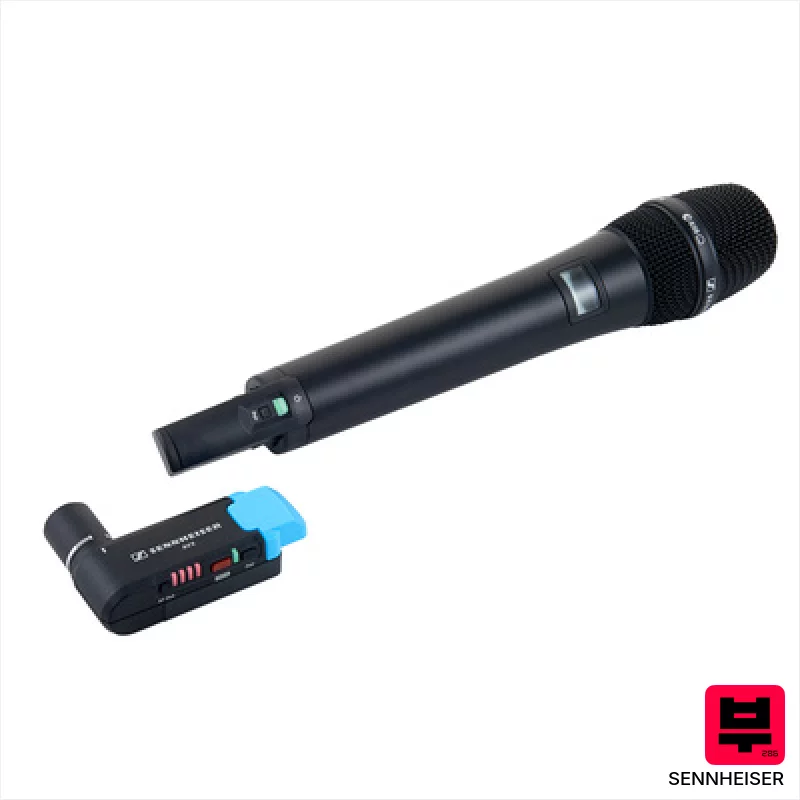
Sennheiser AVX-835 Set
- • Excellent audio clarity with the dynamic capsule, minimizes handling noise
- • Digital transmission provides robust signal stability, avoids RF interference
- • PlugON receiver’s rotating XLR offers flexible mounting options
- • AES 256 encryption ensures secure, private recordings for sensitive content
- • The SKM 835 transmitter can feel a little bulky for extended handheld use
- • Limited frequency band availability might require careful channel selection in congested areas
- • The price point places it in a premium category, a significant investment

Sennheiser AVX-ME2 Set
- • Excellent audio clarity, thanks to the ME2 lavalier mic
- • Robust, compact receiver for easy camera mounting
- • Automatic frequency management simplifies operation significantly
- • AES 256 encryption provides secure transmission for sensitive content
- • Limited frequency band restricts operation in some regions
- • Battery life, while decent, could be improved for longer shoots
- • Receiver's swivel XLR can feel a little flimsy under heavy use

Shure SLXD15 G59
- • Shure's renowned audio quality translates to crystal-clear, professional-grade sound.
- • The digital UHF transmission minimizes interference, offering reliable performance in crowded RF environments.
- • Compact and lightweight design makes it incredibly discreet and easy to handle on camera.
- • Switchable power settings allow for flexibility in range and battery conservation.
- • The frequency band (470-514 MHz) might be restricted in some regions, requiring verification.
- • Reliance on AA or optional Li-ion batteries adds a recurring maintenance consideration.
- • The single-channel receiver limits versatility for multi-source audio capture.
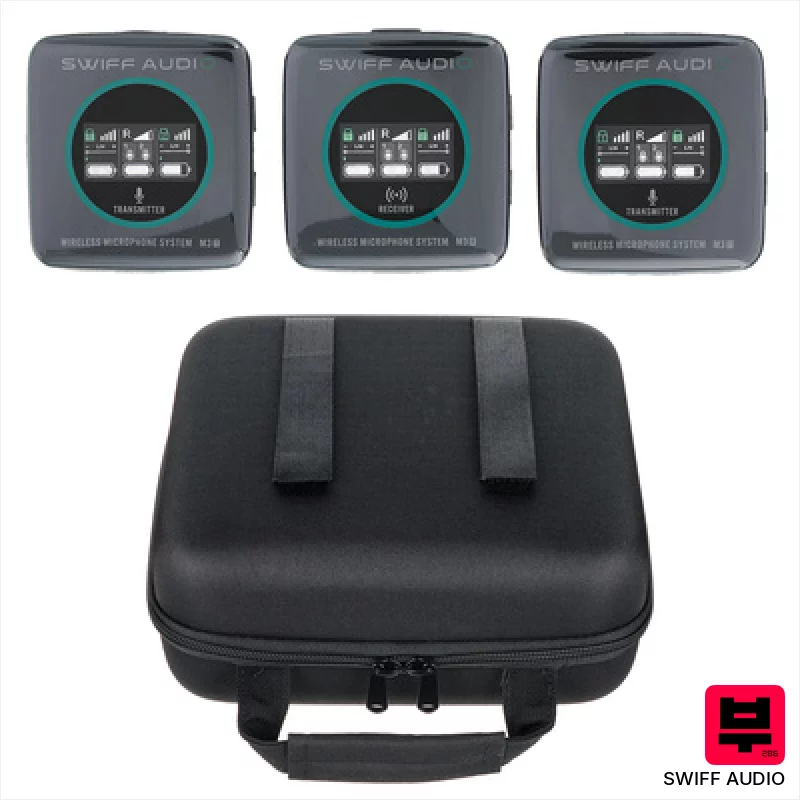
Swiff Audio M3 PRO Case Bundle
- • Compact size makes it ideal for run-and-gun video work.
- • 2.4GHz digital transmission provides a cleaner signal than older FM systems.
- • The included case offers excellent portability and protection.
- • Dual transmitters offer flexibility for interviews or two-person setups.
- • Plastic construction feels a little flimsy compared to higher-end metal options.
- • 50m range is respectable, but susceptible to interference in crowded areas.
- • Limited channel options may necessitate frequency scanning in challenging environments.
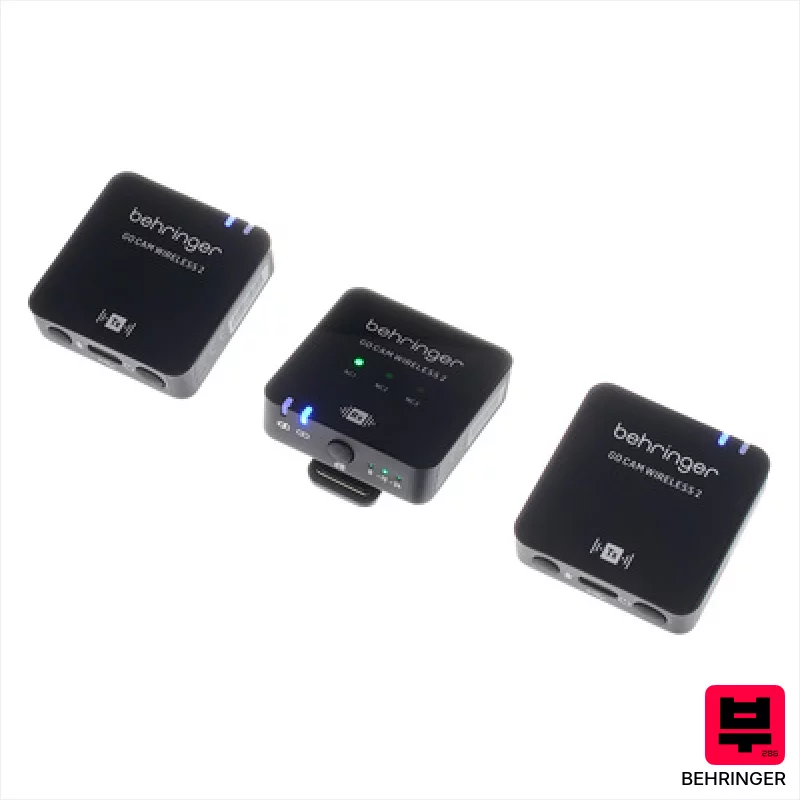
Behringer Go Cam Wireless 2
- • Extremely compact and lightweight transmitters for discreet camera use
- • Built-in omnidirectional mics offer surprisingly decent, usable audio
- • Real-time monitoring is a genuinely useful feature for on-location recording
- • Comprehensive accessory kit provides immediate usability out of the box
- • Plastic construction feels noticeably less robust than higher-end wireless systems
- • Limited frequency band means potential interference in crowded RF environments
- • Omnidirectional mics pick up significant background noise, even with noise reduction

Shure SLXD35 G59
- • Rock-solid Shure build quality, feels instantly durable.
- • G59 frequency band offers relatively clean operation in many areas.
- • Excellent audio clarity; Shure's reputation for transparency shines through.
- • Hot shoe adapter and protective cover add genuine practicality for on-location work.
- • G59 frequency band can be congested in densely populated areas.
- • Limited channel count restricts flexibility for larger productions.
- • Battery dependence (even with rechargeables) can be a workflow constraint.
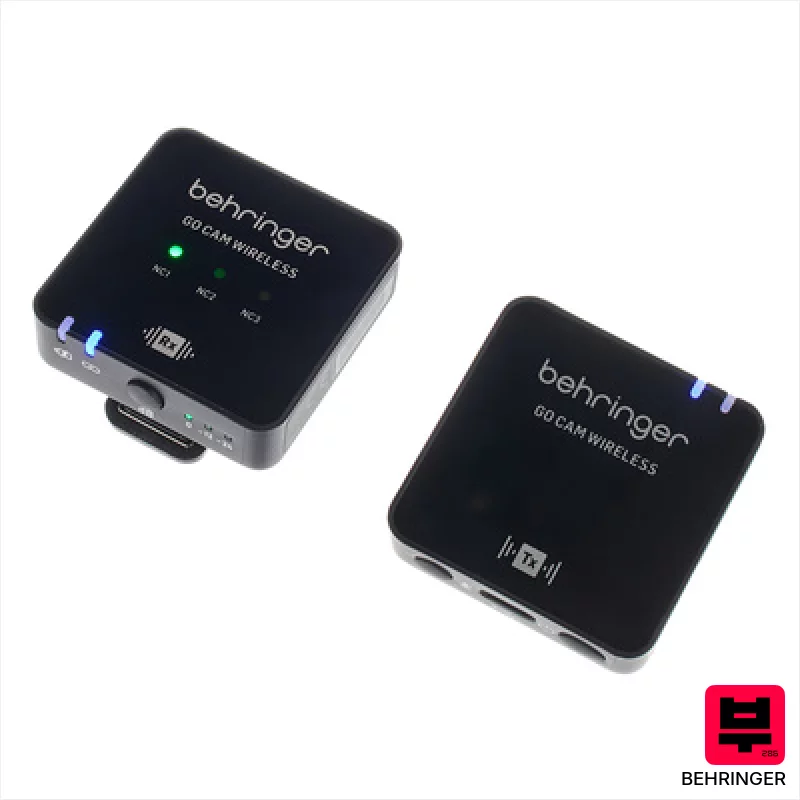
Behringer Go Cam Wireless
- • Compact and lightweight design allows for discreet camera mounting.
- • Built-in omnidirectional mic provides surprisingly decent vocal capture.
- • USB-C charging and monitoring headphones offer modern convenience.
- • Includes multiple cables for versatile connectivity to various devices.
- • Limited frequency band and channel count restricts use in crowded RF environments.
- • Plastic construction feels budget-oriented; durability may be a concern.
- • Omnidirectional mic picks up significant background noise without careful placement.

Swiff Audio M3 PRO
- • Compact design and lightweight construction make it truly mobile-friendly.
- • 2.4GHz digital transmission offers a relatively clean signal for the price point.
- • The included monitoring headphone output is a genuinely useful feature for on-location work.
- • 24-bit/48kHz sampling provides decent audio resolution for vlogging and interviews.
- • Plastic construction feels somewhat flimsy; not ideal for heavy daily use.
- • 50m range is optimistic; expect reduced performance with obstacles.
- • Integrated microphone quality is acceptable, but external mics are strongly recommended.

Sennheiser XSW-D XLR Base Set
- • Rock-solid Sennheiser build quality, feels premium in hand
- • Digital transmission provides clean, interference-free audio
- • XLR connectivity expands compatibility with professional gear
- • Compact transmitter design minimizes on-camera obstruction
- • Limited frequency options compared to higher-end wireless systems
- • Base set lacks accessories like a case or additional batteries
- • Transmitter’s XLR input limits it to dynamic mics only
How to Choose the Best Wireless Devices for Cameras
Frequency Band
This isn't just about the band name; it's about how crowded the airspace is. 2.4GHz is convenient but often congested. 5.8GHz is cleaner but has shorter range. UHF is the classic workhorse, but licensing can be an issue in some areas. Know your local regulations.
Dynamic Range & Noise Floor
A low noise floor is critical. You don't want to spend hours cleaning up hiss in post. Dynamic range dictates how well you can capture quiet signals without clipping loud ones - important for interviews or capturing subtle details. A good system will have at least 70dB of usable dynamic range.
Latency
This is a killer for video. Noticeable latency makes dialogue feel unnatural and can throw off timing. Anything over 10ms is starting to become a problem. Lower latency is absolutely worth prioritizing, even if it means a slight compromise elsewhere.
Range & Reliability
Specs are just numbers. Real-world range is almost always less. Look for systems with a proven track record of reliability, especially in environments with potential interference. Consider the antenna type - external antennas generally offer better performance.
Build Quality & Form Factor
You're going to be tossing this around. Cheap plastic housings will crack. Look for something that feels solid and can withstand the rigors of location work. Think about the form factor - how easy is it to mount, conceal, and operate?
Buying Guide
Under $2000, you're going to be making trade-offs. Don't expect broadcast-quality performance. You'll likely be sacrificing some range or dynamic range. Often, the biggest compromise is in the build quality - these systems are built to work, not to last forever. Prioritize low latency and a clean signal; a little less range is better than a ton of dropouts and a noisy signal.
How This List Is Built
We don't play these instruments — we're a catalog, not a review desk, and we'd rather say so than pretend otherwise. This page ranks 13 wireless devices for cameras from the Thomann catalogue, which is the largest single source of specification data in this category.
Position is computed, not curated. Four signals, in order of weight: how completely the manufacturer documents the instrument (number of published specifications), where it sits in the price range, how specific the model designation is — which filters out generic accessories — and whether a product image exists. The same inputs always produce the same order, so nothing here is shuffled to look fresh.
What this list is good for: narrowing a category down to a shortlist by spec and budget. What it isn't: a substitute for hearing an instrument. Before you buy, read hands-on reviews and, where you can, play it. Full methodology.

