
Best Bad Cat Tube Guitar Heads 2026
Alright, let's talk Bad Cat. These aren't your grandpa's tweed boxes; they're hand-wired, boutique heads built for players who need serious headroom and a cranked amp's responsiveness, but with a bit more refinement. If you're chasing that elusive blend of pristine cleans and a thick, harmonically rich overdrive, and you're willing to pay for it, Bad Cat deserves a serious listen. They're a cult favorite for a reason, but they aren't for everyone - let's break down why.
Last updated: September 28, 2026

Bad Cat Cub 15 Mod Shop Head
- • Handmade in the USA with solid construction quality
- • Two distinct gain modes switchable instantly
- • Includes a footswitch for easy volume changes
- • Uses standard 12AX7 and EL84 power tubes
- • No specific speaker cabinet included in the box
- • Single channel design lacks multi-channel options
- • Reverb is the only built-in effect available

Bad Cat Mod Shop Hot Cat 50 Head
- • Two distinct gain modes give real tonal flexibility
- • Transparent buffered loop lets pedals ring true
- • Four preamp tubes add rich, warm harmonic texture
- • Padded cover protects gear during transport
- • Heavy 14.1 kg weight makes carrying a chore
- • No speaker cabinet included in the kit
- • Only one reverb effect with no other FX
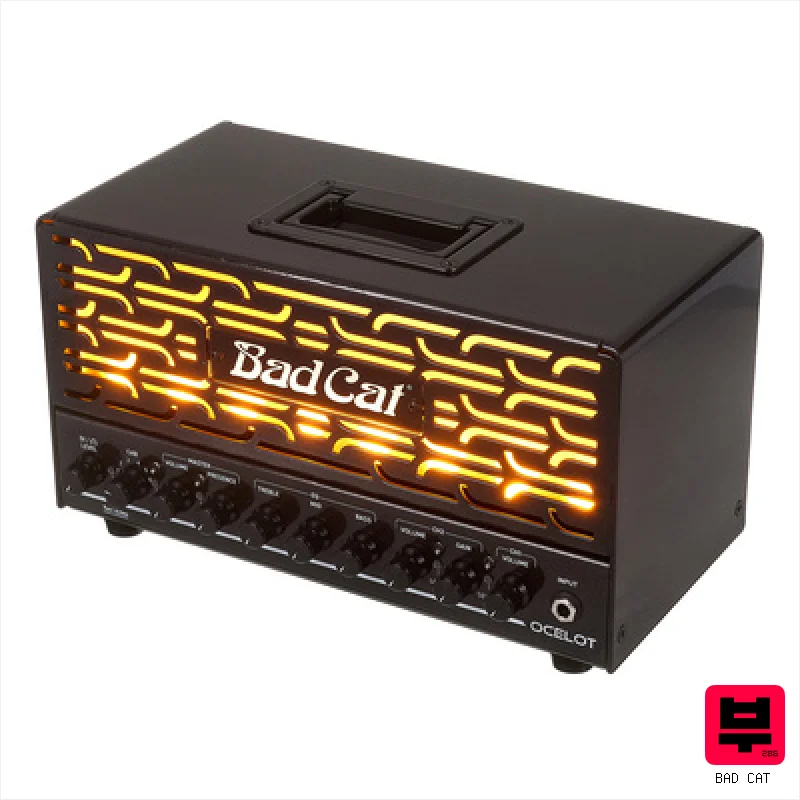
Bad Cat Ocelot Lunchbox Head
- • Runs on three 12AX7 preamp tubes for classic warm sound
- • Includes six DynIR cab simulations for studio flexibility
- • Switchable 1W mode for quiet home practice sessions
- • Lightweight lunchbox design fits easily in any bag
- • No built-in speaker means you need an external cabinet
- • Two channels but only simple three-band EQ per channel
- • No specific wattage listed for the standard high power mode

Bad Cat Mod Shop Black Cat 30 Head
- • Hand-wired construction ensures exceptional reliability and tone clarity
- • EL84 power tubes deliver a signature Bad Cat chime and dynamic response
- • Mod Shop details like engraved panels elevate the aesthetic and perceived value
- • Versatile clean and driven channels cover a wide range of musical styles
- • Premium-priced, placing it out of reach for many players
- • 30 watts might be limiting for very loud stage environments
- • Limited tonal flexibility compared to more complex multi-channel amps
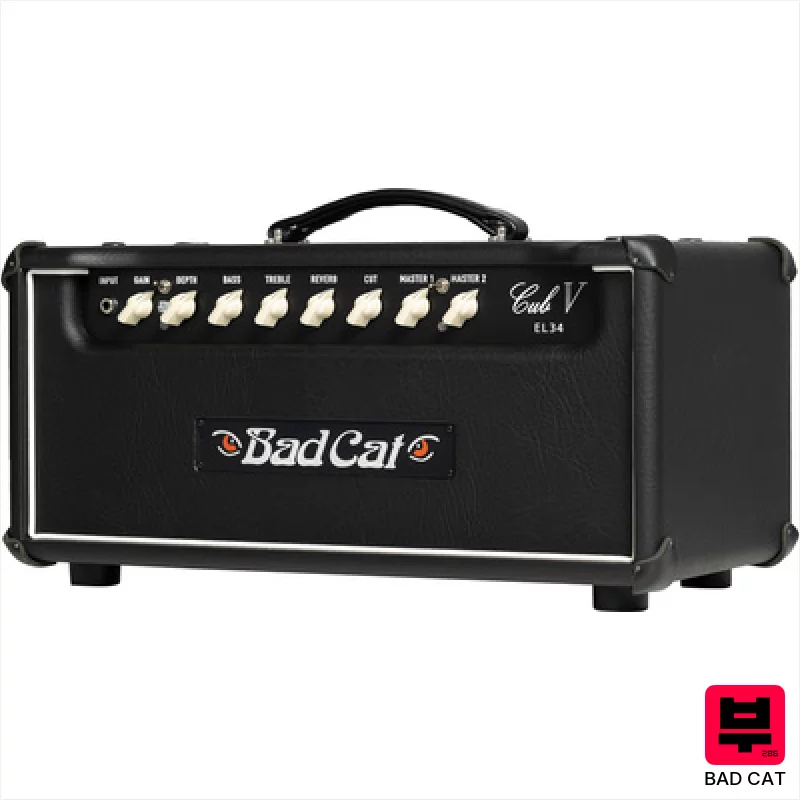
Bad Cat Cub V EL34 Head
- • Hand-wired construction ensures pristine signal and longevity.
- • The EL34 power tubes deliver a thick, harmonically rich tone.
- • Switchable preamp tubes offer a surprisingly wide range of gain flavors.
- • Excellent note definition and clarity even at higher volumes.
- • The 40-watt output might be limiting for some gigging situations.
- • Premium-priced, represents a significant investment for most players.
- • Limited channel flexibility compared to more complex amp designs.

Bad Cat Cub V EL84 Head
- • Hand-wired construction ensures exceptional reliability and tonal purity
- • EL84 power tubes deliver a dynamic, chimey, and responsive clean/crunch
- • Switchable preamp tubes offer a surprising range of gain textures
- • The Cut control provides precise midrange shaping for modern tones.
- • The 15-watt output is limiting for very loud stage environments
- • Premium-priced, representing a significant investment for many guitarists
- • Single channel design lacks flexibility for complex tonal programming.
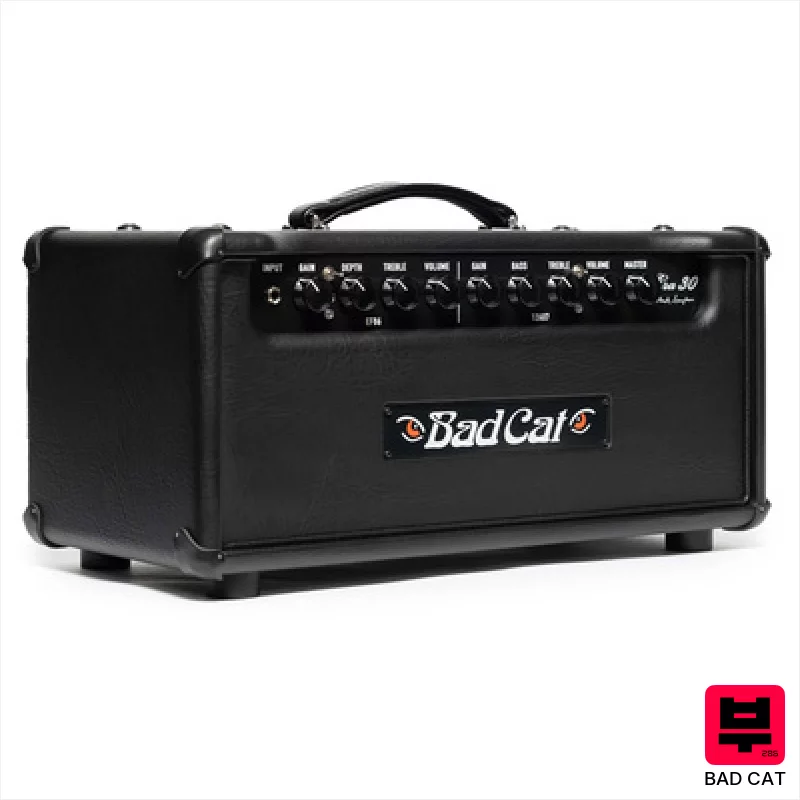
Bad Cat Era 30 Head
- • Hand-wired point-to-point construction ensures exceptional reliability and tone.
- • EF86 channel delivers a unique, harmonically rich, and responsive clean gain.
- • EL84 power tubes provide a classic British chime and dynamic overdrive.
- • Master volume allows for high-gain tones at manageable volumes, crucial for studio work.
- • Premium-priced, placing it out of reach for many players.
- • 30 watts might be limiting for players needing serious stage volume.
- • Limited channel flexibility compared to more complex, multi-channel amps.
Tube Guitar Heads by the numbers
Measured across all 209 models in this category, so «wide», «short» or «expensive» mean something you can check.
How to Choose the Best Tube Guitar Heads
Heritage & Design
Mike Landolina's designs are rooted in classic American amp architecture (think Marshall and Soldano) but with his own distinct voicing. He wasn't chasing vintage - he was chasing a modern, powerful, and responsive platform.
Headroom & Clean Dynamic Range
Bad Cats are known for their incredible headroom. You can really push them hard before they start to break up, and the cleans remain remarkably articulate and defined, even at high volumes. This is crucial for recording and playing with a band where you need to cut through.
Harmonic Complexity
It's not just 'loud' distortion. Bad Cats deliver a complex, layered overdrive with a ton of harmonic richness. That 'fat midrange honk' everyone talks about? It's there, but it's balanced with a tight low-end and a surprisingly sweet high end - no ice-picky harshness.
Build Quality & Hand-Wiring
These amps are built to last. The hand-wired construction, quality components, and meticulous attention to detail translate to exceptional reliability and a long lifespan. You're paying for the craftsmanship, and it shows.
Point-to-Point Wiring & Bias Adjustments
The point-to-point wiring contributes to the amp's responsiveness and dynamic feel. Multiple bias adjustments allow for fine-tuning the amp's tone and gain structure, although this is best left to a qualified tech.
Buying Guide
Bad Cats are an investment. There are no budget-friendly options here - you're paying for that hand-wired quality and the unique voicing. Watch out for heavily modded examples; while some mods can be improvements, many are just a sign someone was chasing a tone that wasn't inherent to the amp's design. Don't be afraid to have a tech bias the amp to your specific preferences; it can make a significant difference.
How This List Is Built
We don't play these instruments — we're a catalog, not a review desk, and we'd rather say so than pretend otherwise. This page covers 7 of 209 tube guitar heads from the Thomann catalogue, which is the largest single source of specification data in this category: 7 in detail, the rest listed with their specifications.
Position is computed, not curated. We parse the manufacturer's own description into actual values — nut width, scale, fret count, fingerboard radius, size, alloy — and rank on them: how many specifications a model has published, how many of them are measurable numbers, and how precisely it meets this page's criterion. A product image adds a little. Price is not a ranking signal: it tells you nothing about whether a neck fits your hand. The same inputs always produce the same order, so nothing here is shuffled to look fresh.
What this list is good for: narrowing a category down to a shortlist by spec and budget. What it isn't: a substitute for hearing an instrument. Before you buy, read hands-on reviews and, where you can, play it. Full methodology.

