AudioFu Chart · October 2026
Best Studio Monitor Controllers 2026
The top pick is Mackie Big Knob Studio Monitor Controller / Interface ($312). Mackie Big Knob Passive Monitor Controller gives you the most for the money at $77. SPL 1760 MC16 Mastering Monitor Controller leads the high end. Ranked by the AudioFu Index from 56 models across 26 brands, prices checked every night.
Last updated: October 26, 2026
Narrow the chart
All Studio Monitor ControllersTop 10
Full detail for the 10 highest AudioFu Index scores. Every other model is listed below.
-
Mackie Big Knob Studio Monitor Controller / Interface
Big Knob Studio+ · Mackie
36 for sale on Reverb2 finishes at Thomann
- Weight2.1 kg
The Big Knob Studio+ is a seriously handy piece for anyone running multiple monitors and needing a quick way to route signals. The built-in USB interface is a nice bonus for grabbing vocals or samples on the fly, and the cue mix is a real time-saver for recording. It's a great solution for home studios and smaller commercial setups.
Pros
- Excellent source routing flexibility for complex setups
- Solid build quality; feels robust for studio use
- Built-in USB interface is genuinely useful for quick tracking
Cons
- USB interface lacks advanced routing options found in dedicated interfaces
- Talkback mic quality is adequate, not professional-grade
77AudioFu
IndexStableno change since Aug 17Aug 17$312 now$312€279 at Thomann · in stockCheck price ↗ -
PreSonus Monitor Station V2 Desktop Monitor Controller
Monitor Station V2 · Presonus
48 for sale on Reverb1 finish at Thomann
- Weight4.6 kg
The Monitor Station V2 is a solid, reliable controller – a real workhorse for smaller studios or anyone needing flexible monitor and headphone management. It’s a great fit for singer-songwriters, bedroom producers, or anyone needing a streamlined workflow without excessive complexity. It gets the job done, and does it well.
Pros
- Flexible source routing simplifies complex monitoring setups.
- The integrated talkback mic is surprisingly good quality and convenient.
- Multiple speaker and headphone trims offer precise level matching.
Cons
- The compact size can feel cramped for users with many peripherals.
- The build quality, while adequate, isn’t premium – mostly plastic construction.
72AudioFu
IndexStableno change since Aug 17Aug 17$318 now$318€284 at Thomann · in stockCheck price ↗ -
Heritage Audio Baby RAM Passive Desktop Monitor Controller
Baby RAM BK · Heritage Audio
17 for sale on Reverb2 finishes at Thomann
- Weight1.2 kg
This little controller lets you tweak volume in tiny steps without drawing power. It handles both stereo and mono signals with switchable balanced lines. Great for small studios needing precise level matching between speakers.
Pros
- Precision volume control with tiny step adjustments
- Works without needing an external power supply
- Switchable balanced connections for cleaner signals
Cons
- No active power means limited volume control
- Single analog input type limits source options
71AudioFu
IndexStableno change since Aug 17Aug 17$223 now$223€199 at Thomann · in stockCheck price ↗ -
Dangerous Music MONITOR ST Remote-Controlled Stereo Monitor Controller
Monitor SR · Dangerous Music
17 for sale on Reverb2 finishes at Thomann
- Size19"
The Monitor SR is a serious upgrade for studios already committed to the Dangerous ecosystem. It’s a beautifully engineered module that delivers incredibly clean and accurate surround monitoring, making it ideal for mixing engineers and post-production facilities needing precise control and fast workflow.
Pros
- Rock-solid build quality with Dangerous Music’s signature robust chassis.
- Seamless, near-instant switching between stereo and 5.1 configurations.
- D-Sub 25 connector simplifies complex routing and integration.
Cons
- Premium-priced, a significant investment for smaller studios.
- Requires a Dangerous Monitor ST for full functionality; not standalone.
71AudioFu
IndexStableno change since Aug 17Aug 17$2,537 now$2,537€2,267 at Thomann · in stockCheck price ↗ -
- Weight0.66 kg
The Studio-Q is a solid, no-frills talkback controller perfect for smaller studios or home recording setups. It's straightforward to use and the build quality feels great, making it a reliable tool for quick communication between the booth and the control room – exactly what you need without a ton of extra stuff.
Pros
- Robust metal chassis provides excellent durability for studio use
- Integrated mic is surprisingly decent for quick talkback needs
- Simple, intuitive layout minimizes learning curve and workflow disruption
Cons
- Limited routing options compared to more complex monitor controllers
- Internal microphone quality isn’t suitable for critical vocal recording
-
Mackie Big Knob Passive Monitor Controller
Big Knob Passive · Mackie
56 for sale on Reverb1 finish at Thomann
The Big Knob Passive is a fantastic, bare-bones solution for anyone needing basic monitor switching. It’s perfect for smaller home studios or project recording environments where you just want clean, reliable switching between a couple of monitor pairs and sources—no frills, just straightforward functionality. The build quality is surprisingly robust for its price point.
Pros
- Solid steel chassis provides excellent durability for studio use
- Passive design eliminates hum and noise often found in powered controllers
- Simple, intuitive layout ideal for quick source switching and level adjustments
Cons
- Passive design requires an external preamp for sufficient gain in some setups
- Limited routing options compared to more complex, active monitor controllers
-
SPL 1760 MC16 Mastering Monitor Controller
MC16 All Black · SPL
6 for sale on Reverb2 finishes at Thomann
- Weight8.4 kg
This unit is great for mixing teams who need to switch between different surround formats quickly. You can set up your 5.1, 11.1, or 9.1.6 layout and instantly compare your work to a reference track. It handles sixteen speakers with one click, but it doesn't have talkback or headphone jacks, so you'll need extra gear for those tasks.
Pros
- Routes all 16 inputs to matching outputs for perfect channel alignment
- Includes dedicated buttons to activate individual speakers easily
- Allows quick comparison of current mixes against reference productions
Cons
- Lacks a built-in talkback feature for studio communication
- Missing headphone output options for private listening
64AudioFu
IndexStableno change since Aug 17Aug 17$5,025 now$5,025€4,489 at Thomann · in stockCheck price ↗ -
PreSonus MicroStation BT 2.1 Bluetooth Studio Monitor Controller
MicroStation BT · Presonus
15 for sale on Reverb1 finish at Thomann
- Weight0.34 kg
The MicroStation BT is a surprisingly useful little box for anyone needing basic monitor switching and Bluetooth integration. It's perfect for bedroom producers, podcasters, or anyone wanting a clean, simple way to route audio without a ton of fuss. Don't expect a flagship feature set, but for the price, it’s a solid, functional solution.
Pros
- Compact footprint ideal for smaller studios or mobile setups
- Bluetooth connectivity offers convenient wireless source switching
- Subwoofer bypass function provides clean monitoring without bass
Cons
- Limited input options compared to higher-end monitor controllers
- RCA subwoofer output restricts flexibility for some setups
61AudioFu
IndexStableno change since Aug 17Aug 17$135 now$135€121 at Thomann · in stockCheck price ↗ -
Focusrite RedNet R1 Desktop Remote Control
RedNet R1 · Focusrite
21 for sale on Reverb1 finish at Thomann
- Weight0.85 kg
The RedNet R1 is a seriously powerful monitor controller, especially if you're already invested in the Focusrite/Dante ecosystem. It's a clean, efficient way to manage complex monitoring setups, from stereo to full 7.1.4 Atmos. Perfect for professional studios and post-production environments needing precise control and flexible routing.
Pros
- Seamless Dante integration simplifies complex studio routing.
- Intuitive LCD displays offer clear visual feedback on settings.
- Flexible monitor configurations support immersive audio workflows.
Cons
- Price point places it outside the reach of smaller home studios.
- Dante dependency requires existing network infrastructure.
61AudioFu
Index↑ 4.1%since Aug 17$1,096 · Aug 17$1,141 now$1,141€1,019 at Thomann · in stockCheck price ↗ -
- Weight3 kg
The SPL MTC MK2 is a seriously refined monitor controller. It's built for engineers and producers who demand transparent signal paths, flexible routing, and a rock-solid talkback system – especially those working with critical mixes or mastering. The build quality is top-notch and the headphone amps are a real highlight.
Pros
- Excellent Phonitor matrix offers pristine signal routing flexibility.
- Discrete headphone amps deliver exceptionally clean, powerful headphone playback.
- Robust, all-metal chassis feels incredibly solid and well-built.
Cons
- Premium-priced, a significant investment for smaller studios.
- Limited cinch (RCA) input – primarily geared toward balanced setups.
61AudioFu
IndexStableno change since Aug 17Aug 17$1,443 now$1,443€1,289 at Thomann · in stockCheck price ↗
All 56 studio monitor controllers
Same index, same nightly prices — compact. Colour options of one model share a row. Tap a photo to zoom.
- 11
Audient Nero Desktop Monitor ControllerNero · Audient60↓ 3.0%$466€416$466€416Check ↗
- 12
Universal Audio Apollo E2M Dante Monitor Controller and Headphone…Apollo e2m · Universal Audio59Stable$480€429$480€429Check ↗
- 13
Dangerous Music D-BOX+ Summing Box / Monitor Controller with USB and…D-Box+ · Dangerous Music58Stable$3,357€2,999$3,357€2,999Check ↗
- 14
SPL Control One Monitor ControllerControl One · SPL57Stable$726€649$726€649Check ↗
- 15
Behringer Xenyx CONTROL2USB Studio Monitor ControllerStudio M · Behringer55Stable$44€39$44€39Check ↗
- 16
PreSonus Central Station Plus Monitor Controller with Remote ControlCentral Station Plus · Presonus55↓ 1.8%$724€647$724€647Check ↗
- 17
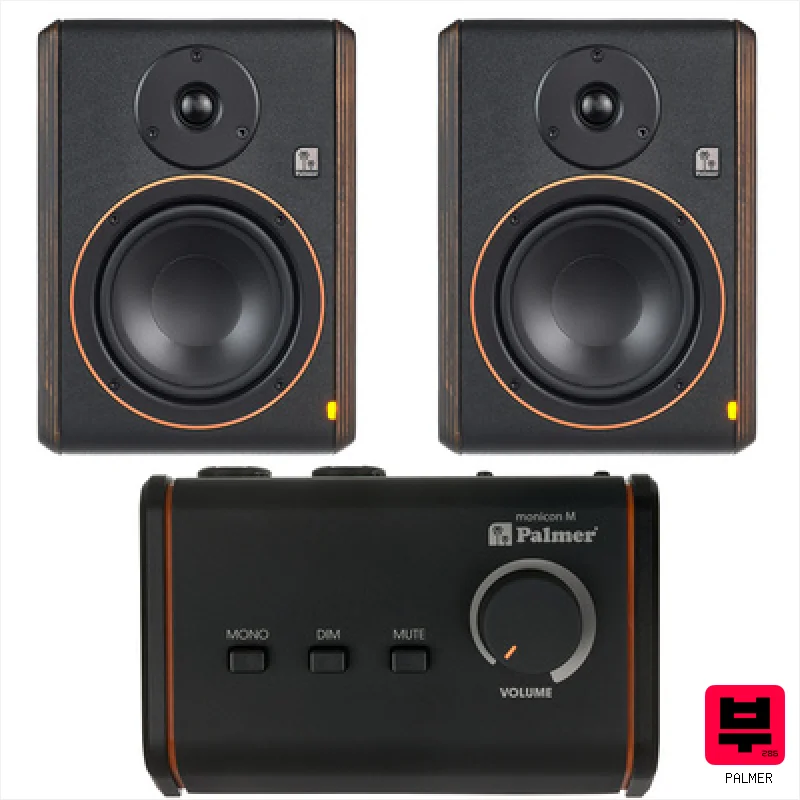
Palmer Monicon XL Monitor ControllerMonicon XL · Palmer53↓ 1.5%$297€265$297€265Check ↗
- 18
Heritage Audio RAM System 2000 Desktop Monitor Controller with…RAM System 2000 · Heritage Audio53Stable$961€859$961€859Check ↗
- 19
Lake People MC50Lake People53Stable$1,741€1,555$1,741€1,555Check ↗
- 20
Focusrite Rednet AM2 Stereo Dante Headphone Amplifier Audio…RedNet AM2 · Focusrite52Stable$726€649$726€649Check ↗
- 21
SPL 2860 2Control Monitor Controller2Control black · SPL52Stable$928€829$928€829Check ↗
- 22
Lake People MC 100Lake People52↓ 13.9%$1,715€1,532$1,715€1,532Check ↗
- 23
RTW TouchMonitor 5 RavennaRTW52Stable$3,021€2,699$3,021€2,699Check ↗
- 24
Drawmer MC2.1 Monitor ControllerMC 2.1 · Drawmer51Stable$894€799$894€799Check ↗
- 25
Palmer Monicon S G2Palmer50↓ 8.2%$50€45$50€45Check ↗
- 26
SPL SMC 2489SPL50Stable$950€849$950€849Check ↗
- 27
Drawmer MC3.1 Monitor ControllerMC 3.1 · Drawmer50Stable$1,286€1,149$1,286€1,149Check ↗
- 28
Dangerous Music Source Portable Monitor Controller and D/A ConverterSource · Dangerous Music50Stable$1,342€1,199$1,342€1,199Check ↗
- 29
Dynaudio Control 01Dynaudio50Stable$5,763€5,149$5,763€5,149Check ↗
- 30
SPL DMC All BlackSPL50Stable$6,144€5,489$6,144€5,489Check ↗
- 31
Behringer Xenyx CONTROL2USB Studio Monitor ControllerControl2USB · Behringer48Stable$124€111$124€111Check ↗
- 32
SPL 2602 Volume 2 Stereo Volume ControllerVolume 2 Black · SPL48Stable$615€549$615€549Check ↗
- 33
API Audio MC531 Monitor ControllerAPI Audio48Stable$3,122€2,789$3,122€2,789Check ↗
- 34
Palmer Monicon L G2Palmer47Stable$212€189$212€189Check ↗
- 35
Heritage Audio RAM 1000Heritage Audio47Stable$559€499$559€499Check ↗
- 36
Drawmer CMC2Drawmer46Stable$391€349$391€349Check ↗
- 37
Genelec 9320A Reference ControllerGenelec46Stable$1,517€1,355$1,517€1,355Check ↗
- 38
Genelec Unio PRMGenelec46Stable$2,562€2,289$2,562€2,289Check ↗
- 39
Palmer Monicon M G2Palmer45↑ 2.7%$85€76$85€76Check ↗
- 40
Fostex PC-1 WhiteFostex · 2 finishes44Stable$41€37$41€37Check ↗
- 41
Swissonic M-ControlSwissonic · 2 finishes44Stable$44€39$44€39Check ↗
- 42
SPL 2608 Volume 8 Volume ControllerVolume 8 black · SPL44Stable$838€749$838€749Check ↗
- 43
Heritage Audio RAM System 5000 5.1 Monitor Controller with Remote…RAM System 5000 · Heritage Audio44Stable$2,114€1,889$2,114€1,889Check ↗
- 44
RTW TouchControl 5 Control & MeterRTW44Stable$4,028€3,599$4,028€3,599Check ↗
- 45
Omnitronic VC-22Omnitronic43Stable$53€47$53€47Check ↗
- 46
TC Electronic Level Pilot Desktop Stereo Analog Volume ControlLevel Pilot X · tc electronic43Stable$57€51$57€51Check ↗
- 47
Kali Audio MV-BTKali Audio43Stable$109€97$109€97Check ↗
- 48
Monkey Banana ZookeeperMonkey Banana43Stable$140€125$140€125Check ↗
- 49
Genelec Z9000 APGenelec38Stable$133€119$133€119Check ↗
- 50
Lake People MC10Lake People38Stable$659€589$659€589Check ↗
Studio Monitor Controllers by the numbers
Measured across all 62 models we track, not a sample.
Median $559 — half of all studio monitor controllers here cost less.
median of 33 models · 0.34 kg–8.4 kg
median of 7 models · 5"–19"
How to choose the best studio monitor controllers
Routing Options
Beyond simple A/B switching, look for the ability to compare multiple sets of monitors (A/B/C/D), aux sends for headphones, and even external inputs for checking mixes on consumer gear. More routing is almost always better, especially if you're bouncing between nearfields and a subwoofer for critical low-end assessment.
Talkback
A built-in talkback mic is a huge time saver when recording vocals or working with musicians in a live room. It avoids awkward shouting and allows for clear communication without having to constantly run back and forth. Cheap controllers often skimp on the talkback mic quality, so listen for clarity and minimal noise.
Dim/Pad Functions
Critical for matching levels when comparing mixes or checking for loudness issues. The ability to precisely dim or pad the signal is essential for avoiding ear fatigue and making informed decisions about your mix's dynamic range. A simple 'mute' button is nice, but dedicated dim and pad controls are a step up.
Mono Check
This isn't just a box to tick; it's a vital part of your workflow. Checking your mix in mono reveals phase cancellation issues that might not be obvious in stereo - things that can make your mix sound muddy or thin on playback systems like car stereos or PA speakers. A good controller makes mono checking easy and fast.
Build Quality & Latency
Cheap plastic feels terrible and often means flaky reliability. More importantly, any digital processing introduces latency - a tiny delay that can mess with your perception of timing and phase. Look for robust construction and, ideally, analog signal paths to minimize latency and ensure transparent signal flow.
Buying guide
So, you've invested in some decent studio monitors - awesome. But running them directly from your interface? That's like driving a Ferrari on a gravel road. A good monitor controller isn't just a volume knob; it's a critical tool for accurate mixing, allowing you to switch between monitors, check mono compatibility, and dial in your room's acoustics without frying your ears or your interface's outputs. Let's break down what to look for so you don't waste your money.
Don't fall for the hype - a fancy feature list doesn't guarantee a good controller. Entry-level controllers often cut corners on build quality and introduce noticeable latency. Spending a bit more for a solid, well-built unit with clean signal path and comprehensive routing options will pay off in the long run, especially if you're serious about your mixes translating well across different playback systems.
Prioritize a controller that feels good to use and doesn't introduce unwanted artifacts into your signal.
How the AudioFu Index works
Five measured signals and nothing else — no stars from strangers, no “tested by experts” we didn’t do. The weights are fixed and public. We don’t play these instruments; we measure the market around them.
This chart covers 62 studio monitor controllers from the Thomann catalogue. Before you buy, read hands-on reviews and, where you can, play it. Full methodology.
AudioFu earns a commission when you buy through our Thomann links. It never changes the order — the index does.
- Demand40%
How many of this exact model are for sale on Reverb right now — what musicians actually buy and resell.
- Lineup20%
How many finishes Thomann stocks — makers expand the models that sell.
- Price15%
Where the price has moved since we started tracking in August.
- Specs15%
How completely the maker documents it.
- Maker10%
How deep the brand’s range is in this category.
Questions
Do I really need a monitor controller if I only use nearfield monitors?
Even with nearfields, a controller gives you the flexibility to compare them to headphones or a consumer system, and the dim/pad functions are invaluable for critical listening. It's about workflow and accuracy, not just volume control.
What's 'latency' in this context?
It's a slight delay introduced by digital processing. Even a few milliseconds can throw off your perception of timing, especially when tracking or critical listening. Analog controllers generally have lower latency.
Can a monitor controller damage my monitors?
No, a monitor controller simply acts as an intermediary; it doesn't introduce any new signal processing that could damage your monitors. Your interface and the monitors themselves are the potential culprits there.
What's the difference between A/B/C switching and 'source selection'?
A/B/C switching lets you quickly compare different sets of monitors. 'Source selection' just lets you choose which input - your interface, a CD player, etc. - is routed to your monitors.
I'm on a tight budget. What's the minimum I should look for?
At a bare minimum, get something with A/B switching and a mono check function. Don't cheap out on the build quality; a flaky controller is more frustrating than useless.