
Best Fender Short Scale Basses 2026
Alright, so you're looking at a Fender short scale bass? Smart move. They're not just for beginners; that shorter scale length brings a surprising warmth and ease of play that seasoned players often dig. We're gonna break down the best Fender options, what makes them tick, and what you're actually getting for your money - because a bass is a serious investment, not just a toy.
Last updated: October 8, 2026
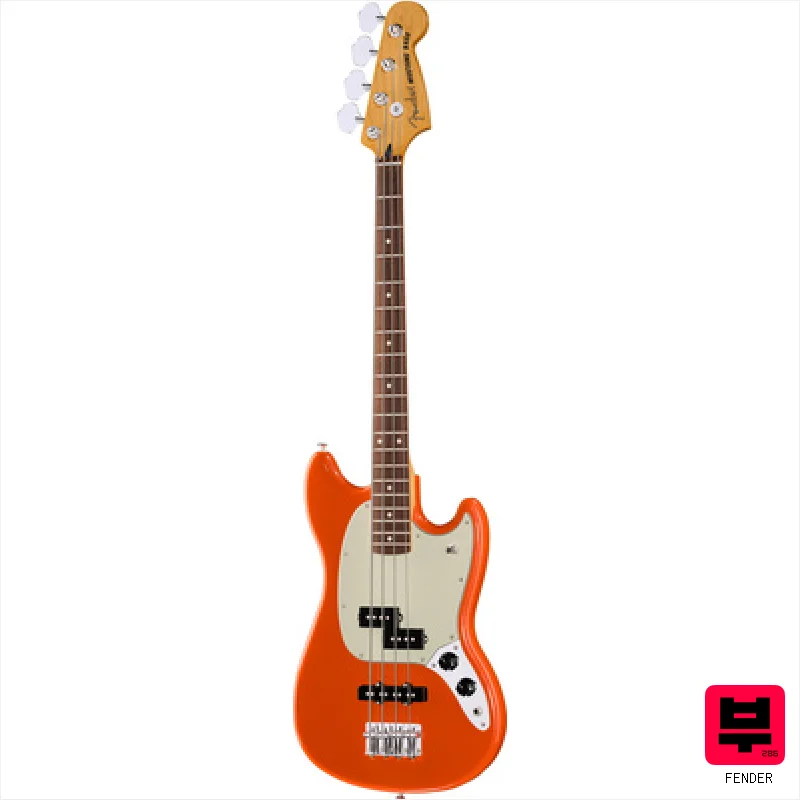
Fender Player II Mustang Bass RW RLO
- • Alnico 5 pickups give a warm, vintage tone
- • Short scale length makes the bass feel light and fast
- • Modern C neck profile is comfortable for large hands
- • Alder body pairs with maple neck for a solid feel
- • No active electronics means limited volume control
- • Missing a fifth string option for extended range
- • Weight is not listed, so heft is unknown
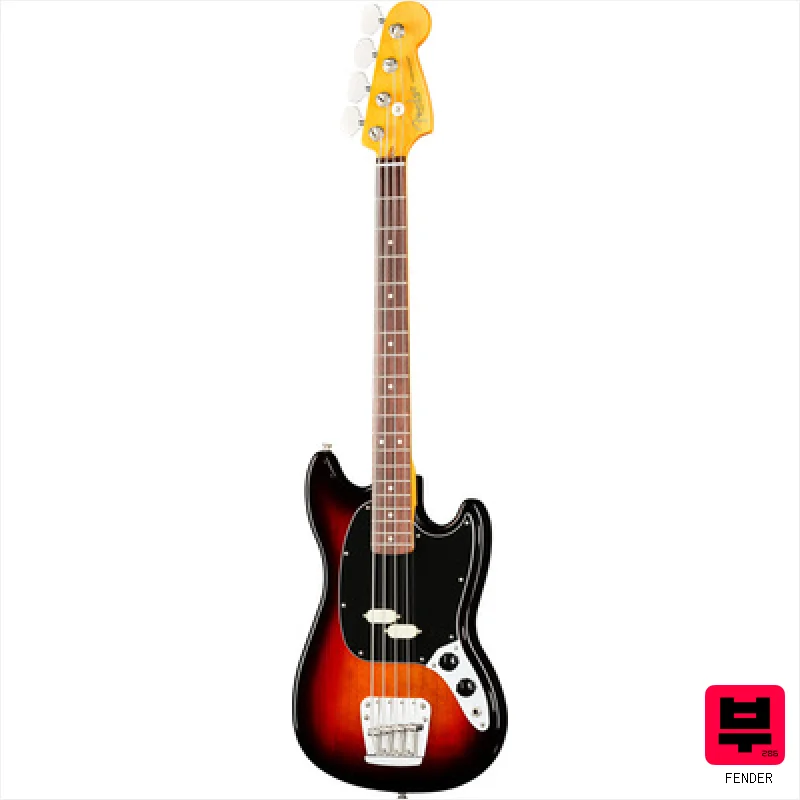
Fender Am Pro Clsc Mustang Bass 3TS
- • Sturdy bolt-on maple neck ensures stability and playability
- • Strings-thru-body bridge design adds sustain and volume
- • Modern C neck profile feels comfortable for fingerstyle
- • Split single coil pickup offers clear, tight bass tone
- • No active electronics means less output control
- • Rosewood fretboard may need regular oiling
- • Single volume control lacks individual pickup blending
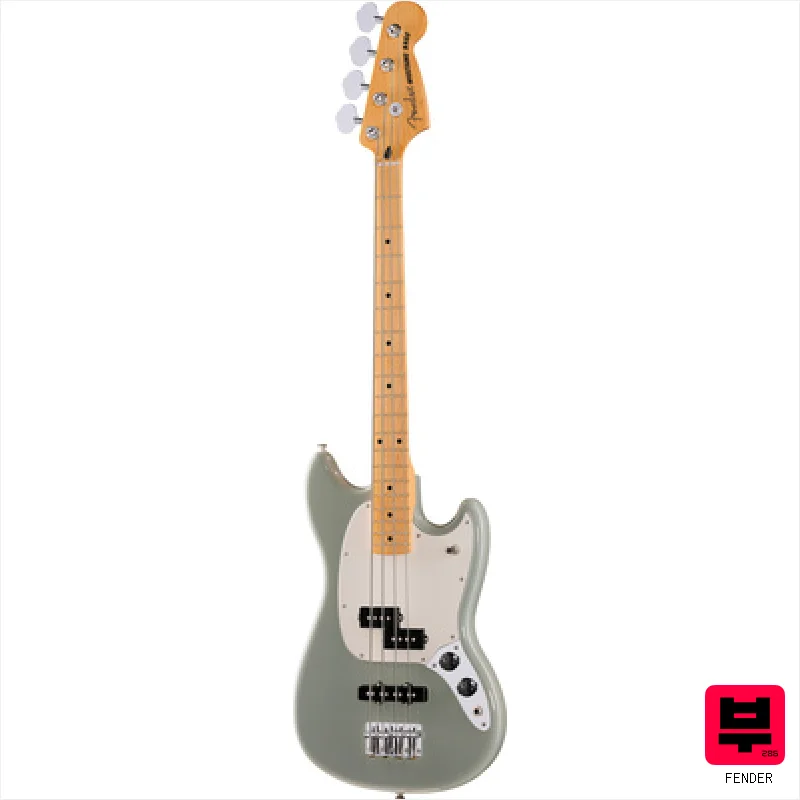
Fender Player II Mustang Bass MN CGR
- • Alnico 5 pickups offer bright, articulate tone for cutting through the mix.
- • Modern C neck profile provides a comfortable, fast playing feel.
- • Short scale length keeps the action low for effortless fretting.
- • Alder body pairs with maple neck for a balanced, punchy sound.
- • No active electronics to boost low-end output or extend frequency.
- • Single coil pickups may need shielding in noisy venues.
- • Missing detailed weight data makes shipping and comfort uncertain.
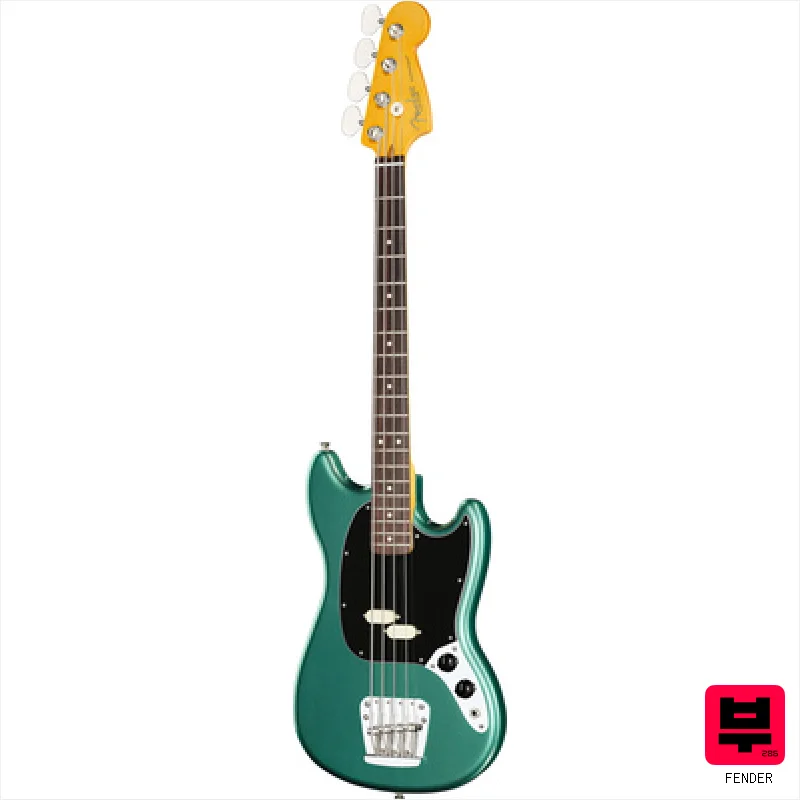
Fender Am Pro Clsc Mustang Bass FSGM
- • Solid alder body resists feedback in loud venues
- • Bolt-on maple neck offers stiff, stable tuning
- • Coastline split coil delivers punchy, cutting tone
- • Strings-thru-body bridge keeps strings perfectly straight
- • No weight spec listed for heavy players
- • Vintage heads feel dated compared to modern options
- • Single pickup limits tone variety compared to 4-band models
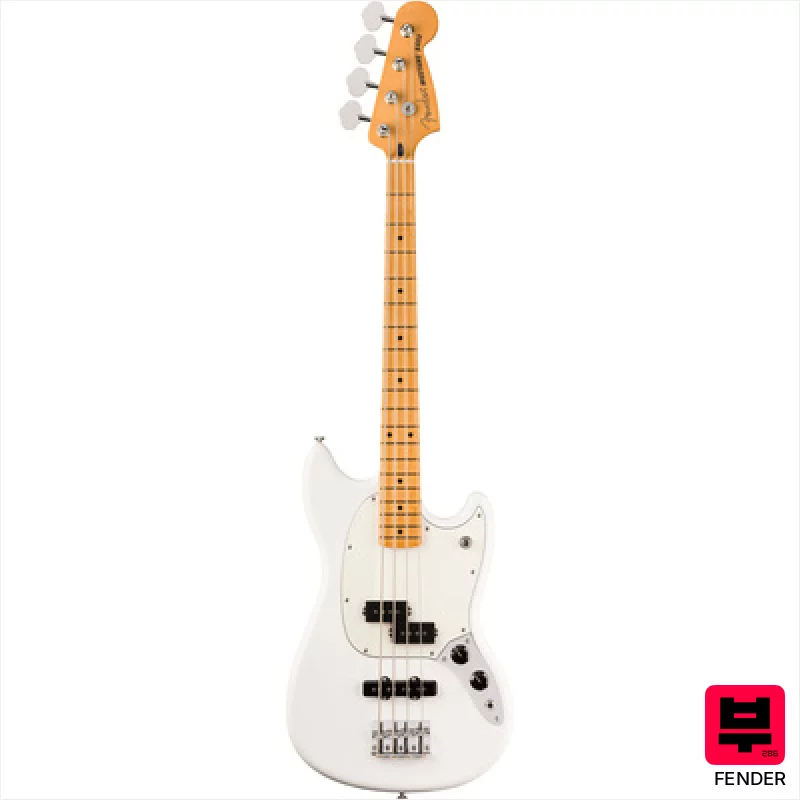
Fender Player II Mustang Bass MN PWT
- • Alder body delivers a balanced, resonant tone with good sustain.
- • Modern C neck profile offers comfortable playability for various hand sizes.
- • Split-coil Precision pickup provides a warm, punchy low-end response.
- • 4-saddle bridge enhances tuning stability and intonation accuracy.
- • Maple fretboard can feel a bit snappier than rosewood for some players.
- • Short scale might feel cramped for bassists with larger hands or longer fingers.
- • Polar White finish shows fingerprints easily, requiring frequent cleaning.
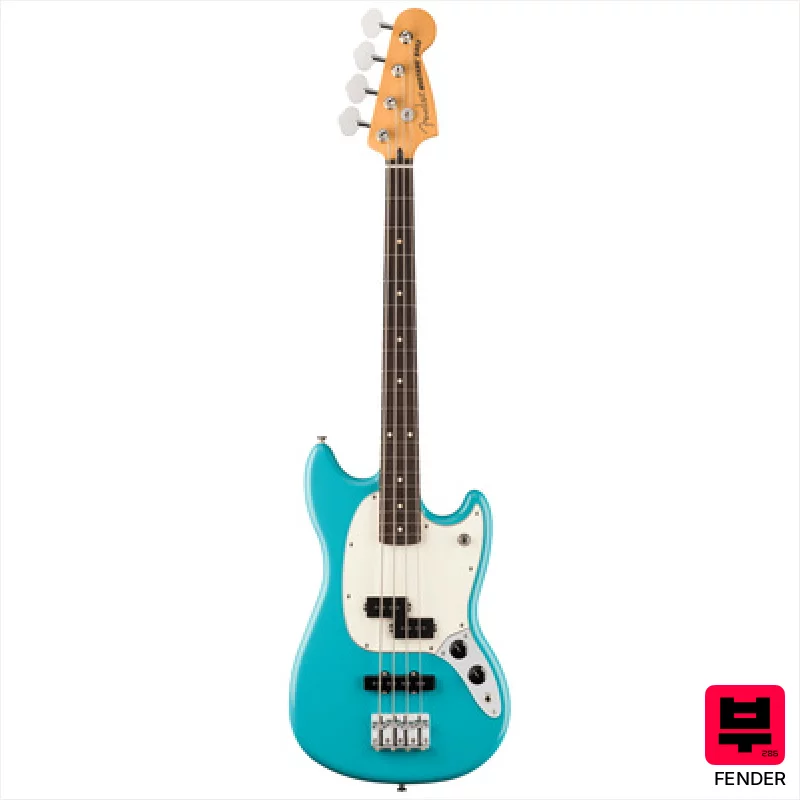
Fender Player II Mustang Bass RW AQB
- • Alder body provides a balanced, resonant tone with good sustain.
- • Modern C neck profile is comfortable and fast for a wide range of players.
- • Split Precision pickup delivers a unique, punchy, and articulate low-end.
- • 4-saddle bridge enhances tuning stability and intonation accuracy.
- • Short scale may feel cramped for players with larger hands or longer fingers.
- • Rosewood fingerboard can feel slightly sticky compared to maple alternatives.
- • Aquatone Blue finish, while attractive, might not appeal to all aesthetic preferences.
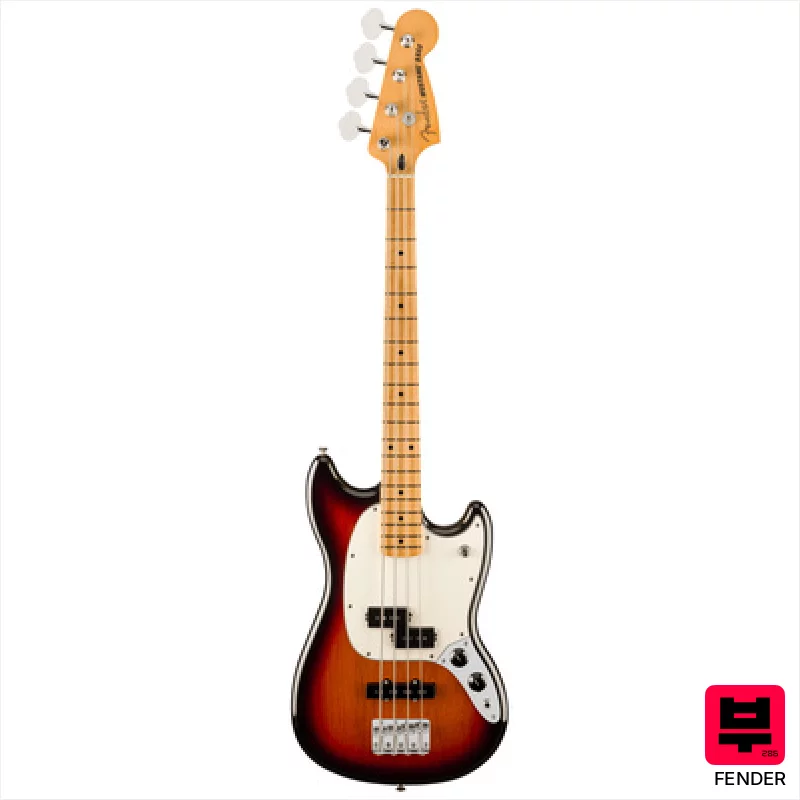
Fender Player II Mustang Bass MN 3TS
- • Alder body provides a balanced, resonant tone with good sustain.
- • Split Precision pickup delivers a unique, growly character and surprising versatility.
- • Modern C neck profile is comfortable and fast for a wide range of playing styles.
- • 4-saddle bridge enhances tuning stability and intonation accuracy.
- • Short scale might feel cramped for players with larger hands or longer fingers.
- • Maple fretboard can be a bit 'snappy' sounding compared to rosewood alternatives.
- • 3-Ply pickguard feels a little less premium than some higher-end options.
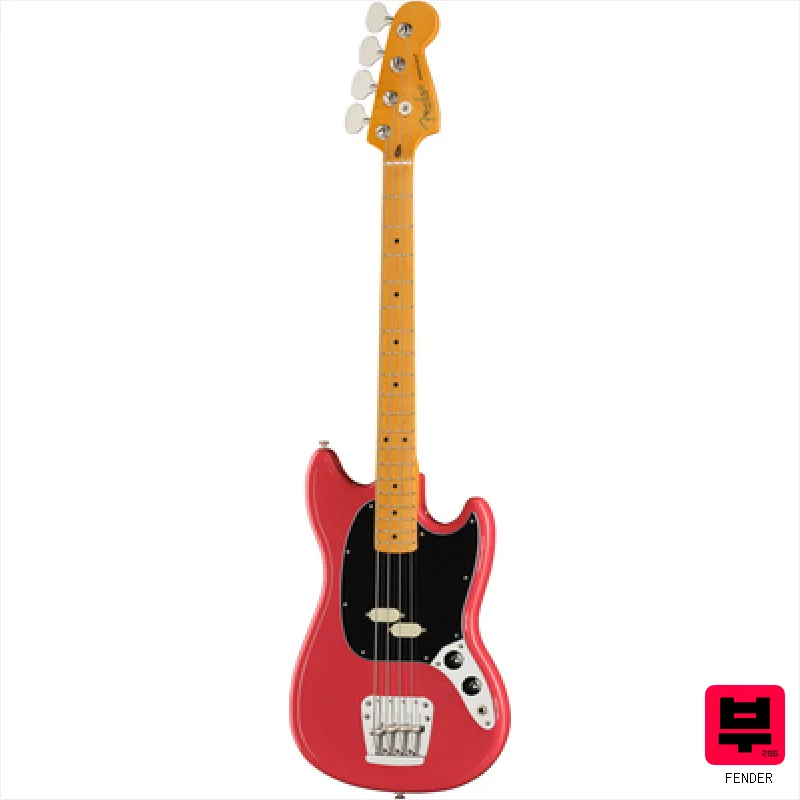
Fender Am Pro Clsc Mustang Bass FDKR
- • Solid alder body offers a balanced, mid-focused tone.
- • Maple bolt-on neck ensures stable tuning and fast play.
- • Split single coil pickup delivers clear, punchy low end.
- • Strings-thru-body bridge design adds strong bottom end.
- • No weight listed makes carrying feel uncertain.
- • Modern C profile might feel small for some hands.
- • Synthetic bone nut lacks the smooth feel of real bone.

Fender JMJ Mustang Bass R.Worn RW BK
- • Alder body provides a balanced, resonant tone with excellent sustain
- • Custom Seymour Duncan pickups deliver a versatile range, from growl to clarity
- • Short 30in scale offers exceptional comfort and fast playing feel
- • Road Worn finish adds character and a vintage aesthetic appeal
- • Short scale might feel cramped for players with larger hands
- • Limited tonal flexibility compared to basses with more pickup configurations
- • Road Worn finish, while attractive, can be prone to showing wear more easily
Short Scale Basses by the numbers
Measured across all 98 models in this category, so «wide», «short» or «expensive» mean something you can check.
How to Choose the Best Short Scale Basses
Scale Length & Feel
The 30.5" scale is the key. It makes the strings easier to fret, especially for players with smaller hands or those who prefer a slinkier feel. That also means lower tension, which can be a plus or a minus depending on your playing style - less 'thump' but easier on the fingers.
Neck Profile
Fender's neck profiles vary wildly, even within short scale models. The 'C' shape is a classic, but a 'Slim C' can be almost too thin for some, while a 'P' neck offers more substance. It's all about what feels comfortable and allows you to play with speed and accuracy.
Pickup Voicing
Short scale basses often have a rounder, warmer tone due to the shorter string length. Fender's pickups can range from bright and articulate (think early StingRays) to thick and woolly. Finding the right voicing for your genre is crucial - a scooped mid-range won't work for Motown.
Body Wood & Construction
Alder is the usual suspect for Fender basses, giving a balanced tone. Bolt-on necks are common, which are perfectly serviceable, but a neck-through construction (rare in short scales) will generally offer more sustain and a smoother feel.
Hardware & Reliability
Fender hardware can be a mixed bag. The tuners need to be decent enough to hold their tuning, and the bridge should offer good string spacing. Cheap hardware is a common corner cut, and it'll impact your gig-ability.
Buying Guide
Don't buy into the 'short scale = beginner' myth. They're fantastic instruments for all levels. Watch out for overly bright pickups - they can be fatiguing in a live setting. Used models are your friend; you can often snag a well-loved instrument for a fraction of the new price. Spend a little more on a bass with a comfortable neck profile - that's where you'll feel the biggest difference.
How This List Is Built
We don't play these instruments — we're a catalog, not a review desk, and we'd rather say so than pretend otherwise. This page covers 9 of 98 short scale basses from the Thomann catalogue, which is the largest single source of specification data in this category: 9 in detail, the rest listed with their specifications.
Position is computed, not curated. We parse the manufacturer's own description into actual values — nut width, scale, fret count, fingerboard radius, size, alloy — and rank on them: how many specifications a model has published, how many of them are measurable numbers, and how precisely it meets this page's criterion. A product image adds a little. Price is not a ranking signal: it tells you nothing about whether a neck fits your hand. The same inputs always produce the same order, so nothing here is shuffled to look fresh.
What this list is good for: narrowing a category down to a shortlist by spec and budget. What it isn't: a substitute for hearing an instrument. Before you buy, read hands-on reviews and, where you can, play it. Full methodology.

