
Best AEA Ribbon Microphones 2026
Okay, so you're looking at ribbon mics? Smart move. Forget the hype - a good ribbon can add a warmth and character you just can't get from a condenser. But not all ribbons are created equal, and if you're serious about nailing that vintage vibe or getting a killer vocal tone, you need to check out AEA. They're carrying the torch for RCA heritage, but with modern refinements that'll blow you away.
Last updated: September 30, 2026
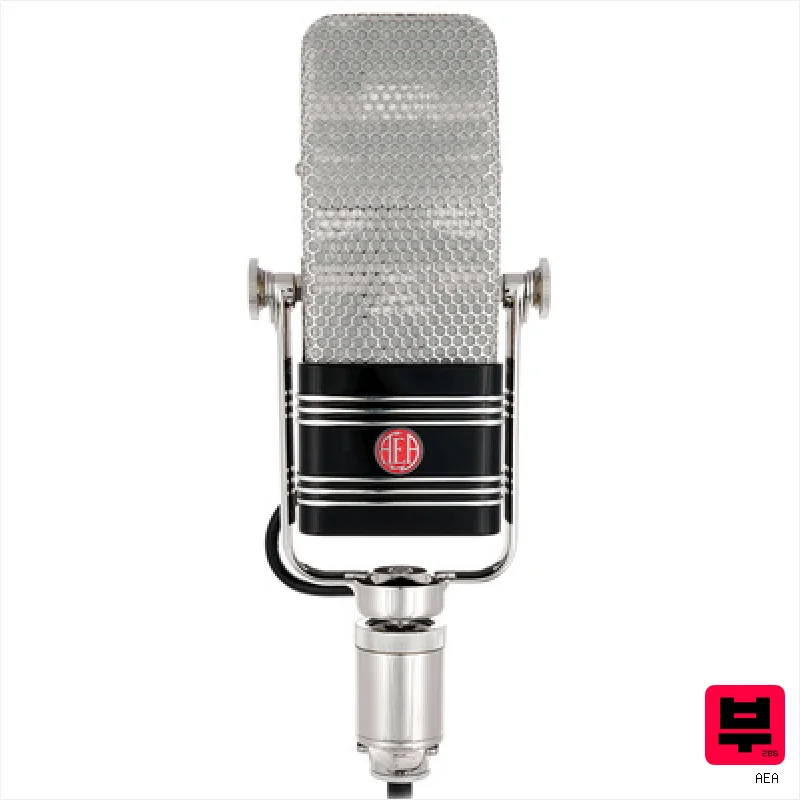
AEA R44CX
- • Modified transducer gives more output power than the standard model
- • Thin folded aluminium ribbon captures complex string and brass tones
- • Wide frequency range covers every musical instrument from bass to treble
- • Handmade in USA with a fixed cable and included carrying case
- • High price point limits budget buyers in the studio market
- • Heavy weight of 3 kg makes it less portable than smaller mics
- • Fixed 3 m cable length reduces flexibility for stage setups
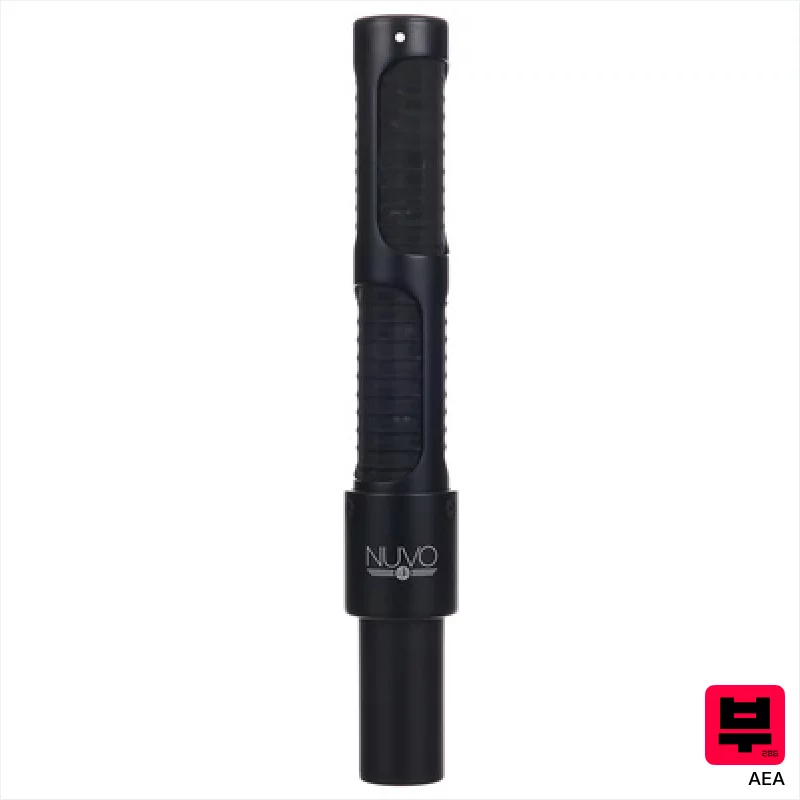
AEA Nuvo N28
- • Exceptional stereo imaging due to the fixed Blumlein configuration.
- • Thin, 1.8µm aluminum ribbons deliver a natural, detailed sound.
- • Robust build quality with meticulous hand-assembly in the USA.
- • Handles high SPLs with remarkable clarity, suitable for loud sources.
- • Fixed stereo pattern limits versatility for mono or other polar patterns.
- • Requires phantom power, potentially problematic with some older interfaces.
- • Significant size and weight makes it less portable and more demanding to mount.
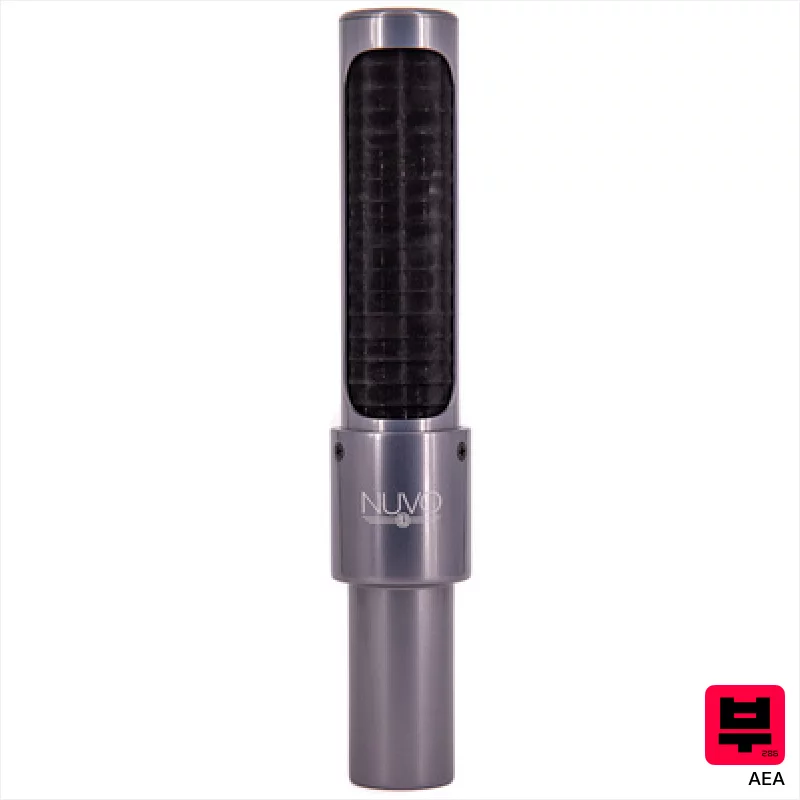
AEA N13 NUVO
- • Exceptional detail retrieval thanks to the folded aluminum ribbon.
- • Natural, smooth upper-midrange avoids harshness common in ribbons.
- • Reduced proximity effect simplifies mic placement and gain staging.
- • Robust construction and AEA's renowned build quality ensure longevity.
- • Requires phantom power, limiting compatibility with some older gear.
- • Figure-8 pattern demands careful room acoustics and mic placement.
- • Best suited for closer mic'ing; not ideal for distant vocal capture.
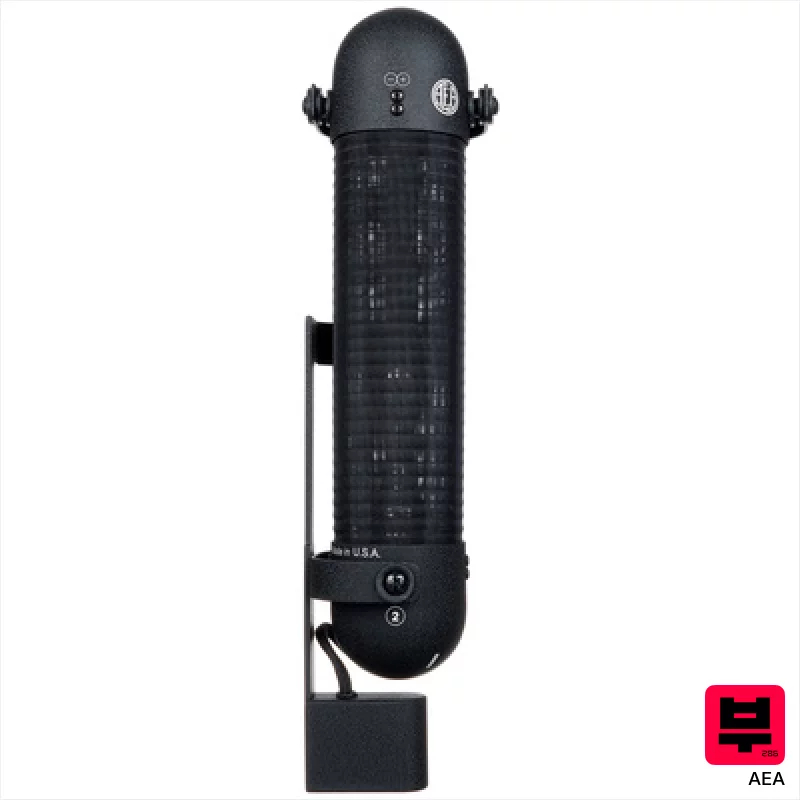
AEA R88 MK2
- • Exceptional stereo imaging due to precisely aligned ribbon elements.
- • The thin, 1.8µm aluminum ribbons offer a remarkably smooth high-end response.
- • Robust build quality with a substantial feel, indicative of its premium construction.
- • Mid-side configuration expands creative possibilities for stereo recording techniques.
- • Significant weight (2.6kg) makes it less ideal for mobile or overhead rigging.
- • Requires a high-quality preamp to fully realize its sensitivity and detail.
- • The figure-8 pattern can pick up unwanted room reflections if not properly positioned.
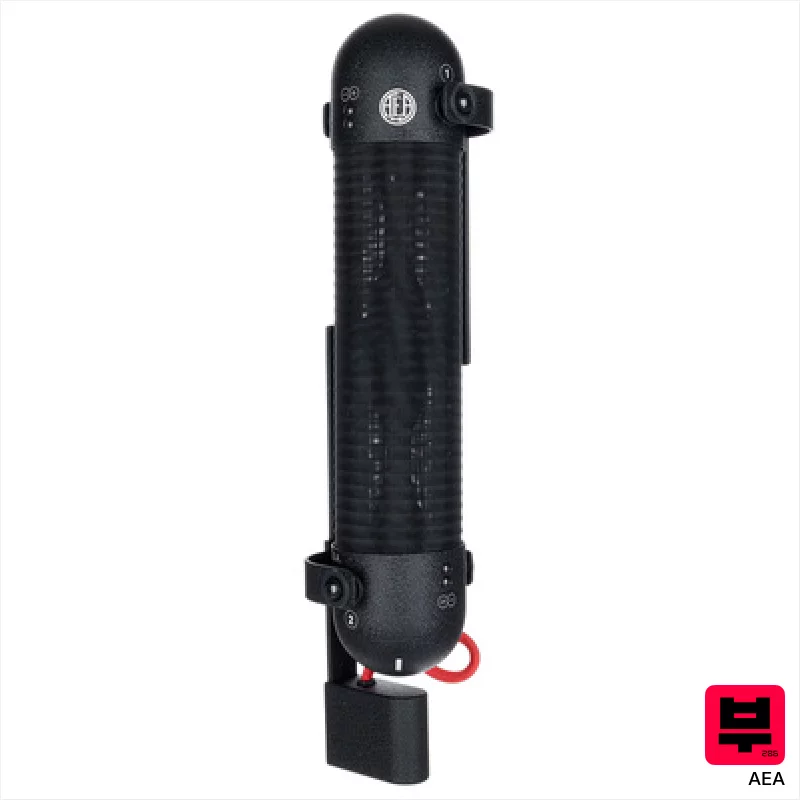
AEA R88A
- • Active circuit provides a significant level boost, easing gain staging challenges.
- • Thin 1.8µm aluminum ribbon delivers a remarkably smooth and detailed high-end response.
- • Figure-8 stereo configuration excels at capturing natural room ambiance and stereo width.
- • Robust construction and handmade quality ensure exceptional durability and longevity.
- • Significant weight (2.8kg) makes it less ideal for mobile or overhead mic setups.
- • Requires 48V phantom power, limiting compatibility with some older or tube-based gear.
- • High-end price point places it firmly in the professional recording studio category.
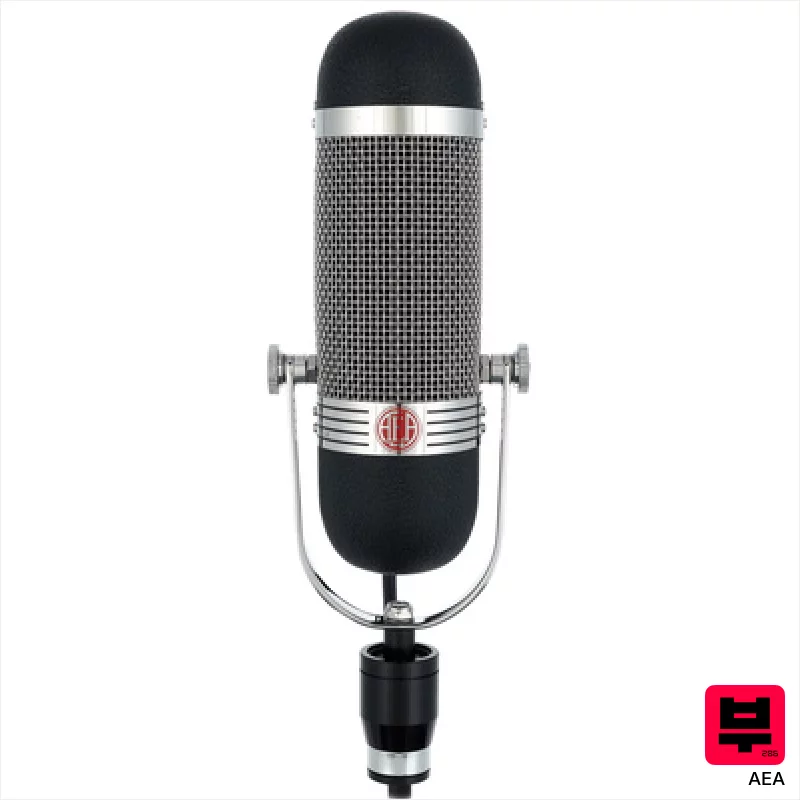
AEA R84
- • Exceptional detail retrieval thanks to the 1.8µm ribbon thickness.
- • Natural, smooth high-end response avoids harshness on brighter sources.
- • Figure-8 pattern excels in stereo recording and isolation.
- • Robust build quality with a fixed, durable 3m cable.
- • Relatively heavy, making it less ideal for mobile recording setups.
- • Fixed cable limits placement flexibility compared to XLR options.
- • Requires a clean preamp to fully realize its sonic potential.
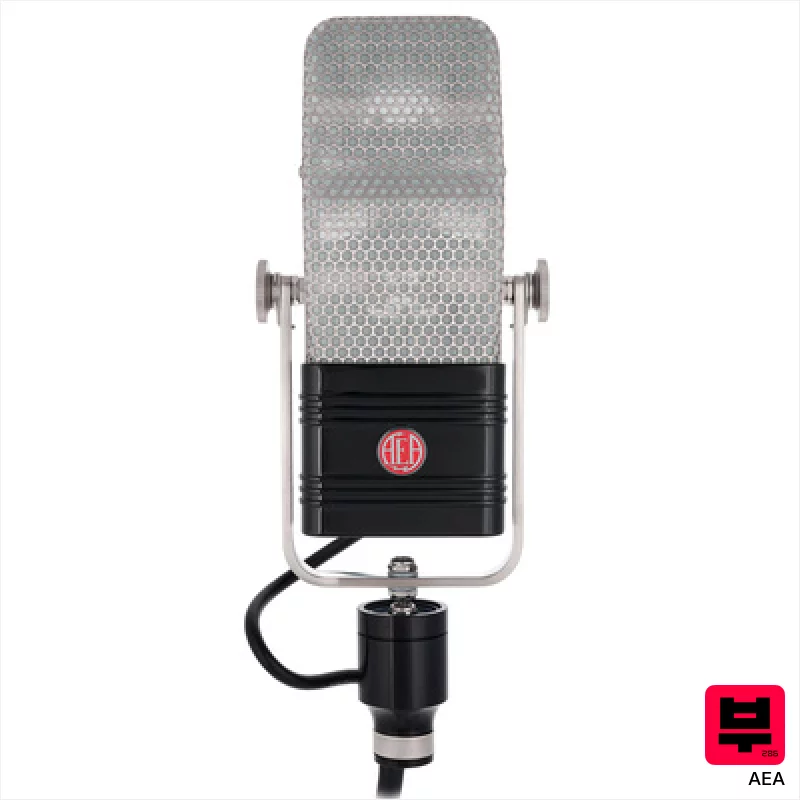
AEA R44CXE
- • Exceptional AEA R44CX sonic signature at a more accessible price point.
- • The folded aluminum ribbon delivers a remarkably detailed and natural sound.
- • Robust construction with a fixed, high-quality XLR cable for reliable performance.
- • Includes premium accessories – case, holder – adding significant value.
- • The fixed cable limits placement flexibility and increases potential for damage.
- • Its figure-8 pattern isn't universally suitable for all recording scenarios.
- • Significant weight makes it less ideal for mobile or overhead mic applications.
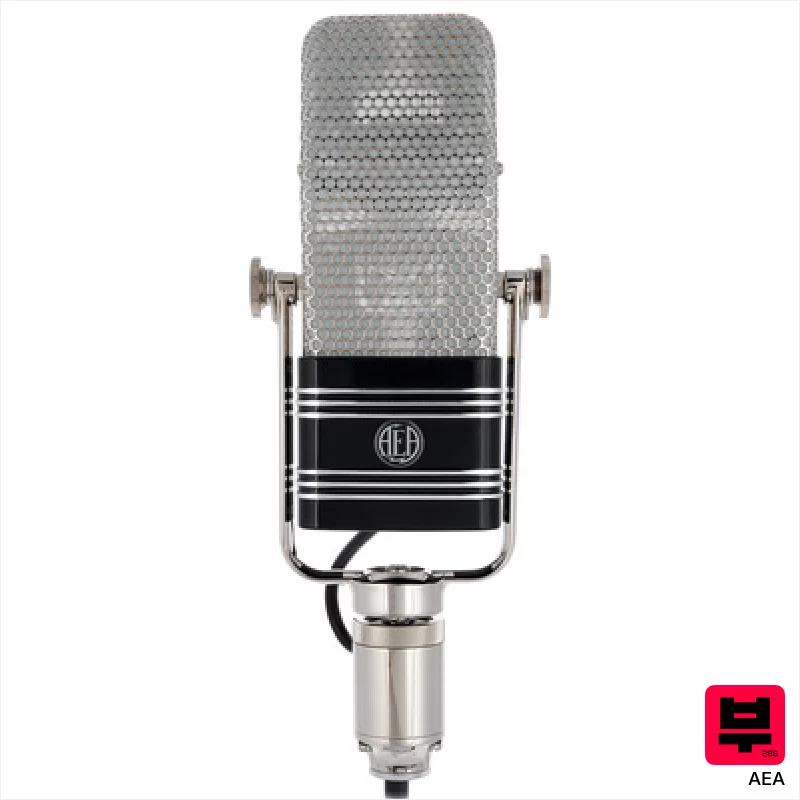
AEA R44C
- • Authentic RCA 44BX recreation delivers classic, warm vintage tone.
- • Hand-folded 1.8µm ribbon ensures exceptional detail and durability.
- • Robust build quality with a fixed, high-quality 3m XLR cable.
- • High SPL handling allows capturing loud sources without distortion.
- • Significant weight makes it less portable and requires a sturdy stand.
- • Fixed cable limits placement flexibility compared to some alternatives.
- • Polar pattern is omnidirectional, limiting directional control in noisy environments.

AEA N8 Stereoset NUVO
- • Handmade construction ensures exceptional build quality and consistent performance across the pair.
- • Active preamp design delivers a robust signal, minimizing noise and maximizing headroom.
- • Thin, 1.8µm aluminum ribbon provides a detailed, nuanced sound with smooth high-end response.
- • Figure-8 pattern excels in stereo recording, capturing accurate stereo imaging and natural ambience.
- • Requires 48V phantom power, limiting compatibility with some older or simpler interfaces.
- • Relatively large and heavy, potentially cumbersome for mobile or overhead mic applications.
- • Its focused sound profile may not be universally flattering across all vocal or instrument types.
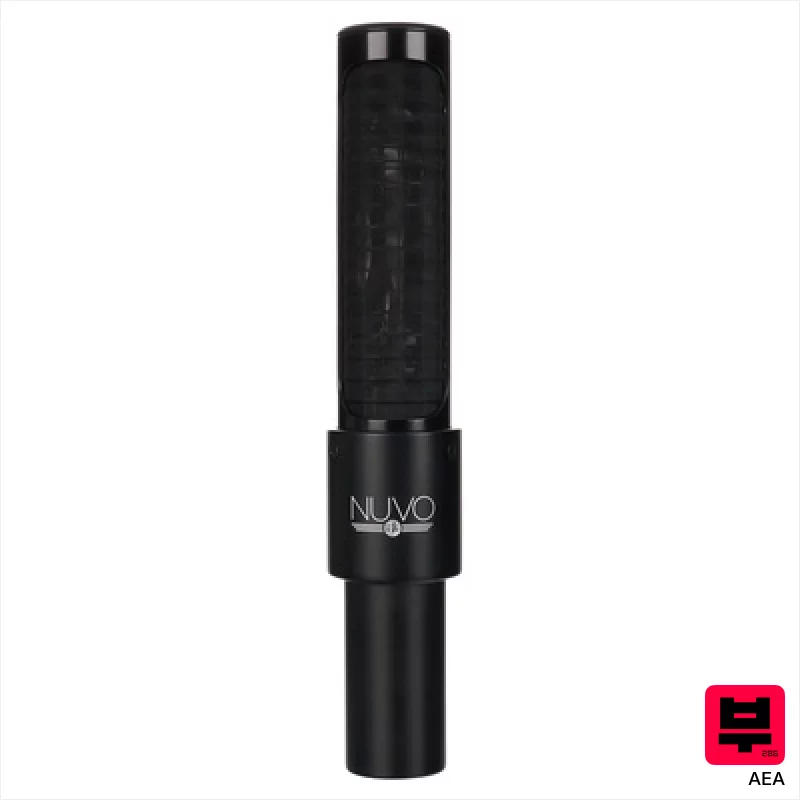
AEA N8 NUVO
- • Exceptional detail retrieval thanks to the 1.8µm aluminum ribbon.
- • Active preamp provides a robust signal without needing a preamp.
- • Figure-8 pattern excels in stereo and Blumlein configurations.
- • Handmade quality ensures consistent performance and longevity.
- • Significant size and weight can be unwieldy in smaller spaces.
- • Requires 48V phantom power, limiting compatibility with some older gear.
- • Figure-8 pattern isn't ideal for solo vocal recording in all situations.
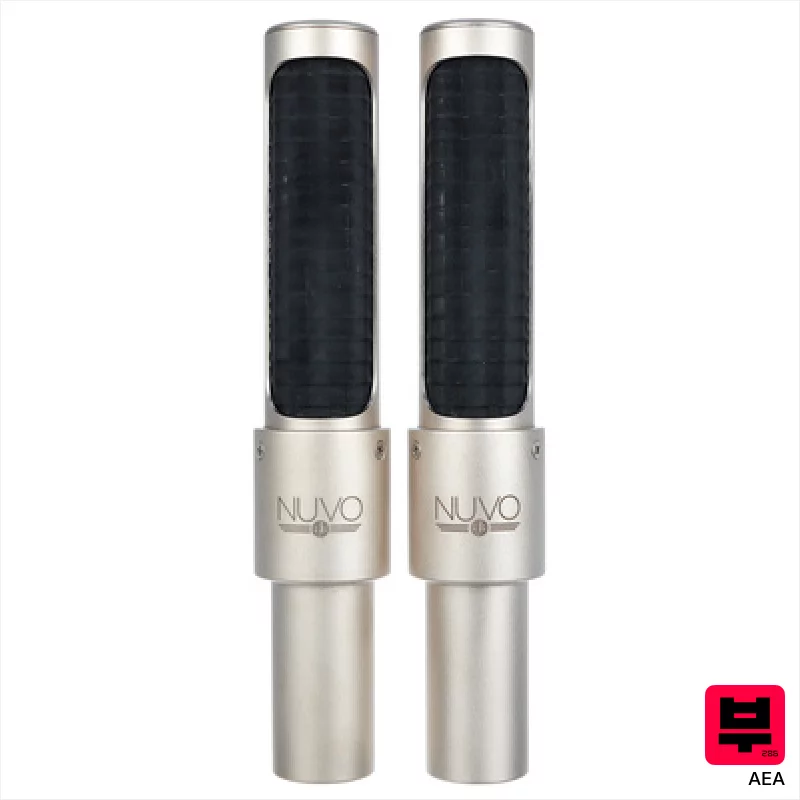
AEA N22 Stereoset NUVO
- • Exceptional transient response thanks to the folded ribbon design.
- • Remarkably low self-noise for a ribbon, allowing clean recordings.
- • Figure-8 pattern excels in stereo imaging and isolation.
- • The NUVO active circuit delivers a strong, usable output signal.
- • Requires 48V phantom power, adding complexity to your setup.
- • Its figure-8 pattern limits versatility for some recording situations.
- • Relatively large and somewhat unwieldy for smaller spaces.

AEA N22 NUVO
- • Handmade construction ensures quality control and consistent performance.
- • Its figure-8 pattern limits versatility for some stereo recording techniques.
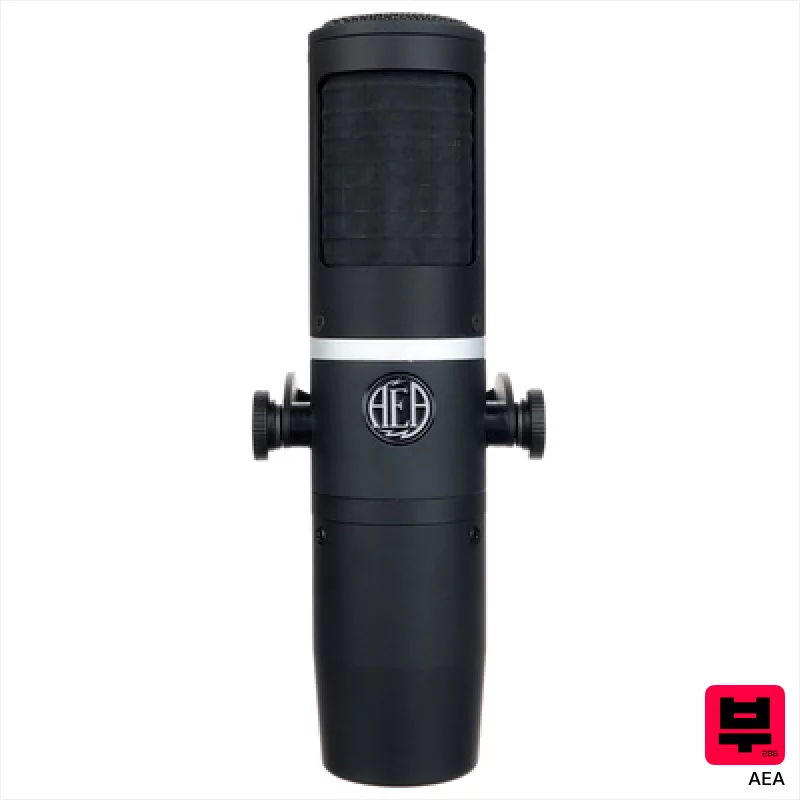
AEA KU5A
- • Exceptional clarity and detail due to the 1.8µm ribbon design.
- • Supercardioid pattern provides excellent isolation in live or tracking scenarios.
- • Reduced proximity effect minimizes boomy low-end in close mic applications.
- • Robust build quality; handmade in the USA with a durable fixed cable.
- • Supercardioid pattern can be challenging to manage for inexperienced users.
- • Requires 48V phantom power, adding to equipment needs and potential noise floor.
- • Fixed cable limits placement flexibility and may require custom solutions.
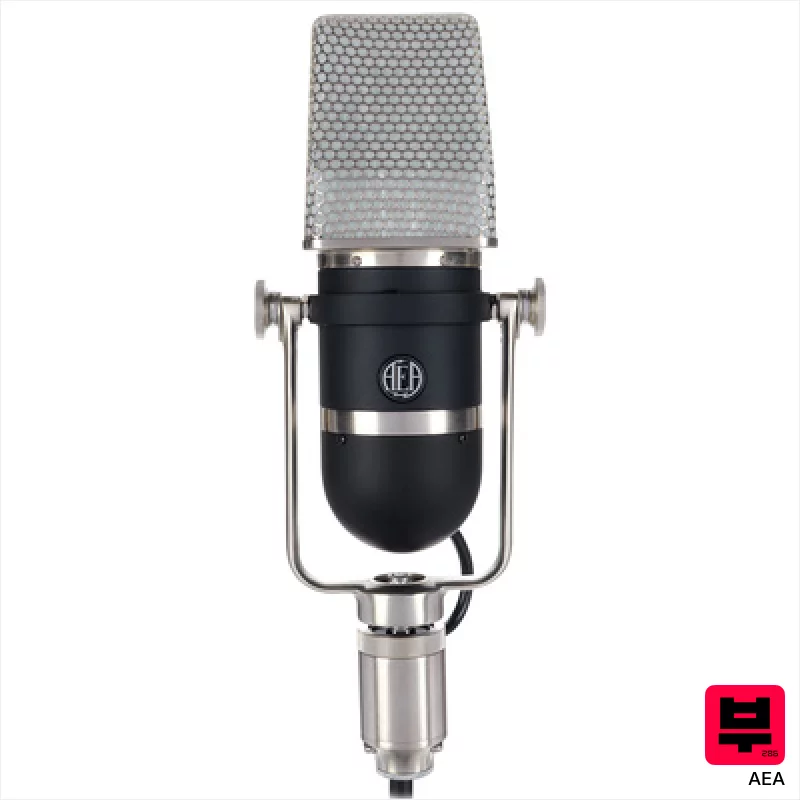
AEA KU4
- • Exceptional transient response thanks to the folded ribbon design.
- • Remarkably natural vocal reproduction, minimizing harshness.
- • Supercardioid pattern excels in isolation, crucial for modern tracking.
- • Robust build quality; clearly built to withstand studio and stage use.
- • High output impedance demands a high-quality, impedance-matched preamp.
- • Supercardioid pattern can be tricky to manage in less-than-ideal acoustic spaces.
- • Premium-priced, representing a significant investment for most studios.
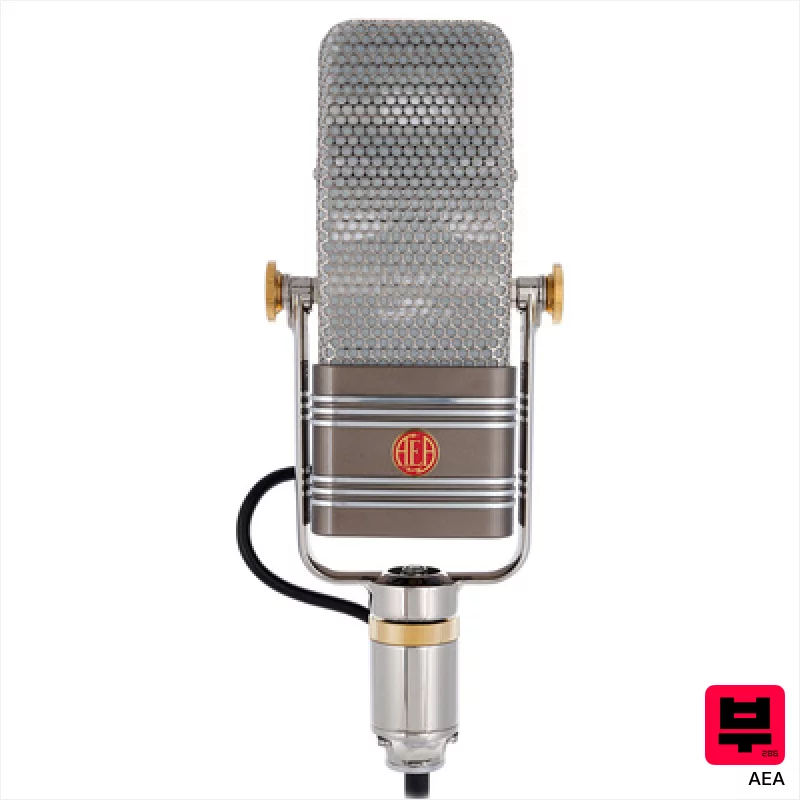
AEA A440
- • Exceptional transient response thanks to the folded ribbon design.
- • Active circuit provides significant headroom and output level.
- • Remarkably natural and detailed sound across a wide frequency spectrum.
- • Robust build quality with a fixed, high-quality XLR cable.
- • The substantial weight makes it less ideal for mobile recording situations.
- • Figure-8 pattern limits versatility in some recording environments.
- • Requires 48V phantom power, adding complexity to the signal chain.
Every ribbon microphones that matches
18 models match this page. The 15 above are covered in detail; the rest are listed here with their published specifications.
| # | Model | Specifications | Price |
|---|---|---|---|
| 16 | AEA R92 | Weight 0.893 kg | $1,425 |
| 17 | AEA R84A | Weight 1.3 kg | $1,941 |
| 18 | AEA N13 Stereoset NUVO | not published | $3,746 |
Ribbon Microphones by the numbers
Measured across all 63 models in this category, so «wide», «short» or «expensive» mean something you can check.
How to Choose the Best Ribbon Microphones
Heritage & Design
AEA's roots are deep in RCA's legendary designs. They're not just copying; they're reimagining the classics with modern materials and tolerances, retaining that classic ribbon character-that smooth, slightly dark response with a really pleasing low-midrange thump.
Transformer Magic
AEA's custom-wound transformers are a big deal. They're not just passing signal; they're actively shaping it, adding that extra bit of color and saturation that makes a ribbon mic sound like a ribbon mic. It's the difference between a clean signal and a signal with real personality.
Sensitivity & Headroom
AEA ribbons tend to be a little more sensitive than some other brands, which means you can get a fantastic signal with a lower noise floor. But that also means you need to watch your preamp gain - pushing them too hard can lead to distortion, though it's often a musical distortion, adding some grit to a snare or a vocal.
Build Quality & Durability
These aren't disposable mics. AEA builds them to last, with robust internal structures and careful attention to detail. They're gig-ready - I've seen them take a serious beating on stage and still sound fantastic. That said, ribbons are still delicate; handle them with respect.
Frequency Response & Articulation
AEA ribbons don't have that harsh, brittle high-end you sometimes get with condensers. Instead, you get a smoother, more natural response that really highlights articulation. Think of a clean electric guitar tone where you can hear every note, every bend - that's what AEA ribbons bring to the table.
Buying Guide
Don't cheap out on a ribbon mic - you'll regret it. The fragility is real, and the sonic compromises of budget options are usually glaring. AEA offers a range of models, so consider your needs: the R84 is a workhorse, the KU5A is a vintage recreation, and the R920 is a hypercardioid for isolation. And remember, a good preamp is crucial - you need something with enough clean gain to really let the mic breathe.
How This List Is Built
We don't play these instruments — we're a catalog, not a review desk, and we'd rather say so than pretend otherwise. This page covers 18 of 63 ribbon microphones from the Thomann catalogue, which is the largest single source of specification data in this category: 15 in detail, the rest listed with their specifications.
Position is computed, not curated. We parse the manufacturer's own description into actual values — nut width, scale, fret count, fingerboard radius, size, alloy — and rank on them: how many specifications a model has published, how many of them are measurable numbers, and how precisely it meets this page's criterion. A product image adds a little. Price is not a ranking signal: it tells you nothing about whether a neck fits your hand. The same inputs always produce the same order, so nothing here is shuffled to look fresh.
What this list is good for: narrowing a category down to a shortlist by spec and budget. What it isn't: a substitute for hearing an instrument. Before you buy, read hands-on reviews and, where you can, play it. Full methodology.

