
Best Reverb Pedals Under $50 2026
Look, we all want that shimmering, ethereal reverb wash, right? But dropping a couple hundred on a Strymon or a Universal Audio pedal isn't always in the cards. The good news is, you can get usable, even surprisingly good, reverb under $50 - you just need to know what to look for and what compromises you're making. This isn't about chasing boutique magic; it's about getting the job done for gigs, practice, and laying down basic tracks.
Last updated: September 29, 2026

tc electronic Skysurfer Reverb
- • Affordable entry into tc electronic's reverb quality.
- • Spring, Plate, and Hall modes offer distinct tonal character.
- • Compact size makes it pedalboard-friendly for most setups.
- • True bypass preserves your dry signal integrity when disengaged.
- • Limited reverb types compared to more expensive options.
- • No battery power, requiring a dedicated power supply.
- • Tone control’s impact is subtle, not a major tonal shaper.
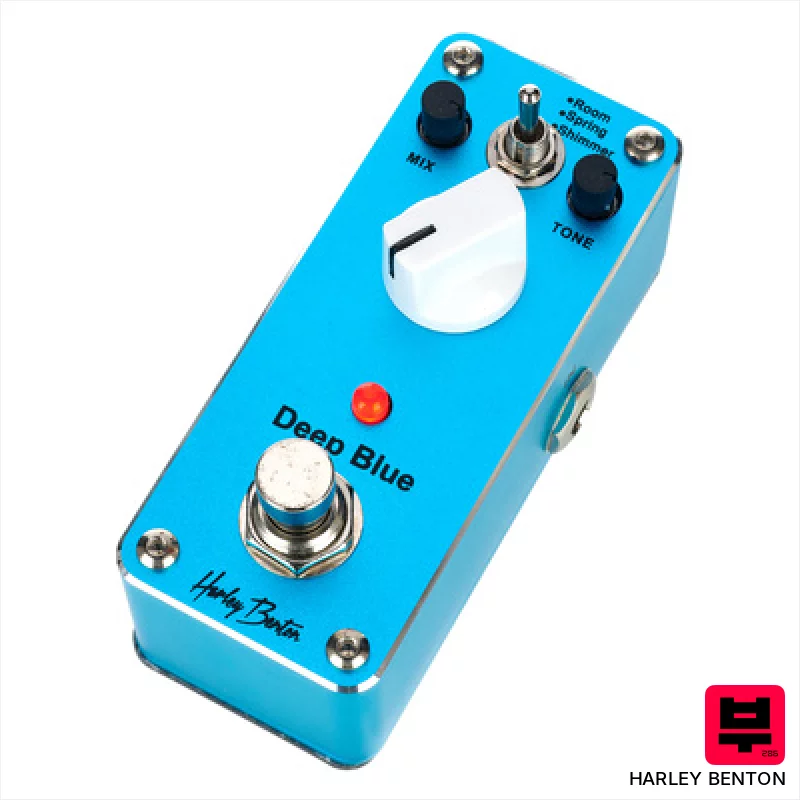
Harley Benton MiniStomp Deep Blue
- • Solid metal housing provides unexpected durability for the price.
- • The shimmer reverb is surprisingly lush and usable, not just a gimmick.
- • Compact size makes it ideal for cramped pedalboards and travel.
- • True bypass ensures signal integrity when the effect is disengaged.
- • The plastic knobs feel cheap and could be a point of failure long-term.
- • Limited control options restrict tonal shaping compared to higher-end reverbs.
- • Power supply not included – a common but still frustrating omission.
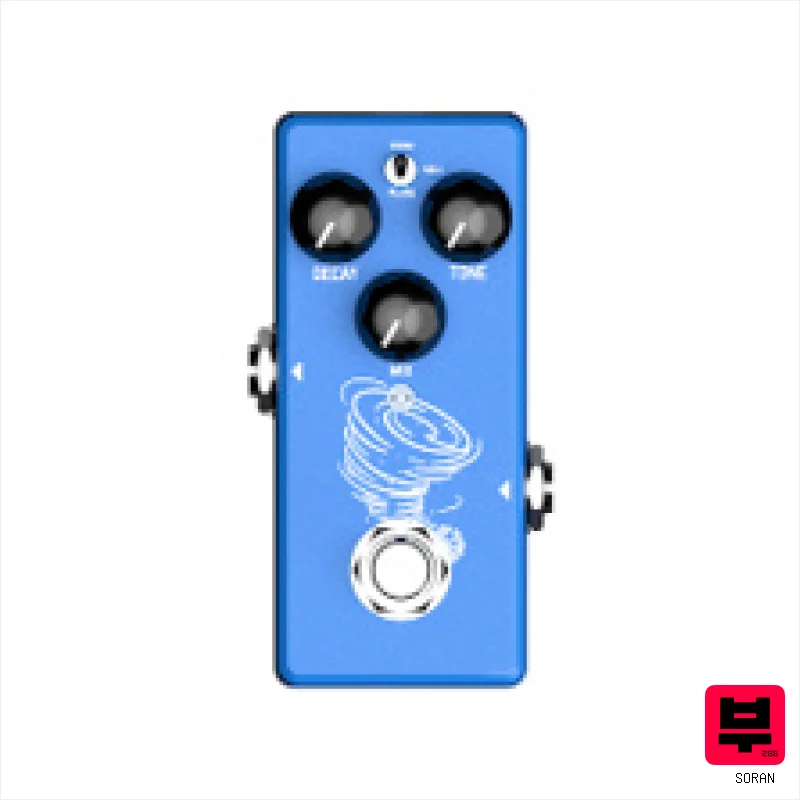
Soran Mini Digital Reverb
- • Three classic reverb sounds in a single compact pedal
- • Infinity mode creates endless reverb with one footstep
- • Dry kill lets you mute the reverb instantly
- • Separate mix control lets you adjust wet signal levels
- • Power adapter is not included in the box
- • No preset storage means manual sound selection each time
- • Small dimensions may feel cramped for some hands
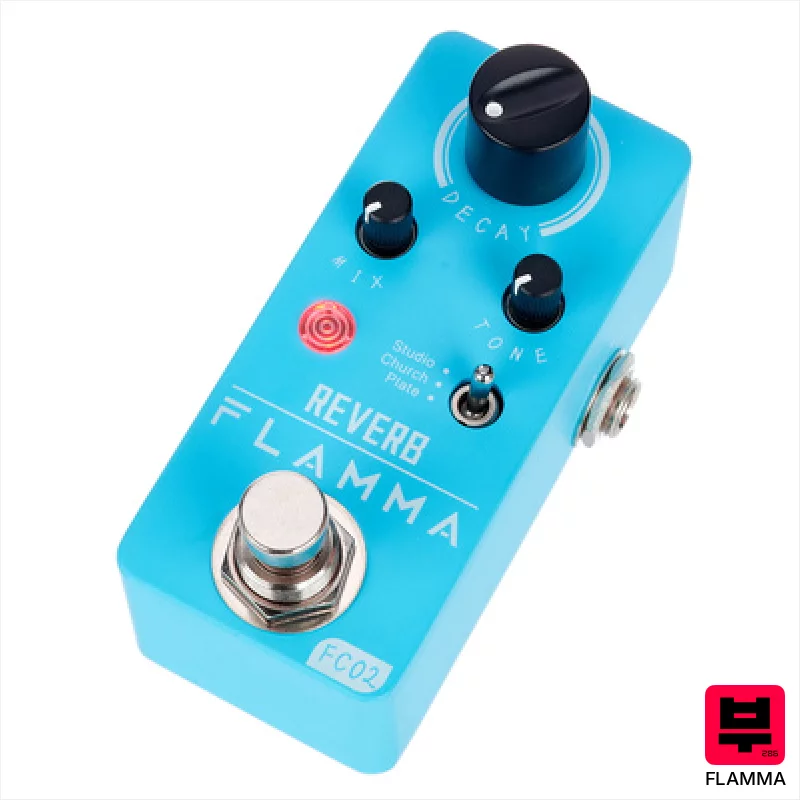
Flamma FC02 Reverb
- • Metal enclosure offers surprising robustness for the price point.
- • Three reverb types provide a decent range of tonal coloration.
- • Real bypass ensures signal integrity when the effect is disengaged.
- • Compact footprint minimizes pedalboard real estate consumption.
- • Limited control options restrict nuanced reverb shaping.
- • Power supply not included adds to the initial investment.
- • Reverb algorithms lack the depth and complexity of higher-end units.
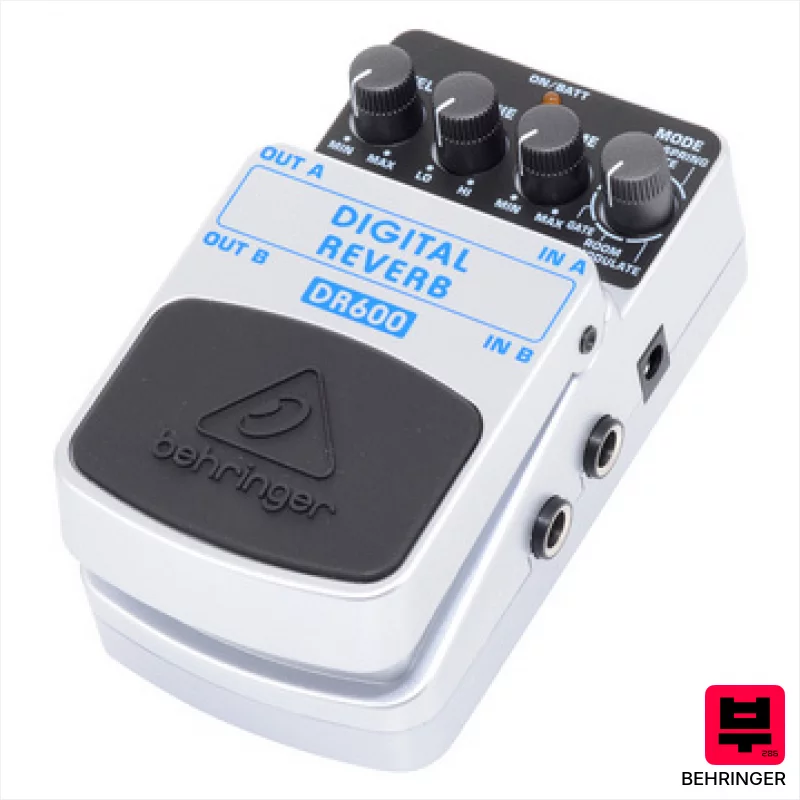
Behringer DR600 Digital Reverb
- • Surprisingly lush spring and plate reverbs for the price
- • Compact footprint ideal for crowded pedalboards
- • Simple controls offer immediate, usable sounds
- • Decent stereo imaging for basic ambience creation
- • Plastic enclosure feels noticeably cheap and fragile
- • Limited preset storage restricts experimentation
- • Tone controls lack nuance, sounding somewhat muddy
Reverb Pedals by the numbers
Measured across all 5 models in this category, so «wide», «short» or «expensive» mean something you can check.
How to Choose the Best Reverb Pedals
Sound Quality
Let's be real, this is priority one. We're looking for usable decay times, a reasonably natural shimmer (or a convincing simulated one), and a lack of harsh digital artifacts. Don't expect lush, nuanced algorithms, but it shouldn't sound like a tin can either.
Algorithm Variety
At this price point, don't expect a ton of options. A spring, hall, and maybe a plate are usually the best you can hope for. The key is how well those algorithms are implemented - are they muddy, or do they add space and depth?
Control Layout & Usability
Simple is good. Too many knobs can be overwhelming, and poorly spaced controls can be a pain on stage in low light. Intuitive controls make dialing in a usable sound quick and easy.
Build Quality
These pedals are often built on a budget, so expect thinner enclosures and potentially less robust knobs. While they might not be bombproof, they should be able to withstand the rigors of gigging without immediately falling apart.
Noise Floor
Budget components can sometimes introduce hiss or hum. A clean signal is crucial, especially when stacking effects or playing clean tones. We're listening for unwanted noise that detracts from the overall tone.
Buying Guide
At this price, you're making trade-offs. Don't expect pristine, studio-grade reverb. The algorithms will be simpler, the controls might be a little plasticky, and the noise floor might be slightly elevated. Focus on finding a pedal with a usable core sound - a spring that's not overly clangorous, a hall that doesn't sound like a tiled bathroom. Consider your needs: a gigging guitarist might prioritize durability and ease of use, while a bedroom producer might focus more on sonic character.
How This List Is Built
We don't play these instruments — we're a catalog, not a review desk, and we'd rather say so than pretend otherwise. This page covers 5 reverb pedals from the Thomann catalogue, which is the largest single source of specification data in this category: 5 in detail, the rest listed with their specifications.
Position is computed, not curated. We parse the manufacturer's own description into actual values — nut width, scale, fret count, fingerboard radius, size, alloy — and rank on them: how many specifications a model has published, how many of them are measurable numbers, and how precisely it meets this page's criterion. A product image adds a little. Price is not a ranking signal: it tells you nothing about whether a neck fits your hand. The same inputs always produce the same order, so nothing here is shuffled to look fresh.
What this list is good for: narrowing a category down to a shortlist by spec and budget. What it isn't: a substitute for hearing an instrument. Before you buy, read hands-on reviews and, where you can, play it. Full methodology.

