
Best Reverb Pedals Under $300 2026
Alright, so you need reverb and you're not looking to remortgage the house for it? Smart. Reverb's not just an effect; it's glue. It fills out your tone, gives you sustain, and makes you sound like you're playing in a real space. This list focuses on pedals that deliver usable, inspiring reverb without breaking the bank - we're talking under $300, and we'll talk about what you realistically get for that kind of money.
Last updated: September 30, 2026

Walrus Audio Slö Multi Texture Reverb
- • Dark mode’s octave effect adds surprising low-end depth.
- • Rise mode creates beautifully swelling, ethereal textures.
- • The Sustain switch is genuinely useful for dramatic transitions.
- • Walrus Audio’s signature robust enclosure feels built to last.
- • The modulation options, while creative, can feel a bit limited for complex sound design.
- • The 'X' control's functionality changes significantly between modes, requiring adjustment.
- • The Slö's footprint is larger than some competing reverb pedals.
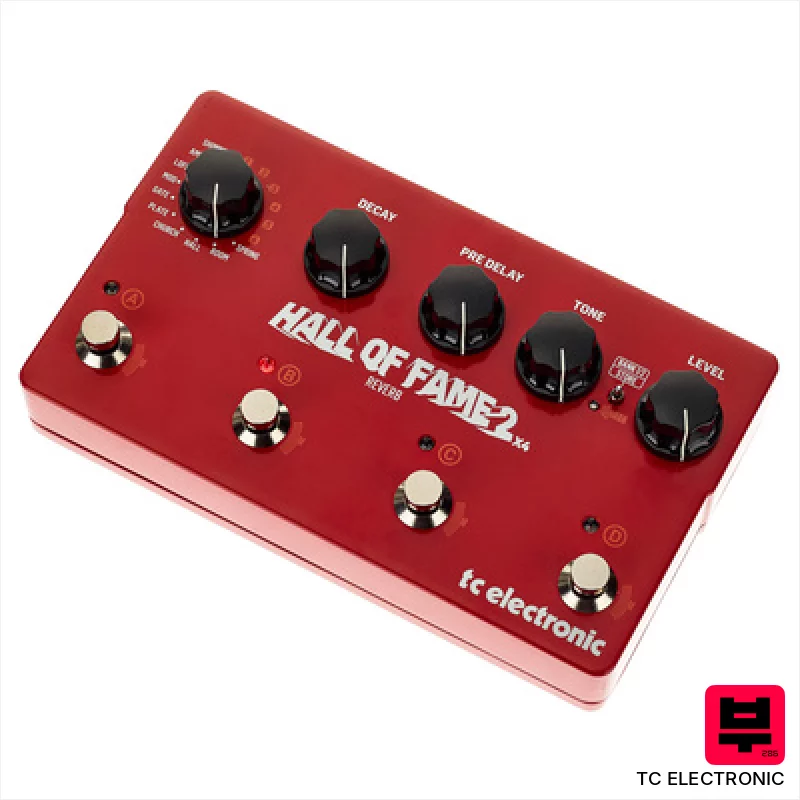
tc electronic Hall of Fame 2x4
- • Four footswitches offer immense flexibility for live performance
- • TonePrint technology allows for custom reverb sounds via app
- • Analog dry through preserves your guitar's natural signal integrity
- • Stereo inputs/outputs create expansive, immersive reverb spaces
- • The 4 push buttons feel a bit cheap compared to the rest of the build
- • The menu navigation can be slightly cumbersome for quick adjustments
- • Physical size might be restrictive for very small pedalboards

Behringer Spring Reverberation 646
- • Surprisingly convincing spring reverb emulation, captures the characteristic 'boing'.
- • Flexible input options (3.5mm & 6.3mm jacks) cater to diverse signal sources.
- • Eurorack module format offers integration for modular synth enthusiasts.
- • Aux and mic preamps add versatility beyond a standard reverb pedal.
- • Plastic enclosure feels a bit flimsy compared to higher-end spring units.
- • Limited control over decay time; rate is the primary shaping parameter.
- • Smaller jack sizes (3.5mm) might require adapters for some setups.
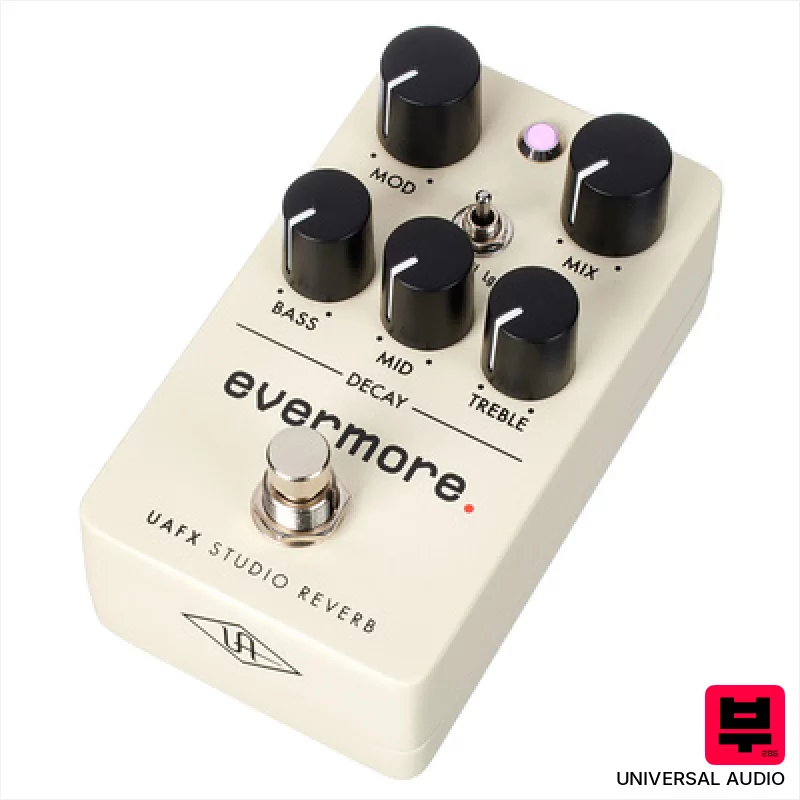
Universal Audio UAFX Evermore Studio Reverb
- • Excellent UA DSP delivers pristine, nuanced reverb emulations.
- • Mod control offers subtle to dramatic tonal shifts within each reverb type.
- • True bypass preserves your signal integrity when the effect is off.
- • Compact footprint saves pedalboard real estate without compromising sound.
- • Limited to three reverb algorithms; lacks broader sonic palette.
- • Requires a separate power supply, adding to overall cost.
- • Mod control's effect can be subtle, potentially underwhelming for some users.
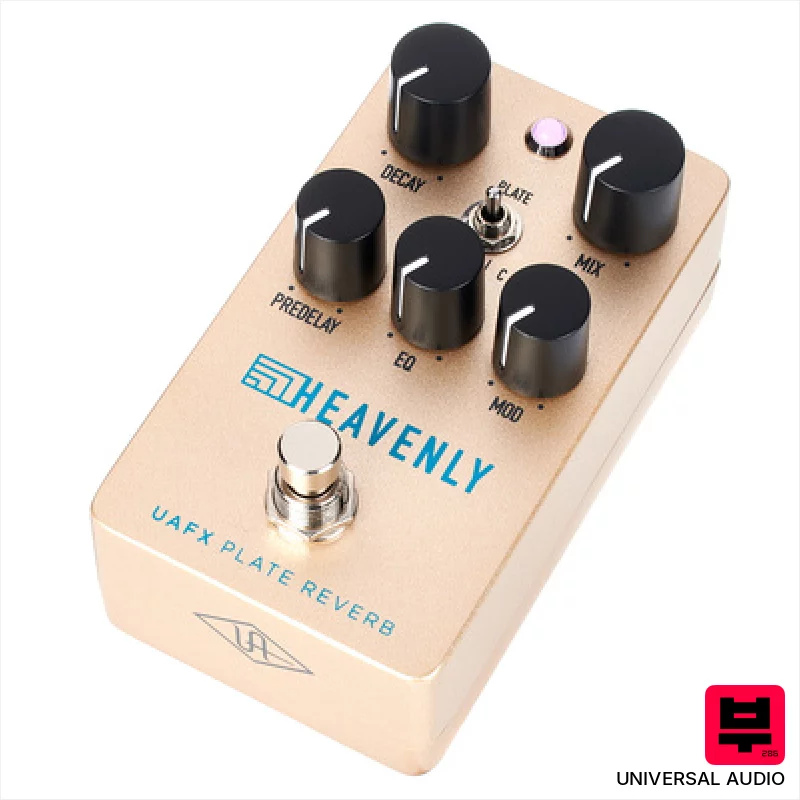
Universal Audio UAFX Heavenly Plate Reverb
- • Authentic plate reverb character, surprisingly deep and lush.
- • Three distinct plate voicings offer tonal flexibility.
- • Excellent EQ control allows shaping the reverb's frequency response.
- • Compact size makes it pedalboard-friendly without sacrificing sound.
- • Requires external power supply, adding to the overall cost.
- • Limited to plate reverb – lacks other reverb types.
- • Modern setting can be a bit sterile compared to vintage options.

tc electronic Skysurfer Reverb
- • Affordable entry into tc electronic's reverb quality.
- • Spring, Plate, and Hall modes offer distinct tonal character.
- • Compact size makes it pedalboard-friendly for most setups.
- • True bypass preserves your dry signal integrity when disengaged.
- • Limited reverb types compared to more expensive options.
- • No battery power, requiring a dedicated power supply.
- • Tone control’s impact is subtle, not a major tonal shaper.

EarthQuaker Devices Afterneath V3
- • The Flexi-Switch offers incredible versatility for modulating reverb parameters.
- • Diffuse control provides genuinely unique and characterful reverb textures.
- • Metal enclosure feels exceptionally robust; clearly built to last gigging.
- • Tails functionality creates lush, evolving soundscapes; very atmospheric.
- • The extensive parameter set can be overwhelming for beginners.
- • The pedal’s size is a bit bulky, may be an issue for smaller boards.
- • While versatile, it leans heavily into atmospheric/experimental sounds.
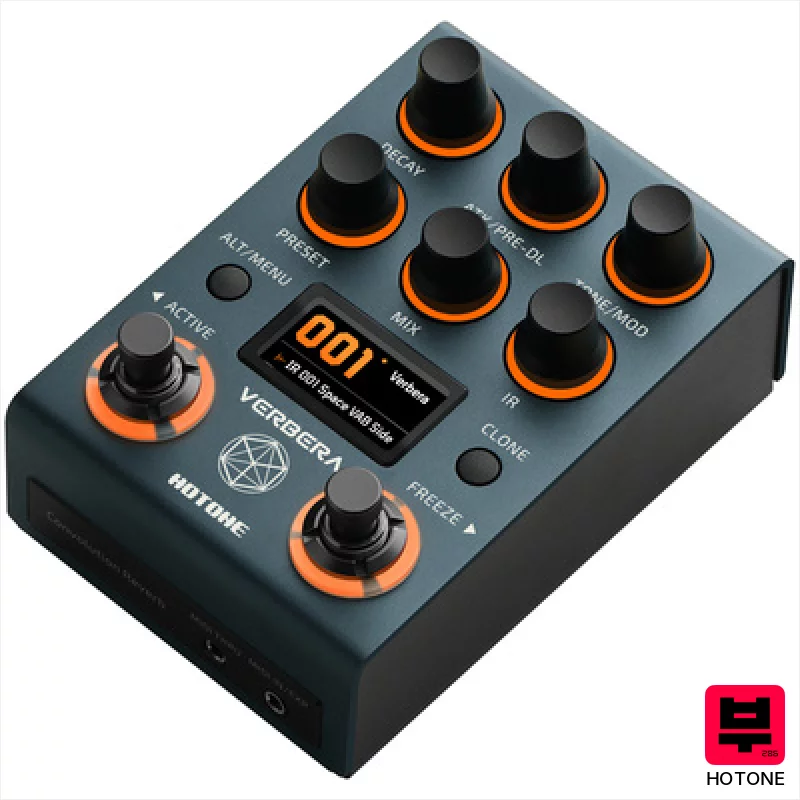
Hotone NC-200 Verbera
- • Massive IR library offers incredible tonal flexibility and realism
- • Stereo in/out and long reverb times create immersive soundscapes
- • Intuitive LCD display and preset system simplify complex adjustments
- • Clone function enables faithful replication of classic reverb units
- • Menu diving can be a bit cumbersome for quick parameter changes
- • Plastic enclosure feels less premium compared to higher-end reverb pedals
- • MIDI implementation is basic, lacking advanced control options
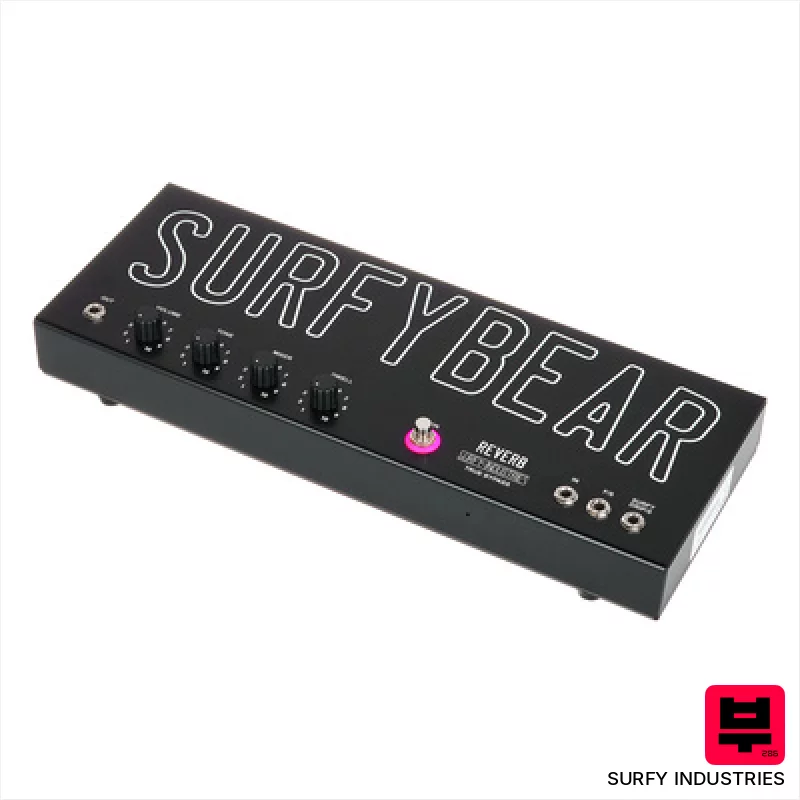
Surfy Industries Surfybear Metal Reverb 2.1 BK
- • Robust aluminum housing offers excellent protection and pedalboard stability
- • Accutronics inSurfy Panin reverb delivers that classic, dripping spring tone
- • Improved power connection eliminates polarity worries, a welcome convenience
- • SurfyDrip Switch compatibility unlocks unique mixer functionality for creative effects
- • The spring reverb sound is inherently limited in versatility compared to digital options
- • Aluminum housing adds to the pedal's weight; not ideal for travel rigs
- • Tone control is broad, lacking fine-grained sculpting capabilities

Boss RV-200 Reverb
- • Exceptional reverb algorithms rivaling dedicated units.
- • Destiny engine adds unique, evolving textures.
- • Robust Boss build quality – feels solid and reliable.
- • Comprehensive control set allows for nuanced shaping.
- • Interface can feel slightly overwhelming initially.
- • Power supply not included, adding to the overall cost.
- • Limited modulation options compared to some competitors.

Caroline Guitar Company Météore Lo-Fi Reverb 10th Anni
- • Keeps original signal completely analogue and unaltered
- • Adds controllable overdrive to the spring reverb sound
- • Adjustable decay controls make the effect sound bigger
- • Handmade in the USA with solid 10th Anniversary finish
- • No battery option required a dedicated wall power adapter
- • No built-in presets or memory for saved settings
- • Not a stereo pedal for left and right channel use
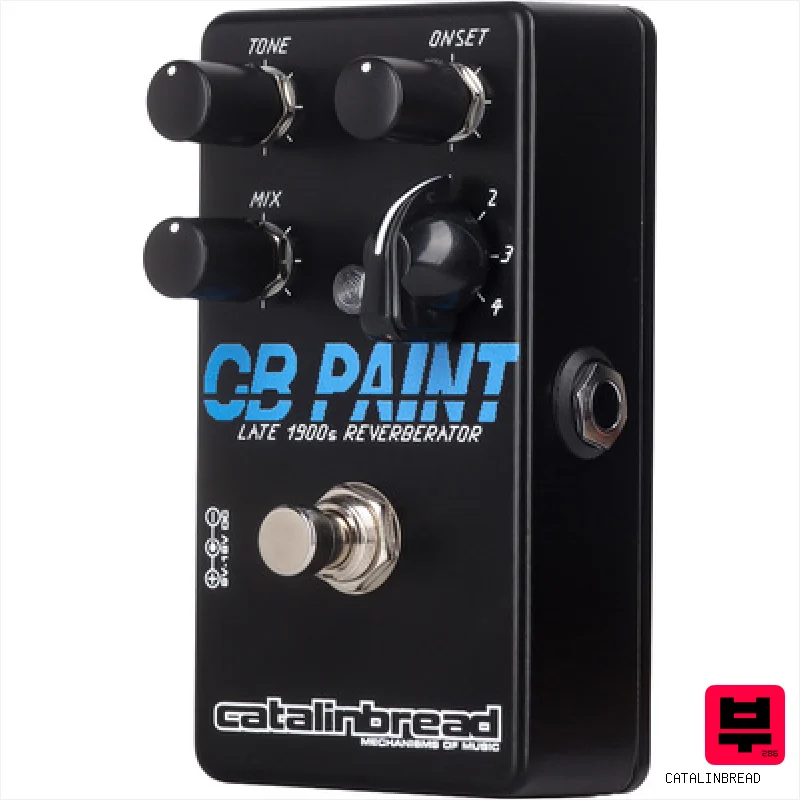
Catalinbread CB Paint Reverb
- • Directly copies the classic Alesis Microverb sound character.
- • Includes six classic reverb types plus gate and reverse modes.
- • Features a dedicated onset control for slower decay starts.
- • Offers adjustable low-pass filter for cutting low frequencies.
- • Mix control is limited to a single knob only.
- • No preset storage for saving custom reverb settings.
- • Lacks stereo output for wide spatial imaging.
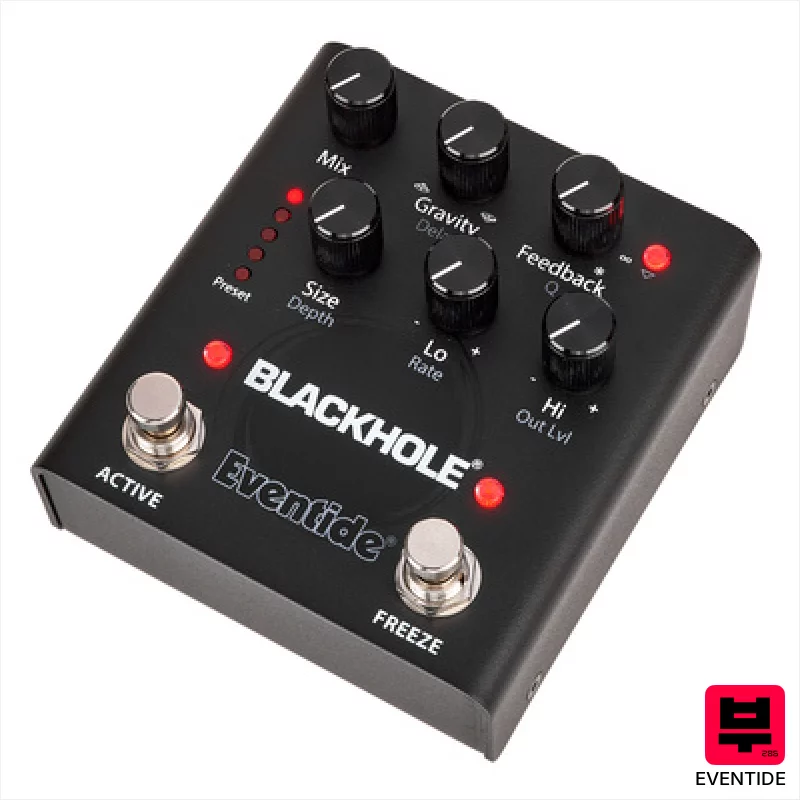
Eventide Blackhole Reverb Effectpedal
- • Unmatched spatial realism, truly feels like different environments
- • Freeze function is incredibly useful for ambient textures
- • EDM software unlocks immense sonic possibilities and customization
- • Guitar/line level switch provides exceptional versatility for various setups
- • Steep learning curve for mastering the EDM software's full potential
- • Can be resource-intensive, may introduce latency with certain interfaces
- • Relatively large footprint compared to smaller reverb pedals
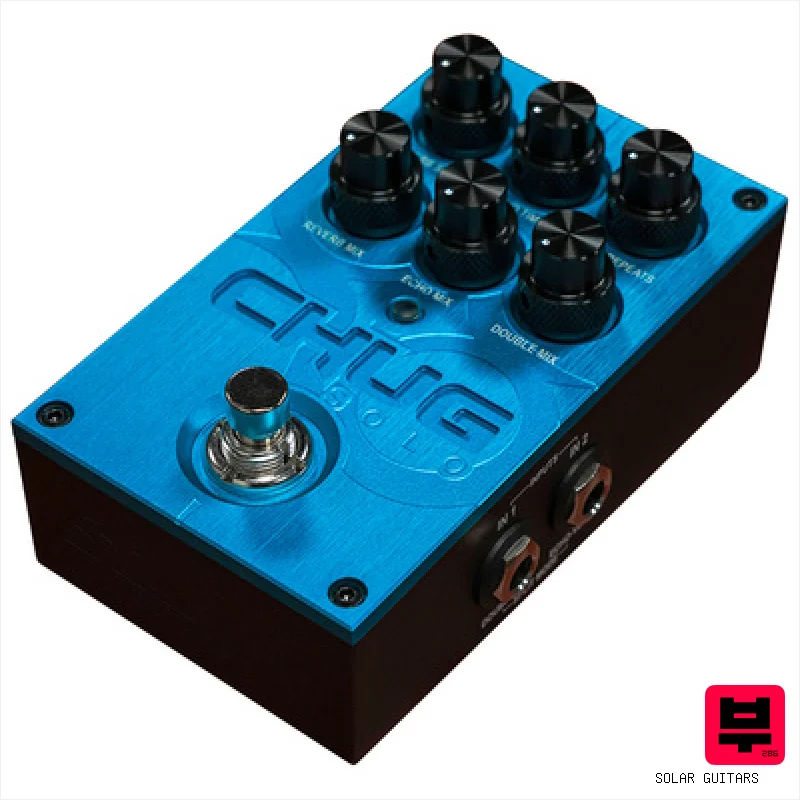
Solar Guitars Chug Solo
- • Combines doubler, echo, and reverb in a single unit
- • Features flexible routing and tap tempo for soloing
- • Compact design saves space on a crowded pedalboard
- • Offers distinct mix controls for each effect type
- • Requires external 9V power supply with no battery option
- • Lacks preset memory or digital saving capabilities
- • Limited control options compared to modern multi-effect pedals

Caroline Guitar Company Météore Lo-Fi Reverb
- • Caroline’s signature circuit design delivers unique, characterful reverb tones.
- • The 'Havoc' switch adds unpredictable, chaotic modulation for creative textures.
- • Handmade in the USA ensures meticulous build quality and component selection.
- • The analog dry signal path preserves your guitar’s core tone and dynamics.
- • The limited control set may not satisfy players needing extensive reverb customization.
- • Lacks stereo output, restricting its use in more complex stereo rigs.
- • The size, while compact, can still be a bit bulky for smaller pedalboards.
Every reverb pedals that matches
76 models match this page. The 15 above are covered in detail; the rest are listed here with their published specifications.
Reverb Pedals by the numbers
Measured across all 76 models in this category, so «wide», «short» or «expensive» mean something you can check.
How to Choose the Best Reverb Pedals
Algorithm Quality
This is the big one. Cheap reverb algorithms often sound thin, metallic, or just...artificial. We're looking for something with decent decay trails and a natural shimmer, even if it's not a convolution model.
Control Depth
A good reverb pedal isn't just 'on' or 'off'. We want controls for decay time, mix, and ideally, something to shape the tone - a tone knob, EQ, or even a simple modulation. This lets you dial in subtle room ambience or a massive, washed-out sound.
Noise Floor
Reverb inherently amplifies noise. A noisy reverb pedal will be a headache, especially in a quiet recording environment or playing with a clean amp. We're listening for hiss and unwanted artifacts.
Ease of Use
Too many knobs and menus can be overwhelming. A pedal that's intuitive and easy to dial in quickly is a huge win, especially when you're mid-gig and the sound guy is breathing down your neck.
Build Quality
Let's be honest, sub-$300 pedals aren't built like tanks. But they should still be reasonably durable for gigging. We're assessing the enclosure, footswitch feel, and overall construction - because a pedal that dies onstage is useless, no matter how good it sounds.
Buying Guide
At this price point, you're making trade-offs. Don't expect true convolution reverb (that's a higher-tier thing). What you will find are decent digital algorithms, often with a few different reverb types (spring, hall, plate). Watch out for pedals that sound overly digital or 'splattery' - those algorithms are often rushed. Pay attention to the mix control - a good one lets you blend the reverb subtly with your dry signal, which is crucial for keeping your signal from getting muddy.
How This List Is Built
We don't play these instruments — we're a catalog, not a review desk, and we'd rather say so than pretend otherwise. This page covers 76 reverb pedals from the Thomann catalogue, which is the largest single source of specification data in this category: 15 in detail, the rest listed with their specifications.
Position is computed, not curated. We parse the manufacturer's own description into actual values — nut width, scale, fret count, fingerboard radius, size, alloy — and rank on them: how many specifications a model has published, how many of them are measurable numbers, and how precisely it meets this page's criterion. A product image adds a little. Price is not a ranking signal: it tells you nothing about whether a neck fits your hand. The same inputs always produce the same order, so nothing here is shuffled to look fresh.
What this list is good for: narrowing a category down to a shortlist by spec and budget. What it isn't: a substitute for hearing an instrument. Before you buy, read hands-on reviews and, where you can, play it. Full methodology.

