
Best Powered Mixers for Portable Pa 2026
So, you're chasing that portable PA dream - singer-songwriter gigs in parks, small band rehearsals in garages, maybe even recording a quick acoustic set for YouTube. Forget those massive, rack-mounted beasts. We're talking about self-powered mixers you can sling in a gig bag and be ready to go. Finding the right one isn't just about wattage; it's about getting a usable sound, enough headroom, and features that don't leave you wrestling with cables under a dim stage light.
Last updated: July 15, 2026 • Next update: July 22, 2026

Behringer PMP 6000
- • Impressive power for its size; Class-D amps are efficient.
- • FBQ feedback detection is genuinely useful on stage.
- • Comprehensive effects processor adds creative flexibility.
- • The 24-bit preamps deliver surprisingly clean, low-noise performance.
- • Build quality feels plasticky; not a road warrior's dream.
- • EQ isn't the most refined; can sound harsh at higher settings.
- • Limited headroom at higher volume levels; clipping can be an issue.

Dynacord Powermate 1600-3 Bundle
- • Dynacord's build quality is legendary - robust, road-ready construction.
- • The 11-band summing EQ offers precise tonal shaping for complex rigs.
- • USB interface supports multi-track recording, a serious boon for live tracking.
- • Voicing filters per XLR input subtly tailor mic characteristics.
- • The bundled effects presets are limited; user customization is key.
- • The weight makes it less ideal for frequent portability; it's a serious piece of gear.
- • B-Master output lacks full flexibility for advanced recording workflows.

Behringer PMP 6000 Bundle
- • Impressive power for the size; Class-D amp efficiency is noticeable.
- • FBQ feedback detection is genuinely useful on stage.
- • The 24-bit effects processor adds versatility for live sound.
- • Multicore cable simplifies setup, saving time and cable clutter.
- • Build quality feels a bit plasticky; not as robust as higher-end mixers.
- • EQ isn't as precise or musical as more expensive options.
- • Voice Canceller function is a gimmick, not a practical tool.

Behringer PMP 1680S
- • Impressive power for its size, genuinely useful FBQ feedback detection
- • Solid build quality for the price point, feels surprisingly robust
- • Versatile effects processor adds significant creative possibilities
- • Rackmountable design allows for easy integration into existing setups
- • EQ isn't the most refined, can sound a little harsh at higher gain
- • Power output is peak, RMS figures are more realistic for practical use
- • Micro preamps are functional but lack the clarity of higher-end units

Omnitronic RM-1422 FXA
- • Compact 19” rack design maximizes space efficiency for mobile setups.
- • Built-in Bluetooth and USB player simplifies media playback for events.
- • Decent 24-bit effects processor offers basic creative sound shaping.
- • 8 mic preamps with phantom power support condenser mics for vocalists.
- • EQ is basic 2-band, limiting tonal sculpting flexibility.
- • Construction feels somewhat plasticky, hinting at budget materials.
- • Limited power output restricts suitability for larger venues or loud bands.
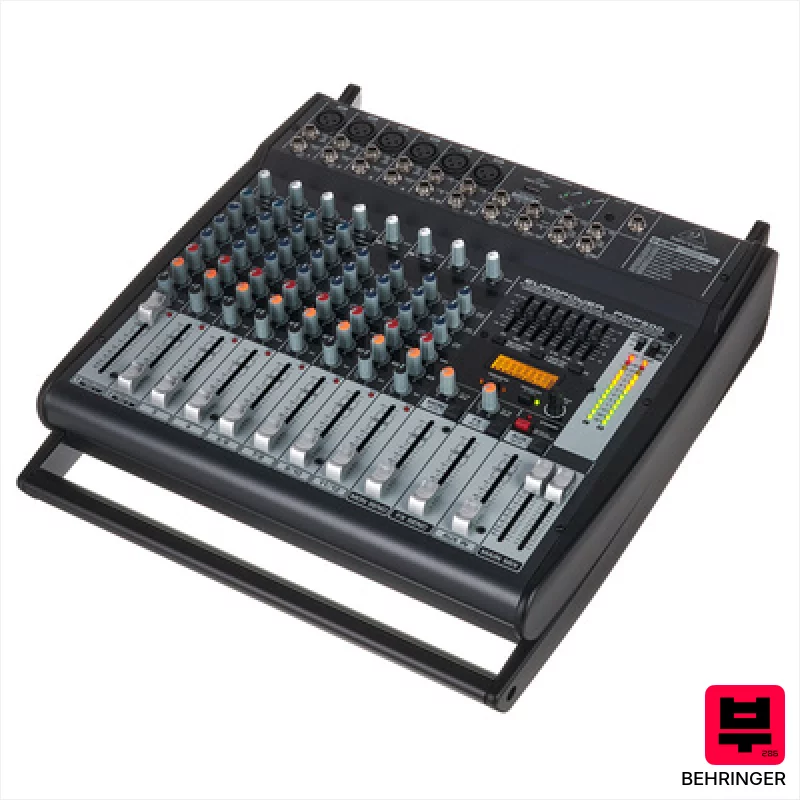
Behringer PMP 500
- • Klark Teknik effects provide surprisingly usable sonic textures.
- • Compact size makes it ideal for smaller gigs and mobile setups.
- • Solid build quality for its price point; feels more robust than expected.
- • Six preamps offer decent gain and usable headroom for live vocals.
- • EQ isn't the most refined; lacks precision for critical mixing.
- • Limited routing options restrict flexibility for complex setups.
- • Power output is adequate but struggles with larger venues or loud bands.

Dynacord Powermate 502
- • Dynacord’s robust build quality inspires confidence and longevity.
- • Compressor on mic channels simplifies gain staging and adds polish.
- • DSP effects offer surprising versatility for a compact unit.
- • Switchable 100V output expands application possibilities significantly.
- • Limited channel count might restrict complex multi-source setups.
- • EQ is 7-band, which isn't as precise as more advanced systems.
- • Physical size, while compact, still makes transport a bit cumbersome.

Dynacord Powermate 1000-3
- • Dynacord’s amplification delivers exceptionally clean, powerful headroom.
- • The summing EQ provides surgical control over the overall mix.
- • Built-in MIDI interface expands creative possibilities for live performance.
- • Robust construction feels durable, ready for demanding touring environments.
- • The fixed effects presets are limiting for experienced users.
- • Weight makes transportation a challenge for solo operators.
- • Premium-priced, potentially prohibitive for smaller venues or budgets.

Yamaha EMX 5
- • Solid Yamaha build quality; feels robust and dependable for gigging.
- • SPX effects processor is surprisingly versatile for a powered mixer.
- • Feedback locator is genuinely useful for taming unruly rooms.
- • Decent power output handles smaller to mid-sized venues effectively.
- • EQ isn't as detailed or flexible as higher-end consoles.
- • Limited routing options restrict complex signal chains.
- • The chassis, while sturdy, makes it a bit heavy for frequent transport.

Fun Generation PM-6
- • Surprisingly robust plastic enclosure for the price point
- • Bluetooth connectivity adds real convenience for mobile gigs
- • Decent EQ options offer basic sound shaping capabilities
- • Compact size makes it easy to transport and set up
- • Power output is limited, better suited for small rooms or acoustic sets
- • EQ is basic, lacks finesse for critical mixing
- • Build quality feels plasticky, not designed for heavy abuse

Dynacord Powermate 1600-3
- • Dynacord's renowned build quality ensures road-worthy durability.
- • Flexible parametric mids offer precise tonal shaping on each channel.
- • The 11-band summing EQ provides exceptional overall mix clarity.
- • USB interface simplifies recording and playback for live performance.
- • The fixed presets on the effects processor limit creative flexibility.
- • Weight makes transport and setup a two-person job for frequent gigs.
- • Premium-priced, potentially prohibitive for smaller, budget-conscious operations.
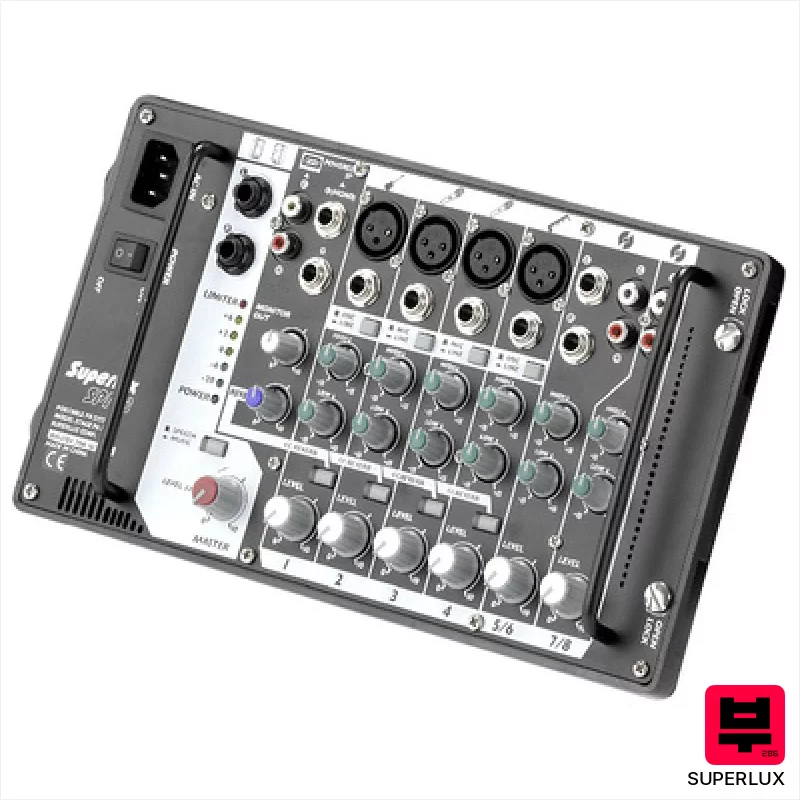
Superlux SP108 Powermixer
- • Surprisingly robust plastic construction for the price point
- • Clean preamp section handles dynamic mics well
- • Integrated power amp simplifies setup for small gigs
- • Decent EQ allows for basic sound shaping on each channel
- • Limited effects options – reverb is basic and somewhat muddy
- • EQ isn't the most precise; lacks nuance for critical mixing
- • Power output is adequate, but struggles with larger venues

Dynacord Powermate 1000-3 Bundle
- • Dynacord’s build quality is exceptional; feels rock-solid and durable.
- • The 11-band summing EQ offers precise tonal shaping capabilities.
- • Flexible aux sends allow for complex routing and monitor mixes.
- • USB interface enables seamless recording and playback functionality.
- • The preset effects are limited; custom effects are essential for creativity.
- • Weight makes transport and setup a challenge for solo operators.
- • The B-Master output might lack the headroom for critical recording scenarios.

Dynacord Powermate 600-3
- • Solid Dynacord build quality; feels robust despite the weight
- • Excellent integrated effects – genuinely usable and creative
- • Speaker Twist output simplifies speaker connection and impedance matching
- • 9-band EQ provides detailed tonal shaping for live sound
- • Limited input flexibility compared to dedicated mixing consoles
- • Weight (9 kg) makes portability a challenge for solo performers
- • Aux sends lack pre/post-EQ switching, limiting routing options

Behringer PMP 4000
- • Impressive power output for its size; 1600W bridged is substantial.
- • FBQ feedback detection is genuinely useful for live sound control.
- • Comprehensive feature set including effects and aux sends offers versatility.
- • Compact design simplifies transport and setup for smaller venues.
- • Build quality feels plasticky; not as robust as more premium mixers.
- • EQ isn't the most refined; lacks the precision of higher-end models.
- • Limited headroom at higher volumes; potential for distortion with demanding signals.
How to Choose the Best Powered Mixers
Tonal Character
Portable PAs often need to fill a space, so a flat, neutral response isn't always ideal. A slight warmth, or a bit of 'air' in the high-mids, can help vocals cut through without sounding harsh. That ice-picky top end is a killer - avoid it like the plague.
Headroom & Clean Power
Gigging isn't about pushing a mixer to its absolute limit, but you need enough headroom to handle unexpected peaks without a muddy, compressed sound. A little extra wattage goes a long way when you're dealing with a dynamic acoustic ensemble or a surprisingly loud harmonica player.
EQ & Effects
A decent EQ is non-negotiable. Reverb is your friend for vocal clarity, especially in less-than-ideal acoustic spaces. Compression can help tame unruly dynamics, but be careful not to overdo it - a squashed, lifeless sound is worse than a little bit of variation.
Connectivity & Routing
Think about your needs - multiple mic inputs? Instrument channels with Hi-Z? Aux sends for monitors? A flexible routing scheme is essential, especially when you're sharing a space with other musicians.
Portability & Durability
Let's be honest, these mixers are going to get tossed around. A robust build quality and a manageable weight are crucial. A flimsy plastic case won't last a season of gigs.
Buying Guide
Don't get blinded by wattage numbers alone. A 1000-watt mixer isn't always better than a 500-watt one if the power delivery is sloppy or the speakers are thin. Be wary of mixers that skimp on the EQ - a basic 3-band EQ is better than no EQ at all, but a parametric EQ offers far more control. And remember, a slightly warmer, more forgiving tone is almost always preferable to a sterile, clinical one for portable PA applications.
Our Methodology
We don't just look at spec sheets - anyone can do that. We've spent countless hours A/B'ing these mixers through various amps and microphones, running them through band rehearsals, and even using them for basic recording. Our evaluations are based on how they sound in the real world, how they handle dynamics, and how user-friendly they are for a gigging musician - not just theoretical numbers.

