
Best Powered Mixers for Churches 2026
Let's be honest, a church sound system isn't just about volume; it's about clarity, warmth, and making sure everyone from the soprano in the choir to the bass player on the praise band's Hammond B3 can be heard and felt. You need a powered mixer that handles a wide dynamic range, from quiet hymns to full-throttle worship. Finding the right one can be a headache, so let's break down what you really need to nail that Sunday service.
Last updated: July 22, 2026 • Next update: July 29, 2026

Dynacord Powermate 502
- • Dynacord’s robust build quality inspires confidence and longevity.
- • Compressor on mic channels simplifies gain staging and adds polish.
- • DSP effects offer surprising versatility for a compact unit.
- • Switchable 100V output expands application possibilities significantly.
- • Limited channel count might restrict complex multi-source setups.
- • EQ is 7-band, which isn't as precise as more advanced systems.
- • Physical size, while compact, still makes transport a bit cumbersome.

Behringer PMP 4000
- • Impressive power output for its size; 1600W bridged is substantial.
- • FBQ feedback detection is genuinely useful for live sound control.
- • Comprehensive feature set including effects and aux sends offers versatility.
- • Compact design simplifies transport and setup for smaller venues.
- • Build quality feels plasticky; not as robust as more premium mixers.
- • EQ isn't the most refined; lacks the precision of higher-end models.
- • Limited headroom at higher volumes; potential for distortion with demanding signals.

Behringer PMP 6000
- • Impressive power for its size; Class-D amps are efficient.
- • FBQ feedback detection is genuinely useful on stage.
- • Comprehensive effects processor adds creative flexibility.
- • The 24-bit preamps deliver surprisingly clean, low-noise performance.
- • Build quality feels plasticky; not a road warrior's dream.
- • EQ isn't the most refined; can sound harsh at higher settings.
- • Limited headroom at higher volume levels; clipping can be an issue.

Dynacord Powermate 1000-3 Bundle
- • Dynacord’s build quality is exceptional; feels rock-solid and durable.
- • The 11-band summing EQ offers precise tonal shaping capabilities.
- • Flexible aux sends allow for complex routing and monitor mixes.
- • USB interface enables seamless recording and playback functionality.
- • The preset effects are limited; custom effects are essential for creativity.
- • Weight makes transport and setup a challenge for solo operators.
- • The B-Master output might lack the headroom for critical recording scenarios.

Dynacord Powermate 1600-3 Bundle
- • Dynacord's build quality is legendary - robust, road-ready construction.
- • The 11-band summing EQ offers precise tonal shaping for complex rigs.
- • USB interface supports multi-track recording, a serious boon for live tracking.
- • Voicing filters per XLR input subtly tailor mic characteristics.
- • The bundled effects presets are limited; user customization is key.
- • The weight makes it less ideal for frequent portability; it's a serious piece of gear.
- • B-Master output lacks full flexibility for advanced recording workflows.

Omnitronic RM-1422 FXA
- • Compact 19” rack design maximizes space efficiency for mobile setups.
- • Built-in Bluetooth and USB player simplifies media playback for events.
- • Decent 24-bit effects processor offers basic creative sound shaping.
- • 8 mic preamps with phantom power support condenser mics for vocalists.
- • EQ is basic 2-band, limiting tonal sculpting flexibility.
- • Construction feels somewhat plasticky, hinting at budget materials.
- • Limited power output restricts suitability for larger venues or loud bands.

Dynacord Powermate 1000-3
- • Dynacord’s amplification delivers exceptionally clean, powerful headroom.
- • The summing EQ provides surgical control over the overall mix.
- • Built-in MIDI interface expands creative possibilities for live performance.
- • Robust construction feels durable, ready for demanding touring environments.
- • The fixed effects presets are limiting for experienced users.
- • Weight makes transportation a challenge for solo operators.
- • Premium-priced, potentially prohibitive for smaller venues or budgets.

Dynacord Powermate 600-3
- • Solid Dynacord build quality; feels robust despite the weight
- • Excellent integrated effects – genuinely usable and creative
- • Speaker Twist output simplifies speaker connection and impedance matching
- • 9-band EQ provides detailed tonal shaping for live sound
- • Limited input flexibility compared to dedicated mixing consoles
- • Weight (9 kg) makes portability a challenge for solo performers
- • Aux sends lack pre/post-EQ switching, limiting routing options

Behringer PMP 6000 Bundle
- • Impressive power for the size; Class-D amp efficiency is noticeable.
- • FBQ feedback detection is genuinely useful on stage.
- • The 24-bit effects processor adds versatility for live sound.
- • Multicore cable simplifies setup, saving time and cable clutter.
- • Build quality feels a bit plasticky; not as robust as higher-end mixers.
- • EQ isn't as precise or musical as more expensive options.
- • Voice Canceller function is a gimmick, not a practical tool.

Behringer PMP 1680S
- • Impressive power for its size, genuinely useful FBQ feedback detection
- • Solid build quality for the price point, feels surprisingly robust
- • Versatile effects processor adds significant creative possibilities
- • Rackmountable design allows for easy integration into existing setups
- • EQ isn't the most refined, can sound a little harsh at higher gain
- • Power output is peak, RMS figures are more realistic for practical use
- • Micro preamps are functional but lack the clarity of higher-end units

Dynacord Powermate 1600-3
- • Dynacord's renowned build quality ensures road-worthy durability.
- • Flexible parametric mids offer precise tonal shaping on each channel.
- • The 11-band summing EQ provides exceptional overall mix clarity.
- • USB interface simplifies recording and playback for live performance.
- • The fixed presets on the effects processor limit creative flexibility.
- • Weight makes transport and setup a two-person job for frequent gigs.
- • Premium-priced, potentially prohibitive for smaller, budget-conscious operations.

Yamaha EMX 5
- • Solid Yamaha build quality; feels robust and dependable for gigging.
- • SPX effects processor is surprisingly versatile for a powered mixer.
- • Feedback locator is genuinely useful for taming unruly rooms.
- • Decent power output handles smaller to mid-sized venues effectively.
- • EQ isn't as detailed or flexible as higher-end consoles.
- • Limited routing options restrict complex signal chains.
- • The chassis, while sturdy, makes it a bit heavy for frequent transport.
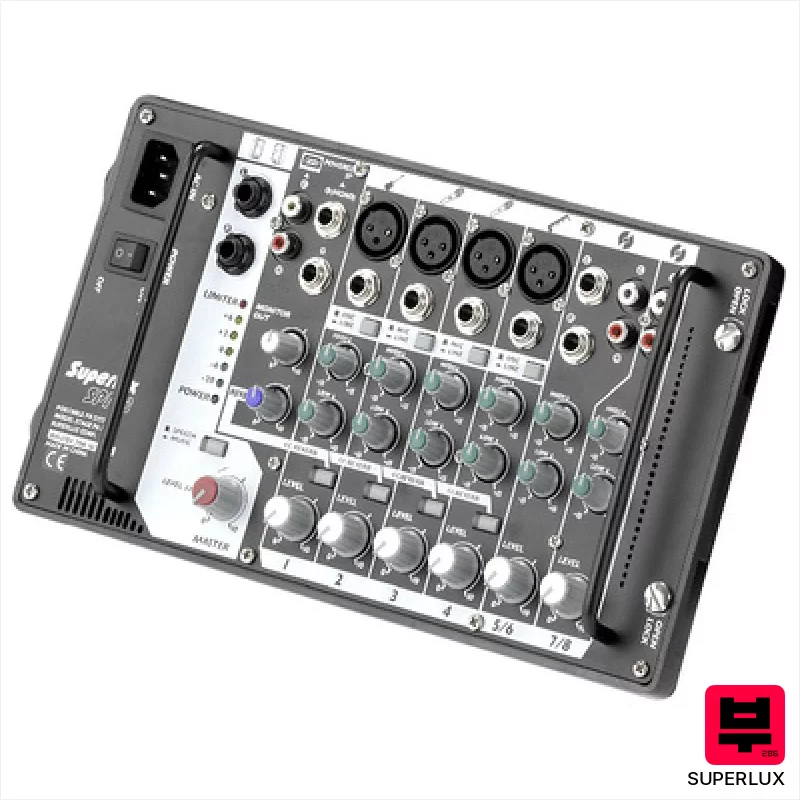
Superlux SP108 Powermixer
- • Surprisingly robust plastic construction for the price point
- • Clean preamp section handles dynamic mics well
- • Integrated power amp simplifies setup for small gigs
- • Decent EQ allows for basic sound shaping on each channel
- • Limited effects options – reverb is basic and somewhat muddy
- • EQ isn't the most precise; lacks nuance for critical mixing
- • Power output is adequate, but struggles with larger venues

Fun Generation PM-6
- • Surprisingly robust plastic enclosure for the price point
- • Bluetooth connectivity adds real convenience for mobile gigs
- • Decent EQ options offer basic sound shaping capabilities
- • Compact size makes it easy to transport and set up
- • Power output is limited, better suited for small rooms or acoustic sets
- • EQ is basic, lacks finesse for critical mixing
- • Build quality feels plasticky, not designed for heavy abuse

Behringer PMP 2000D
- • Impressive power output for its size and price class
- • Flexible operating modes suit various live and monitor scenarios
- • Built-in effects offer usable sounds without external processing
- • Robust construction feels surprisingly solid for a budget-friendly mixer
- • EQ isn't as refined or musical as higher-end mixing consoles
- • Class D amps can introduce a slight hiss at higher volumes
- • Limited headroom beyond moderate volume levels; not for massive shows
How to Choose the Best Powered Mixers
Tonal Character
Churches often require a warmer, more natural sound than, say, a metal gig. We're looking for a clean, balanced response with a slight emphasis on the lower mids - that 'fat midrange honk' that helps vocals cut through without sounding harsh or brittle. Avoid anything overly bright or ice-picky; it'll fatigue listeners quickly.
Input Flexibility
You'll likely be dealing with a mix of dynamic mics (vocals, drums), condenser mics (choirs, acoustic instruments), and direct inputs (keyboards, guitars). Multiple XLR inputs with phantom power are essential, as are a few instrument-grade line inputs. A few aux sends for monitor mixes are also a big plus.
Headroom & Clean Power
Those moments of peak volume - a powerful organ swell, a full choir - demand headroom. Clipping is the enemy of clarity; it introduces unwanted distortion and muddies the mix. A mixer with ample clean power will handle those dynamic peaks gracefully without breaking a sweat.
EQ & Routing
A decent EQ section is crucial for shaping the sound of individual channels and the overall mix. Look for at least a three-band EQ with a usable mid-sweep. Flexible routing options - aux sends, subgroups - allow for more complex mixing scenarios and monitor management.
Build Quality & Reliability
Church gear takes a beating. It gets moved, bumped, and used constantly. A robust build quality, with solid faders and reliable power supplies, is worth the investment. Cheap gear will fail when you need it most.
Buying Guide
Don't be fooled by the numbers - wattage isn't everything. A smaller, well-designed mixer with clean power will often outperform a larger one with a reputation for harshness or limited headroom. Pay attention to the EQ; a usable mid-sweep can save a muddy vocal. And seriously, invest in a good power conditioner - a clean power supply is vital for consistent performance.
Our Methodology
We don't just look at specs here at Audiofu. We've spent countless hours putting these mixers through their paces - live rehearsals, recording vocal tracks, even running them through looped test tones to check for distortion. It's about real-world performance, how they handle a busy board with multiple mics, and whether they'll still sound decent after a five-hour service.

