
Best Powered Mixers for Band 2026
Alright, so you're looking for a powered mixer for your band - smart move. Lugging around a separate head and cabs is a pain, and those little practice amps just don't cut it when you've got a full band firing. We're not talking about bedroom recording here; we're talking about gigging, rehearsals, and getting a decent live sound without breaking the bank or your back.
Last updated: July 22, 2026 • Next update: July 29, 2026

Dynacord Powermate 600-3
- • Solid Dynacord build quality; feels robust despite the weight
- • Excellent integrated effects – genuinely usable and creative
- • Speaker Twist output simplifies speaker connection and impedance matching
- • 9-band EQ provides detailed tonal shaping for live sound
- • Limited input flexibility compared to dedicated mixing consoles
- • Weight (9 kg) makes portability a challenge for solo performers
- • Aux sends lack pre/post-EQ switching, limiting routing options

Behringer PMP 6000 Bundle
- • Impressive power for the size; Class-D amp efficiency is noticeable.
- • FBQ feedback detection is genuinely useful on stage.
- • The 24-bit effects processor adds versatility for live sound.
- • Multicore cable simplifies setup, saving time and cable clutter.
- • Build quality feels a bit plasticky; not as robust as higher-end mixers.
- • EQ isn't as precise or musical as more expensive options.
- • Voice Canceller function is a gimmick, not a practical tool.

Omnitronic RM-1422 FXA
- • Compact 19” rack design maximizes space efficiency for mobile setups.
- • Built-in Bluetooth and USB player simplifies media playback for events.
- • Decent 24-bit effects processor offers basic creative sound shaping.
- • 8 mic preamps with phantom power support condenser mics for vocalists.
- • EQ is basic 2-band, limiting tonal sculpting flexibility.
- • Construction feels somewhat plasticky, hinting at budget materials.
- • Limited power output restricts suitability for larger venues or loud bands.
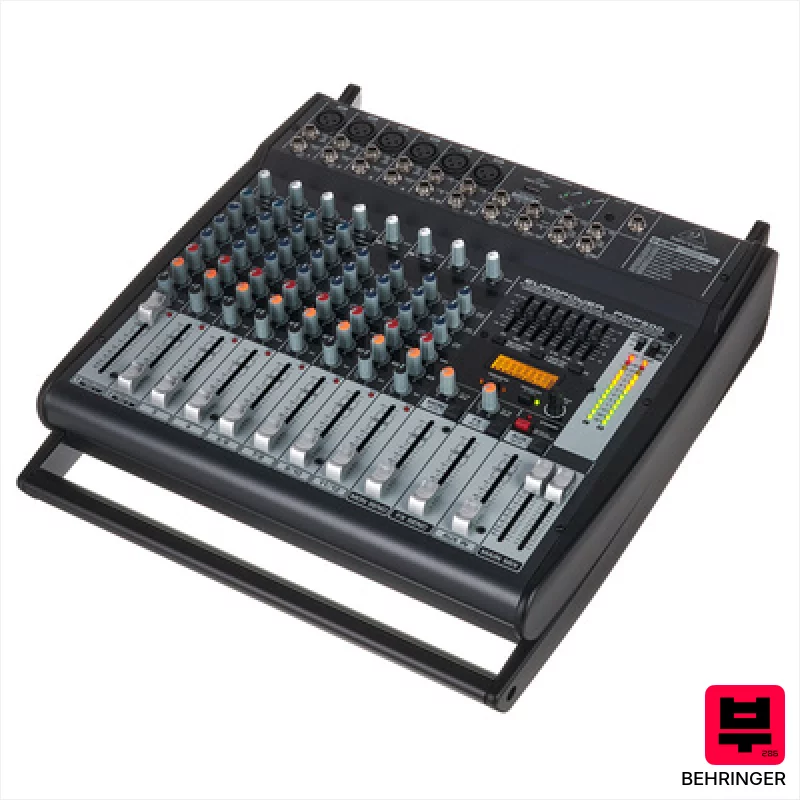
Behringer PMP 500
- • Klark Teknik effects provide surprisingly usable sonic textures.
- • Compact size makes it ideal for smaller gigs and mobile setups.
- • Solid build quality for its price point; feels more robust than expected.
- • Six preamps offer decent gain and usable headroom for live vocals.
- • EQ isn't the most refined; lacks precision for critical mixing.
- • Limited routing options restrict flexibility for complex setups.
- • Power output is adequate but struggles with larger venues or loud bands.

Dynacord Powermate 1600-3
- • Dynacord's renowned build quality ensures road-worthy durability.
- • Flexible parametric mids offer precise tonal shaping on each channel.
- • The 11-band summing EQ provides exceptional overall mix clarity.
- • USB interface simplifies recording and playback for live performance.
- • The fixed presets on the effects processor limit creative flexibility.
- • Weight makes transport and setup a two-person job for frequent gigs.
- • Premium-priced, potentially prohibitive for smaller, budget-conscious operations.

Dynacord Powermate 1600-3 Bundle
- • Dynacord's build quality is legendary - robust, road-ready construction.
- • The 11-band summing EQ offers precise tonal shaping for complex rigs.
- • USB interface supports multi-track recording, a serious boon for live tracking.
- • Voicing filters per XLR input subtly tailor mic characteristics.
- • The bundled effects presets are limited; user customization is key.
- • The weight makes it less ideal for frequent portability; it's a serious piece of gear.
- • B-Master output lacks full flexibility for advanced recording workflows.

Dynacord Powermate 1000-3
- • Dynacord’s amplification delivers exceptionally clean, powerful headroom.
- • The summing EQ provides surgical control over the overall mix.
- • Built-in MIDI interface expands creative possibilities for live performance.
- • Robust construction feels durable, ready for demanding touring environments.
- • The fixed effects presets are limiting for experienced users.
- • Weight makes transportation a challenge for solo operators.
- • Premium-priced, potentially prohibitive for smaller venues or budgets.

Dynacord Powermate 1000-3 Bundle
- • Dynacord’s build quality is exceptional; feels rock-solid and durable.
- • The 11-band summing EQ offers precise tonal shaping capabilities.
- • Flexible aux sends allow for complex routing and monitor mixes.
- • USB interface enables seamless recording and playback functionality.
- • The preset effects are limited; custom effects are essential for creativity.
- • Weight makes transport and setup a challenge for solo operators.
- • The B-Master output might lack the headroom for critical recording scenarios.

Dynacord Powermate 502
- • Dynacord’s robust build quality inspires confidence and longevity.
- • Compressor on mic channels simplifies gain staging and adds polish.
- • DSP effects offer surprising versatility for a compact unit.
- • Switchable 100V output expands application possibilities significantly.
- • Limited channel count might restrict complex multi-source setups.
- • EQ is 7-band, which isn't as precise as more advanced systems.
- • Physical size, while compact, still makes transport a bit cumbersome.

Behringer PMP 4000
- • Impressive power output for its size; 1600W bridged is substantial.
- • FBQ feedback detection is genuinely useful for live sound control.
- • Comprehensive feature set including effects and aux sends offers versatility.
- • Compact design simplifies transport and setup for smaller venues.
- • Build quality feels plasticky; not as robust as more premium mixers.
- • EQ isn't the most refined; lacks the precision of higher-end models.
- • Limited headroom at higher volumes; potential for distortion with demanding signals.

Behringer PMP 1680S
- • Impressive power for its size, genuinely useful FBQ feedback detection
- • Solid build quality for the price point, feels surprisingly robust
- • Versatile effects processor adds significant creative possibilities
- • Rackmountable design allows for easy integration into existing setups
- • EQ isn't the most refined, can sound a little harsh at higher gain
- • Power output is peak, RMS figures are more realistic for practical use
- • Micro preamps are functional but lack the clarity of higher-end units

Yamaha EMX 5
- • Solid Yamaha build quality; feels robust and dependable for gigging.
- • SPX effects processor is surprisingly versatile for a powered mixer.
- • Feedback locator is genuinely useful for taming unruly rooms.
- • Decent power output handles smaller to mid-sized venues effectively.
- • EQ isn't as detailed or flexible as higher-end consoles.
- • Limited routing options restrict complex signal chains.
- • The chassis, while sturdy, makes it a bit heavy for frequent transport.

Behringer PMP 6000
- • Impressive power for its size; Class-D amps are efficient.
- • FBQ feedback detection is genuinely useful on stage.
- • Comprehensive effects processor adds creative flexibility.
- • The 24-bit preamps deliver surprisingly clean, low-noise performance.
- • Build quality feels plasticky; not a road warrior's dream.
- • EQ isn't the most refined; can sound harsh at higher settings.
- • Limited headroom at higher volume levels; clipping can be an issue.

Behringer PMP 2000D
- • Impressive power output for its size and price class
- • Flexible operating modes suit various live and monitor scenarios
- • Built-in effects offer usable sounds without external processing
- • Robust construction feels surprisingly solid for a budget-friendly mixer
- • EQ isn't as refined or musical as higher-end mixing consoles
- • Class D amps can introduce a slight hiss at higher volumes
- • Limited headroom beyond moderate volume levels; not for massive shows
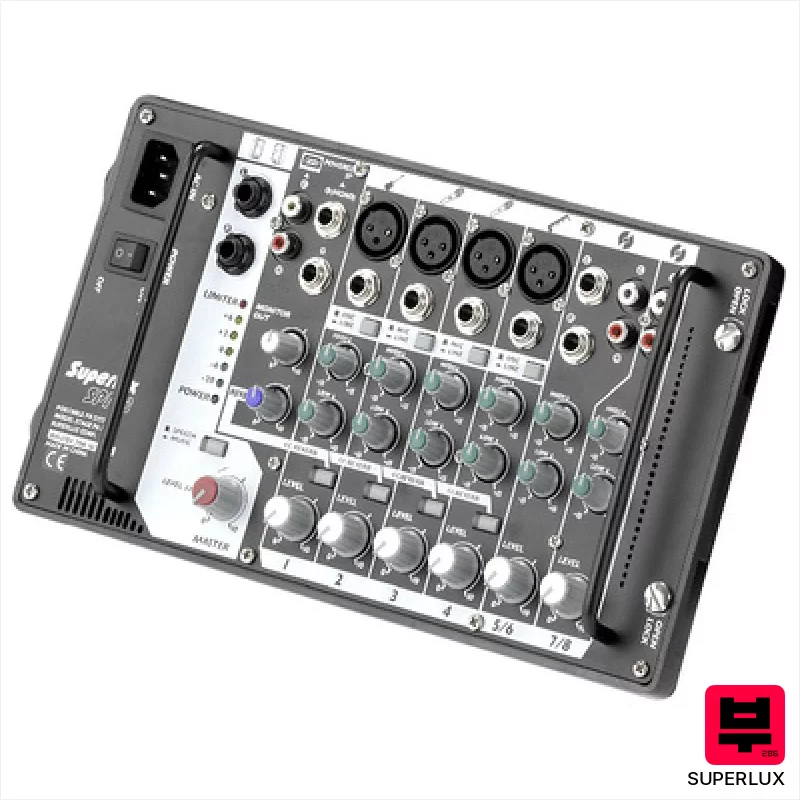
Superlux SP108 Powermixer
- • Surprisingly robust plastic construction for the price point
- • Clean preamp section handles dynamic mics well
- • Integrated power amp simplifies setup for small gigs
- • Decent EQ allows for basic sound shaping on each channel
- • Limited effects options – reverb is basic and somewhat muddy
- • EQ isn't the most precise; lacks nuance for critical mixing
- • Power output is adequate, but struggles with larger venues
How to Choose the Best Powered Mixers
Headroom & Clean Power
Bands need headroom. Seriously. Nothing's worse than a mixer that starts to breakup and introduce unwanted distortion the second the drummer hits the crash. We're looking for a clean, powerful signal path that can handle a loud band without flinching.
EQ & Routing Flexibility
A decent EQ section is vital for shaping the overall sound and carving out space for each instrument. Aux sends are a must for monitor mixes - no one wants to fight for volume on stage.
Tonal Character
Some mixers are sterile and clinical, others have a subtle warmth or character. That 'character' can be a real asset for live sound, especially if you're not running everything through a ton of effects. We're looking for something that flatters the instruments, not hides them.
Build Quality & Durability
Gigging gear takes a beating. We're evaluating the robustness of the construction - are the faders smooth? Are the jacks solid? Will this thing survive a few bumps and bruises on the road?
Effects (Reverb/Delay)
Built-in effects aren't a replacement for dedicated pedals, but they can be a lifesaver in a pinch, especially for vocals. We're assessing the quality and usability of any onboard effects - are they usable, or just cheesy filler?
Buying Guide
Don't chase the highest wattage number - headroom is about clean power, not just loudness. Cheaper mixers often cut corners on components, leading to noise and distortion. Paying a bit more for a mixer with a better power supply and more robust EQ circuitry will almost always pay off in the long run. Also, consider your band's size and typical volume; a 12-channel mixer might seem overkill, but having extra channels is always better than needing more.
Our Methodology
We don't just look at specs; we play these things. We've run these mixers through rehearsals with a rock band, a blues trio, and even a folk ensemble, A/B'ing them against comparable systems. We're listening for how they handle dynamics, how clean they stay at higher volumes, and if they actually help instruments cut through the mix - not just how they look on paper.

