AudioFu Chart · October 2026
Best Passive Full-Range PA Speakers for Professional 2026
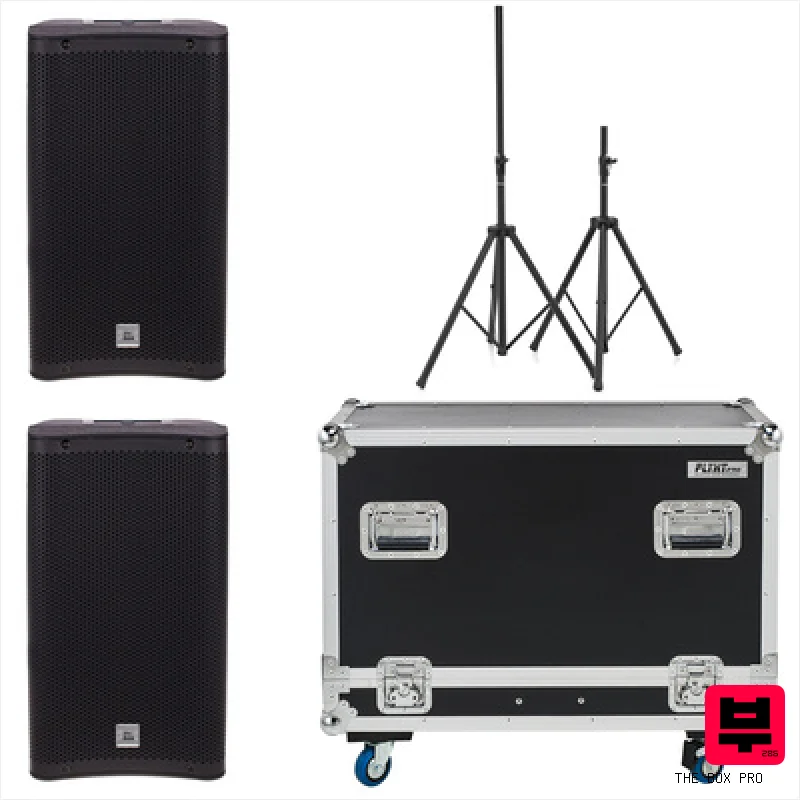
The top pick is TW AUDiO M12 Stereo Bundle ($7,040). Seeburg Acoustic Line K 30 60° gives you the most for the money at $3,731. Ranked by the AudioFu Index from 138 models across 19 brands, prices checked every night.
Last updated: October 26, 2026
Top 10
Full detail for the 10 highest AudioFu Index scores. Every other model is listed below.
-
- Size12"
- Weight20.2 kg
This passive speaker needs its own amp, which is a big hassle for gigging. The birch wood case sounds nice and holds up well. It's heavy to carry but packs a solid punch up to thirteen-two decibels.
Pros
- Multiplex birch wood housing feels solid and durable on stage.
Cons
- No active electronics means you must buy separate amplifiers.
- Heavy 20.2 kg makes lifting and moving physically demanding.
35AudioFu
IndexStableno change since Aug 17Aug 17$7,040 now$7,040€6,290 at Thomann · in stockCheck price ↗ -
- Size12"
- Weight33.1 kg
This T24N-60 is a serious workhorse for DJs, bands, and rental companies needing substantial SPL and pattern control. The horn-loaded design really cuts through in loud environments, and the birch construction feels rock solid. It's a premium-priced speaker, but delivers professional-grade performance.
Pros
- Neodymium woofers deliver tight, controlled low-end response.
- Birch multiplex construction ensures exceptional rigidity and resonance damping.
- High-output compression driver provides clear, articulate high frequencies.
Cons
- The 4-ohm impedance demands a powerful and compatible amplifier.
- Significant weight requires careful handling and transportation logistics.
51AudioFu
IndexStableno change since Aug 17Aug 17$6,257 now$6,257€5,590 at Thomann · in stockCheck price ↗ -
- Size12"
- Weight33.1 kg
This T24N-90 is a serious workhorse, built for professional sound reinforcement where headroom and clarity are paramount. The horn provides excellent vocal intelligibility, and those neodymium drivers pack a serious punch – perfect for DJs, cover bands, or any application needing consistent, powerful sound across a decent-sized space. Just be prepared to muscle it around!
Pros
- Neodymium woofers deliver tight, impactful low-end response.
- Birch multiplex construction ensures exceptional rigidity and durability.
- Horn-loaded design provides incredible projection and vocal clarity.
Cons
- The 4-ohm impedance demands a powerful, compatible amplifier.
- Significant weight makes transport and setup a two-person job.
51AudioFu
IndexStableno change since Aug 17Aug 17$6,257 now$6,257€5,590 at Thomann · in stockCheck price ↗ -
- Size10"
- Weight15.2 kg
This is a great passive speaker for musicians who already own a good amplifier. The solid wood box sounds warm, and the ten-inch woofer hits the bass really hard. It is heavy but easy to move thanks to the handles and rigging rails. You will need to pair it with an external amp to get sound out of it.
Pros
- Multiplex birch wood housing provides a solid, warm acoustic foundation for the sound.
- 10-inch long-throw woofer delivers deep bass down to 68 Hz for powerful low ends.
- High 1200-watt peak power rating ensures loud volume without distortion at high levels.
Cons
- No internal amplifier means you must buy a separate power amp to use it.
- Sensitivity (sensitivity) is not listed, making efficiency unknown for direct comparison.
35AudioFu
IndexStableno change since Aug 17Aug 17$5,809 now$5,809€5,190 at Thomann · in stockCheck price ↗ -
- Size10"
- Weight24.3 kg
The T20-60 is a seriously impressive point-source speaker – really well-engineered. It’s got a clean, powerful sound with good clarity, making it a great choice for bands needing consistent coverage in mid-sized venues or corporate events where you need to project clearly without feedback. You'll need a quality amplifier to truly unlock its potential, though.
Pros
- Neodymium woofers deliver tight, impactful low-end response.
- Birch multiplex construction ensures robust build and excellent resonance damping.
- The horn/compression driver combo provides clear, articulate highs with excellent throw.
Cons
- High price point makes it a premium investment for serious users.
- The 8-ohm impedance requires careful amplifier selection for optimal performance.
51AudioFu
IndexStableno change since Aug 17Aug 17$4,981 now$4,981€4,450 at Thomann · in stockCheck price ↗ -
- Size10"
- Weight24.3 kg
The T20-90 is a seriously impressive point-source speaker. It's built like a tank with that birch ply, and the sound is surprisingly clean and powerful, especially for live sound reinforcement or smaller touring rigs. You'll need a quality amplifier to truly unlock its potential, but the results are worth it.
Pros
- Birch multiplex construction provides exceptional resonance and durability.
- Neodymium woofers deliver tight, controlled low-end response.
- 90°x50° dispersion optimizes coverage and minimizes unwanted reflections.
Cons
- Premium-priced, putting it out of reach for budget-conscious users.
- Significant weight makes transport and setup a two-person job.
51AudioFu
IndexStableno change since Aug 17Aug 17$4,981 now$4,981€4,450 at Thomann · in stockCheck price ↗ -
- Size15"
- Weight23.8 kg
The C15 is a seriously powerful and well-built speaker, designed for professional sound reinforcement. Its coaxial design and birch construction make it ideal for bands, DJs, or rental companies needing consistent coverage in medium to large venues—just be prepared to invest in a quality amplifier to truly unlock its potential.
Pros
- Robust birch multiplex construction ensures durability for touring.
- Coaxial design delivers excellent off-axis coverage and clarity.
- High 133dB SPL handles large venues with ease and headroom.
Cons
- The 8-ohm impedance limits amplifier choices and power efficiency.
- Significant weight (23.8kg) makes transport and setup challenging.
51AudioFu
IndexStableno change since Aug 17Aug 17$4,466 now$4,466€3,990 at Thomann · in stockCheck price ↗ -
- Size15"
- Weight24.9 kg
The M15 R is a seriously impressive point-source speaker – think of it as a compact powerhouse. It's built like a tank with that birch construction and the compression driver gives you clean, powerful highs. This is ideal for bands needing focused coverage in mid-sized venues or for sound reinforcement where portability is a concern, but you still need serious headroom.
Pros
- Birch multiplex construction ensures exceptional durability and resonance.
- 1.4” compression driver delivers crisp highs with surprising clarity.
- Rigging rails simplify flown installations for versatile deployment.
Cons
- The weight (24.9kg) makes transport and setup a two-person job.
- Requires a premium amplifier to truly unlock its potential.
55AudioFu
IndexStableno change since Aug 17Aug 17$4,197 now$4,197€3,750 at Thomann · in stockCheck price ↗ -
- Size12"
- Weight19.6 kg
The C12 is a seriously impressive speaker – the coaxial design really shines for live sound reinforcement and stage monitoring. It’s built like a tank with that birch ply housing, and the output is loud and clean. This is ideal for bands and sound reinforcement needing a versatile, high-output solution, though the amplifier recommendations are key to getting the best results.
Pros
- Exceptional coaxial design delivers surprisingly focused coverage.
- Multiplex birch construction feels robust and handles abuse well.
- High SPL (132dB) allows for serious volume without distortion.
Cons
- High impedance (8 Ohm) limits amplifier choices and power efficiency.
- Weight (19.6 kg) makes transport and setup a two-person job.
51AudioFu
IndexStableno change since Aug 17Aug 17$4,197 now$4,197€3,750 at Thomann · in stockCheck price ↗ -
- Size12"
- Weight32 kg
This speaker packs a mean punch with two big 12-inch drivers and a loud horn. The narrow beam helps you fill small to medium rooms without wasting power, but it can be hard to mix two of them together. It's a solid workhorse for venues where you need that big, clear sound, though the weight makes it tricky to move around.
Pros
- Two powerful 12-inch neodymium woofers drive heavy bass
- Rotatable 60-degree horn focuses sound for tight coverage
- High 137 dB maximum output cuts through loud rooms
Cons
- Single 4-ohm impedance limits mixing flexibility
- Heavy 32 kg weight makes stacking difficult
56AudioFu
IndexStableno change since Aug 17Aug 17$3,731 now$3,731€3,333 at Thomann · in stockCheck price ↗
All 138 passive full-range PA speakers
Same index, same nightly prices — compact. Colour options of one model share a row. Tap a photo to zoom.
- 11
TW AUDiO M8 Stereo BundleTW AUDiO · 3 finishes35Stable$3,803€3,398$3,803€3,398Check ↗
- 12
Seeburg Acoustic Line K24 60°Seeburg Acoustic Line51Stable$3,571€3,190$3,571€3,190Check ↗
- 13
Seeburg Acoustic Line GL24 xovSeeburg Acoustic Line51Stable$3,244€2,898$3,244€2,898Check ↗
- 14
TW AUDiO M6 Stereo BundleTW AUDiO · 3 finishes35Stable$3,347€2,990$3,347€2,990Check ↗
- 15
Bose Professional Forum FC112Bose Professional39Stable$3,020€2,698$3,020€2,698Check ↗
- 16
Seeburg Acoustic Line F4Seeburg Acoustic Line51Stable$2,849€2,545$2,849€2,545Check ↗
- 17
Seeburg Acoustic Line X8Seeburg Acoustic Line51Stable$2,517€2,249$2,517€2,249Check ↗
- 18
KS audio C 1KS audio44Stable$2,573€2,299$2,573€2,299Check ↗
- 19
Seeburg Acoustic Line K 20 60°Seeburg Acoustic Line · 2 finishes56Stable$2,348€2,098$2,348€2,098Check ↗
- 20
EV ELX200-15EV · 2 finishes83↓ 0.7%$621€555$621€555Check ↗
- 21
EV EKX-12EV75Stable$726€649$726€649Check ↗
- 22
EV EKX-15EV75Stable$805€719$805€719Check ↗
- 23
EV ELX200-12-WEV · 2 finishes84Stable$525€469$525€469Check ↗
- 24
EV ZLX 12 G2EV · 3 finishes84Stable$445€398$445€398Check ↗
- 25
JBL PRX412M 2-Way 12" Passive SpeakerPRX 415M · JBL · 2 finishes66↑ 1.1%$701€626$701€626Check ↗
- 26
HK Audio L5 112 F Linear 5HK Audio · 6 finishes62Stable$771€689$771€689Check ↗
- 27
EV ZLX 8 G2EV · 2 finishes79Stable$413€369$413€369Check ↗
- 28
JBL SRX815P 2-Way 2000-Watt 15" Active LoudspeakerSRX815 · JBL59Stable$1,382€1,235$1,382€1,235Check ↗
- 29
EV ELX200-10-WEV · 2 finishes76Stable$445€398$445€398Check ↗
- 30
EV SX300E Black-System 2000EV · 2 finishes56↓ 40.0%$670€599$670€599Check ↗
- 31
the box pro Achat 112the box pro · 2 finishes56Stable$781€698$781€698Check ↗
- 32
the box pro Achat 208 HRthe box pro · 2 finishes56Stable$669€598$669€598Check ↗
- 33
DAS Audio Altea-712-WRDAS Audio · 2 finishes54Stable$760€679$760€679Check ↗
- 34
EV Zx1-90 WhiteEV · 3 finishes68Stable$480€429$480€429Check ↗
- 35
EV ZX1i-90EV53↑ 2.8%$781€698$781€698Check ↗
- 36
DAS Audio Altea-412-WRDAS Audio · 2 finishes54Stable$637€569$637€569Check ↗
- 37
Seeburg Acoustic Line A1Seeburg Acoustic Line51Stable$745€666$745€666Check ↗
- 38
the box pro Achat 215the box pro51Stable$961€859$961€859Check ↗
- 39
Seeburg Acoustic Line X 1Seeburg Acoustic Line51Stable$1,005€898$1,005€898Check ↗
- 40
Seeburg Acoustic Line A4Seeburg Acoustic Line51Stable$1,073€959$1,073€959Check ↗
- 41
Seeburg Acoustic Line A2Seeburg Acoustic Line51Stable$1,118€999$1,118€999Check ↗
- 42
Seeburg Acoustic Line F1Seeburg Acoustic Line51Stable$1,203€1,075$1,203€1,075Check ↗
- 43
Seeburg Acoustic Line X 2Seeburg Acoustic Line51Stable$1,229€1,098$1,229€1,098Check ↗
- 44
Seeburg Acoustic Line A3Seeburg Acoustic Line51Stable$1,259€1,125$1,259€1,125Check ↗
- 45
Seeburg Acoustic Line A6Seeburg Acoustic Line51Stable$1,416€1,265$1,416€1,265Check ↗
- 46
TW AUDiO C5TW AUDiO51Stable$1,545€1,380$1,545€1,380Check ↗
- 47
Seeburg Acoustic Line X 4Seeburg Acoustic Line51Stable$1,595€1,425$1,595€1,425Check ↗
- 48
Seeburg Acoustic Line F2Seeburg Acoustic Line51Stable$1,651€1,475$1,651€1,475Check ↗
- 49
Seeburg Acoustic Line A8Seeburg Acoustic Line51Stable$1,677€1,498$1,677€1,498Check ↗
- 50
Seeburg Acoustic Line F3Seeburg Acoustic Line51Stable$1,976€1,765$1,976€1,765Check ↗
Passive Full-Range PA Speakers by the numbers
Measured across all 188 models we track, not a sample.
Median $514 — half of all passive full-range PA speakers here cost less.
median of 173 models · 4"–15"
median of 187 models · 3 kg–30.1 kg
How to choose the best passive full-range PA speakers
Frequency Response & Dispersion
It's not just about going low; it's about how low it goes and how evenly it spreads. You want consistent coverage across the audience - no hot spots or dead zones, especially in tricky venues. That means a wide horizontal dispersion angle is crucial.
Power Handling & Headroom
This is the difference between clean, punchy sound and a distorted, flailing mess when the bass player decides to lay down a serious groove. Real headroom means your speakers can handle dynamic peaks without compression or breakup - vital for live performance.
Midrange Clarity & Articulation
So many speakers get the lows and highs right but completely butcher the mids. That's where the meat of most vocals and instruments live. You want that fat midrange honk without it being muddy or boxy - it's what allows instruments to cut through the mix.
Build Quality & Durability
Gigs aren't gentle. These speakers are going to get bumped, dropped (maybe), and exposed to all sorts of conditions. Solid construction, robust drivers, and a reliable enclosure are non-negotiable for a professional setup.
Efficiency (Sensitivity)
This dictates how loud you can get with a given amplifier. Higher sensitivity means you can achieve a comfortable volume with less power, saving on amp costs and potentially improving headroom - a huge factor for smaller venues or when you're packing a lot of gear into a limited space.
Buying guide
Alright, so you're a pro, or at least you're chasing that level. You're tired of speakers that sound thin, fizz, or just plain disappear when the drummer hits. Passive full-range speakers are a solid choice for reliable, gig-ready sound, but not all of them are created equal - we're talking about delivering articulate lows, a balanced midrange, and clean highs that don't induce listener fatigue after a 3-hour set. Let's cut through the marketing and get you equipped.
Don't fall for the 'loudest' claims; focus on balanced frequency response and headroom. Cheaper speakers often cut corners on driver quality, leading to harsh highs and muddy lows. Paying more generally gets you better components, improved waveguide design for better dispersion, and a more robust build, but research specific models - read reviews from other working musicians.
Consider the venue size and typical band volume; a smaller 12" speaker might be perfect for coffee shops, while a larger 15" model is needed for louder rock gigs.
How the AudioFu Index works
Five measured signals and nothing else — no stars from strangers, no “tested by experts” we didn’t do. The weights are fixed and public. We don’t play these instruments; we measure the market around them.
This chart covers 188 passive full-range PA speakers from the Thomann catalogue. Before you buy, read hands-on reviews and, where you can, play it. Full methodology.
AudioFu earns a commission when you buy through our Thomann links. It never changes the order — the index does.
- Demand40%
How many of this exact model are for sale on Reverb right now — what musicians actually buy and resell.
- Lineup20%
How many finishes Thomann stocks — makers expand the models that sell.
- Price15%
Where the price has moved since we started tracking in August.
- Specs15%
How completely the maker documents it.
- Maker10%
How deep the brand’s range is in this category.
Questions
What's the deal with 'full-range' - why not subwoofers?
Full-range speakers are designed to cover a wide frequency spectrum without needing a separate subwoofer. They're great for versatility, but if you really need that low-end thump for certain gigs, a sub is still a good idea. It's a tradeoff between portability and ultimate low-frequency extension.
How many watts do I really need?
Wattage isn't everything. Sensitivity plays a massive role. A speaker with 85dB sensitivity and 300 watts will be louder than a 95dB/200 watt speaker. Look at the sensitivity rating alongside the power handling to get a real picture of its capability.
Are bi-amp or passive better?
Passive speakers are simpler to integrate into existing systems, especially when you're using multiple amps. Bi-amped speakers have separate amplifiers for the woofers and tweeters, which can offer better performance, but also adds complexity and cost. For most pros, passive is the sweet spot.
What about speaker stands?
Don't skimp on stands! Proper height and angle are crucial for even sound coverage. Sturdy, reliable stands are an investment that prevents feedback and ensures everyone hears the mix properly. Cheap stands wobble and can even fall over - a recipe for disaster.
Can I use these for recording?
Absolutely, but consider their tonal character. Some speakers have a more colored sound that might not be ideal for critical monitoring. If you're recording vocals, for example, a flatter, more neutral speaker will be a better choice.