
Best Noise Modules for Professional 2026
Alright, let's talk noise. It's not just static; it's a fundamental building block for texture, rhythm, and outright sonic chaos in modular synthesis. A decent noise source isn't a luxury; it's a necessity for professional players looking to add grit, movement, and unpredictable elements to their soundscapes - whether you're crafting a cinematic score or just need some harsh texture to cut through a dense band mix. Forget the basic white noise oscillator; we're diving into modules that offer real control and character.
Last updated: April 11, 2026
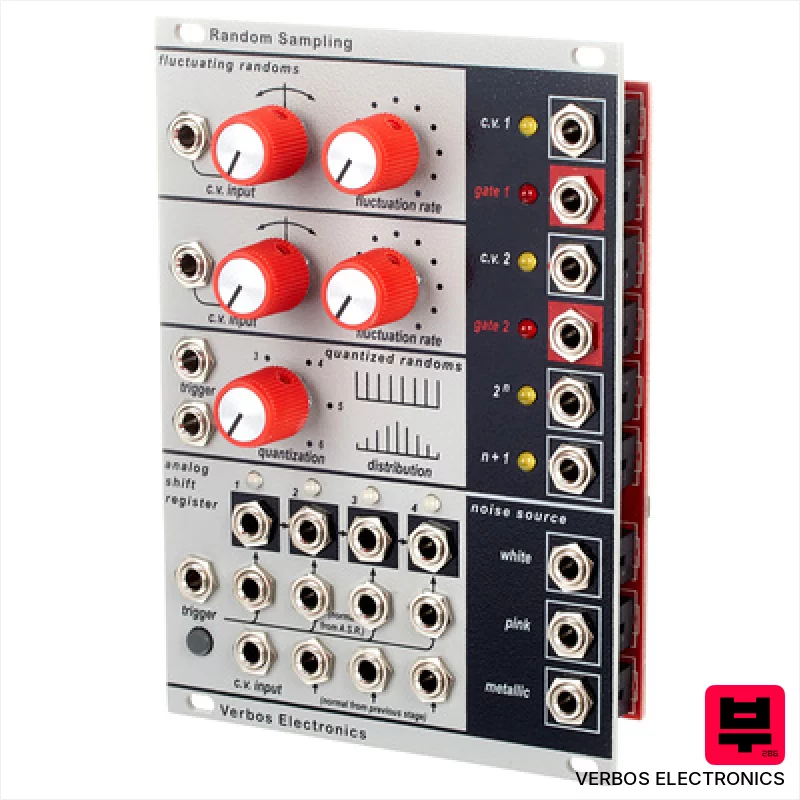
Verbos Electronics Random Sampling
- • Generates truly unpredictable and evolving textures.
- • Shift register provides complex, cascading rhythmic patterns.
- • Multiple noise outputs offer diverse sonic palettes for experimentation.
- • Robust Verbos build quality – feels solid and dependable.
- • Can be overwhelming for beginners due to its complexity.
- • Limited modulation destinations compared to some rivals.
- • The 6-bit quantization can feel restrictive for precise control.

Befaco Noise Plethora
- • Versatile noise algorithms offer surprising textural complexity.
- • OTA filters provide a warm, characterful shaping of the noise.
- • Individual channel control fosters intricate sound design possibilities.
- • Compact 14HP footprint maximizes space in a modular setup.
- • The digital nature can lack the organic feel of purely analog noise.
- • Algorithm selection lacks a direct visual display of the current setting.
- • Limited modulation destinations per algorithm may restrict advanced patching.

AJH Synth Entropic Doom black
- • Exceptional noise textures, ranging from subtle hiss to chaotic storms.
- • Flexible low-pass filter offers significant tonal shaping possibilities.
- • Ring modulator adds unexpected character and experimental sound design options.
- • Compact depth (26mm) makes it ideal for space-constrained Eurorack systems.
- • Limited modulation destinations beyond the obvious filter and VCA.
- • XOR VCA, while unique, can be a bit unpredictable in dynamic response.
- • Bright/Dark outputs, while creative, might require additional mixing for balanced results.

Intellijel Designs Flurry
- • Exceptional noise palette offers diverse textures, from granular to harsh.
- • The slew limiter's envelope follower mode is surprisingly musical and useful.
- • Internal square wave generator provides a solid foundation for rhythmic complexity.
- • Morph parameter offers intuitive and dynamic signal shaping possibilities.
- • Power draw of 116mA can be significant in densely populated racks.
- • The learning curve can be steep for those unfamiliar with complex modulation.
- • Limited routing options compared to more expansive noise generators.
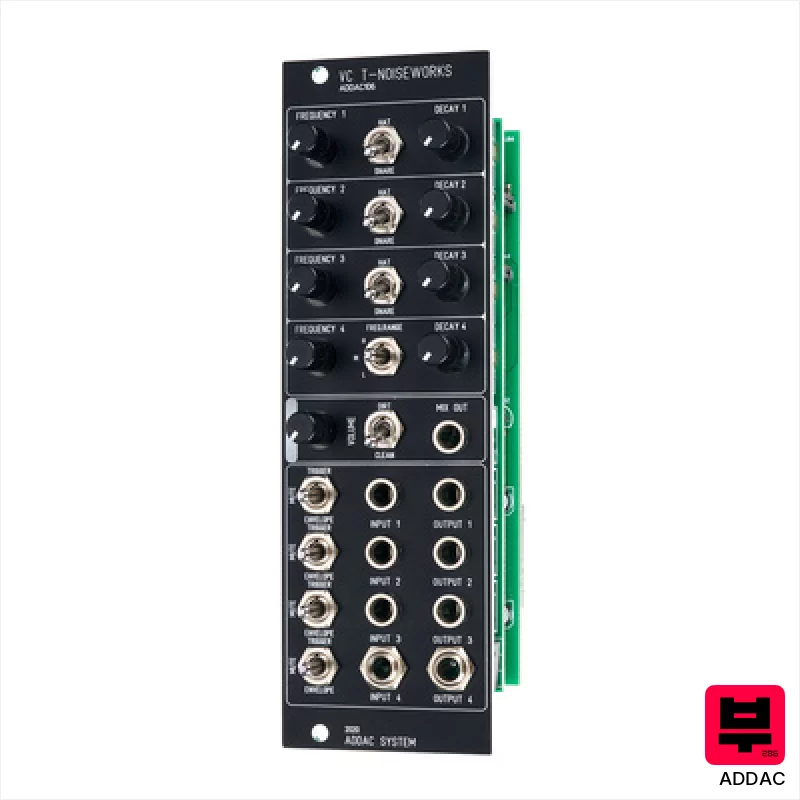
ADDAC 106 T-Noiseworks
- • Excellent noise variety, offering a surprisingly wide sonic palette
- • T-network filter provides unique, characterful shaping capabilities
- • Compact 8HP footprint maximizes space in tight modular setups
- • Clean/Dirt switch on the sum output adds immediate tonal flexibility
- • 40mA draw can be significant for power-constrained systems
- • Single outputs per voice limit complex layering possibilities
- • Envelope shaping is basic, lacking advanced modulation options
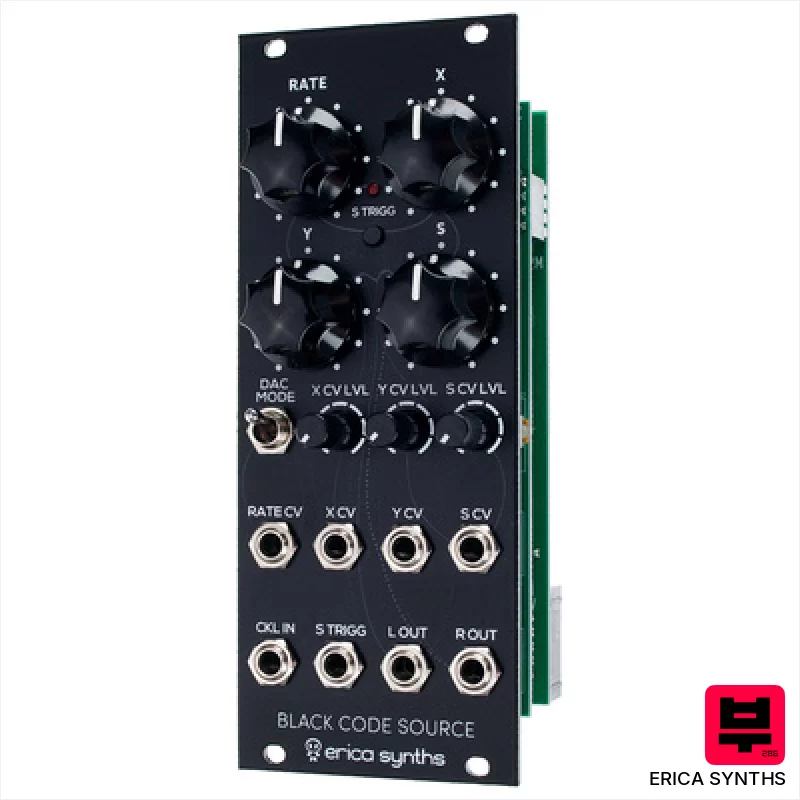
Erica Synths Black Code Source
- • Nine distinct noise types offer surprising textural variety.
- • Dual CV random generators enable complex, evolving sequences.
- • Compact 10HP footprint maximizes modular space efficiency.
- • Stereo output expands sonic possibilities for immersive soundscapes.
- • Requires Black Code Source Expander for full functionality, a separate investment.
- • Limited parameter control without the Expander; basic noise generation only.
- • Output voltage range (-5V to +5V) can be low for some downstream modules.
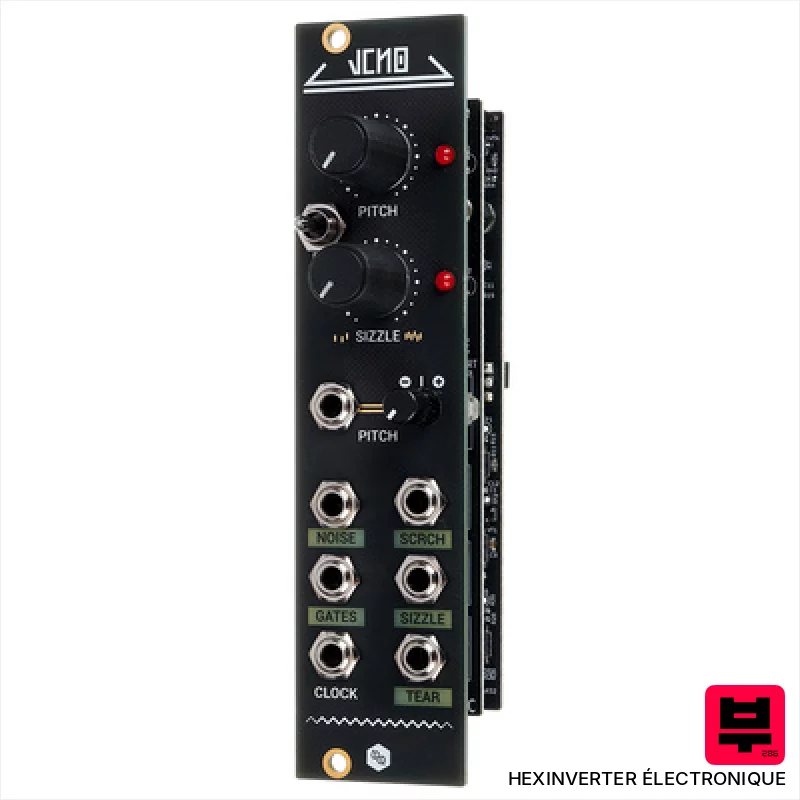
Hexinverter Électronique VCNO
- • Unique 'Sizzle' output adds complex harmonic textures.
- • DC-coupled gate output enables intricate rhythmic possibilities.
- • Compact 6U width maximizes modular space efficiency.
- • Pitch CV attenuator allows for precise noise modulation control.
- • Limited noise type variety compared to dedicated noise generators.
- • Power draw, while not excessive, can strain smaller power supplies.
- • Screech output can be harsh and requires careful attenuation.
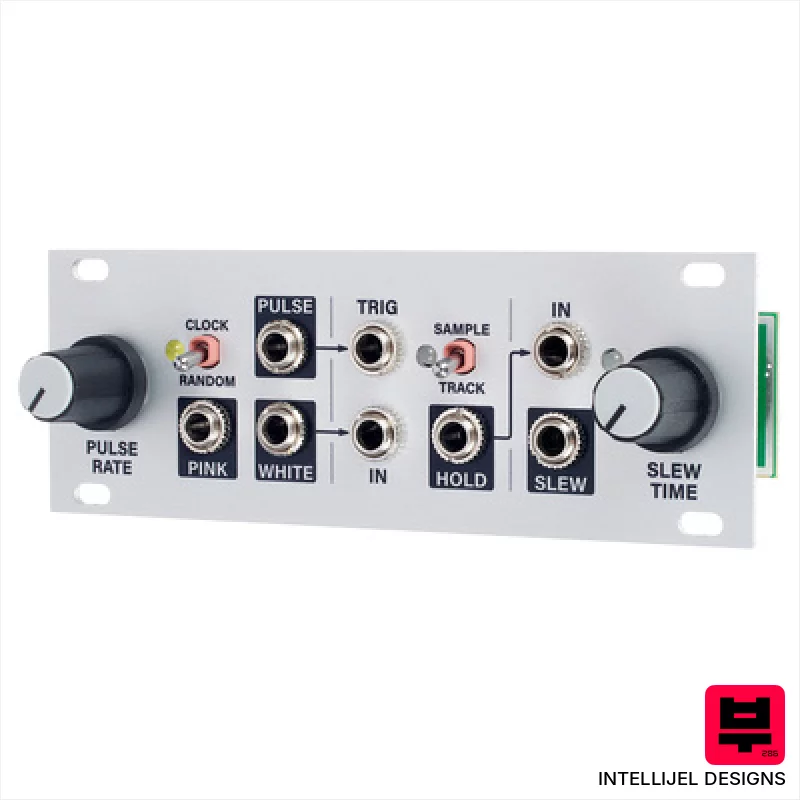
Intellijel Designs Noise Random Tools 1U
- • Excellent pink noise provides smooth, organic textures.
- • Sample & Hold circuit adds dynamic variation and rhythmic possibilities.
- • Slew limiter shapes random signals for controlled evolution.
- • Compact 1U format maximizes space in tight Eurorack setups.
- • Limited noise type options compared to more expansive modules.
- • Slew limiter’s range can feel restrictive for extreme shaping.
- • Power draw, while reasonable, can add up in larger systems.

Doepfer A-118 Noise/Random Vintage Ed.
- • Vintage black bezel adds a classic, understated aesthetic
- • Color noise shaping offers nuanced textural possibilities
- • Low-frequency random voltage is excellent for slow modulation
- • Compact 8HP footprint ideal for dense modular setups
- • Noise floor can be a bit prominent at higher output levels
- • Limited output options compared to more complex noise generators
- • Vintage edition components might exhibit slight inconsistencies
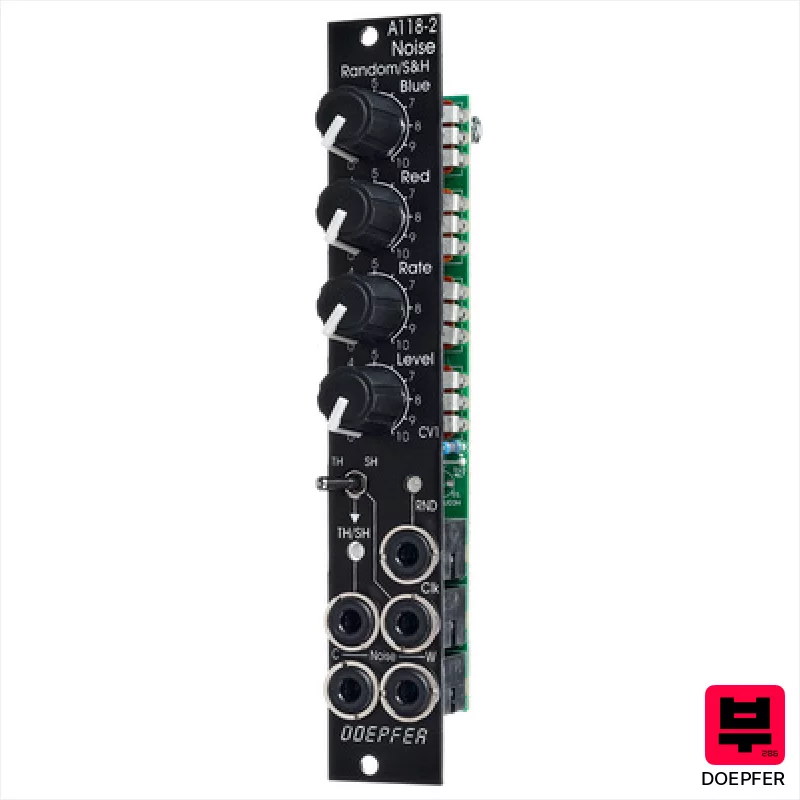
Doepfer A-118-2 VE
- • Classic Doepfer build quality: robust, reliable, and feels substantial.
- • Versatile noise palette: red, blue, and white noise offer diverse textures.
- • Track/Hold and Sample/Hold options expand creative possibilities significantly.
- • Compact 4U format integrates seamlessly into most Eurorack systems.
- • Limited noise shaping beyond basic color mixing; lacks complex filtering.
- • Vintage Edition black panel is prone to fingerprinting and smudging.
- • Power draw, while modest, can add up in larger modular setups.
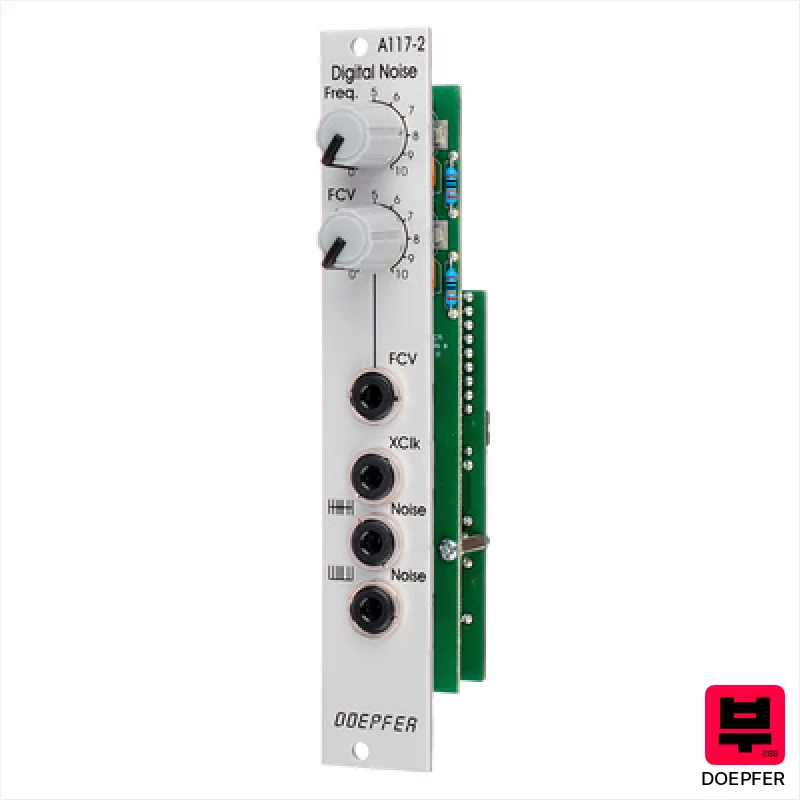
Doepfer A-117-2
- • Excellent noise quality, surprisingly rich and textured for a digital module.
- • Wide frequency range (50-40kHz) allows for subtle to harsh noise.
- • Compact 4HP footprint makes it ideal for dense modular setups.
- • CV input provides dynamic control over the noise sequence's rate.
- • Limited output options; bipolar/unipolar can restrict certain patching scenarios.
- • Relatively basic functionality compared to more complex noise generators.
- • 45mm depth might create issues in shallow Eurorack cases.

Doepfer A-118-2
- • Excellent noise quality, surprisingly clean and usable.
- • Versatile random voltage output with useful level control.
- • Track/Hold and Sample/Hold modes offer creative modulation.
- • Compact 4HP footprint ideal for dense modular systems.
- • Limited noise color shaping compared to more expensive modules.
- • The level control can be a bit fiddly with fast changes.
- • Output levels might require gain staging adjustments in some setups.

Ritual Electronics Krach
- • Excellent noise variety; distinct textures for unique soundscapes.
- • Compact 6HP footprint maximizes modular space efficiency.
- • Rumble output provides genuinely useful sub-bass frequencies.
- • Robust construction; feels solid and well-built for its size.
- • Limited output level adjustment; may need external gain.
- • Pink noise isn't perfectly flat; slight coloration noticeable.
- • Hiss resonance can become harsh quickly with improper settings.
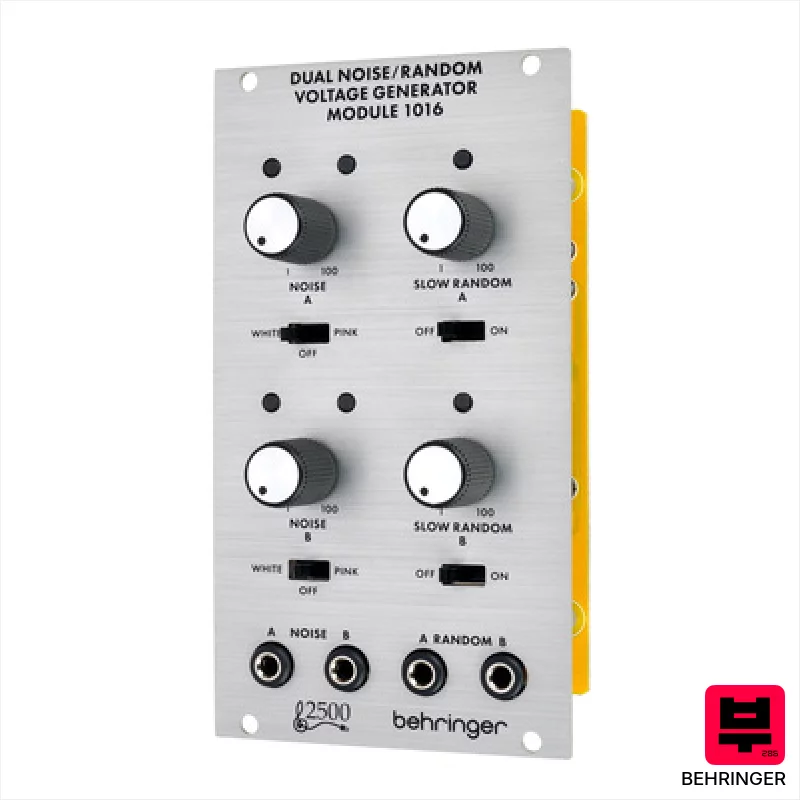
Behringer Dual Noise / Random Gen. 1016
- • Excellent noise source for textural soundscapes
- • Random voltage generators add unpredictable movement
- • Tiny footprint (14HP) maximizes modular space
- • Incredibly affordable entry point into noise generation
- • Plastic construction feels less robust than higher-end modules
- • Limited control beyond basic level and attenuation
- • Noise generators lack advanced shaping options like filtering

Doepfer A-117
- • Unique digital noise character distinct from analog alternatives
- • 808 source recreates classic drum machine textures convincingly
- • Compact 8HP footprint ideal for space-constrained modular systems
- • External clock input offers versatile rhythmic possibilities
- • Limited noise shaping compared to more complex noise generators
- • 808 source's sounds can be somewhat predictable without extensive modulation
- • Relatively basic feature set for a modern noise module
How to Choose the Best Noise Modules
Noise Types & Shaping
Beyond simple white, pink, or brown noise, pro modules offer multiple noise sources (filtered pink, static, granular) and extensive shaping options. This is about dialing in the exact character - that subtle hiss for ambience, or the aggressive sizzle for a distorted lead.
Modulation Capabilities
A static noise source is a novelty; a modulated one is a tool. We're looking for modules with flexible modulation inputs - FM, amplitude modulation, even complex envelope followers - to add movement and life to the noise.
Timbral Complexity
Some noise modules are just...flat. The best ones have built-in filtering, distortion, or other processing to add harmonic content and character. That 'ice-picky' top end isn't always what you want; sometimes you need a warm, gritty noise that sits well in a mix.
Utility & Integration
How well does it play with other modules? Look for features like voltage-controlled filtering, sample-and-hold, or even onboard sequencers to create complex textures without a massive patch.
Build Quality & Reliability
Let's be real, gigging with a flimsy module is a nightmare. Solid construction, robust jacks, and a stable power draw are non-negotiable for professional use. A module that fails mid-performance is a wasted investment.
Buying Guide
Don't fall for the hype. A module with a million features is useless if the core noise generation sounds like a dial-up modem. Pay attention to the noise's character - does it have a pleasant grit, or is it just harsh and unpleasant? Spending a bit more on a module with a well-designed filter section or a wider range of noise types will pay dividends in your sound. And always, always check the power draw; a module sucking down too many milliamps can bring down your entire system.
How This List Is Built
We don't play these instruments — we're a catalog, not a review desk, and we'd rather say so than pretend otherwise. This page ranks 15 noise modules from the Thomann catalogue, which is the largest single source of specification data in this category.
Position is computed, not curated. Four signals, in order of weight: how completely the manufacturer documents the instrument (number of published specifications), where it sits in the price range, how specific the model designation is — which filters out generic accessories — and whether a product image exists. The same inputs always produce the same order, so nothing here is shuffled to look fresh.
What this list is good for: narrowing a category down to a shortlist by spec and budget. What it isn't: a substitute for hearing an instrument. Before you buy, read hands-on reviews and, where you can, play it. Full methodology.

