AudioFu Chart · October 2026
Best Microphones for Flutes 2026
The top pick is Audix ADX10FLP Mini Flute Condenser Mic ($251). the t.bone Ovid System CC 100 RC EW gives you the most for the money at $66. Ranked by the AudioFu Index from 5 models across 3 brands, prices checked every night.
Last updated: October 19, 2026
Narrow the chart
All Microphones for FlutesTop 5
Full detail for the 5 highest AudioFu Index scores. Every other model is listed below.
-
- Size8"
The Audix ADX 10 FLP is a fantastic, purpose-built mic for flutists who need freedom of movement. The included belt pack is a game-changer for stage performance, and the sound is crisp and detailed, really bringing out the instrument's character. It's ideal for soloists, orchestral players, or anyone wanting a focused, professional flute recording.
Pros
- Excellent transient response captures flute nuances beautifully
- Belt pack provides unparalleled freedom and stage mobility
- Well-designed clip minimizes handling noise and feedback
Cons
- Mini-XLR connector limits cable options and can be fragile
- Battery dependence requires frequent changes or phantom power
81AudioFu
Index↓ 2.6%since Aug 17 · lowest so far$258 · Aug 17$251 now$251€223 at Thomann · in stockCheck price ↗ -
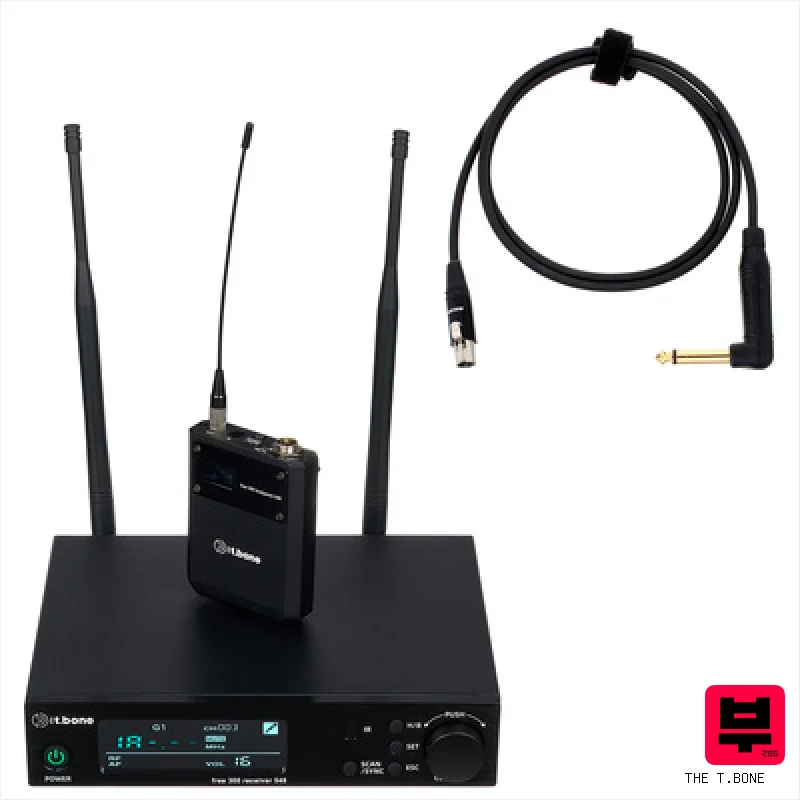
This t.bone Ovid CC 100 RC EW is a surprisingly capable solution for flute players who need a budget-friendly wireless setup. It's especially good for gigging musicians or students who want a simple, reliable mic without the expense of a high-end studio option – just be aware it's not going to replace a dedicated studio condenser.
Pros
- Sennheiser EW connector offers seamless integration for wireless flutists.
- Cardioid pattern minimizes room noise, crucial for stage performance.
- Flexible gooseneck precisely positions the mic for optimal capture.
Cons
- Build quality feels somewhat plasticky for repeated, demanding use.
- Limited to Sennheiser EW systems without additional cables.
-
This t.bone Ovid is a surprisingly capable clip mic for flute players needing wireless freedom. It’s a budget-friendly solution that's easy to set up and use, especially if you already have Shure wireless gear. While it won’t replace a top-tier studio mic, it’s a solid choice for gigging musicians.
Pros
- Compact design minimizes obstruction during performance
- Cardioid pattern effectively rejects stage noise and feedback
- 4-Pin mini XLR enables seamless integration with Shure wireless systems
Cons
- Build quality feels somewhat plasticky, not as robust as higher-end options
- Gooseneck flexibility may loosen over time with frequent adjustments
-
This little module is a real boon for serious flute players using Myers pickups. It gives you a clean, powerful signal boost, especially helpful in louder environments or when needing to mic a large ensemble. If you're already in the Myers ecosystem, this is a smart, affordable upgrade to maximize your mic's performance.
Pros
- Provides clean, low-noise amplification for Myers flute mics
- Compact size allows for discreet mounting on goosenecks
- Lithium battery offers reliable, long-lasting power
Cons
- Limited to Myers Master Series microphones and goosenecks
- Battery replacement adds to ongoing operational costs
40AudioFu
IndexStableno change since Aug 17Aug 17$201 now$201€179 at Thomann · in stockCheck price ↗ -
The Master Flute is a clever and well-thought-out pickup system for serious flute players needing amplified sound. The gooseneck design and multiple mounting options allow for excellent mic positioning, and the active preamp ensures a clean signal – perfect for soloists, chamber ensembles, or anyone needing to amplify their flute on stage or in a rehearsal setting.
Pros
- Flexible goosenecks provide precise mic placement for nuanced flute tones
- Active preamp delivers clean, amplified signal with minimal noise
- Multiple mounting options (clips, strap, clamp) offer versatility
Cons
- Lithium battery necessitates periodic replacement, adding ongoing cost
- Compact preamp housing might be fiddly for some users
40AudioFu
IndexStableno change since Aug 17Aug 17$505 now$505€449 at Thomann · in stockCheck price ↗
How to choose the best microphones for flutes
Polar Pattern
Cardioid is generally your best bet for flute. It rejects off-axis noise, which is crucial when you're dealing with breath sounds and potential stage bleed. Omni can be nice for a really natural, airy sound in a controlled acoustic space, but it's a gamble live.
Frequency Response
Flutes live in a pretty high frequency range, but you need a mic that captures the fundamental tones accurately without emphasizing harshness. Look for a response that's relatively even, but with a gentle lift in the upper mids to bring out the clarity - avoid anything that sounds overly bright or ice-picky.
Sensitivity
Flutes aren't the loudest instruments. A mic with good sensitivity will capture the quieter nuances of your playing without needing a ton of gain, which can introduce noise. Low-output mics will require more preamp gain and potentially bring out unwanted noise floor.
Transient Response
A good mic needs to respond quickly to the initial attack of each note. Sloppy transient response will make the flute sound sluggish and muddy, blurring the articulation. This is especially important if you're playing fast passages or intricate ornamentation.
Self-Noise
This is a big one, especially for quieter passages and recordings. Even a small amount of self-noise can be distracting and muddy the clarity of your flute's tone. A mic with a low self-noise figure (measured in dBA) is essential for clean recordings.
Buying guide
So, you're looking for a mic for your flute? It's a surprisingly nuanced hunt - you're not just capturing a tone, you're trying to translate the subtle nuances of breath control and fingering into something that sounds natural and present, whether it's for a solo recording, a gig with a chamber ensemble, or even just practicing at home. A bad mic can make your flute sound thin, brittle, or just plain lifeless. Let's cut through the noise and find the right mic for your flute, whatever your setup.
Don't chase the hype. A lot of mics marketed towards woodwinds are overpriced and don't deliver. Condenser mics are the standard for flute recording - they offer the sensitivity and detail needed to capture the instrument's nuances.
For gigging, consider a small-diaphragm condenser for its robustness and consistent performance, but if you're primarily recording, a large-diaphragm can offer a more detailed and nuanced tone, assuming your room is treated well. Budget for a decent preamp too - a great mic paired with a cheap preamp is a waste of money.
How the AudioFu Index works
Five measured signals and nothing else — no stars from strangers, no “tested by experts” we didn’t do. The weights are fixed and public. We don’t play these instruments; we measure the market around them.
This chart covers 6 microphones for flutes from the Thomann catalogue. Before you buy, read hands-on reviews and, where you can, play it. Full methodology.
AudioFu earns a commission when you buy through our Thomann links. It never changes the order — the index does.
- Demand40%
How many of this exact model are for sale on Reverb right now — what musicians actually buy and resell.
- Lineup20%
How many finishes Thomann stocks — makers expand the models that sell.
- Price15%
Where the price has moved since we started tracking in August.
- Specs15%
How completely the maker documents it.
- Maker10%
How deep the brand’s range is in this category.
Questions
What's the difference between a large-diaphragm and small-diaphragm condenser mic for flute?
Large-diaphragm mics often have a slightly warmer, more 'romantic' tone, but they can be more sensitive to room acoustics. Small-diaphragm mics are generally more accurate and forgiving in less-than-ideal rooms, and tend to be more durable for gigging.
Should I use a pop filter with a flute mic?
Not usually, but it can help. Flute breath noise isn't as intense as vocal pop noise, but if you're getting excessive wind noise, a very light pop filter can help tame it without significantly altering the tone.
What's a good preamp for a flute mic?
Ideally, something with clean gain and low noise. Universal Audio, Focusrite, and Audient all make solid options in various price ranges. Don't cheap out - a good preamp can really elevate the sound.
Can I use a dynamic mic for flute?
Technically, yes, but it's generally not ideal. Dynamic mics are less sensitive and often lack the detail needed to capture the flute's subtleties. You'll likely need a lot of gain, which will amplify any noise in your signal chain.
How far away from the flute should I place the microphone?
Experiment! Start with around 6-12 inches and adjust based on the room acoustics and the desired tone. Closer placement emphasizes the direct sound, while further placement captures more of the room's ambience.