
Best Measurement Microphones Under $2,000 2026
So, you're diving into room acoustics and need a measurement mic, but your bank account isn't screaming? Good news: you don't need to drop serious cash to get something that'll actually help you tame those nasty room modes and get a decent response curve. This isn't about chasing perfection, it's about getting a usable tool for the price - dialing in your monitors, checking speaker placement, or even just getting a baseline for your bedroom studio. Let's look at some solid options under $2000 that won't leave you feeling ripped off.
Last updated: August 25, 2026
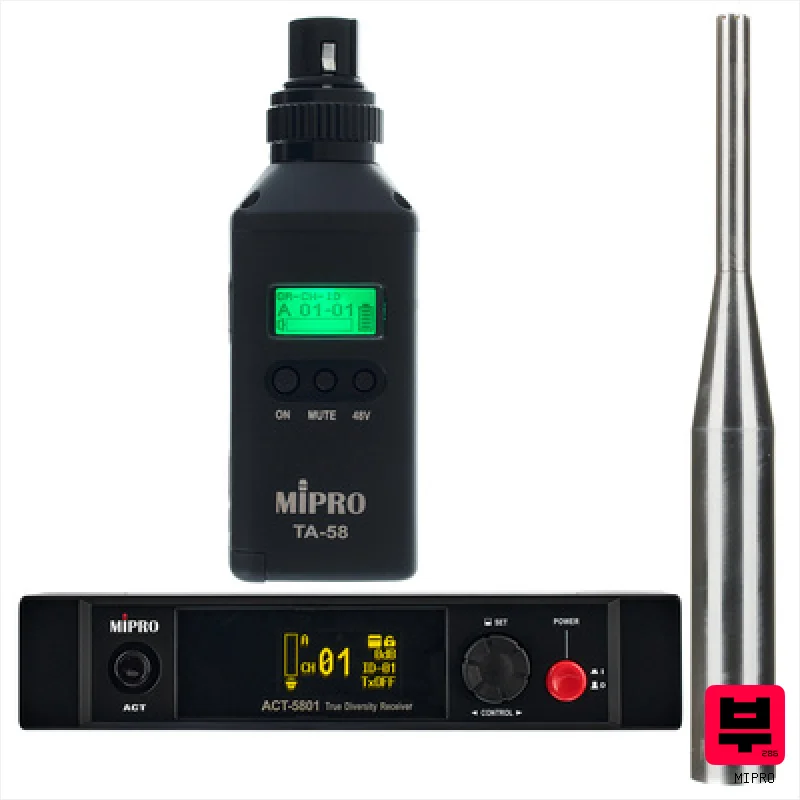
Mipro ACT-5801 Measurement Bundle
- • Low 1.5 ms latency for real-time monitoring
- • Rechargeable battery lasts up to 12 hours
- • Omnidirectional mic captures full frequency range
- • Lockable XLR socket prevents accidental unplugging
- • Transmitter requires separate purchase from bundle
- • No specific weight listed for the transmitter unit
- • Missing max SPL rating for the measuring mic
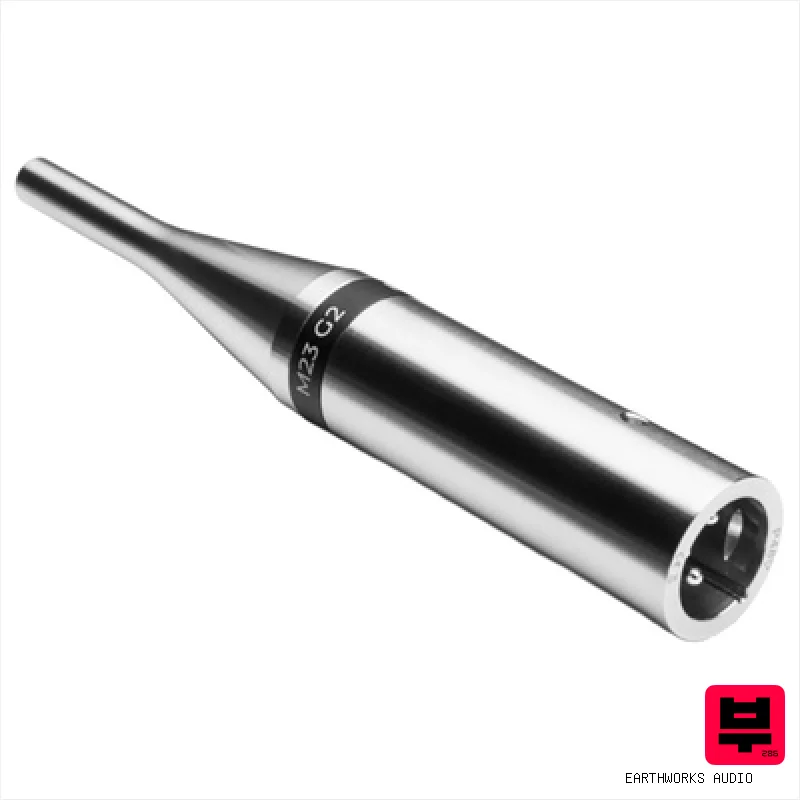
Earthworks Audio M23 Gen2
- • Captures full range from 5 Hz to 35 kHz with flat response
- • Handles loud sounds up to 140 dB SPL without distortion
- • Includes windscreen and adapter for outdoor and studio use
- • Compact 140g size fits in any recording setup easily
- • Sensitivity value is completely missing from the specs
- • No built-in preamp, so you need an external power source
- • Only one voltage option listed for phantom power supply
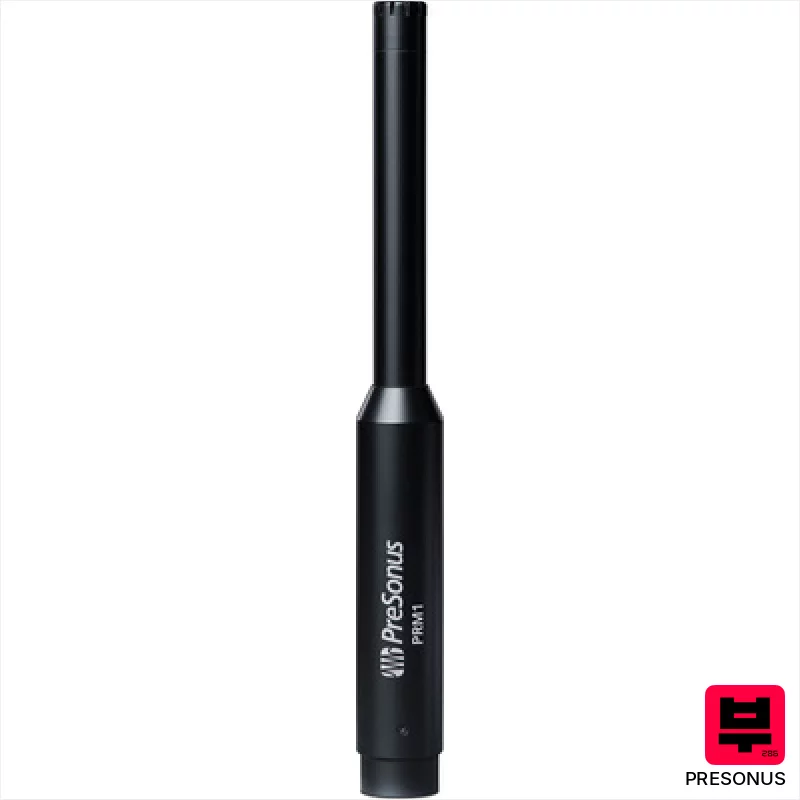
Presonus PRM1
- • Excellent value for basic room and system analysis.
- • Surprisingly robust ball capsule for its price point.
- • Well-matched frequency response for measurement accuracy.
- • Included accessories (clamp, windscreen, case) add convenience.
- • Lacks the precision of higher-end measurement microphones.
- • 1/4 in capsule limits flexibility for complex acoustic setups.
- • Limited dynamic range compared to studio-grade condensers.

Superlux ECM 888 B
- • Nickel housing provides a surprisingly robust and professional feel.
- • Omnidirectional response captures a wide, natural sound field.
- • Battery operation offers portability and flexibility in measurement setups.
- • Shock mount holder minimizes vibrations and handling noise effectively.
- • High impedance necessitates a preamp with sufficient gain and impedance matching.
- • Large size can be cumbersome in tight spaces or crowded environments.
- • Limited frequency response detail compared to higher-end measurement mics.
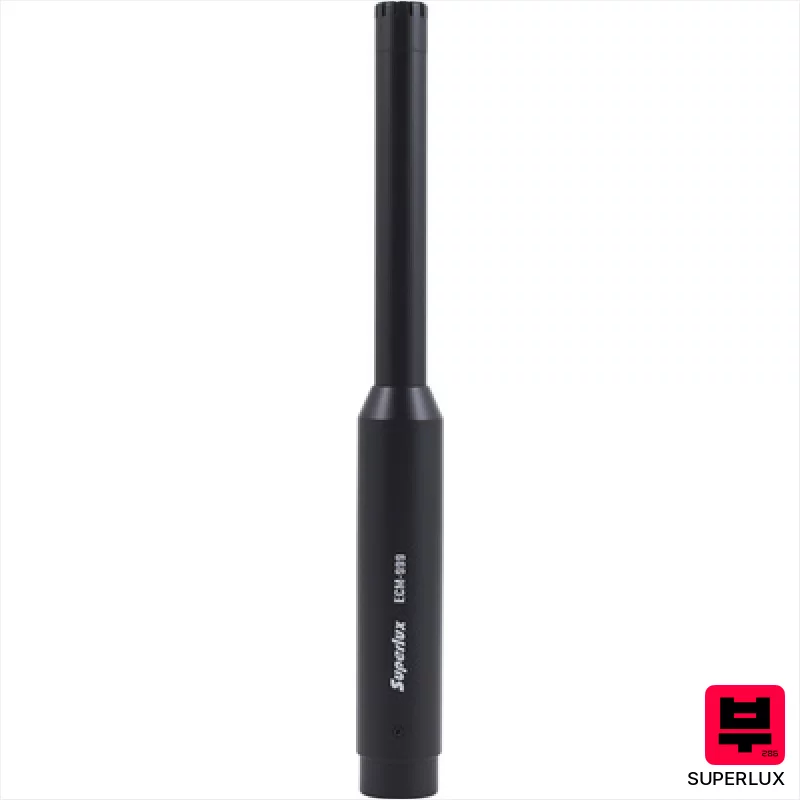
Superlux ECM999
- • Remarkably flat frequency response for accurate measurements
- • Surprisingly robust plastic body considering the price point
- • Included windscreen effectively reduces plosives and wind noise
- • Lightweight and compact, easy to position anywhere
- • Plastic body feels noticeably less premium than metal alternatives
- • Sensitivity could be higher for quieter environments
- • Limited application beyond measurement and basic vocal recording
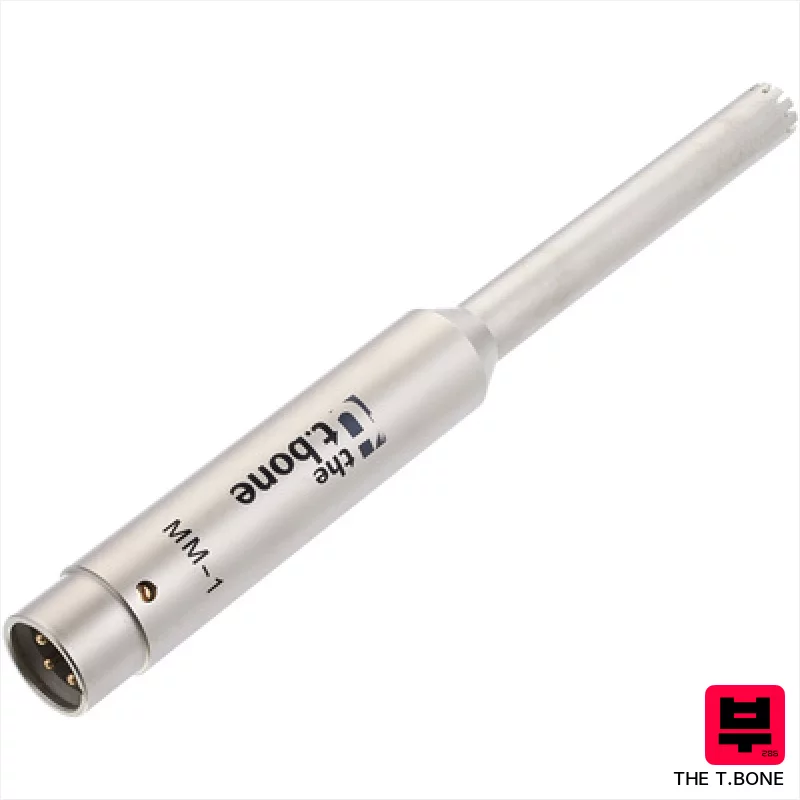
the t.bone MM-1
- • Surprisingly robust 1/4in polarized capsule for its price.
- • Decent frequency response for basic room and system analysis.
- • Included holder provides stable, usable mounting options.
- • Very lightweight and portable for field measurements.
- • Limited dynamic range compared to professional measurement mics.
- • Higher output impedance requires a low-noise preamp for best results.
- • Omnidirectional response picks up unwanted background noise easily.

NTI Audio M2211
- • Metal diaphragm ensures accurate transient response and durability
- • Removable capsule allows for future upgrades and customization
- • Class 1 frequency response delivers exceptionally flat and neutral measurements
- • Omnidirectional pattern captures sound accurately from all directions
- • High-end price point puts it out of reach for casual users
- • Limited application beyond acoustic measurement and analysis
- • Relatively long body (150 mm) can be unwieldy in tight spaces
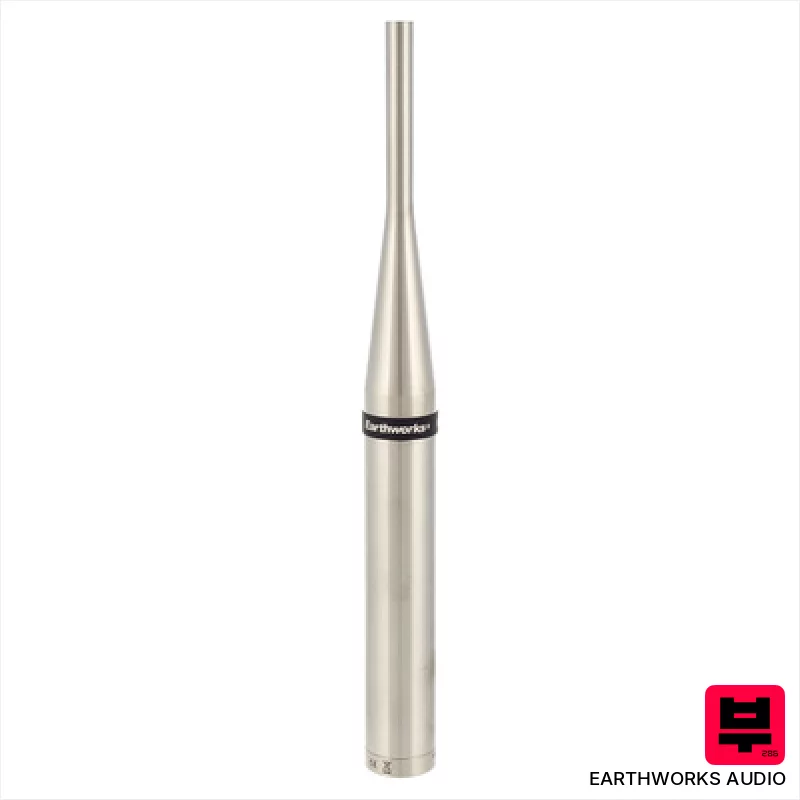
Earthworks Audio M30
- • Exceptional frequency response for accurate measurement data
- • Robust, all-steel construction ensures longevity and durability
- • Omnidirectional pattern offers consistent response from all angles
- • Low self-noise minimizes unwanted background artifacts during recordings
- • High SPL handling requires careful gain staging to avoid distortion
- • Limited polar pattern options restrict use in some recording scenarios
- • Premium-priced, a significant investment for hobbyists or smaller studios
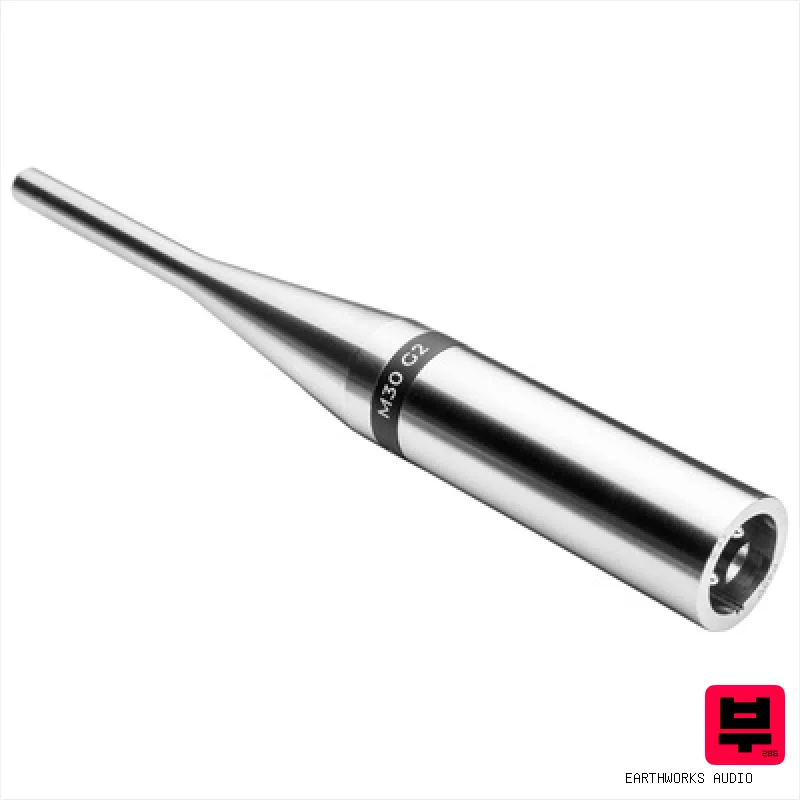
Earthworks Audio M30 Gen2
- • Extremely wide frequency range from 3 Hz to 40 kHz for accurate measurements
- • Heavy 140 g weight ensures stability on recording tables during sessions
- • Includes windscreen and calibration adapter for outdoor field work conditions
- • High SPL handling up to 140 dB prevents distortion in loud environments
- • Omnidirectional pattern limits directional control compared to cardioid models
- • No USB connectivity requires external audio interface for signal output
- • Small physical size may feel unstable on very large or uneven surfaces
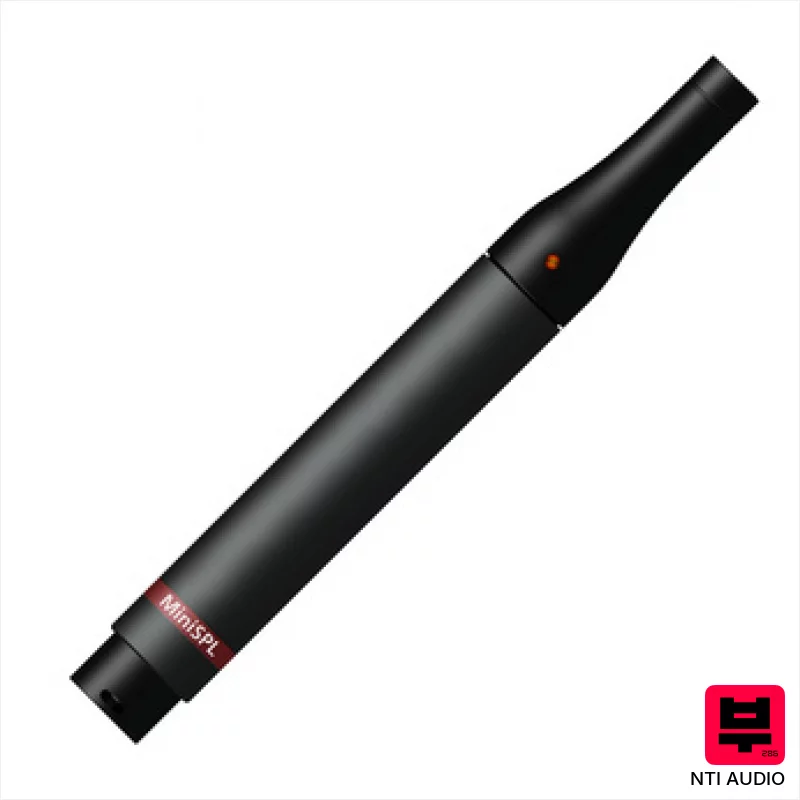
NTI Audio Mini SPL with Certificate
- • Excellent calibration certificate ensures reliable, repeatable measurements.
- • Compact size and micro-clamp offer incredible versatility in tight spaces.
- • Electret capsule delivers surprisingly accurate and detailed sound reproduction.
- • Battery powered operation allows for field use without external power.
- • Limited frequency response compared to higher-end measurement microphones.
- • The electret capsule's dynamic range isn't as broad as condenser alternatives.
- • Small size can make handling slightly awkward, especially with gloves.

NTI Audio M4262
- • Excellent frequency response, accurate for critical acoustic measurements.
- • Robust construction with a solid, reliable capsule housing.
- • ASD function provides direct calibration data for NTI XL2 systems.
- • Omnidirectional pattern ensures consistent, natural sound capture.
- • Higher inherent noise floor might be a concern for ultra-quiet environments.
- • Limited polar pattern options restricts its use in certain recording scenarios.
- • Relatively bulky size can be cumbersome in tight spaces.
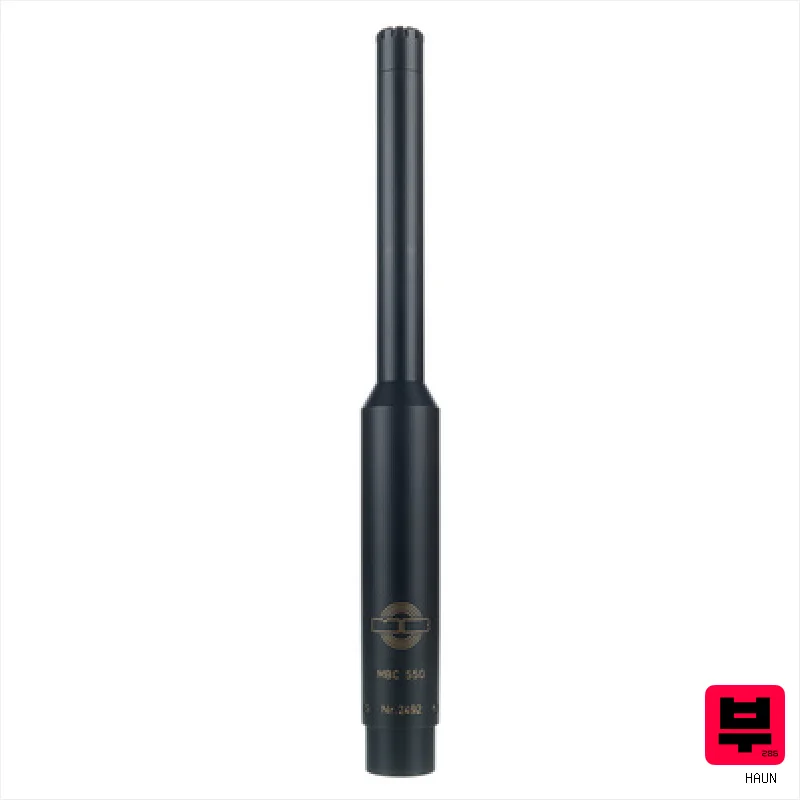
Haun MBNM 550 EL
- • Omnidirectional pickup captures sound from any angle.
- • Almost linear response keeps frequencies true to source.
- • Handles loud piano and acoustic instruments up to 126 dB.
- • Includes sturdy wooden case for safe transport.
- • Requires 16 to 48 volts of phantom power to work.
- • 500 ohm impedance may need specific preamp matching.
- • No sensitivity data listed in the official description.
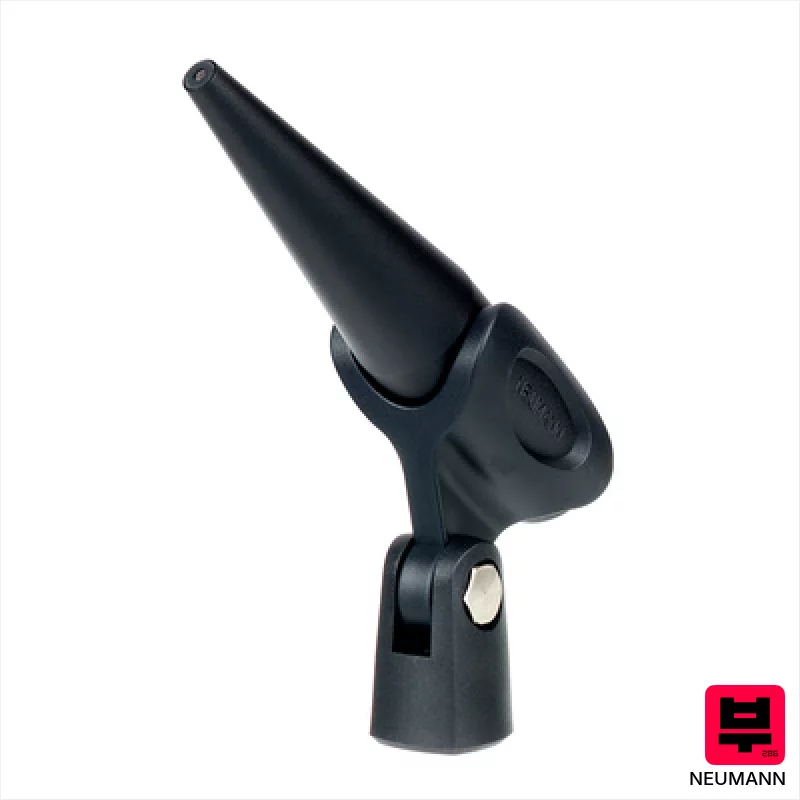
Neumann MA 1
- • Exceptional accuracy for monitor calibration, thanks to Fraunhofer IIS algorithms
- • Space-adaptive target curve simplifies room correction significantly
- • Compact design minimizes interference during measurement process
- • Seamless integration with Neumann’s DSP monitor ecosystem is a huge benefit
- • Limited to Neumann monitors, restricting broader studio compatibility
- • Omnidirectional pattern can pick up unwanted room reflections easily
- • Price point makes it a premium investment for smaller studios
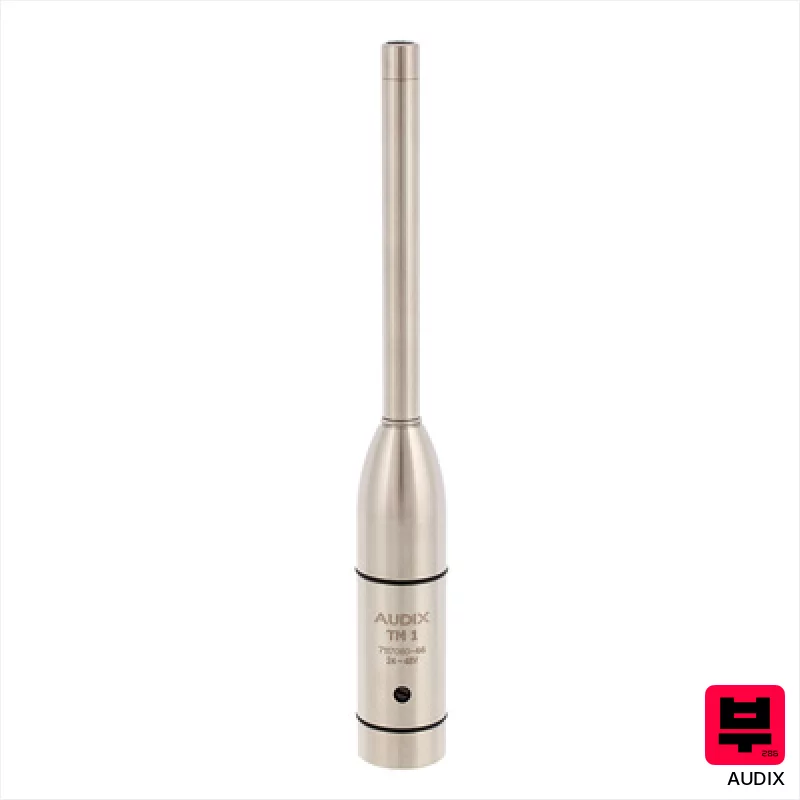
Audix TM-1 Plus
- • Brass housing provides exceptional durability and reduces resonance
- • Pre-polarized capsule simplifies operation and eliminates external bias
- • Included calibration data file ensures accurate measurements and repeatability
- • Elastic suspension minimizes handling noise and vibrations effectively
- • Omnidirectional pickup inherently captures unwanted room reflections
- • Limited versatility compared to multi-pattern microphones
- • Relatively short cable length may require extensions in some setups

Audix TM-1
- • Solid nickel-plated brass housing provides excellent durability and resonance.
- • Omnidirectional pickup ensures accurate room and ambience capture.
- • Wide 20 Hz - 25 kHz frequency response captures subtle details.
- • Gold-plated XLR connector minimizes noise and maximizes signal transfer.
- • Limited to omnidirectional pattern, restricting versatility for focused recording.
- • Relatively long body (150 mm) can be unwieldy in tight spaces.
- • Requires 18-52V phantom power, potentially limiting compatibility with some interfaces.
Every measurement microphones that matches
21 models match this page. The 15 above are covered in detail; the rest are listed here with their published specifications.
| # | Model | Specifications | Price |
|---|---|---|---|
| 16 | Mipro MM-100 | not published | $290 |
| 17 | beyerdynamic MM 1 (2023) | not published | $255 |
| 18 | DBX DriveRack RTA-M | not published | $146 |
| 19 | Sonarworks SoundID Ref Measurement Micro | not published | $99 |
| 20 | IK Multimedia MEMS Microphone for ARC System | not published | $85 |
| 21 | Behringer ECM8000 | not published | $24 |
Measurement Microphones by the numbers
Measured across all 21 models in this category, so «wide», «short» or «expensive» mean something you can check.
How to Choose the Best Measurement Microphones
Frequency Response Flatness
This is the big one. You want a mic that doesn't color the sound it's measuring. A slight bump or dip is okay, but massive deviations will skew your results and make your room EQ a mess. Look for mics with a relatively wide, flat response within the audible range (20Hz-20kHz).
Self-Noise
A noisy mic introduces errors into your measurements, especially at lower SPLs. Self-noise is measured in A-weighted decibels (dBA), and lower is better. Anything above 15dBA starts to become noticeable and can impact the accuracy of your low-frequency measurements.
Dynamic Range
This tells you how loud a signal the mic can handle before distortion becomes a problem. A wider dynamic range gives you more headroom, which is crucial if you're measuring loud sources like guitar cabs or drums.
Polar Pattern Accuracy
Most measurement mics are omnidirectional, which is generally what you want for room acoustics. But check the polar response - is it truly omni, or does it have noticeable lobes or nulls? These inconsistencies will affect your measurements.
Build Quality & Capsule
A cheap plastic body or a poorly manufactured capsule can introduce noise and distortion. You're not expecting tank-level durability, but a mic that feels flimsy is a red flag. Capsule suspension is also important to minimize vibrations.
Buying Guide
At this price point, you're making trade-offs. You won't get the absolute flatness of a $5000 Neumann, but you can get something surprisingly accurate. Be wary of mics that promise too much for too little - often, those are just marketing hype. Focus on mics with good reviews from other engineers and acoustic consultants, and don't be afraid to buy used to stretch your budget. A decent preamp is also important to get a clean signal from your measurement mic.
How This List Is Built
We don't play these instruments — we're a catalog, not a review desk, and we'd rather say so than pretend otherwise. This page covers 21 measurement microphones from the Thomann catalogue, which is the largest single source of specification data in this category: 15 in detail, the rest listed with their specifications.
Position is computed, not curated. We parse the manufacturer's own description into actual values — nut width, scale, fret count, fingerboard radius, size, alloy — and rank on them: how many specifications a model has published, how many of them are measurable numbers, and how precisely it meets this page's criterion. A product image adds a little. Price is not a ranking signal: it tells you nothing about whether a neck fits your hand. The same inputs always produce the same order, so nothing here is shuffled to look fresh.
What this list is good for: narrowing a category down to a shortlist by spec and budget. What it isn't: a substitute for hearing an instrument. Before you buy, read hands-on reviews and, where you can, play it. Full methodology.

