
Best Installation Mixing Amps Under $800 2026
So, you're building out a small venue, a rehearsal space, or maybe a home studio and need some reliable power without breaking the bank? Finding decent installation amps under $800 can feel like searching for a vintage Les Paul at a flea market, but it's doable. We've been there, lugging around underpowered amps that choked out the low end or just plain fizzed when pushed - let's find you something that'll actually work for your gig.
Last updated: September 29, 2026
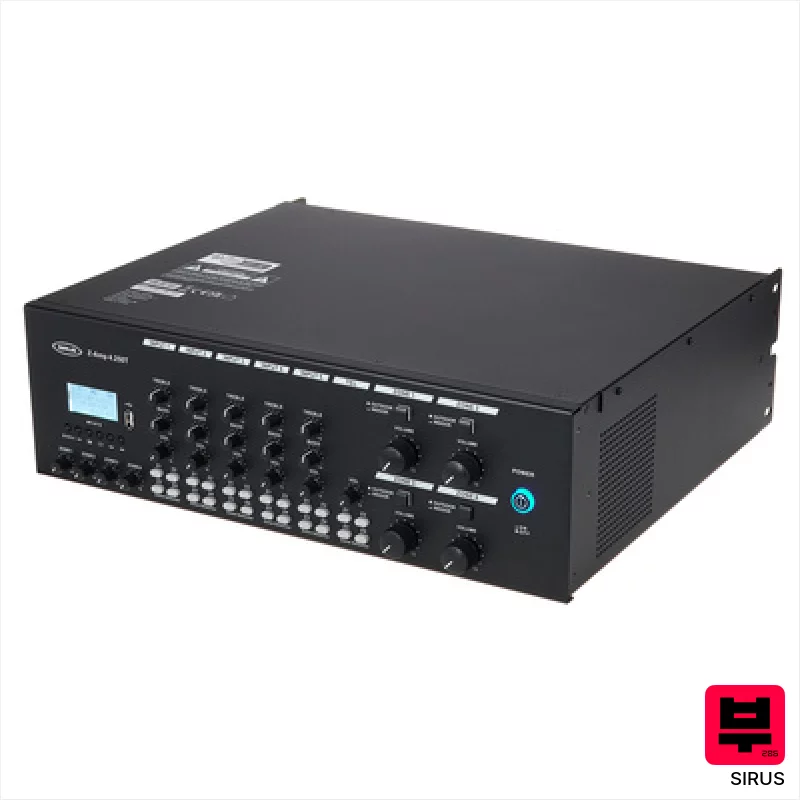
Sirus Z-Amp 4.250T
- • Robust Class-D design ensures efficient power delivery and minimal heat.
- • Flexible zone control simplifies complex audio distribution scenarios.
- • Integrated USB media player and Bluetooth add significant convenience.
- • Solid construction with rack-mount capability allows for professional installations.
- • Frequency response, while adequate, lacks the extended highs of more premium amplifiers.
- • RCA input limits high-quality stereo source options; only suitable for basic playback.
- • The 19” 3RU form factor may be restrictive for some installations.
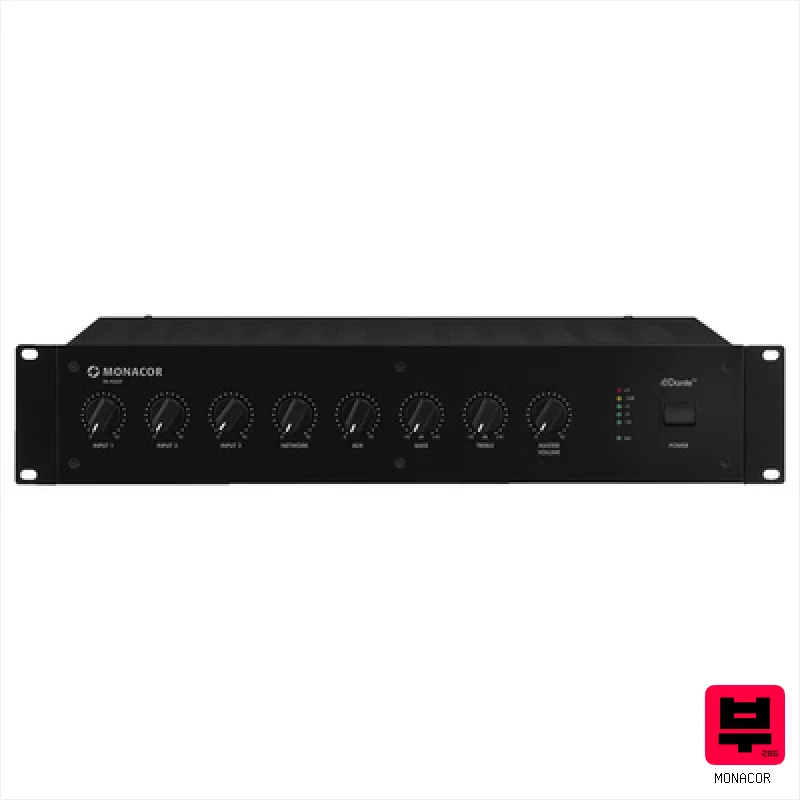
Monacor PA-900DT
- • Solid 120W RMS power for small venues
- • Built-in Dante support for network mixing
- • Dedicated priority input for lead vocals
- • Rack-mountable design for easy installation
- • Only two audio input channels available
- • No dedicated monitor output section listed
- • Limited to single-zone operation
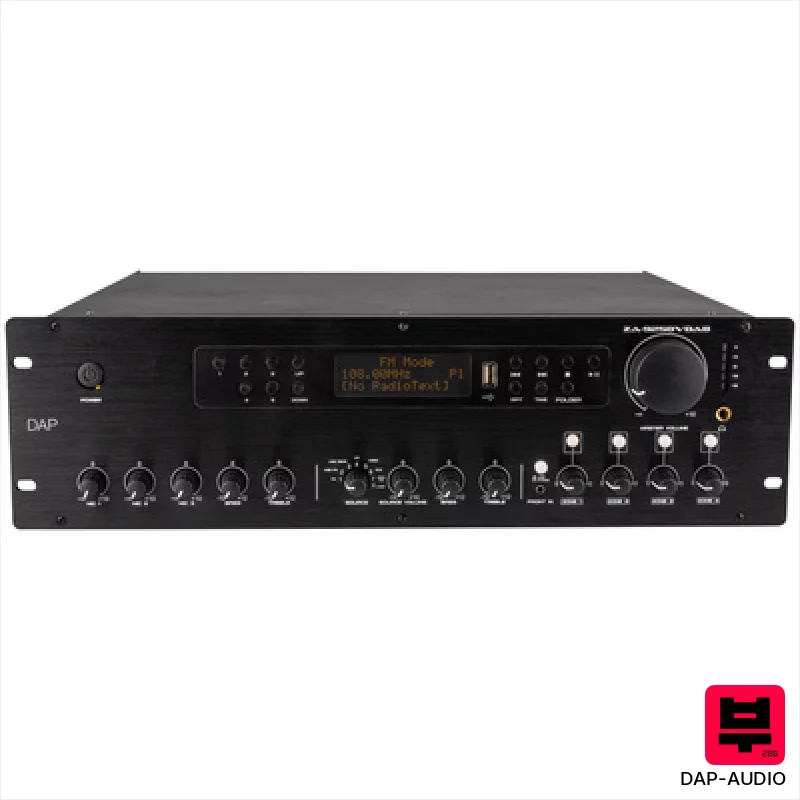
DAP-Audio ZA-9250VDAB
- • Four zones offer significant flexibility for varied installations
- • Built-in DAB+/FM tuner with presets is a convenient feature
- • Backup 24V DC power supply ensures reliable operation during outages
- • Comprehensive connectivity includes XLR, RCA, mini-jack, and Phoenix terminals
- • The 14kg weight makes rack mounting a two-person job
- • RCA connections limit high-quality audio signal transfer
- • Limited MP3/WAV codec support may restrict music file compatibility
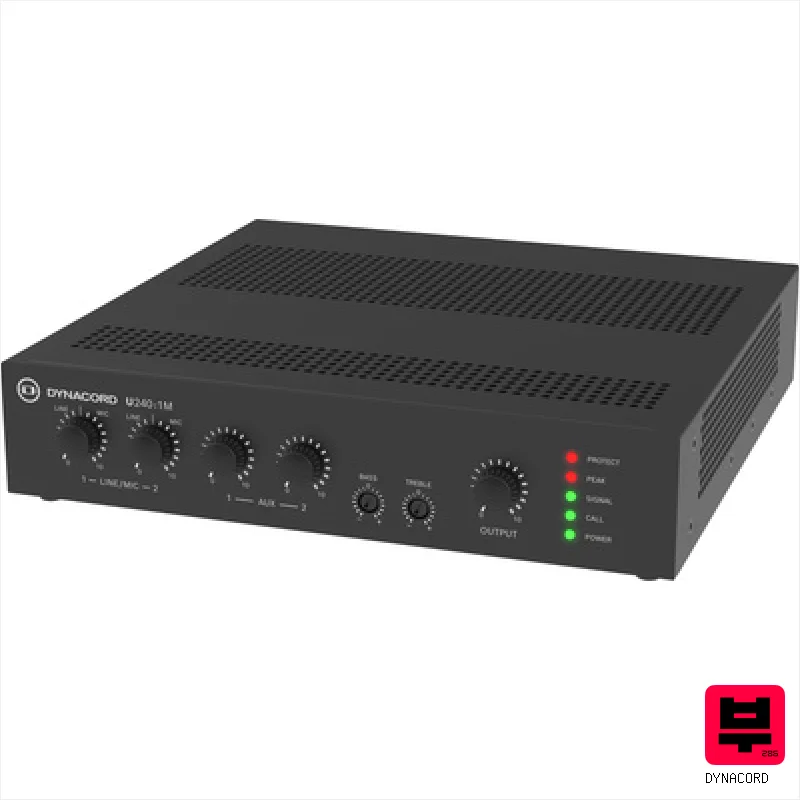
Dynacord U240:1M Mixer amplifier
- • Delivers 240 watts of Class D amplification power
- • Supports EMG priority input for instant contact override
- • Offers flexible 70V and 100V speaker output options
- • Includes 48V phantom power for microphone operation
- • Only handles a single channel of mixing
- • Missing dedicated headphone output for monitoring
- • Lacks digital effects or EQ beyond basic filters
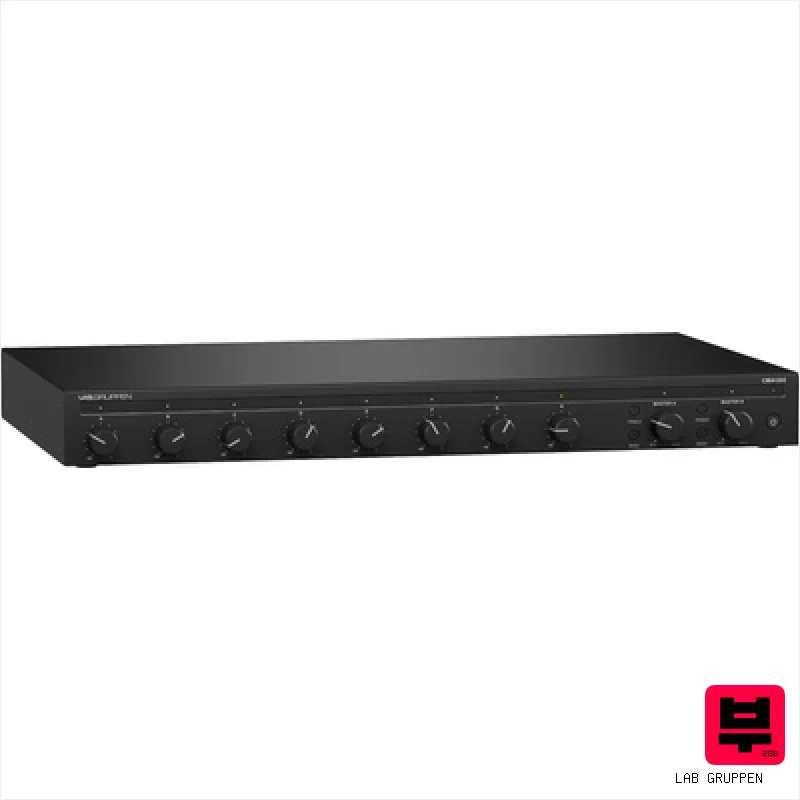
LAB Gruppen CMA1202
- • Dual power zones for versatile stage setups
- • Eight inputs handle most mic and line needs
- • Ethernet control lets you adjust volume remotely
- • Compact 1U size fits easily in any rack
- • No digital XLR inputs for modern microphones
- • Bass and treble controls are per-zone only
- • Single output jack limits multi-device use
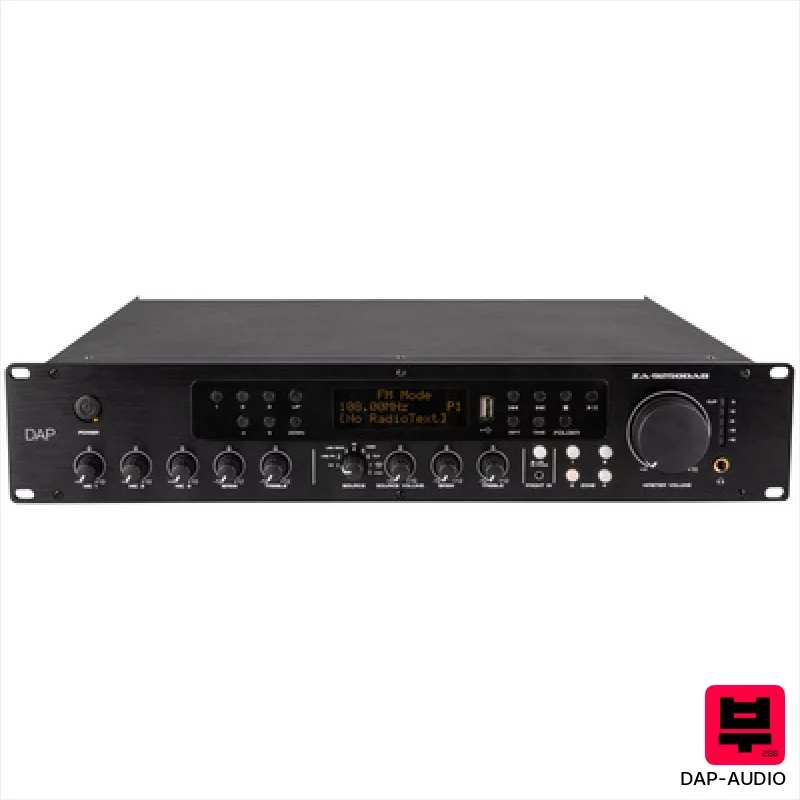
DAP-Audio ZA-9250DAB
- • Four zones offer excellent flexibility for diverse installations
- • Built-in DAB+ and FM tuner with presets is genuinely useful
- • Emergency power input provides critical operational redundancy
- • Comprehensive connectivity including phantom power and multiple inputs
- • 12 kg weight makes rack mounting or transport a bit cumbersome
- • RCA connections feel dated compared to modern digital options
- • Limited MP3/WAV format support; lacks more modern codecs.
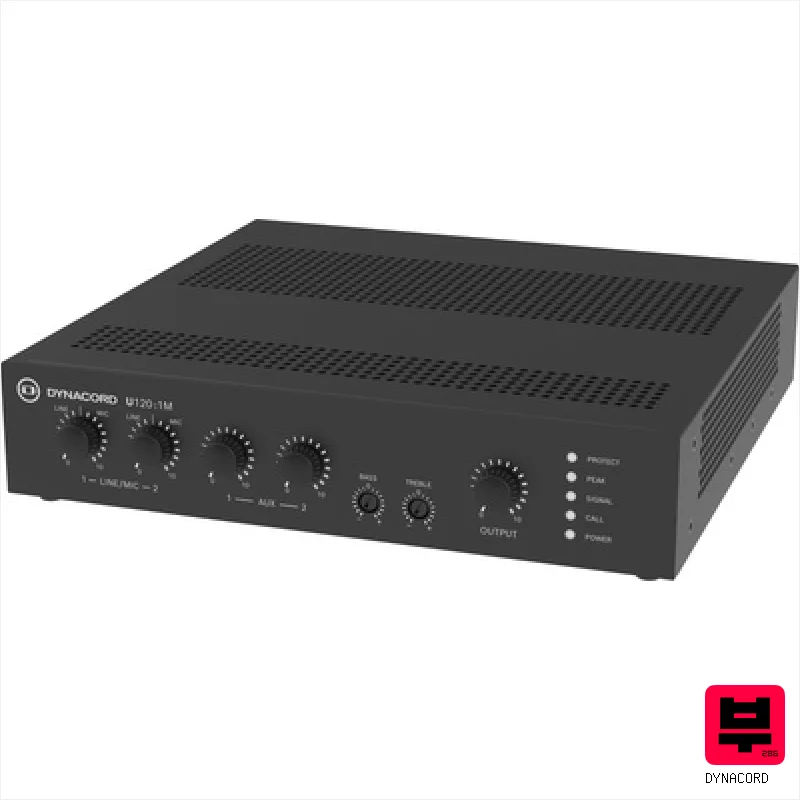
Dynacord U120:1M Mixer amplifier
- • Solid 120 watts of Class D amplifier power for live gigs.
- • Includes dedicated EMG priority input for quick stage access.
- • Offers 70 and 100 volt line outputs for long cable runs.
- • Provides 48 volt phantom power to run condenser microphones.
- • Only one channel limits mixing capabilities for groups.
- • Lacks built-in digital effects like reverb or delay.
- • Fixed low-cut filter reduces flexibility on sound shaping.
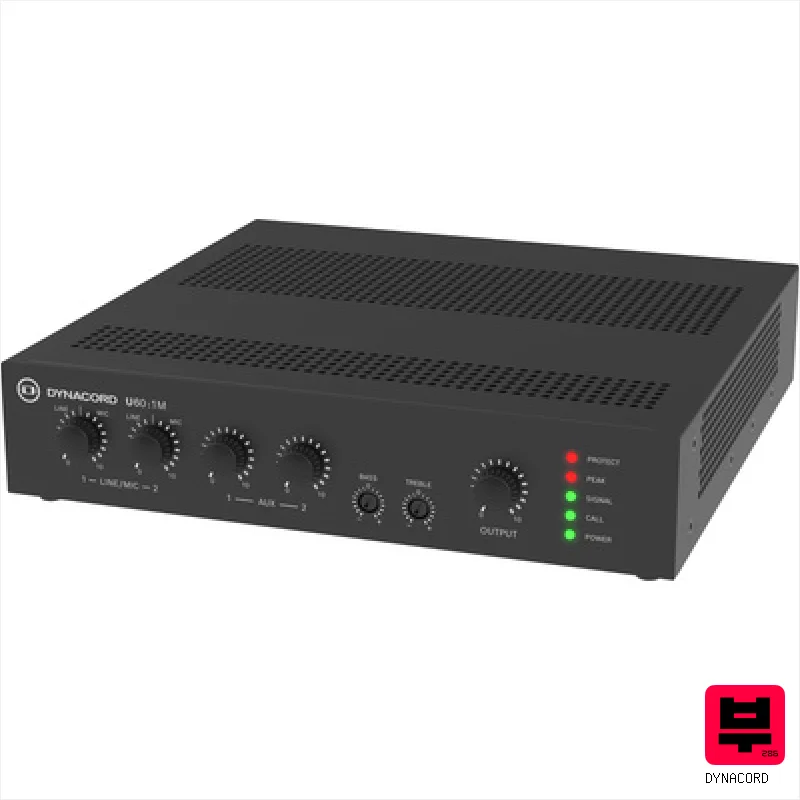
Dynacord U60:1M Mixer amplifier
- • Delivers 60 watts of Class D amplification power.
- • Includes dedicated EMG priority input for guitarists.
- • Supports 48 volt phantom power for microphones.
- • Offers 70 and 100 volt outputs for long runs.
- • Only provides a single mixing channel.
- • Lacks built-in speaker monitoring capability.
- • Limited equalization options with fixed filters.
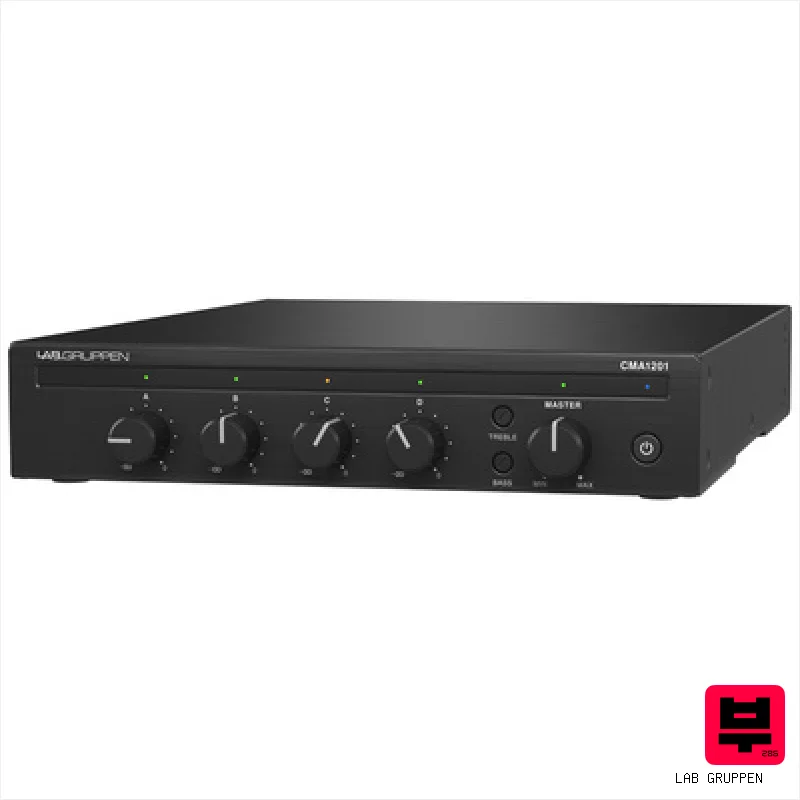
LAB Gruppen CMA1201
- • Switches between 4 and 8 Ohm loads for flexible setups
- • Includes 70 and 100 Volt line level operation options
- • Fits easily into half-rack spaces with compact 1U design
- • Offers GPI remote volume control via Ethernet connection
- • Only provides 120 Watts of output power total
- • Lacks built-in effects processing or EQ beyond basic controls
- • Missing DSP features found in more expensive models
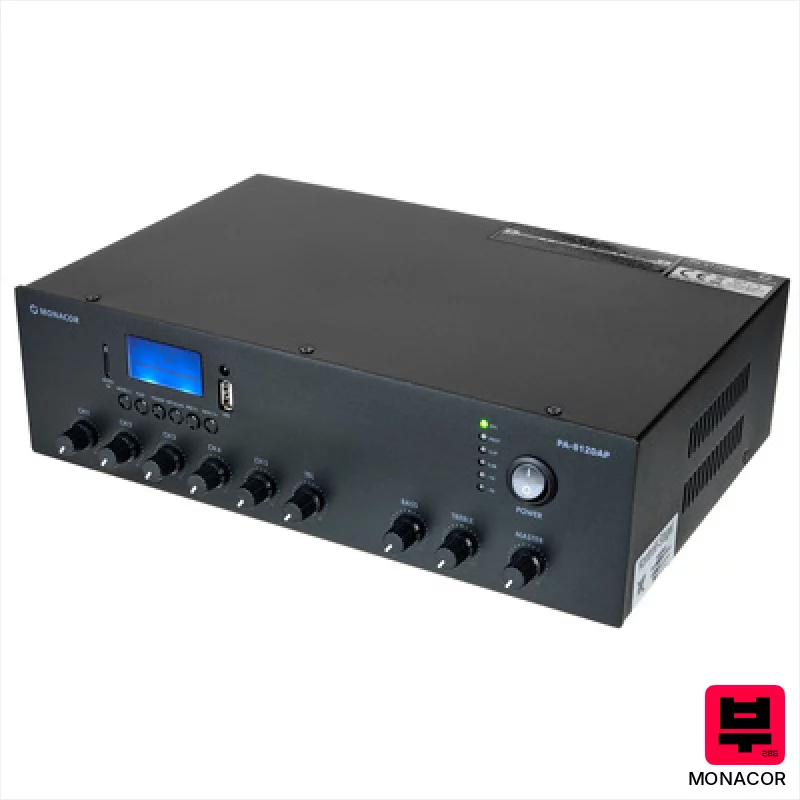
Monacor PA-812DAP
- • Compact Class D design delivers efficient power with minimal heat.
- • Integrated MP3 player, FM/DAB+ tuner, and Bluetooth add surprising versatility.
- • Balanced mic input with phantom power supports condenser microphones effectively.
- • Emergency input provides critical backup for public address applications.
- • Limited EQ – 2-band is basic for detailed sound shaping.
- • Bluetooth 4.2 is outdated; lacks newer codecs for improved audio quality.
- • Build quality feels somewhat plasticky; not as robust as higher-end units.
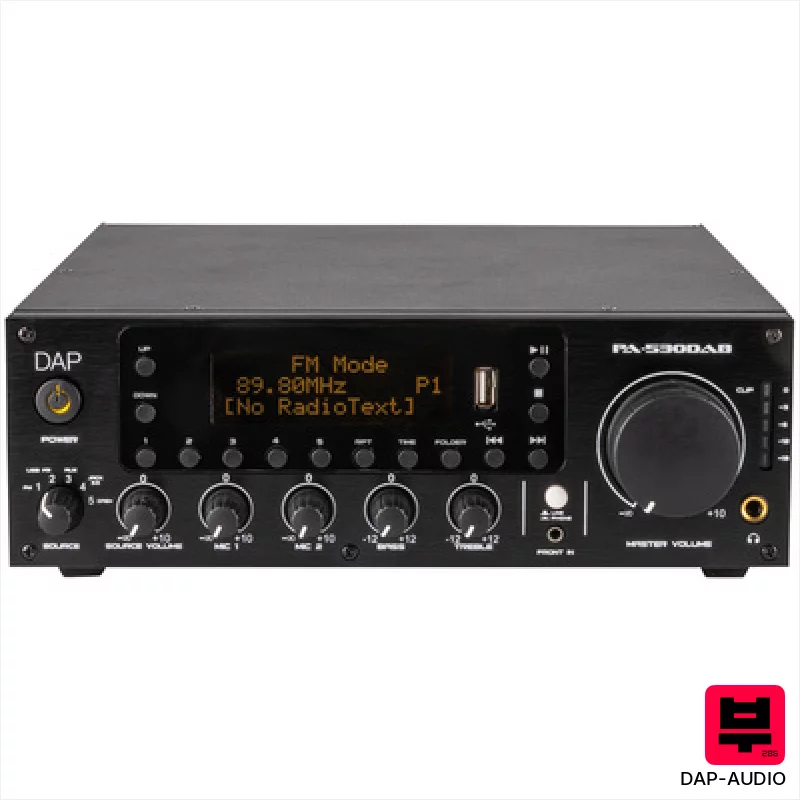
DAP-Audio PA-530DAB
- • Built-in DAB+ tuner is a surprisingly useful feature for remote locations
- • Phoenix connectors offer robust, reliable speaker connections
- • Ducking function simplifies managing background music and announcements
- • 24V DC backup power provides crucial operational resilience
- • Limited power output (30W) restricts use to smaller spaces
- • Front-panel 3.5mm input feels cheap and vulnerable
- • LC display, while functional, lacks the clarity of a modern LCD screen
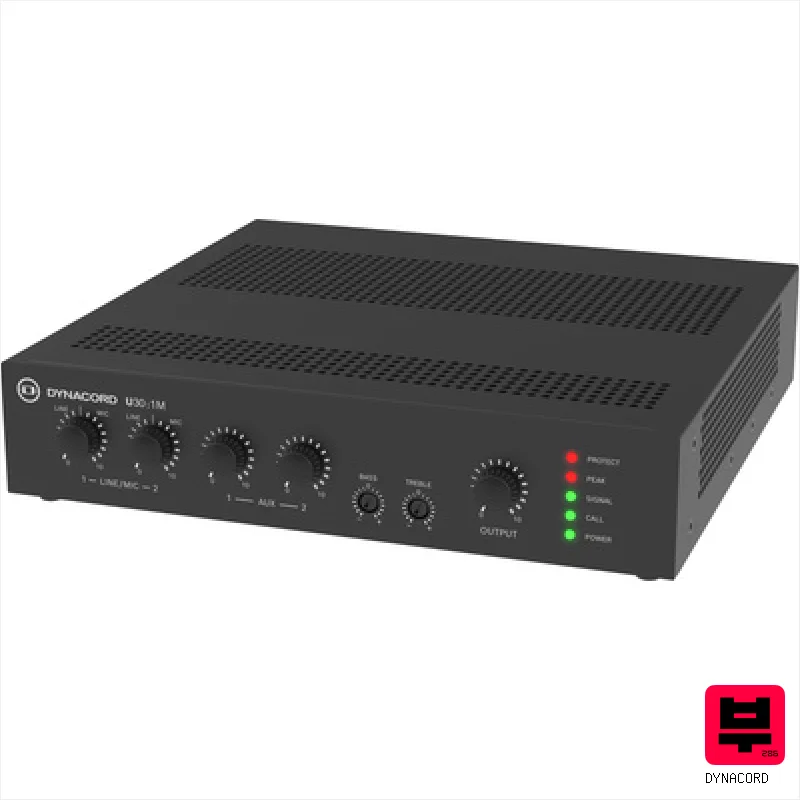
Dynacord U30:1M Mixer amplifier
- • Class D efficiency keeps heat low for long gigs
- • Two mic inputs handle multiple singers easily
- • EMG priority lets guitarists control the sound
- • 70V and 100V outputs power long runs well
- • Only one channel limits multi-act setups
- • Lack of EQ knobs on the front panel
- • Fixed low-cut filter offers no flexibility
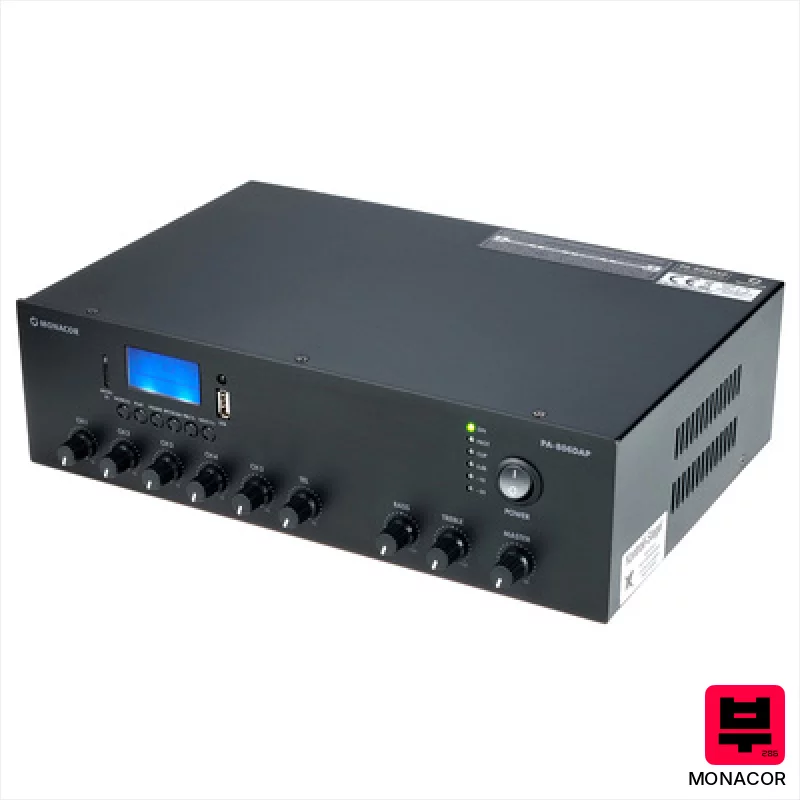
Monacor PA-806DAP
- • Class D amp delivers surprising power for its size and weight.
- • Integrated MP3 player & tuner simplify background music needs.
- • Phantom power supports condenser mics for professional vocal recordings.
- • Emergency input provides backup audio source functionality.
- • Bluetooth 4.2 is dated; lacks modern codecs for optimal streaming.
- • Cinch connections feel cheap and limit professional audio connectivity.
- • Limited EQ (2-band) restricts fine-tuning for complex sound systems.
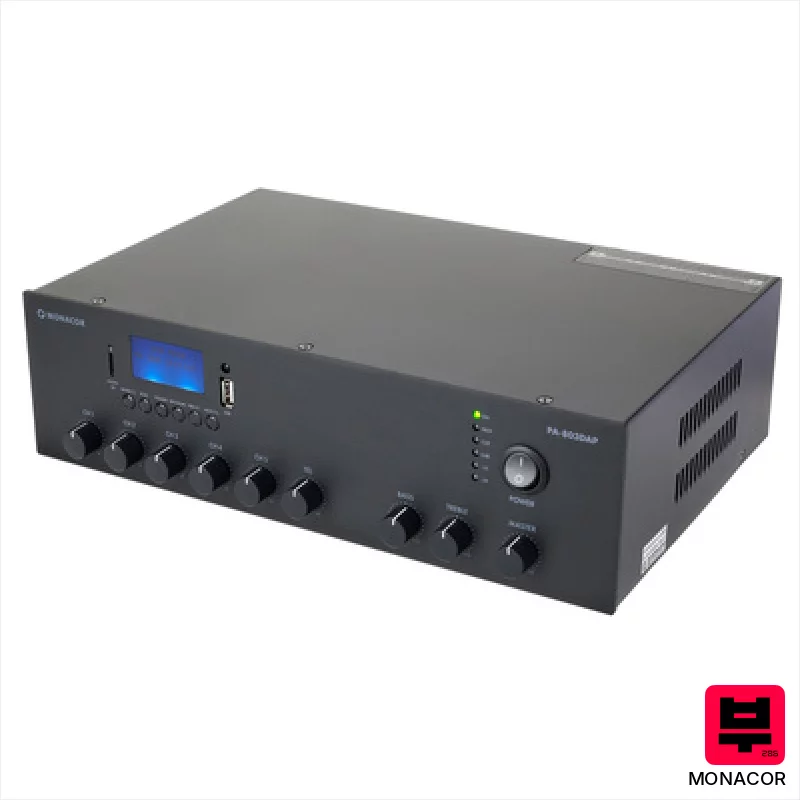
Monacor PA-803DAP
- • Class-D amplification offers efficient power delivery and manageable heat.
- • Integrated MP3 player, FM/DAB+ tuner, and Bluetooth add significant convenience.
- • Phantom power supports condenser microphones for flexible vocal recording.
- • Prioritization circuitry ensures critical announcements override background music.
- • Cinch connections feel dated; modern users may prefer balanced options.
- • Limited power output (30W) restricts use to smaller spaces or quieter applications.
- • Build quality, while adequate, feels budget-oriented with plastic housing.

Swissonic SA 125
- • Surprisingly robust build for its class, feels solid despite the price.
- • Clean, usable power for small venues or rehearsal spaces.
- • Phantom power is a welcome addition for condenser mics.
- • Compact footprint makes it ideal for mobile setups and tight spaces.
- • EQ is basic; lacks finesse for critical sound shaping.
- • Limited routing options restrict complex signal flow scenarios.
- • Power output might be a constraint for larger events.
Every installation mixing amps that matches
17 models match this page. The 15 above are covered in detail; the rest are listed here with their published specifications.
| # | Model | Specifications | Price |
|---|---|---|---|
| 16 | Swissonic SA 65 | Weight 8.8 kg | $170 |
| 17 | Swissonic SA 33 | Weight 4.5 kg | $124 |
Installation Mixing Amps by the numbers
Measured across all 17 models in this category, so «wide», «short» or «expensive» mean something you can check.
How to Choose the Best Installation Mixing Amps
Power Output (RMS)
Don't get fooled by peak wattage. RMS power is what matters for consistent headroom and avoiding that distorted, flubby low-end when things get loud. 200-400W RMS is a good target for most small to medium installs.
Frequency Response
A wider frequency response doesn't always mean better sound, but a severely limited low end will leave your bass player feeling shortchanged. Look for something that extends comfortably below 100Hz.
Damping Factor
This tells you how well the amp can control the movement of the speakers. A higher damping factor (ideally 200 or higher) means tighter, cleaner bass response and less muddiness - crucial for avoiding that boomy, uncontrolled low-end thump.
Connectivity & Routing
Beyond just XLR inputs, consider features like EQ on each channel, aux sends/returns for effects loops, and enough outputs to handle multiple speakers or zones. Flexibility is king in an installation setting.
Cooling & Reliability
Cheap amps often skimp on heat sinks and ventilation. This can lead to thermal throttling (reduced power) or even premature failure. Read reviews and look for models known for their reliability, especially if this is going to be a permanent install.
Buying Guide
At this price point, you're making trade-offs. Don't expect pristine, audiophile-grade sound. You're looking for functional and reliable power. Corners are often cut in the power supply - this can mean less clean headroom before breakup and a slightly higher noise floor. Prioritize a good damping factor and decent EQ over flashy features you probably won't use. Solid state is the name of the game here - tube amps are out of the question at this budget.
How This List Is Built
We don't play these instruments — we're a catalog, not a review desk, and we'd rather say so than pretend otherwise. This page covers 17 installation mixing amps from the Thomann catalogue, which is the largest single source of specification data in this category: 15 in detail, the rest listed with their specifications.
Position is computed, not curated. We parse the manufacturer's own description into actual values — nut width, scale, fret count, fingerboard radius, size, alloy — and rank on them: how many specifications a model has published, how many of them are measurable numbers, and how precisely it meets this page's criterion. A product image adds a little. Price is not a ranking signal: it tells you nothing about whether a neck fits your hand. The same inputs always produce the same order, so nothing here is shuffled to look fresh.
What this list is good for: narrowing a category down to a shortlist by spec and budget. What it isn't: a substitute for hearing an instrument. Before you buy, read hands-on reviews and, where you can, play it. Full methodology.

