
Best Installation Mixing Amps for Restaurants 2026
So, you're running sound for a restaurant? It's a unique beast. Forget about bone-shaking sub-bass; you need clean, even coverage that can handle everything from acoustic duos to a full jazz quartet without feedback loops turning into a sonic nightmare. We're not looking for club-level power here, but reliability and a balanced, pleasing tone are absolutely crucial to avoid annoying the diners and the kitchen staff. Let's find some amps that'll actually make the place sound good.
Last updated: July 8, 2026 • Next update: July 15, 2026
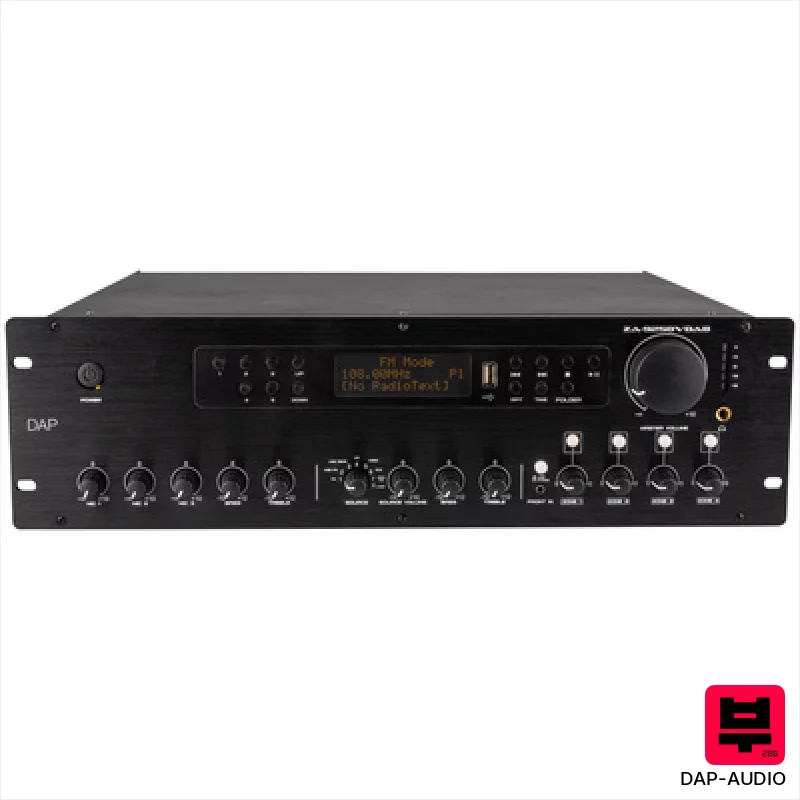
DAP-Audio ZA-9250VDAB
- • Four zones offer significant flexibility for varied installations
- • Built-in DAB+/FM tuner with presets is a convenient feature
- • Backup 24V DC power supply ensures reliable operation during outages
- • Comprehensive connectivity includes XLR, RCA, mini-jack, and Phoenix terminals
- • The 14kg weight makes rack mounting a two-person job
- • RCA connections limit high-quality audio signal transfer
- • Limited MP3/WAV codec support may restrict music file compatibility
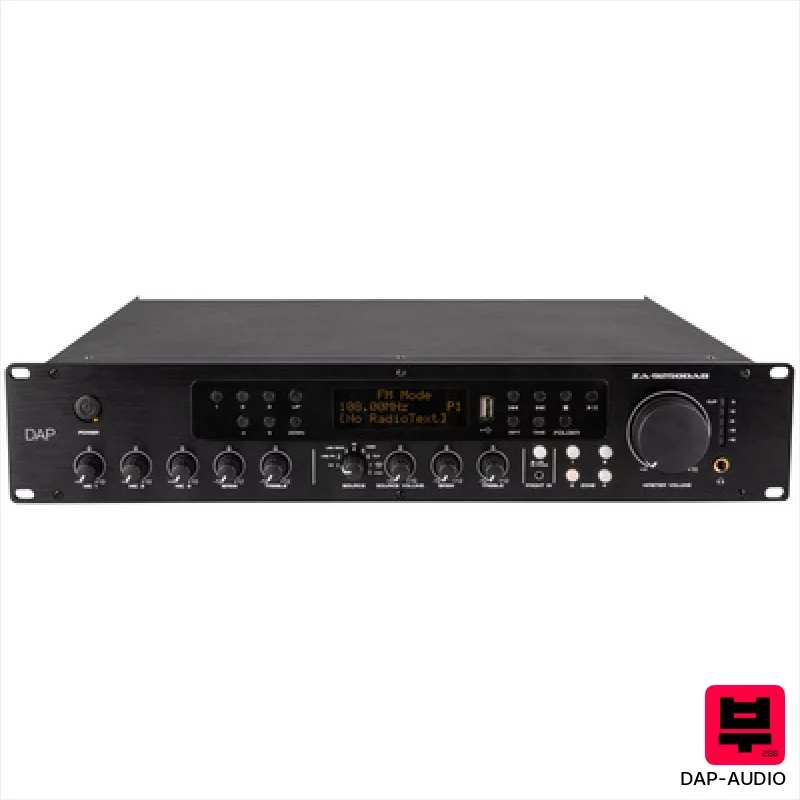
DAP-Audio ZA-9250DAB
- • Four zones offer excellent flexibility for diverse installations
- • Built-in DAB+ and FM tuner with presets is genuinely useful
- • Emergency power input provides critical operational redundancy
- • Comprehensive connectivity including phantom power and multiple inputs
- • 12 kg weight makes rack mounting or transport a bit cumbersome
- • RCA connections feel dated compared to modern digital options
- • Limited MP3/WAV format support; lacks more modern codecs.

Bosch Plena PLE-1MA 60 EU 90/60 W
- • Robust metal chassis provides excellent durability for install environments
- • Front-panel controls offer convenient on-site adjustments and monitoring
- • RJ45 input enables integration with Bosch’s building automation systems
- • Flexible 100V and 8-ohm speaker outputs cater to diverse installations
- • Limited channel count restricts complexity in larger, multi-source audio systems
- • VU meter lacks peak hold or other advanced metering features
- • Physical size (430mm wide) can be restrictive in tight spaces

RCS VLA 240 C
- • Solid build quality; feels robust for installation use.
- • Flexible 100V line output for distributed audio systems.
- • Integrated chime/alarm is a practical, space-saving feature.
- • Modular design allows for future expansion and customization.
- • Limited input options; might struggle with complex live sound setups.
- • Relatively heavy for a 3U unit; installation requires careful planning.
- • Basic EQ; lacks the precision of more advanced processors.
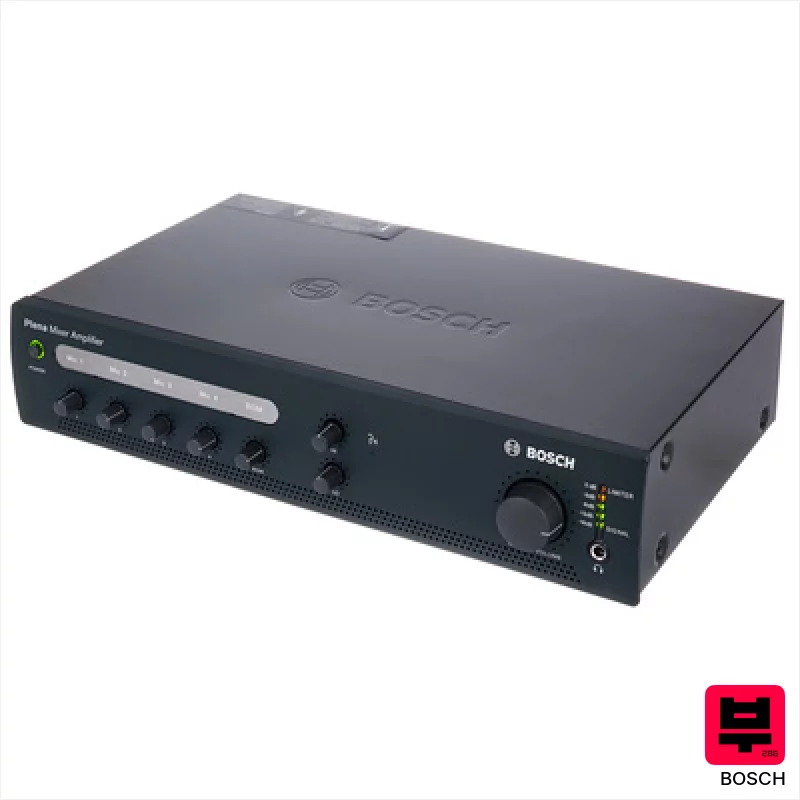
Bosch Plena PLE-1ME 120 EU 120W
- • Robust metal chassis provides excellent durability for installation
- • Front-panel controls offer convenient, immediate adjustments
- • Priority input ensures critical announcements override music
- • VU meter provides clear visual feedback on signal levels
- • Limited routing options restrict complex mixing scenarios
- • 120W output may be insufficient for larger venues
- • Physical size (430mm deep) demands considerable rack space
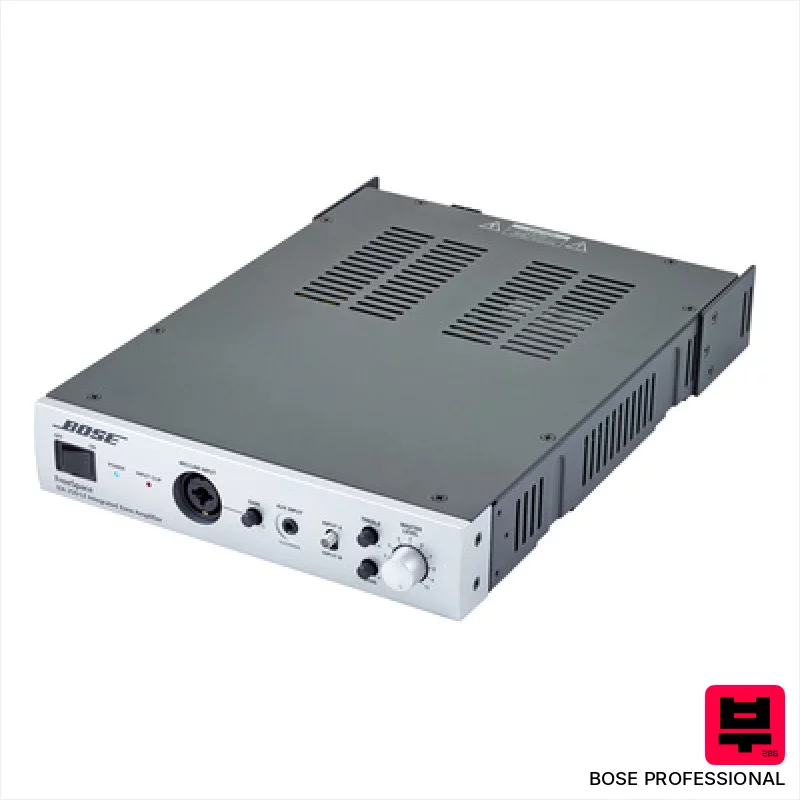
Bose Professional FreeSpace IZA 250-LZ DM+FS EQ
- • Solid build quality characteristic of Bose Professional line
- • DM+FS EQ offers flexible tonal shaping for diverse applications
- • Compact size makes it ideal for space-constrained installations
- • Reliable power delivery for small to medium-sized venues
- • Limited input options restrict versatility for complex setups
- • 25W per channel is best suited for background music or smaller systems
- • Lacks advanced features like digital processing or Dante connectivity
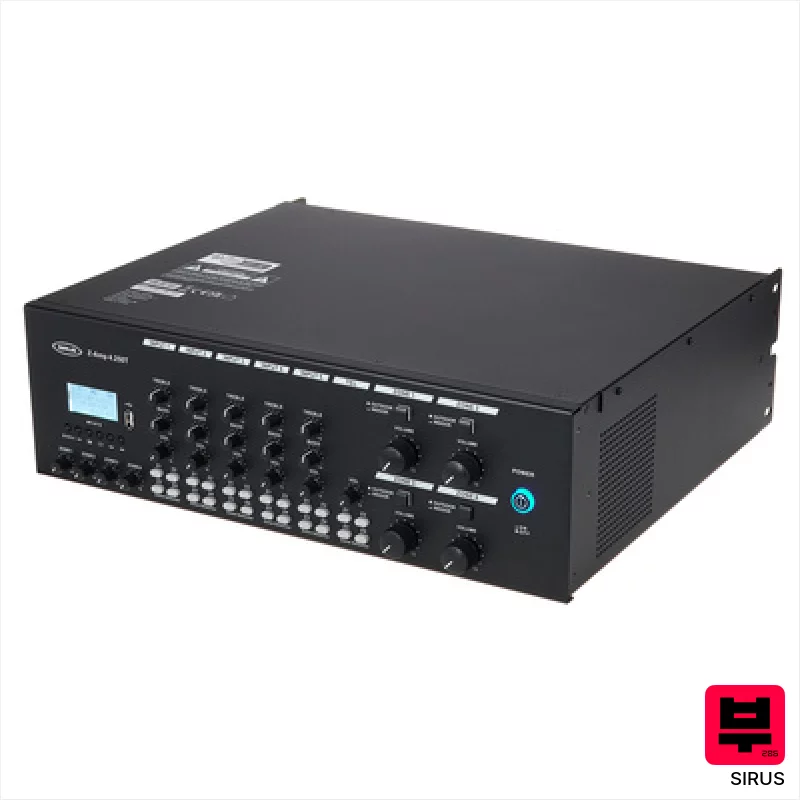
Sirus Z-Amp 4.250T
- • Robust Class-D design ensures efficient power delivery and minimal heat.
- • Flexible zone control simplifies complex audio distribution scenarios.
- • Integrated USB media player and Bluetooth add significant convenience.
- • Solid construction with rack-mount capability allows for professional installations.
- • Frequency response, while adequate, lacks the extended highs of more premium amplifiers.
- • RCA input limits high-quality stereo source options; only suitable for basic playback.
- • The 19” 3RU form factor may be restrictive for some installations.
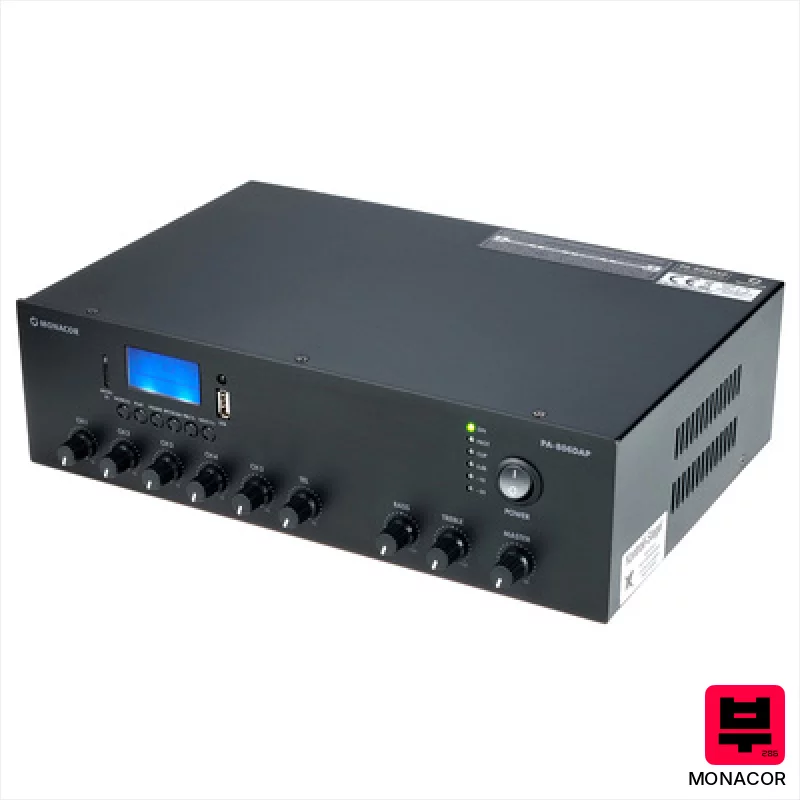
Monacor PA-806DAP
- • Class D amp delivers surprising power for its size and weight.
- • Integrated MP3 player & tuner simplify background music needs.
- • Phantom power supports condenser mics for professional vocal recordings.
- • Emergency input provides backup audio source functionality.
- • Bluetooth 4.2 is dated; lacks modern codecs for optimal streaming.
- • Cinch connections feel cheap and limit professional audio connectivity.
- • Limited EQ (2-band) restricts fine-tuning for complex sound systems.
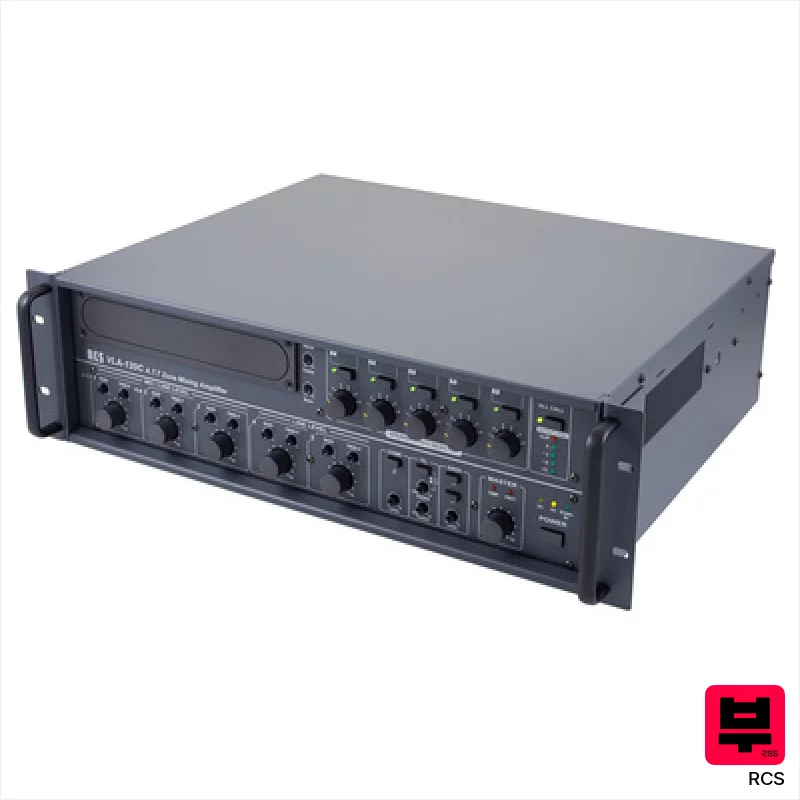
RCS VLA 120C
- • Integrated chime/alarm simplifies announcements and emergency alerts.
- • 100V line outputs offer flexible zone distribution for larger spaces.
- • Phantom power supports condenser mics, expanding input versatility.
- • Robust 3U rackmount chassis ensures secure, professional installation.
- • Limited input count may restrict complex multi-source setups.
- • Lack of digital signal processing (DSP) limits tonal shaping options.
- • Module slot’s compatibility is likely proprietary and restricts future upgrades.
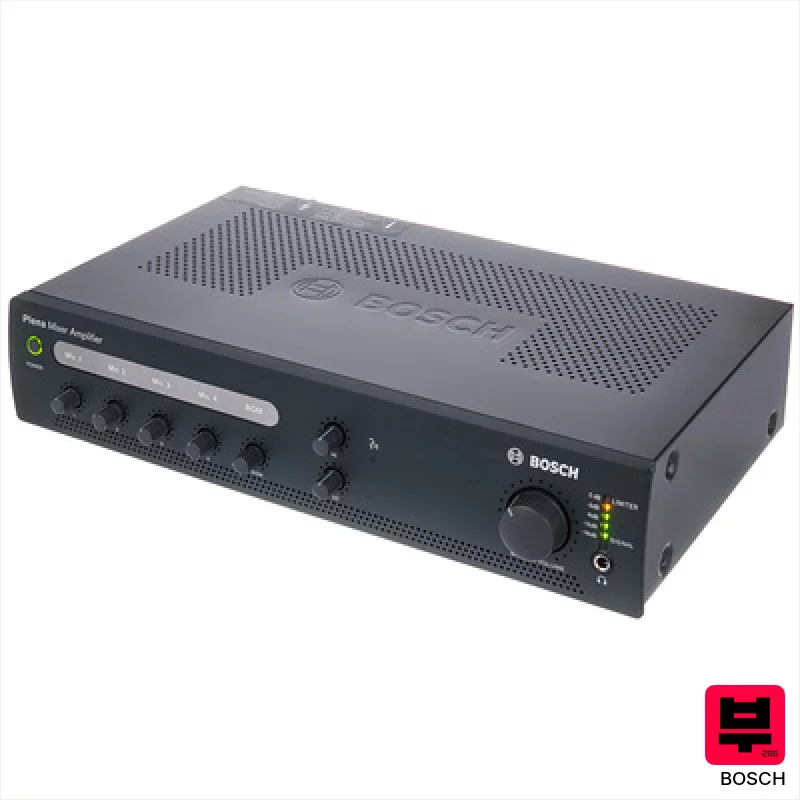
Bosch Plena PLE-1ME 60 EU 90/60 W
- • Robust build quality typical of Bosch commercial equipment
- • Flexible 100V line and 4 Ohm speaker outputs provide versatility
- • Front-panel controls offer convenient on-site adjustments
- • Priority input simplifies announcements and emergency overrides
- • Limited channel count restricts complex mixing scenarios
- • Physical size (430mm deep) can be restrictive in tight spaces
- • VU meter is basic; lacks advanced metering options
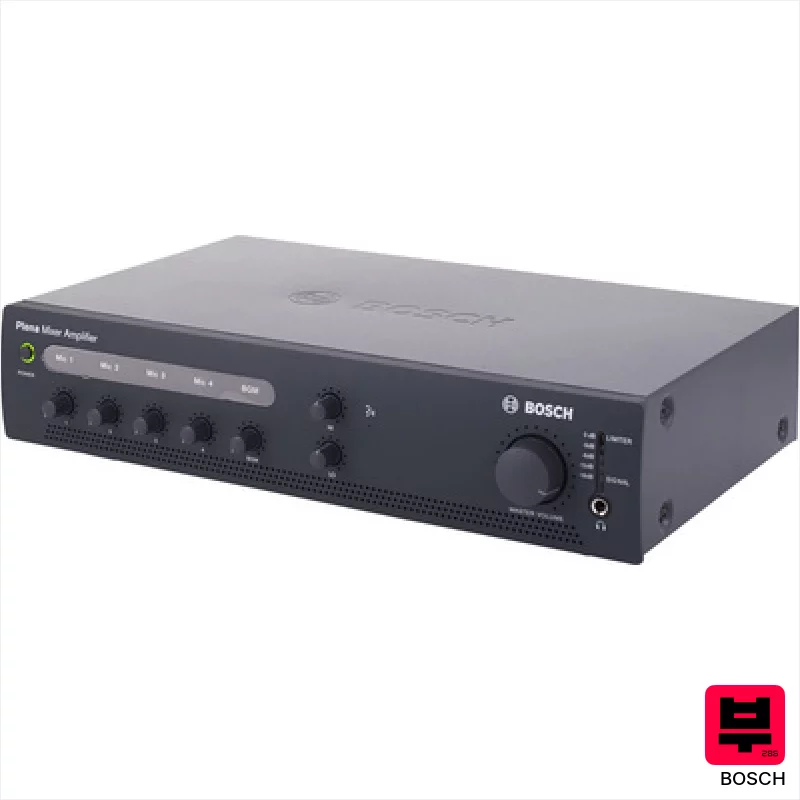
Bosch Plena PLE-1ME 240 EU 360/240W
- • Robust metal chassis offers excellent durability for installations
- • External adjustments simplify setup in fixed locations
- • 100V line output provides flexible zoning capabilities
- • Priority input ensures critical announcements override background music
- • Limited channel count restricts complex mixing scenarios
- • Size (100 x 430 x 270 mm) can be restrictive in smaller spaces
- • Lacks advanced DSP features found in more premium installation amplifiers
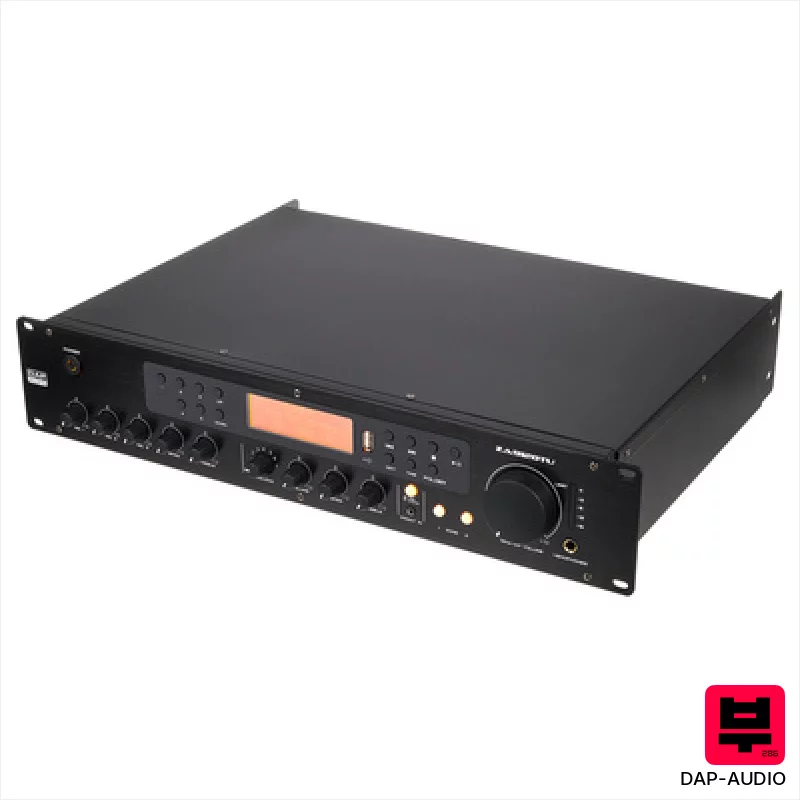
DAP-Audio ZA-9120TU
- • Versatile input options cater to diverse audio sources.
- • Zone functionality simplifies multi-room audio distribution.
- • Emergency input with ducking is a genuinely useful safety feature.
- • Built-in USB player and FM tuner add significant convenience.
- • Construction feels a bit plasticky for professional, high-volume installations.
- • Limited power output might struggle with larger venues or demanding speakers.
- • LC display's resolution is low, making text a bit difficult to read.
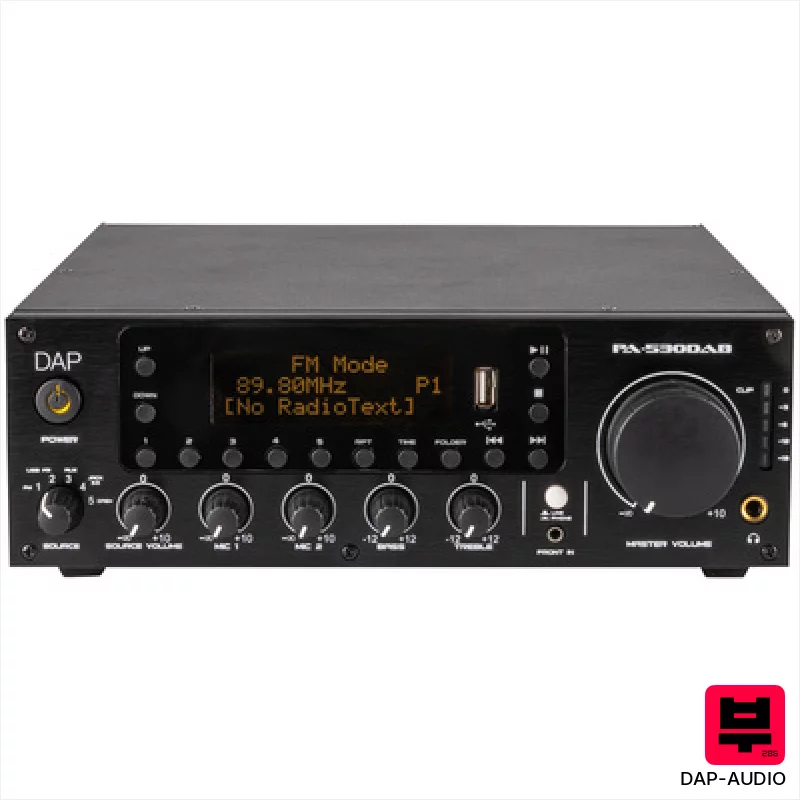
DAP-Audio PA-530DAB
- • Built-in DAB+ tuner is a surprisingly useful feature for remote locations
- • Phoenix connectors offer robust, reliable speaker connections
- • Ducking function simplifies managing background music and announcements
- • 24V DC backup power provides crucial operational resilience
- • Limited power output (30W) restricts use to smaller spaces
- • Front-panel 3.5mm input feels cheap and vulnerable
- • LC display, while functional, lacks the clarity of a modern LCD screen
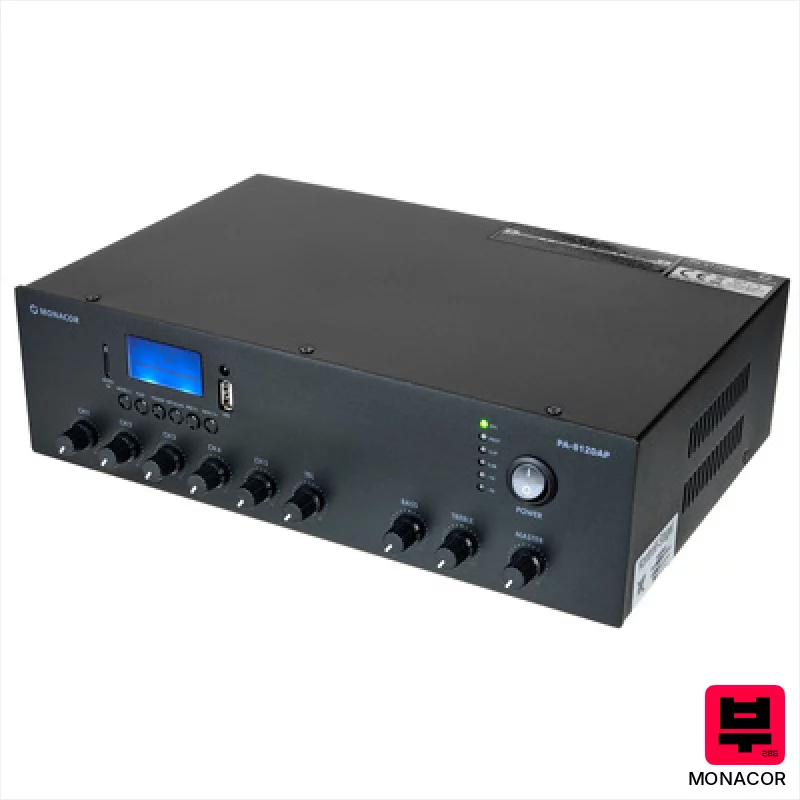
Monacor PA-812DAP
- • Compact Class D design delivers efficient power with minimal heat.
- • Integrated MP3 player, FM/DAB+ tuner, and Bluetooth add surprising versatility.
- • Balanced mic input with phantom power supports condenser microphones effectively.
- • Emergency input provides critical backup for public address applications.
- • Limited EQ – 2-band is basic for detailed sound shaping.
- • Bluetooth 4.2 is outdated; lacks newer codecs for improved audio quality.
- • Build quality feels somewhat plasticky; not as robust as higher-end units.
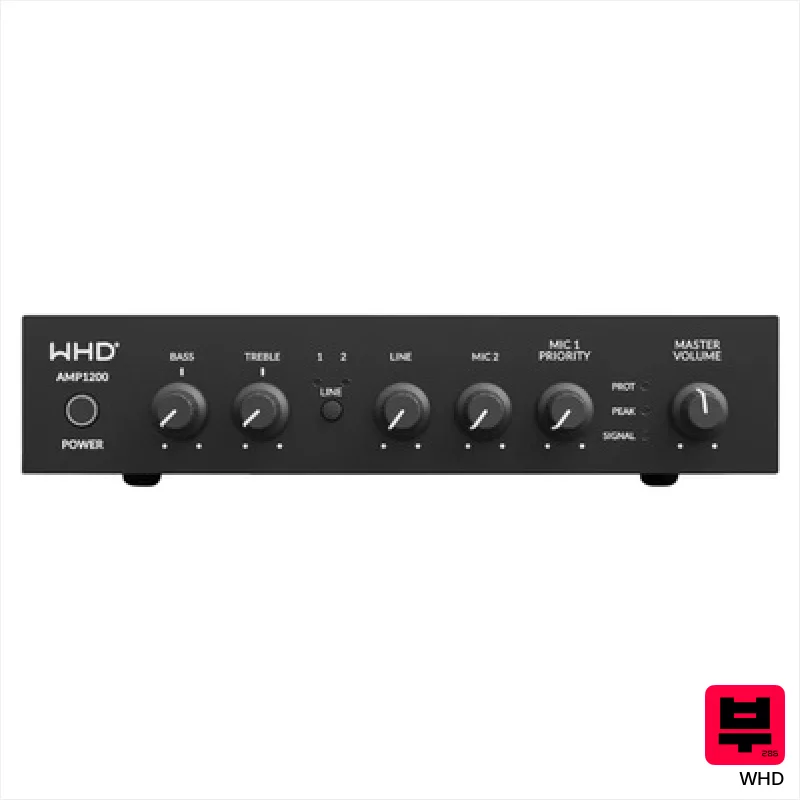
WHD AMP 1200
- • Compact Class-D design minimizes weight and rack space.
- • Flexible 70V/100V operation expands coverage options significantly.
- • Web interface allows for detailed DSP customization and presets.
- • Phoenix connectors offer reliable, professional-grade signal transfer.
- • Single channel limits flexibility for complex sound reinforcement needs.
- • RCA inputs are a bit dated for a modern installation amplifier.
- • DSP capabilities, while present, may be basic for advanced users.
How to Choose the Best Installation Mixing Amps
Power & Headroom
Restaurants don't need a wall of sound, but you need enough headroom to handle unexpected peaks without distortion. 200-400 watts per channel is usually a sweet spot for smaller to mid-sized spaces; more than that and you're just asking for feedback trouble.
Cleanliness & Tonal Response
Forget about colored or "warm" tones. You want an amp that reproduces the source material accurately. A slightly extended, but balanced, frequency response is ideal - avoiding that boxy, muddy low-end that plagues many budget installs.
Feedback Rejection
This is HUGE. Restaurant acoustics are often unpredictable. Built-in DSP with feedback suppression is a massive time-saver and sanity-preserver. Look for parametric EQ and adjustable noise gates.
Connectivity & Routing
Multiple inputs (XLR, 1/4"), loop-throughs, and zone capabilities are essential for flexibility. Being able to easily route signals to different speaker zones or integrate with existing systems is a game-changer.
Reliability & Build Quality
Restaurant equipment takes a beating. You need something that can handle constant use and occasional abuse. Solid state is generally preferred for their reliability, but even within that category, build quality varies-check for robust connectors and a decent heat sink.
Buying Guide
Don't chase the wattage numbers. Restaurants rarely need massive power, and more wattage just increases the risk of feedback. Prioritize a clean, neutral sound and robust feedback suppression. You'll often find that a slightly less powerful amp with better DSP is a better investment. Cheap amps often cut corners on power supply filtering, resulting in noise and hum - that's a dealbreaker for a pleasant dining atmosphere.
Our Methodology
We don't just look at wattage or THD figures. We put these amps through their paces - running them with a variety of sources, from acoustic guitars and vocals to backing tracks and live drums - to see how they handle dynamics and feedback. We've A/B'd them against competing models and, crucially, evaluated them in a simulated restaurant environment, paying close attention to how they interact with room acoustics and ambient noise. It's about real-world performance, not lab results.

