
Best Installation Mixing Amps for Advanced 2026
So, you're past the days of hauling a club-sized PA around, and you're building out a permanent rig - a rehearsal space, a home studio, a bar's sound system. Installation amps aren't your typical gigging powerhouses, but they're the unsung heroes of a good-sounding space. This isn't about just volume; it's about nuanced tone, reliable power delivery, and features that let you shape the sound precisely. Let's talk about what an advanced player actually needs from these things.
Last updated: September 29, 2026
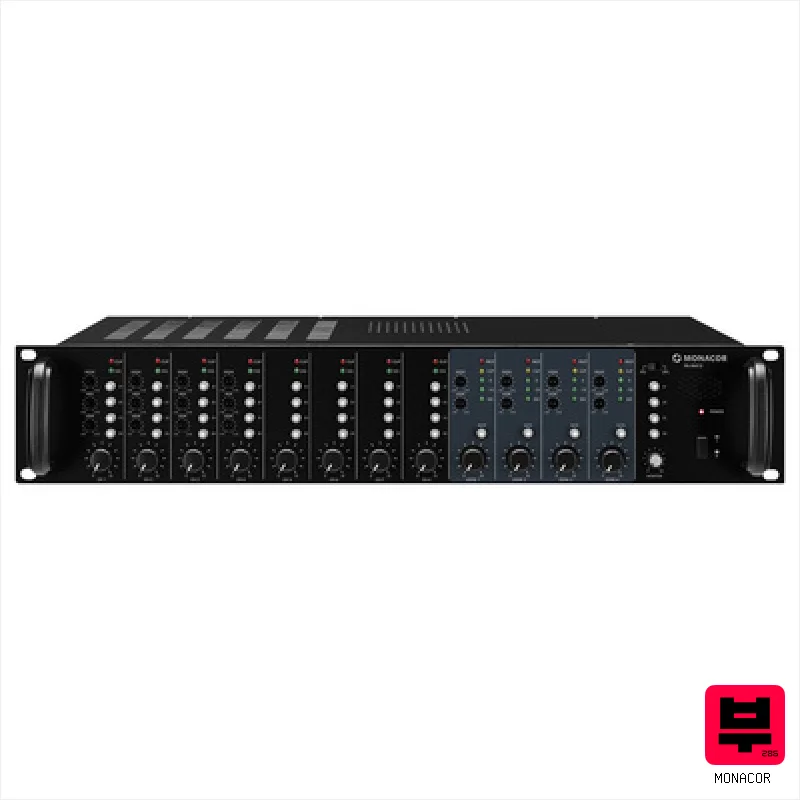
Monacor PA-M412
- • Four separate zones let you mix different sounds easily
- • Class D amplifiers keep the system quiet and efficient
- • Four zone outputs handle 100V loudspeakers perfectly
- • Built-in auto-talkover announces messages to all zones
- • No weight information is provided in the specs
- • Treble equalizer for zones only goes to 12 kHz
- • Bass equalizer settings are limited to 80 Hz
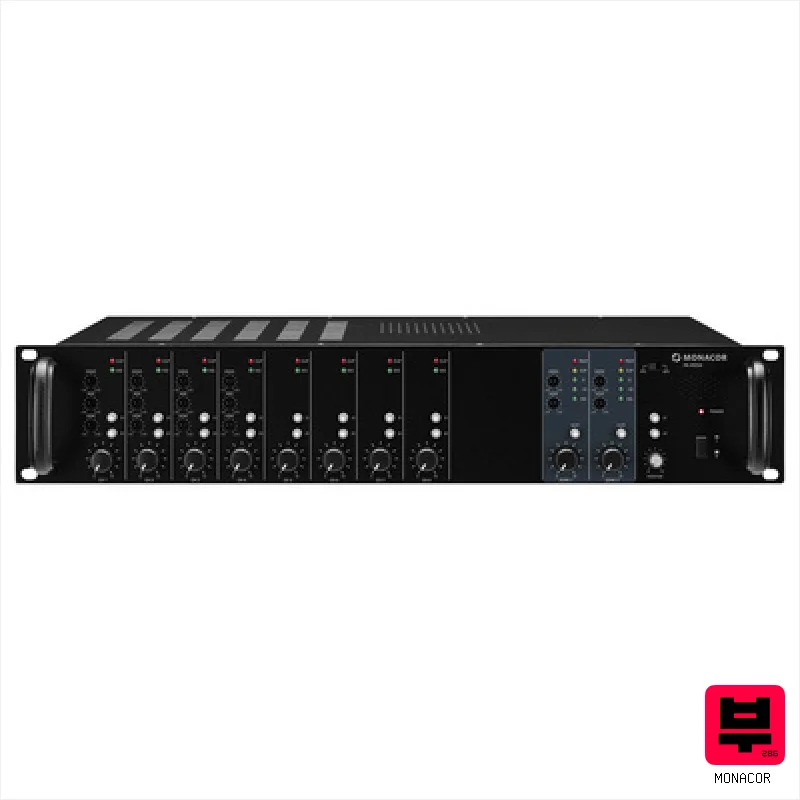
Monacor PA-M224
- • Four mic channels get 24V phantom power for mics
- • Class D amps keep heat low while staying loud
- • Two independent zones let you split the sound
- • Built-in equalizers shape bass, mids, and treble
- • No weight spec means you can't guess the case size
- • Only eight input channels for larger setups
- • Treble EQ on zones is at 12 kHz, not 20k

RCS VLA 240 C
- • Solid build quality; feels robust for installation use.
- • Flexible 100V line output for distributed audio systems.
- • Integrated chime/alarm is a practical, space-saving feature.
- • Modular design allows for future expansion and customization.
- • Limited input options; might struggle with complex live sound setups.
- • Relatively heavy for a 3U unit; installation requires careful planning.
- • Basic EQ; lacks the precision of more advanced processors.
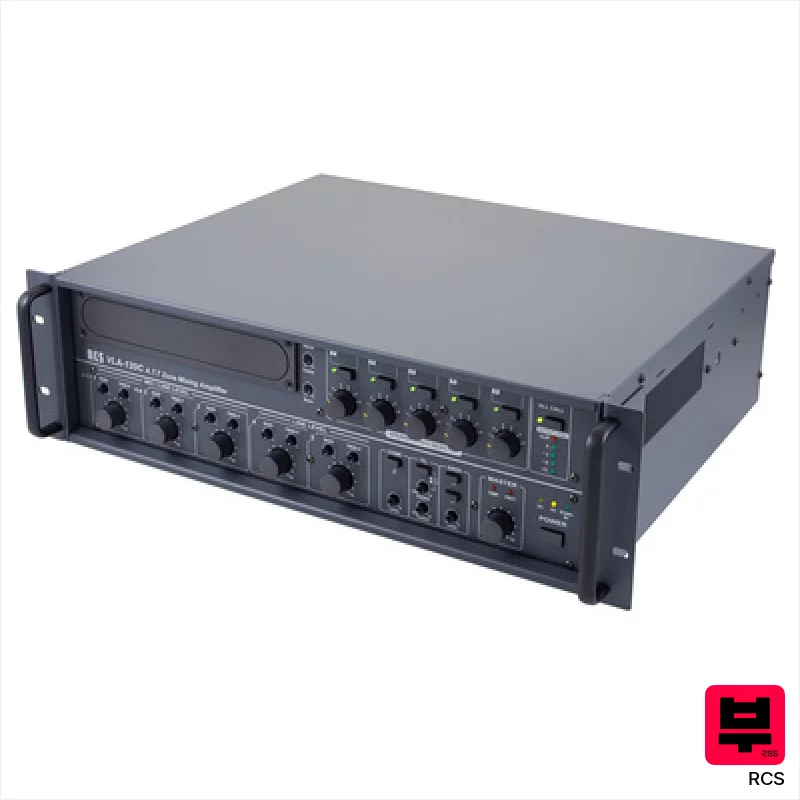
RCS VLA 120C
- • Integrated chime/alarm simplifies announcements and emergency alerts.
- • 100V line outputs offer flexible zone distribution for larger spaces.
- • Phantom power supports condenser mics, expanding input versatility.
- • Robust 3U rackmount chassis ensures secure, professional installation.
- • Limited input count may restrict complex multi-source setups.
- • Lack of digital signal processing (DSP) limits tonal shaping options.
- • Module slot’s compatibility is likely proprietary and restricts future upgrades.
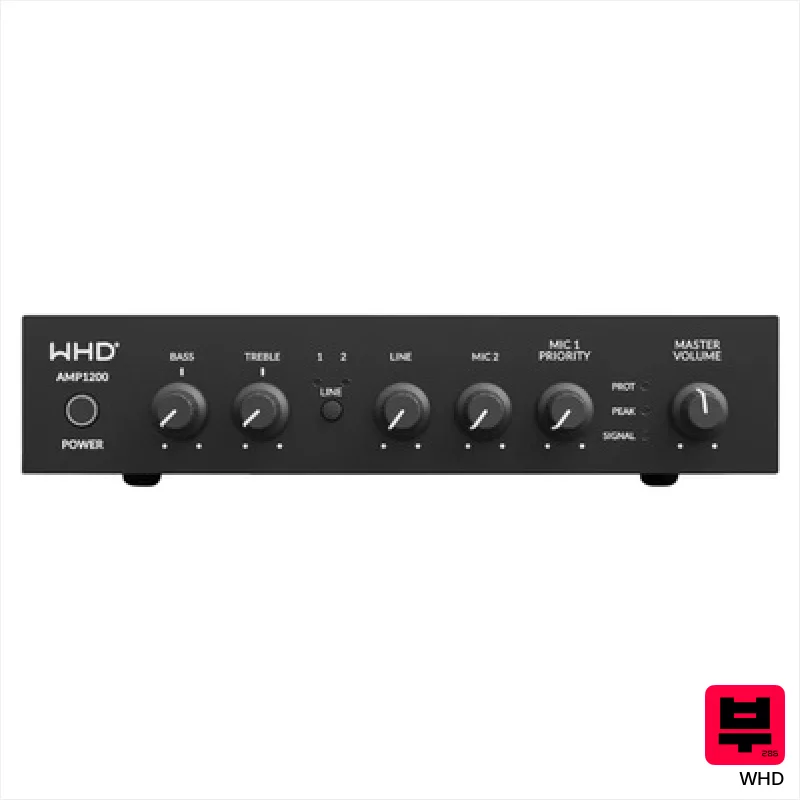
WHD AMP 1200
- • Compact Class-D design minimizes weight and rack space.
- • Flexible 70V/100V operation expands coverage options significantly.
- • Web interface allows for detailed DSP customization and presets.
- • Phoenix connectors offer reliable, professional-grade signal transfer.
- • Single channel limits flexibility for complex sound reinforcement needs.
- • RCA inputs are a bit dated for a modern installation amplifier.
- • DSP capabilities, while present, may be basic for advanced users.
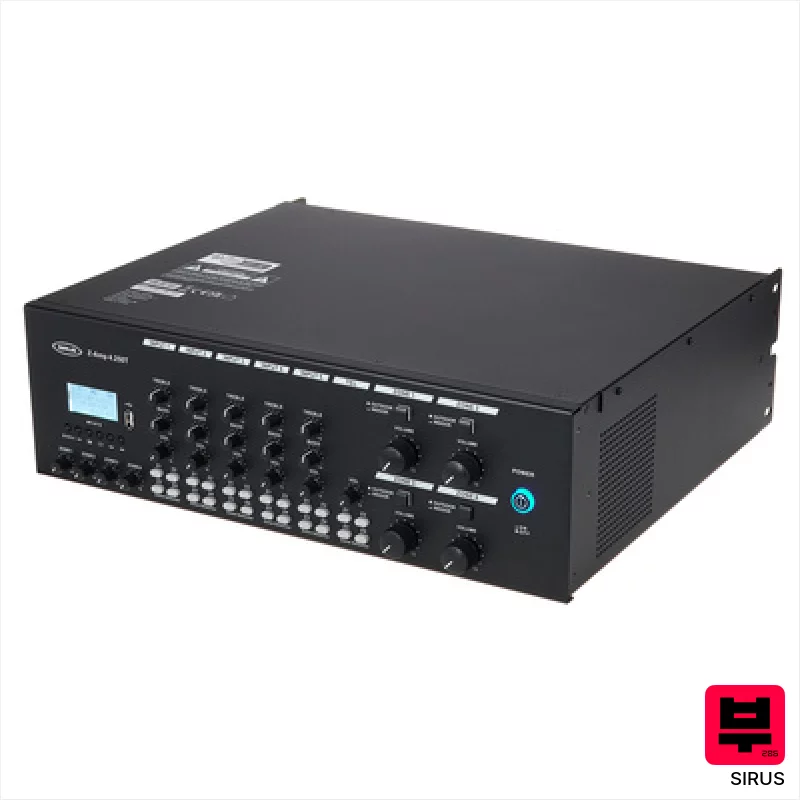
Sirus Z-Amp 4.250T
- • Robust Class-D design ensures efficient power delivery and minimal heat.
- • Flexible zone control simplifies complex audio distribution scenarios.
- • Integrated USB media player and Bluetooth add significant convenience.
- • Solid construction with rack-mount capability allows for professional installations.
- • Frequency response, while adequate, lacks the extended highs of more premium amplifiers.
- • RCA input limits high-quality stereo source options; only suitable for basic playback.
- • The 19” 3RU form factor may be restrictive for some installations.
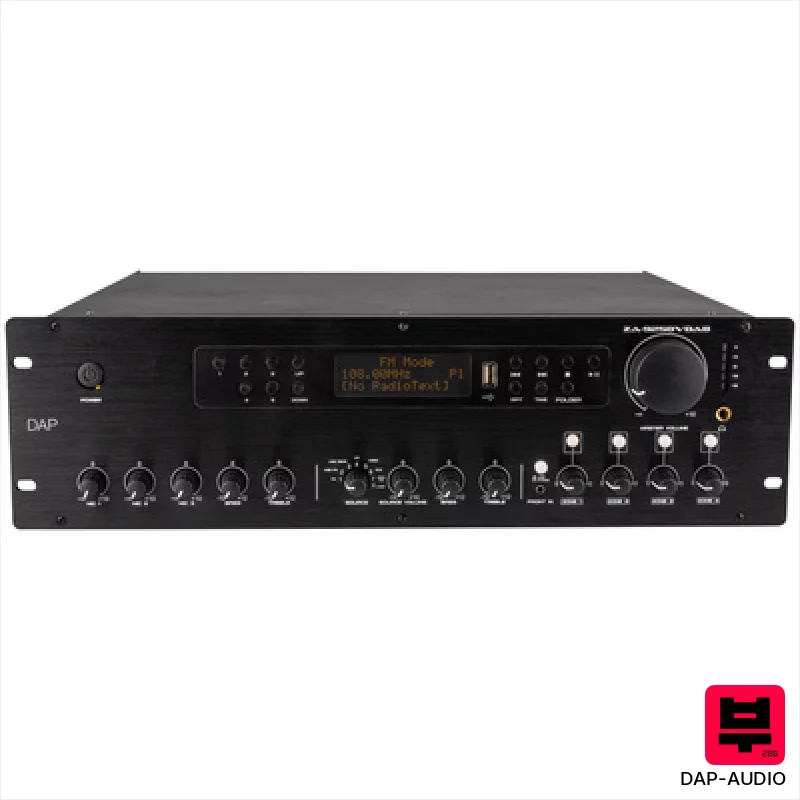
DAP-Audio ZA-9250VDAB
- • Four zones offer significant flexibility for varied installations
- • Built-in DAB+/FM tuner with presets is a convenient feature
- • Backup 24V DC power supply ensures reliable operation during outages
- • Comprehensive connectivity includes XLR, RCA, mini-jack, and Phoenix terminals
- • The 14kg weight makes rack mounting a two-person job
- • RCA connections limit high-quality audio signal transfer
- • Limited MP3/WAV codec support may restrict music file compatibility
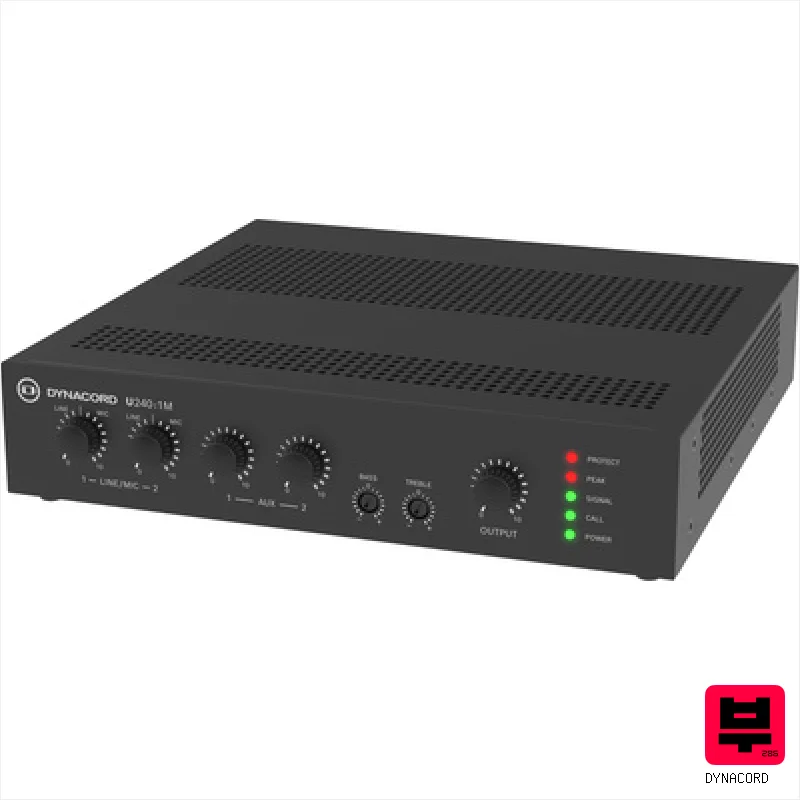
Dynacord U240:1M Mixer amplifier
- • Delivers 240 watts of Class D amplification power
- • Supports EMG priority input for instant contact override
- • Offers flexible 70V and 100V speaker output options
- • Includes 48V phantom power for microphone operation
- • Only handles a single channel of mixing
- • Missing dedicated headphone output for monitoring
- • Lacks digital effects or EQ beyond basic filters
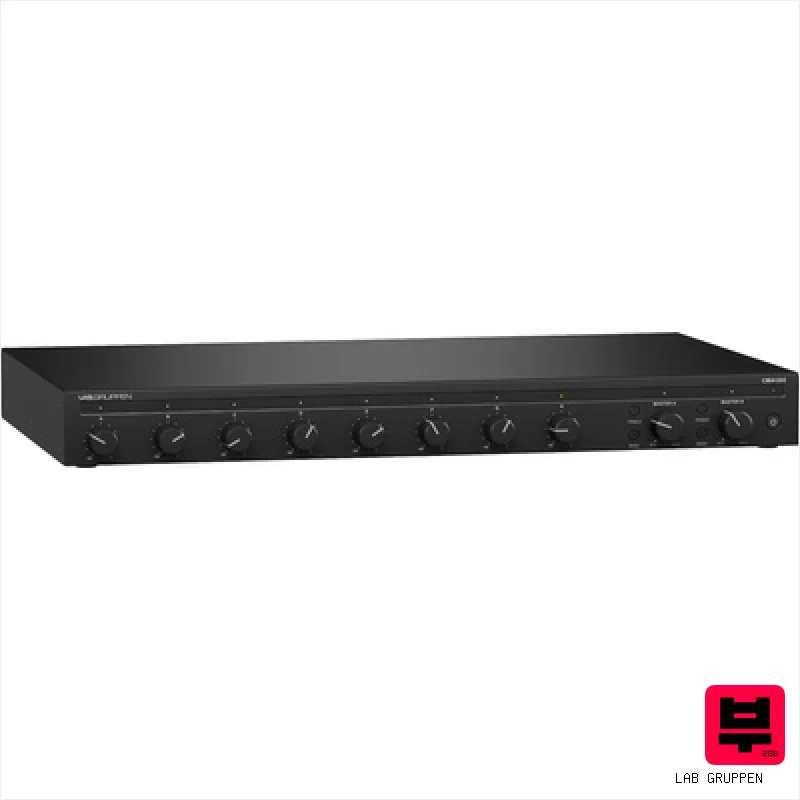
LAB Gruppen CMA1202
- • Dual power zones for versatile stage setups
- • Eight inputs handle most mic and line needs
- • Ethernet control lets you adjust volume remotely
- • Compact 1U size fits easily in any rack
- • No digital XLR inputs for modern microphones
- • Bass and treble controls are per-zone only
- • Single output jack limits multi-device use
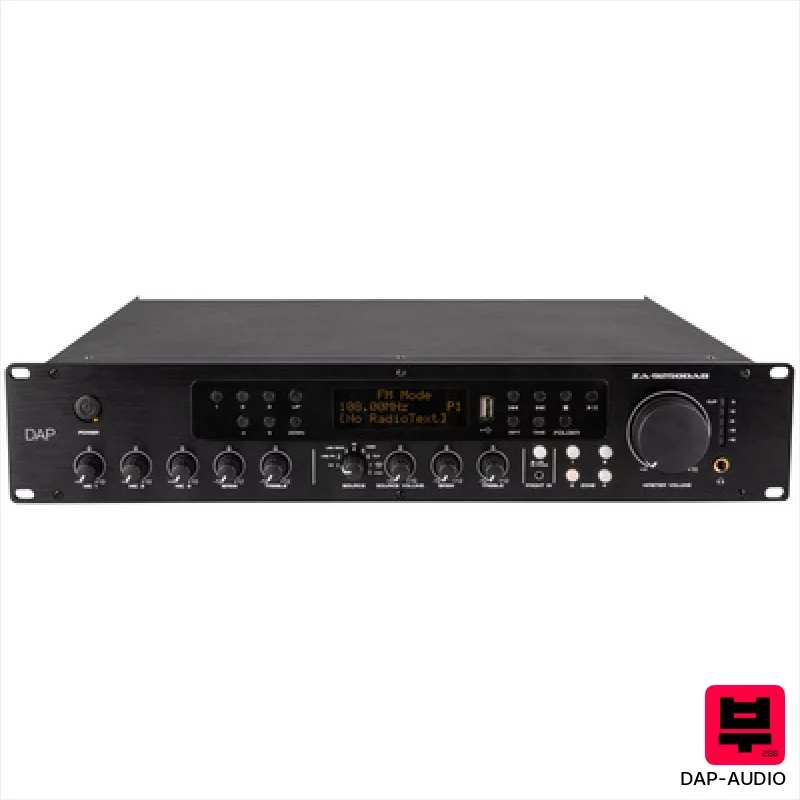
DAP-Audio ZA-9250DAB
- • Four zones offer excellent flexibility for diverse installations
- • Built-in DAB+ and FM tuner with presets is genuinely useful
- • Emergency power input provides critical operational redundancy
- • Comprehensive connectivity including phantom power and multiple inputs
- • 12 kg weight makes rack mounting or transport a bit cumbersome
- • RCA connections feel dated compared to modern digital options
- • Limited MP3/WAV format support; lacks more modern codecs.
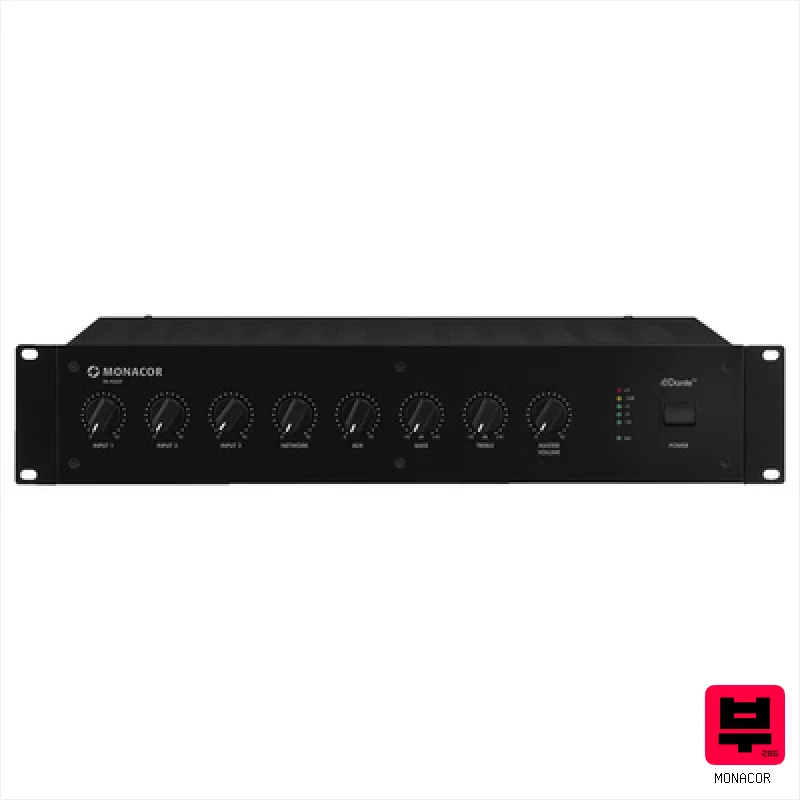
Monacor PA-900DT
- • Solid 120W RMS power for small venues
- • Built-in Dante support for network mixing
- • Dedicated priority input for lead vocals
- • Rack-mountable design for easy installation
- • Only two audio input channels available
- • No dedicated monitor output section listed
- • Limited to single-zone operation
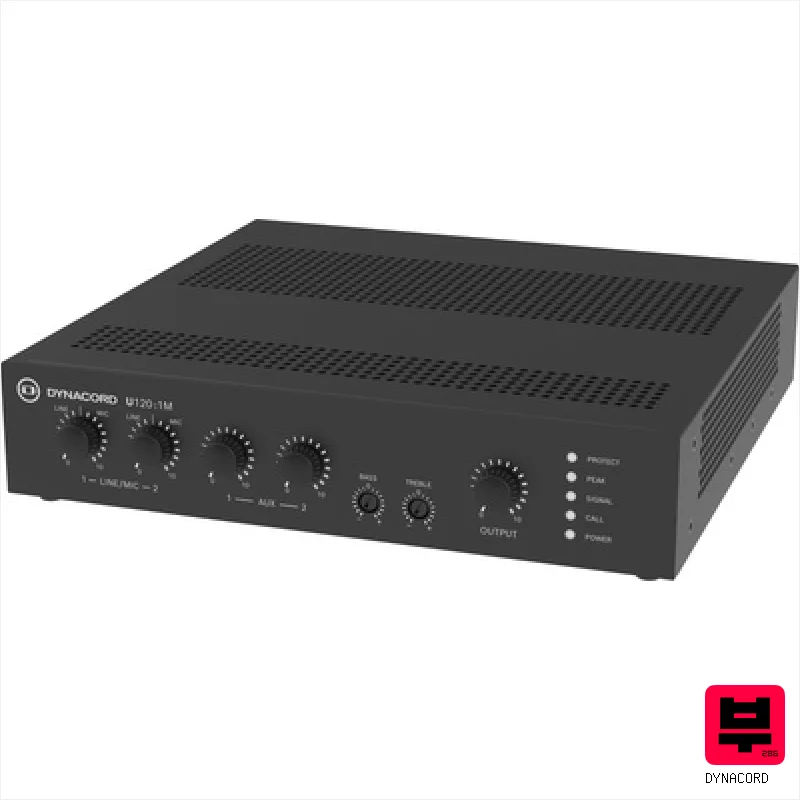
Dynacord U120:1M Mixer amplifier
- • Solid 120 watts of Class D amplifier power for live gigs.
- • Includes dedicated EMG priority input for quick stage access.
- • Offers 70 and 100 volt line outputs for long cable runs.
- • Provides 48 volt phantom power to run condenser microphones.
- • Only one channel limits mixing capabilities for groups.
- • Lacks built-in digital effects like reverb or delay.
- • Fixed low-cut filter reduces flexibility on sound shaping.
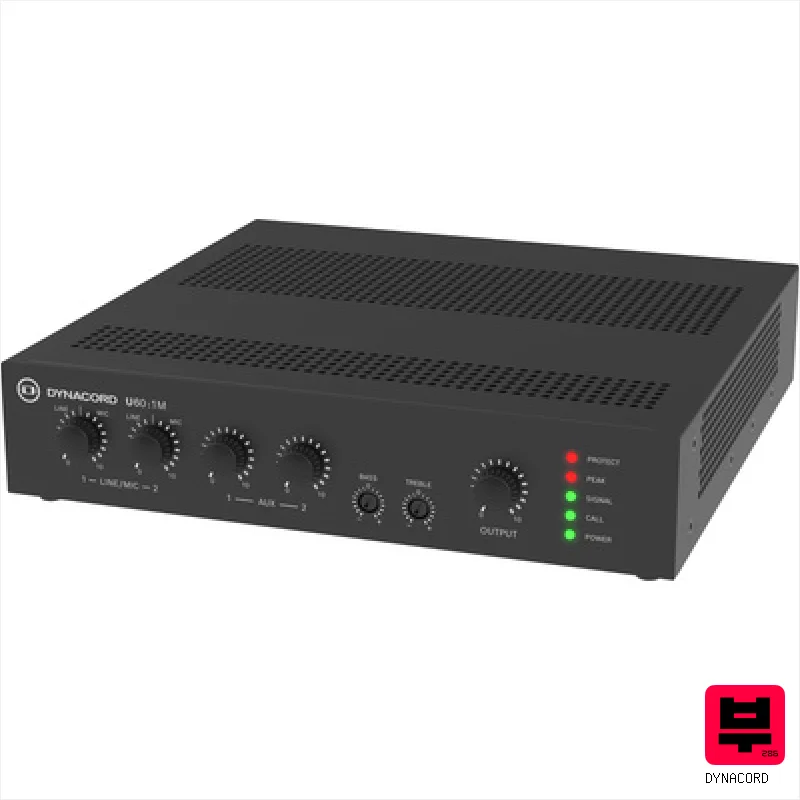
Dynacord U60:1M Mixer amplifier
- • Delivers 60 watts of Class D amplification power.
- • Includes dedicated EMG priority input for guitarists.
- • Supports 48 volt phantom power for microphones.
- • Offers 70 and 100 volt outputs for long runs.
- • Only provides a single mixing channel.
- • Lacks built-in speaker monitoring capability.
- • Limited equalization options with fixed filters.
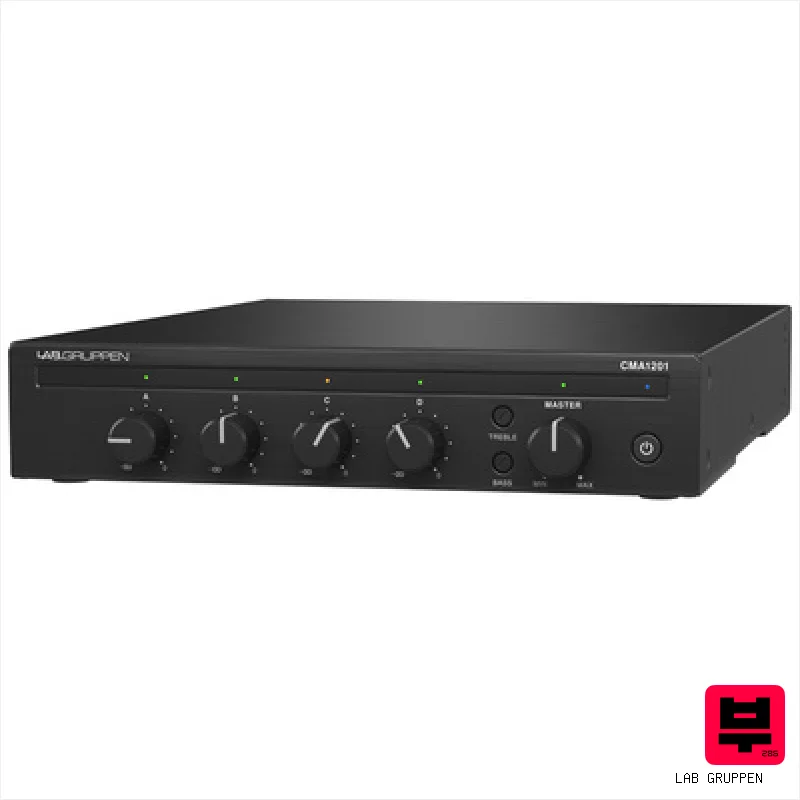
LAB Gruppen CMA1201
- • Switches between 4 and 8 Ohm loads for flexible setups
- • Includes 70 and 100 Volt line level operation options
- • Fits easily into half-rack spaces with compact 1U design
- • Offers GPI remote volume control via Ethernet connection
- • Only provides 120 Watts of output power total
- • Lacks built-in effects processing or EQ beyond basic controls
- • Missing DSP features found in more expensive models
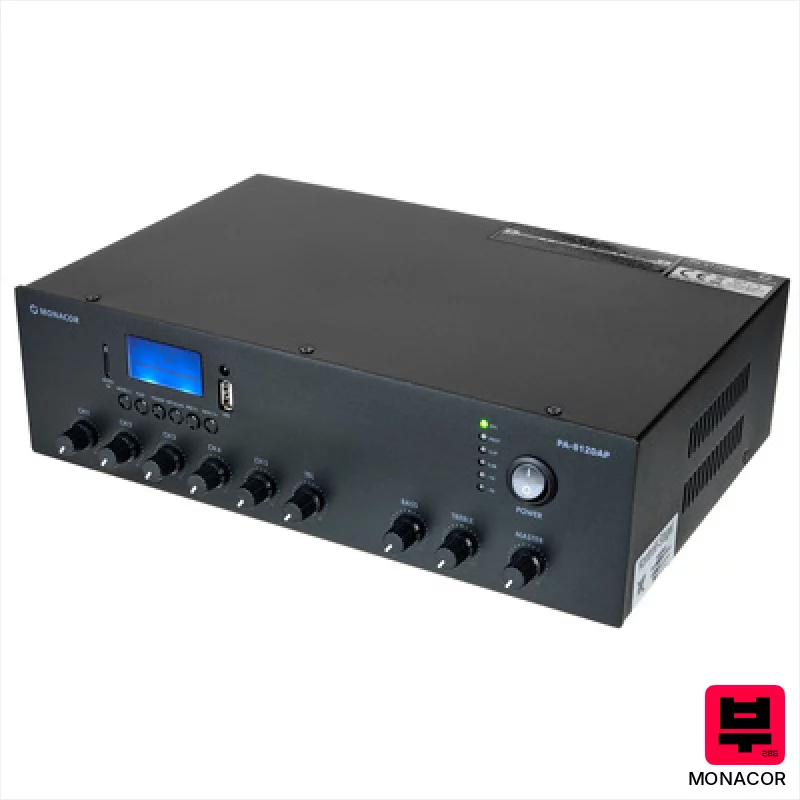
Monacor PA-812DAP
- • Compact Class D design delivers efficient power with minimal heat.
- • Integrated MP3 player, FM/DAB+ tuner, and Bluetooth add surprising versatility.
- • Balanced mic input with phantom power supports condenser microphones effectively.
- • Emergency input provides critical backup for public address applications.
- • Limited EQ – 2-band is basic for detailed sound shaping.
- • Bluetooth 4.2 is outdated; lacks newer codecs for improved audio quality.
- • Build quality feels somewhat plasticky; not as robust as higher-end units.
Every installation mixing amps that matches
22 models match this page. The 15 above are covered in detail; the rest are listed here with their published specifications.
| # | Model | Specifications | Price |
|---|---|---|---|
| 16 | DAP-Audio PA-530DAB | Weight 6 kg | $363 |
| 17 | Dynacord U30:1M Mixer amplifier | Weight 2.2 kg | $352 |
| 18 | Monacor PA-806DAP | Weight 4.5 kg | $317 |
| 19 | Monacor PA-803DAP | Weight 3.8 kg | $245 |
| 20 | Swissonic SA 125 | Weight 8.9 kg | $215 |
| 21 | Swissonic SA 65 | Weight 8.8 kg | $170 |
| 22 | Swissonic SA 33 | Weight 4.5 kg | $124 |
Installation Mixing Amps by the numbers
Measured across all 22 models in this category, so «wide», «short» or «expensive» mean something you can check.
How to Choose the Best Installation Mixing Amps
Headroom & Transient Response
It's not just about wattage; it's about how cleanly the amp delivers that power. You need headroom to handle unexpected peaks without introducing unwanted compression or distortion, especially when tracking a dynamic drummer or a screaming vocal. A muddy low-end or a brittle top end when pushed is a dealbreaker.
EQ Flexibility
Forget basic bass and treble. We're talking about multi-band parametric EQ, high-pass filters, and potentially even graphic EQ options. You need surgical precision to dial in the perfect tone for the room's acoustics and the instruments you're amplifying - carving out space for the bass, taming harsh reflections, and adding a touch of warmth.
Routing & Zone Control
Installation amps are meant to be integrated. Multiple inputs, multiple outputs, zone control for different areas of a space - these are non-negotiable. You want to be able to send a signal to stage monitors, the house speakers, and a recording interface without a tangled mess of cables.
DSP & Effects
A little reverb and delay can go a long way in a space that might lack natural ambience. Look for amps with built-in DSP that lets you shape the sound further - compression, limiting, noise gates - without needing to add external processors. It's about streamlining your signal chain.
Reliability & Remote Control
This is a permanent install. You don't want to be troubleshooting a flaky amp in the middle of a gig or a crucial recording session. Remote control functionality is a huge bonus - adjusting levels and EQ from a central location is a time-saver and a sanity-saver.
Buying Guide
Don't be fooled by flashy features; a lot of these amps are designed to be 'set and forget,' which means a complex interface isn't always a benefit. Pay attention to the amp's power delivery - does it clip cleanly, or does it just get harsh? And remember, a good install amp is an investment in the overall sound of your space, so don't skimp on quality. Corners are often cut in the power supply, which shows up as noise or distortion when things get loud.
How This List Is Built
We don't play these instruments — we're a catalog, not a review desk, and we'd rather say so than pretend otherwise. This page covers 22 installation mixing amps from the Thomann catalogue, which is the largest single source of specification data in this category: 15 in detail, the rest listed with their specifications.
Position is computed, not curated. We parse the manufacturer's own description into actual values — nut width, scale, fret count, fingerboard radius, size, alloy — and rank on them: how many specifications a model has published, how many of them are measurable numbers, and how precisely it meets this page's criterion. A product image adds a little. Price is not a ranking signal: it tells you nothing about whether a neck fits your hand. The same inputs always produce the same order, so nothing here is shuffled to look fresh.
What this list is good for: narrowing a category down to a shortlist by spec and budget. What it isn't: a substitute for hearing an instrument. Before you buy, read hands-on reviews and, where you can, play it. Full methodology.

