AudioFu
AudioFu Chart · October 2026
Best Hardware Sequencers and Arrangers for Intermediate 2026
The top pick is Torso Electronics T-1 Euclidian Algorithmic Sequencer ($616). M-Live Divo Plus leads the high end. Ranked by the AudioFu Index from 28 models across 12 brands, prices checked every night.
Last updated: October 15, 2026
Top 10
Full detail for the 10 highest AudioFu Index scores. Every other model is listed below.
-
Torso Electronics T-1 Euclidian Algorithmic Sequencer
T1 · Torso Electronics
28 for sale on Reverb1 finish at Thomann
The Torso T-1 is a seriously cool algorithmic sequencer—it’s perfect for experimental electronic musicians, glitch producers, and anyone wanting to create unique, evolving rhythms and melodies without diving into complex software. The hardware interface is a joy to use, and the results are instantly captivating, offering a fresh approach to sequencing.
Pros
- Intuitive encoder-based programming feels surprisingly natural and fast.
- The Euclidean rhythms create instantly compelling, complex patterns.
- 16 tracks offer substantial sequencing depth for intricate arrangements.
Cons
- Limited polyphony per track might frustrate some complex melodic sequencing.
- The workflow, while intuitive, has a learning curve for non-sequencer users.
65AudioFu
Index↓ 5.2%since Aug 14 · lowest so far$649 · Aug 14$616 now$616€550 at Thomann · in stockCheck price ↗ -
- Weight0.98 kg
The B.Beat X is a clever solution for musicians needing a robust, self-contained playback system for live performances. It’s particularly well-suited for solo artists or bands wanting to incorporate backing tracks and video elements without a full laptop setup. It’s a solid choice for those prioritizing portability and ease of use over deep sequencing capabilities.
Pros
- Excellent multitrack handling for complex live arrangements
- M-Pen integration streamlines lyrics/chord display for performers
- Robust 128GB storage accommodates extensive song libraries
Cons
- USB 2.0 transfer speeds will be a bottleneck for large files
- Reliance on the M-Pen adds to the overall cost and complexity
57AudioFu
IndexStableno change since Aug 14Aug 14$688 now$688€615 at Thomann · in stockCheck price ↗ -
- Weight0.55 kg
The B.Beat Evo is a seriously useful tool for gigging musicians and performers needing a self-contained playback and arrangement solution. It’s a solid choice for those wanting to ditch laptops onstage, especially if you're running backing tracks, loops, or complex arrangements with lyrics and visuals. The integrated WiFi is a big plus for wireless tablet integration.
Pros
- Integrated WiFi eliminates the need for an M-Pen, simplifying setup.
- Robust 256GB storage handles extensive multitrack projects.
- Six balanced outputs enable complex, layered live performances.
Cons
- 2.4in OLED screen is small; onscreen navigation can be fiddly.
- USB 2.0 connectivity limits transfer speeds for large files.
57AudioFu
IndexStableno change since Aug 14Aug 14$850 now$850€759 at Thomann · in stockCheck price ↗ -
- Weight1.66 kg
The M-Live Divo Basic is a seriously packed live performance tool, acting as a sound module, live player, and digital mixer all in one. It’s ideal for solo performers, cover bands, or anyone needing a self-contained solution for backing tracks and vocal processing—especially those who prioritize a streamlined, all-in-one workflow.
Pros
- Integrated SSD provides ample storage for extensive song libraries
- Comprehensive digital mixer offers detailed audio and MIDI editing capabilities
- Built-in microphone preamps with phantom power suit vocalists and live performance
Cons
- Reliance on M-Pen for wireless data transfer feels like an unnecessary extra cost
- Polyphony of 240 voices might be limiting for complex orchestral arrangements
57AudioFu
IndexStableno change since Aug 14Aug 14$962 now$962€859 at Thomann · in stockCheck price ↗ -
- Weight0.55 kg
This device handles up to 16 audio tracks with real-time EQ and even talks to your guitar amps. It lets you manage video files and create loops easily, but you need to buy a separate pen for chord transfers. It's great for stage setups where you need clean audio playback without a full mixer.
Pros
- Supports up to 16 mono audio tracks for complex multitrack recording
- Includes 3-band EQ for each individual audio track
- Directly manages guitar amp modellers from your effects pedals
Cons
- Requires separate M-Pen accessory to transfer lyrics and chords
- Lacks explicit mention of native MIDI or CV/Gate output ports
57AudioFu
IndexStableno change since Aug 17Aug 17$995 now$995€889 at Thomann · in stockCheck price ↗ -
- Weight1.66 kg
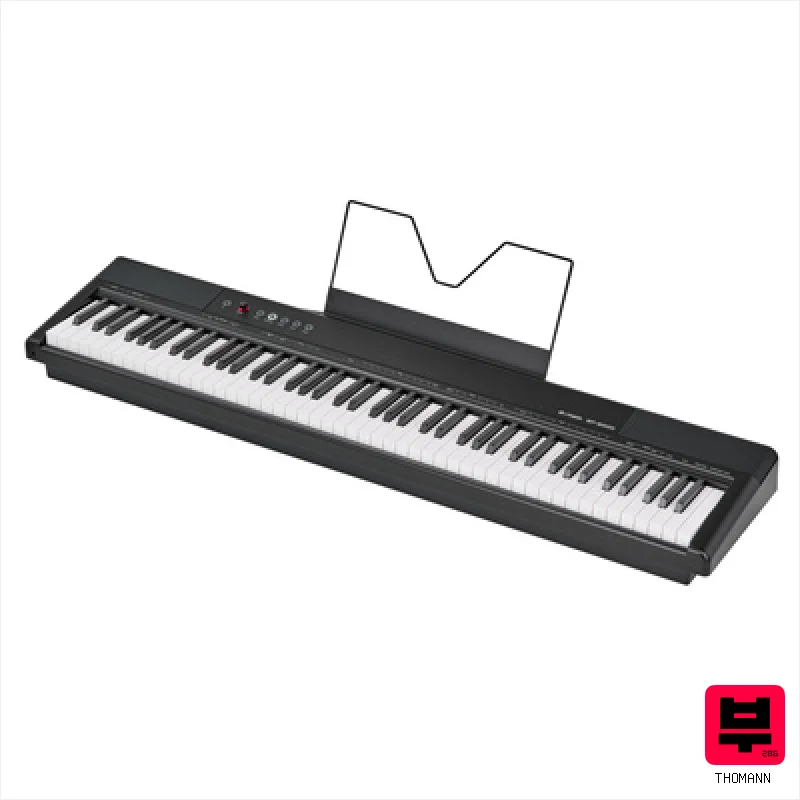
This keyboard acts as a full sequencer and mixer with huge sound libraries. It handles many voices well and lets you record audio directly. It fits small studios needing a compact setup with good mic capabilities.
Pros
- Massive 300 sounds plus 250 percussion options
- 240-voice polyphony handles big arrangements easily
- Built-in 128GB SSD stores lots of custom content
Cons
- Only two effects available for MIDI files
- No CV/Gate inputs listed in the specs
57AudioFu
IndexStableno change since Aug 17Aug 17$1,286 now$1,286€1,149 at Thomann · in stockCheck price ↗ -
- Weight0.7 kg
This little box is great for live players who need clean mono mixes. The big storage holds plenty of songs, and the touch screen feels modern. It works well with headphones, but you still need external speakers for the full sound. Perfect for anyone wanting a simple, reliable backing track player.
Pros
- Six separate mono outputs let you create custom mixes easily.
- Internal storage holds 64 GB of backing tracks comfortably.
- TFT touchscreen makes navigating menus much faster.
Cons
- Only supports WAV format, limiting file choices.
- Lacks dedicated USB audio interface ports.
50AudioFu
IndexStableno change since Aug 17Aug 17$559 now$559€499 at Thomann · in stockCheck price ↗ -
- Weight0.66 kg
This sequencer lets you make melodies by placing magnets on a spinning disc without any screen or software. You can run four loops at once and mute tracks with buttons, then send MIDI data to your computer. It is great for beginners who want a hands-on way to practice without feeling overwhelmed. The simple design removes the barrier to entry while still letting pros control external synths.
Pros
- No screens or complex software to get started
- Four simultaneous loops play at once easily
- Mute individual tracks with simple letter buttons
Cons
- No specific step count or grid size listed
- No mention of CV/Gate output capability
50AudioFu
IndexStableno change since Aug 17Aug 17$532 now$532€475 at Thomann · in stockCheck price ↗ -
The Dark Time Blue/White is a seriously capable sequencer for those diving into modular synthesis. Its analog heart and flexible routing options unlock some creative possibilities, especially for generating intricate patterns and rhythms—ideal for experimental electronic music producers and seasoned modular explorers.
Pros
- Solid, robust build with quality potentiometer action
- Versatile sequencing modes cater to varied rhythmic needs
- Blue/white LED illumination is visually appealing and functional
Cons
- Limited step resolution compared to more modern sequencers
- 3.5mm jacks can be a fiddly connection for some users
44AudioFu
IndexStableno change since Aug 14Aug 14$559 now$559€499 at Thomann · in stockCheck price ↗ -
The M-Live B.Beat is a solid option for gigging musicians and performers needing a robust, self-contained playback solution. It’s perfect for those who want to ditch laptops and have a dedicated, reliable player for backing tracks, video, and lyrics, especially those in theater or corporate settings. The file management is a bit clunky, but the core functionality is reliable.
Pros
- Large 128GB storage handles extensive song files and video content.
- Flexible audio format support (Wav, MP3, MTA) offers broad compatibility.
- Six outputs allow complex routing for live performance and recording.
Cons
- The 2.4” OLED display is small; visual clarity could be an issue in bright light.
- USB 2.0 connectivity limits data transfer speeds compared to newer standards.
42AudioFu
IndexStableno change since Aug 14Aug 14$615 now$615€549 at Thomann · in stockCheck price ↗
All 28 hardware sequencers and arrangers
Same index, same nightly prices — compact. Colour options of one model share a row. Tap a photo to zoom.
- 11
M-Live B.Beat 128GB Limited EditionM-Live42Stable$669€598$669€598Check ↗
- 12
Intellijel Designs Metropolix SoloIntellijel Designs35Stable$816€729$816€729Check ↗
- 13
cre8audio Programmcre8audio50Stable$357€319$357€319Check ↗
- 14
Conductive Labs The NDLR V2Conductive Labs35Stable$480€429$480€429Check ↗
- 15
Squarp Instruments HapaxSquarp Instruments59Stable$1,439€1,285$1,439€1,285Check ↗
- 16
M-Live Divo ProM-Live57Stable$1,488€1,329$1,488€1,329Check ↗
- 17
M-Live B.Beat PRO 16 Plus 512GBM-Live57Stable$1,677€1,498$1,677€1,498Check ↗
- 18
M-Live Merish 5+M-Live57Stable$2,092€1,869$2,092€1,869Check ↗
- 19
Ketron EventXKetron57↓ 3.8%$4,253€3,799$4,253€3,799Check ↗
- 20
Ketron SD-90Ketron56↓ 1.5%$2,910€2,599$2,910€2,599Check ↗
- 21
Ketron SD-40Ketron55Stable$2,126€1,899$2,126€1,899Check ↗
- 22
Ketron MidjProKetron55Stable$2,461€2,198$2,461€2,198Check ↗
- 23
Ketron EVM Event ModuleKetron55Stable$3,123€2,790$3,123€2,790Check ↗
- 24
Ketron EVM Plus Sound/Arranger ModuleKetron55Stable$3,570€3,189$3,570€3,189Check ↗
- 25
Behringer BQ-10Behringer50Stable$167€149$167€149Check ↗
- 26
M-Live B.Beat PRO 16 Plus 1TBM-Live50↑ 26.8%$2,126€1,899$2,126€1,899Check ↗
- 27
Arturia Beatstep Pro Decksaver SetArturia32↓ 7.1%$279€249$279€249Check ↗
- 28
Ketron EVM Event BundleKetron33Stable$3,356€2,998$3,356€2,998Check ↗
Hardware Sequencers and Arrangers by the numbers
Measured across all 29 models we track, not a sample.
Median $962 — half of all hardware sequencers and arrangers here cost less.
median of 22 models · 0.55 kg–3.5 kg
How to choose the best hardware sequencers and arrangers
Playability
How intuitive is the interface? Can you tweak parameters on the fly without stopping the music? A sequencer that feels like a chore will kill your flow, especially when you're trying to build something spontaneous.
Step Sequencing Resolution
More steps per beat (e.g., 1/32 vs. 1/8) gives you finer control over rhythms and lets you create more complex patterns. This is crucial for nuanced grooves and intricate arrangements.
Polyphony & Track Count
How many sounds can you layer simultaneously? Enough tracks to build a full band arrangement? Limited polyphony will bottleneck your creativity quickly, especially when layering synths and drums.
Modulation Options
LFOs, envelopes, sequencers within a sequencer - these are what bring life and movement to your sequences. Static patterns get boring fast; modulation adds that crucial element of evolving texture.
Connectivity & MIDI
How easily does it integrate with your existing gear? MIDI In/Out/Thru are essential, and USB is a huge bonus for syncing with a DAW or computer. Don't get stuck with a sequencer that's an island.
Buying guide
So, you're past the basic looper and want to actually arrange some music? A hardware sequencer or arranger can be a game-changer, but they aren't all created equal, especially for someone stepping up from beginner territory. It's easy to get overwhelmed by features, so let's look at some options that won't leave you stranded in a menu maze, but still offer enough power to really flesh out your ideas - whether you're layering sounds in the studio or building a setlist for a gig.
At this level, you're paying for workflow and reliability. Cheaper units often skimp on build quality - flimsy knobs, unreliable buttons - which is a nightmare on stage. Don't be afraid to spend a little more for something that feels solid and inspires confidence.
Consider your biggest workflow bottleneck - is it rhythm complexity, sound design, or live performance? Focus on sequencers that excel in that area.
How the AudioFu Index works
Five measured signals and nothing else — no stars from strangers, no “tested by experts” we didn’t do. The weights are fixed and public. We don’t play these instruments; we measure the market around them.
This chart covers 29 hardware sequencers and arrangers from the Thomann catalogue. Before you buy, read hands-on reviews and, where you can, play it. Full methodology.
AudioFu earns a commission when you buy through our Thomann links. It never changes the order — the index does.
- Demand40%
How many of this exact model are for sale on Reverb right now — what musicians actually buy and resell.
- Lineup20%
How many finishes Thomann stocks — makers expand the models that sell.
- Price15%
Where the price has moved since we started tracking in August.
- Specs15%
How completely the maker documents it.
- Maker10%
How deep the brand’s range is in this category.
Questions
What's the difference between a sequencer and an arranger?
A sequencer primarily focuses on generating patterns - drum beats, basslines, melodies. An arranger often builds on that, adding chord progressions, intros/outros, and more structured song forms. Some units blur the lines, but that's the general distinction.
Can I use a hardware sequencer with my DAW?
Absolutely! Most modern sequencers offer USB MIDI connectivity, allowing you to sync with your DAW and even import/export patterns. It's a great way to combine the tactile feel of hardware with the power of a computer.
I'm worried about a steep learning curve. Which one is easiest to pick up?
The Roland MC-303 is generally considered pretty user-friendly, with a straightforward layout. It's a bit limited in features compared to some others, but it's a great entry point. The Korg SQ-1 is another decent option, though the smaller screen can be a challenge.
How important is audio output?
Crucial. Some older units have noisy or low-level outputs that require a lot of gain, which can introduce hiss. Listen for clean, robust outputs that can drive your mixer or audio interface without needing to be cranked up to 11.
I play live. What should I prioritize?
Reliability is key. Buttons that stick, screens that glitch - those are dealbreakers on stage. Also, consider how easily you can make changes mid-performance. A sequencer with a clear, tactile interface will save you a lot of embarrassment.