
Best Hotone Guitar Multi Effects 2026
Alright, so you're looking at Hotone multi-effects? Smart move. They've quietly become a serious contender, especially for players who want a lot of sounds without breaking the bank. Forget the usual suspects - Hotone's got a unique vibe and a surprisingly good pedigree, blending Chinese manufacturing with some seriously clever amp modeling and effects design. Let's break down what makes them tick, and whether one of these units is right for your rig.
Last updated: October 8, 2026

Hotone Ampero II Stage Bundle
- • Runs 460+ effects with 90+ amp models on one unit
- • Includes built-in looper that records up to 60 seconds
- • Features 5-inch touchscreen for easy menu navigation
- • Supports third-party Impulse Responses via USB editing
- • No dedicated expression pedal included in the bundle
- • Looper recording time is limited to just 60 seconds
- • Exact number of presets or cab models is not listed

Hotone Ampero II Stage Bundle
- • Excellent amp modeling provides surprisingly realistic tones.
- • Intuitive touchscreen interface simplifies complex effect chains.
- • Built-in drum module adds practice convenience and versatility.
- • IR loader allows for significant tonal customization and expansion.
- • Touchscreen responsiveness can occasionally feel slightly laggy.
- • The bundled drum module's sounds are basic; upgrade for serious practice.
- • Limited physical controls demand reliance on the touchscreen for adjustments.

Hotone Ampero II Stage
- • Excellent amp modeling provides surprisingly authentic vintage and modern tones.
- • Touchscreen interface is intuitive once mastered, offering deep effect editing.
- • Impressive effect library offers incredible sonic versatility for diverse genres.
- • Integrated drum module is a genuinely useful practice tool, surprisingly well-implemented.
- • Menu navigation can feel slow and occasionally clunky despite the touchscreen.
- • Physical build quality feels somewhat plasticky, not as robust as higher-end units.
- • Acoustic guitar simulation is a novelty, not a replacement for dedicated acoustic amps.
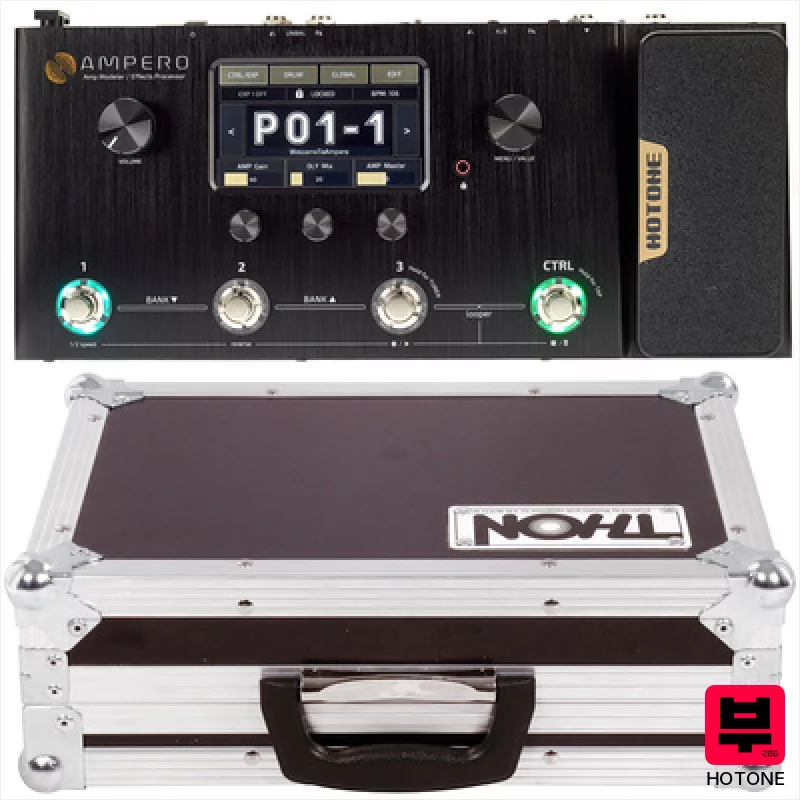
Hotone Ampero Bundle
- • Dual-DSP offers impressive effect stacking and clarity.
- • Touchscreen is surprisingly responsive and intuitive for menu navigation.
- • Integrated drum machine is a genuinely useful practice tool.
- • IR loader expands tonal possibilities beyond pre-loaded amp models.
- • Build quality feels somewhat plasticky, not as robust as higher-end units.
- • Limited physical controls can make tweaking on-the-fly less convenient.
- • The expression pedal feels a little 'budget' in terms of responsiveness.
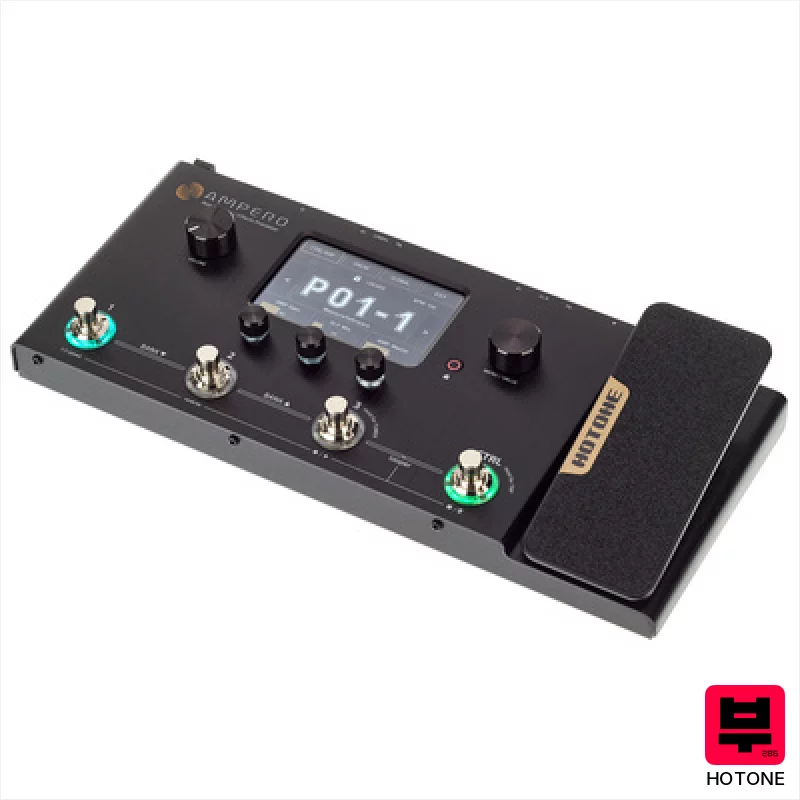
Hotone Ampero
- • Dual-DSP provides a surprising depth and clarity in effect stacking.
- • Touchscreen is surprisingly responsive and intuitive for menu navigation.
- • Integrated drum machine offers surprisingly usable backing tracks for practice.
- • IR loader expands sonic possibilities beyond the built-in amp models.
- • Build quality feels a bit plasticky, not as robust as higher-end units.
- • Limited physical knob control necessitates heavy touchscreen reliance.
- • Expression pedal lacks the sensitivity and nuance of a dedicated pedal.

Hotone Ampero II Stage Case Bundle
- • Impressive effect library offers immense sonic flexibility.
- • Stage Case provides robust protection and convenient portability.
- • Touchscreen interface is surprisingly intuitive and responsive.
- • Integrated drum module simplifies practice and recording.
- • DSP processing can introduce subtle latency for critical players.
- • Menu navigation, while improved, isn't as immediate as dedicated knobs.
- • Acoustic guitar simulation is a novelty, not a primary strength.
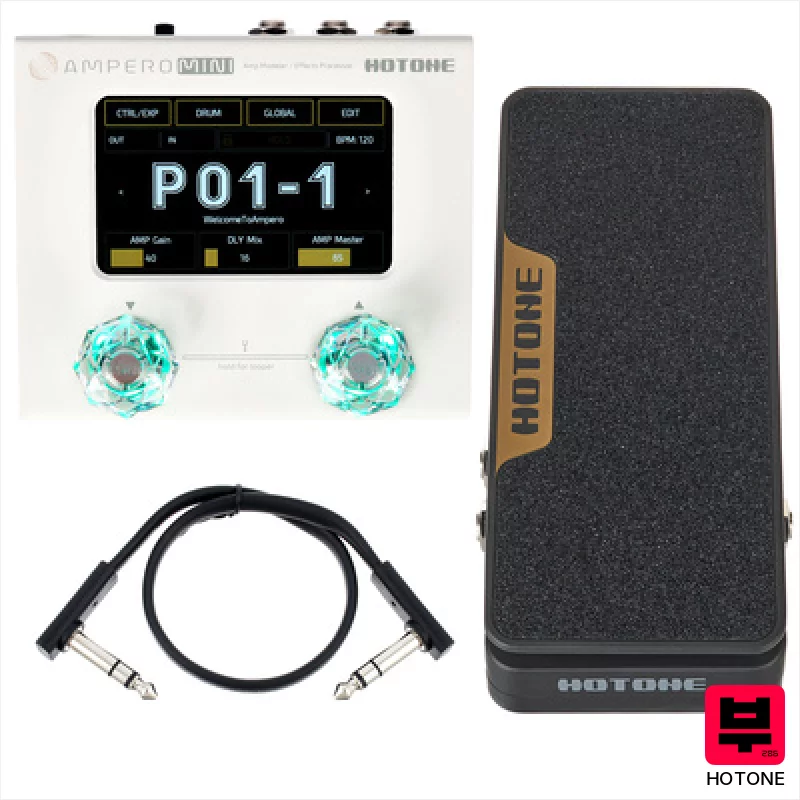
Hotone Ampero Mini Vanilla Bundle
- • Dual-DSP provides surprisingly rich, layered effects processing.
- • Touchscreen interface is responsive and genuinely useful for tweaking.
- • Compact size makes it ideal for pedalboard travel and smaller spaces.
- • IR loader opens up considerable tonal flexibility beyond the built-in cabs.
- • Build quality feels somewhat plasticky; not a gig-ready tank.
- • Limited physical controls can make complex edits slower.
- • Acoustic guitar simulation, while present, is a novelty – not a core strength.
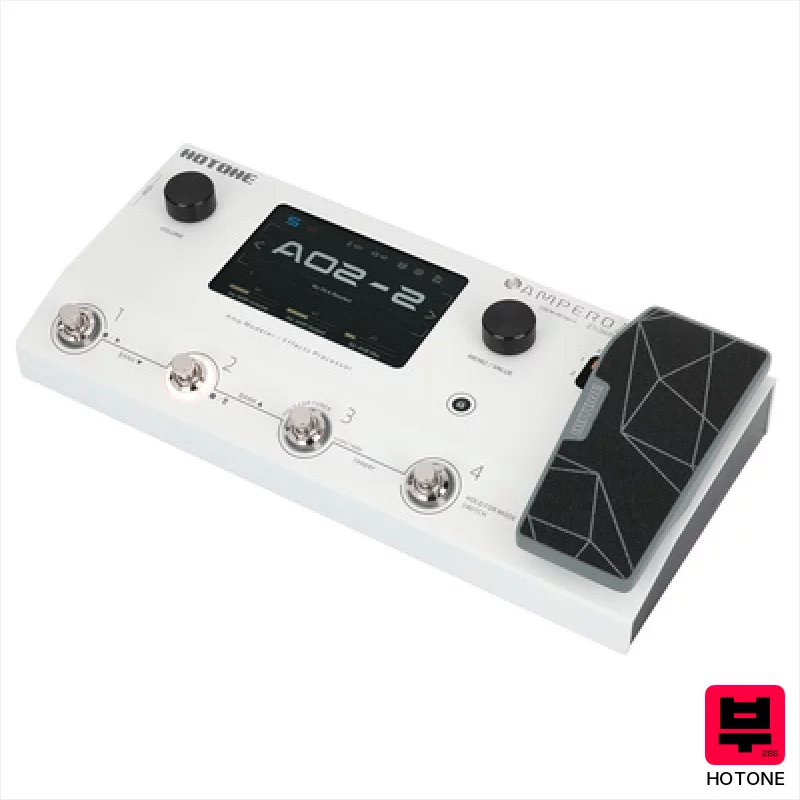
Hotone Ampero II
- • Tri-Core DSP delivers surprisingly authentic amp and cab emulations.
- • Tone Capture feature fosters community sharing and personalized sounds.
- • Intuitive touchscreen interface simplifies complex effect chains and navigation.
- • Lightweight aluminum housing makes it gig-ready without excessive bulk.
- • Menu navigation, while touchscreen-based, can feel a little clunky at times.
- • While versatile, its 'amp modeling' leans towards modern, high-gain tones; vintage cleans are less convincing.
- • The looper's 60-second limit is restrictive for more complex arrangements.
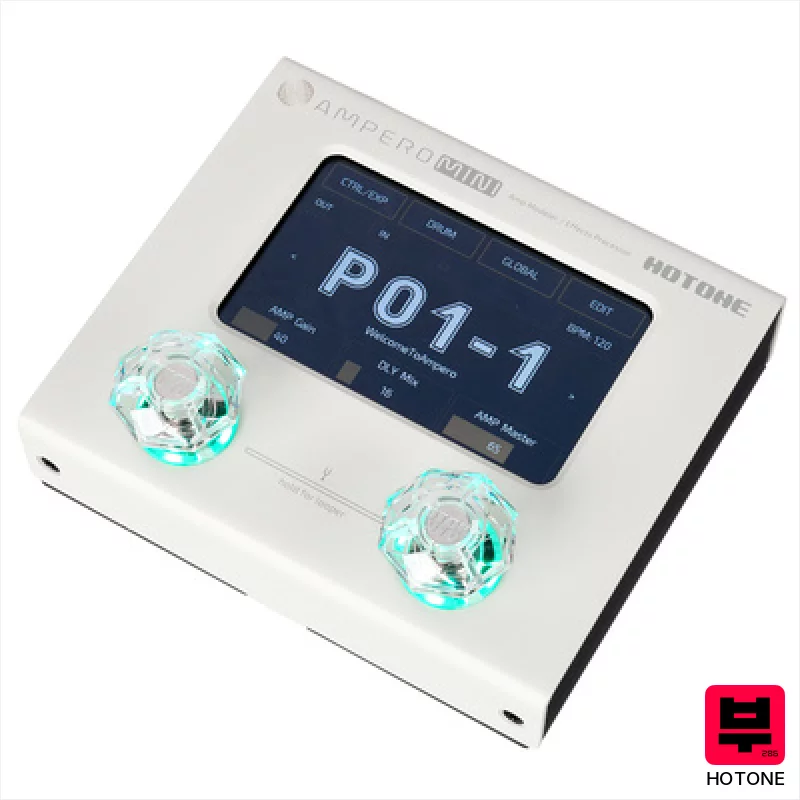
Hotone Ampero Mini Vanilla
- • Dual-DSP provides surprisingly clean, layered effects processing.
- • Touchscreen is responsive and intuitive for real-time adjustments.
- • Compact size makes it extremely pedalboard-friendly and portable.
- • Black Tech acoustic simulation offers a surprisingly usable acoustic tone.
- • Build quality feels somewhat plasticky; not as robust as higher-end units.
- • Limited physical controls require reliance on the touchscreen, which can be a workflow challenge.
- • Impulse Response loading, while present, isn't as flexible as dedicated IR loaders.
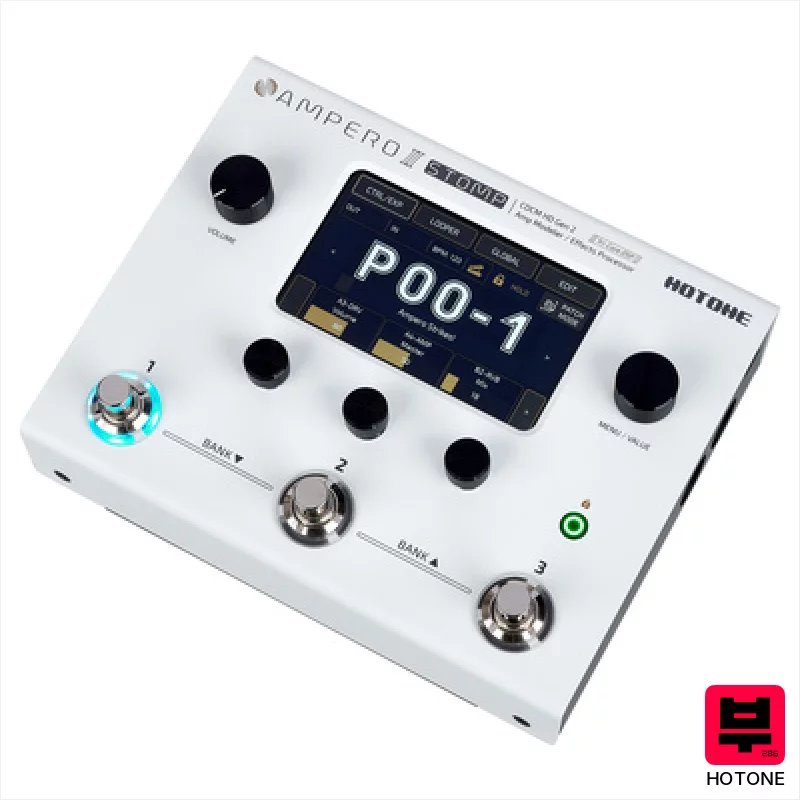
Hotone Ampero II Stomp
- • Excellent Tri-Core DSP delivers clean, responsive amp modeling.
- • High-quality ESS Sabre AD/DA converters noticeably improve audio fidelity.
- • Intuitive TFT touchscreen simplifies complex effect routing and editing.
- • Compact, pedalboard-friendly design maximizes space efficiency.
- • Touchscreen interface can be less tactile than dedicated knobs/buttons.
- • Aux input is a basic 3.5mm mini-jack; feels like an afterthought.
- • Limited looper time (60 seconds) restricts longer phrase creation.
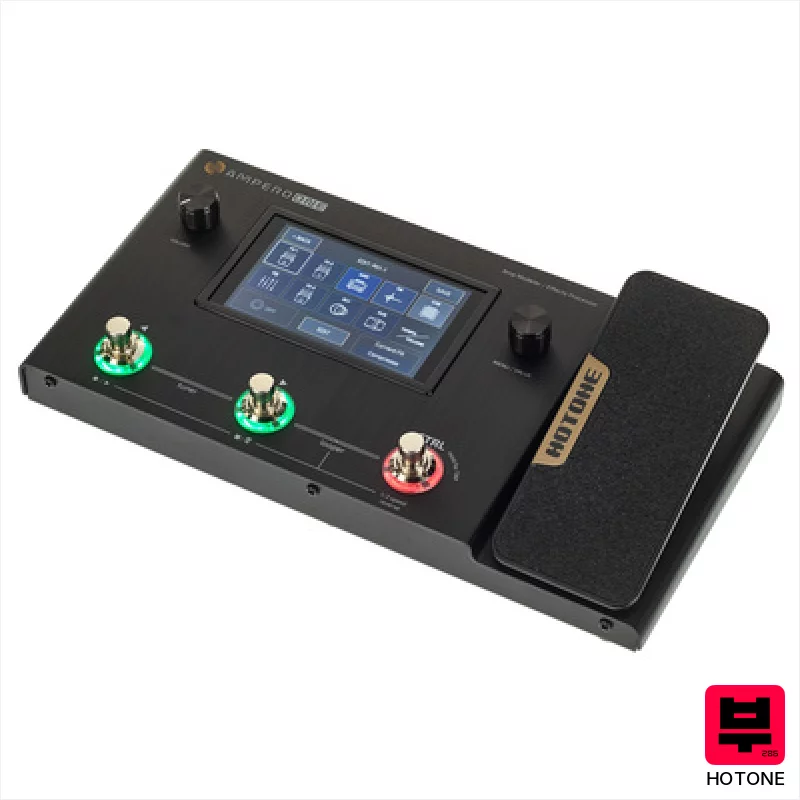
Hotone MP-80 Ampero One
- • Excellent value for the sheer number of amp and effect models.
- • The dual-DSP architecture delivers surprisingly clean and complex sounds.
- • Integrated expression pedal offers immediate, hands-on control of effects.
- • inBlack acoustic simulation adds unexpected versatility for recording.
- • The user interface can feel a little overwhelming initially due to the density of options.
- • The expression pedal’s range and sensitivity might feel limited for experienced users.
- • While versatile, the amp models lean towards modern high-gain tones, lacking truly convincing vintage cleans.
Guitar Multi Effects by the numbers
Measured across all 160 models in this category, so «wide», «short» or «expensive» mean something you can check.
How to Choose the Best Guitar Multi Effects
Heritage
Hotone is a sub-brand of Apollo, a company with decades of experience in pro audio manufacturing. They've learned a lot about speaker design and amp simulation - that knowledge is baked into these multi-effects, resulting in a surprisingly authentic feel.
Amp Modeling
It's not going to fool a vintage plexi fanatic, but Hotone's amp models are surprisingly good for the price. They nail a modern high-gain crunch and have usable clean tones, although the lower-gain stuff can get a little muddy if your pickup voicing is already dark.
Effects Quality
The modulation and time-based effects (reverb, delay) are a real highlight. The reverbs especially have a lush, three-dimensional quality that's often missing in cheaper units. The overdrive and distortion models, while plentiful, vary in quality - some are killer, some are...less so.
Build Quality
Let's be honest, it's not boutique-level. The chassis feels a little plasticky, and the footswitches aren't the most robust. However, for the price point, the electronics seem solid, and they've held up surprisingly well to gigging.
User Interface
The layout is generally intuitive, but tweaking complex effects chains can get a little clunky. The display isn't huge, so you'll be doing a fair bit of menu diving. It's not terrible, but it's not as streamlined as some of the pricier competitors.
Buying Guide
Look, you're not getting a Kemper here, but you're getting a lot of bang for your buck. The lower-end models are great for bedroom practice or a beginner's pedalboard, but if you're serious about gigging, spend the extra cash for a unit with more memory and a better build. Be realistic about the amp modeling - it's good, not amazing. And don't expect the same level of tweakability as a Fractal or a Line 6 Helix.
How This List Is Built
We don't play these instruments — we're a catalog, not a review desk, and we'd rather say so than pretend otherwise. This page covers 11 of 160 guitar multi effects from the Thomann catalogue, which is the largest single source of specification data in this category: 11 in detail, the rest listed with their specifications.
Position is computed, not curated. We parse the manufacturer's own description into actual values — nut width, scale, fret count, fingerboard radius, size, alloy — and rank on them: how many specifications a model has published, how many of them are measurable numbers, and how precisely it meets this page's criterion. A product image adds a little. Price is not a ranking signal: it tells you nothing about whether a neck fits your hand. The same inputs always produce the same order, so nothing here is shuffled to look fresh.
What this list is good for: narrowing a category down to a shortlist by spec and budget. What it isn't: a substitute for hearing an instrument. Before you buy, read hands-on reviews and, where you can, play it. Full methodology.

