AudioFu
AudioFu Chart · October 2026
Best General Digital Pianos Under $2,000 2026
The top pick is Casio CT-S200 Casiotone 61-Key Portable Keyboard ($963). Alesis Concert 88-Key Digital Piano gives you the most for the money at $300. Kawai CN201 88-Key Digital Piano leads the high end. Ranked by the AudioFu Index from 27 models across 8 brands, prices checked every night.
Last updated: October 11, 2026
Top 10
Full detail for the 10 highest AudioFu Index scores. Every other model is listed below.
-
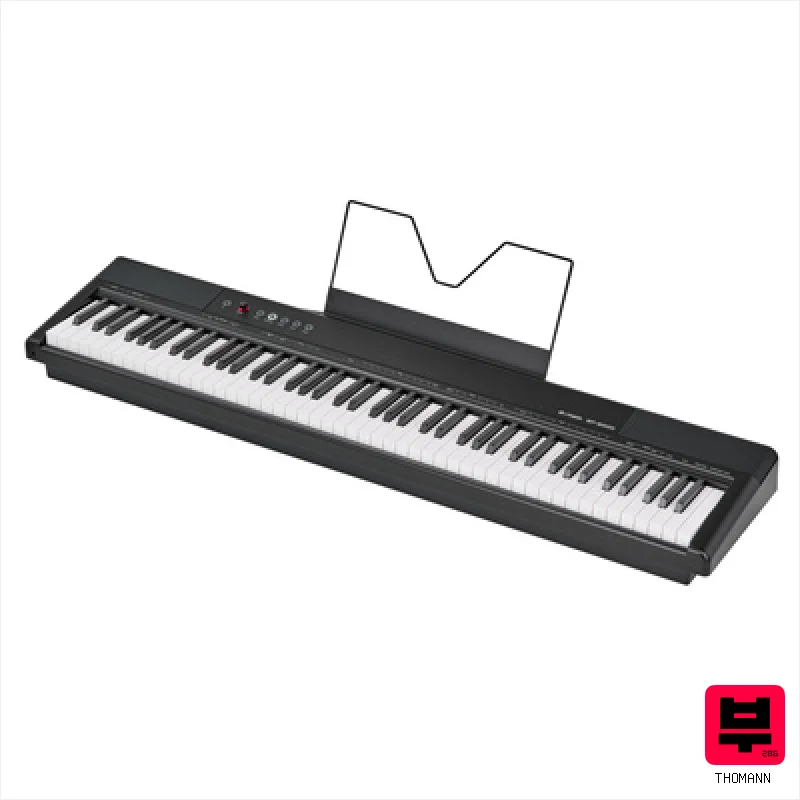
Casio CT-S200 Casiotone 61-Key Portable Keyboard
AP-S200 BN · Casio
70 for sale on Reverb6 finishes at Thomann
- Weight34 kg
- Key actionWeighted keys
The AP-S200 BN is a solid choice for beginners or intermediate players looking for a stylish and relatively affordable entry into the digital piano world. The action is surprisingly good for the price point, and the compact design makes it easy to fit into smaller spaces. It’s great for home practice and casual playing, but don't expect studio-level sound quality or a huge range of sonic textures.
Pros
- Attractive brown finish elevates aesthetics for modern living spaces.
- Smart Scaled Hammer Action provides a surprisingly realistic piano feel.
- Decent speaker system delivers clear, usable sound for practice and small performances.
Cons
- Sound engine, while adequate, lacks the nuance of higher-end digital pianos.
- The included 3-fold pedal feels somewhat plasticky and basic.
90AudioFu
Index↓ 23.9%since Aug 14 · lowest so far$1,265 · Aug 14$963 now$963€859 at Thomann · in stockCheck price ↗ -
- Weight43 kg
- Key actionWeighted keys
The CN-201 B is a solid entry-level digital piano, offering a surprisingly good key action for the price. It's perfect for students and home players who want a realistic piano experience without the expense of a high-end model. The sound is pleasant, and the Bluetooth connectivity adds modern convenience.
Pros
- Responsive Hammer III action provides surprisingly realistic key feel.
- The built-in speaker system delivers a full, warm tonal character.
- Bluetooth MIDI connectivity allows for seamless integration with apps and devices.
Cons
- Limited sound selection compared to higher-end digital pianos.
- Recorder functionality is basic, lacking advanced editing features.
65AudioFu
Index↑ 0.8%since Aug 14$1,377 · Aug 14$1,388 now$1,388€1,239 at Thomann · in stockCheck price ↗ -
- Weight47.5 kg
- Key actionWeighted keys
The CN-301 W is a solid choice for intermediate players and beginners looking for a realistic piano experience without the premium price tag. The RHIII action is genuinely impressive for this class of instrument, and the Bluetooth features are a welcome addition. It’s a great all-rounder for home practice and casual performance.
Pros
- Responsive Hammer III action delivers surprisingly realistic key weighting.
- Satin white finish is elegant and resists fingerprints well.
- The built-in speaker system provides a full, warm sound for practice.
Cons
- Limited sound selection compared to higher-end Kawai models.
- The OLED display, while clear, is relatively small for detailed editing.
64AudioFu
Index↓ 1.3%since Aug 14 · lowest so far$1,747 · Aug 14$1,725 now$1,725€1,539 at Thomann · in stockCheck price ↗ -
- Weight57 kg
- Key actionWeighted keys
The CLP-835 is a solid, reliable digital piano offering a surprisingly authentic playing experience. The GrandTouch-S action is a standout feature, and the sound quality is excellent. This is a great choice for intermediate to advanced players wanting a high-quality instrument for home practice and performance, without the bulk and maintenance of an acoustic grand.
Pros
- GrandTouch-S action convincingly replicates acoustic piano feel.
- CFX and Bösendorfer sounds offer a genuinely premium tonal palette.
- Built-in recording capabilities simplify composition and practice workflows.
Cons
- The synthetic ivory/ebony feel isn't quite the same as real ivory.
- Limited speaker power might necessitate external amplification for larger spaces.
60AudioFu
Index↓ 1.2%since Aug 14 · lowest so far$1,894 · Aug 14$1,870 now$1,870€1,669 at Thomann · in stockCheck price ↗ -
- Weight12 kg
- Key actionWeighted keys
The ES-120 B is a solid entry-level digital piano offering a surprisingly good playing experience for the price. It's ideal for students, beginners, or those needing a portable stage piano – the action is much better than you’d expect for this tier, and the Bluetooth connectivity is a real bonus.
Pros
- Responsive Hammer Compact action provides surprisingly realistic key feel.
- Kawai's sound engine delivers a warm, nuanced grand piano tone.
- Bluetooth MIDI & Audio offer modern connectivity and convenience.
Cons
- RHC action, while good, lacks the depth of Kawai's higher-end actions.
- Limited sound selection compared to more expensive stage pianos.
59AudioFu
IndexStableno change since Aug 14Aug 14$671 now$671€599 at Thomann · in stockCheck price ↗ -
- Weight37 kg
- Key actionWeighted keys
This piano feels great to play thanks to its realistic weighted keys and three authentic grand piano tones. It pairs well with a piano app for lessons but lacks a built-in recorder. Great for players who want a portable stage instrument without breaking the bank.
Pros
- Three distinct Shigeru Kawai grand piano tones
- Responsive Hammer Compact II action feels real
- Fourteen additional instrument sounds for variety
Cons
- Only 40 W speakers lack studio power
- No built-in recording function despite MIDI support
59AudioFu
IndexStableno change since Aug 17Aug 17$1,321 now$1,321€1,179 at Thomann · in stockCheck price ↗ -
- Weight37.6 kg
- Key actionWeighted keys
The AP-S450BK is a really interesting offering – Casio’s Smart Hybrid action provides a surprisingly good playing experience for the money, and the Bechstein collaboration is a nice touch. It’s a great choice for students, apartment dwellers, or anyone wanting a portable, full-sized piano with a decent sound without the premium price tag.
Pros
- Smart Hybrid Hammer Action offers surprisingly realistic key feel.
- AiR sound engine delivers a warm, nuanced piano tone.
- Compact design balances portability with full 88-key functionality.
Cons
- The spruce/plastic hybrid action isn't a true acoustic feel.
- Limited sound selection compared to higher-end digital pianos.
59AudioFu
Index↓ 11.1%since Aug 14 · lowest so far$1,512 · Aug 14$1,344 now$1,344€1,199 at Thomann · in stockCheck price ↗ -
- Weight45 kg
- Key actionWeighted keys
The CLP-825 R is a solid choice for serious students and intermediate players looking for a realistic piano experience without the premium price tag. The action is genuinely impressive, and the sound quality is excellent for home practice and performance – just be aware the speakers are best suited for smaller spaces. It’s a great all-rounder, offering a good balance of features and performance.
Pros
- GrandTouch-S action delivers realistic hammer feel and nuanced control.
- Excellent CFX and Bösendorfer piano sounds offer a wide tonal palette.
- Bluetooth MIDI and Audio connectivity simplifies integration with modern devices.
Cons
- Polyphony, while adequate, might struggle with very complex layered sounds.
- Speaker system, while decent, lacks the power for truly large rooms.
59AudioFu
Index↓ 1.5%since Aug 14 · lowest so far$1,545 · Aug 14$1,523 now$1,523€1,359 at Thomann · in stockCheck price ↗ -
- Weight74 kg
- Key actionWeighted keys
The Thomann DP-140B U BK is a surprisingly capable upright digital piano that delivers a good bang for your buck. Its weighted keys and decent sound engine make it ideal for beginners or intermediate players who need a compact and affordable instrument for home practice and basic performance. It’s a solid choice for students or those needing a space-saving alternative to an acoustic piano.
Pros
- Solid, matte black finish gives a premium, understated aesthetic.
- The 5-Stage piano power MARS technology provides surprisingly realistic acoustic piano tones.
- 30W + 20W speaker system offers decent volume and clarity for home practice and small performances.
Cons
- USB connectivity is MIDI only; no audio output over USB, limiting recording options.
- Synthetic ivory key surface, while durable, lacks the nuanced feel of real ivory or higher-end plastic.
58AudioFu
Index↓ 9.2%since Aug 14 · lowest so far$985 · Aug 14$894 now$894€798 at Thomann · in stockCheck price ↗ -
- Weight7.1 kg
- Key actionSemi-weighted keys
The Alesis Concert is a solid, budget-friendly option for beginners or those needing a portable practice instrument. It won't fool a seasoned pianist, but it's perfectly adequate for learning the basics and experimenting with different sounds. A great choice for students or anyone needing a compact, all-in-one solution.
Pros
- Affordable entry point for aspiring pianists.
- Decent selection of basic instrument voices.
- Integrated metronome is surprisingly useful for practice.
Cons
- Semi-weighted action lacks the nuance of a real piano.
- Polyphony limit can cause note drop with complex layering.
57AudioFu
Index↓ 13.5%since Aug 14 · lowest so far$347 · Aug 14$300 now$300€268 at Thomann · in stockCheck price ↗
All 27 general digital pianos
Same index, same nightly prices — compact. Colour options of one model share a row. Tap a photo to zoom.
- 11
Casio AP-300 BNCasio · 4 finishes57↓ 12.0%$1,232€1,099$1,232€1,099Check ↗
- 12
Casio AP-750 BKCasio · 4 finishes57↓ 12.3%$1,915€1,709$1,915€1,709Check ↗
- 13
Thomann DP-51 WHThomann · 6 finishes56↓ 4.9%$670€598$670€598Check ↗
- 14
Gewa DP 510 BlackGewa · 4 finishes55Stable$783€699$783€699Check ↗
- 15
Casio AP-550 BKCasio · 3 finishes55↓ 10.4%$1,456€1,299$1,456€1,299Check ↗
- 16
Casio CT-S1 76 BKCasio · 4 finishes54↓ 28.5%$256€228$256€228Check ↗
- 17
Roland GO-61P GO:PIANO 61-Key Digital PianoGO:PIANO 88PX · Roland · 2 finishes54↓ 30.4%$308€275$308€275Check ↗
- 18
Hemingway DP-501 MKII RWHemingway · 6 finishes54↓ 5.4%$593€529$593€529Check ↗
- 19
Thomann DP-32 BThomann · 4 finishes53↓ 5.9%$558€498$558€498Check ↗
- 20
Thomann DP-95 BThomann · 4 finishes53↓ 5.2%$615€549$615€549Check ↗
- 21
Kawai CX-102 BKawai · 4 finishes53Stable$1,007€899$1,007€899Check ↗
- 22
Gewa DP 520 BlackGewa · 2 finishes52↓ 2.0%$1,097€979$1,097€979Check ↗
- 23
Gewa UP 540 BlackGewa · 2 finishes52↓ 3.6%$1,512€1,349$1,512€1,349Check ↗
- 24
Gewa CP 510 BlackGewa · 2 finishes51Stable$783€699$783€699Check ↗
- 25
Gewa PP-3Gewa · 4 finishes50Stable$498€444$498€444Check ↗
- 26
Gewa PP-2Gewa · 2 finishes46Stable$414€369$414€369Check ↗
- 27
Roland GO:PIANO Bag BundleRoland17Stable$357€319$357€319Check ↗
General Digital Pianos by the numbers
Measured across all 116 models we track, not a sample.
Median $1,063 — half of all general digital pianos here cost less.
median of 113 models · 12 kg–59 kg
most common · 109 models
median of 10 models · 88–88
How to choose the best general digital pianos
Action
This is HUGE. A heavy, uneven action will kill your playing. Look for graded hammer action - it should feel like an acoustic piano, with more resistance in the lower register. Even in this price range, some actions feel noticeably better than others; a slightly better action is worth prioritizing.
Sound Engine & Samples
The core of the piano's tone. You're looking for a decent sampling library, not just a basic synthesized sound. Listen for dynamic range - does the tone evolve as you play softer or louder? Does it have that subtle 'warmth' or a harsh, digital edge?
Polyphony
128 voices minimum is the baseline now. Anything less and you'll start hearing notes drop during complex chords or layered parts, which is a major frustration for recording or playing with a band.
Connectivity & Features
MIDI, USB, multiple outputs - these are your friends. Consider the included sounds beyond just piano; a decent Rhodes or electric piano patch can be a game-changer for versatility. Bluetooth is a nice bonus, but not essential.
Build Quality & Keybed Material
Plastic is the norm at this price, but some plastics feel cheaper than others. A composite keybed will generally feel more responsive than a purely plastic one. Also, check for stability - does the piano wobble when you play hard?
Buying guide
So you're looking for a decent digital piano without dropping a fortune? Been there. It's a sweet spot - you want something that feels good under your fingers, sounds usable for recording, and won't embarrass you on a small gig. Under $2000 gets you a lot more than it used to, but you still gotta know what to look for to avoid a plastic-sounding disappointment.
Don't chase the biggest name; focus on the feel and sound. You'll almost certainly be making some compromises - the cabinet might be plastic, the effects might be basic, and the speaker system will likely be just 'okay'. Prioritize the action and the core piano sound above all else; you can always add external speakers or effects later.
And seriously, try before you buy if possible - what sounds good on YouTube might not cut it for your ears and playing style.
How the AudioFu Index works
Five measured signals and nothing else — no stars from strangers, no “tested by experts” we didn’t do. The weights are fixed and public. We don’t play these instruments; we measure the market around them.
This chart covers 116 general digital pianos from the Thomann catalogue. Before you buy, read hands-on reviews and, where you can, play it. Full methodology.
AudioFu earns a commission when you buy through our Thomann links. It never changes the order — the index does.
- Demand40%
How many of this exact model are for sale on Reverb right now — what musicians actually buy and resell.
- Lineup20%
How many finishes Thomann stocks — makers expand the models that sell.
- Price15%
Where the price has moved since we started tracking in August.
- Specs15%
How completely the maker documents it.
- Maker10%
How deep the brand’s range is in this category.
Questions
Is a weighted keybed enough, or do I need graded hammer action?
Weighted is better than nothing, but graded hammer action is a significant upgrade for feel and expression. If you're serious about piano playing, it's worth the extra cost.
Can I use this for recording?
Absolutely, but manage your expectations. The built-in sounds are decent, but you'll likely want to use external VST instruments or microphones for a professional recording. MIDI connectivity is essential.
How important are the speakers?
They're often the weakest link. They'll be fine for practice and casual playing, but for gigging or critical listening, invest in external monitors or headphones.
What's the difference between a 'digital piano' and a 'stage piano'?
Generally, stage pianos are more portable and geared towards live performance, with more effects and connectivity options. Digital pianos often have more built-in sounds and a more furniture-like appearance. The lines are blurring, though.
Is it worth buying used?
Definitely! You can often find higher-end models within your budget if you're willing to buy used. Just be sure to thoroughly inspect the action and keybeds for wear and tear.